Heritage · Country
United States Culture and Heritage
A country that records its dead in bronze and stone, the United States keeps memory in reflecting pools, in fields of empty chairs and in a memorial quilt grown too vast to unfold in a single place. This is a guide to how a young and plural nation holds its oldest griefs alongside its newest, and to the reckonings it is still learning to make.Written to last.
By Confinity Heritage Editorial · Updated 2026-07-31 · 8-minute readQuiet tools, kept out of the way.
The United States is a young country with an old habit of remembering out loud. Its earliest monuments predate the republic by roughly two thousand years: the Hopewell Ceremonial Earthworks of central Ohio, geometric enclosures raised along the tributaries of the Ohio River and inscribed by UNESCO in 2023. Its most recent are counted in the names cut into bronze around two reflecting pools set in the footprints of the World Trade Center, where 2,977 people are remembered one by one. Between those poles the nation has built an unusual apparatus of public memory: a holiday for its war dead that began in 1868, a cemetery at Arlington where more than four hundred thousand people lie, a National Park Service charged with keeping the land itself, and a federal register of nearly a hundred thousand protected places.
What distinguishes American remembrance is not only its scale but its arguments. This is a country that has had to learn to memorialize the people it wronged: the Native nations forced west along the Trail of Tears, the millions held in slavery, the thousands lynched in the decades after emancipation. Much of that work is recent, built in the twenty-first century by museums and memorials that name the dead individually and refuse the comfort of generalities.
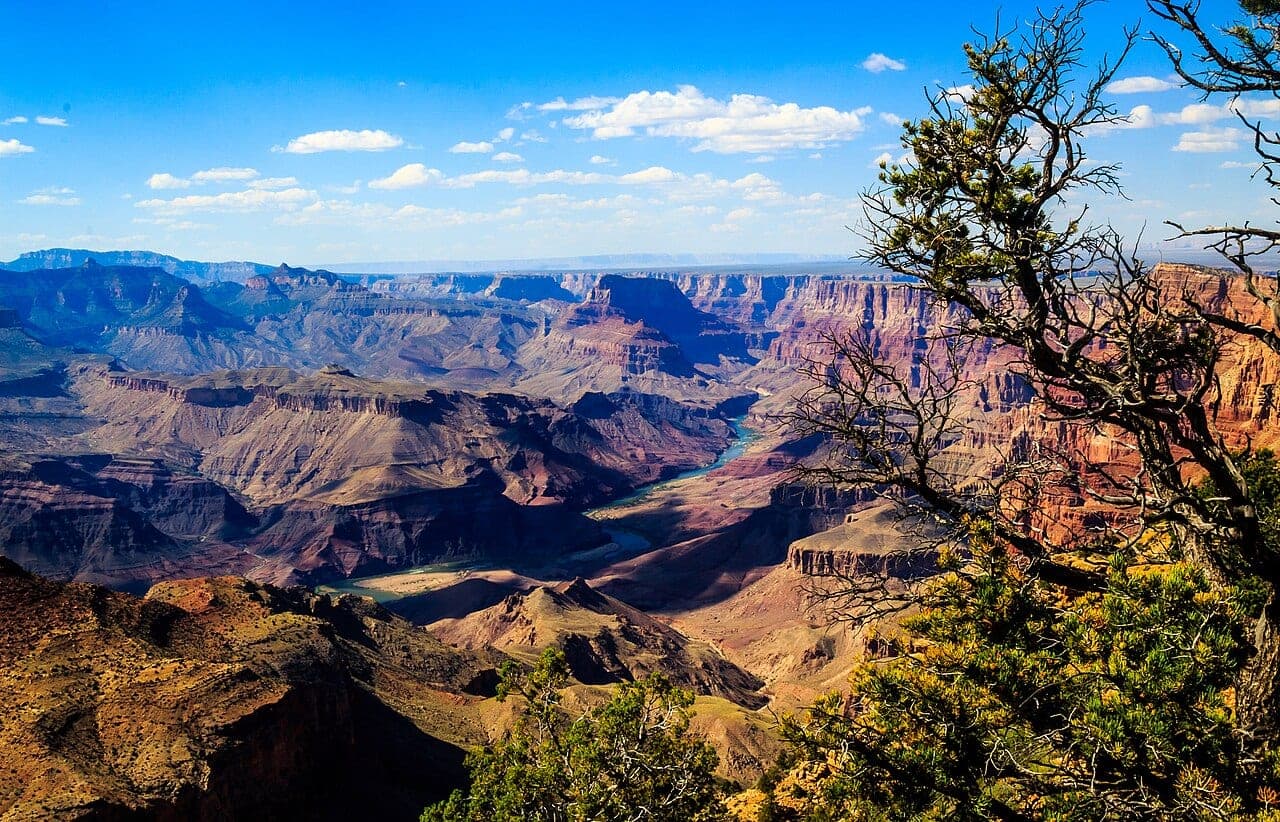
The United States covers about 9.8 million square kilometres, one of the three or four largest countries on earth, spanning a continent between the Atlantic and Pacific oceans and reaching north to Alaska and west to the Hawaiian islands in the mid-Pacific. Its landscapes run from the Appalachian forests of the east across the Great Plains to the Rocky Mountains, the deserts of the Southwest and the Pacific coast; Denali in Alaska rises to 6,190 metres, the highest point in North America, while Badwater Basin in California's Death Valley lies 86 metres below sea level.
The population passed 340 million in 2024, making it the third most populous nation after India and China. It is a federal republic of fifty states and a federal district, Washington, D.C., with power divided between the states and a national government of three branches under a written constitution in force since 1789. California is the most populous state and New York City the largest city. The country holds twenty-six UNESCO World Heritage sites, among them Yellowstone and Mesa Verde, inscribed in 1978 among the first anywhere, and it preserves its past through a dense network of federal, state and tribal institutions.
Washington, D.C. The capital was laid out in the 1790s on the Potomac as a purpose-built seat of government, and it doubles as the country's memorial city. The National Mall gathers the Lincoln and Jefferson memorials, the Vietnam Veterans Memorial, the World War II Memorial and, since 2011, the Martin Luther King, Jr. Memorial, alongside the museums of the Smithsonian Institution and the National Archives, which displays the Declaration of Independence, the Constitution and the Bill of Rights.
New York City. The largest American city, with about 8.3 million residents, grew around a harbour that received some twelve million immigrants at the Ellis Island station between 1892 and 1954. The Statue of Liberty, a gift from France dedicated in 1886 and inscribed by UNESCO in 1984, still marks the approach, and Lower Manhattan now holds the National September 11 Memorial and Museum.
Philadelphia. The birthplace of the republic keeps Independence Hall, where the Declaration was adopted in 1776 and the Constitution drafted in 1787 and which UNESCO inscribed in 1979, together with the Liberty Bell.
Boston. A cradle of the Revolution, Boston threads its colonial and revolutionary sites along the Freedom Trail, from the Old North Church to the graves of the founders, and preserves some of the country's oldest public burying grounds.
New Orleans. Founded by the French in 1718 and shaped by Spanish, African and Caribbean influences, New Orleans gave the nation jazz and keeps a distinctive culture of death, from the above-ground tombs of its historic cemeteries to the brass-band jazz funeral, in which the walk home turns from mourning to celebration.
Montgomery and Selma. The Alabama towns at the heart of the civil-rights movement carry some of the country's most demanding memory: the Edmund Pettus Bridge in Selma, crossed by marchers in 1965, and in Montgomery the Legacy Museum and the National Memorial for Peace and Justice, which confront slavery and racial terror directly.
People have lived in North America for at least fifteen thousand years, and long before European contact the continent held societies of great sophistication. Cahokia, near present-day St. Louis, was the largest settlement north of Mexico around 1100, home to perhaps ten to twenty thousand people and to earthen mounds on a monumental scale; the Ancestral Puebloans built the cliff dwellings preserved at Mesa Verde; and the Hopewell raised their ceremonial earthworks in the Ohio valley. European colonization began in earnest with the Spanish in the sixteenth century and the English at Jamestown in 1607 and Plymouth in 1620. In 1619 the first enslaved Africans were brought to Virginia, opening more than two centuries of slavery that would build much of the country's wealth.
 Cliff Palace at Mesa Verde, built into the rock in the thirteenth century and left within a hundred years. Photograph by Tobi 87, CC BY-SA 4.0, via Wikimedia Commons.
Thirteen British colonies declared independence on 4 July 1776 and won it in 1783; the Constitution drafted in 1787 established the federal government in 1789. The nineteenth century brought vast expansion and vast injury together: the Louisiana Purchase and westward settlement pushed the frontier to the Pacific, while the Indian Removal Act of 1830 uprooted southeastern Native nations along the routes remembered as the Trail of Tears, on which thousands of Cherokee and others died. The question of slavery split the country in the Civil War of 1861–1865, the deadliest in American history, with at least 620,000 soldiers killed; the Thirteenth Amendment abolished slavery in 1865. Emancipation gave way to the segregation and racial violence of the Jim Crow decades, contested through the long civil-rights movement of the twentieth century. Waves of immigration remade the population, two world wars remade the country's place in the world, and the attacks of 11 September 2001 opened the era whose memorials now anchor Lower Manhattan, a Pennsylvania field and the Pentagon.
The country's name honours the Florentine navigator Amerigo Vespucci: the German cartographer Martin Waldseemüller applied "America" to the New World on his 1507 map, the first document known to use the name, in recognition of Vespucci's argument that the lands reached across the Atlantic were a separate continent. The full title "United States of America" first appeared in the Declaration of Independence in 1776.
English is the language of American public life, and in March 2025 an executive order designated it the official language of the United States for the first time at the federal level. Yet the country has always been multilingual. Spanish is spoken by tens of millions, a legacy of Mexican and Caribbean settlement and of continued immigration, and the map itself records the languages that came before English: Mississippi, Ohio, Massachusetts and Chicago are among the many place names, including roughly half the state names, that descend from Native American words. More than a hundred and fifty indigenous languages are still spoken, Navajo the most widely of them with well over a hundred thousand speakers, but most are endangered, and tribal nations now run immersion schools, dictionaries and digital archives to carry languages such as Cherokee to a new generation.
American identity has long been described by the motto on the national seal, e pluribus unum, "out of many, one", and by the harder truth that the one has never stopped arguing over who the many include. A nation of immigrants and of the descendants of the enslaved and the dispossessed, the United States built a common culture out of difference: the English language, a set of founding ideals about liberty and equality, and a genius for popular art. Its music is the clearest example, born largely of Black American experience: the blues and jazz of the Mississippi Delta and New Orleans, gospel and soul, country from the Appalachian South, and hip-hop, which grew in the Bronx in the 1970s to become the dominant sound of the planet.
The same plural energy runs through American letters, from Whitman and Dickinson to the Nobel laureates William Faulkner, Ernest Hemingway and Toni Morrison, whose novels made the memory of slavery central to the national story. Sport carries local and national loyalty in baseball, gridiron football and basketball; Hollywood and, later, American television exported the country's self-image worldwide; and regional cultures keep distinct traditions of food, craft and remembrance alive within the whole, among them the Hispanic and Pueblo heritage of the Southwest, the Gullah Geechee of the Lowcountry, Cajun Louisiana and the Pennsylvania Dutch.
Religious freedom is written into the country's foundations: the First Amendment of 1791 forbids any established church and protects free exercise, a principle that has allowed a wide range of faiths to flourish. Some 62 per cent of American adults identify as Christian, about 40 per cent Protestant and 19 per cent Catholic, while roughly 29 per cent are religiously unaffiliated, a share that rose for decades before levelling off in the 2020s. Jewish, Muslim, Hindu and Buddhist communities are long established, and new immigrant faiths continue to arrive.
Religion has shaped American remembrance in particular ways. The Black church, forged under slavery and segregation, became the moral engine of the civil-rights movement and remains a centre of communal mourning and celebration. Native nations sustain ceremonial traditions tied to land and ancestors, some of them protected only recently in law, and the return of ancestral remains has become an act of spiritual as well as cultural repair. Across denominations, the funeral service, the graveside prayer and the anniversary remembrance remain among the most widely observed of American rituals.
The country's most widely kept day of remembrance began in grief for its Civil War dead. In 1868 General John A. Logan, leader of the Union veterans' association, called for a Decoration Day on 30 May, when graves would be strewn with flowers; the observance spread, took the name Memorial Day, and in 1971 became a federal holiday fixed to the last Monday in May under the Uniform Monday Holiday Act. Its ceremonial home is Arlington National Cemetery, established on a seized estate in 1864 and now the resting place of more than four hundred thousand people across 639 acres. There the Tomb of the Unknown Soldier, dedicated in 1921, has been guarded without pause since 1937, and American military funerals keep a precise grammar of mourning: the folded flag handed to the next of kin, the three-volley salute and the sounding of "Taps".
Cliff Palace at Mesa Verde, built into the rock in the thirteenth century and left within a hundred years. Photograph by Tobi 87, CC BY-SA 4.0, via Wikimedia Commons.
Thirteen British colonies declared independence on 4 July 1776 and won it in 1783; the Constitution drafted in 1787 established the federal government in 1789. The nineteenth century brought vast expansion and vast injury together: the Louisiana Purchase and westward settlement pushed the frontier to the Pacific, while the Indian Removal Act of 1830 uprooted southeastern Native nations along the routes remembered as the Trail of Tears, on which thousands of Cherokee and others died. The question of slavery split the country in the Civil War of 1861–1865, the deadliest in American history, with at least 620,000 soldiers killed; the Thirteenth Amendment abolished slavery in 1865. Emancipation gave way to the segregation and racial violence of the Jim Crow decades, contested through the long civil-rights movement of the twentieth century. Waves of immigration remade the population, two world wars remade the country's place in the world, and the attacks of 11 September 2001 opened the era whose memorials now anchor Lower Manhattan, a Pennsylvania field and the Pentagon.
The country's name honours the Florentine navigator Amerigo Vespucci: the German cartographer Martin Waldseemüller applied "America" to the New World on his 1507 map, the first document known to use the name, in recognition of Vespucci's argument that the lands reached across the Atlantic were a separate continent. The full title "United States of America" first appeared in the Declaration of Independence in 1776.
English is the language of American public life, and in March 2025 an executive order designated it the official language of the United States for the first time at the federal level. Yet the country has always been multilingual. Spanish is spoken by tens of millions, a legacy of Mexican and Caribbean settlement and of continued immigration, and the map itself records the languages that came before English: Mississippi, Ohio, Massachusetts and Chicago are among the many place names, including roughly half the state names, that descend from Native American words. More than a hundred and fifty indigenous languages are still spoken, Navajo the most widely of them with well over a hundred thousand speakers, but most are endangered, and tribal nations now run immersion schools, dictionaries and digital archives to carry languages such as Cherokee to a new generation.
American identity has long been described by the motto on the national seal, e pluribus unum, "out of many, one", and by the harder truth that the one has never stopped arguing over who the many include. A nation of immigrants and of the descendants of the enslaved and the dispossessed, the United States built a common culture out of difference: the English language, a set of founding ideals about liberty and equality, and a genius for popular art. Its music is the clearest example, born largely of Black American experience: the blues and jazz of the Mississippi Delta and New Orleans, gospel and soul, country from the Appalachian South, and hip-hop, which grew in the Bronx in the 1970s to become the dominant sound of the planet.
The same plural energy runs through American letters, from Whitman and Dickinson to the Nobel laureates William Faulkner, Ernest Hemingway and Toni Morrison, whose novels made the memory of slavery central to the national story. Sport carries local and national loyalty in baseball, gridiron football and basketball; Hollywood and, later, American television exported the country's self-image worldwide; and regional cultures keep distinct traditions of food, craft and remembrance alive within the whole, among them the Hispanic and Pueblo heritage of the Southwest, the Gullah Geechee of the Lowcountry, Cajun Louisiana and the Pennsylvania Dutch.
Religious freedom is written into the country's foundations: the First Amendment of 1791 forbids any established church and protects free exercise, a principle that has allowed a wide range of faiths to flourish. Some 62 per cent of American adults identify as Christian, about 40 per cent Protestant and 19 per cent Catholic, while roughly 29 per cent are religiously unaffiliated, a share that rose for decades before levelling off in the 2020s. Jewish, Muslim, Hindu and Buddhist communities are long established, and new immigrant faiths continue to arrive.
Religion has shaped American remembrance in particular ways. The Black church, forged under slavery and segregation, became the moral engine of the civil-rights movement and remains a centre of communal mourning and celebration. Native nations sustain ceremonial traditions tied to land and ancestors, some of them protected only recently in law, and the return of ancestral remains has become an act of spiritual as well as cultural repair. Across denominations, the funeral service, the graveside prayer and the anniversary remembrance remain among the most widely observed of American rituals.
The country's most widely kept day of remembrance began in grief for its Civil War dead. In 1868 General John A. Logan, leader of the Union veterans' association, called for a Decoration Day on 30 May, when graves would be strewn with flowers; the observance spread, took the name Memorial Day, and in 1971 became a federal holiday fixed to the last Monday in May under the Uniform Monday Holiday Act. Its ceremonial home is Arlington National Cemetery, established on a seized estate in 1864 and now the resting place of more than four hundred thousand people across 639 acres. There the Tomb of the Unknown Soldier, dedicated in 1921, has been guarded without pause since 1937, and American military funerals keep a precise grammar of mourning: the folded flag handed to the next of kin, the three-volley salute and the sounding of "Taps".
 Maya Lin's wall lists the dead in the order they died rather than by rank, and the polished granite puts the reader's face among the names. Photograph by the 3rd US Infantry Regiment, public domain, via Wikimedia Commons.
Two memorials of the late twentieth century changed how the nation grieves. The Vietnam Veterans Memorial, dedicated in 1982 and designed by the twenty-one-year-old student Maya Lin, inscribes the names of more than 58,000 dead and missing on a wall of black granite that mirrors the visitor's own face; its refusal of triumph and its insistence on naming every individual reshaped memorial design far beyond the United States. Five years later, at the height of the AIDS epidemic, the NAMES Project began the AIDS Memorial Quilt, first unfolded on the National Mall in October 1987 with 1,920 panels, each sewn by hand for a person lost. Nominated for the Nobel Peace Prize in 1989 and grown to tens of thousands of panels weighing many tons, the Quilt turned private mourning into a public act and is now too large to display in one place.
The turn of the twenty-first century brought memorials to sudden mass death. At the Oklahoma City National Memorial, on the site of the federal building destroyed by a bomb on 19 April 1995, a Field of Empty Chairs holds one chair for each of the 168 people killed, nineteen of them children, beside a surviving American elm called the Survivor Tree; it was dedicated on the fifth anniversary in 2000. In New York the National September 11 Memorial, opened on the tenth anniversary in 2011 with its museum following in 2014, set two waterfalls into the footprints of the fallen towers and ringed them with the names of the 2,977 people killed on 11 September 2001, along with the six who died in the 1993 bombing. Companion memorials mark the Pentagon and the Pennsylvania field where the passengers of United Flight 93 forced down their hijacked plane.
The hardest strands of American memory concern the people the nation harmed. Remembrance of Native dispossession runs from the Trail of Tears National Historic Trail to the National Museum of the American Indian, opened on the National Mall in 2004 as the first national museum to present its exhibitions from a Native point of view, and to the repatriation of ancestral remains and sacred objects now required by federal law. The memory of slavery, long avoided, has found new institutions in this century: the Whitney Plantation in Louisiana opened in 2014 as the first American museum focused on the enslaved rather than the enslavers, naming the people who worked its fields; the International African American Museum opened in 2023 on Gadsden's Wharf in Charleston, through which tens of thousands of captive Africans once passed; and the National Museum of African American History and Culture, opened in 2016 as the nineteenth Smithsonian museum, carries the whole arc from the Middle Passage to the present.
The most unflinching of these projects is the National Memorial for Peace and Justice, opened by the Equal Justice Initiative in Montgomery in 2018. It remembers more than 4,400 Black victims of racial terror lynchings between 1877 and 1950 on more than eight hundred hanging steel columns, one for each county where a lynching is recorded, and it invites those counties to claim a duplicate column and reckon with their own history. Civil-rights memory is kept at the National Civil Rights Museum in the Lorraine Motel in Memphis, where Martin Luther King, Jr. was killed in 1968, and at the Edmund Pettus Bridge in Selma; King's birthday is a federal holiday. And in 2021 Juneteenth, which marks 19 June 1865, the day enslaved people in Texas learned of their freedom, became the first new federal holiday in nearly four decades, a national act of remembrance for emancipation itself.
The United States has no national register of births, marriages and deaths, and that single fact shapes all American research. Vital records are a state responsibility, and most states only began recording them systematically between about 1880 and 1920. Before that the evidence is church registers, family bibles, town records in New England, and probate files everywhere.
What is national is the census, taken every ten years from 1790 and released after seventy-two years, which put the 1950 returns into public view in 2022. There is a hole in the middle: the 1890 census was damaged by a fire at the Commerce building in 1921 and the surviving fragment covers a fraction of one per cent of the population, so a family that arrived in 1885 can vanish between 1880 and 1900.
For African American families the record breaks at 1870, the first census in which formerly enslaved people are named rather than counted. Getting past it means using the records of the people who owned them: probate inventories, bills of sale, plantation books and the files of the Freedmen's Bureau, whose marriage and labour records the National Archives has digitised and made searchable. It is difficult work and it is not impossible work, and a great deal of the recent progress in it has come from linking those documents by DNA.
The immigrant record is the other American strength. Passenger manifests, naturalisation petitions and the alien registration files hold detail that often exists nowhere in the country the family left, including the village of origin and the name of a relative still living there. For many families the American archive is the best surviving record of somewhere else.
Federal stewardship of American heritage rests on two pillars. The National Park Service, created by the Organic Act of 1916, manages more than four hundred units across some 85 million acres, including 63 designated national parks and hundreds of national monuments, historic sites and battlefields; Yellowstone, established in 1872, was the first national park anywhere in the world. The National Historic Preservation Act of 1966 created the National Register of Historic Places, which now lists more than 95,000 properties and the roughly 1.4 million individual resources they contain, administered together with state and tribal historic preservation offices.
The country's twenty-six World Heritage sites range from natural wonders such as the Grand Canyon and the Everglades to cultural landmarks including Independence Hall, the Statue of Liberty, Thomas Jefferson's Monticello, the Ancestral Puebloan dwellings at Mesa Verde and the mounds of Cahokia; the most recent, added in 2023, are the Hopewell Ceremonial Earthworks. Preservation has also become a matter of returning what was taken: the Native American Graves Protection and Repatriation Act of 1990 requires museums and agencies to return ancestral remains and cultural objects to the tribes they belong to, and thousands have been repatriated in the decades since.
American memory is heavily digitized. The Library of Congress, founded in 1800 and the largest library in the world, has put millions of items online, including the Chronicling America archive of historic newspapers built with the National Endowment for the Humanities. The National Archives holds and displays the founding documents and has digitized vast genealogical resources; when it released the 1950 federal census in 2022, it did so as a free, name-searchable online collection.
Genealogy is a national pastime with deep digital roots. FamilySearch, operated by the Church of Jesus Christ of Latter-day Saints and drawing on records preserved in the Granite Mountain Records Vault in Utah, offers billions of records without charge, while commercial services such as Ancestry connect millions of families to their pasts. The Digital Public Library of America, launched in 2013, aggregates collections from thousands of libraries, archives and museums, and memory projects from the AIDS Memorial Quilt, now fully viewable online, to the Smithsonian's open-access image releases have opened once-inaccessible collections to anyone with a connection.
American culture reaches almost everywhere, and it carries the country's preoccupation with memory with it. Hollywood has told and retold the national past, from the Civil War to Vietnam to 11 September, shaping how audiences around the world picture those events; American popular music, jazz, blues, rock, country and hip-hop, remains a global common language; and American writers, artists and scholars continue to press on the country's unfinished history.
The influence runs in the design of remembrance itself. Maya Lin's Vietnam wall, with its long roll of names and its rejection of heroic statuary, became a template copied by memorials in many countries, and the American insistence on naming the individual dead, seen again at the September 11 pools and the Oklahoma City chairs, has spread as a standard for how democracies mark loss. Even the country's newer public reckonings, the lynching memorial in Montgomery and the slavery museums of Louisiana and Charleston, are now studied abroad as models for how a nation might face the worst of its own history in the open.
A wall that renamed grief. The Vietnam Veterans Memorial was contested when its design was chosen and beloved almost as soon as it opened. Its plain roll of 58,000 names, still added to as remains are identified, drew a new kind of pilgrimage, with visitors leaving letters, medals and photographs that the Park Service now preserves as a collection in its own right.
A museum a century in the making. First proposed by Black Civil War veterans in the early twentieth century, the National Museum of African American History and Culture finally opened on the National Mall in 2016 and became one of the most visited museums in the country, telling a story the nation had long kept at its margins.
Naming the enslaved. At the Whitney Plantation and on Gadsden's Wharf in Charleston, memory work has moved from the big house to the people who were held there, recovering names from old ledgers and inscribing them in stone, and giving descendants a place to mourn ancestors who were denied graves of their own.
A quilt that would not be folded away. The AIDS Memorial Quilt turned a stigmatized epidemic into a shared national mourning, one hand-sewn panel at a time; decades on, its digitization has made every panel and every name searchable from anywhere, so that the remembrance keeps growing after the fabric can no longer be spread out in full.
The oldest monuments join the list. In 2023 the Hopewell Ceremonial Earthworks became the country's twenty-sixth World Heritage site and the first in Ohio, recognising the two-thousand-year-old achievement of Native builders as heritage belonging to all of humanity.
Maya Lin's wall lists the dead in the order they died rather than by rank, and the polished granite puts the reader's face among the names. Photograph by the 3rd US Infantry Regiment, public domain, via Wikimedia Commons.
Two memorials of the late twentieth century changed how the nation grieves. The Vietnam Veterans Memorial, dedicated in 1982 and designed by the twenty-one-year-old student Maya Lin, inscribes the names of more than 58,000 dead and missing on a wall of black granite that mirrors the visitor's own face; its refusal of triumph and its insistence on naming every individual reshaped memorial design far beyond the United States. Five years later, at the height of the AIDS epidemic, the NAMES Project began the AIDS Memorial Quilt, first unfolded on the National Mall in October 1987 with 1,920 panels, each sewn by hand for a person lost. Nominated for the Nobel Peace Prize in 1989 and grown to tens of thousands of panels weighing many tons, the Quilt turned private mourning into a public act and is now too large to display in one place.
The turn of the twenty-first century brought memorials to sudden mass death. At the Oklahoma City National Memorial, on the site of the federal building destroyed by a bomb on 19 April 1995, a Field of Empty Chairs holds one chair for each of the 168 people killed, nineteen of them children, beside a surviving American elm called the Survivor Tree; it was dedicated on the fifth anniversary in 2000. In New York the National September 11 Memorial, opened on the tenth anniversary in 2011 with its museum following in 2014, set two waterfalls into the footprints of the fallen towers and ringed them with the names of the 2,977 people killed on 11 September 2001, along with the six who died in the 1993 bombing. Companion memorials mark the Pentagon and the Pennsylvania field where the passengers of United Flight 93 forced down their hijacked plane.
The hardest strands of American memory concern the people the nation harmed. Remembrance of Native dispossession runs from the Trail of Tears National Historic Trail to the National Museum of the American Indian, opened on the National Mall in 2004 as the first national museum to present its exhibitions from a Native point of view, and to the repatriation of ancestral remains and sacred objects now required by federal law. The memory of slavery, long avoided, has found new institutions in this century: the Whitney Plantation in Louisiana opened in 2014 as the first American museum focused on the enslaved rather than the enslavers, naming the people who worked its fields; the International African American Museum opened in 2023 on Gadsden's Wharf in Charleston, through which tens of thousands of captive Africans once passed; and the National Museum of African American History and Culture, opened in 2016 as the nineteenth Smithsonian museum, carries the whole arc from the Middle Passage to the present.
The most unflinching of these projects is the National Memorial for Peace and Justice, opened by the Equal Justice Initiative in Montgomery in 2018. It remembers more than 4,400 Black victims of racial terror lynchings between 1877 and 1950 on more than eight hundred hanging steel columns, one for each county where a lynching is recorded, and it invites those counties to claim a duplicate column and reckon with their own history. Civil-rights memory is kept at the National Civil Rights Museum in the Lorraine Motel in Memphis, where Martin Luther King, Jr. was killed in 1968, and at the Edmund Pettus Bridge in Selma; King's birthday is a federal holiday. And in 2021 Juneteenth, which marks 19 June 1865, the day enslaved people in Texas learned of their freedom, became the first new federal holiday in nearly four decades, a national act of remembrance for emancipation itself.
The United States has no national register of births, marriages and deaths, and that single fact shapes all American research. Vital records are a state responsibility, and most states only began recording them systematically between about 1880 and 1920. Before that the evidence is church registers, family bibles, town records in New England, and probate files everywhere.
What is national is the census, taken every ten years from 1790 and released after seventy-two years, which put the 1950 returns into public view in 2022. There is a hole in the middle: the 1890 census was damaged by a fire at the Commerce building in 1921 and the surviving fragment covers a fraction of one per cent of the population, so a family that arrived in 1885 can vanish between 1880 and 1900.
For African American families the record breaks at 1870, the first census in which formerly enslaved people are named rather than counted. Getting past it means using the records of the people who owned them: probate inventories, bills of sale, plantation books and the files of the Freedmen's Bureau, whose marriage and labour records the National Archives has digitised and made searchable. It is difficult work and it is not impossible work, and a great deal of the recent progress in it has come from linking those documents by DNA.
The immigrant record is the other American strength. Passenger manifests, naturalisation petitions and the alien registration files hold detail that often exists nowhere in the country the family left, including the village of origin and the name of a relative still living there. For many families the American archive is the best surviving record of somewhere else.
Federal stewardship of American heritage rests on two pillars. The National Park Service, created by the Organic Act of 1916, manages more than four hundred units across some 85 million acres, including 63 designated national parks and hundreds of national monuments, historic sites and battlefields; Yellowstone, established in 1872, was the first national park anywhere in the world. The National Historic Preservation Act of 1966 created the National Register of Historic Places, which now lists more than 95,000 properties and the roughly 1.4 million individual resources they contain, administered together with state and tribal historic preservation offices.
The country's twenty-six World Heritage sites range from natural wonders such as the Grand Canyon and the Everglades to cultural landmarks including Independence Hall, the Statue of Liberty, Thomas Jefferson's Monticello, the Ancestral Puebloan dwellings at Mesa Verde and the mounds of Cahokia; the most recent, added in 2023, are the Hopewell Ceremonial Earthworks. Preservation has also become a matter of returning what was taken: the Native American Graves Protection and Repatriation Act of 1990 requires museums and agencies to return ancestral remains and cultural objects to the tribes they belong to, and thousands have been repatriated in the decades since.
American memory is heavily digitized. The Library of Congress, founded in 1800 and the largest library in the world, has put millions of items online, including the Chronicling America archive of historic newspapers built with the National Endowment for the Humanities. The National Archives holds and displays the founding documents and has digitized vast genealogical resources; when it released the 1950 federal census in 2022, it did so as a free, name-searchable online collection.
Genealogy is a national pastime with deep digital roots. FamilySearch, operated by the Church of Jesus Christ of Latter-day Saints and drawing on records preserved in the Granite Mountain Records Vault in Utah, offers billions of records without charge, while commercial services such as Ancestry connect millions of families to their pasts. The Digital Public Library of America, launched in 2013, aggregates collections from thousands of libraries, archives and museums, and memory projects from the AIDS Memorial Quilt, now fully viewable online, to the Smithsonian's open-access image releases have opened once-inaccessible collections to anyone with a connection.
American culture reaches almost everywhere, and it carries the country's preoccupation with memory with it. Hollywood has told and retold the national past, from the Civil War to Vietnam to 11 September, shaping how audiences around the world picture those events; American popular music, jazz, blues, rock, country and hip-hop, remains a global common language; and American writers, artists and scholars continue to press on the country's unfinished history.
The influence runs in the design of remembrance itself. Maya Lin's Vietnam wall, with its long roll of names and its rejection of heroic statuary, became a template copied by memorials in many countries, and the American insistence on naming the individual dead, seen again at the September 11 pools and the Oklahoma City chairs, has spread as a standard for how democracies mark loss. Even the country's newer public reckonings, the lynching memorial in Montgomery and the slavery museums of Louisiana and Charleston, are now studied abroad as models for how a nation might face the worst of its own history in the open.
A wall that renamed grief. The Vietnam Veterans Memorial was contested when its design was chosen and beloved almost as soon as it opened. Its plain roll of 58,000 names, still added to as remains are identified, drew a new kind of pilgrimage, with visitors leaving letters, medals and photographs that the Park Service now preserves as a collection in its own right.
A museum a century in the making. First proposed by Black Civil War veterans in the early twentieth century, the National Museum of African American History and Culture finally opened on the National Mall in 2016 and became one of the most visited museums in the country, telling a story the nation had long kept at its margins.
Naming the enslaved. At the Whitney Plantation and on Gadsden's Wharf in Charleston, memory work has moved from the big house to the people who were held there, recovering names from old ledgers and inscribing them in stone, and giving descendants a place to mourn ancestors who were denied graves of their own.
A quilt that would not be folded away. The AIDS Memorial Quilt turned a stigmatized epidemic into a shared national mourning, one hand-sewn panel at a time; decades on, its digitization has made every panel and every name searchable from anywhere, so that the remembrance keeps growing after the fabric can no longer be spread out in full.
The oldest monuments join the list. In 2023 the Hopewell Ceremonial Earthworks became the country's twenty-sixth World Heritage site and the first in Ohio, recognising the two-thousand-year-old achievement of Native builders as heritage belonging to all of humanity.
National Overview
Notable Cities
Historical Foundations
Linguistic and Etymological Roots
Cultural Identity
Religion and Spirituality
Remembrance and Mourning Traditions
Tracing a Family in United States
Heritage Preservation Efforts
Digital Heritage
Contemporary Cultural Influences
Success Stories
References and resources
- National Park Service, World Heritage in the United States, the U.S. list of twenty-six sites and the World Heritage Convention.
- National Register of Historic Places (NPS), the federal register of protected places.
- Arlington National Cemetery, history, burials and the Tomb of the Unknown Soldier.
- National September 11 Memorial & Museum, the memorial and museum at the World Trade Center site.
- Oklahoma City National Memorial (NPS), the memorial to the 1995 bombing.
- The National Memorial for Peace and Justice, Equal Justice Initiative, the memorial to victims of racial terror lynchings.
- National Museum of African American History and Culture, the Smithsonian's museum of the Black American experience.
- National Museum of the American Indian, the Smithsonian's museum of Native peoples of the Americas.
- Library of Congress, the world's largest library and its digital collections.
- National Archives, the founding documents and federal genealogical records.
- Pew Research Center, 2023-24 Religious Landscape Study, the religious composition of the United States.
- Encyclopaedia Britannica, United States, geography, history and political background.