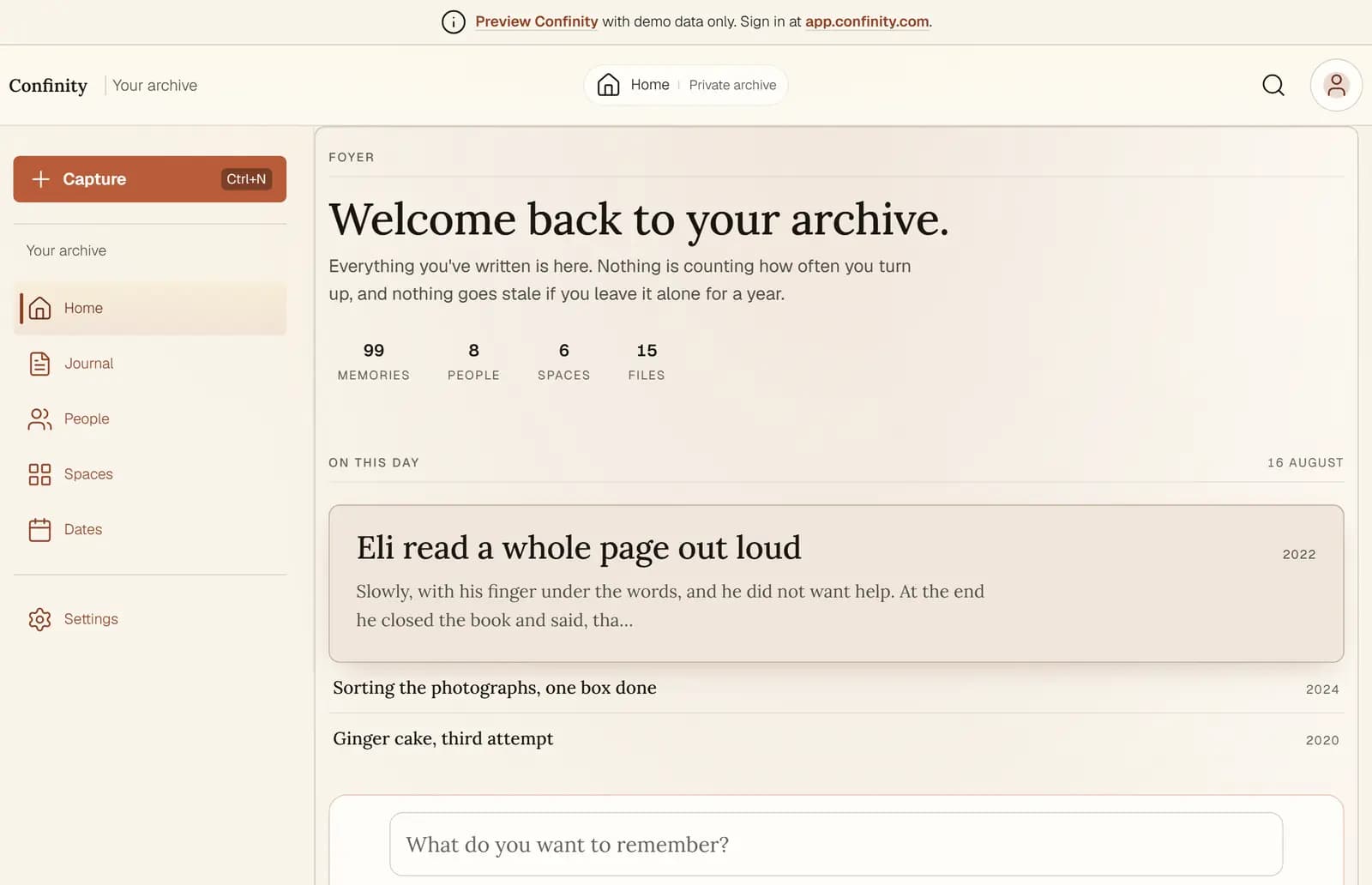
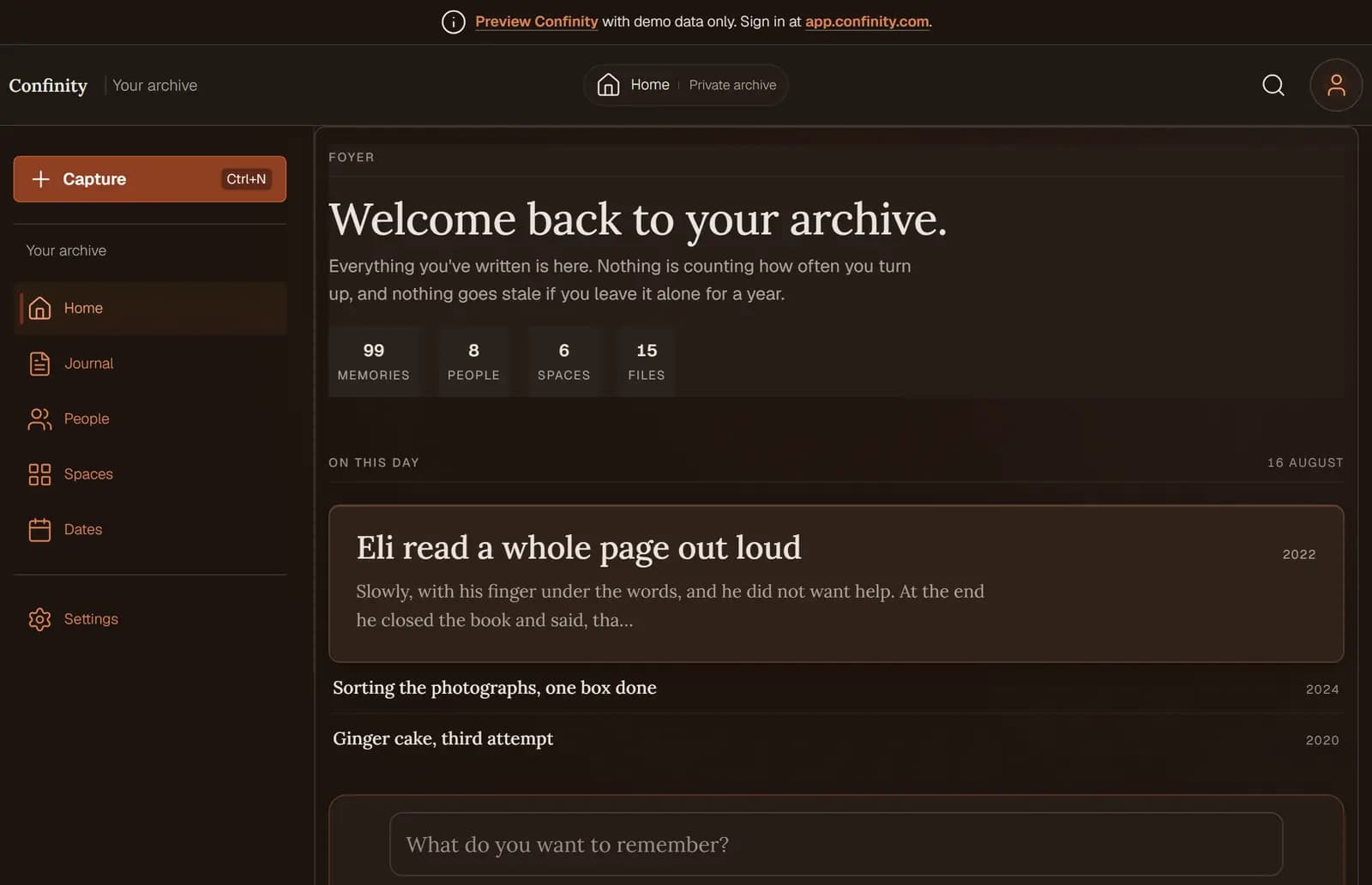
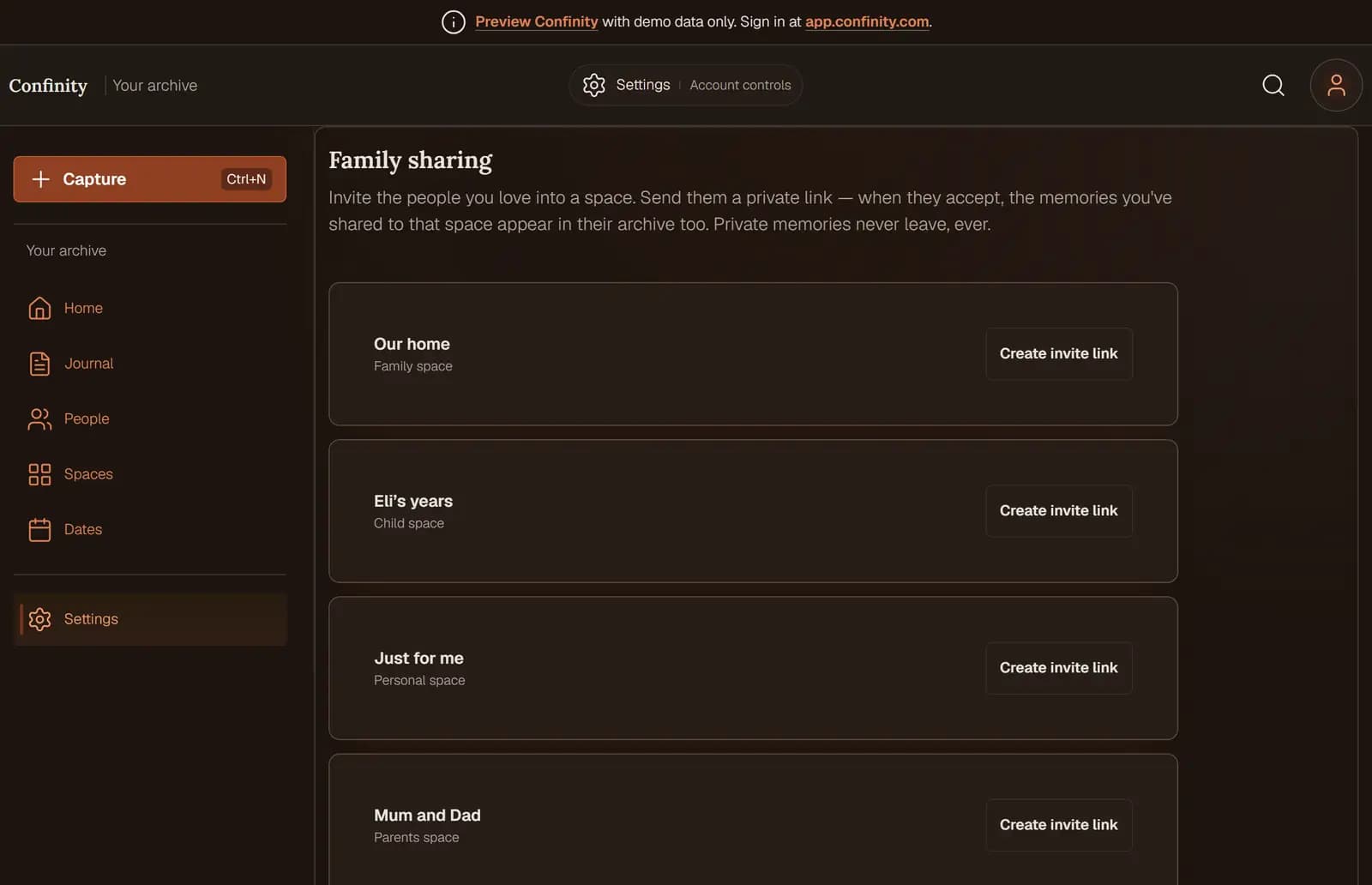
A private place for the memories your community can't afford to lose.
A private, branded space your community adds to — invite-only, never a public feed, and yours to export. Built for care homes, museums, universities, libraries, hospices, funeral homes, and faith communities.
Pilot onlyNo mass rolloutNamed buyerArchivist, director, or care leadNo institutional adsPrivacy first
Pilot cohort only — no mass rollout, no ads to bereaved families.
£99 / month1 location - up to 500 memorials - branded sub-domain - JSON-LD on every page - standard moderation - monthly transparency report.
Institution
Recommended
£299 / monthUp to 5,000 memorials - device-bound magic-link kiosk login - admin dashboard - white-label option - read-only API - priority moderation - cultural-advisor signoff on launch.SAML / OIDC SSO is on the Y2 roadmap; not in Y1.
30% off Starter + Institution for registered non-profits. 25% off Institution for accredited universities. 10% bundle discount on three-site minimum.
IIUse cases
By audience
Eight kinds of institution. One promise about privacy.
Care homes & senior living
A life story for every resident — and calmer, kinder days.Families and staff gather each resident's voice, photos, and the people who matter into a living life-story. Gentle reminiscence that lifts mood and connection, and helps carers know the person behind the chart.Life-story books · Reminiscence prompts · Family roomsPerson-centred care, family-built
Visitor stories that respect collection standards.Invite families to add memories about objects, exhibitions, and their community — without turning the archive into a social feed.Oral histories · Object stories · Consent receiptsModerated intake + exportable metadata
Alumni memory as a living endowment.A private, branded space for life stories, tributes to faculty, class-year memories, and thanking your donors.Alumni rooms · Campaign stories · Faculty tributesPrivate by default, institution-branded
Local history people can actually add to.Run memory drives, neighbourhood archives, and elder-interview programmes with clear privacy boundaries.Memory drives · Local history · Interview kitsStructured export for cataloguing
A memorial the family can take home.Create a private remembrance page during arrangement, then hand it to the family without locking them into a feed.Memorial pages · Service stories · Family invitesNo marketing to bereaved families
Legacy work that doesn't add to your care team's load.A private room where patients and families can keep a voice, a letter, or a last wish safe, with nothing extra for your care team to manage.Voice letters · Family rooms · Future messagesHIPAA-aware deployment path
Community memory that honours your traditions.Hold remembrance, rituals, elder stories, and community milestones with permission, context, and care.Ritual archives · Yahrzeit rooms · Elder storiesNo algorithm, no feed
Living archives members can actually contribute to.Run oral-history programmes, neighbourhood memory drives, and member legacies with exportable metadata for cataloguing.Oral histories · Member legacies · Exhibition storiesStructured export for cataloguing
You stay in control, and the archive still belongs to the families.
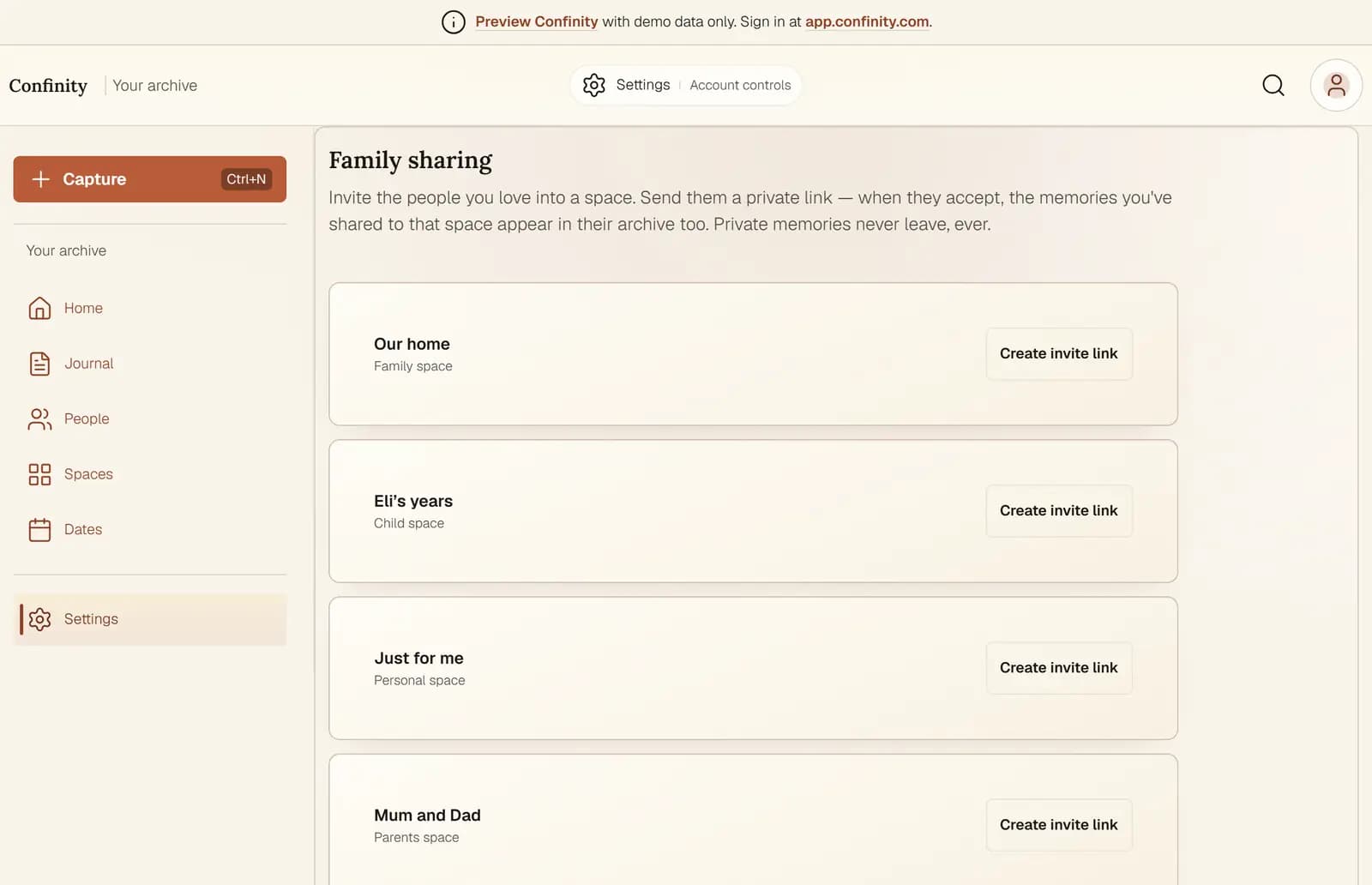
You keep control
Everything is invite-only and permission-based. There's no public feed, no comment section, and no algorithm deciding what gets seen. Your team chooses what is gathered and shared, so nothing goes out by accident.
No marketing to the families you serve, and no extra screens for care staff. One quiet space, one clear privacy promise, and the founders on hand during the pilot.
Everything a board or records committee will ask is already published: the Trust Centre's encryption posture and honesty ledger (printable as a dossier), the DPA we sign, and the Oxford knowledge partnerships that read our AI and legal posture in the open.