Heritage · University
Yale University: History and Overview
Founded in 1701 as the Collegiate School and renamed for Elihu Yale in 1718, Yale is a private Ivy League research university in New Haven, Connecticut.Written to last.
By Confinity Heritage Editorial · Updated 2026-07-31 · 8-minute readQuiet tools, kept out of the way.
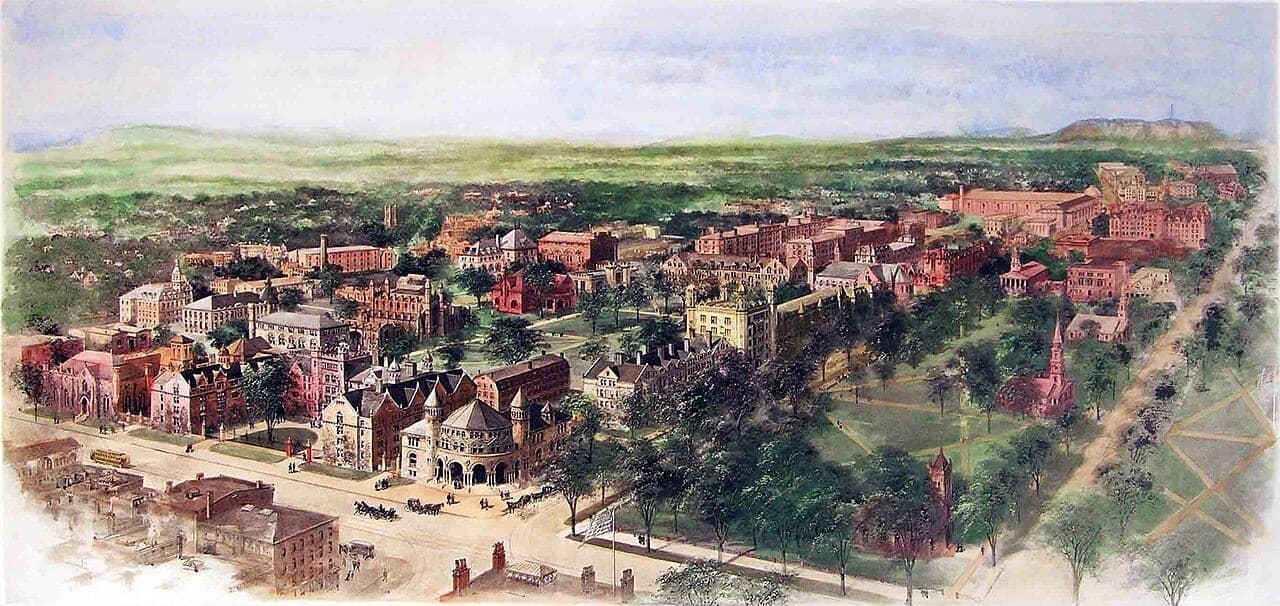
Yale University is a private research university in New Haven, Connecticut, and a member of the Ivy League. Founded in 1701, it is the third-oldest institution of higher education in the United States, after Harvard and the College of William & Mary (Britannica). Yale is best known for its undergraduate residential-college system, its network of graduate and professional schools, and an alumni roll that includes five US presidents (Wikipedia). Its motto, Lux et Veritas, is Latin for "Light and Truth."
Yale began in 1701, when a group of Congregationalist ministers, several of them Harvard graduates, obtained a charter from the Colony of Connecticut to found a Collegiate School for the training of clergy and public leaders (Britannica; Yale University Library). The school first met in Saybrook and Killingworth before relocating to New Haven in 1716, where it has remained ever since (Wikipedia).
In 1718 the college was renamed Yale College to honor a gift from Elihu Yale, a Welsh-born merchant who had grown wealthy through the East India Company's trade in the Indian port city of Madras (now Chennai). His donation, which included the proceeds from the sale of goods, several hundred books, and a portrait of King George I, gave the young school important early support (Britannica).
Over the following two centuries Yale added scientific and professional instruction. The School of Medicine was established in 1810, and the Law School was established in 1843 (Wikipedia). In 1861 Yale conferred the first PhD degrees granted in the United States, an early sign of its turn toward advanced research (Yale News). As its colleges and graduate faculties multiplied, the institution took the name Yale University in 1887 (Britannica).
The campus occupies much of central New Haven and is known for its Collegiate Gothic architecture, a good deal of it designed in the early twentieth century by the architect James Gamble Rogers (Yale Visitor Center). Harkness Tower, a stone spire completed in 1921, rises roughly 216 feet and holds a carillon of more than fifty bells that students play by hand (Wikipedia).
 The architect built it as a church on purpose, down to a circulation desk where the altar would be. Photograph by Christian David, CC BY-SA 4.0, via Wikimedia Commons.
Yale's undergraduate residential-college system was inaugurated in 1933 with funding from the philanthropist Edward S. Harkness, who admired the residential colleges of Oxford and Cambridge and wanted Yale undergraduates to live in comparable communities (Wikipedia). Each college has its own dining hall, courtyard, and common spaces, and every undergraduate is assigned to one. The system grew to fourteen colleges in 2017 with the opening of Benjamin Franklin College and Pauli Murray College, the latter the first Yale college named for a woman and for an African American (Yale News).
Libraries are central to the campus. Sterling Memorial Library, opened in 1931 and also designed by Rogers, serves as the main research library and contains millions of volumes (Wikipedia). Nearby, the Beinecke Rare Book & Manuscript Library, wrapped in translucent marble panels that filter daylight, holds a copy of the Gutenberg Bible that has been on public view since 1963 (Beinecke Library).
Yale's graduates include five US presidents: William Howard Taft, Gerald Ford, George H. W. Bush, Bill Clinton, and George W. Bush (Wikipedia). The university has also educated leaders in law, literature, science, and the performing arts. Yale Law School, established in 1843, is among the most selective and influential law schools in the country (Wikipedia). The drama school, founded in 1925 as the first program of its kind attached to a university, has trained many actors, playwrights, and designers; it was renamed the David Geffen School of Drama in 2021 following a large gift (Wikipedia). Alongside them, the Graduate School of Arts and Sciences and schools of medicine, management, art, music, nursing, public health, the environment, and divinity support research across nearly every field (Yale University).
Yale is one of the leading research universities in the world. It enrolls roughly 15,000 students in total, divided between Yale College and its graduate and professional schools, although published figures vary from year to year (Yale University). The university maintains one of the largest academic endowments of any institution, which helps fund need-based financial aid, research, and public collections. Its museums, including the Yale University Art Gallery and the Yale Center for British Art, are open to the public, and the university remains a major part of the civic and economic life of New Haven (Britannica).
Yale's campus sits in downtown New Haven, about two hours from New York City and roughly two and a half hours from Boston by train or car. New Haven's Union Station lies on the Northeast Corridor, with frequent rail service in both directions. The Yale Visitor Center offers guided and self-guided walking tours, and several of the university's cultural sites, including the Yale University Art Gallery and the Beinecke Library, are free to enter (Yale Visitor Center; Yale University).
The architect built it as a church on purpose, down to a circulation desk where the altar would be. Photograph by Christian David, CC BY-SA 4.0, via Wikimedia Commons.
Yale's undergraduate residential-college system was inaugurated in 1933 with funding from the philanthropist Edward S. Harkness, who admired the residential colleges of Oxford and Cambridge and wanted Yale undergraduates to live in comparable communities (Wikipedia). Each college has its own dining hall, courtyard, and common spaces, and every undergraduate is assigned to one. The system grew to fourteen colleges in 2017 with the opening of Benjamin Franklin College and Pauli Murray College, the latter the first Yale college named for a woman and for an African American (Yale News).
Libraries are central to the campus. Sterling Memorial Library, opened in 1931 and also designed by Rogers, serves as the main research library and contains millions of volumes (Wikipedia). Nearby, the Beinecke Rare Book & Manuscript Library, wrapped in translucent marble panels that filter daylight, holds a copy of the Gutenberg Bible that has been on public view since 1963 (Beinecke Library).
Yale's graduates include five US presidents: William Howard Taft, Gerald Ford, George H. W. Bush, Bill Clinton, and George W. Bush (Wikipedia). The university has also educated leaders in law, literature, science, and the performing arts. Yale Law School, established in 1843, is among the most selective and influential law schools in the country (Wikipedia). The drama school, founded in 1925 as the first program of its kind attached to a university, has trained many actors, playwrights, and designers; it was renamed the David Geffen School of Drama in 2021 following a large gift (Wikipedia). Alongside them, the Graduate School of Arts and Sciences and schools of medicine, management, art, music, nursing, public health, the environment, and divinity support research across nearly every field (Yale University).
Yale is one of the leading research universities in the world. It enrolls roughly 15,000 students in total, divided between Yale College and its graduate and professional schools, although published figures vary from year to year (Yale University). The university maintains one of the largest academic endowments of any institution, which helps fund need-based financial aid, research, and public collections. Its museums, including the Yale University Art Gallery and the Yale Center for British Art, are open to the public, and the university remains a major part of the civic and economic life of New Haven (Britannica).
Yale's campus sits in downtown New Haven, about two hours from New York City and roughly two and a half hours from Boston by train or car. New Haven's Union Station lies on the Northeast Corridor, with frequent rail service in both directions. The Yale Visitor Center offers guided and self-guided walking tours, and several of the university's cultural sites, including the Yale University Art Gallery and the Beinecke Library, are free to enter (Yale Visitor Center; Yale University).
History
Campus and colleges
Scholarship
Yale today
Visiting
References and resources
- Encyclopaedia Britannica: Yale University
- Yale University (official site)
- Wikipedia: Yale University
- Yale University Library: A Brief History of Yale
- Yale News: Happy Birthday to the Oldest American Graduate School
- Yale News: Newest residential colleges dedicated (2017)
- Beinecke Rare Book & Manuscript Library: Gutenberg Bible
- Yale Visitor Center: Architecture of Yale