Heritage · Museum
The Museum of Modern Art (MoMA): History and Visitor Guide
Founded in 1929, New York's Museum of Modern Art holds over 200,000 works, including Van Gogh's The Starry Night and Picasso's Les Demoiselles d'Avignon.Written to last.
By Confinity Heritage Editorial · Updated 2026-07-31 · 7-minute readQuiet tools, kept out of the way.
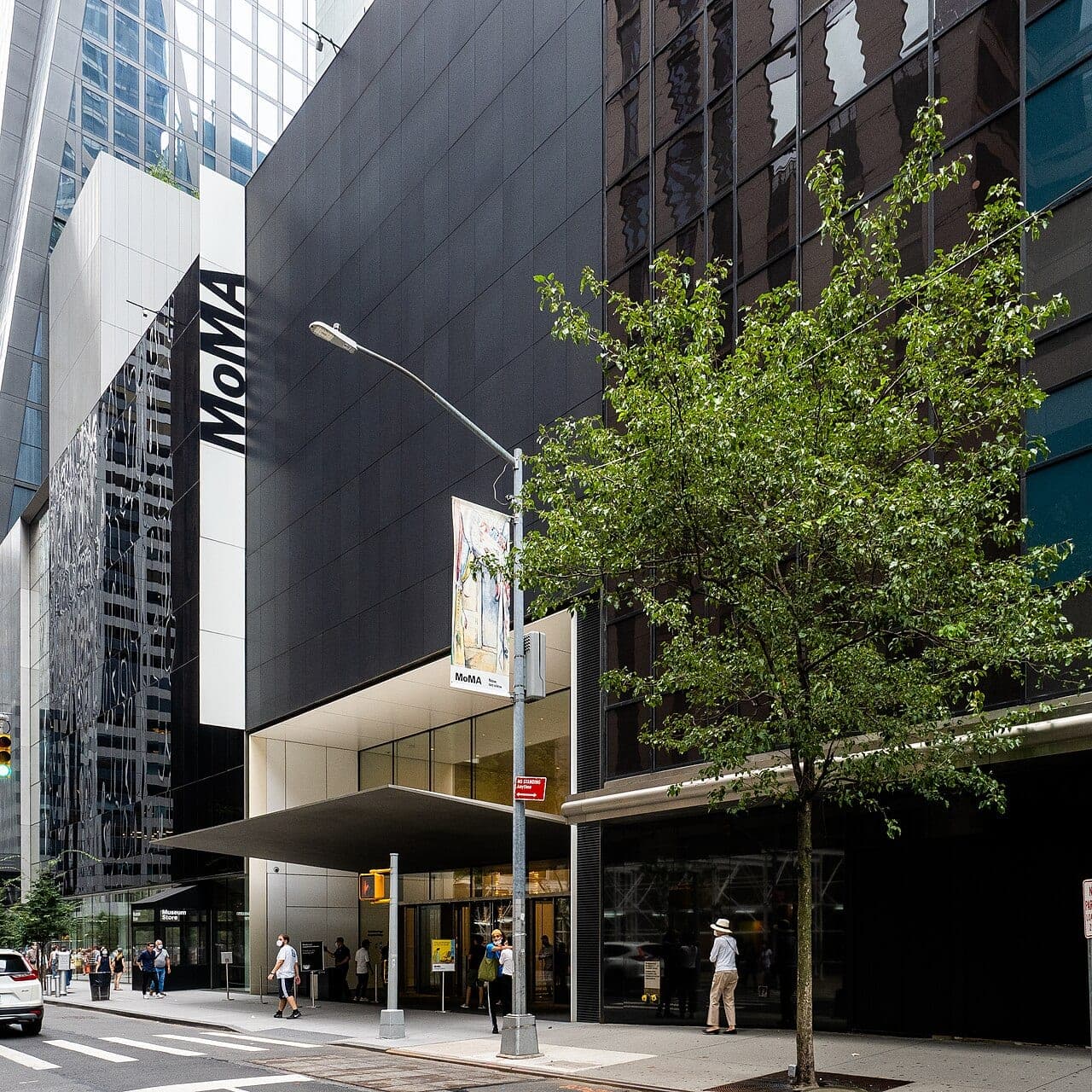
The Museum of Modern Art, known almost universally as MoMA, is one of the most influential museums of modern and contemporary art anywhere. It occupies a building at 11 West 53rd Street in Midtown Manhattan, between Fifth and Sixth Avenues, and holds a collection of more than 200,000 works spanning painting and sculpture, architecture and design, drawings and prints, photography, film, and media. Among its best-known holdings are Vincent van Gogh's "The Starry Night" and Pablo Picasso's "Les Demoiselles d'Avignon," two paintings that anchor a collection assembled to tell the story of art from the 1880s to the present. Founded in 1929, the museum drew close to 2.84 million visitors in 2023, placing it among the most-visited art museums in the world.
The museum was founded on November 7, 1929, nine days after the Wall Street crash, by three patrons: Abby Aldrich Rockefeller, Lillie P. Bliss, and Mary Quinn Sullivan. The three women wanted an institution devoted to the modern art that established American museums largely ignored. Its first home was a rented suite of rooms in the Heckscher Building on Fifth Avenue, where it opened with a loan exhibition of Cézanne, Gauguin, Seurat, and van Gogh.
The museum's intellectual shape came from its first director, Alfred H. Barr Jr., appointed in his late twenties. Barr argued that a museum of modern art should collect far more than paintings, and he built the institution around a set of departments covering painting and sculpture, drawings and prints, architecture and design, film, and photography. The Film Library, one of the first of its kind, was established in 1935 under Iris Barry, and a department of photography followed in 1940 with Beaumont Newhall as its first curator.
MoMA moved through a series of temporary quarters before settling on West 53rd Street. Its first purpose-built home, opened in 1939 and designed by Philip L. Goodwin and Edward Durell Stone, was an early example of the International Style in an American museum. The building has been rebuilt and enlarged several times since. A major expansion designed by the Japanese architect Yoshio Taniguchi opened in 2004 and nearly doubled the exhibition space. A further enlargement by the firm Diller Scofidio + Renfro, working with Gensler, opened in 2019, adding around 40,000 square feet of gallery space and reworking how the collection is shown.
The heart of the museum is its painting and sculpture. Van Gogh painted "The Starry Night" in June 1889 from his room at the asylum in Saint-Rémy-de-Provence; MoMA acquired it in 1941, and it has become one of the most recognized paintings in the world. Picasso's "Les Demoiselles d'Avignon" of 1907, a work that helped open the way to Cubism, entered the collection in 1939. Around them hang defining works by Cézanne, Matisse, Mondrian, Kahlo, Pollock, Warhol, and many others, arranged to trace the development of modern art across more than a century.
 The sculpture garden, laid out by Philip Johnson in 1953 and rebuilt to the same design twice since. It is the only part of the museum most New Yorkers can describe from memory. Photograph by Velvet, CC BY-SA 3.0, via Wikimedia Commons.
The museum's reach beyond painting sets it apart. Its architecture and design collection, built from a department founded in the early 1930s, treats design objects as seriously as fine art and holds everything from Mies van der Rohe furniture to a Bell 47D1 helicopter. The Department of Film preserves tens of thousands of films and screens them in the museum's own theaters. The photography collection, one of the deepest in any art museum, follows the medium from the nineteenth century to the present.
More than most museums, MoMA has shaped the way modern art is understood. Barr's exhibitions and diagrams, including his 1936 chart of the development of abstract art, helped define a canon that textbooks and other museums followed for decades. That influence has also drawn criticism. Scholars have argued that the museum's early narrative centered narrowly on European and American men and gave too little room to women artists, artists of color, and art made outside the West. The 2019 rehang was partly a response, mixing media and periods and bringing long-stored works into view. Debates over what belongs in the story of modern art, and who tells it, continue to play out in the museum's galleries.
MoMA is at 11 West 53rd Street, between Fifth and Sixth Avenues in Midtown Manhattan, a short walk from the Fifth Avenue and 53rd Street subway station on the E and M lines and close to Rockefeller Center. The museum is open daily, with timed tickets recommended and free admission offered on the first Friday evening of each month. The building is wheelchair accessible and offers assistive services, coat check, restaurants, and a well-known design store. Its affiliate MoMA PS1, in Long Island City, Queens, shows contemporary and experimental work on a separate site. Because the collection is large, many visitors focus on a few floors rather than the whole building in one day.
The sculpture garden, laid out by Philip Johnson in 1953 and rebuilt to the same design twice since. It is the only part of the museum most New Yorkers can describe from memory. Photograph by Velvet, CC BY-SA 3.0, via Wikimedia Commons.
The museum's reach beyond painting sets it apart. Its architecture and design collection, built from a department founded in the early 1930s, treats design objects as seriously as fine art and holds everything from Mies van der Rohe furniture to a Bell 47D1 helicopter. The Department of Film preserves tens of thousands of films and screens them in the museum's own theaters. The photography collection, one of the deepest in any art museum, follows the medium from the nineteenth century to the present.
More than most museums, MoMA has shaped the way modern art is understood. Barr's exhibitions and diagrams, including his 1936 chart of the development of abstract art, helped define a canon that textbooks and other museums followed for decades. That influence has also drawn criticism. Scholars have argued that the museum's early narrative centered narrowly on European and American men and gave too little room to women artists, artists of color, and art made outside the West. The 2019 rehang was partly a response, mixing media and periods and bringing long-stored works into view. Debates over what belongs in the story of modern art, and who tells it, continue to play out in the museum's galleries.
MoMA is at 11 West 53rd Street, between Fifth and Sixth Avenues in Midtown Manhattan, a short walk from the Fifth Avenue and 53rd Street subway station on the E and M lines and close to Rockefeller Center. The museum is open daily, with timed tickets recommended and free admission offered on the first Friday evening of each month. The building is wheelchair accessible and offers assistive services, coat check, restaurants, and a well-known design store. Its affiliate MoMA PS1, in Long Island City, Queens, shows contemporary and experimental work on a separate site. Because the collection is large, many visitors focus on a few floors rather than the whole building in one day.
History
The collection
Cultural role
Visiting
References and resources
- Museum of Modern Art at Encyclopaedia Britannica, on the founding, directors, and growth of the museum
- Museum of Modern Art official site, with visitor information and collection access
- Museum of Modern Art on Wikipedia, with departmental detail, building history, and citations
- Vincent van Gogh, The Starry Night, the museum's collection record for the painting
- Visit MoMA, current hours, admission, and directions