Heritage · University
Harvard University: Programs, Campus & Admissions Info
Harvard University is a leading institution offering top academic programs, research, and student life. Explore courses, campus details, and admissions info.Written to last.
By Confinity Heritage Editorial · Updated 2026-07-20 · 8-minute readQuiet tools, kept out of the way.
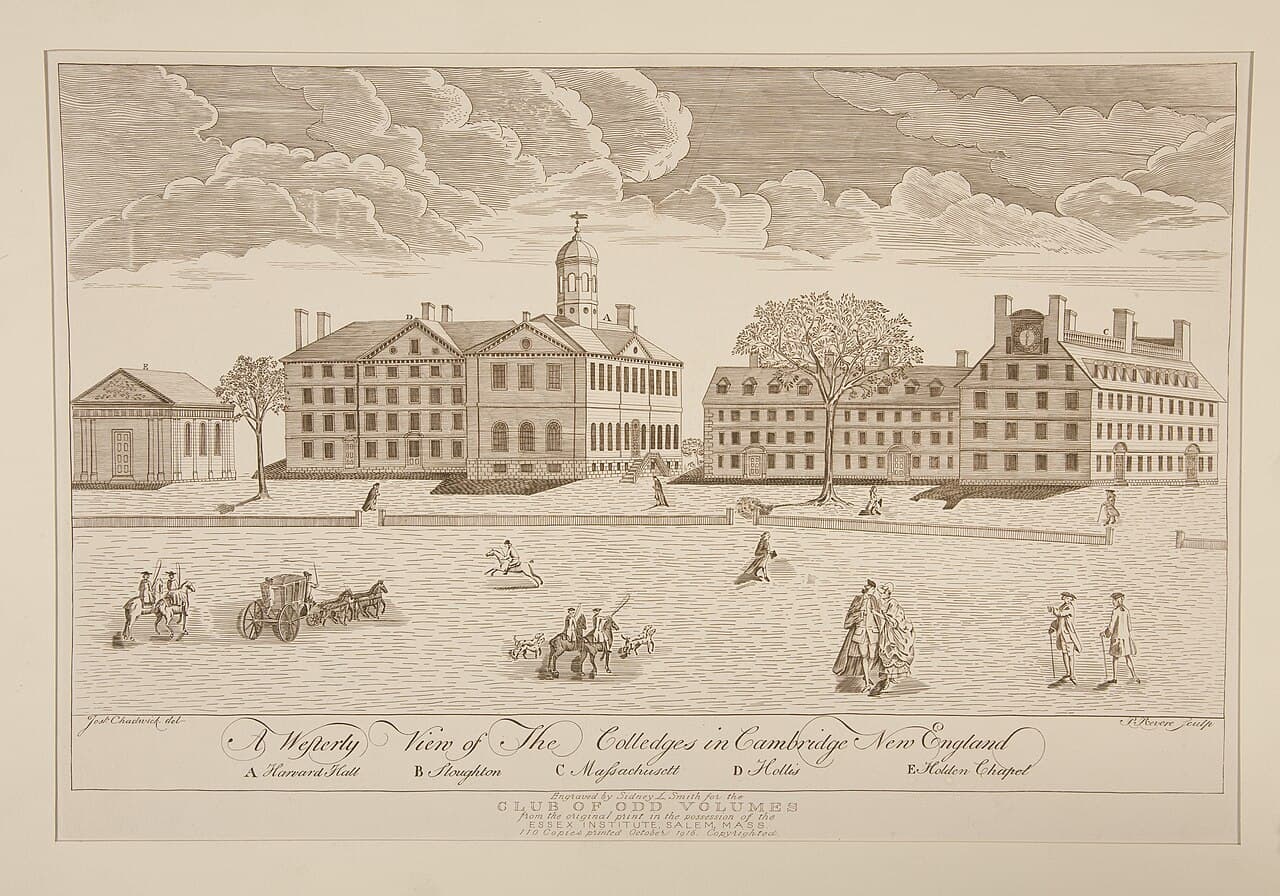
Harvard University is a private research university in Cambridge, Massachusetts, and the oldest institution of higher learning in the United States. It was chartered in 1636 by vote of the Great and General Court of the Massachusetts Bay Colony, 140 years before the country it now helps define declared its independence. What began as a single house and a class meant to supply the colony with educated ministers has become a university of roughly 21,000 students, a library system holding more than 20 million volumes, and the largest academic endowment in the world.
The name has come to stand for a certain idea of American ambition, but Harvard's story is older and stranger than any brand. It runs through a colonial clergyman's deathbed gift, a fire that consumed almost the entire founding library, four centuries of graduates who wrote laws and split atoms, and a statue in the Yard that lies three times over. This article traces how the institution was founded, how it grew into a modern research university, and what it now keeps for the record.
Harvard was established on October 28, 1636, when the Massachusetts legislature voted to set aside £400 for "a schoale or colledge" at what was then called Newtowne, soon renamed Cambridge after the English university where many of the colony's leaders had studied. For its first years it was known simply as New College. It had no permanent building and no charter of its own, and its single instructor left in scandal after a brief tenure.
Its identity changed with a bequest. John Harvard (1607-1638), a young Puritan minister who had emigrated from England, died of tuberculosis in 1638. He left the fledgling college roughly half his estate, about £779, and his personal library of some 400 volumes. In gratitude, on March 13, 1639, the General Court ordered that the college "shalbee called Harvard Colledge." He was not the founder, and he did not endow the institution single-handedly, but his gift arrived at the moment the college most needed it, and his name stuck.
The first class graduated at Harvard's first commencement in 1642, nine young men trained in Latin, Greek, Hebrew, logic, and theology. In 1650 the colonial legislature granted a charter creating the President and Fellows of Harvard College, the governing body still known as the Harvard Corporation. That charter makes it the oldest corporation in the Western Hemisphere. The university's motto, Veritas ("truth"), was first recorded by the Corporation in 1643, though it fell out of use for two centuries before being restored on the modern seal.
For its first century and a half Harvard remained a small college with a religious purpose, though it slowly widened. In 1708 John Leverett became its first president who was not a clergyman, a signal that the college was drifting from strict Puritan control toward a broader learning. When Massachusetts drafted its state constitution in 1780, largely the work of the Harvard graduate John Adams, the document formally referred to the school as "the University at Cambridge," recognizing in law a status the college had been growing into for decades.
The Harvard that the world now recognizes was largely built in the nineteenth and early twentieth centuries, and much of it under one man. Charles William Eliot, a chemist, served as president from 1869 to 1909, one of the longest tenures in American higher education. He dismantled the rigid required curriculum in favor of the elective system, letting undergraduates choose their courses and pursue specialized study. He raised admission and graduation standards, strengthened the medical and law schools, and pulled the professional faculties into a single university structure.
Under Eliot and his successors, Harvard adopted the model of the German research university, where advanced study and original scholarship sat at the center of the institution rather than at its margins. The Graduate School of Arts and Sciences was organized in 1872 to award the doctorate. Professional schools expanded and new ones were founded: the Business School opened in 1908 and pioneered the case method of instruction, and schools of public health, education, design, and government followed through the twentieth century. Today the university is organized into Harvard College, the undergraduate faculty of arts and sciences, and ten graduate and professional schools.
That research turn produced discoveries that reached far beyond the campus. In 1846, the surgeon John Collins Warren performed the first public demonstration of ether anesthesia at Massachusetts General Hospital, a Harvard teaching hospital, changing the practice of surgery worldwide. A little over a century later, in 1954, the Harvard surgeon Joseph Murray carried out the first successful human kidney transplant, work that earned him a Nobel Prize in 1990. Harvard's teaching hospitals and laboratories remain among the most productive centers of biomedical research anywhere, and the university consistently ranks among the largest recipients of federal research funding in the country.
Access widened slowly and unevenly. Women had been taught in a separate program from 1879, the "Harvard Annex," which was chartered as Radcliffe College in 1894. For generations Radcliffe students were taught by Harvard faculty but held their own institution. Harvard and Radcliffe merged admissions and instruction over the second half of the twentieth century, and the two formally combined in 1999, with Radcliffe reconstituted as the Radcliffe Institute for Advanced Study. Harvard was also a founding member of the Ivy League, the athletic conference of eight northeastern universities formalized in 1954, a label that came to describe a shared reputation as much as a sports schedule.
By the twenty-first century, Harvard had become one of the wealthiest and most heavily funded universities anywhere. Its endowment stood at about $53.2 billion at the close of fiscal year 2024, and it remains the largest academic endowment in the world, exceeding the national wealth of many countries. That wealth funds financial aid that has made the university free for many admitted students from lower-income families, along with the laboratories, museums, and library system that anchor its research.
Few universities have supplied as much of a nation's leadership. Eight U.S. presidents attended Harvard: John Adams and John Quincy Adams, Rutherford B. Hayes and Theodore Roosevelt, Franklin D. Roosevelt, John F. Kennedy, George W. Bush, and Barack Obama, the last two through the Business School and the Law School respectively. That is more than any other single institution. Harvard graduates also account for scores of foreign heads of state, dozens of Supreme Court justices, and a long roster of members of Congress.
The scholarly record is comparably deep. More than 160 Nobel laureates have been affiliated with Harvard as students or faculty, beginning with the chemist Theodore William Richards in 1914. The faculty and alumni include figures who reshaped whole fields: the philosopher and psychologist William James, the biologist Ernst Mayr, the paleontologist Stephen Jay Gould, and the economist John Kenneth Galbraith among them.
The university's history also carries the weight of who was long kept out, and who broke through. W. E. B. Du Bois, the sociologist, historian, and civil rights leader, became the first African American to earn a doctorate from Harvard in 1895; his scholarship on race and American democracy remains foundational. Helen Keller studied through Radcliffe. In more recent generations the alumni body has extended from Supreme Court justices and Federal Reserve chairs to writers, activists, and the founders of some of the largest companies of the digital age, several of whom left before graduating. The point is less any single name than the pattern: for four centuries, a striking share of the people who shaped American public life passed through this one campus.
At the center of the university, in every sense, is the Harvard Library, the largest academic library in the world. The system spans more than 25 libraries, holds over 20 million volumes along with tens of millions of manuscripts, images, and digital items, and collects material in more than 450 languages. It traces its origin directly to John Harvard's 1638 gift of books, which makes it the oldest library in the United States as well as the largest of its kind.
 Widener is a memorial. Harry Elkins Widener died on the Titanic at twenty-seven, and his mother gave the library on condition that the building never be altered. Photograph by Chris Rycroft, CC BY 2.0, via Wikimedia Commons.
Its flagship is Widener Library, the great columned building that faces Harvard Yard. It opened in 1915 as a memorial to Harry Elkins Widener, a book collector and member of the Class of 1907 who drowned in the sinking of the Titanic in 1912. His mother, Eleanor Elkins Widener, who survived the disaster, funded the building in his memory. Widener holds about 3.5 million books on site, arranged across ten levels and some 57 miles of shelving, one of the deepest research collections in the humanities and social sciences ever assembled under a single roof. Rare treasures are kept nearby at Houghton Library, opened in 1942 as the first freestanding special-collections library at an American university.
The campus that surrounds the library grew outward from Harvard Yard, the tree-shaded quadrangle at the historic core, where first-year undergraduates still live in dormitories a short walk from where the college began. Massachusetts Hall, completed in 1720, is the oldest building still standing on campus. Beyond the Yard, the university now occupies three main areas: Cambridge, which holds the college and the faculty of arts and sciences; Allston, across the Charles River, home to the Business School, the athletic complex, and a growing science and engineering campus; and the Longwood Medical Area in Boston, where the medical, dental, and public health schools sit among a cluster of teaching hospitals.
Harvard occupies an unusual place in the American imagination. Its name is used as shorthand for the very top of a hierarchy, invoked in films, novels, and everyday speech as a symbol of achievement, exclusivity, and sometimes privilege. That symbolism has made the university a recurring subject of national debate, over who gets admitted, over its wealth, and over what an institution of such reach owes the public.
Its traditions are woven into the calendar of Cambridge and beyond. The Harvard-Yale football game, known simply as The Game and first played in 1875, is one of the oldest rivalries in American college sport. Commencement each spring draws graduates back from across the world. The John Harvard Statue in the Yard, sculpted by Daniel Chester French in 1884, is one of the most photographed monuments in the country and is affectionately called the "Statue of Three Lies": its inscription names John Harvard as founder in 1638, yet he did not found the college, it was established in 1636, and because no likeness of him survives, the face is that of an anonymous student model. The statue is a small monument to how legend and record braid together at an old institution.
For a company built around keeping memory, Harvard is worth studying as a keeper in its own right. Its libraries, archives, and museums hold a continuous record of American intellectual life reaching back to the colonial period, along with collections drawn from across the world.
The most telling object is also the smallest. In January 1764, a fire swept through Harvard Hall and destroyed nearly the entire founding library, including almost all of John Harvard's original bequest. Only a single volume from that first gift survived, and it survived by accident: a student named Ephraim Briggs had checked it out, and it was overdue on the night of the fire. The book, John Downame's The Christian Warfare Against the Devil, World, and Flesh (1634), is now held at Houghton Library, the one physical thread that connects the modern university to the man whose name it bears.
Around that relic sit collections of extraordinary range. The Harvard University Archives, established in the nineteenth century, preserve the institution's own records, from the 1650 charter to the papers of its presidents. Houghton holds a Gutenberg Bible, displayed near the Widener Memorial Room, alongside Shakespeare folios, medieval manuscripts, and the working papers of writers and scientists. The Harvard Art Museums, the Museum of Comparative Zoology, and the Peabody Museum of Archaeology and Ethnology keep millions of objects and specimens. Taken together, these holdings are a working memory of scholarship: not a monument sealed off from use, but an archive that students and researchers open every day.
Harvard Yard is open to the public, and self-guided and student-led tours introduce visitors to the campus and its history. Harvard Square, the busy district of bookstores, cafes, and shops that borders the Yard, has been a gathering place for students and residents for generations and remains one of the liveliest corners of greater Boston. The Harvard Art Museums and the university's natural history museum are open to visitors, the latter best known for its glass models of plants.
As of the fall of 2024 the university enrolled about 21,200 students, roughly 7,000 undergraduates in Harvard College and around 14,000 in its graduate and professional schools, taught by a faculty spread across ten schools and dozens of research centers. Admission to the college remains among the most competitive in the country, with an acceptance rate in the low single digits, and the university continues to expand need-based financial aid so that cost is not the barrier that reputation might suggest. Nearly four centuries after nine graduates crossed a colonial yard, Harvard remains a working university and a living archive, still adding to a record it has kept since 1636.
Widener is a memorial. Harry Elkins Widener died on the Titanic at twenty-seven, and his mother gave the library on condition that the building never be altered. Photograph by Chris Rycroft, CC BY 2.0, via Wikimedia Commons.
Its flagship is Widener Library, the great columned building that faces Harvard Yard. It opened in 1915 as a memorial to Harry Elkins Widener, a book collector and member of the Class of 1907 who drowned in the sinking of the Titanic in 1912. His mother, Eleanor Elkins Widener, who survived the disaster, funded the building in his memory. Widener holds about 3.5 million books on site, arranged across ten levels and some 57 miles of shelving, one of the deepest research collections in the humanities and social sciences ever assembled under a single roof. Rare treasures are kept nearby at Houghton Library, opened in 1942 as the first freestanding special-collections library at an American university.
The campus that surrounds the library grew outward from Harvard Yard, the tree-shaded quadrangle at the historic core, where first-year undergraduates still live in dormitories a short walk from where the college began. Massachusetts Hall, completed in 1720, is the oldest building still standing on campus. Beyond the Yard, the university now occupies three main areas: Cambridge, which holds the college and the faculty of arts and sciences; Allston, across the Charles River, home to the Business School, the athletic complex, and a growing science and engineering campus; and the Longwood Medical Area in Boston, where the medical, dental, and public health schools sit among a cluster of teaching hospitals.
Harvard occupies an unusual place in the American imagination. Its name is used as shorthand for the very top of a hierarchy, invoked in films, novels, and everyday speech as a symbol of achievement, exclusivity, and sometimes privilege. That symbolism has made the university a recurring subject of national debate, over who gets admitted, over its wealth, and over what an institution of such reach owes the public.
Its traditions are woven into the calendar of Cambridge and beyond. The Harvard-Yale football game, known simply as The Game and first played in 1875, is one of the oldest rivalries in American college sport. Commencement each spring draws graduates back from across the world. The John Harvard Statue in the Yard, sculpted by Daniel Chester French in 1884, is one of the most photographed monuments in the country and is affectionately called the "Statue of Three Lies": its inscription names John Harvard as founder in 1638, yet he did not found the college, it was established in 1636, and because no likeness of him survives, the face is that of an anonymous student model. The statue is a small monument to how legend and record braid together at an old institution.
For a company built around keeping memory, Harvard is worth studying as a keeper in its own right. Its libraries, archives, and museums hold a continuous record of American intellectual life reaching back to the colonial period, along with collections drawn from across the world.
The most telling object is also the smallest. In January 1764, a fire swept through Harvard Hall and destroyed nearly the entire founding library, including almost all of John Harvard's original bequest. Only a single volume from that first gift survived, and it survived by accident: a student named Ephraim Briggs had checked it out, and it was overdue on the night of the fire. The book, John Downame's The Christian Warfare Against the Devil, World, and Flesh (1634), is now held at Houghton Library, the one physical thread that connects the modern university to the man whose name it bears.
Around that relic sit collections of extraordinary range. The Harvard University Archives, established in the nineteenth century, preserve the institution's own records, from the 1650 charter to the papers of its presidents. Houghton holds a Gutenberg Bible, displayed near the Widener Memorial Room, alongside Shakespeare folios, medieval manuscripts, and the working papers of writers and scientists. The Harvard Art Museums, the Museum of Comparative Zoology, and the Peabody Museum of Archaeology and Ethnology keep millions of objects and specimens. Taken together, these holdings are a working memory of scholarship: not a monument sealed off from use, but an archive that students and researchers open every day.
Harvard Yard is open to the public, and self-guided and student-led tours introduce visitors to the campus and its history. Harvard Square, the busy district of bookstores, cafes, and shops that borders the Yard, has been a gathering place for students and residents for generations and remains one of the liveliest corners of greater Boston. The Harvard Art Museums and the university's natural history museum are open to visitors, the latter best known for its glass models of plants.
As of the fall of 2024 the university enrolled about 21,200 students, roughly 7,000 undergraduates in Harvard College and around 14,000 in its graduate and professional schools, taught by a faculty spread across ten schools and dozens of research centers. Admission to the college remains among the most competitive in the country, with an acceptance rate in the low single digits, and the university continues to expand need-based financial aid so that cost is not the barrier that reputation might suggest. Nearly four centuries after nine graduates crossed a colonial yard, Harvard remains a working university and a living archive, still adding to a record it has kept since 1636.
History and founding
Growth into a research university
Notable scholars and alumni
The libraries and campus
Cultural significance
What it preserves
Visiting and today
References and resources
- Harvard University: official website - history, facts, and current figures from the university itself.
- Encyclopaedia Britannica: Harvard University - concise, edited overview of the founding and development.
- Wikipedia: Harvard University - detailed, cited survey of the institution and its enrollment.
- History of Harvard University (Wikipedia) - the founding, the 1650 charter, and early years in depth.
- Harvard Library: About - the scale and scope of the largest academic library in the world.
- Widener Library (Harvard Library) - the flagship library and its Titanic-linked founding.
- Harvard University: Nobel Laureates - the university's official list of affiliated laureates.
- Harvard Endowment (The Harvard Crimson) - reporting on the size and returns of the endowment.
- Tale of John Harvard's surviving book (Harvard Gazette) - the 1764 fire and the one book that survived.