Heritage · Country
Venezuela Culture and Heritage
Angel Falls plunging nearly a kilometre from a flat-topped tepui, Bolivar's sarcophagus in the National Pantheon, and pilgrims climbing the sacred mountain of Maria Lionza each October. A guide to Venezuela's heritage, from the joropo of the cattle plains to the customs by which its families keep faith with their dead.Written to last.
By Confinity Heritage Editorial · Updated 2026-07-31 · 8-minute readQuiet tools, kept out of the way.
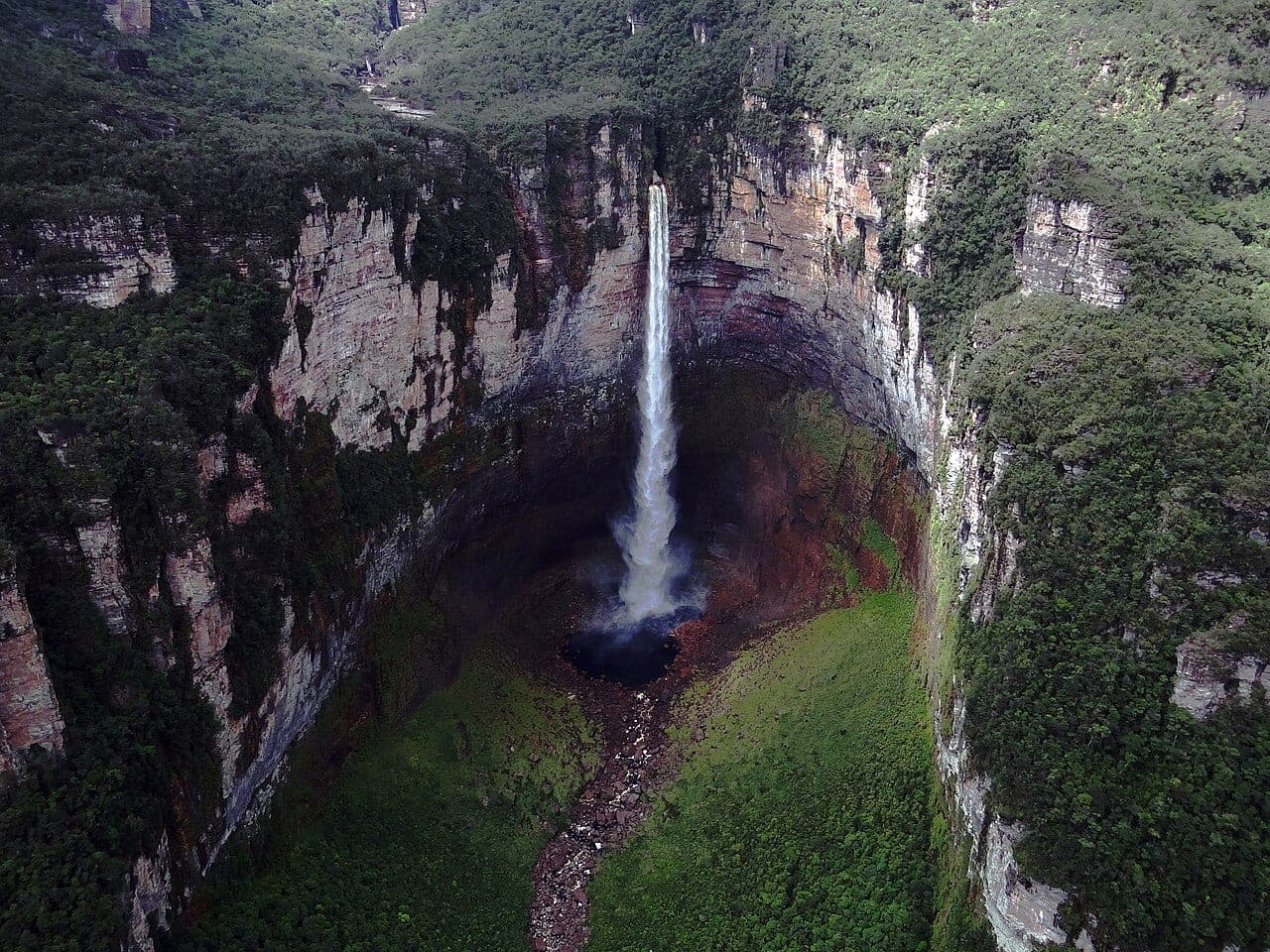
Venezuela wears its heights and its heroes in the same breath. From the flat summit of Auyán-tepui, one of the sandstone mesas the Pemón people count among the homes of the gods, the water of Angel Falls drops 979 metres, the tallest waterfall on earth, so far that much of it dissolves into mist before it reaches the forest floor. Hundreds of kilometres to the north, in the old core of Caracas, the bronze sarcophagus of Simón Bolívar rests beneath a painted ceiling in the National Pantheon, at the centre of a republic that has arranged much of its public life around the memory of a single man.
Between those poles, the natural wonder in the south and the founding father in the capital, lies a heritage built from Indigenous, Spanish and African inheritances: the harp and cuatro music of the cattle plains, the earthen lanes of colonial Coro, the pilgrims who climb a sacred mountain each October to a queen of the spirits, and the quiet November ritual of tending a family grave. Venezuela has passed through a severe economic and political crisis over the past decade, and this profile records that plainly in one place; its subject, though, is the older inheritance beneath the headlines, and the ways Venezuelans keep it, and keep faith with their dead.
Venezuela occupies the northern shoulder of South America, some 916,000 square kilometres facing the Caribbean, with Colombia to the west, Brazil to the south and Guyana to the east. The Andes rise in the state of Mérida to Pico Bolívar at 4,978 metres, the country's highest point. In the north-west lies Lake Maracaibo, the largest body of inland water in South America and the basin that made the nation's oil, its shoreline giving the Catatumbo river mouth some of the most frequent lightning on earth. Across the centre spread the Llanos, the flood plains of the Orinoco, and in the south-east the Guayana Highlands lift the tepuis, the flat-topped mountains of the Gran Sabana.
Estimates of the population vary, complicated by large emigration since the mid-2010s, and commonly fall between about 28 and 32 million. Most Venezuelans descend from a mingling of Indigenous, Spanish and African ancestry: the 2011 census recorded just over half as of mixed background, about 44 per cent as white and around 4 per cent as Black, alongside recognised Indigenous peoples such as the Wayúu, the Warao, the Pemón and the Yanomami. A federal republic of 23 states, Venezuela holds three UNESCO World Heritage sites and, since 2025, its national dance on the list of intangible heritage.
Caracas. Founded in 1567 as Santiago de León de Caracas and set in a valley below the green wall of the Ávila (Waraira Repano), the capital is the birthplace of Simón Bolívar, whose family home survives as a museum near the plaza that bears his name. The National Pantheon holds his remains, and the modernist campus of the Central University, the Ciudad Universitaria de Caracas, carries a UNESCO inscription of its own.
Maracaibo. The second city and the capital of oil, spread along the western shore of its lake and linked to the far bank by one of the longest bridges in Latin America. Its people, the maracuchos, keep a distinctive speech and, at Christmas, the drum-driven song called gaita.
Coro. Founded in 1527 below the Paraguaná peninsula, Coro was the first capital of the province and the first bishopric on the American mainland. Its earthen streets of adobe and bahareque, blending Spanish, Indigenous and Dutch traditions, were inscribed by UNESCO in 1993 and placed on the List of World Heritage in Danger in 2005.
Mérida. The Andean university city sits below the high peaks and is reached by the Mukumbarí cable car, the highest and longest in the world, which climbs toward the shoulder of Pico Bolívar, base for the country's mountaineering.
Ciudad Bolívar. Once called Angostura, the old river port narrows the Orinoco to a single crossing. Here in 1819 Bolívar convened the Congress of Angostura that framed the union of Gran Colombia, and from the town the road runs south to Canaima and Angel Falls.
Long before European sails appeared, Carib, Arawak and Chibcha-speaking peoples farmed, fished and traded across the land; the Warao of the Orinoco delta kept one of the continent's oldest continuous ways of life among the water channels, and communities on Lake Maracaibo raised their houses on stilts above the shallows. Christopher Columbus reached the Paria peninsula in 1498, the only part of the South American mainland he is known to have touched, and the next year Alonso de Ojeda, with Amerigo Vespucci aboard, coasted the western gulf. Coro was founded in 1527, and for a turbulent interval the Spanish crown leased the province to the Welser bankers of Augsburg. Three centuries of colonial rule followed, built on cacao worked by enslaved Africans, first under the Viceroyalty of New Granada and, from 1777, the Captaincy General of Venezuela.
Independence began early and cost dearly. A junta deposed the colonial governor in Caracas on 19 April 1810, and on 5 July 1811 Venezuela issued the first formal declaration of independence in Spanish America. Out of the long and ruinous war rose Simón Bolívar, born in Caracas in 1783, whose victory at the Battle of Carabobo in June 1821 secured the country and whose campaigns went on to free the future Colombia, Panama, Ecuador, Peru and Bolivia. Known ever after as El Libertador, the Liberator, he dreamed of a united Spanish America in Gran Colombia, watched it fracture, and died at Santa Marta in 1830, the year Venezuela became a separate state.
The nineteenth century passed in civil wars and caudillo rule, and the twentieth was reshaped by oil. The Barroso II well, which blew out near Lake Maracaibo in 1922, turned an agrarian country into a great petroleum exporter; Venezuela was a founding member of OPEC in 1960 and nationalised its industry in 1976 under the state company PDVSA, atop what are counted as the largest proven oil reserves on earth. Since around 2014 the country has undergone a severe economic and political crisis, marked by hyperinflation and shortages, during which more than seven million people have emigrated, one of the largest displacements in the modern history of the Americas.
The country's name is a small joke that lasted five centuries. When Ojeda and Vespucci saw Indigenous dwellings raised on posts above Lake Maracaibo in 1499, the stilt village is said to have reminded the Italian navigator of Venice, and the coast was recorded as Veneziola, little Venice, which Spanish smoothed into Venezuela. An alternative account, from the chronicler Martín Fernández de Enciso, holds that the name came instead from a local Indigenous word; the little-Venice story, though, is the one that endured.
Venezuelan Spanish belongs to the Caribbean family: quick and musical, softening or dropping the s at the ends of syllables and fond of diminutives and of words such as chévere, an everyday term for something fine that traces back to an African language. The Maracaibo region keeps its own voseo, using vos where most of the country uses tú. Beneath the Spanish runs an older plurality of tongues: the 1999 constitution recognised Indigenous languages as official for the peoples who speak them, and around forty survive, from Wayuunaiki, with hundreds of thousands of speakers, to Warao, Pemón and Yanomami. Many are endangered, and their words remain on the map in names such as Maracaibo, Guárico and Caroní.
The sound of Venezuela is the joropo, the harp-driven music and dance of the Llanos that became the national genre in 1882 and was inscribed on UNESCO's list of intangible heritage in 2025. Around the diatonic harp and the plucked bandola turns the cuatro, the small four-stringed guitar that is the country's signature instrument, its rhythm shaken along by maracas. The songs come out of the cattle plains, where the llanero, the plainsman on horseback, works the herds; the 1914 melody Alma Llanera, the soul of the plains, is sung so widely that Venezuelans treat it as a second anthem.
 The Pemon call the falls Kerepakupai Meru, and the tepuis they fall from are among the oldest exposed rock formations on earth. Photograph by Diego Delso, CC BY 3.0, via Wikimedia Commons.
The table is built on maize. The arepa, a round griddled cornbread split and filled, is eaten at any hour and by every class, and the Christmas hallaca, a parcel of seasoned dough and stewed meat wrapped in plantain leaf, gathers whole families to assemble it. Pabellón criollo, shredded beef with black beans, rice and fried plantain, is the closest thing to a national plate. And where most of Latin America worships football, Venezuela's great passion is baseball, carried in by early-twentieth-century contact with the United States: the professional winter league fills stadiums, and Venezuelans from Luis Aparicio to Miguel Cabrera have reached the summit of the Major Leagues.
Venezuela is historically Roman Catholic, though evangelical and Pentecostal churches have grown quickly and the non-religious are rising. The national patroness is Our Lady of Coromoto, whose apparition to a chief of the Cospes people near Guanare in 1652 is remembered in a basilica on the site, and one of the largest processions in the Americas honours the Divina Pastora, the Divine Shepherdess, when hundreds of thousands walk with her image through Barquisimeto each 14 January.
Alongside the Church runs a religion of the country's own making. The cult of María Lionza, which took shape in the twentieth century, blends Indigenous, African and Catholic devotion around a nature goddess usually pictured as an Indigenous woman. Her followers, drawn from every layer of society, venerate the tres potencias, the three powers of María Lionza, the Indigenous chief Guaicaipuro and the figure known as Negro Felipe. Each October pilgrims gather at the mountain of Sorte in Yaracuy, protected as a natural monument in her name, for rites of spirit possession, cleansing and healing.
Indigenous belief endures in its own right. Warao, Pemón and Yanomami communities keep cosmologies in which shamans mediate between the living and the spirits, and the tepuis of the Gran Sabana, whose walls the Pemón long treated as the seats of powerful beings, remain sacred ground rather than mere scenery.
Venezuelan mourning begins with company. The velorio, the wake, gathers relatives, neighbours and workmates around the body through the night, with coffee, prayer and low conversation, and burial usually follows within a day. Then comes the novenario, nine consecutive evenings of the rosary prayed in the home of the dead, often led by a rezandera or rezandero versed in the old prayers, and closing on the ninth night with a larger gathering that helps the soul on its way. Anniversary masses and a period of luto, mourning dress and restraint, mark the year that follows.
Each 2 November, the Day of the Faithful Departed, families visit the cemetery to clean the graves, lay chrysanthemums and light candles, and attend a mass for their dead; the day is quieter and less theatrical than Mexico's festival, closer to reflection than carnival, but no less faithfully kept. Popular devotion also gathers around the dead who are held to answer prayers. Above all Venezuelans venerate José Gregorio Hernández, the physician of the poor who died in a Caracas street accident in 1919 and whose image, in dark suit and hat, watches over countless homes and clinics; long petitioned as a folk healer, he was beatified by the Catholic Church in 2021, uniting official and popular devotion in one beloved figure.
Venezuelan records are old and the country's most recent record is being made in twelve other countries.
Catholic parish registers survive from the sixteenth century in Coro and the older towns, and civil registration was established in 1873, held by municipal registries. The Archivo General de la Nación in Caracas holds the colonial and republican series, and the Archivo del Libertador holds Bolívar's papers, which document the independence generation in detail.
Venezuela was also a country of arrival. Substantial Spanish, Italian, Portuguese and Lebanese immigration in the twentieth century, drawn by oil, is documented in immigration files and in the community associations those groups built.
Then the reversal. Since 2015 something in the region of seven to eight million people have left, the largest displacement in the history of the Americas, mostly to Colombia, Peru, Ecuador, Chile, Brazil, Spain and the United States. Many left without documents, because obtaining a passport or an apostilled birth certificate inside the country became slow, expensive and in periods effectively impossible. Children born to Venezuelan parents abroad have faced statelessness risk where neither state would register them.
For those families the practical genealogy is now a folder of receiving-country paperwork, and the Venezuelan document that would prove a relationship sits in a registry office they cannot reach.
The older Afro-Venezuelan and Indigenous records are in the parish books and in the mission registers of the Capuchin and Franciscan missions of the Llanos and Guayana.
Venezuela carries three UNESCO World Heritage sites, each of a different kind. Coro and its Port (1993) preserves the earthen colonial town and its harbour of La Vela, and has remained on the List of World Heritage in Danger since 2005 because rain and neglect threaten its clay walls. Canaima National Park (1994) protects some 30,000 square kilometres of the Gran Sabana, the tepuis and Angel Falls, and is the homeland of the Pemón, whose knowledge of the land is part of what the listing recognises. The Ciudad Universitaria de Caracas (2000) honours Carlos Raúl Villanueva's campus of the 1940s and 1950s, a planned union of architecture with painting and sculpture, including works by Alexander Calder in its great hall.
The country's intangible heritage is equally distinctive. The joropo joined UNESCO's Representative List in 2025, following the Dancing Devils of Corpus Christi (2012), whose masked penitents dance in red before the Blessed Sacrament, and the Carnival of El Callao (2016); the oral tradition of the Mapoyo people was inscribed on the urgent-safeguarding list in 2014. At home, the Institute of Cultural Heritage keeps the national register, though the recent crisis and the departure of trained conservators have left much of the day-to-day care with parishes, families and communities.
Venezuela's digital heritage has grown in difficult circumstances, increasingly through partnerships and the diaspora. The National Library and the General Archive of the Nation, both rooted in the nineteenth century, hold the documentary memory of the republic and have digitised parts of their collections, while national programmes such as Memoria de Venezuela have gathered historical material for schools. International platforms widen access from outside, with Google Arts and Culture presenting Angel Falls and Canaima in high resolution and El Sistema recordings circulating online. Among Venezuelans abroad, family photographs, music and oral testimony are increasingly preserved in digital form, a portable heritage carried by a scattered population determined not to lose the thread.
Venezuela's most admired modern export is a way of teaching children to play together. El Sistema, founded in 1975 by the musician and economist José Antonio Abreu with nine pupils in a Caracas garage, grew into a national network of youth and children's orchestras that has enrolled hundreds of thousands of young people, many from poor neighbourhoods, on the principle that ensemble music builds discipline and belonging. Its Simón Bolívar Symphony Orchestra tours the great concert halls, and its most famous graduate, Gustavo Dudamel, conducts the Los Angeles Philharmonic and the Paris Opera. Dozens of countries have since built programmes on the Venezuelan model.
The wider culture travels too: the kinetic artists Jesús Soto and Carlos Cruz-Diez fill museums with colour and movement, the novelist Rómulo Gallegos lends his name to a leading prize in Spanish-language fiction, and Venezuelan baseball players, telenovelas and arepa shops carry the country's flavours across the Americas even as its people disperse.
A national dance joins the world's list. In December 2025 UNESCO inscribed the joropo on its Representative List of the Intangible Cultural Heritage of Humanity, recognising the harp, cuatro and maraca music of the plains, and its song and dance, as a shared inheritance of Indigenous, African and European roots.
Music as a national school. Fifty years after José Antonio Abreu began with nine children, El Sistema has taught orchestral music to generations of Venezuelans and sent conductors and players to the front rank of the profession, offering a model of cultural education much of the world has since copied.
A people's saint recognised. The beatification of José Gregorio Hernández in 2021 gave the Church's blessing to a devotion Venezuelans had kept for a century, a rare meeting of official and popular faith around the doctor who had treated the poor for nothing.
A wilderness kept whole. Canaima National Park protects the tepuis, the Gran Sabana and the tallest waterfall on earth together with the Pemón communities who live among them, holding a landscape of global importance and Indigenous meaning within a single protected expanse.
The Pemon call the falls Kerepakupai Meru, and the tepuis they fall from are among the oldest exposed rock formations on earth. Photograph by Diego Delso, CC BY 3.0, via Wikimedia Commons.
The table is built on maize. The arepa, a round griddled cornbread split and filled, is eaten at any hour and by every class, and the Christmas hallaca, a parcel of seasoned dough and stewed meat wrapped in plantain leaf, gathers whole families to assemble it. Pabellón criollo, shredded beef with black beans, rice and fried plantain, is the closest thing to a national plate. And where most of Latin America worships football, Venezuela's great passion is baseball, carried in by early-twentieth-century contact with the United States: the professional winter league fills stadiums, and Venezuelans from Luis Aparicio to Miguel Cabrera have reached the summit of the Major Leagues.
Venezuela is historically Roman Catholic, though evangelical and Pentecostal churches have grown quickly and the non-religious are rising. The national patroness is Our Lady of Coromoto, whose apparition to a chief of the Cospes people near Guanare in 1652 is remembered in a basilica on the site, and one of the largest processions in the Americas honours the Divina Pastora, the Divine Shepherdess, when hundreds of thousands walk with her image through Barquisimeto each 14 January.
Alongside the Church runs a religion of the country's own making. The cult of María Lionza, which took shape in the twentieth century, blends Indigenous, African and Catholic devotion around a nature goddess usually pictured as an Indigenous woman. Her followers, drawn from every layer of society, venerate the tres potencias, the three powers of María Lionza, the Indigenous chief Guaicaipuro and the figure known as Negro Felipe. Each October pilgrims gather at the mountain of Sorte in Yaracuy, protected as a natural monument in her name, for rites of spirit possession, cleansing and healing.
Indigenous belief endures in its own right. Warao, Pemón and Yanomami communities keep cosmologies in which shamans mediate between the living and the spirits, and the tepuis of the Gran Sabana, whose walls the Pemón long treated as the seats of powerful beings, remain sacred ground rather than mere scenery.
Venezuelan mourning begins with company. The velorio, the wake, gathers relatives, neighbours and workmates around the body through the night, with coffee, prayer and low conversation, and burial usually follows within a day. Then comes the novenario, nine consecutive evenings of the rosary prayed in the home of the dead, often led by a rezandera or rezandero versed in the old prayers, and closing on the ninth night with a larger gathering that helps the soul on its way. Anniversary masses and a period of luto, mourning dress and restraint, mark the year that follows.
Each 2 November, the Day of the Faithful Departed, families visit the cemetery to clean the graves, lay chrysanthemums and light candles, and attend a mass for their dead; the day is quieter and less theatrical than Mexico's festival, closer to reflection than carnival, but no less faithfully kept. Popular devotion also gathers around the dead who are held to answer prayers. Above all Venezuelans venerate José Gregorio Hernández, the physician of the poor who died in a Caracas street accident in 1919 and whose image, in dark suit and hat, watches over countless homes and clinics; long petitioned as a folk healer, he was beatified by the Catholic Church in 2021, uniting official and popular devotion in one beloved figure.
Venezuelan records are old and the country's most recent record is being made in twelve other countries.
Catholic parish registers survive from the sixteenth century in Coro and the older towns, and civil registration was established in 1873, held by municipal registries. The Archivo General de la Nación in Caracas holds the colonial and republican series, and the Archivo del Libertador holds Bolívar's papers, which document the independence generation in detail.
Venezuela was also a country of arrival. Substantial Spanish, Italian, Portuguese and Lebanese immigration in the twentieth century, drawn by oil, is documented in immigration files and in the community associations those groups built.
Then the reversal. Since 2015 something in the region of seven to eight million people have left, the largest displacement in the history of the Americas, mostly to Colombia, Peru, Ecuador, Chile, Brazil, Spain and the United States. Many left without documents, because obtaining a passport or an apostilled birth certificate inside the country became slow, expensive and in periods effectively impossible. Children born to Venezuelan parents abroad have faced statelessness risk where neither state would register them.
For those families the practical genealogy is now a folder of receiving-country paperwork, and the Venezuelan document that would prove a relationship sits in a registry office they cannot reach.
The older Afro-Venezuelan and Indigenous records are in the parish books and in the mission registers of the Capuchin and Franciscan missions of the Llanos and Guayana.
Venezuela carries three UNESCO World Heritage sites, each of a different kind. Coro and its Port (1993) preserves the earthen colonial town and its harbour of La Vela, and has remained on the List of World Heritage in Danger since 2005 because rain and neglect threaten its clay walls. Canaima National Park (1994) protects some 30,000 square kilometres of the Gran Sabana, the tepuis and Angel Falls, and is the homeland of the Pemón, whose knowledge of the land is part of what the listing recognises. The Ciudad Universitaria de Caracas (2000) honours Carlos Raúl Villanueva's campus of the 1940s and 1950s, a planned union of architecture with painting and sculpture, including works by Alexander Calder in its great hall.
The country's intangible heritage is equally distinctive. The joropo joined UNESCO's Representative List in 2025, following the Dancing Devils of Corpus Christi (2012), whose masked penitents dance in red before the Blessed Sacrament, and the Carnival of El Callao (2016); the oral tradition of the Mapoyo people was inscribed on the urgent-safeguarding list in 2014. At home, the Institute of Cultural Heritage keeps the national register, though the recent crisis and the departure of trained conservators have left much of the day-to-day care with parishes, families and communities.
Venezuela's digital heritage has grown in difficult circumstances, increasingly through partnerships and the diaspora. The National Library and the General Archive of the Nation, both rooted in the nineteenth century, hold the documentary memory of the republic and have digitised parts of their collections, while national programmes such as Memoria de Venezuela have gathered historical material for schools. International platforms widen access from outside, with Google Arts and Culture presenting Angel Falls and Canaima in high resolution and El Sistema recordings circulating online. Among Venezuelans abroad, family photographs, music and oral testimony are increasingly preserved in digital form, a portable heritage carried by a scattered population determined not to lose the thread.
Venezuela's most admired modern export is a way of teaching children to play together. El Sistema, founded in 1975 by the musician and economist José Antonio Abreu with nine pupils in a Caracas garage, grew into a national network of youth and children's orchestras that has enrolled hundreds of thousands of young people, many from poor neighbourhoods, on the principle that ensemble music builds discipline and belonging. Its Simón Bolívar Symphony Orchestra tours the great concert halls, and its most famous graduate, Gustavo Dudamel, conducts the Los Angeles Philharmonic and the Paris Opera. Dozens of countries have since built programmes on the Venezuelan model.
The wider culture travels too: the kinetic artists Jesús Soto and Carlos Cruz-Diez fill museums with colour and movement, the novelist Rómulo Gallegos lends his name to a leading prize in Spanish-language fiction, and Venezuelan baseball players, telenovelas and arepa shops carry the country's flavours across the Americas even as its people disperse.
A national dance joins the world's list. In December 2025 UNESCO inscribed the joropo on its Representative List of the Intangible Cultural Heritage of Humanity, recognising the harp, cuatro and maraca music of the plains, and its song and dance, as a shared inheritance of Indigenous, African and European roots.
Music as a national school. Fifty years after José Antonio Abreu began with nine children, El Sistema has taught orchestral music to generations of Venezuelans and sent conductors and players to the front rank of the profession, offering a model of cultural education much of the world has since copied.
A people's saint recognised. The beatification of José Gregorio Hernández in 2021 gave the Church's blessing to a devotion Venezuelans had kept for a century, a rare meeting of official and popular faith around the doctor who had treated the poor for nothing.
A wilderness kept whole. Canaima National Park protects the tepuis, the Gran Sabana and the tallest waterfall on earth together with the Pemón communities who live among them, holding a landscape of global importance and Indigenous meaning within a single protected expanse.
National Overview
Notable Cities
Historical Foundations
Linguistic and Etymological Roots
Cultural Identity
Religion and Spirituality
Remembrance and Mourning Traditions
Tracing a Family in Venezuela
Heritage Preservation Efforts
Digital Heritage
Contemporary Cultural Influences
Success Stories
References and resources
- UNESCO World Heritage Centre: Canaima National Park. The 1994 inscription covering the tepuis, the Gran Sabana and Angel Falls.
- UNESCO World Heritage Centre: Coro and its Port. The earthen colonial town, inscribed in 1993 and on the Danger list since 2005.
- UNESCO World Heritage Centre: Ciudad Universitaria de Caracas. Carlos Raúl Villanueva's modernist campus, inscribed in 2000.
- UNESCO Intangible Cultural Heritage: Joropo in Venezuela. The 2025 inscription of the national music and dance.
- Encyclopaedia Britannica: Venezuela. Geography, demography, history and background.
- Encyclopaedia Britannica: Simón Bolívar. The life and campaigns of the Liberator.
- Encyclopaedia Britannica: Lake Maracaibo. The oil basin and largest lake in South America.
- Wikipedia: Angel Falls. Height, location and the story of its naming.
- Wikipedia: El Sistema. The youth-orchestra network founded by José Antonio Abreu.
- Wikipedia: María Lionza. The syncretic religion and the pilgrimage to Sorte.