Heritage · Country
Bolivia Culture and Heritage
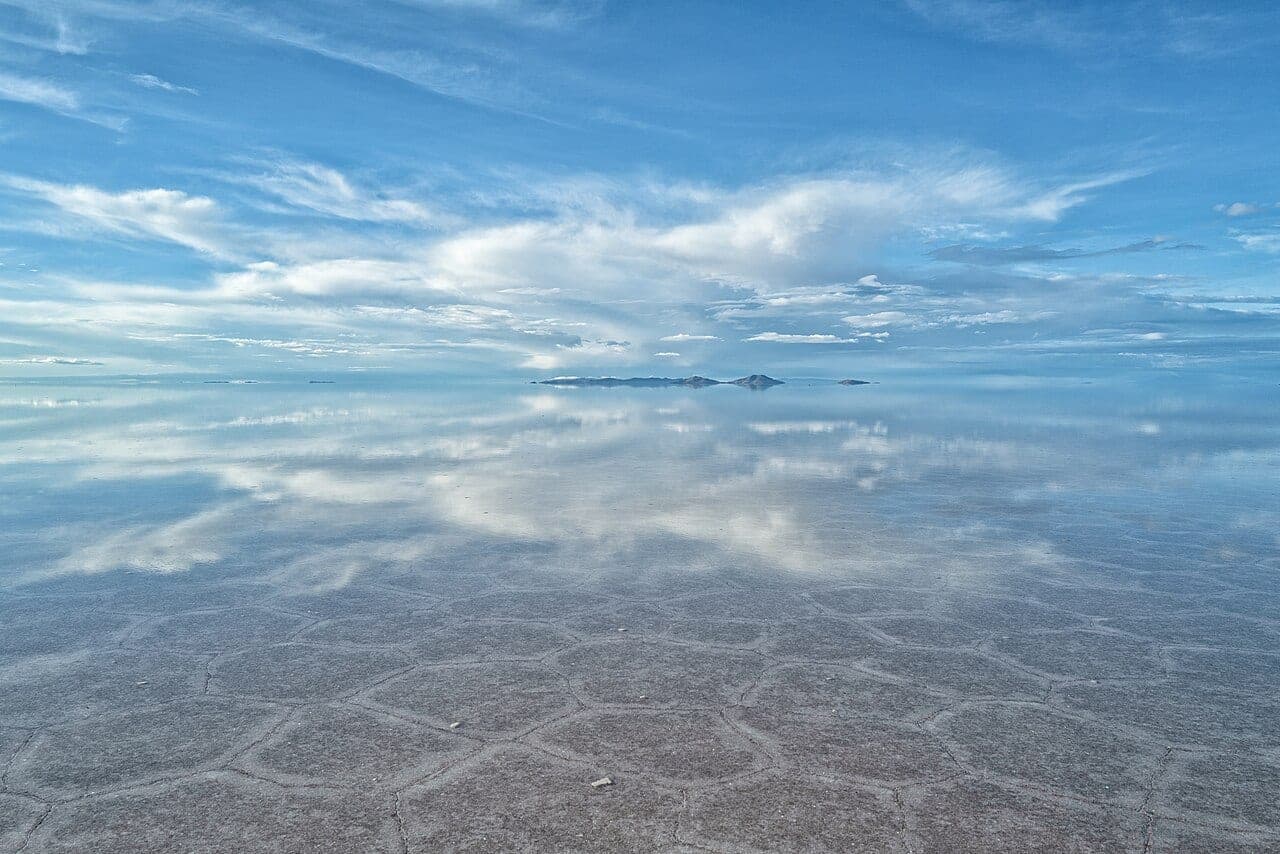
From the sunken temples of Tiwanaku to the salt mirror of Uyuni, Bolivia holds one of the deepest living Indigenous inheritances in the Americas. Its remembrance customs, from the bread babies of Todos Santos to the garlanded skulls of the ñatitas, keep the ancestors present rather than past.Written to last.
By Confinity Heritage Editorial · Updated 2026-07-31 · 8-minute readQuiet tools, kept out of the way.
Bolivia sits at the roof of South America, a landlocked republic where the Andes divide into two great cordilleras and cradle the Altiplano, the high plateau that has carried human life for thousands of years. Here lies Lake Titicaca, the highest large navigable lake on earth and, in Andean belief, the water from which the sun and the first people emerged. Around it the Aymara and Quechua peoples still farm, weave and remember much as their ancestors did, which is one reason Bolivia holds among the largest Indigenous populations of any country in the Americas.
This inheritance is not kept behind glass. It lives in the sunken courtyards of Tiwanaku, in the silver mountain that once bankrolled an empire and consumed generations of workers, and above all in the way Bolivian families keep company with their dead. Each November the departed are welcomed home with bread shaped like infants and altars laid with their favourite foods; in La Paz, garlanded human skulls are honoured as household protectors.
Bolivia covers about 1.1 million square kilometres, ranging from the icy Altiplano and the peaks of the Cordillera Real to the Amazon lowlands and the dry Gran Chaco. Much of the plateau lies above 3,600 metres, and the volcano Nevado Sajama rises to about 6,542 metres, the country's highest point (Wikipedia). The 2024 census counted around 11.4 million people, of whom close to 38 per cent identified as belonging to an Indigenous nation or people, one of the highest such shares anywhere in the Americas (Wikipedia).
Bolivia has two capitals. La Paz is the seat of government and, at between roughly 3,250 and 4,100 metres, the highest seat of government in the world, while Sucre remains the constitutional capital and the seat of the judiciary (Britannica). Spanish shares official status with 36 Indigenous languages recognised by the 2009 constitution, among them Quechua, Aymara and Guaraní (Wikipedia). The country holds seven UNESCO World Heritage sites, six cultural and one natural (List of World Heritage Sites in Bolivia).
La Paz. Founded in 1548 as Nuestra Señora de La Paz, the city fills a canyon below the Altiplano, its buildings climbing towards the satellite city of El Alto, which at about 4,150 metres is the highest major city on earth (Britannica). The Mi Teleférico cable-car network now links the two. La Paz is the centre of Aymara urban life, of the Alasitas fair and of the ñatitas devotion.
 Cerro Rico above Potosi produced the silver that paid for the Spanish empire, and consumed an unknown number of Indigenous and enslaved African miners doing it. Photograph by Jbmurray, CC BY-SA 4.0, via Wikimedia Commons.
Sucre. Known as the White City for the lime-washed walls of its colonial centre, Sucre was inscribed by UNESCO in 1991 for architecture that blends local and European traditions (UNESCO). It was here, in the Casa de la Libertad, that Bolivia's declaration of independence was signed on 6 August 1825, and the city remains the constitutional capital.
Potosí. Set beneath the Cerro Rico, the "rich mountain", Potosí was for two centuries one of the largest and wealthiest cities in the world, its silver funding the Spanish crown (UNESCO). That wealth was drawn out at immense human cost, a history taken up below. UNESCO inscribed the city in 1987 for its mines, colonial architecture and the industrial monuments of silver-working.
Santa Cruz. Santa Cruz de la Sierra, in the eastern lowlands, is now Bolivia's largest city and its economic engine, growing quickly on agriculture, gas and trade (Wikipedia). It is the gateway to the Chiquitania, where the restored Jesuit mission churches carry a distinctive chapter of colonial and Indigenous history.
Cochabamba. In a fertile Andean valley known for its mild climate, Cochabamba is a market and culinary centre, long a granary of the highlands. Above it rises the Cristo de la Concordia, among the tallest statues of Christ anywhere, looking out over the valley.
Long before the Inca, the southern shore of Lake Titicaca held Tiwanaku, the ceremonial and political centre of one of the Andes' formative civilisations. Occupied from the early centuries of the common era, the city reached its height between about 500 and 900 CE, its influence reaching across present-day Bolivia, southern Peru, northern Chile and Argentina (UNESCO). Its builders raised the Akapana platform mound, the semi-subterranean temple and the Kalasasaya enclosure, whose monolithic Gateway of the Sun carries the carved staff-bearing figure often read as a creator deity (Britannica). After Tiwanaku declined, the region fragmented into competing Aymara-speaking kingdoms across the Altiplano.
Cerro Rico above Potosi produced the silver that paid for the Spanish empire, and consumed an unknown number of Indigenous and enslaved African miners doing it. Photograph by Jbmurray, CC BY-SA 4.0, via Wikimedia Commons.
Sucre. Known as the White City for the lime-washed walls of its colonial centre, Sucre was inscribed by UNESCO in 1991 for architecture that blends local and European traditions (UNESCO). It was here, in the Casa de la Libertad, that Bolivia's declaration of independence was signed on 6 August 1825, and the city remains the constitutional capital.
Potosí. Set beneath the Cerro Rico, the "rich mountain", Potosí was for two centuries one of the largest and wealthiest cities in the world, its silver funding the Spanish crown (UNESCO). That wealth was drawn out at immense human cost, a history taken up below. UNESCO inscribed the city in 1987 for its mines, colonial architecture and the industrial monuments of silver-working.
Santa Cruz. Santa Cruz de la Sierra, in the eastern lowlands, is now Bolivia's largest city and its economic engine, growing quickly on agriculture, gas and trade (Wikipedia). It is the gateway to the Chiquitania, where the restored Jesuit mission churches carry a distinctive chapter of colonial and Indigenous history.
Cochabamba. In a fertile Andean valley known for its mild climate, Cochabamba is a market and culinary centre, long a granary of the highlands. Above it rises the Cristo de la Concordia, among the tallest statues of Christ anywhere, looking out over the valley.
Long before the Inca, the southern shore of Lake Titicaca held Tiwanaku, the ceremonial and political centre of one of the Andes' formative civilisations. Occupied from the early centuries of the common era, the city reached its height between about 500 and 900 CE, its influence reaching across present-day Bolivia, southern Peru, northern Chile and Argentina (UNESCO). Its builders raised the Akapana platform mound, the semi-subterranean temple and the Kalasasaya enclosure, whose monolithic Gateway of the Sun carries the carved staff-bearing figure often read as a creator deity (Britannica). After Tiwanaku declined, the region fragmented into competing Aymara-speaking kingdoms across the Altiplano.
 The Gate of the Sun at Tiwanaku, cut from a single block of andesite by a state that rose and fell before the Inca existed. Photograph by Dennis Jarvis, CC BY-SA 2.0, via Wikimedia Commons.
In the fifteenth century the expanding Inca empire absorbed these highlands as Qullasuyu, the southern quarter of Tawantinsuyu, drawing the region into a road and tribute system that reached from Ecuador to central Chile (UNESCO). Inca rule was brief. The Spanish, having toppled the Inca in the 1530s, founded La Paz in 1548 and, above all, exploited the silver of Potosí after its discovery in 1545 (Wikipedia).
To work the mines the colonial administration adapted the Andean mit'a, a rotational labour obligation. Under the Inca the mit'a had been a form of labour service bound up with reciprocal duties; the Spanish kept the name and the conscription but stripped away the reciprocity, sending Indigenous communities in rotation to the mines and refineries of Potosí (Wikipedia). Conditions underground, and the mercury used to refine the ore, were lethal, and over the colonial centuries the toll ran into the hundreds of thousands, by some estimates far higher; a seventeenth-century friar wrote that the mountain had devoured more lives than the silver it yielded. The suffering of Potosí is remembered soberly as one of the darkest passages of colonial Latin America.
Independence came on 6 August 1825, when the territory of Upper Peru was freed by the campaigns of Simón Bolívar and Antonio José de Sucre and named Bolivia in Bolívar's honour (Wikipedia). The young republic later lost its Pacific coast to Chile in the War of the Pacific of 1879–1884, becoming landlocked, a loss still felt in national life. The twentieth century brought the National Revolution of 1952, which introduced universal suffrage and land reform, then decades of military and civilian rule, and in 2006 the election of Evo Morales as the country's first Indigenous president. In 2009 a new constitution refounded the country as the Plurinational State of Bolivia (Wikipedia).
Bolivia is among the most linguistically plural countries in the Americas. Spanish is the common language of government and schooling, but the 2009 constitution granted official status to 36 Indigenous languages alongside it (Wikipedia). The two most widely spoken are Quechua, the language family spread by the Inca, and Aymara, older on the Altiplano and closely tied to the Titicaca heartland; Guaraní is the principal Indigenous language of the eastern lowlands, and dozens of smaller Amazonian and Chaco languages complete the map.
The country's name is a personal tribute. At independence the new state took its name from Simón Bolívar, the Venezuelan-born liberator, as Rome, an early formula ran, took its name from Romulus (Wikipedia). Everyday Bolivian Spanish is layered with Quechua and Aymara words, and place names across the highlands, from Titicaca to Illimani, carry meanings in those languages rather than in Spanish. The names of the remembrance customs themselves, ñatita and t'anta wawa, come straight from Aymara and Quechua.
Andean weaving is among Bolivia's most eloquent art forms. In highland communities such as those of the Jalq'a and the Tarabuqueños near Sucre, weavers produce cloth whose patterns encode community identity, cosmology and status, a visual language passed between generations at the loom and often guarded as a family heirloom.
The peak of the festival calendar is the Carnival of Oruro, proclaimed by UNESCO a Masterpiece of the Oral and Intangible Heritage of Humanity in 2001 and later inscribed on its Representative List (UNESCO). Over several days tens of thousands of costumed dancers process in honour of the Virgen del Socavón, patron of miners. Its signature dance is the diablada, the dance of the devils, in which masked performers enact the struggle of good and evil and the defeat of the seven deadly sins, fusing Andean belief with Catholic teaching. The morenada, caporales and other dances fill the streets to the sound of brass bands.
The charango, a small ten-stringed lute descended from the Spanish vihuela and long made in Andean workshops, is the emblematic instrument of Bolivian highland music (Wikipedia). Around it, panpipes and drums carry the sound of the Altiplano.
The chola, or cholita, is one of the most recognisable figures of Bolivian life: an Indigenous, usually Aymara, woman in the pollera, the layered skirt, with a shawl and a bowler hat. The style has a painful origin, since colonial rules once imposed such dress as a mark of subordinate status, but Aymara and Quechua women have made it their own, and the cholita is now a figure of pride, present in fashion, in politics and in the crowd-pleasing spectacle of cholita wrestling (Culture Trip). Bolivian cooking reflects the same range of altitudes: the salteña, a juicy baked pasty, and silpancho from the valleys; freeze-dried chuño potatoes and quinoa from the Altiplano; and river fish and tropical fruit from the lowlands.
Roman Catholicism, brought by the Spanish, is the majority faith, professed by around four in five Bolivians (Wikipedia). In the Andes, however, it has never stood alone. Catholic practice is interwoven with older Andean belief, above all devotion to Pachamama, Mother Earth, to whom offerings are made at planting, at building and at the start of ventures. The ch'alla, a libation poured to Pachamama, and the burning of a ritual offering, the mesa, remain common across the highlands, and August is widely kept as her month.
Andean and Catholic worlds meet openly at shrines and festivals: the diablada is danced for a Catholic Virgin yet draws on the figure of the mine spirit, and the mountains, the achachilas, are addressed as living beings. A distinctive expression of this abundance-seeking spirituality is Ekeko, the Aymara household god of plenty, honoured at the Alasitas fair in La Paz each January, where people buy miniature versions of what they hope to acquire, a house, a car, a diploma, and have them blessed (Wikipedia). Evangelical and Pentecostal churches have also grown in recent decades.
Bolivian remembrance rests on the meeting of Andean ancestor practice and the Catholic feast of All Saints and All Souls. The central observance is Todos Santos, on 1 and 2 November, when families believe the souls of the dead return to visit. Homes and cemeteries fill with altars laid for the departed and stocked with the food and drink they favoured in life; by custom the souls are received around midday on 1 November and seen off the following day, when relatives gather at the grave to eat, pray and share (Kiva).
Among the offerings are the t'antawawa, or bread babies: sweet rolls shaped and decorated as infants, whose name joins the Aymara and Quechua words for bread and child. Made in the form of a small child, they were traditionally offered for children who had died, and they sit on the altars beside breads shaped as ladders, horses and other figures; families bake them and exchange them with kin and neighbours (Wikipedia).
A custom particular to the La Paz region is the Fiesta de las Ñatitas, held about a week after Todos Santos. On this day people bring human skulls, the ñatitas or "little snub-nosed ones", many of them kept in the home through the year, to be blessed and honoured. The skulls are set among flowers and given offerings of coca leaves, cigarettes and drink, and are believed by their keepers to offer protection and to answer requests; the custom joins Andean regard for the ancestors with Catholic ritual, and the church's relationship to it has shifted over time (Smithsonian Magazine). Beyond these public occasions, highland communities keep quieter ancestral customs, tending graves, making offerings on anniversaries, and maintaining the reciprocal bond between the living and the dead that runs through Andean belief.
Bolivian family history runs through the parish and, for a great many families, through a mine.
Catholic registers begin in the sixteenth century, and the Andean parishes kept separate books for españoles and for indios, which means an Indigenous family can often be traced in the colonial record where in other countries it could not. Civil registration was established at the start of the twentieth century and is held by the Servicio de Registro Cívico.
Potosí is the particular Bolivian archive. From 1573 the mita required Indigenous communities across a huge area of the southern Andes to send a proportion of their men to work the silver mines, in rotation, for generations. The system generated lists: which community owed how many workers, who was sent, who returned and who did not. The padrones, the tribute censuses taken to administer it, name Indigenous households by community across the colonial period and are the deepest genealogical source in the country. They were made for extraction and they preserve the names of the extracted.
The Archivo y Biblioteca Nacionales de Bolivia in Sucre holds the colonial series, and the Casa de la Moneda in Potosí holds the mining and mint records.
Aymara and Quechua communities keep their own record in the ayllu, the descent and territory group that organises land, obligation and ritual, and in the practice of caring for the dead which brings the skulls of ancestors out each November.
Bolivia's seven World Heritage sites span its history and its landscapes. The City of Potosí was the first inscribed, in 1987, for its silver mines and colonial fabric (UNESCO); the Jesuit Missions of the Chiquitos, six restored mission settlements in the eastern lowlands, followed in 1990 as a rare surviving ensemble of the reductions where Jesuits and the Indigenous Chiquitano built a shared community (UNESCO). The Historic City of Sucre was inscribed in 1991 (UNESCO), the pre-Inca rock sanctuary of Fuerte de Samaipata in 1998 (UNESCO), and Tiwanaku in 2000 for its central role in Andean civilisation (UNESCO). The country's one natural site, Noel Kempff Mercado National Park, an expanse of Amazonian and cerrado wilderness, was also inscribed in 2000 (UNESCO). In 2014 Bolivia joined five other Andean nations in the transnational inscription of the Qhapaq Ñan, the Inca road system, recognising the highland routes that once bound the region together (UNESCO). Potosí has since been listed among World Heritage in Danger, reflecting concern for the stability of the Cerro Rico and its historic workings.
Bolivia's digital heritage effort is younger and smaller than those of some of its neighbours, but it is growing. National institutions such as the Casa de la Libertad in Sucre maintain online catalogues and virtual tours, and the National Archive and Library of Bolivia in Sucre, which holds colonial records reaching back to the sixteenth century, has worked to digitise fragile documents for preservation and access. Language projects publish Quechua and Aymara dictionaries and recordings online, supporting the constitution's recognition of Indigenous languages, and photographic and three-dimensional surveys help document sites such as Tiwanaku and the Jesuit mission churches, exposed to weather, tourism and time.
Bolivian culture reaches well beyond its borders. Andean music carried by groups from the 1960s folk revival made the sound of the charango and the panpipe familiar worldwide, and morenada and caporales dances now feature at Bolivian community festivals across the Americas and Europe. The cholita has become an international emblem: the Cholitas Escaladoras, Aymara women who climb Andean peaks in their polleras, and the cholitas of the wrestling ring have drawn documentary attention as figures of Indigenous pride and women's assertion (Culture Trip). Bolivian writers and film-makers, working in Spanish and in Indigenous languages, explore memory, mining and migration. The salt flat of Uyuni, meanwhile, has placed Bolivia at the centre of the global conversation about lithium, since its brines hold one of the largest known reserves of the metal used in batteries (Britannica), tying an ancient landscape to a modern future.
A pre-Columbian capital protected. Since its inscription in 2000, Tiwanaku has anchored Bolivian archaeology and Aymara identity (UNESCO), while the June solstice gathering there has become a focus of contemporary Aymara ceremony.
The Chiquitos missions restored. The eastern mission churches, saved from ruin through a decades-long restoration led by the architect Hans Roth and local communities, were inscribed by UNESCO in 1990 and now host a celebrated festival of baroque music revived from scores preserved in the missions (UNESCO).
Indigenous languages given official standing. The 2009 constitution's recognition of 36 Indigenous languages, alongside Spanish, gave legal weight to a plurality of tongues and has underpinned bilingual education and publishing (Wikipedia).
Remembrance that stayed in the family. Todos Santos, the t'antawawa and the ñatitas remain family and community practices first, carried out for the dead rather than for spectators, customs that endure by staying rooted in the home.
The Gate of the Sun at Tiwanaku, cut from a single block of andesite by a state that rose and fell before the Inca existed. Photograph by Dennis Jarvis, CC BY-SA 2.0, via Wikimedia Commons.
In the fifteenth century the expanding Inca empire absorbed these highlands as Qullasuyu, the southern quarter of Tawantinsuyu, drawing the region into a road and tribute system that reached from Ecuador to central Chile (UNESCO). Inca rule was brief. The Spanish, having toppled the Inca in the 1530s, founded La Paz in 1548 and, above all, exploited the silver of Potosí after its discovery in 1545 (Wikipedia).
To work the mines the colonial administration adapted the Andean mit'a, a rotational labour obligation. Under the Inca the mit'a had been a form of labour service bound up with reciprocal duties; the Spanish kept the name and the conscription but stripped away the reciprocity, sending Indigenous communities in rotation to the mines and refineries of Potosí (Wikipedia). Conditions underground, and the mercury used to refine the ore, were lethal, and over the colonial centuries the toll ran into the hundreds of thousands, by some estimates far higher; a seventeenth-century friar wrote that the mountain had devoured more lives than the silver it yielded. The suffering of Potosí is remembered soberly as one of the darkest passages of colonial Latin America.
Independence came on 6 August 1825, when the territory of Upper Peru was freed by the campaigns of Simón Bolívar and Antonio José de Sucre and named Bolivia in Bolívar's honour (Wikipedia). The young republic later lost its Pacific coast to Chile in the War of the Pacific of 1879–1884, becoming landlocked, a loss still felt in national life. The twentieth century brought the National Revolution of 1952, which introduced universal suffrage and land reform, then decades of military and civilian rule, and in 2006 the election of Evo Morales as the country's first Indigenous president. In 2009 a new constitution refounded the country as the Plurinational State of Bolivia (Wikipedia).
Bolivia is among the most linguistically plural countries in the Americas. Spanish is the common language of government and schooling, but the 2009 constitution granted official status to 36 Indigenous languages alongside it (Wikipedia). The two most widely spoken are Quechua, the language family spread by the Inca, and Aymara, older on the Altiplano and closely tied to the Titicaca heartland; Guaraní is the principal Indigenous language of the eastern lowlands, and dozens of smaller Amazonian and Chaco languages complete the map.
The country's name is a personal tribute. At independence the new state took its name from Simón Bolívar, the Venezuelan-born liberator, as Rome, an early formula ran, took its name from Romulus (Wikipedia). Everyday Bolivian Spanish is layered with Quechua and Aymara words, and place names across the highlands, from Titicaca to Illimani, carry meanings in those languages rather than in Spanish. The names of the remembrance customs themselves, ñatita and t'anta wawa, come straight from Aymara and Quechua.
Andean weaving is among Bolivia's most eloquent art forms. In highland communities such as those of the Jalq'a and the Tarabuqueños near Sucre, weavers produce cloth whose patterns encode community identity, cosmology and status, a visual language passed between generations at the loom and often guarded as a family heirloom.
The peak of the festival calendar is the Carnival of Oruro, proclaimed by UNESCO a Masterpiece of the Oral and Intangible Heritage of Humanity in 2001 and later inscribed on its Representative List (UNESCO). Over several days tens of thousands of costumed dancers process in honour of the Virgen del Socavón, patron of miners. Its signature dance is the diablada, the dance of the devils, in which masked performers enact the struggle of good and evil and the defeat of the seven deadly sins, fusing Andean belief with Catholic teaching. The morenada, caporales and other dances fill the streets to the sound of brass bands.
The charango, a small ten-stringed lute descended from the Spanish vihuela and long made in Andean workshops, is the emblematic instrument of Bolivian highland music (Wikipedia). Around it, panpipes and drums carry the sound of the Altiplano.
The chola, or cholita, is one of the most recognisable figures of Bolivian life: an Indigenous, usually Aymara, woman in the pollera, the layered skirt, with a shawl and a bowler hat. The style has a painful origin, since colonial rules once imposed such dress as a mark of subordinate status, but Aymara and Quechua women have made it their own, and the cholita is now a figure of pride, present in fashion, in politics and in the crowd-pleasing spectacle of cholita wrestling (Culture Trip). Bolivian cooking reflects the same range of altitudes: the salteña, a juicy baked pasty, and silpancho from the valleys; freeze-dried chuño potatoes and quinoa from the Altiplano; and river fish and tropical fruit from the lowlands.
Roman Catholicism, brought by the Spanish, is the majority faith, professed by around four in five Bolivians (Wikipedia). In the Andes, however, it has never stood alone. Catholic practice is interwoven with older Andean belief, above all devotion to Pachamama, Mother Earth, to whom offerings are made at planting, at building and at the start of ventures. The ch'alla, a libation poured to Pachamama, and the burning of a ritual offering, the mesa, remain common across the highlands, and August is widely kept as her month.
Andean and Catholic worlds meet openly at shrines and festivals: the diablada is danced for a Catholic Virgin yet draws on the figure of the mine spirit, and the mountains, the achachilas, are addressed as living beings. A distinctive expression of this abundance-seeking spirituality is Ekeko, the Aymara household god of plenty, honoured at the Alasitas fair in La Paz each January, where people buy miniature versions of what they hope to acquire, a house, a car, a diploma, and have them blessed (Wikipedia). Evangelical and Pentecostal churches have also grown in recent decades.
Bolivian remembrance rests on the meeting of Andean ancestor practice and the Catholic feast of All Saints and All Souls. The central observance is Todos Santos, on 1 and 2 November, when families believe the souls of the dead return to visit. Homes and cemeteries fill with altars laid for the departed and stocked with the food and drink they favoured in life; by custom the souls are received around midday on 1 November and seen off the following day, when relatives gather at the grave to eat, pray and share (Kiva).
Among the offerings are the t'antawawa, or bread babies: sweet rolls shaped and decorated as infants, whose name joins the Aymara and Quechua words for bread and child. Made in the form of a small child, they were traditionally offered for children who had died, and they sit on the altars beside breads shaped as ladders, horses and other figures; families bake them and exchange them with kin and neighbours (Wikipedia).
A custom particular to the La Paz region is the Fiesta de las Ñatitas, held about a week after Todos Santos. On this day people bring human skulls, the ñatitas or "little snub-nosed ones", many of them kept in the home through the year, to be blessed and honoured. The skulls are set among flowers and given offerings of coca leaves, cigarettes and drink, and are believed by their keepers to offer protection and to answer requests; the custom joins Andean regard for the ancestors with Catholic ritual, and the church's relationship to it has shifted over time (Smithsonian Magazine). Beyond these public occasions, highland communities keep quieter ancestral customs, tending graves, making offerings on anniversaries, and maintaining the reciprocal bond between the living and the dead that runs through Andean belief.
Bolivian family history runs through the parish and, for a great many families, through a mine.
Catholic registers begin in the sixteenth century, and the Andean parishes kept separate books for españoles and for indios, which means an Indigenous family can often be traced in the colonial record where in other countries it could not. Civil registration was established at the start of the twentieth century and is held by the Servicio de Registro Cívico.
Potosí is the particular Bolivian archive. From 1573 the mita required Indigenous communities across a huge area of the southern Andes to send a proportion of their men to work the silver mines, in rotation, for generations. The system generated lists: which community owed how many workers, who was sent, who returned and who did not. The padrones, the tribute censuses taken to administer it, name Indigenous households by community across the colonial period and are the deepest genealogical source in the country. They were made for extraction and they preserve the names of the extracted.
The Archivo y Biblioteca Nacionales de Bolivia in Sucre holds the colonial series, and the Casa de la Moneda in Potosí holds the mining and mint records.
Aymara and Quechua communities keep their own record in the ayllu, the descent and territory group that organises land, obligation and ritual, and in the practice of caring for the dead which brings the skulls of ancestors out each November.
Bolivia's seven World Heritage sites span its history and its landscapes. The City of Potosí was the first inscribed, in 1987, for its silver mines and colonial fabric (UNESCO); the Jesuit Missions of the Chiquitos, six restored mission settlements in the eastern lowlands, followed in 1990 as a rare surviving ensemble of the reductions where Jesuits and the Indigenous Chiquitano built a shared community (UNESCO). The Historic City of Sucre was inscribed in 1991 (UNESCO), the pre-Inca rock sanctuary of Fuerte de Samaipata in 1998 (UNESCO), and Tiwanaku in 2000 for its central role in Andean civilisation (UNESCO). The country's one natural site, Noel Kempff Mercado National Park, an expanse of Amazonian and cerrado wilderness, was also inscribed in 2000 (UNESCO). In 2014 Bolivia joined five other Andean nations in the transnational inscription of the Qhapaq Ñan, the Inca road system, recognising the highland routes that once bound the region together (UNESCO). Potosí has since been listed among World Heritage in Danger, reflecting concern for the stability of the Cerro Rico and its historic workings.
Bolivia's digital heritage effort is younger and smaller than those of some of its neighbours, but it is growing. National institutions such as the Casa de la Libertad in Sucre maintain online catalogues and virtual tours, and the National Archive and Library of Bolivia in Sucre, which holds colonial records reaching back to the sixteenth century, has worked to digitise fragile documents for preservation and access. Language projects publish Quechua and Aymara dictionaries and recordings online, supporting the constitution's recognition of Indigenous languages, and photographic and three-dimensional surveys help document sites such as Tiwanaku and the Jesuit mission churches, exposed to weather, tourism and time.
Bolivian culture reaches well beyond its borders. Andean music carried by groups from the 1960s folk revival made the sound of the charango and the panpipe familiar worldwide, and morenada and caporales dances now feature at Bolivian community festivals across the Americas and Europe. The cholita has become an international emblem: the Cholitas Escaladoras, Aymara women who climb Andean peaks in their polleras, and the cholitas of the wrestling ring have drawn documentary attention as figures of Indigenous pride and women's assertion (Culture Trip). Bolivian writers and film-makers, working in Spanish and in Indigenous languages, explore memory, mining and migration. The salt flat of Uyuni, meanwhile, has placed Bolivia at the centre of the global conversation about lithium, since its brines hold one of the largest known reserves of the metal used in batteries (Britannica), tying an ancient landscape to a modern future.
A pre-Columbian capital protected. Since its inscription in 2000, Tiwanaku has anchored Bolivian archaeology and Aymara identity (UNESCO), while the June solstice gathering there has become a focus of contemporary Aymara ceremony.
The Chiquitos missions restored. The eastern mission churches, saved from ruin through a decades-long restoration led by the architect Hans Roth and local communities, were inscribed by UNESCO in 1990 and now host a celebrated festival of baroque music revived from scores preserved in the missions (UNESCO).
Indigenous languages given official standing. The 2009 constitution's recognition of 36 Indigenous languages, alongside Spanish, gave legal weight to a plurality of tongues and has underpinned bilingual education and publishing (Wikipedia).
Remembrance that stayed in the family. Todos Santos, the t'antawawa and the ñatitas remain family and community practices first, carried out for the dead rather than for spectators, customs that endure by staying rooted in the home.
National Overview
Notable Cities
Historical Foundations
Linguistic and Etymological Roots
Cultural Identity
Religion and Spirituality
Remembrance and Mourning Traditions
Tracing a Family in Bolivia
Heritage Preservation Efforts
Digital Heritage
Contemporary Cultural Influences
Success Stories
References and resources
- UNESCO World Heritage Centre: Tiwanaku. The spiritual and political centre of the Tiwanaku culture, inscribed 2000.
- UNESCO World Heritage Centre: City of Potosí. The colonial silver city and its mines, inscribed 1987.
- UNESCO World Heritage Centre: Historic City of Sucre. The White City, inscribed 1991.
- UNESCO World Heritage Centre: Jesuit Missions of the Chiquitos. The restored lowland mission churches, inscribed 1990.
- UNESCO World Heritage Centre: Fuerte de Samaipata. The pre-Inca rock sanctuary, inscribed 1998.
- UNESCO World Heritage Centre: Noel Kempff Mercado National Park. Bolivia's natural World Heritage site, inscribed 2000.
- UNESCO World Heritage Centre: Qhapaq Ñan, Andean Road System. The transnational Inca road network, inscribed 2014.
- UNESCO Intangible Cultural Heritage: Carnival of Oruro. The Andean and Catholic carnival and the diablada.
- Encyclopaedia Britannica: Tiwanaku. The pre-Columbian civilisation and its architecture.
- Encyclopaedia Britannica: Uyuni Salt Flat. The Salar de Uyuni, its scale and lithium.
- Encyclopaedia Britannica: La Paz. The seat of government and El Alto.
- Wikipedia: Bolivia. Geography, demographics, languages and history.
- Wikipedia: List of World Heritage Sites in Bolivia. The seven inscriptions and their dates.
- Wikipedia: T'anta wawa. The bread babies of Todos Santos.
- Smithsonian Magazine: the ñatitas of La Paz. The Fiesta de las Ñatitas described.