Heritage · Country
Turkey Culture and Heritage
From the world's oldest known temple at Gobekli Tepe to the great dome of Hagia Sophia, Turkey carries ten thousand years of Anatolian, Greek, Roman, Byzantine, Seljuk and Ottoman memory across two continents. A guide to the country's heritage, to its Islamic and secular traditions of mourning, and to the archives carrying Turkish memory into the digital age.Written to last.
By Confinity Heritage Editorial · Updated 2026-07-31 · 8-minute readQuiet tools, kept out of the way.
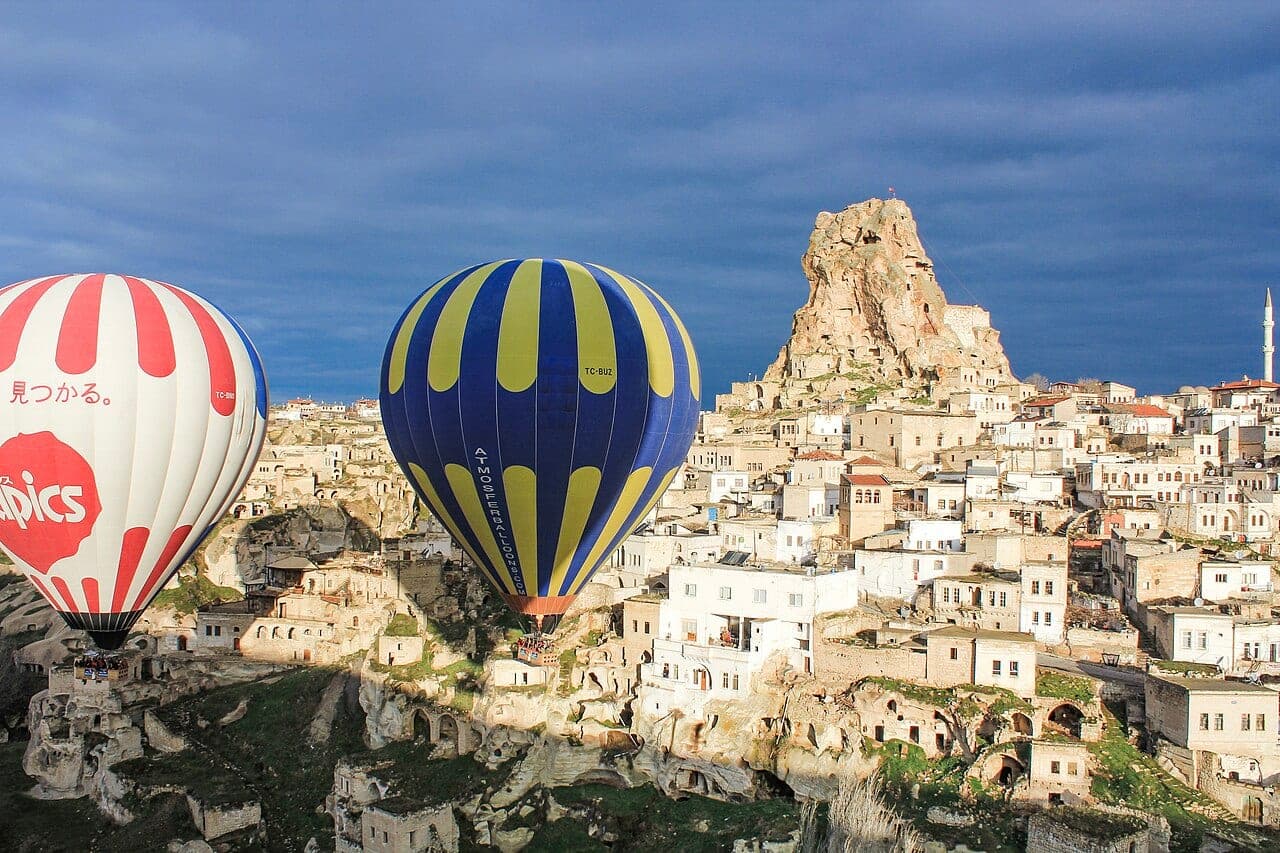
Few countries hold as many pasts at once as Turkey. A single ferry across the Bosphorus in Istanbul carries a traveller from Europe to Asia in minutes, and the shores between them have been Greek and Roman, the capital of Byzantium and then of the Ottomans, before becoming the largest city of a modern secular republic. Beneath the surface the ground keeps deeper time still: the Neolithic sanctuary of Gobekli Tepe, raised by hunter-gatherers some eleven and a half thousand years ago, predates farming, writing and the wheel. In Turkey the layers do not cancel each other out so much as accumulate.
That accumulation makes remembrance a daily practice. Each year on the tenth of November, at five minutes past nine in the morning, traffic halts and sirens sound across the country for the moment Mustafa Kemal Ataturk died in 1938. Families gather on the fortieth day after a death to read the Mevlid and share sweet helva, and whole neighbourhoods tend Ottoman cemeteries whose headstones are carved as turbans and flowers. The country also carries harder memories, including the mass killings and deportations of Ottoman Armenians during the First World War, a subject addressed below with the neutrality it demands.
Turkey occupies a bridge of land between two continents. Most of its territory is Anatolia, also called Asia Minor, a broad peninsula in western Asia, while a smaller corner across the straits, Eastern Thrace, sits in southeastern Europe; roughly ninety-seven percent of the land lies in Asia. It borders Greece and Bulgaria to the west, Georgia, Armenia, Azerbaijan and Iran to the east, and Iraq and Syria to the south, and is washed by the Black Sea, the Mediterranean and the Aegean, with the inland Sea of Marmara linking them through the Bosphorus and Dardanelles straits, according to Encyclopaedia Britannica. The interior rises into high plateau and mountain, culminating in Mount Ararat at 5,137 metres near the eastern frontier.
The population is roughly 86 million. Ankara, in the centre of the Anatolian plateau, became the capital in 1923, replacing Constantinople, while Istanbul remains the largest city and the economic heart. In 2022 the country formally registered its name at the United Nations as Turkiye, the spelling used in Turkish. A founding character of the modern nation is its secularism, written into the constitution in 1937, alongside a large diaspora, most visibly the several million people of Turkish descent in Germany.
Istanbul. The only major city set on two continents, Istanbul has been the capital of two of history's longest-lived empires. Founded as the Greek colony of Byzantion, refounded by Constantine as Constantinople in 330 AD, and taken by the Ottomans in 1453, it holds Hagia Sophia, the Blue Mosque, the Topkapi Palace and the Byzantine land walls in a dense historic core inscribed by UNESCO. Around 16 million people live in its metropolitan area.
Ankara. An old Anatolian town known in antiquity as Ancyra, Ankara became the seat of the republic in 1923 and grew into a planned modern capital. Its most visited monument is Anitkabir, the hilltop mausoleum where Ataturk is buried, a place of secular pilgrimage.
Izmir. The third city, on the Aegean coast, was the ancient Greek Smyrna and a cosmopolitan Ottoman port before much of it burned in 1922 at the close of the war between Greece and Turkey. Rebuilt, it is the gateway to Ephesus.
Bursa. The first capital of the Ottoman state, at the foot of Mount Uludag, Bursa holds the tombs of the early sultans and the early Ottoman mosque complexes that UNESCO inscribed in 2014.
Konya. On the central plateau, Konya was the capital of the Seljuk Sultanate of Rum and remains the spiritual home of the Mevlevi whirling dervishes, founded in the teaching of the poet Rumi, whose green-domed tomb draws pilgrims from around the world.
Anatolia is one of the oldest inhabited regions on earth. Gobekli Tepe, near Sanliurfa, was raised around 9600 BC, its rings of carved T-shaped pillars the oldest known monumental sanctuary anywhere, and Catalhoyuk was among the largest early farming settlements. In the Bronze and Iron Ages the plateau belonged in turn to the Hittites, whose capital Hattusa left cuneiform archives; to the kingdom of Urartu around Lake Van; to the Phrygians of King Midas; and to the Lydians of Sardis, credited with striking the first coins.
 Hagia Sophia has been a cathedral, a mosque, a museum and a mosque again. Photograph by ImanFakhri, CC BY-SA 4.0, via Wikimedia Commons.
From the eighth century BC, Greeks settled the Aegean coast, founding the cities of Ionia, among them Miletus, home of the first Greek philosophers, and Ephesus, with its Temple of Artemis, one of the Seven Wonders of the ancient world. Anatolia passed to Persia, then to Alexander the Great, and finally to Rome. When Constantine moved the Roman capital to Constantinople in 330 AD, Anatolia became the core of the Byzantine Empire, Greek-speaking and Christian, which endured for more than a thousand years and gave the world Hagia Sophia.
The Turkic peoples arrived from Central Asia. The Seljuks broke Byzantine power at the Battle of Manzikert in 1071 and established the Sultanate of Rum at Konya, opening Anatolia to Turkish settlement and Islam. Out of the frontier principalities that followed rose the Ottomans, who from around 1299 built one of history's most durable empires. Mehmed II took Constantinople in 1453, ending Byzantium; under Suleiman the Magnificent, who reigned from 1520 to 1566, the empire stretched from Hungary to the Persian Gulf. After a long decline and defeat in the First World War, the empire collapsed, and following a war of independence Mustafa Kemal Ataturk proclaimed the Republic of Turkey on 29 October 1923, abolishing the sultanate and, in 1924, the caliphate, and launching a sweeping programme of secular reform.
Turkish belongs to the Turkic language family, in its southwestern or Oghuz branch, carried into Anatolia by the Seljuk and Ottoman Turks from Central Asia and now the mother tongue of the great majority of the population. It is an agglutinative language, building long words from strings of suffixes and governed by vowel harmony. Under the Ottomans the written language used an Arabic-based script thick with Persian and Arabic vocabulary, largely inaccessible to the unlettered majority.
The most consequential of Ataturk's reforms addressed this directly. By Law No. 1353 of November 1928, the state replaced the Arabic script with a new Latin-based Turkish alphabet, tailored to the language with new letters and diacritics. Ataturk toured the country with a blackboard as the "head teacher," and "Nation's Schools" taught the new letters to millions of adults; the alphabet became mandatory in 1929, as the Turkish alphabet reform records. The Turkish Language Association, founded in 1932, then worked to replace loanwords with Turkic coinages. The country's name carries its own history: "Turk" appears in Central Asian inscriptions more than a thousand years old and may mean something like "strong," while "Turkey" reached English through the medieval Latin Turchia, the land of the Turks. Alongside Turkish, the country is home to speakers of Kurdish, Arabic, Zaza, Laz and Circassian.
Hospitality sits at the centre of Turkish life. A guest is honoured with tea served in tulip-shaped glasses and with Turkish coffee, whose fortune-telling grounds were inscribed on UNESCO's intangible heritage list in 2013. The shared table runs to meze, grilled meats, breads, the layered pastry of baklava and the sweet called lokum. Everyday objects carry meaning: the blue nazar boncugu, an eye-shaped bead, hangs in doorways to turn away the evil eye.
The visual and performing arts reach back through the Ottoman court and the Sufi lodges. Anatolian carpets and kilims, the blue and white tiles of Iznik and ebru, the art of marbling color on water, are living crafts, and the whirling Sema ceremony of the Mevlevi dervishes turns grief and longing into a turning prayer. Village culture keeps its own forms too, from the line dances of the halay to the oiled combat of the Kirkpinar wrestlers, among the world's oldest continuous sporting festivals.
Turkey is overwhelmingly Muslim by heritage, the majority following Sunni Islam of the Hanafi school. A substantial minority are Alevis, whose tradition blends Shia, Sufi and older Anatolian elements; Alevis worship not in mosques but in assembly houses called cemevi, where men and women together perform the semah, a turning ritual dance, in a devotion tracing to the thirteenth-century saint Haci Bektas Veli. The state itself is constitutionally secular, and a Directorate of Religious Affairs, the Diyanet, established in 1924, administers Sunni religious services.
Hagia Sophia has been a cathedral, a mosque, a museum and a mosque again. Photograph by ImanFakhri, CC BY-SA 4.0, via Wikimedia Commons.
From the eighth century BC, Greeks settled the Aegean coast, founding the cities of Ionia, among them Miletus, home of the first Greek philosophers, and Ephesus, with its Temple of Artemis, one of the Seven Wonders of the ancient world. Anatolia passed to Persia, then to Alexander the Great, and finally to Rome. When Constantine moved the Roman capital to Constantinople in 330 AD, Anatolia became the core of the Byzantine Empire, Greek-speaking and Christian, which endured for more than a thousand years and gave the world Hagia Sophia.
The Turkic peoples arrived from Central Asia. The Seljuks broke Byzantine power at the Battle of Manzikert in 1071 and established the Sultanate of Rum at Konya, opening Anatolia to Turkish settlement and Islam. Out of the frontier principalities that followed rose the Ottomans, who from around 1299 built one of history's most durable empires. Mehmed II took Constantinople in 1453, ending Byzantium; under Suleiman the Magnificent, who reigned from 1520 to 1566, the empire stretched from Hungary to the Persian Gulf. After a long decline and defeat in the First World War, the empire collapsed, and following a war of independence Mustafa Kemal Ataturk proclaimed the Republic of Turkey on 29 October 1923, abolishing the sultanate and, in 1924, the caliphate, and launching a sweeping programme of secular reform.
Turkish belongs to the Turkic language family, in its southwestern or Oghuz branch, carried into Anatolia by the Seljuk and Ottoman Turks from Central Asia and now the mother tongue of the great majority of the population. It is an agglutinative language, building long words from strings of suffixes and governed by vowel harmony. Under the Ottomans the written language used an Arabic-based script thick with Persian and Arabic vocabulary, largely inaccessible to the unlettered majority.
The most consequential of Ataturk's reforms addressed this directly. By Law No. 1353 of November 1928, the state replaced the Arabic script with a new Latin-based Turkish alphabet, tailored to the language with new letters and diacritics. Ataturk toured the country with a blackboard as the "head teacher," and "Nation's Schools" taught the new letters to millions of adults; the alphabet became mandatory in 1929, as the Turkish alphabet reform records. The Turkish Language Association, founded in 1932, then worked to replace loanwords with Turkic coinages. The country's name carries its own history: "Turk" appears in Central Asian inscriptions more than a thousand years old and may mean something like "strong," while "Turkey" reached English through the medieval Latin Turchia, the land of the Turks. Alongside Turkish, the country is home to speakers of Kurdish, Arabic, Zaza, Laz and Circassian.
Hospitality sits at the centre of Turkish life. A guest is honoured with tea served in tulip-shaped glasses and with Turkish coffee, whose fortune-telling grounds were inscribed on UNESCO's intangible heritage list in 2013. The shared table runs to meze, grilled meats, breads, the layered pastry of baklava and the sweet called lokum. Everyday objects carry meaning: the blue nazar boncugu, an eye-shaped bead, hangs in doorways to turn away the evil eye.
The visual and performing arts reach back through the Ottoman court and the Sufi lodges. Anatolian carpets and kilims, the blue and white tiles of Iznik and ebru, the art of marbling color on water, are living crafts, and the whirling Sema ceremony of the Mevlevi dervishes turns grief and longing into a turning prayer. Village culture keeps its own forms too, from the line dances of the halay to the oiled combat of the Kirkpinar wrestlers, among the world's oldest continuous sporting festivals.
Turkey is overwhelmingly Muslim by heritage, the majority following Sunni Islam of the Hanafi school. A substantial minority are Alevis, whose tradition blends Shia, Sufi and older Anatolian elements; Alevis worship not in mosques but in assembly houses called cemevi, where men and women together perform the semah, a turning ritual dance, in a devotion tracing to the thirteenth-century saint Haci Bektas Veli. The state itself is constitutionally secular, and a Directorate of Religious Affairs, the Diyanet, established in 1924, administers Sunni religious services.
 At Goreme in Cappadocia, congregations cut their churches into the rock rather than building them. Photograph by Sonse, CC BY 2.0, via Wikimedia Commons.
Anatolia was also one of the cradles of Christianity. The apostle Paul was born at Tarsus, the first believers were called Christians at Antioch, and the early church councils met at Nicaea and Chalcedon near Istanbul. The Ecumenical Patriarchate of Constantinople, the senior see of Eastern Orthodoxy, still keeps its seat in the Phanar quarter of Istanbul, and the Armenian Apostolic Church and the Syriac Orthodox monasteries around Mardin maintain ancient communities much reduced in number. Turkey holds one of the longest Jewish presences in the region as well: Sephardic Jews expelled from Spain in 1492 were welcomed by the Ottoman sultan Bayezid II, and a small community, centred on Istanbul and its historic Neve Shalom synagogue, remains today.
Islamic practice shapes how Turkey buries and mourns its dead. A death is followed by burial as soon as possible, usually within a day. The body is washed in ritual ablution, wrapped in a plain white shroud, the kefen, and carried to the mosque for the funeral prayer, the cenaze namazi, before being laid in the earth without a coffin, facing Mecca. In the days that follow, families receive condolence visits, the taziye, and distribute helva, a sweet whose scent is bound up in Turkish minds with remembrance. Gatherings to read the Mevlid are held on the seventh and fortieth days after a death, and graves are visited at the two great religious holidays.
The nation observes its own days of collective memory. The tenth of November marks the death of Ataturk in 1938, when the country pauses at five past nine in the morning. The eighteenth of March is Canakkale Victory and Martyrs' Day, commemorating the naval defence of the Dardanelles in 1915 during the Gallipoli campaign, in which tens of thousands of Ottoman soldiers died; each April the same battlefield draws Australians and New Zealanders for Anzac Day, and words of consolation long attributed to Ataturk address the mothers of the foreign dead as sharing the soil with Turkish sons, as covered in reporting on the Canakkale commemorations.
The country also carries a deeply contested memory from the same war. The mass killings and deportations of Ottoman Armenians in 1915–1917 are recognised as genocide by the great majority of historians and genocide scholars and by the governments or parliaments of more than thirty countries, with estimates of the dead commonly placed at around one million or more, according to Encyclopaedia Britannica. The Turkish state officially disputes that characterisation, acknowledging that large numbers of Armenians died during wartime deportations but arguing that the deaths resulted from war, disease and inter-communal conflict rather than a coordinated policy of extermination, a position set out by the Turkish Ministry of Foreign Affairs. The events remain the subject of active scholarship, diplomacy and public commemoration in both countries and their diasporas.
Turkey has done something no other country in the region has: it put the Ottoman population registers online and gave every citizen a key to them.
Through the e-Devlet portal, any Turkish citizen with an identity number can pull up a family tree assembled from the nüfus registers, reaching into the nineteenth century and sometimes the eighteenth. The registers themselves were begun in the 1870s and record households by place, listing every member with dates and relationships, and they are held by the population directorate in Ankara rather than in an open archive. The service is for citizens only, which is the catch for anyone tracing a family that left.
The other Turkish complication is the Surname Law of 1934, which required every citizen to take a fixed hereditary surname where most had used a father's name, a trade or a place. A family's paperwork therefore changes name in the middle of the twentieth century, and the pre-1934 record has to be found through the register entry rather than the surname.
Ottoman-era records for the empire's Christian and Jewish communities were kept by those communities as well as the state. Greek Orthodox, Armenian and Sephardi registers survive in patchy form and are scattered across Istanbul, Athens, Jerusalem and Yerevan, because the communities that kept them were dispersed. For Armenian families the 1915 genocide is the point at which the record and the people both stop, and the reconstruction of it has been done largely from survivor testimony and from the archives of the states that took the refugees in.
Turkey ranks among the world's leading countries for UNESCO recognition, with more than twenty World Heritage sites, the great majority cultural and two of mixed cultural and natural value. The Historic Areas of Istanbul, inscribed in 1985, take in Hagia Sophia, built as a cathedral in 537 AD, converted to a mosque after 1453, opened as a museum in 1935 and returned to use as a mosque in 2020. Ephesus, one of the best-preserved classical cities in the Mediterranean, was inscribed in 2015, and the archaeological site of Troy, made famous by Homer, in 1998. Goreme National Park and the rock sites of Cappadocia, with their carved churches and underground cities among the volcanic "fairy chimneys," were inscribed in 1985, and the travertine terraces of Pamukkale, above ancient Hierapolis, in 1988; both are among the mixed sites.
The most striking recent addition is Gobekli Tepe, inscribed in 2018, whose excavation reshaped understanding of the Neolithic. Preservation extends to minority heritage as well: the tenth-century Armenian church of the Holy Cross on Akdamar Island in Lake Van was restored and reopened in 2007, and the Greek Orthodox monastery of Sumela, near Trabzon, has undergone major conservation. The heritage estate has also faced disaster. The earthquakes of February 2023 in the southeast damaged historic fabric in Gaziantep and in Antakya, where the ancient Habib-i Neccar Mosque was among the losses, and long-term restoration is underway under the Ministry of Culture and Tourism.
Turkey has moved much of its heritage online. The Ministry of Culture and Tourism operates a virtual museum service offering three-hundred-and-sixty-degree tours of leading museums and archaeological sites, a resource that widened its reach sharply when physical sites closed in 2020. The State Archives, among the world's largest documentary collections with tens of millions of Ottoman records, has pursued a long digitisation programme that opens catalogues and images to researchers far beyond Istanbul.
Independent institutions add to the effort. SALT Research, a cultural body in Istanbul, has built a free online archive of hundreds of thousands of documents, photographs and plans of late-Ottoman and Republican life, much of it downloadable, an open record of a nation's recent memory. Sites such as Gobekli Tepe have also been recorded in three dimensions so that fragile excavations can be studied without wear.
Modern Turkey exports its imagination widely. Orhan Pamuk won the Nobel Prize in Literature in 2006, and his portrait of Istanbul and his Museum of Innocence project have carried the texture of Turkish memory to readers worldwide. The scientist Aziz Sancar shared the Nobel Prize in Chemistry in 2015, and Nuri Bilge Ceylan won the Palme d'Or at Cannes in 2014 for "Winter Sleep."
Turkish television has become one of the country's most far-reaching cultural forces, with serialised dramas, known as dizi, exported to audiences across the Middle East, the Balkans, Latin America and beyond, making Turkey one of the largest exporters of scripted drama in the world. Turkish cuisine travels alongside them, and the diaspora in Germany sustains a two-way exchange in music, food and film.
Gobekli Tepe rewrites prehistory. A hill in the southeast, long dismissed as a medieval cemetery, was recognised from excavations begun in 1995 as the oldest known monumental sanctuary on earth, older than agriculture. Its inscription by UNESCO in 2018 and the wider Tas Tepeler, or Stone Hills, programme, now investigating related Neolithic sites including Karahan Tepe, have made Anatolia central to the story of human beginnings.
A novel becomes a museum. Orhan Pamuk built the Museum of Innocence in Istanbul as the physical companion to his novel of the same name, filling its cases with the ordinary objects of a lost love. Opened in 2012, it was named European Museum of the Year in 2014, a fusion of literature and remembrance in which fiction preserves a vanished daily life.
An ancient church sings again. The Armenian church on Akdamar Island, restored and reopened in 2007 as a museum, has hosted an annual religious service since 2010, restoring worship to one of the masterpieces of medieval Armenian architecture after nearly a century of silence.
At Goreme in Cappadocia, congregations cut their churches into the rock rather than building them. Photograph by Sonse, CC BY 2.0, via Wikimedia Commons.
Anatolia was also one of the cradles of Christianity. The apostle Paul was born at Tarsus, the first believers were called Christians at Antioch, and the early church councils met at Nicaea and Chalcedon near Istanbul. The Ecumenical Patriarchate of Constantinople, the senior see of Eastern Orthodoxy, still keeps its seat in the Phanar quarter of Istanbul, and the Armenian Apostolic Church and the Syriac Orthodox monasteries around Mardin maintain ancient communities much reduced in number. Turkey holds one of the longest Jewish presences in the region as well: Sephardic Jews expelled from Spain in 1492 were welcomed by the Ottoman sultan Bayezid II, and a small community, centred on Istanbul and its historic Neve Shalom synagogue, remains today.
Islamic practice shapes how Turkey buries and mourns its dead. A death is followed by burial as soon as possible, usually within a day. The body is washed in ritual ablution, wrapped in a plain white shroud, the kefen, and carried to the mosque for the funeral prayer, the cenaze namazi, before being laid in the earth without a coffin, facing Mecca. In the days that follow, families receive condolence visits, the taziye, and distribute helva, a sweet whose scent is bound up in Turkish minds with remembrance. Gatherings to read the Mevlid are held on the seventh and fortieth days after a death, and graves are visited at the two great religious holidays.
The nation observes its own days of collective memory. The tenth of November marks the death of Ataturk in 1938, when the country pauses at five past nine in the morning. The eighteenth of March is Canakkale Victory and Martyrs' Day, commemorating the naval defence of the Dardanelles in 1915 during the Gallipoli campaign, in which tens of thousands of Ottoman soldiers died; each April the same battlefield draws Australians and New Zealanders for Anzac Day, and words of consolation long attributed to Ataturk address the mothers of the foreign dead as sharing the soil with Turkish sons, as covered in reporting on the Canakkale commemorations.
The country also carries a deeply contested memory from the same war. The mass killings and deportations of Ottoman Armenians in 1915–1917 are recognised as genocide by the great majority of historians and genocide scholars and by the governments or parliaments of more than thirty countries, with estimates of the dead commonly placed at around one million or more, according to Encyclopaedia Britannica. The Turkish state officially disputes that characterisation, acknowledging that large numbers of Armenians died during wartime deportations but arguing that the deaths resulted from war, disease and inter-communal conflict rather than a coordinated policy of extermination, a position set out by the Turkish Ministry of Foreign Affairs. The events remain the subject of active scholarship, diplomacy and public commemoration in both countries and their diasporas.
Turkey has done something no other country in the region has: it put the Ottoman population registers online and gave every citizen a key to them.
Through the e-Devlet portal, any Turkish citizen with an identity number can pull up a family tree assembled from the nüfus registers, reaching into the nineteenth century and sometimes the eighteenth. The registers themselves were begun in the 1870s and record households by place, listing every member with dates and relationships, and they are held by the population directorate in Ankara rather than in an open archive. The service is for citizens only, which is the catch for anyone tracing a family that left.
The other Turkish complication is the Surname Law of 1934, which required every citizen to take a fixed hereditary surname where most had used a father's name, a trade or a place. A family's paperwork therefore changes name in the middle of the twentieth century, and the pre-1934 record has to be found through the register entry rather than the surname.
Ottoman-era records for the empire's Christian and Jewish communities were kept by those communities as well as the state. Greek Orthodox, Armenian and Sephardi registers survive in patchy form and are scattered across Istanbul, Athens, Jerusalem and Yerevan, because the communities that kept them were dispersed. For Armenian families the 1915 genocide is the point at which the record and the people both stop, and the reconstruction of it has been done largely from survivor testimony and from the archives of the states that took the refugees in.
Turkey ranks among the world's leading countries for UNESCO recognition, with more than twenty World Heritage sites, the great majority cultural and two of mixed cultural and natural value. The Historic Areas of Istanbul, inscribed in 1985, take in Hagia Sophia, built as a cathedral in 537 AD, converted to a mosque after 1453, opened as a museum in 1935 and returned to use as a mosque in 2020. Ephesus, one of the best-preserved classical cities in the Mediterranean, was inscribed in 2015, and the archaeological site of Troy, made famous by Homer, in 1998. Goreme National Park and the rock sites of Cappadocia, with their carved churches and underground cities among the volcanic "fairy chimneys," were inscribed in 1985, and the travertine terraces of Pamukkale, above ancient Hierapolis, in 1988; both are among the mixed sites.
The most striking recent addition is Gobekli Tepe, inscribed in 2018, whose excavation reshaped understanding of the Neolithic. Preservation extends to minority heritage as well: the tenth-century Armenian church of the Holy Cross on Akdamar Island in Lake Van was restored and reopened in 2007, and the Greek Orthodox monastery of Sumela, near Trabzon, has undergone major conservation. The heritage estate has also faced disaster. The earthquakes of February 2023 in the southeast damaged historic fabric in Gaziantep and in Antakya, where the ancient Habib-i Neccar Mosque was among the losses, and long-term restoration is underway under the Ministry of Culture and Tourism.
Turkey has moved much of its heritage online. The Ministry of Culture and Tourism operates a virtual museum service offering three-hundred-and-sixty-degree tours of leading museums and archaeological sites, a resource that widened its reach sharply when physical sites closed in 2020. The State Archives, among the world's largest documentary collections with tens of millions of Ottoman records, has pursued a long digitisation programme that opens catalogues and images to researchers far beyond Istanbul.
Independent institutions add to the effort. SALT Research, a cultural body in Istanbul, has built a free online archive of hundreds of thousands of documents, photographs and plans of late-Ottoman and Republican life, much of it downloadable, an open record of a nation's recent memory. Sites such as Gobekli Tepe have also been recorded in three dimensions so that fragile excavations can be studied without wear.
Modern Turkey exports its imagination widely. Orhan Pamuk won the Nobel Prize in Literature in 2006, and his portrait of Istanbul and his Museum of Innocence project have carried the texture of Turkish memory to readers worldwide. The scientist Aziz Sancar shared the Nobel Prize in Chemistry in 2015, and Nuri Bilge Ceylan won the Palme d'Or at Cannes in 2014 for "Winter Sleep."
Turkish television has become one of the country's most far-reaching cultural forces, with serialised dramas, known as dizi, exported to audiences across the Middle East, the Balkans, Latin America and beyond, making Turkey one of the largest exporters of scripted drama in the world. Turkish cuisine travels alongside them, and the diaspora in Germany sustains a two-way exchange in music, food and film.
Gobekli Tepe rewrites prehistory. A hill in the southeast, long dismissed as a medieval cemetery, was recognised from excavations begun in 1995 as the oldest known monumental sanctuary on earth, older than agriculture. Its inscription by UNESCO in 2018 and the wider Tas Tepeler, or Stone Hills, programme, now investigating related Neolithic sites including Karahan Tepe, have made Anatolia central to the story of human beginnings.
A novel becomes a museum. Orhan Pamuk built the Museum of Innocence in Istanbul as the physical companion to his novel of the same name, filling its cases with the ordinary objects of a lost love. Opened in 2012, it was named European Museum of the Year in 2014, a fusion of literature and remembrance in which fiction preserves a vanished daily life.
An ancient church sings again. The Armenian church on Akdamar Island, restored and reopened in 2007 as a museum, has hosted an annual religious service since 2010, restoring worship to one of the masterpieces of medieval Armenian architecture after nearly a century of silence.
National Overview
Notable Cities
Historical Foundations
Linguistic and Etymological Roots
Cultural Identity
Religion and Spirituality
Remembrance and Mourning Traditions
Tracing a Family in Turkey
Heritage Preservation Efforts
Digital Heritage
Contemporary Cultural Influences
Success Stories
References and resources
- Encyclopaedia Britannica: Turkey for geography, history and society.
- Encyclopaedia Britannica: Armenian Genocide for the scholarly account of the events of 1915–1917.
- Republic of Turkiye Ministry of Foreign Affairs: The Events of 1915 for the Turkish state's official position.
- UNESCO World Heritage Centre: Turkiye for the country's inscribed World Heritage sites.
- List of World Heritage Sites in Turkey for inscription dates and details.
- UNESCO Intangible Cultural Heritage: Turkish coffee culture and tradition for one of Turkey's inscribed living traditions.
- Turkish alphabet reform for the 1928 change of script.
- United Nations in Turkiye: name change for the 2022 registration of the name Turkiye.