Heritage · Country
Armenia Culture and Heritage
Armenia was the first state to make Christianity its religion, and it has carved memory into stone ever since, from the cross-stones of its graveyards to the alphabet invented for its scripture. This is a guide to the country's heritage, to Armenian Apostolic remembrance, and to the memory of 1915 that binds a global people together.Written to last.
By Confinity Heritage Editorial · Updated 2026-07-31 · 8-minute readQuiet tools, kept out of the way.
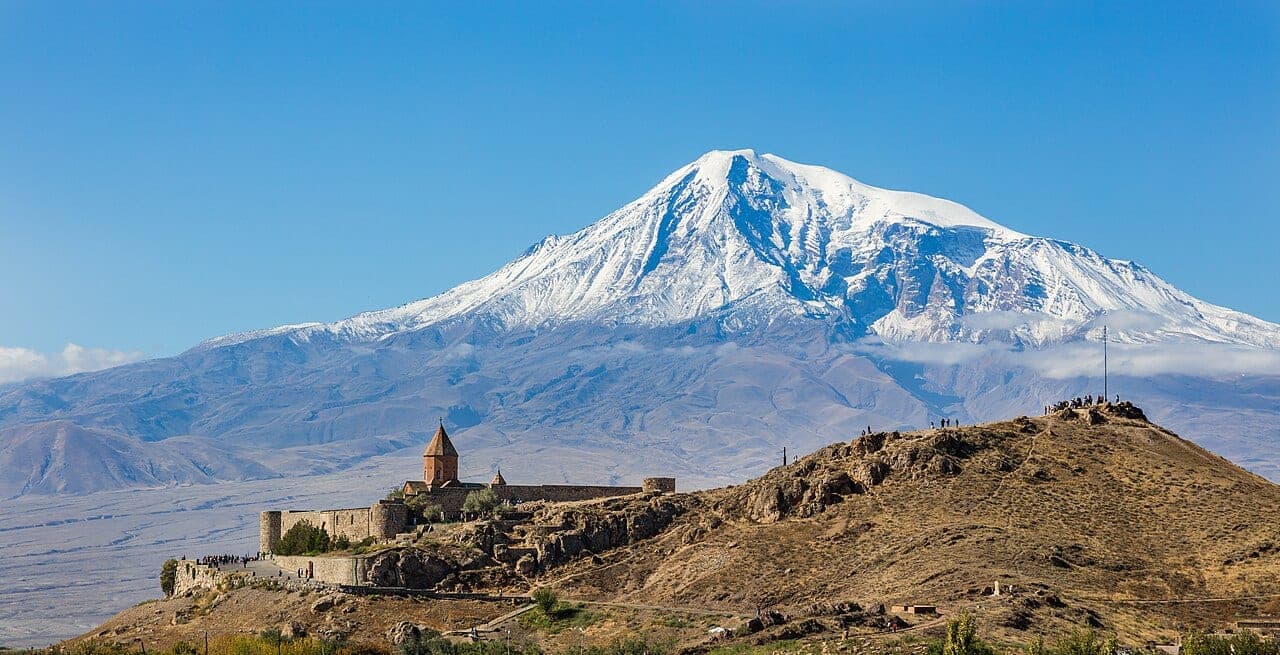
Few nations have made remembrance so central to their sense of self as Armenia. Perhaps three million Armenians live in the republic today, and two to three times that number are scattered across the world, held together less by borders than by memory: of a mountain now on the far side of a closed frontier, of saints and scribes, of a catastrophe a century has not dimmed. Armenians call themselves Hay and their homeland Hayastan, the land of Hayk, the legendary archer who founded the people at the foot of the mountains, so that the country's very name is an act of remembering an ancestor.
That instinct is carved in stone. Across the Armenian highland stand tens of thousands of khachkars, cross-stones raised over graves and for the living and the dead alike, no two the same, and the craft of making them sits on UNESCO's list of intangible heritage. It is written into a script no other language uses, invented so a newly Christian people could read scripture in their own tongue. And it is gathered each 24 April at a hilltop in Yerevan, where an eternal flame burns for the victims of the 1915 genocide.
Armenia is a landlocked country of the southern Caucasus, bordered by Turkey to the west, Georgia to the north, Azerbaijan to the east and Iran to the south. It is a country of high ground: the average elevation is around 1,800 metres, Mount Aragats reaches 4,090 metres, and Lake Sevan is one of the largest high-altitude freshwater lakes in the world. Above the plain to the south rises the twin-peaked Mount Ararat, the national symbol where Noah's ark is traditionally said to have rested; it now lies inside Turkey, across a closed border, yet fills the skyline of the capital and marks the national coat of arms.
The resident population is about three million, almost all ethnic Armenians of the Armenian Apostolic Church. What sets the country apart is its diaspora: estimates of Armenians worldwide range from roughly eight to eleven million, most living outside the republic, with the largest communities in Russia, the United States and France. Armenia regained independence in 1991 after seven decades in the Soviet Union, and its heritage policy, language planning and remembrance customs are all shaped by the need to hold a dispersed nation together.
Yerevan. The capital is one of the oldest continuously inhabited cities in the world, grown from the Urartian fortress of Erebuni that King Argishti I founded in 782 BC, older than Rome. It was largely rebuilt in the twentieth century to Alexander Tamanian's plan, which wrapped the centre around Republic Square and clad it in the local tuff that gives the pink city its name. Its landmarks gather the national memory in one place: the Matenadaran repository of manuscripts, the Cascade of stairways and sculpture, the History Museum, and, on a hill above, the Tsitsernakaberd genocide memorial.
Vagharshapat (Echmiadzin). West of the capital lies the spiritual heart of the nation. Long known by the name of its cathedral, Echmiadzin, it is the seat of the Catholicos of All Armenians. Its Mother Cathedral, traditionally founded just after the country's conversion, is regarded as one of the oldest cathedrals in the world and, with the nearby ruins of Zvartnots, forms part of Armenia's earliest UNESCO listing.
Gyumri. Armenia's second city, capital of the Shirak plain, is known for its craftsmen, its wit and its folk musicians, and for the black-and-red tuff mansions of its old Kumayri quarter. It carries a heavy modern memory: on 7 December 1988 the Spitak earthquake struck northern Armenia, killing at least twenty-five thousand people and levelling much of the then-Soviet city. Decades on, families still live in shelters put up after the disaster.
The Armenian highland has carried states for nearly three thousand years. The first was Urartu, a kingdom of the ninth to sixth centuries BC whose fortresses and cuneiform inscriptions survive at Erebuni and elsewhere. After it fell, the region passed through Median and Persian rule and then formed an Armenian kingdom that reached its height under Tigranes the Great, who ruled from about 95 to 55 BC and briefly held an empire stretching toward the Mediterranean before Rome checked its growth.
Two events near the turn of late antiquity fixed the national identity. Around the year 301, King Tiridates III, converted by Gregory the Illuminator, proclaimed Christianity the religion of his kingdom, traditionally counted as making Armenia the first state to adopt the faith; Gregory had earlier been imprisoned for thirteen years in the pit at Khor Virap, still a place of pilgrimage in the shadow of Ararat. A century later, around 405, the monk Mesrop Mashtots devised a distinct alphabet so scripture and liturgy could be set down in Armenian, opening a golden age of writing and translation.
The medieval centuries brought new kingdoms. The Bagratid dynasty restored an Armenian state in the ninth century, with its capital at Ani, a walled city near the modern Turkish border once called the city of a thousand and one churches, before it fell in 1045. Armenians then founded the kingdom of Cilician Armenia on the Mediterranean coast, which lasted from the eleventh into the fourteenth century. For much of the period that followed Armenia had no state of its own, its lands divided between the Ottoman and Persian empires, with the eastern provinces passing to the Russian Empire in the early nineteenth century.
During the First World War the Ottoman government carried out mass deportations and killings of its Armenian subjects beginning in 1915; estimates of the dead commonly reach around one million or more. The commemoration falls on 24 April, the date in 1915 when Armenian community leaders were arrested in Constantinople. Armenia, many other states and a broad body of scholars characterize these events as genocide; the Turkish state contests that characterization, acknowledging wartime deaths while rejecting the term and the finding of intent. This profile attributes those positions rather than adjudicating between them, and the events remain central to how Armenians understand themselves.
A short-lived First Republic was declared in 1918, but it lasted only until 1920, when the country was absorbed into the Soviet Union, becoming the Armenian Soviet Socialist Republic in 1936. Armenia declared independence again on 21 September 1991 as the Soviet state dissolved. The mountainous region of Nagorno-Karabakh, called Artsakh by Armenians and internationally recognized as part of Azerbaijan, was the subject of a prolonged dispute and repeated conflict between Armenia and Azerbaijan from the late 1980s onward; in September 2023 Azerbaijan reasserted control of the territory and most of its ethnic Armenian residents departed. This profile takes no position on that dispute.
Armenian forms its own independent branch of the Indo-European family, with no close living relatives. Its writing system was the work of one man: around 405, Mesrop Mashtots, aided by the Catholicos Sahak the Great, compiled an alphabet of thirty-six letters, later extended to thirty-eight, to capture the sounds of Armenian precisely. Tradition holds that the first sentence written in it was a verse from the Book of Proverbs, and the invention launched a golden age of translation, the Armenian Bible earning the name queen of translations. Today the language has two literary standards, Eastern Armenian in the republic and Iran, and Western Armenian carried by the descendants of Ottoman-era Armenians, the latter now classed by UNESCO as endangered.
The country answers to two names. To Armenians it is Hayastan, built from Hay, their self-designation, and a suffix meaning land, and traced in legend to the patriarch Hayk. To the rest of the world it is Armenia, an exonym first attested as Armina in the trilingual Behistun inscription of the Persian king Darius I, carved around 520 BC. Both names have been in continuous use for well over two thousand years.
The signature Armenian art is the khachkar, the cross-stone: an upright slab carved with an ornamented cross rising from a wheel of eternity, framed by interlace, vines and geometric lace so fine that no two stones repeat. Tens of thousands survive, and the craft is still practised. Closely related is the illuminated manuscript, kept alive over centuries in monastic scriptoria and gathered now in the Matenadaran, whose gospel books, such as those of the medieval master Toros Roslin, glow with colours ground from minerals and plants.
Sound carries the culture as much as stone. The duduk, a double-reed pipe made from apricot wood, produces a soft, mournful tone that many regard as the voice of the Armenian soul; its music was recognized by UNESCO in 2008 and now travels the world through film scores. Weaving is old too: Armenian carpets and their dragon patterns were made for home and export over generations. The table anchors family life: lavash, the thin flatbread slapped against the wall of a clay tonir oven, is itself on UNESCO's intangible list as inscribed in 2014, wrapping the grilled meat of khorovats and accompanying dolma, harissa and pomegranates. The Areni-1 cave in the south holds what is often called the oldest known winery, some six thousand years old.
The Armenian Apostolic Church is among the oldest Christian institutions in existence, founded in tradition by the apostles Bartholomew and Thaddeus and given a state footing by the conversion of 301. It belongs to the Oriental Orthodox communion, having declined to accept the Council of Chalcedon of 451, and is led by the Catholicos of All Armenians from the Mother See of Holy Echmiadzin, with smaller Armenian Catholic and Evangelical communities chiefly in the diaspora.
 At Geghard the inner chapels are cut directly into the cliff, so parts of the monastery were carved rather than built. Photograph by Vyacheslav Argenberg, CC BY 4.0, via Wikimedia Commons.
The church has been the keeper of national identity through long centuries without a state, guarding language, learning and liturgy. Its central place is often traced to the Battle of Avarayr in 451, when Armenian forces under Vardan Mamikonian fought the Sasanian Persian empire over the freedom to keep their faith; though a military defeat, it is remembered as a founding act of endurance. The church survived even the suppression of Soviet rule, and its feasts and sacraments have returned to public life since independence.
Armenian Apostolic mourning is a structured passage rather than a single event. A funeral, taghum, usually takes place within a few days of death, after a wake at which family and community keep company with the body. The requiem service, hogehangist, meaning the repose of the soul, is chanted at the burial, and a memorial meal, the hogejash, gathers mourners afterward. Prayers for the departed are offered again on the seventh day and, most importantly, on the fortieth, and then on the anniversaries that follow, so remembrance is renewed at set intervals.
At Geghard the inner chapels are cut directly into the cliff, so parts of the monastery were carved rather than built. Photograph by Vyacheslav Argenberg, CC BY 4.0, via Wikimedia Commons.
The church has been the keeper of national identity through long centuries without a state, guarding language, learning and liturgy. Its central place is often traced to the Battle of Avarayr in 451, when Armenian forces under Vardan Mamikonian fought the Sasanian Persian empire over the freedom to keep their faith; though a military defeat, it is remembered as a founding act of endurance. The church survived even the suppression of Soviet rule, and its feasts and sacraments have returned to public life since independence.
Armenian Apostolic mourning is a structured passage rather than a single event. A funeral, taghum, usually takes place within a few days of death, after a wake at which family and community keep company with the body. The requiem service, hogehangist, meaning the repose of the soul, is chanted at the burial, and a memorial meal, the hogejash, gathers mourners afterward. Prayers for the departed are offered again on the seventh day and, most importantly, on the fortieth, and then on the anniversaries that follow, so remembrance is renewed at set intervals.
 Khachkars at Noratus. No two are the same, each was carved for a particular person, and the craft is on the UNESCO intangible heritage list. Photograph by M.D. Shahinyan, CC BY-SA 4.0, via Wikimedia Commons.
The church also sets aside collective days of the dead. On Merelots, the memorial day that follows Easter and other great feasts, families go to the cemeteries to tend the graves, light candles and share food among the tombs. Over those graves stand the khachkars: the cross-stone is at heart a memorial, a way of fixing a name and a prayer in enduring stone, its wheel of eternity a statement about memory that outlasts the person it honours.
Above all this sits the memory of 1915. Every 24 April, hundreds of thousands walk up the hill of Tsitsernakaberd in Yerevan to lay flowers around the eternal flame, which burns within a ring of twelve inclined slabs beneath a tall cleft spire; the adjoining museum documents the events, and the forget-me-not adopted for the 2015 centennial has become the emblem of the commemoration. For a nation so widely dispersed, this shared day of mourning is one of the strongest threads holding the whole people together.
The Armenian record was made by the church, and then a great deal of it was made by the catastrophe.
Armenian Apostolic parishes kept registers of baptism, marriage and burial, and the church's structure meant those books existed across the Ottoman and Russian empires and in every diaspora community. Where the Ottoman-era registers survive at all, they are usually in the Patriarchate archives in Istanbul or Jerusalem, in Yerevan, or in the hands of the communities that carried them. Russian Armenia's records follow the imperial pattern of metrical books, and the National Archives of Armenia in Yerevan hold those along with the Soviet-era ZAGS series.
Then 1915. Around a million and a half Armenians were killed and the population of the eastern Anatolian provinces was destroyed, so for most diaspora families the record stops in a village whose registers no longer exist. What replaced it is an archive of survivors: the orphan registers of the Near East Relief, which cared for more than a hundred thousand children, the refugee and repatriation files of Syria, Lebanon, Greece, France and the United States, and the testimony collections gathered from the 1970s onward.
The Armenian Genocide Museum-Institute in Yerevan holds a great deal of that material, and its work is genealogical as much as historical, because for many families the only surviving document naming a great-grandparent is a relief agency's card.
The manuscripts survived better than the people. The Matenadaran in Yerevan holds one of the world's great collections of medieval manuscripts, carried out on foot.
Armenia has three properties on the UNESCO World Heritage List, all ensembles of medieval religious architecture. The Monasteries of Haghpat and Sanahin in the north, inscribed in 1996 and extended in 2000, were leading centres of learning and manuscript copying between the tenth and thirteenth centuries. The Monastery of Geghard and the Upper Azat Valley, inscribed in 2000, includes churches and tombs cut directly into the rock beneath towering cliffs. The Cathedral and Churches of Echmiatsin and the Archaeological Site of Zvartnots, also from 2000, gather the spiritual capital of the nation and the ruins of a seventh-century circular church. Other landmarks lie outside the list, among them the cliff-top monastery of Tatev in the south, reached since 2010 by the aerial tramway known as the Wings of Tatev.
Armenia's intangible heritage is well represented too. The duduk and its music (2008), the symbolism and craftsmanship of the khachkar (2010) and the making of lavash (2014) all appear on UNESCO's intangible lists, joined by the Kochari group dance and the national epic. At the centre of manuscript preservation stands the Matenadaran in Yerevan, formally the Mesrop Mashtots Institute of Ancient Manuscripts, which holds more than twenty-three thousand manuscripts along with hundreds of thousands of archival documents and serves at once as museum, archive and research institute.
The nation's dispersal has made digital heritage unusually valuable, since much of the audience lives far from the archive. The Matenadaran has been digitizing its manuscripts and publishing high-resolution images, letting scholars and descendants abroad consult books they could never reach in person, while the Armenian Genocide Museum-Institute maintains online exhibitions, testimony collections and databases that carry the record of 1915 to a global public. Diaspora-led projects extend the reach: Houshamadyan, for instance, reconstructs the everyday life of Ottoman-era Armenian towns and villages online from photographs, memoirs and objects, while virtual monastery tours, genealogical church records and online Armenian courses keep the culture reachable from anywhere.
Armenian creativity has long reached well beyond the republic's borders. The composer Aram Khachaturian gave the world the Sabre Dance and the ballet Spartacus, while the filmmaker Sergei Parajanov turned Armenian imagery into cinema with The Color of Pomegranates. William Saroyan wrote the immigrant experience into American literature, and Arshile Gorky helped shape mid-century abstraction in New York. The diaspora has produced figures from the French-Armenian singer Charles Aznavour to the rock band System of a Down, whose members have used their platform to keep the memory of 1915 in public view.
At home, Armenia has built a reputation in fields that reward a small, education-focused population. Chess is a compulsory subject in schools, and Armenian grandmasters have won team Olympiads. A growing technology sector has made Yerevan a regional software hub, while cultural festivals and a revived wine industry draw a new generation of visitors and returnees.
The Matenadaran's manuscripts, saved and shared. Books that survived invasion, fire and forced migration, sometimes carried to safety a few pages at a time, are now conserved and increasingly digitized, so a scholar in Los Angeles or Beirut can study a medieval Armenian gospel from a screen.
The duduk carries a small language to a wide audience. Recognized by UNESCO in 2008, the apricot-wood pipe is now one of the most recognizable sounds in world cinema, reaching millions with no other connection to Armenia.
The Wings of Tatev revives a remote region. The aerial tramway opened in 2010 restored access to the medieval monastery of Tatev and brought visitors and income to a thinly populated corner of the south.
A day of mourning holds a scattered nation together. Each 24 April, communities from Yerevan to Glendale, Marseille and Moscow observe the same commemoration, a shared act of memory that keeps a dispersed people conscious of itself as one.
Khachkars at Noratus. No two are the same, each was carved for a particular person, and the craft is on the UNESCO intangible heritage list. Photograph by M.D. Shahinyan, CC BY-SA 4.0, via Wikimedia Commons.
The church also sets aside collective days of the dead. On Merelots, the memorial day that follows Easter and other great feasts, families go to the cemeteries to tend the graves, light candles and share food among the tombs. Over those graves stand the khachkars: the cross-stone is at heart a memorial, a way of fixing a name and a prayer in enduring stone, its wheel of eternity a statement about memory that outlasts the person it honours.
Above all this sits the memory of 1915. Every 24 April, hundreds of thousands walk up the hill of Tsitsernakaberd in Yerevan to lay flowers around the eternal flame, which burns within a ring of twelve inclined slabs beneath a tall cleft spire; the adjoining museum documents the events, and the forget-me-not adopted for the 2015 centennial has become the emblem of the commemoration. For a nation so widely dispersed, this shared day of mourning is one of the strongest threads holding the whole people together.
The Armenian record was made by the church, and then a great deal of it was made by the catastrophe.
Armenian Apostolic parishes kept registers of baptism, marriage and burial, and the church's structure meant those books existed across the Ottoman and Russian empires and in every diaspora community. Where the Ottoman-era registers survive at all, they are usually in the Patriarchate archives in Istanbul or Jerusalem, in Yerevan, or in the hands of the communities that carried them. Russian Armenia's records follow the imperial pattern of metrical books, and the National Archives of Armenia in Yerevan hold those along with the Soviet-era ZAGS series.
Then 1915. Around a million and a half Armenians were killed and the population of the eastern Anatolian provinces was destroyed, so for most diaspora families the record stops in a village whose registers no longer exist. What replaced it is an archive of survivors: the orphan registers of the Near East Relief, which cared for more than a hundred thousand children, the refugee and repatriation files of Syria, Lebanon, Greece, France and the United States, and the testimony collections gathered from the 1970s onward.
The Armenian Genocide Museum-Institute in Yerevan holds a great deal of that material, and its work is genealogical as much as historical, because for many families the only surviving document naming a great-grandparent is a relief agency's card.
The manuscripts survived better than the people. The Matenadaran in Yerevan holds one of the world's great collections of medieval manuscripts, carried out on foot.
Armenia has three properties on the UNESCO World Heritage List, all ensembles of medieval religious architecture. The Monasteries of Haghpat and Sanahin in the north, inscribed in 1996 and extended in 2000, were leading centres of learning and manuscript copying between the tenth and thirteenth centuries. The Monastery of Geghard and the Upper Azat Valley, inscribed in 2000, includes churches and tombs cut directly into the rock beneath towering cliffs. The Cathedral and Churches of Echmiatsin and the Archaeological Site of Zvartnots, also from 2000, gather the spiritual capital of the nation and the ruins of a seventh-century circular church. Other landmarks lie outside the list, among them the cliff-top monastery of Tatev in the south, reached since 2010 by the aerial tramway known as the Wings of Tatev.
Armenia's intangible heritage is well represented too. The duduk and its music (2008), the symbolism and craftsmanship of the khachkar (2010) and the making of lavash (2014) all appear on UNESCO's intangible lists, joined by the Kochari group dance and the national epic. At the centre of manuscript preservation stands the Matenadaran in Yerevan, formally the Mesrop Mashtots Institute of Ancient Manuscripts, which holds more than twenty-three thousand manuscripts along with hundreds of thousands of archival documents and serves at once as museum, archive and research institute.
The nation's dispersal has made digital heritage unusually valuable, since much of the audience lives far from the archive. The Matenadaran has been digitizing its manuscripts and publishing high-resolution images, letting scholars and descendants abroad consult books they could never reach in person, while the Armenian Genocide Museum-Institute maintains online exhibitions, testimony collections and databases that carry the record of 1915 to a global public. Diaspora-led projects extend the reach: Houshamadyan, for instance, reconstructs the everyday life of Ottoman-era Armenian towns and villages online from photographs, memoirs and objects, while virtual monastery tours, genealogical church records and online Armenian courses keep the culture reachable from anywhere.
Armenian creativity has long reached well beyond the republic's borders. The composer Aram Khachaturian gave the world the Sabre Dance and the ballet Spartacus, while the filmmaker Sergei Parajanov turned Armenian imagery into cinema with The Color of Pomegranates. William Saroyan wrote the immigrant experience into American literature, and Arshile Gorky helped shape mid-century abstraction in New York. The diaspora has produced figures from the French-Armenian singer Charles Aznavour to the rock band System of a Down, whose members have used their platform to keep the memory of 1915 in public view.
At home, Armenia has built a reputation in fields that reward a small, education-focused population. Chess is a compulsory subject in schools, and Armenian grandmasters have won team Olympiads. A growing technology sector has made Yerevan a regional software hub, while cultural festivals and a revived wine industry draw a new generation of visitors and returnees.
The Matenadaran's manuscripts, saved and shared. Books that survived invasion, fire and forced migration, sometimes carried to safety a few pages at a time, are now conserved and increasingly digitized, so a scholar in Los Angeles or Beirut can study a medieval Armenian gospel from a screen.
The duduk carries a small language to a wide audience. Recognized by UNESCO in 2008, the apricot-wood pipe is now one of the most recognizable sounds in world cinema, reaching millions with no other connection to Armenia.
The Wings of Tatev revives a remote region. The aerial tramway opened in 2010 restored access to the medieval monastery of Tatev and brought visitors and income to a thinly populated corner of the south.
A day of mourning holds a scattered nation together. Each 24 April, communities from Yerevan to Glendale, Marseille and Moscow observe the same commemoration, a shared act of memory that keeps a dispersed people conscious of itself as one.
National Overview
Notable Cities
Historical Foundations
Linguistic and Etymological Roots
Cultural Identity
Religion and Spirituality
Remembrance and Mourning Traditions
Tracing a Family in Armenia
Heritage Preservation Efforts
Digital Heritage
Contemporary Cultural Influences
Success Stories
References and resources
- UNESCO World Heritage Centre: Armenia. State-party page listing Armenia's three World Heritage properties.
- UNESCO Intangible Cultural Heritage: Duduk and its music. The 2008 inscription of the national wind instrument.
- UNESCO Intangible Cultural Heritage: Armenian cross-stones art (khachkars). The 2010 inscription covering khachkar symbolism and craft.
- UNESCO Intangible Cultural Heritage: Lavash. The 2014 inscription of traditional Armenian bread-making.
- Encyclopaedia Britannica: Armenia. Geography, history and political background.
- World History Encyclopedia: The Early Christianization of Armenia. The conversion of 301 and Gregory the Illuminator.
- Armenian Genocide Museum-Institute. The Tsitsernakaberd memorial complex, its museum and its archives.
- Matenadaran: Mesrop Mashtots Institute of Ancient Manuscripts. The national repository of Armenian manuscripts.
- Wikipedia: Armenia. Overview of the country's history, demography and culture.