Heritage · Country
Hungary Culture and Heritage
On the second of November, Hungarian families carry chrysanthemums and candles to the cemeteries until whole hillsides of graves glow after dark. A guide to the country's heritage, its singular language, and the ways Hungarians keep faith with a much-divided past.Written to last.
By Confinity Heritage Editorial · 2026-07-11 · 8-minute readQuiet tools, kept out of the way.
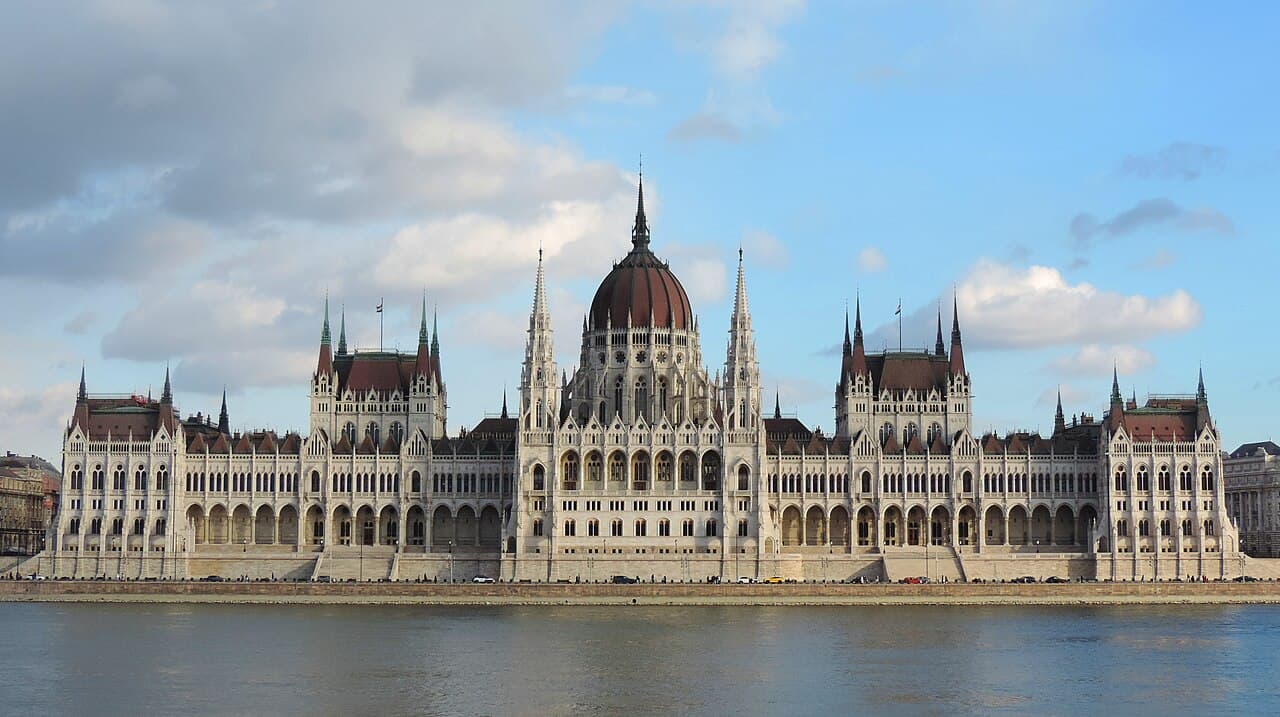
Every year on the night of the second of November, the cemeteries of Hungary fill with light. For Halottak napja, the Day of the Dead, families clean the family plot, lay chrysanthemums and lanterns, and light candles until the graveyards of Budapest and the smallest Transylvanian-border villages glow together in the cold. It is one of the country's most widely kept customs, observed by believers and non-believers alike, and it says something essential about a nation that has spent much of its history burying and reburying its dead, redrawing its borders, and arguing about how the past should be remembered.
Hungary is a country that has had to become expert in loss. The Treaty of Trianon in 1920 stripped it of two-thirds of its territory and left millions of Magyars living in neighbouring states; the Holocaust of 1944 destroyed much of one of Europe's great Jewish communities; and the crushing of the 1956 revolution sent a generation into exile. Yet the same century produced the reburial of a martyred prime minister before a crowd of hundreds of thousands, a folk-music revival that saved a vanishing peasant tradition, and one of the most ambitious digital archives of ordinary life anywhere in Europe.
 The Danube quay at Pest in a watercolour by Rudolf von Alt, 1847, two decades before Buda and Pest were united as one city. Public domain, via Wikimedia Commons.
Hungary is a landlocked country of about 93,000 square kilometres in the heart of the Carpathian Basin, the broad lowland ringed by mountains that the Danube and the Tisza drain on their way to the Black Sea. Most of the land is plain: the Great Hungarian Plain, the Alföld, spreads flat and open to the east and south, its grasslands, the puszta, long a symbol of the country in painting and song, while gentler hills rise in Transdanubia to the west. The Danube cuts the country almost in half from north to south, passing through Budapest, and Lake Balaton, the largest lake in central Europe, draws crowds to its shallow summer water. There are no high mountains; the highest point, Kékes in the Mátra range, reaches only 1,014 metres.
With a population of roughly 9.6 million, Hungary is a parliamentary republic and has been a member of NATO since 1999 and of the European Union since 2004. It is unusually homogeneous in language, and yet its national story cannot be told inside its present borders: the frontiers drawn at Trianon left large Hungarian-speaking communities in Romania (above all in Transylvania and the Székely Land), Slovakia, Serbia's Vojvodina and Ukraine's Transcarpathia, so that a substantial share of all Magyars live in states other than Hungary. That fact, more than any institution, shapes how the country thinks about heritage, kinship and memory.
Budapest. The capital, home to some 1.7 million people, was created in 1873 by uniting hilly Buda and the old royal seat of Óbuda on the west bank with flat, commercial Pest on the east. The whole riverfront, from the Buda Castle Quarter and the neo-Gothic Parliament to Andrássy Avenue and the Millennium Underground, is a UNESCO World Heritage Site. Its memory sites are everywhere: the Dohány Street Synagogue, the largest in Europe; the Shoes on the Danube Bank; the Fiumei Road cemetery where the nation's great figures lie; and the thermal baths, fed by springs the Romans and Ottomans used before the Habsburgs.
The Danube quay at Pest in a watercolour by Rudolf von Alt, 1847, two decades before Buda and Pest were united as one city. Public domain, via Wikimedia Commons.
Hungary is a landlocked country of about 93,000 square kilometres in the heart of the Carpathian Basin, the broad lowland ringed by mountains that the Danube and the Tisza drain on their way to the Black Sea. Most of the land is plain: the Great Hungarian Plain, the Alföld, spreads flat and open to the east and south, its grasslands, the puszta, long a symbol of the country in painting and song, while gentler hills rise in Transdanubia to the west. The Danube cuts the country almost in half from north to south, passing through Budapest, and Lake Balaton, the largest lake in central Europe, draws crowds to its shallow summer water. There are no high mountains; the highest point, Kékes in the Mátra range, reaches only 1,014 metres.
With a population of roughly 9.6 million, Hungary is a parliamentary republic and has been a member of NATO since 1999 and of the European Union since 2004. It is unusually homogeneous in language, and yet its national story cannot be told inside its present borders: the frontiers drawn at Trianon left large Hungarian-speaking communities in Romania (above all in Transylvania and the Székely Land), Slovakia, Serbia's Vojvodina and Ukraine's Transcarpathia, so that a substantial share of all Magyars live in states other than Hungary. That fact, more than any institution, shapes how the country thinks about heritage, kinship and memory.
Budapest. The capital, home to some 1.7 million people, was created in 1873 by uniting hilly Buda and the old royal seat of Óbuda on the west bank with flat, commercial Pest on the east. The whole riverfront, from the Buda Castle Quarter and the neo-Gothic Parliament to Andrássy Avenue and the Millennium Underground, is a UNESCO World Heritage Site. Its memory sites are everywhere: the Dohány Street Synagogue, the largest in Europe; the Shoes on the Danube Bank; the Fiumei Road cemetery where the nation's great figures lie; and the thermal baths, fed by springs the Romans and Ottomans used before the Habsburgs.
 The Széchenyi Chain Bridge, the first permanent span between Buda and Pest, opened in 1849, in a 1907 postcard. Public domain, via Wikimedia Commons.
Debrecen. The great city of the eastern plain, Hungary's second largest, is the stronghold of Hungarian Calvinism, so proudly Protestant that it is nicknamed the "Calvinist Rome". Its twin-towered Reformed Great Church is a national symbol; it was there, in 1849, that Lajos Kossuth read out Hungary's declaration of independence from the Habsburgs, and there again that a provisional government met in 1944 as the war closed in.
Pécs. In the far south, Pécs keeps a Roman past under its streets: the Early Christian Necropolis of Sopianae, a set of painted fourth-century burial chambers, is a World Heritage Site and one of the finest such cemeteries north of the Mediterranean. Centuries of Ottoman rule left the city the Mosque of Pasha Qasim, now a church, whose green dome still crowns the main square. Pécs was a European Capital of Culture in 2010.
Szeged. Rebuilt on a grand plan after the Tisza flood of 1879 destroyed almost the entire town, Szeged is a city of boulevards and its votive church, the Cathedral, raised in thanks for the recovery. It is known for paprika and for its open-air festival, and its university carries the name of Albert Szent-Györgyi, who isolated vitamin C there and won the Nobel Prize in 1937.
Sopron. On the Austrian border, Sopron escaped the Mongol and Ottoman destruction that flattened so much of Hungary and kept a dense medieval and baroque core. In a 1921 plebiscite the town voted to remain in Hungary rather than join Austria, earning the title Civitas Fidelissima, the "most loyal town", a piece of Trianon-era memory still marked on its Loyalty Gate.
The Magyars, a confederation of horse-riding tribes speaking a Finno-Ugric language, crossed the Carpathians and occupied the basin around 895, an event Hungarians call the Honfoglalás, the "conquest of the homeland", led by the chieftain Árpád. A century of raids across Europe ended in defeat, and the decisive turn came with Árpád's descendant Stephen, who accepted Christianity, was crowned around the year 1000 with a crown said to have been sent by the pope, and built a Christian kingdom. Canonised as Saint Stephen, he remains the founding figure of the nation, and the Holy Crown that bears his name is still treated as an emblem of the state itself, displayed under guard in the Parliament.
Catastrophe and recovery set the rhythm of the centuries that followed. The Mongols devastated the kingdom in 1241–42; it rebuilt. Under kings such as Matthias Corvinus in the fifteenth century, Hungary became a Renaissance power with one of Europe's great libraries. Then came the Ottomans: the disaster at Mohács in 1526, where the young King Louis II died in the rout, opened the way to a century and a half of partition, with Buda under Turkish rule from 1541 until its bloody recapture in 1686. The Habsburgs who liberated the country then ruled it, and Hungarian resentment of Vienna erupted in the revolution of 1848–49, led by Lajos Kossuth and given its voice by the poet Sándor Petőfi, who vanished in battle at twenty-six. The revolution was crushed with Russian help, and its defeat is still mourned: on 6 October Hungarians remember the thirteen generals executed at Arad and Prime Minister Batthyány shot in Pest. The Compromise of 1867 created the dual monarchy of Austria-Hungary and a belle-époque golden age that built much of modern Budapest, but the First World War ended it, and the Treaty of Trianon in 1920 remains the deepest wound in the national memory. The twentieth century then brought the Holocaust, the Second World War, four decades of Communist rule after 1949, the revolution of 1956 and its suppression, and finally the peaceful transition of 1989.
The Széchenyi Chain Bridge, the first permanent span between Buda and Pest, opened in 1849, in a 1907 postcard. Public domain, via Wikimedia Commons.
Debrecen. The great city of the eastern plain, Hungary's second largest, is the stronghold of Hungarian Calvinism, so proudly Protestant that it is nicknamed the "Calvinist Rome". Its twin-towered Reformed Great Church is a national symbol; it was there, in 1849, that Lajos Kossuth read out Hungary's declaration of independence from the Habsburgs, and there again that a provisional government met in 1944 as the war closed in.
Pécs. In the far south, Pécs keeps a Roman past under its streets: the Early Christian Necropolis of Sopianae, a set of painted fourth-century burial chambers, is a World Heritage Site and one of the finest such cemeteries north of the Mediterranean. Centuries of Ottoman rule left the city the Mosque of Pasha Qasim, now a church, whose green dome still crowns the main square. Pécs was a European Capital of Culture in 2010.
Szeged. Rebuilt on a grand plan after the Tisza flood of 1879 destroyed almost the entire town, Szeged is a city of boulevards and its votive church, the Cathedral, raised in thanks for the recovery. It is known for paprika and for its open-air festival, and its university carries the name of Albert Szent-Györgyi, who isolated vitamin C there and won the Nobel Prize in 1937.
Sopron. On the Austrian border, Sopron escaped the Mongol and Ottoman destruction that flattened so much of Hungary and kept a dense medieval and baroque core. In a 1921 plebiscite the town voted to remain in Hungary rather than join Austria, earning the title Civitas Fidelissima, the "most loyal town", a piece of Trianon-era memory still marked on its Loyalty Gate.
The Magyars, a confederation of horse-riding tribes speaking a Finno-Ugric language, crossed the Carpathians and occupied the basin around 895, an event Hungarians call the Honfoglalás, the "conquest of the homeland", led by the chieftain Árpád. A century of raids across Europe ended in defeat, and the decisive turn came with Árpád's descendant Stephen, who accepted Christianity, was crowned around the year 1000 with a crown said to have been sent by the pope, and built a Christian kingdom. Canonised as Saint Stephen, he remains the founding figure of the nation, and the Holy Crown that bears his name is still treated as an emblem of the state itself, displayed under guard in the Parliament.
Catastrophe and recovery set the rhythm of the centuries that followed. The Mongols devastated the kingdom in 1241–42; it rebuilt. Under kings such as Matthias Corvinus in the fifteenth century, Hungary became a Renaissance power with one of Europe's great libraries. Then came the Ottomans: the disaster at Mohács in 1526, where the young King Louis II died in the rout, opened the way to a century and a half of partition, with Buda under Turkish rule from 1541 until its bloody recapture in 1686. The Habsburgs who liberated the country then ruled it, and Hungarian resentment of Vienna erupted in the revolution of 1848–49, led by Lajos Kossuth and given its voice by the poet Sándor Petőfi, who vanished in battle at twenty-six. The revolution was crushed with Russian help, and its defeat is still mourned: on 6 October Hungarians remember the thirteen generals executed at Arad and Prime Minister Batthyány shot in Pest. The Compromise of 1867 created the dual monarchy of Austria-Hungary and a belle-époque golden age that built much of modern Budapest, but the First World War ended it, and the Treaty of Trianon in 1920 remains the deepest wound in the national memory. The twentieth century then brought the Holocaust, the Second World War, four decades of Communist rule after 1949, the revolution of 1956 and its suppression, and finally the peaceful transition of 1989.
 The statue of Prince Eugene of Savoy before the Royal Palace of Buda Castle, in a 1906 postcard. Public domain, via Wikimedia Commons.
Hungarian, which its speakers call magyar, is one of the reasons the country feels distinct from its neighbours. It belongs not to the vast Indo-European family that surrounds it but to the Uralic family, its closest major relatives being Finnish and Estonian, from which it separated thousands of years ago on the far side of the Ural Mountains. It is agglutinative, building long words by stacking suffixes, and its vocabulary, grammar and even its way of ordering names, family name first, set it apart from the Slavic, Germanic and Romance languages around it. For Hungarians the language is the core of identity, "the fortress of the nation" in a common phrase, and its survival through centuries of foreign rule is treated as an achievement in itself.
The country's names carry their own history. "Hungary" and its cognates in other European languages descend not from magyar but from the Onogur, a Turkic tribal confederation whose name meant something like "ten arrows", with which outsiders once associated the Magyars; the accidental echo of the Huns in "Hungary" is a later folk connection. The endonym Magyar comes from the people's own ancient self-name. The map, meanwhile, records every layer of settlement: Slavic place-names from the peoples the Magyars found in the basin, Turkish traces from the occupation, German names in the towns the Habsburgs resettled with Swabian colonists, and the pure Hungarian names of the plain. Beyond the border, the dialect of the Székelys of eastern Transylvania and the archaic speech of the Csángós of Moldavia preserve older forms of the language among communities that have lived outside Hungary's frontiers for centuries.
Hungarian everyday culture runs on a handful of powerful institutions. The thermal bath is one: sitting in the steaming outdoor pools of Budapest's Széchenyi baths in winter, or playing chess across a floating board, is a genuinely national pastime, built on the hundreds of hot springs that made the country a spa culture long before tourism. The table is another. Paprika, brought from the New World and made Hungarian, colours the national dishes, gulyás (goulash), pörkölt and halászlé, and Hungary's sweet Tokaji wine, the "wine of kings", was prized across Europe before Bordeaux. Coffee-house culture, born in the belle époque, gave the city's writers their second homes.
The country's contribution to European art music is out of all proportion to its size. Franz Liszt gave his name to the Budapest academy that still trains musicians; and in the early twentieth century Béla Bartók and Zoltán Kodály travelled the villages with phonographs, recording thousands of peasant songs before they were lost, and built from them both a new classical music and a system of music education used around the world. That collecting work later fed the táncház, the "dance house" movement of the 1970s, which revived Transylvanian village dance and music among young urban Hungarians and became a model, recognised by UNESCO, for keeping folk tradition alive. Folk custom itself endures in the embroidery of Kalocsa and the Matyó of Mezőkövesd, in the carved shepherds' crafts of the plain, and in the Busójárás of Mohács, the masked, sheepskin-clad midwinter carnival, inscribed by UNESCO, in which the townsfolk drive out winter, and, by tradition, once frightened off the Turks. Hungary's genius for invention is a point of national pride too: the Rubik's Cube, designed by the architect Ernő Rubik in 1974, and a long line of scientists and Nobel laureates, many of them émigrés, are claimed as part of the same inheritance.
Christianity has shaped Hungary since Saint Stephen made it the state religion around the year 1000, and the country has been Catholic, Protestant and religiously divided by turns ever since. The Reformation took deep root in the sixteenth and seventeenth centuries, especially the Calvinism of the eastern plain, and Hungary remains one of the more Protestant of the historically Catholic lands of central Europe: Roman Catholics are the largest group, the Reformed (Calvinist) Church the second, with Lutherans and Greek Catholics making up smaller shares, though recent censuses show a steep rise in those declaring no religion or declining to answer. The Primate of Hungary sits at Esztergom, the birthplace of Saint Stephen, whose vast basilica, the largest church in the country, rises above the Danube where it forms the Slovak border.
The statue of Prince Eugene of Savoy before the Royal Palace of Buda Castle, in a 1906 postcard. Public domain, via Wikimedia Commons.
Hungarian, which its speakers call magyar, is one of the reasons the country feels distinct from its neighbours. It belongs not to the vast Indo-European family that surrounds it but to the Uralic family, its closest major relatives being Finnish and Estonian, from which it separated thousands of years ago on the far side of the Ural Mountains. It is agglutinative, building long words by stacking suffixes, and its vocabulary, grammar and even its way of ordering names, family name first, set it apart from the Slavic, Germanic and Romance languages around it. For Hungarians the language is the core of identity, "the fortress of the nation" in a common phrase, and its survival through centuries of foreign rule is treated as an achievement in itself.
The country's names carry their own history. "Hungary" and its cognates in other European languages descend not from magyar but from the Onogur, a Turkic tribal confederation whose name meant something like "ten arrows", with which outsiders once associated the Magyars; the accidental echo of the Huns in "Hungary" is a later folk connection. The endonym Magyar comes from the people's own ancient self-name. The map, meanwhile, records every layer of settlement: Slavic place-names from the peoples the Magyars found in the basin, Turkish traces from the occupation, German names in the towns the Habsburgs resettled with Swabian colonists, and the pure Hungarian names of the plain. Beyond the border, the dialect of the Székelys of eastern Transylvania and the archaic speech of the Csángós of Moldavia preserve older forms of the language among communities that have lived outside Hungary's frontiers for centuries.
Hungarian everyday culture runs on a handful of powerful institutions. The thermal bath is one: sitting in the steaming outdoor pools of Budapest's Széchenyi baths in winter, or playing chess across a floating board, is a genuinely national pastime, built on the hundreds of hot springs that made the country a spa culture long before tourism. The table is another. Paprika, brought from the New World and made Hungarian, colours the national dishes, gulyás (goulash), pörkölt and halászlé, and Hungary's sweet Tokaji wine, the "wine of kings", was prized across Europe before Bordeaux. Coffee-house culture, born in the belle époque, gave the city's writers their second homes.
The country's contribution to European art music is out of all proportion to its size. Franz Liszt gave his name to the Budapest academy that still trains musicians; and in the early twentieth century Béla Bartók and Zoltán Kodály travelled the villages with phonographs, recording thousands of peasant songs before they were lost, and built from them both a new classical music and a system of music education used around the world. That collecting work later fed the táncház, the "dance house" movement of the 1970s, which revived Transylvanian village dance and music among young urban Hungarians and became a model, recognised by UNESCO, for keeping folk tradition alive. Folk custom itself endures in the embroidery of Kalocsa and the Matyó of Mezőkövesd, in the carved shepherds' crafts of the plain, and in the Busójárás of Mohács, the masked, sheepskin-clad midwinter carnival, inscribed by UNESCO, in which the townsfolk drive out winter, and, by tradition, once frightened off the Turks. Hungary's genius for invention is a point of national pride too: the Rubik's Cube, designed by the architect Ernő Rubik in 1974, and a long line of scientists and Nobel laureates, many of them émigrés, are claimed as part of the same inheritance.
Christianity has shaped Hungary since Saint Stephen made it the state religion around the year 1000, and the country has been Catholic, Protestant and religiously divided by turns ever since. The Reformation took deep root in the sixteenth and seventeenth centuries, especially the Calvinism of the eastern plain, and Hungary remains one of the more Protestant of the historically Catholic lands of central Europe: Roman Catholics are the largest group, the Reformed (Calvinist) Church the second, with Lutherans and Greek Catholics making up smaller shares, though recent censuses show a steep rise in those declaring no religion or declining to answer. The Primate of Hungary sits at Esztergom, the birthplace of Saint Stephen, whose vast basilica, the largest church in the country, rises above the Danube where it forms the Slovak border.
 The coronation of Franz Joseph as King of Hungary at the Matthias Church in Buda, 1867. Public domain, via Wikimedia Commons.
Hungarian Jewish history is inseparable from the story of Budapest, which by 1900 had one of the largest and most creative Jewish communities in Europe, centred on the Moorish-style Dohány Street Synagogue completed in 1859. That world was shattered in 1944, but the community survived in greater numbers than almost anywhere else in the region, and Budapest is again a centre of Jewish life. Older and stranger devotions persist as well: the shrine of Máriapócs in the north-east, where a weeping icon of the Virgin drew Greek Catholic pilgrims, and the great national pilgrimage to Csíksomlyó (Șumuleu Ciuc) in the Székely Land of Transylvania, where hundreds of thousands of Hungarians gather at Whitsun in one of the largest Christian pilgrimages in central Europe, an act of faith and of national belonging at once.
Hungarian mourning keeps close to the calendar and to the grave. The most visible custom is Halottak napja, All Souls' Day on 2 November, following All Saints' on the 1st: families travel, often long distances, to tend the graves of their dead, clearing and planting them, laying chrysanthemums, the flower of the dead, and lighting candles and lanterns so that by nightfall the cemeteries glow with thousands of small flames. In the villages the older rites of death survive within living memory and sometimes still in practice: the virrasztás, the wake at which neighbours sit with the body through the night; the tolling of the church bell; the sirató, the ritual lament sung by women, which Bartók and Kodály recorded as a musical form in its own right; and elaborately carved wooden grave-posts, the kopjafák of the Calvinist and Székely regions, whose shapes encode the age, sex and status of the person beneath. The carved grave-post has since become a national symbol, raised as a memorial far beyond the graveyard.
Public remembrance in Hungary is unusually charged because so much of it concerns defeat, division and the reckoning with dictatorship. Three dates carry the weight of the modern nation. The 6th of October mourns the martyrs of the 1848–49 revolution. The 4th of June marks the anniversary of the Treaty of Trianon, kept since 2010 as the Day of National Cohesion, when Hungarians remember the territory and the millions of Magyars lost in 1920. And the 23rd of October, once a forbidden anniversary, is now a national holiday commemorating the 1956 revolution, when Hungarians rose against Soviet rule and were crushed by tanks. The reburial of Imre Nagy, the reform prime minister of 1956 who was hanged in secret in 1958 and buried face-down in an unmarked grave, became the great ritual of the transition: on 16 June 1989 his reinterment before some 200,000 people in Heroes' Square turned a funeral into the symbolic end of Communism. Budapest's central cemetery on Fiumei Road, the country's national pantheon, gathers the graves and mausoleums of its statesmen, writers and artists, from Kossuth to Batthyány, while a wall of the same cemetery marks the plot where the executed of 1956 were once dumped.
The memory of the Holocaust has produced some of the country's most affecting memorials. Along the Pest embankment, sixty cast-iron pairs of period shoes, the Shoes on the Danube Bank installed in 2005, mark the spot where Arrow Cross militiamen shot Jews into the river in the winter of 1944–45, telling them to remove their shoes first. Nearby, the Dohány Street Synagogue's courtyard holds a mass grave of ghetto victims and a weeping-willow memorial whose metal leaves are inscribed with the names of the dead. Together with the House of Terror museum in the former secret-police headquarters on Andrássy Avenue, these sites show a country still working, and still arguing, over how to remember the twin totalitarian catastrophes of its twentieth century.
Hungarian records are precise, and the date to remember is 1 October 1895.
That is when the state took registration of births, marriages and deaths from the churches. Before it, the parish register is the record, and Hungarian parishes kept them well: Catholic books from the seventeenth century, Reformed and Lutheran from the same period or a little later, and Jewish community registers from the late eighteenth century when the state required them. The Hungarian National Archives and FamilySearch have digitised a large share, and civil registers from 1895 are microfilmed and searchable.
The complication is the map. Before 1920 the Kingdom of Hungary covered territory that is now in Slovakia, Romania, Serbia, Croatia, Ukraine, Austria and Slovenia. A Hungarian family that never moved may have its records in another country and in another language, and the place name in the family's memory may be the Hungarian one while the archive files it under the modern name. Working out which archive holds a village is usually the first hour of Hungarian research and sometimes the hardest.
Jewish records are a large part of the Hungarian archive and a large absence. Around 560,000 Hungarian Jews were killed, most of them deported in a few weeks in 1944, and the deportation lists, the Arolsen Archives and the Yad Vashem names database are where those families are documented. The registers themselves largely survive, which is why so many of the names are recoverable.
Hungary's heritage institutions are old and central to national life. The Hungarian National Museum was founded in 1802 on the collections of Count Ferenc Széchényi, who in the same act gave the country its national library, now the Széchényi National Library housed in Buda Castle; the Hungarian Academy of Sciences followed in 1825, funded by his son István Széchenyi, the reformer who also built the Chain Bridge. These bodies grew out of the reform era's conviction that a nation is sustained by its records and its learning, and they remain the backbone of preservation today, alongside the National Archives of Hungary, whose holdings reach back to medieval charters.
Hungary has eight UNESCO World Heritage Sites, which together map the national story. Budapest's Danube panorama, Castle Quarter and Andrássy Avenue represent the capital; the old Palóc village of Hollókő preserves a living folk settlement of whitewashed houses; the Millenary Benedictine Abbey of Pannonhalma, founded in 996, is the country's oldest continuously used monastery and archive; Hortobágy National Park protects the puszta and its herding traditions; the Early Christian Necropolis of Pécs keeps its Roman burial art; the Fertő/Neusiedlersee landscape and the Aggtelek karst caves span the borders; and the Tokaj wine region protects a cultural landscape of cellars and terraced vines. Preservation extends to the intangible too, through Hungary's UNESCO listings for the Busójárás carnival, the táncház method of folk-dance transmission, and the falconry and blue-dyeing traditions it shares with neighbours. A national network of open-air village museums, the largest at Szentendre, has rescued and rebuilt vernacular architecture from across the historic country.
Hungary has thrown itself into digitisation with notable energy. The commercial-scholarly platform Arcanum has built Hungaricana and the Arcanum Digital Science Library, an enormous searchable corpus of digitised newspapers, journals, maps, church registers and archival material running to many millions of pages, which has transformed research and family history alike. The National Archives and the county archives have put civil registers, censuses and manorial records online, and because Hungarian church records were microfilmed in the twentieth century, genealogists worldwide can trace Magyar ancestors, including those from the lost territories, through FamilySearch and the archives' own portals.
The most beloved of Hungary's digital projects is Fortepan, a free online photo archive begun in 2010 and named after a classic Hungarian film stock. Built from tens of thousands of donated amateur photographs, most of them anonymous snapshots of ordinary twentieth-century life, it has become a national album, its images carefully dated and located by volunteers and used everywhere from schoolbooks to documentaries. For sound and testimony, the recordings that Bartók and Kodály and their successors made of village singers survive in the archives of the Institute for Musicology, and the visual arts have been opened up by digitisation programmes at the Museum of Fine Arts and the Hungarian National Gallery, so that the country's painted and recorded memory is increasingly available to anyone with a connection.
Hungary's cultural reach today runs along two channels: the world of the diaspora and the world of contemporary art. The diaspora is vast and old, from the "forty-eighters" who fled after 1849 and the political exiles of 1919, 1945 and 1956 to the Hungarian-speaking communities of Transylvania, Slovakia, Serbia and Ukraine, and it keeps its own churches, dance houses, scout troops and memory institutions across North America and western Europe. Questions of who counts as Hungarian, and of the state's relationship with Magyars beyond the borders, remain live and politically charged, sharpened by the extension of citizenship to ethnic Hungarians abroad.
In the arts, Hungarian cinema has punched far above its weight: the austere, monumental films of Béla Tarr; and, in a new generation, László Nemes's Son of Saul, set in Auschwitz, which won the Academy Award for Best Foreign Language Film in 2016. Hungarian musicians, mathematicians and scientists remain internationally prominent, and Budapest has become a hub for film production and for a lively contemporary music and design scene. Debate over how the national past should be presented, from museum narratives to the memorials that appear and disappear on the capital's squares, is itself a defining feature of contemporary Hungarian culture, a sign of a society still actively negotiating its inheritance.
The reburial that ended an era. On 16 June 1989 the remains of Imre Nagy and other leaders of the 1956 revolution, executed and buried in secret, were exhumed and reinterred with honour before a crowd of some 200,000 in Heroes' Square. The ceremony, broadcast nationally, became the symbolic funeral of the Communist regime; within months the People's Republic was gone, and the day is remembered as a turning point of 1989.
A nation's photo album. Fortepan, launched in 2010, gathered tens of thousands of donated and abandoned private photographs into a free, meticulously catalogued online archive of twentieth-century Hungarian life. Run largely by volunteers, it has restored to public memory the faces of ordinary people whose images would otherwise have been thrown away, and become an indispensable resource for historians, teachers and the descendants who recognise their own families in it.
The village that voted to stay. After the First World War, when Trianon assigned the border town of Sopron and its surroundings to Austria, a plebiscite in December 1921 returned a majority for Hungary. The town's title Civitas Fidelissima, the "most loyal town", and its Loyalty Gate keep alive a rare piece of Trianon-era memory that Hungarians recall as a victory rather than a loss.
Bartók and Kodály's rescued songs. In the first decades of the twentieth century Béla Bartók and Zoltán Kodály recorded thousands of Hungarian and neighbouring folk songs on wax cylinders before they disappeared. Their collection became the foundation of the Kodály method of music education, taught worldwide, and, decades later, the raw material of the táncház revival that brought village music and dance back to Hungary's cities.
Son of Saul at the Oscars. László Nemes's debut feature, filmed in claustrophobic close-up inside the Auschwitz Sonderkommando, won the Grand Prix at Cannes in 2015 and the Academy Award for Best Foreign Language Film in 2016. Its international success carried Hungary's confrontation with the Holocaust to a global audience and confirmed the strength of a new generation of Hungarian filmmakers.
The coronation of Franz Joseph as King of Hungary at the Matthias Church in Buda, 1867. Public domain, via Wikimedia Commons.
Hungarian Jewish history is inseparable from the story of Budapest, which by 1900 had one of the largest and most creative Jewish communities in Europe, centred on the Moorish-style Dohány Street Synagogue completed in 1859. That world was shattered in 1944, but the community survived in greater numbers than almost anywhere else in the region, and Budapest is again a centre of Jewish life. Older and stranger devotions persist as well: the shrine of Máriapócs in the north-east, where a weeping icon of the Virgin drew Greek Catholic pilgrims, and the great national pilgrimage to Csíksomlyó (Șumuleu Ciuc) in the Székely Land of Transylvania, where hundreds of thousands of Hungarians gather at Whitsun in one of the largest Christian pilgrimages in central Europe, an act of faith and of national belonging at once.
Hungarian mourning keeps close to the calendar and to the grave. The most visible custom is Halottak napja, All Souls' Day on 2 November, following All Saints' on the 1st: families travel, often long distances, to tend the graves of their dead, clearing and planting them, laying chrysanthemums, the flower of the dead, and lighting candles and lanterns so that by nightfall the cemeteries glow with thousands of small flames. In the villages the older rites of death survive within living memory and sometimes still in practice: the virrasztás, the wake at which neighbours sit with the body through the night; the tolling of the church bell; the sirató, the ritual lament sung by women, which Bartók and Kodály recorded as a musical form in its own right; and elaborately carved wooden grave-posts, the kopjafák of the Calvinist and Székely regions, whose shapes encode the age, sex and status of the person beneath. The carved grave-post has since become a national symbol, raised as a memorial far beyond the graveyard.
Public remembrance in Hungary is unusually charged because so much of it concerns defeat, division and the reckoning with dictatorship. Three dates carry the weight of the modern nation. The 6th of October mourns the martyrs of the 1848–49 revolution. The 4th of June marks the anniversary of the Treaty of Trianon, kept since 2010 as the Day of National Cohesion, when Hungarians remember the territory and the millions of Magyars lost in 1920. And the 23rd of October, once a forbidden anniversary, is now a national holiday commemorating the 1956 revolution, when Hungarians rose against Soviet rule and were crushed by tanks. The reburial of Imre Nagy, the reform prime minister of 1956 who was hanged in secret in 1958 and buried face-down in an unmarked grave, became the great ritual of the transition: on 16 June 1989 his reinterment before some 200,000 people in Heroes' Square turned a funeral into the symbolic end of Communism. Budapest's central cemetery on Fiumei Road, the country's national pantheon, gathers the graves and mausoleums of its statesmen, writers and artists, from Kossuth to Batthyány, while a wall of the same cemetery marks the plot where the executed of 1956 were once dumped.
The memory of the Holocaust has produced some of the country's most affecting memorials. Along the Pest embankment, sixty cast-iron pairs of period shoes, the Shoes on the Danube Bank installed in 2005, mark the spot where Arrow Cross militiamen shot Jews into the river in the winter of 1944–45, telling them to remove their shoes first. Nearby, the Dohány Street Synagogue's courtyard holds a mass grave of ghetto victims and a weeping-willow memorial whose metal leaves are inscribed with the names of the dead. Together with the House of Terror museum in the former secret-police headquarters on Andrássy Avenue, these sites show a country still working, and still arguing, over how to remember the twin totalitarian catastrophes of its twentieth century.
Hungarian records are precise, and the date to remember is 1 October 1895.
That is when the state took registration of births, marriages and deaths from the churches. Before it, the parish register is the record, and Hungarian parishes kept them well: Catholic books from the seventeenth century, Reformed and Lutheran from the same period or a little later, and Jewish community registers from the late eighteenth century when the state required them. The Hungarian National Archives and FamilySearch have digitised a large share, and civil registers from 1895 are microfilmed and searchable.
The complication is the map. Before 1920 the Kingdom of Hungary covered territory that is now in Slovakia, Romania, Serbia, Croatia, Ukraine, Austria and Slovenia. A Hungarian family that never moved may have its records in another country and in another language, and the place name in the family's memory may be the Hungarian one while the archive files it under the modern name. Working out which archive holds a village is usually the first hour of Hungarian research and sometimes the hardest.
Jewish records are a large part of the Hungarian archive and a large absence. Around 560,000 Hungarian Jews were killed, most of them deported in a few weeks in 1944, and the deportation lists, the Arolsen Archives and the Yad Vashem names database are where those families are documented. The registers themselves largely survive, which is why so many of the names are recoverable.
Hungary's heritage institutions are old and central to national life. The Hungarian National Museum was founded in 1802 on the collections of Count Ferenc Széchényi, who in the same act gave the country its national library, now the Széchényi National Library housed in Buda Castle; the Hungarian Academy of Sciences followed in 1825, funded by his son István Széchenyi, the reformer who also built the Chain Bridge. These bodies grew out of the reform era's conviction that a nation is sustained by its records and its learning, and they remain the backbone of preservation today, alongside the National Archives of Hungary, whose holdings reach back to medieval charters.
Hungary has eight UNESCO World Heritage Sites, which together map the national story. Budapest's Danube panorama, Castle Quarter and Andrássy Avenue represent the capital; the old Palóc village of Hollókő preserves a living folk settlement of whitewashed houses; the Millenary Benedictine Abbey of Pannonhalma, founded in 996, is the country's oldest continuously used monastery and archive; Hortobágy National Park protects the puszta and its herding traditions; the Early Christian Necropolis of Pécs keeps its Roman burial art; the Fertő/Neusiedlersee landscape and the Aggtelek karst caves span the borders; and the Tokaj wine region protects a cultural landscape of cellars and terraced vines. Preservation extends to the intangible too, through Hungary's UNESCO listings for the Busójárás carnival, the táncház method of folk-dance transmission, and the falconry and blue-dyeing traditions it shares with neighbours. A national network of open-air village museums, the largest at Szentendre, has rescued and rebuilt vernacular architecture from across the historic country.
Hungary has thrown itself into digitisation with notable energy. The commercial-scholarly platform Arcanum has built Hungaricana and the Arcanum Digital Science Library, an enormous searchable corpus of digitised newspapers, journals, maps, church registers and archival material running to many millions of pages, which has transformed research and family history alike. The National Archives and the county archives have put civil registers, censuses and manorial records online, and because Hungarian church records were microfilmed in the twentieth century, genealogists worldwide can trace Magyar ancestors, including those from the lost territories, through FamilySearch and the archives' own portals.
The most beloved of Hungary's digital projects is Fortepan, a free online photo archive begun in 2010 and named after a classic Hungarian film stock. Built from tens of thousands of donated amateur photographs, most of them anonymous snapshots of ordinary twentieth-century life, it has become a national album, its images carefully dated and located by volunteers and used everywhere from schoolbooks to documentaries. For sound and testimony, the recordings that Bartók and Kodály and their successors made of village singers survive in the archives of the Institute for Musicology, and the visual arts have been opened up by digitisation programmes at the Museum of Fine Arts and the Hungarian National Gallery, so that the country's painted and recorded memory is increasingly available to anyone with a connection.
Hungary's cultural reach today runs along two channels: the world of the diaspora and the world of contemporary art. The diaspora is vast and old, from the "forty-eighters" who fled after 1849 and the political exiles of 1919, 1945 and 1956 to the Hungarian-speaking communities of Transylvania, Slovakia, Serbia and Ukraine, and it keeps its own churches, dance houses, scout troops and memory institutions across North America and western Europe. Questions of who counts as Hungarian, and of the state's relationship with Magyars beyond the borders, remain live and politically charged, sharpened by the extension of citizenship to ethnic Hungarians abroad.
In the arts, Hungarian cinema has punched far above its weight: the austere, monumental films of Béla Tarr; and, in a new generation, László Nemes's Son of Saul, set in Auschwitz, which won the Academy Award for Best Foreign Language Film in 2016. Hungarian musicians, mathematicians and scientists remain internationally prominent, and Budapest has become a hub for film production and for a lively contemporary music and design scene. Debate over how the national past should be presented, from museum narratives to the memorials that appear and disappear on the capital's squares, is itself a defining feature of contemporary Hungarian culture, a sign of a society still actively negotiating its inheritance.
The reburial that ended an era. On 16 June 1989 the remains of Imre Nagy and other leaders of the 1956 revolution, executed and buried in secret, were exhumed and reinterred with honour before a crowd of some 200,000 in Heroes' Square. The ceremony, broadcast nationally, became the symbolic funeral of the Communist regime; within months the People's Republic was gone, and the day is remembered as a turning point of 1989.
A nation's photo album. Fortepan, launched in 2010, gathered tens of thousands of donated and abandoned private photographs into a free, meticulously catalogued online archive of twentieth-century Hungarian life. Run largely by volunteers, it has restored to public memory the faces of ordinary people whose images would otherwise have been thrown away, and become an indispensable resource for historians, teachers and the descendants who recognise their own families in it.
The village that voted to stay. After the First World War, when Trianon assigned the border town of Sopron and its surroundings to Austria, a plebiscite in December 1921 returned a majority for Hungary. The town's title Civitas Fidelissima, the "most loyal town", and its Loyalty Gate keep alive a rare piece of Trianon-era memory that Hungarians recall as a victory rather than a loss.
Bartók and Kodály's rescued songs. In the first decades of the twentieth century Béla Bartók and Zoltán Kodály recorded thousands of Hungarian and neighbouring folk songs on wax cylinders before they disappeared. Their collection became the foundation of the Kodály method of music education, taught worldwide, and, decades later, the raw material of the táncház revival that brought village music and dance back to Hungary's cities.
Son of Saul at the Oscars. László Nemes's debut feature, filmed in claustrophobic close-up inside the Auschwitz Sonderkommando, won the Grand Prix at Cannes in 2015 and the Academy Award for Best Foreign Language Film in 2016. Its international success carried Hungary's confrontation with the Holocaust to a global audience and confirmed the strength of a new generation of Hungarian filmmakers.
National Overview
Notable Cities
Historical Foundations
Linguistic and Etymological Roots
Cultural Identity
Religion and Spirituality
Remembrance and Mourning Traditions
Tracing a Family in Hungary
Heritage Preservation Efforts
Digital Heritage
Contemporary Cultural Influences
Success Stories
References and resources
- UNESCO World Heritage Centre, Hungary, the state-party page listing Budapest, Hollókő, Pannonhalma, Hortobágy, Tokaj and Hungary's other inscribed sites.
- Hungarian National Museum, the national museum founded in 1802 and its collections of Hungarian history.
- National Archives of Hungary, the central archive of charters, registers and records reaching back to the Middle Ages.
- National Széchényi Library, Hungary's national library, founded in 1802 and housed in Buda Castle.
- Fortepan, the free online archive of donated twentieth-century Hungarian photographs.
- Hungaricana / Arcanum, the digitised database of Hungarian archival documents, maps, newspapers and registers.
- Dohány Street Synagogue and the Hungarian Jewish Museum, the memorials and museum documenting Hungarian Jewish life and the Holocaust.
- House of Terror Museum, the museum of the twin totalitarian regimes in the former secret-police headquarters on Andrássy Avenue.
- Encyclopaedia Britannica, Hungary, geography, history and political background.