Heritage · Country
Guinea Culture and Heritage
From the Fouta Djallon highlands, the water tower that feeds the Niger, the Senegal and the Gambia, to the eight-hundred-year-old Sosso-Bala balafon guarded by a single griot family, Guinea keeps its past in stone, water and song. This is a guide to how the Republic of Guinea remembers, through Islamic scholarship, the jeli praise-singers of the Mandé world, and the drum that carried its name across the earth.Written to last.
By Confinity Heritage Editorial · Updated 2026-07-31 · 8-minute readQuiet tools, kept out of the way.
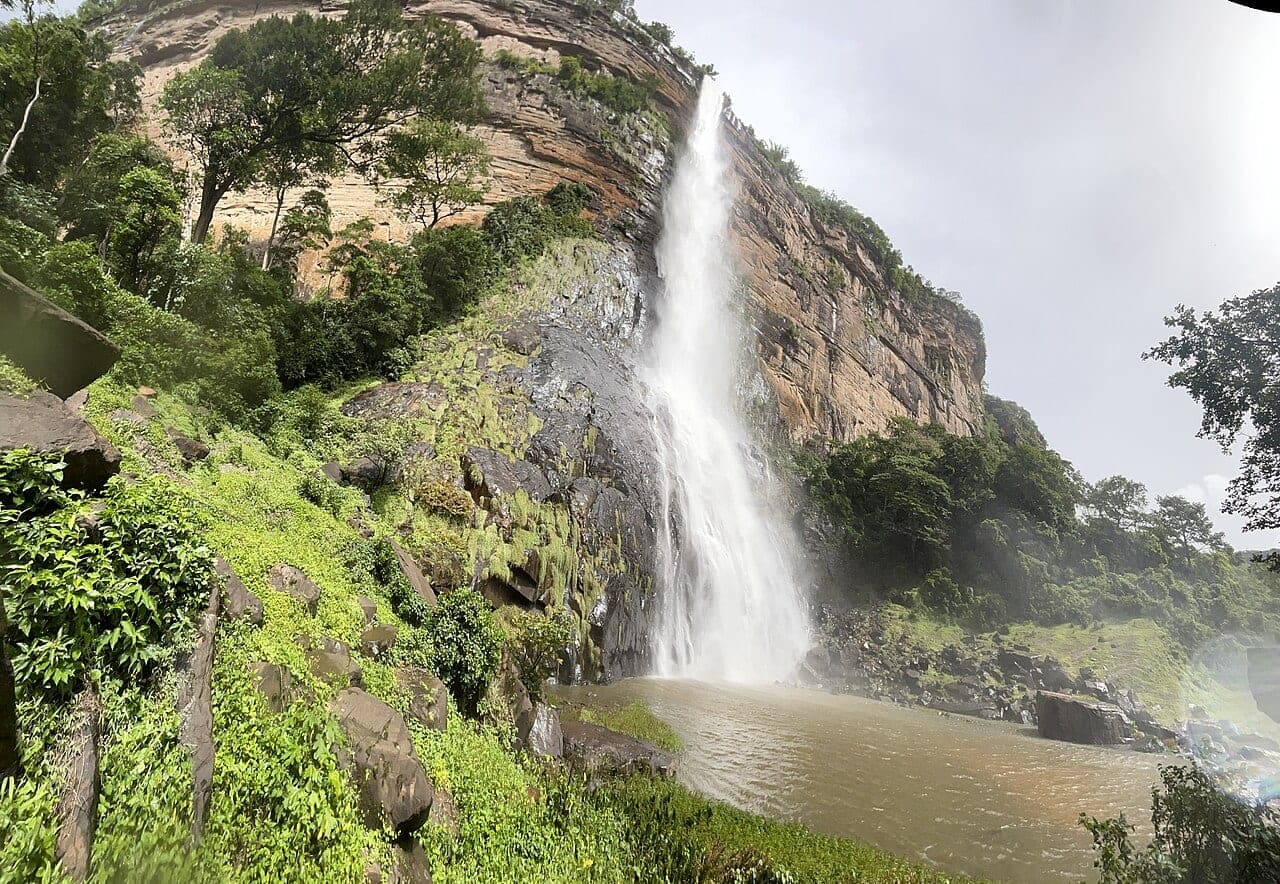
Guinea is a country that begins as water. In the sandstone plateaus of the Fouta Djallon, rain gathers into more than a thousand streams, and from this single upland the Niger, the Senegal and the Gambia all set out toward distant seas. Hydrologists call the Fouta Djallon the water tower of West Africa, and rivers born on Guinean rock reach some 300 million people downstream. Waterfalls mark the descent from the plateau: the Chutes de Ditinn near Dalaba drop about 80 metres, the highest in the country, and the Chutes de Kambadaga step down in stages near Pita. Guinea's memory, in a sense, runs the way its rivers do, outward from a highland source into the lives of its neighbours.
That memory has a keeper. Across the Mandé world that Guinea shares with Mali, Senegal and the Gambia, the griot, called jeli in the Manding languages, is the hereditary custodian of genealogy, praise and history. In the northern village of Niagassola one griot family has guarded the Sosso-Bala, a wooden balafon said to date to the founding of the Mali Empire in the thirteenth century, for close to 800 years. Guinea carries harder memories too: the slave-trading estuaries of its coast, and the long resistance of Samori Touré to French conquest.
The Republic of Guinea lies on the Atlantic coast of West Africa, covering about 245,857 square kilometres and home to an estimated 14 to 15 million people. It borders Guinea-Bissau, Senegal and Mali to the north, Côte d'Ivoire to the east, and Liberia and Sierra Leone to the south, with the ocean to the west. The country falls into four natural regions: Lower (Maritime) Guinea along the mangrove coast; Middle Guinea, the highland Fouta Djallon; Upper Guinea, the savanna sloping toward the Niger; and the Forest Region in the south-east, where rainforest climbs toward Mount Nimba, at 1,752 metres the country's highest point.
Beneath this landscape lies great mineral wealth: Guinea holds roughly a third of the world's known bauxite reserves, along with iron ore, gold and diamonds. The population is majority Muslim, with the Fulani (Peul), Malinké (Maninka) and Susu the largest peoples, joined by the Kissi, Kpelle, Toma and others in the forest. Conakry, spread over Tombo Island and the Camayenne peninsula, is the capital, chief port and largest city; French remains the official language of state and schooling.
Conakry. The Atlantic capital grew from a settlement on Tombo Island into a coastal metropolis of well over two million people. It is the seat of government, the deep-water port through which Guinea's bauxite reaches the world, and home to the Sandervalia National Museum, the country's principal ethnographic collection.
Kankan. The largest city of Upper Guinea, on the Milo river near the Niger, is the historic heart of the Malinké country and one of West Africa's older centres of Islamic learning, long a waystation on the routes toward Mali.
Nzérékoré. The main city of the Forest Region, near Mount Nimba in the far south-east, is a market and administrative centre known for its silversmiths and for a mixture in which Islam, Christianity and older forest traditions meet.
Labé. The chief city of the Fouta Djallon, high on the central plateau, is the historic capital of the Fulani highlands and a renowned seat of Islamic scholarship, where generations of Muslim teachers made the town a name in Qur'anic study.
Guinea was peopled early by farmers and ironworkers, ancestors of the Baga of the coast and the Kissi and Kpelle of the forest, but its recorded history was shaped by the Sahelian empires to the north. The gold of the western Sudan built the empire of Ghana and then the Mali Empire, whose founding moment lay near Guinean soil: around 1235, at the Battle of Kirina, Sundiata Keita defeated Soumaoro Kanté of Sosso and gathered the Manding chieftaincies into an empire that ruled much of West Africa. From that war comes the Sosso-Bala, the sacred balafon taken as a trophy and entrusted to the Kouyaté griots, who guard it at Niagassola still. Upper Guinea lay inside the Mandé heartland, and the jeli tradition of praise and remembrance was carried here as an institution of state.
In the highlands a different order arose. During the eighteenth century Fulani Muslim scholars in the Fouta Djallon launched a religious reform, and after the Battle of Talansan in 1725 they founded the Imamate of Futa Jallon, one of the earliest Fula theocratic states. Karamokho Alfa became its first Almami, and after his death in 1751 Ibrahima Sori consolidated the state from a capital at Timbo. Running on Qur'anic schools and a class of literate marabouts, the Imamate made the Fouta Djallon a lasting centre of Islamic learning and Pular scholarship.
Upper Guinea produced the last great pre-colonial state and the fiercest resistance to France. Samori Touré, a Malinké born about 1830, built the Wassoulou Empire from the 1860s and fought French expansion for the better part of two decades until his capture in 1898. Seized at Guélémou and exiled to Gabon, he died in 1900.
The coast holds a graver record. From the sixteenth century onward, European traders worked the estuaries the French called the Rivières du Sud, and stations on the Rio Nunez, the Rio Pongo and the Îles de Los became points of departure in the transatlantic slave trade, most intensively between about 1790 and 1860. Countless people captured inland were shipped from these shores into bondage across the Atlantic, and coastal societies were reshaped by that violence. It is a history to be remembered plainly.
France declared the colony of French Guinea in the 1890s, defeating Samori and dismantling the Imamate. Colonial rule lasted until a decisive break: in the referendum of 28 September 1958, Guinea became the only French African territory to vote no to Charles de Gaulle's proposed Community, and declared independence on 2 October 1958 under Ahmed Sékou Touré, its first president. The Sékou Touré era, which lasted until his death in 1984, was a period of one-party government and cultural nationalism whose politics remain contested. Guinea has since seen further changes of government and continues to work out its constitutional path, questions this profile leaves to Guineans themselves.
French is Guinea's official language, the medium of administration and secondary education, but everyday life moves in the national languages. Pular (Fula), the tongue of the Fulani, is spoken above all in the Fouta Djallon; Maninka (Malinké), a Manding language close to the Bambara of Mali, dominates Upper Guinea; and Susu is the lingua franca of the coast and of Conakry, with Kissi, Kpelle, Toma and others in the forest. Several of these languages carry deep written traditions, Pular in particular having a body of Islamic poetry composed in Arabic script, a practice known as Ajami.
The name Guinea is old and its origin uncertain. It reached English through the Portuguese Guiné, a term Iberian navigators applied from the fifteenth century to the coast and its peoples south of the Senegal river. Scholars have proposed several deeper roots, among them a Berber word for the lands beyond the desert and a link to Djenné, the Niger trading city that Leo Africanus rendered as Ghinea in 1526, while a local tradition connects the word to the Susu language. Whatever its source, the name later gave four modern countries a shared word in their titles.
At the centre of Guinean culture stands the jeli, the Mandé griot. Born into named families such as the Kouyaté, Diabaté and Kanté, the jeli are the memory of society: they recite genealogies, praise patrons and their ancestors, and keep alive the epic of Sundiata. Their instruments define the classical sound of the region: the kora, a twenty-one-string harp-lute, and the balafon, the wooden xylophone whose most sacred example is the Sosso-Bala, together with the ngoni lute and the human voice.
 Nimba is shared with Ivory Coast and holds species found nowhere else. It has been on the List of World Heritage in Danger since 1992, because the mountain is also one of the richest iron ore deposits in the world. Photograph by Guy Debonnet, CC BY-SA 3.0 IGO, via Wikimedia Commons.
Guinea gave the world another instrument as well. The djembe, the goblet drum of the Malinké blacksmith communities, went from village ceremony to the concert stage largely through Les Ballets Africains, founded by the Guinean artist Fodéba Keïta in Paris in 1952; after independence Sékou Touré made it the national ensemble, and master drummers such as Famoudou Konaté and Mamady Keïta later taught the djembe on every continent. Fulani and Mandé heritage also survives in weaving, indigo dyeing and leatherwork. At the table, rice anchors the meal, often served with groundnut or cassava-leaf sauce, while fonio, one of the world's oldest cultivated grains, is a Fouta Djallon speciality.
Guinea is overwhelmingly Muslim, with something like 85 to 90 percent of the population following Islam, most of it Sunni of the Maliki school and shaped by the Sufi orders, the Tijaniyya and the Qadiriyya. The Fouta Djallon has been a centre of Islamic scholarship since the eighteenth-century Imamate, and towns such as Labé and Kankan are known for their Qur'anic schools. Islamic practice is often woven together with older belief: reverence for ancestors, respect for sacred places, and the work of diviners and healers persist alongside the mosque.
Christianity, mainly Roman Catholic with growing Protestant communities, is concentrated in Conakry and above all in the Forest Region, where Islam arrived later. Among the coastal Baga and the forest peoples, masking traditions carry spiritual weight; the great Baga shoulder mask known as D'mba, or Nimba, an image of ideal motherhood, is one of the most recognised sculptural forms in West African art. Across the country, faiths coexist in daily life.
Death in Guinea is met by the community as much as the family. For the Muslim majority, the pattern follows Islamic law with local warmth. The body is washed by kin of the same sex, wrapped in a plain white shroud, prayed over, and buried as soon as possible, ideally before the next sundown, facing Mecca. The household then receives condolences for three days, during which visitors sit, pray and recite the Qur'an while neighbours bring and cook food so that the bereaved need not. Many Guinean families mark the fortieth day after a death with a further gathering and with charity given in the name of the departed, and remember them again at a year.
Older and forest traditions add another register: in non-Muslim communities of the south-east, and in the memorial phase of funerals more widely, drumming, dancing and singing honour the dead and escort the spirit toward the ancestors. Above all, it is the griot who keeps the memory of the deceased. At a death of consequence the jeli recites the lineage of the departed and sets the individual life within the long chain of the family, so that to be mourned properly is to be placed in a genealogy reaching back for generations. The country's hardest collective memory, the enslavement of its coastal peoples, is held more quietly, in place-names, oral history and the growing work of remembrance along the old Rivières du Sud.
Guinea's family record is oral and it belongs to a profession.
The jeli, the griot families of Mande society, hold the genealogies, and Guinea is the heartland of that tradition. The epic of Sunjata Keita, founder of the Mali empire, is performed here, and the Kouyaté lineage claims descent from Sunjata's own griot. A Mande family's descent, its jamu or clan name, and the joking relationships between clans are all carried in this tradition, and they still organise marriage and social obligation.
The written record is French and it is thin. Colonial administration produced an état civil applied unevenly, split between Conakry and the overseas archives at Aix-en-Provence, and Guinea's break with France in 1958 was abrupt: the departing administration destroyed or removed a great deal.
The archive that most Guinean families need is Camp Boiro. Under Sékou Touré's government, from 1958 to 1984, several thousand people were detained at the camp in Conakry and at other sites, and many died there or were executed. The records were not made public, families were not told, and there has been no accounting. What documentation exists has been assembled by survivors and exiles, much of it abroad.
The Fouta Djallon has its own written tradition: Fulani scholars wrote in Pular using Arabic script, and the manuscript collections of the region include family and community histories that have only partly been catalogued.
Guinea's flagship protected site is the Mount Nimba Strict Nature Reserve, inscribed on the UNESCO World Heritage List in 1981 and extended into Côte d'Ivoire in 1982, a transboundary reserve on a massif whose slopes also touch Liberia. Its grasslands and forests shelter endemic species, including a viviparous toad and stone-using chimpanzees, and the range feeds some fifty springs. It has been listed as World Heritage in Danger since 1992, when iron-ore mining plans and the pressure of displacement threatened its most fragile zones.
The Sandervalia National Museum in Conakry, founded in 1960, preserves masks, statues, instruments and regalia from Guinea's peoples, though much older religious and courtly art was lost in the twentieth century. The Fouta Djallon landscapes are the object of a long regional effort, backed by the Food and Agriculture Organization, to protect the highland watersheds on which West Africa depends. On the intangible side, the Cultural Space of Sosso-Bala was proclaimed a Masterpiece in 2001 and inscribed on UNESCO's Representative List in 2008, recognising the Kouyaté custodianship of the ancient balafon at Niagassola.
Guinea's digital record is young and grows chiefly from below. Much of the country's written and oral heritage circulates through diaspora effort: the long-running online library WebGuinée has assembled colonial-era texts and Pular and Maninka material for readers who cannot reach Conakry, and independent projects have posted recordings of griot performances, family genealogies and the epic of Sundiata to public platforms. The jeli repertoire, an oral archive by nature, has found an unexpected preservation medium in video.
Guinean music, one of the country's strongest exports, is extensively documented on streaming and video services, from the state-era orchestras to contemporary kora and djembe masters, so that a tradition once confined to ceremony is now searchable worldwide. Diaspora communities in France, the United States and across West Africa add a steady flow of recorded weddings, naming ceremonies and funerals that together form an informal, dispersed national archive.
Guinea's largest cultural footprint abroad is musical. The griot heritage, modernised on electric instruments, made Guinea a source of West African popular music long before the term world music existed. Bembeya Jazz National, formed in the 1960s under the cultural policy of the Touré years, set a standard for the region's dance orchestras. Above all, Mory Kanté, a kora player from a griot family, reached a global audience with his 1987 single "Yé ké yé ké", an electrified reworking of a traditional theme that topped charts across Europe and became one of the first African recordings to sell a million copies.
Singers such as Sékouba Bambino Diabaté carried the tradition forward, and Guinean djembe teachers built schools of drumming on several continents. The Ballets Africains lineage still shapes how the world sees West African dance, while the diaspora sustains mosques, cultural associations and music networks that tie emigrant communities back to the Fouta Djallon and the Manding heartland, carrying the balafon, the kora and the djembe wherever Guineans settle.
Eight hundred years of one instrument. The Sosso-Bala, the balafon said to have passed from Soumaoro Kanté to Sundiata Keita around 1235, has been kept and played by the Kouyaté griots of Niagassola for close to eight centuries, a chain of custodianship UNESCO recognised in 2001 and 2008.
The drum that travelled. The djembe, once the ceremonial drum of Malinké villages, became a global instrument through Les Ballets Africains and the master drummers who followed, and can now be heard in classrooms and studios from Tokyo to New York.
A hit from a harp. Mory Kanté turned the kora, the griot's ancient harp, into the sound of an international dance record, opening doors for a generation of African musicians.
A mountain held across a border. The Mount Nimba reserve, protected jointly by Guinea and Côte d'Ivoire, has kept its endemic species and montane habitats despite decades of mining pressure, a rare example of cross-border stewardship.
Nimba is shared with Ivory Coast and holds species found nowhere else. It has been on the List of World Heritage in Danger since 1992, because the mountain is also one of the richest iron ore deposits in the world. Photograph by Guy Debonnet, CC BY-SA 3.0 IGO, via Wikimedia Commons.
Guinea gave the world another instrument as well. The djembe, the goblet drum of the Malinké blacksmith communities, went from village ceremony to the concert stage largely through Les Ballets Africains, founded by the Guinean artist Fodéba Keïta in Paris in 1952; after independence Sékou Touré made it the national ensemble, and master drummers such as Famoudou Konaté and Mamady Keïta later taught the djembe on every continent. Fulani and Mandé heritage also survives in weaving, indigo dyeing and leatherwork. At the table, rice anchors the meal, often served with groundnut or cassava-leaf sauce, while fonio, one of the world's oldest cultivated grains, is a Fouta Djallon speciality.
Guinea is overwhelmingly Muslim, with something like 85 to 90 percent of the population following Islam, most of it Sunni of the Maliki school and shaped by the Sufi orders, the Tijaniyya and the Qadiriyya. The Fouta Djallon has been a centre of Islamic scholarship since the eighteenth-century Imamate, and towns such as Labé and Kankan are known for their Qur'anic schools. Islamic practice is often woven together with older belief: reverence for ancestors, respect for sacred places, and the work of diviners and healers persist alongside the mosque.
Christianity, mainly Roman Catholic with growing Protestant communities, is concentrated in Conakry and above all in the Forest Region, where Islam arrived later. Among the coastal Baga and the forest peoples, masking traditions carry spiritual weight; the great Baga shoulder mask known as D'mba, or Nimba, an image of ideal motherhood, is one of the most recognised sculptural forms in West African art. Across the country, faiths coexist in daily life.
Death in Guinea is met by the community as much as the family. For the Muslim majority, the pattern follows Islamic law with local warmth. The body is washed by kin of the same sex, wrapped in a plain white shroud, prayed over, and buried as soon as possible, ideally before the next sundown, facing Mecca. The household then receives condolences for three days, during which visitors sit, pray and recite the Qur'an while neighbours bring and cook food so that the bereaved need not. Many Guinean families mark the fortieth day after a death with a further gathering and with charity given in the name of the departed, and remember them again at a year.
Older and forest traditions add another register: in non-Muslim communities of the south-east, and in the memorial phase of funerals more widely, drumming, dancing and singing honour the dead and escort the spirit toward the ancestors. Above all, it is the griot who keeps the memory of the deceased. At a death of consequence the jeli recites the lineage of the departed and sets the individual life within the long chain of the family, so that to be mourned properly is to be placed in a genealogy reaching back for generations. The country's hardest collective memory, the enslavement of its coastal peoples, is held more quietly, in place-names, oral history and the growing work of remembrance along the old Rivières du Sud.
Guinea's family record is oral and it belongs to a profession.
The jeli, the griot families of Mande society, hold the genealogies, and Guinea is the heartland of that tradition. The epic of Sunjata Keita, founder of the Mali empire, is performed here, and the Kouyaté lineage claims descent from Sunjata's own griot. A Mande family's descent, its jamu or clan name, and the joking relationships between clans are all carried in this tradition, and they still organise marriage and social obligation.
The written record is French and it is thin. Colonial administration produced an état civil applied unevenly, split between Conakry and the overseas archives at Aix-en-Provence, and Guinea's break with France in 1958 was abrupt: the departing administration destroyed or removed a great deal.
The archive that most Guinean families need is Camp Boiro. Under Sékou Touré's government, from 1958 to 1984, several thousand people were detained at the camp in Conakry and at other sites, and many died there or were executed. The records were not made public, families were not told, and there has been no accounting. What documentation exists has been assembled by survivors and exiles, much of it abroad.
The Fouta Djallon has its own written tradition: Fulani scholars wrote in Pular using Arabic script, and the manuscript collections of the region include family and community histories that have only partly been catalogued.
Guinea's flagship protected site is the Mount Nimba Strict Nature Reserve, inscribed on the UNESCO World Heritage List in 1981 and extended into Côte d'Ivoire in 1982, a transboundary reserve on a massif whose slopes also touch Liberia. Its grasslands and forests shelter endemic species, including a viviparous toad and stone-using chimpanzees, and the range feeds some fifty springs. It has been listed as World Heritage in Danger since 1992, when iron-ore mining plans and the pressure of displacement threatened its most fragile zones.
The Sandervalia National Museum in Conakry, founded in 1960, preserves masks, statues, instruments and regalia from Guinea's peoples, though much older religious and courtly art was lost in the twentieth century. The Fouta Djallon landscapes are the object of a long regional effort, backed by the Food and Agriculture Organization, to protect the highland watersheds on which West Africa depends. On the intangible side, the Cultural Space of Sosso-Bala was proclaimed a Masterpiece in 2001 and inscribed on UNESCO's Representative List in 2008, recognising the Kouyaté custodianship of the ancient balafon at Niagassola.
Guinea's digital record is young and grows chiefly from below. Much of the country's written and oral heritage circulates through diaspora effort: the long-running online library WebGuinée has assembled colonial-era texts and Pular and Maninka material for readers who cannot reach Conakry, and independent projects have posted recordings of griot performances, family genealogies and the epic of Sundiata to public platforms. The jeli repertoire, an oral archive by nature, has found an unexpected preservation medium in video.
Guinean music, one of the country's strongest exports, is extensively documented on streaming and video services, from the state-era orchestras to contemporary kora and djembe masters, so that a tradition once confined to ceremony is now searchable worldwide. Diaspora communities in France, the United States and across West Africa add a steady flow of recorded weddings, naming ceremonies and funerals that together form an informal, dispersed national archive.
Guinea's largest cultural footprint abroad is musical. The griot heritage, modernised on electric instruments, made Guinea a source of West African popular music long before the term world music existed. Bembeya Jazz National, formed in the 1960s under the cultural policy of the Touré years, set a standard for the region's dance orchestras. Above all, Mory Kanté, a kora player from a griot family, reached a global audience with his 1987 single "Yé ké yé ké", an electrified reworking of a traditional theme that topped charts across Europe and became one of the first African recordings to sell a million copies.
Singers such as Sékouba Bambino Diabaté carried the tradition forward, and Guinean djembe teachers built schools of drumming on several continents. The Ballets Africains lineage still shapes how the world sees West African dance, while the diaspora sustains mosques, cultural associations and music networks that tie emigrant communities back to the Fouta Djallon and the Manding heartland, carrying the balafon, the kora and the djembe wherever Guineans settle.
Eight hundred years of one instrument. The Sosso-Bala, the balafon said to have passed from Soumaoro Kanté to Sundiata Keita around 1235, has been kept and played by the Kouyaté griots of Niagassola for close to eight centuries, a chain of custodianship UNESCO recognised in 2001 and 2008.
The drum that travelled. The djembe, once the ceremonial drum of Malinké villages, became a global instrument through Les Ballets Africains and the master drummers who followed, and can now be heard in classrooms and studios from Tokyo to New York.
A hit from a harp. Mory Kanté turned the kora, the griot's ancient harp, into the sound of an international dance record, opening doors for a generation of African musicians.
A mountain held across a border. The Mount Nimba reserve, protected jointly by Guinea and Côte d'Ivoire, has kept its endemic species and montane habitats despite decades of mining pressure, a rare example of cross-border stewardship.
National Overview
Notable Cities
Historical Foundations
Linguistic and Etymological Roots
Cultural Identity
Religion and Spirituality
Remembrance and Mourning Traditions
Tracing a Family in Guinea
Heritage Preservation Efforts
Digital Heritage
Contemporary Cultural Influences
Success Stories
References and resources
- Encyclopaedia Britannica: Guinea. Geography, peoples, history and economy.
- Encyclopaedia Britannica: Fouta Djallon. The central highlands and their river sources.
- World Bank: Fouta Djallon Highland Water Atlas, the Water Tower of West Africa. The highlands as the source of the region's major rivers.
- UNESCO World Heritage Centre: Mount Nimba Strict Nature Reserve. The transboundary natural site and its endangered status.
- UNESCO Intangible Cultural Heritage: Cultural Space of Sosso-Bala. The sacred balafon and its Kouyaté custodians at Niagassola.
- Wikipedia: Imamate of Futa Jallon. The eighteenth-century Fulani theocratic state and its Islamic scholarship.
- EBSCO Research Starters: Samory Touré. The Wassoulou Empire and the resistance to French conquest.
- EBSCO Research Starters: Guinea Gains Independence from France. The 1958 referendum and the break with the French Community.
- Wikipedia: Sandervalia National Museum. The national collection in Conakry.
- Wikipedia: Les Ballets Africains. Fodéba Keïta and the company that carried the djembe abroad.
- The Conversation: Mory Kanté, Guinea's hero, found new ways of playing the old music. The griot who took the kora to the global charts.