Heritage · Country
Papua New Guinea Culture and Heritage
Papua New Guinea holds more of the world's languages than any other nation, from the highland sing-sing grounds to the carved spirit houses of the Sepik River. A guide to how its peoples honour their ancestors, from the haus krai to the malagan, and keep the deep past close.Written to last.
By Confinity Heritage Editorial · Updated 2026-07-31 · 8-minute readQuiet tools, kept out of the way.
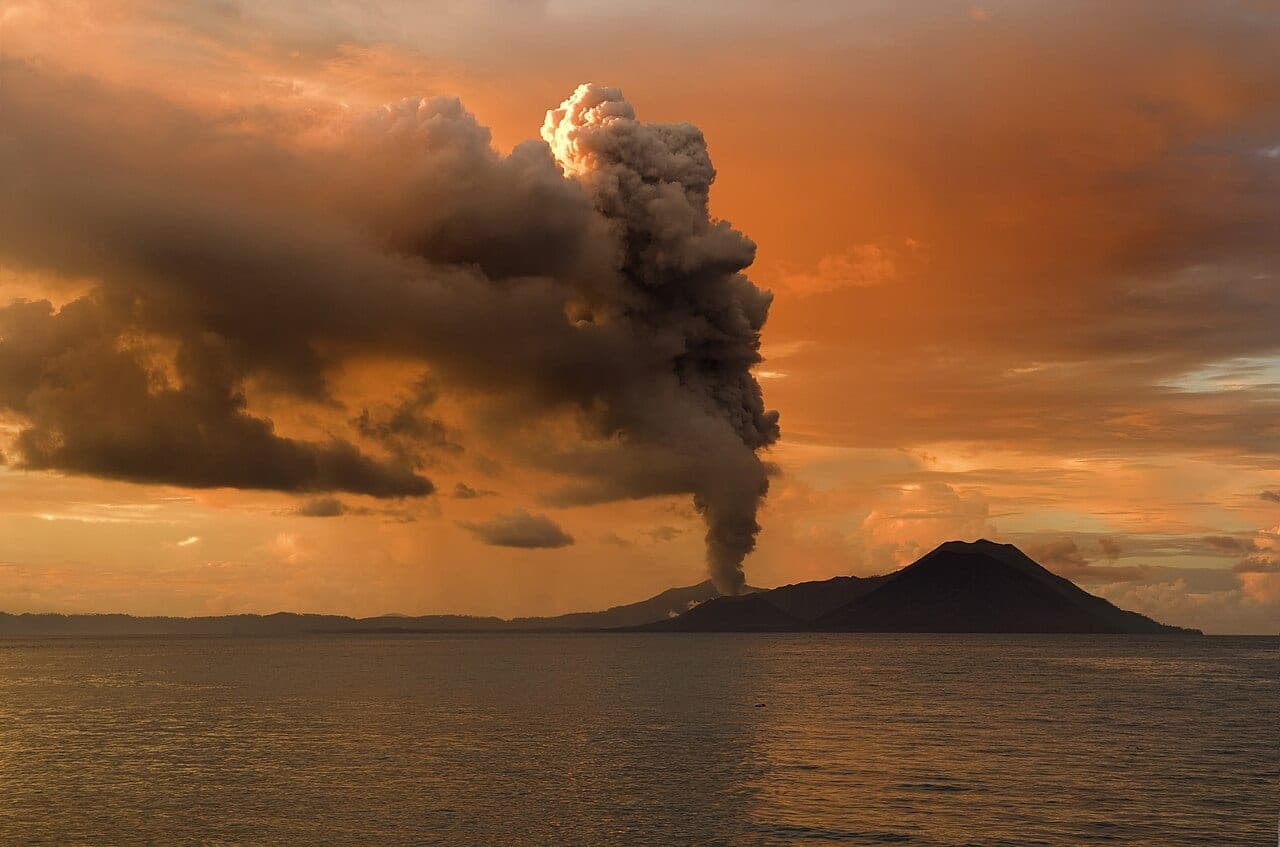
No country on earth holds as many distinct human cultures as Papua New Guinea. Across the eastern half of New Guinea, the world's second-largest island, and a scatter of archipelagos in the Coral and Bismarck seas, more than ten million people speak over 800 languages, making this the most linguistically diverse nation on the planet. Across a landscape broken by high ranges, river swamps and island volcanoes, communities settled and grew apart over tens of thousands of years, each keeping its own language, art and way of honouring the dead.
For Papua New Guineans, the past is not a distant record but a set of living obligations. Ancestors remain present in carved figures and spirit houses, in the exchanges of pigs and shell wealth that mark a death, and in the days of collective mourning that gather kin from across a province. This page traces that inheritance, from agriculture begun in a highland swamp some nine thousand years ago to the digital archives now safeguarding endangered languages, in the same spirit that guides Confinity's own remembrance work: memory, faithfully kept, holds a people together.
Papua New Guinea occupies the eastern half of New Guinea, together with New Britain, New Ireland, Bougainville, the Bismarck Archipelago and hundreds of smaller islands. Its western border runs down the middle of the island, meeting the Indonesian province of Papua, while to the south lie the Torres Strait and Australia. The interior is dominated by the central highland cordillera, whose fertile valleys were unknown to the outside world until the 1930s and today hold much of the national population, while around this spine spread lowland rainforests, the Sepik and Fly river systems, and a coastline of reefs and volcanic islands. The 2024 national census counted more than ten million people, overwhelmingly Melanesian.
Most Papua New Guineans live in rural villages and work customary land held not by individuals but by clans, an arrangement that shapes the whole society. Wealth is measured in pigs and, in many regions, in shell valuables, and the obligations of exchange bind families across generations. The country is a parliamentary democracy that gained independence from Australia in 1975, with Port Moresby as its capital, the kina as its currency, and a national identity built less on uniformity than on the shared value its constitution calls the Melanesian way.
Port Moresby. The capital and largest city sits on the south coast, on the land of the Motu and Koita peoples, whose ancestors sailed annual hiri trading voyages westward along the Gulf of Papua in great multi-hulled canoes. Modern Moresby is the seat of the National Parliament, whose facade borrows the form of a Sepik spirit house, and of the National Museum and Art Gallery at Waigani. Each September the Hiri Moale festival revives the memory of those voyages with canoe races and dancing.
Lae. The country's second city and principal cargo port lies at the mouth of the Markham River in Morobe Province and anchors the Highlands Highway into the interior. It holds the Lae War Cemetery, where more than two thousand Commonwealth service personnel are buried.
Mount Hagen. The main highland centre, capital of Western Highlands Province, grew from a 1930s patrol post into the commercial heart of the coffee-growing highlands. It gives its name to the Mount Hagen Cultural Show, among the largest of the highland gatherings, which draws sing-sing groups from across the country.
Rabaul. Once the elegant colonial capital of the northern territory, on New Britain, Rabaul sat inside a flooded volcanic caldera. A major Japanese base in the Second World War, it was largely buried in ash by the 1994 eruptions of Tavurvur and Vulcan, prompting the shift of the provincial capital to nearby Kokopo. Tavurvur still steams above the harbour.
Human beings reached New Guinea at least fifty thousand years ago, crossing from Southeast Asia when lower seas joined the island to Australia. Their most extraordinary legacy lies in the highlands at the Kuk Early Agricultural Site, a swamp in the Wahgi Valley where drainage ditches, mounds and planting beds show that people were cultivating taro and banana here between seven thousand and ten thousand years ago. Kuk is one of the very few places on earth where agriculture arose independently.
Later came the seafarers. Around 3,300 years ago, Austronesian voyagers moved into the Bismarck Archipelago and mixed with the long-resident Papuan populations, producing the Lapita culture, whose dentate-stamped pottery marks the ancestral thread that would carry settlers across the open Pacific to Fiji, Samoa and eventually Polynesia.
European administration was late. Only in the 1880s did Germany claim the north-east as German New Guinea and Britain declare a protectorate over the south-east, soon known as British New Guinea and then Papua. Australia took over Papua in 1906, occupied German New Guinea in the First World War, and after 1918 governed it under a League of Nations mandate. The Second World War brought devastation: Japanese forces seized Rabaul in early 1942 and pushed south, and along the Kokoda Track, a foot trail over the Owen Stanley Range, Australian troops and Papuan carriers halted the advance on Port Moresby. The wider New Guinea campaign of 1942 to 1945 cost an estimated 216,000 lives, and its memory, including the Papuan stretcher-bearers remembered as the Fuzzy Wuzzy Angels, remains a shared bond between Papua New Guinea and Australia.
Australia guided the territories toward self-government in 1973, and full independence followed on 16 September 1975, with Michael Somare as founding prime minister. Soon afterward, grievances on Bougainville over the Panguna copper mine grew into an armed conflict that lasted from 1988 until a peace agreement in 2001 granted the island autonomy. A referendum in 2019 recorded a large majority for independence, and the question of Bougainville's future status remains under negotiation between its government and the national government.
The name Papua New Guinea joins two older labels. Papua is generally traced to a Malay term describing the tightly curled hair of the island's people, while New Guinea, from the Spanish Nueva Guinea, was applied by the navigator Yñigo Ortiz de Retez in 1545, who thought the inhabitants resembled those of the Guinea coast of West Africa. The two names, one for the south, one for the whole, were fused when the independent state was formed.
The country's linguistic wealth has no equal. Its more than 800 languages fall into two broad groupings, the Austronesian languages of many coastal and island communities and the far older and more varied Papuan languages of the interior. Ranges and rivers kept neighbouring valleys apart for so long that adjoining communities often cannot understand one another. Three languages carry statutory recognition. Tok Pisin, an English-based creole that took shape on nineteenth-century plantation labour lines, is now the everyday lingua franca; Hiri Motu, a simplified form of the Motu language once spread by colonial police, serves parts of the south; and English remains the language of government, courts and higher education. Many smaller vernaculars, spoken by only a few hundred people, are now endangered, and their documentation has become a matter of national concern.
The most visible expression of Papua New Guinean culture is the sing-sing, a gathering at which groups display their own dances, songs and finery. At the great highland shows, above all the Mount Hagen Cultural Show and the Goroka Show, scores of groups assemble in a single ground, each in the finery of its home place. The Huli of Hela Province appear as wigmen, wearing crescent wigs woven from their own hair and crowned with the feathers of birds of paradise; the Asaro of the Eastern Highlands cover themselves in pale clay and don grotesque mud masks.
Along the Sepik River, culture takes carved form. The Sepik peoples are among the finest woodcarvers in the Pacific, and the centre of village life is the haus tambaran, the spirit house, a soaring gabled structure whose facade and interior carry masks, hooks, figures and the tall carved posts through which ancestral spirits are honoured and clan knowledge is kept. Masks, garamut slit drums cut from single logs, and painted shields all link the living community to its founding spirits. Across the whole country, women knot and loop the bilum, the string bag carried on the head or shoulder for produce, belongings and even infants, its patterns and dyes identifying region and maker. Objects like these are never merely decorative; they encode genealogy, rank and obligation.
Christianity is professed by the great majority of Papua New Guineans, the fruit of missions that reached the coasts in the mid-nineteenth century and the highlands in the twentieth. Roman Catholic, Lutheran, Anglican, United Church, Seventh-day Adventist and Pentecostal congregations are all strong.
 The haus tambaran holds a village's carvings, flutes and masks, and admission to it was traditionally restricted by initiation, so the building is both the archive and the rule about who may consult it. Photograph by Sylt-Tinto, CC0, via Wikimedia Commons.
Yet Christian faith is very often held together with the older Melanesian understanding of the world. In that view, ancestors remain close to their descendants, spirits inhabit particular places, and misfortune, sickness and death are often read as the work of spirits or of sorcery. Sacred sites and objects are protected by prohibition, and ritual specialists mediate with the spirit world. Most communities move without difficulty between Sunday worship and customary ceremony, and the encounter between the two traditions also produced the movements outsiders labelled cargo cults, in which prophetic leaders reworked the arrival of foreign goods into new religious forms.
When a death occurs, mourning in Papua New Guinea is public, prolonged and shared. Across much of the country the household of the deceased becomes a haus krai, a house of crying, to which relatives travel from near and far to grieve together. Mourners wail and keen, and in traditional practice smeared their bodies with grey clay, cut their hair and set aside ordinary dress as signs of loss. Around this grief moves the customary economy of death, as pigs, food and shell or cash wealth pass between the lineages of the mother and the father, honouring the dead and mending the ties it has torn.
The care of the dead has taken many forms. In New Ireland, the elaborate malagan ceremonies, held months or years after a death, commission carved and painted sculptures that embody the deceased and the clan's rights, display them at a great commemorative feast, and then let them pass away, their work of remembrance complete. Along the Sepik, the skulls of ancestors were once cleaned, modelled and kept so that the dead remained present among the living. Some practices belong firmly to the past: among the South Fore of the Eastern Highlands, a mortuary custom of consuming parts of the dead as an act of grief spread the fatal disease kuru until it ended in the mid-twentieth century, a history now studied with care. Today most funerals centre on a Christian service and burial, but the haus krai, the feasting, the exchanges and the respect shown to ancestors carry the older understanding forward, so that remembrance remains a duty owed by the whole community rather than a private sorrow.
Papua New Guinea has more languages than any country on earth, around eight hundred, and its most complete written record of ordinary villages was made by Australian officials on foot.
The kiaps, patrol officers of the Australian administration, walked circuits through the territory and wrote reports. Those reports describe first contact with Highland communities, count the people village by village, record births and deaths since the last patrol, note disputes, health, gardens and warfare, and name individuals. For thousands of communities they are the only written record of the period before independence in 1975, and for some they document the moment the outside world arrived. The University of California San Diego digitised the series with the National Archives of Papua New Guinea, and it is online.
The village book, kept at each patrol post, listed the people of a village and was updated on each visit, functioning as a census that no other system replaced.
Mission registers, Lutheran, Catholic, Anglican and others, carry baptisms and marriages from the nineteenth century on the coast and later inland.
Everything else is oral and it is enormous. Descent groups hold land, and land in Papua New Guinea is around ninety-seven per cent customary, so knowing your lineage is knowing what you own. Disputes are settled by reciting it. In matrilineal societies of the islands and patrilineal ones of the Highlands the rules differ entirely, which is why there is no single Papua New Guinean way to trace a family.
Papua New Guinea's foremost heritage institution is the National Museum and Art Gallery in Waigani, Port Moresby, opened in 1977 as a gift marking independence and holding a collection of more than thirty thousand objects, from Sepik carvings and highland regalia to archaeological material. It works alongside the National Cultural Commission and the Institute of Papua New Guinea Studies to record oral traditions, music and language, and to regulate the export of cultural property so that significant works remain in the country.
The Kuk Early Agricultural Site was inscribed on the UNESCO World Heritage List in 2008, the country's only World Heritage property, recognised for the evidence it preserves of independent early agriculture in the Wahgi Valley. Its protection is pursued in partnership with the customary landowning clans who farm the surrounding valley, reflecting the reality that in Papua New Guinea almost all land, and much of the heritage upon it, belongs to communities rather than to the state. Provincial cultural shows, from Goroka and Mount Hagen to the islands, act as living preservation, giving communities a stage to keep their dances, songs and regalia in active use.
With so many languages at risk, digital documentation has become vital to Papua New Guinean heritage. Recordings of the country's songs, stories and speech are archived and made accessible through the Pacific and Regional Archive for Digital Sources in Endangered Cultures, a regional repository that preserves fragile field recordings and returns copies to the communities they came from. Linguists deposit their audio and video in open language archives, and databases of New Guinea languages gather scattered scholarship for students and communities to consult.
Museums and cultural bodies increasingly share collections online, and diaspora and village communities alike use social media and mobile networks to circulate music, ceremony and news of deaths and feasts across great distances. For a country whose oldest knowledge lives in speech, carving and performance rather than in writing, the careful digital capture of that knowledge, governed so that restricted material stays restricted, has become a form of insurance against loss.
Papua New Guinean creativity carries its heritage into the present. A national literature emerged around independence, its landmark the novel The Crocodile by Vincent Eri, the first published by a Papua New Guinean. In music, the string bands of the villages gave way to a lively popular scene, and artists such as the Rabaul singer George Telek carried Papua New Guinean song to international stages while keeping its languages and rhythms intact. The bilum has moved from the garden path to the fashion runway, as designers turn the looped string bag into contemporary clothing.
Everyday life blends the customary and the modern. Rugby league is followed with a passion that unites a country otherwise divided by language. Contemporary painters, carvers and filmmakers draw on Sepik and highland traditions, and the great cultural shows have become both a source of national pride and a mainstay of cultural tourism.
One of humanity's first farms, recognised by the world. The inscription of the Kuk Early Agricultural Site in 2008 confirmed the Wahgi Valley as one of the few places on earth where people invented agriculture on their own, giving Papua New Guinea a settled place in the deep history of humankind.
A nation built from more than 800 languages. That a country of such extreme diversity has held together as a single democracy since 1975, bound by Tok Pisin and the shared value of the Melanesian way, is among the more remarkable achievements of the modern Pacific.
Culture kept alive on its own ground. The sing-sing shows of Goroka, Mount Hagen and beyond have kept dance, music and regalia in continuous use, and the Goroka Show, running since 1957, remains the longest-established of them all.
A living tradition carried to the world. From George Telek's music to the bilum's journey onto the international runway, Papua New Guinean artists have shown that heritage can travel far without being emptied of meaning.
The haus tambaran holds a village's carvings, flutes and masks, and admission to it was traditionally restricted by initiation, so the building is both the archive and the rule about who may consult it. Photograph by Sylt-Tinto, CC0, via Wikimedia Commons.
Yet Christian faith is very often held together with the older Melanesian understanding of the world. In that view, ancestors remain close to their descendants, spirits inhabit particular places, and misfortune, sickness and death are often read as the work of spirits or of sorcery. Sacred sites and objects are protected by prohibition, and ritual specialists mediate with the spirit world. Most communities move without difficulty between Sunday worship and customary ceremony, and the encounter between the two traditions also produced the movements outsiders labelled cargo cults, in which prophetic leaders reworked the arrival of foreign goods into new religious forms.
When a death occurs, mourning in Papua New Guinea is public, prolonged and shared. Across much of the country the household of the deceased becomes a haus krai, a house of crying, to which relatives travel from near and far to grieve together. Mourners wail and keen, and in traditional practice smeared their bodies with grey clay, cut their hair and set aside ordinary dress as signs of loss. Around this grief moves the customary economy of death, as pigs, food and shell or cash wealth pass between the lineages of the mother and the father, honouring the dead and mending the ties it has torn.
The care of the dead has taken many forms. In New Ireland, the elaborate malagan ceremonies, held months or years after a death, commission carved and painted sculptures that embody the deceased and the clan's rights, display them at a great commemorative feast, and then let them pass away, their work of remembrance complete. Along the Sepik, the skulls of ancestors were once cleaned, modelled and kept so that the dead remained present among the living. Some practices belong firmly to the past: among the South Fore of the Eastern Highlands, a mortuary custom of consuming parts of the dead as an act of grief spread the fatal disease kuru until it ended in the mid-twentieth century, a history now studied with care. Today most funerals centre on a Christian service and burial, but the haus krai, the feasting, the exchanges and the respect shown to ancestors carry the older understanding forward, so that remembrance remains a duty owed by the whole community rather than a private sorrow.
Papua New Guinea has more languages than any country on earth, around eight hundred, and its most complete written record of ordinary villages was made by Australian officials on foot.
The kiaps, patrol officers of the Australian administration, walked circuits through the territory and wrote reports. Those reports describe first contact with Highland communities, count the people village by village, record births and deaths since the last patrol, note disputes, health, gardens and warfare, and name individuals. For thousands of communities they are the only written record of the period before independence in 1975, and for some they document the moment the outside world arrived. The University of California San Diego digitised the series with the National Archives of Papua New Guinea, and it is online.
The village book, kept at each patrol post, listed the people of a village and was updated on each visit, functioning as a census that no other system replaced.
Mission registers, Lutheran, Catholic, Anglican and others, carry baptisms and marriages from the nineteenth century on the coast and later inland.
Everything else is oral and it is enormous. Descent groups hold land, and land in Papua New Guinea is around ninety-seven per cent customary, so knowing your lineage is knowing what you own. Disputes are settled by reciting it. In matrilineal societies of the islands and patrilineal ones of the Highlands the rules differ entirely, which is why there is no single Papua New Guinean way to trace a family.
Papua New Guinea's foremost heritage institution is the National Museum and Art Gallery in Waigani, Port Moresby, opened in 1977 as a gift marking independence and holding a collection of more than thirty thousand objects, from Sepik carvings and highland regalia to archaeological material. It works alongside the National Cultural Commission and the Institute of Papua New Guinea Studies to record oral traditions, music and language, and to regulate the export of cultural property so that significant works remain in the country.
The Kuk Early Agricultural Site was inscribed on the UNESCO World Heritage List in 2008, the country's only World Heritage property, recognised for the evidence it preserves of independent early agriculture in the Wahgi Valley. Its protection is pursued in partnership with the customary landowning clans who farm the surrounding valley, reflecting the reality that in Papua New Guinea almost all land, and much of the heritage upon it, belongs to communities rather than to the state. Provincial cultural shows, from Goroka and Mount Hagen to the islands, act as living preservation, giving communities a stage to keep their dances, songs and regalia in active use.
With so many languages at risk, digital documentation has become vital to Papua New Guinean heritage. Recordings of the country's songs, stories and speech are archived and made accessible through the Pacific and Regional Archive for Digital Sources in Endangered Cultures, a regional repository that preserves fragile field recordings and returns copies to the communities they came from. Linguists deposit their audio and video in open language archives, and databases of New Guinea languages gather scattered scholarship for students and communities to consult.
Museums and cultural bodies increasingly share collections online, and diaspora and village communities alike use social media and mobile networks to circulate music, ceremony and news of deaths and feasts across great distances. For a country whose oldest knowledge lives in speech, carving and performance rather than in writing, the careful digital capture of that knowledge, governed so that restricted material stays restricted, has become a form of insurance against loss.
Papua New Guinean creativity carries its heritage into the present. A national literature emerged around independence, its landmark the novel The Crocodile by Vincent Eri, the first published by a Papua New Guinean. In music, the string bands of the villages gave way to a lively popular scene, and artists such as the Rabaul singer George Telek carried Papua New Guinean song to international stages while keeping its languages and rhythms intact. The bilum has moved from the garden path to the fashion runway, as designers turn the looped string bag into contemporary clothing.
Everyday life blends the customary and the modern. Rugby league is followed with a passion that unites a country otherwise divided by language. Contemporary painters, carvers and filmmakers draw on Sepik and highland traditions, and the great cultural shows have become both a source of national pride and a mainstay of cultural tourism.
One of humanity's first farms, recognised by the world. The inscription of the Kuk Early Agricultural Site in 2008 confirmed the Wahgi Valley as one of the few places on earth where people invented agriculture on their own, giving Papua New Guinea a settled place in the deep history of humankind.
A nation built from more than 800 languages. That a country of such extreme diversity has held together as a single democracy since 1975, bound by Tok Pisin and the shared value of the Melanesian way, is among the more remarkable achievements of the modern Pacific.
Culture kept alive on its own ground. The sing-sing shows of Goroka, Mount Hagen and beyond have kept dance, music and regalia in continuous use, and the Goroka Show, running since 1957, remains the longest-established of them all.
A living tradition carried to the world. From George Telek's music to the bilum's journey onto the international runway, Papua New Guinean artists have shown that heritage can travel far without being emptied of meaning.
National Overview
Notable Cities
Historical Foundations
Linguistic and Etymological Roots
Cultural Identity
Religion and Spirituality
Remembrance and Mourning Traditions
Tracing a Family in Papua New Guinea
Heritage Preservation Efforts
Digital Heritage
Contemporary Cultural Influences
Success Stories
References and resources
- UNESCO World Heritage Centre: Kuk Early Agricultural Site
- Encyclopaedia Britannica: Papua New Guinea
- Encyclopaedia Britannica: Lapita culture
- Encyclopaedia Britannica: Tok Pisin
- Wikipedia: Languages of Papua New Guinea
- Wikipedia: Sing-sing (New Guinea)
- Wikipedia: Papua New Guinea National Museum and Art Gallery
- PNG Attitude: The PNG way of death, the ritual of haus krai
- UNFPA Papua New Guinea: 2024 National Population Census Final Figures
- PARADISEC: Pacific and Regional Archive for Digital Sources in Endangered Cultures