Heritage · Country
Liberia Culture and Heritage
Africa's oldest republic began in 1822 as a settlement of free-born and formerly enslaved African Americans who landed at Providence Island, a heritage that met and mingled with sixteen Indigenous nations already rooted in the forest and along the coast. This guide follows Liberia's memory across the Vai script and the Poro grove, through the sober years of war and reconciliation, to a country that made an elder woman its president and taught the world to keep the peace.Written to last.
By Confinity Heritage Editorial · Updated 2026-07-31 · 8-minute readQuiet tools, kept out of the way.
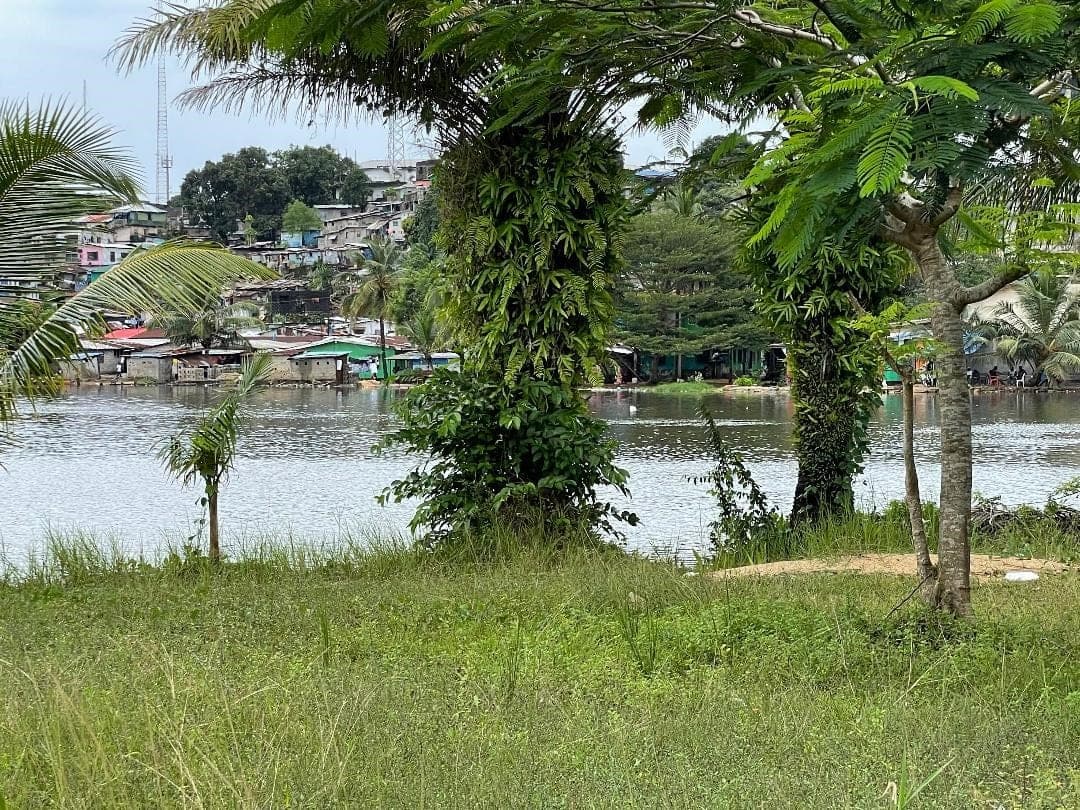
Liberia keeps two African memories at once. It is the oldest republic on the continent, born in 1822 when the American Colonization Society landed the first parties of free-born and formerly enslaved African Americans on Providence Island, a low green islet at the mouth of the Mesurado River in what became Monrovia. Those settlers, who came to be called Americo-Liberians, carried an ocean of loss with them and built a state in the image of the country that had held their parents in bondage. But the land they reached was not empty: sixteen Indigenous nations, among them the Kpelle, Bassa, Gio, Kru and Vai, had lived in its forests and along its surf-battered coast for centuries. The heritage of modern Liberia is the long, uneasy, and finally shared meeting of these two African inheritances.
It moves through the Vai script, one of the very few writing systems invented in Africa; the Poro and Sande societies whose masked initiations still shape village life; and the rainforest of Sapo, among the last great stands of primary forest in West Africa. It treats the civil wars of 1989 to 2003 soberly and briefly, alongside the reconciliation that followed, and it holds up the country's gift to the world: Ellen Johnson Sirleaf, Africa's first elected woman head of state, and Leymah Gbowee, who helped end a war by organising the peace.
Liberia occupies a stretch of the West African coast between Sierra Leone, Guinea and Côte d'Ivoire, some 111,000 square kilometres of Atlantic shoreline, mangrove and lagoon rising through rolling plateau to the forested highlands of the interior. Its population is around five million, most of it young, and about half lives in and around Monrovia, the capital. The country is one of only two on the continent never formally colonised by a European power, and its flag, the Lone Star of a single white star on a blue field above eleven red and white stripes, is modelled on that of the United States, a reminder of the settler founding.
At least sixteen officially recognised ethnic groups make up the Indigenous majority, sorted by linguists into three families, Mande, Kwa and Mel. The Kpelle are the largest, followed by the Bassa, Grebo, Gio (also called Dan), Mano and Kru, with the Vai, Gola, Kissi, Loma, Krahn and others alongside them. The Americo-Liberian and allied settler community, though a small minority, held political and economic power for well over a century after independence. English is the official language, the national motto is "The love of liberty brought us here," and the economy rests on iron ore, rubber, gold, timber and remittances from a large diaspora.
Monrovia. The capital, named for United States President James Monroe, grew from the 1822 landing at Providence Island and remains the seat of government, commerce and memory. Cape Mesurado and the old islet look across to a skyline of ministries and markets, while the National Museum of Liberia and the Ducor district hold what survives of the settler and Indigenous past. It is the only national capital, apart from Washington, named after a United States president.
Gbarnga. The capital of Bong County and Liberia's second most populous city, Gbarnga sits in the north-central interior among the Kpelle heartland and is home to Cuttington University, one of the oldest private universities in sub-Saharan Africa. During the civil wars it served for a period as a wartime factional headquarters, and its recovery has made it a hub of trade between the coast and the Guinean border.
Buchanan. A deep-water port on Waterhouse Bay in Grand Bassa County, Buchanan is named for Thomas Buchanan, an early governor and cousin of another United States president. The site began in 1832 as Port Cresson, a settlement founded by Black Quakers from the northern colonisation societies, and it later became the ocean terminus for the iron ore railway from the Nimba mountains.
Harper. Set on Cape Palmas in the far south-east, Harper is the capital of Maryland County and takes its name from Robert Goodloe Harper of the American Colonization Society. It grew from a separate settler colony, the short-lived independent Republic of Maryland, which joined Liberia in 1857, and its faded avenues of settler mansions overlook the Grebo country and the Atlantic.
Human settlement of the Liberian coast reaches back many centuries, shaped by long southward movements of peoples. In the first half of the sixteenth century the Mane, warrior groups of Southern Mande speakers, swept down from the interior and imposed themselves over earlier coastal societies, a conquest that reordered the region and helped fix the pattern of Mande, Kwa and Mel peoples still recognised today. Along the shore, Kru and Grebo mariners became renowned boatmen and traders, and by the eighteenth century Kru sailors, the "Krumen," worked the length of the West African coast aboard European vessels.
 The first settlers from America landed on Providence Island in 1822. The state they founded gave them citizenship and withheld it from the people already living there, which shaped the next century and a half. Photograph by Fred van der Kraaij, CC BY-SA 4.0, via Wikimedia Commons.
The republic's other root is the American Colonization Society, founded in 1816 to resettle free African Americans in Africa. The first lasting settlement took hold at Providence Island and Cape Mesurado in 1822, and Monrovia grew from it. Between 1822 and the American Civil War, more than fifteen thousand free-born and formerly enslaved African Americans, together with several thousand Afro-Caribbeans and "recaptives" freed from slave ships, made the crossing (Encyclopaedia Britannica). On 26 July 1847 the settlers declared the independent Republic of Liberia, with a constitution modelled on that of the United States and Joseph Jenkins Roberts as first president, making Liberia the first republic in Africa.
For more than a century the Americo-Liberian minority, organised around the True Whig Party, governed a country in which the Indigenous majority had little voice; Indigenous Liberians did not gain birthright citizenship until 1904, and the relationship between settler and Indigenous heritage remained the central tension of national life. That order ended in April 1980, when a coup led by Master Sergeant Samuel Doe overthrew the government. Political breakdown gave way to two connected civil wars between 1989 and 2003 that caused immense suffering, with an estimated 250,000 deaths, roughly a twelfth of the population, and the displacement of much of the country (Britannica). The fighting ended with the Accra peace agreement of 2003 and a United Nations mission. A Truth and Reconciliation Commission, established in 2005, gathered testimony from thousands of Liberians so that the record of those years could be told and examined in public. In the same year voters elected Ellen Johnson Sirleaf, and the long, patient work of recovery began.
The name Liberia comes from the Latin liber, "free," and can be read as "land of the free," a claim made by the settlers for a country founded as a refuge from bondage. English is the official language and the medium of government and schooling, but everyday speech across ethnic lines is carried by Liberian Kreyol, widely known as Kolokwa or Liberian Kolokwa English, an Atlantic English-based creole that grew among the settlers and now serves as a common tongue for most of the population, with a smaller number of first-language speakers.
Beneath this shared surface lie more than two dozen Indigenous languages. Kpelle, a Mande language, has the most speakers; Bassa belongs to the Kwa family; and Vai, also Mande, carries a distinction few languages anywhere can claim. Around the 1830s a Vai man named Momolu Duwalu Bukele, from what is now Grand Cape Mount County, devised a syllabary for his language, one of the few writing systems ever created independently within Africa (Vai syllabary). Each of its several hundred characters stands for a consonant-and-vowel syllable, and it has been used continuously for correspondence, record-keeping and religious texts, and refined at the University of Liberia in the twentieth century. The Vai script is among the strongest evidence that literacy in the region did not arrive only from outside.
The Vai script is one thread in a wider fabric of Indigenous knowledge, much of it held and transmitted by two initiatory institutions. The Poro society for men and the Sande society for women, found among the Vai, Gola, Kpelle, Bassa, Mende and their neighbours, run the "bush school," periods of seclusion in which the young are taught history, law, craft, medicine and the moral code of the community before returning as adults. Their ceremonies are inseparable from masking. Among the Dan and Gio peoples, carvers produce some of Africa's most admired wooden masks, serene faces used in Poro contexts, while the Sande society is represented by the helmet-shaped sowei mask, one of the rare masking traditions worn by women.
The settler inheritance forms a second cultural stream. Americo-Liberian families kept the dress, church architecture, hymnody and domestic crafts of the nineteenth-century American South, including a strong tradition of quilting; in 1892 a formerly enslaved Liberian woman, Martha Ann Ricks, presented a handmade quilt to Queen Victoria in London. Music runs across both worlds, from church choirs and highlife bands to hipco, a modern style that rhymes in Kolokwa. And the table unites the country: rice is the essential Liberian staple, joined by cassava in the forms of fufu and dumboy, by palm butter and pepper soup, by cassava-leaf sauce and jollof rice, food that crosses every line the old politics drew.
Liberia is a country of several faiths held side by side. A large majority of Liberians are Christian, the result of both settler churches, Baptist, Methodist and Episcopal among them, and later missionary work in the interior; Islam is the faith of a substantial minority, strong among the Mandingo and Vai, whose traders and teachers carried it along the old routes from the north. Alongside and often within both stands the older layer of Indigenous belief, centred on a creator, on nature spirits and, above all, on the ancestors, and expressed through the Poro and Sande societies and their ritual specialists, the zoes.
These traditions coexist with a notable degree of tolerance, and many Liberians move between them without contradiction, attending church or mosque while honouring the customs of the ancestral home. Mosques and churches share the streets of Monrovia and the towns of the interior, and interfaith cooperation has a concrete history in the country: religious leaders, Christian and Muslim together, worked to broker peace during the civil wars. The result is a spiritual life better described as layered than divided.
Across all three traditions, Liberians treat the dead with great seriousness and the funeral as a central act of community. In Christian families a death is followed by a wake, hymns and a church service before burial, often with a printed programme and a gathering that draws relatives from across the country and the diaspora. In Muslim communities the body is washed, shrouded and buried swiftly, facing Mecca, with prayers led by an imam and remembrance continued in the days that follow. In Indigenous practice a death sets in motion "wake-keeping," nights of drumming, song and storytelling that honour the deceased and comfort the living, and among several peoples a later second observance formally settles the departed among the ancestors, who remain part of the family and are consulted, thanked and remembered at life's milestones.
Beneath the differences lies a shared conviction that the dead are not simply gone and that the living owe them ceremony, presence and memory. The scale of a Liberian funeral, the travel undertaken to attend, the feeding of all who come, expresses belonging as much as grief. That instinct has been carried to the level of the nation. The Truth and Reconciliation Commission gave Liberians a public place to name the losses of 1989 to 2003 and to record them for those not yet born, and communities across the country have marked the war years with reburials, memorials and days of remembrance. The national memory of the conflict, held soberly and without triumph, has become part of how Liberia remembers its own.
Liberia has two family histories that do not share a starting point, and the country's politics for a century and a half turned on the difference.
The settler record is unusually good. The American Colonization Society, which sent free and formerly enslaved African Americans here from 1822, kept emigrant rolls listing name, age, origin, occupation, the ship and the date, along with correspondence and the letters the settlers wrote home. Those papers are in the Library of Congress and are digitised, so an Americo-Liberian family can often be traced back to a specific county in Virginia or Georgia, and across the crossing, which almost no African American family can otherwise do.
The Indigenous record is oral. The sixteen recognised peoples of the interior, Kpelle, Bassa, Gio, Mano, Kru, Vai and the rest, keep genealogy through lineage and through the Poro and Sande societies, and the Vai are unusual in having their own script, devised in the 1830s, in which some families kept written records.
The state's paperwork was never comprehensive and the wars of 1989 to 2003 destroyed a great deal of what there was. Government buildings were looted, the National Archives suffered badly, and civil registration reached a minority of the population.
The fullest record of Liberians for that period is a refugee record: registration in Guinea, Ivory Coast, Ghana and Sierra Leone, and the resettlement files of the United States, where the largest Liberian diaspora lives.
The oldest site of settler memory is Providence Island itself, the 1822 landing place in Monrovia harbour, which has been developed as a cultural and historical centre. Nearby, the National Museum of Liberia holds the country's principal public collection, from Indigenous masks and textiles to relics of the early republic, including a dining table given to President Roberts by Queen Victoria. The museum's story is also the story of the war: several thousand objects were lost to looting during the fighting, leaving a much reduced collection, and only a fraction have been recovered (Liberian National Museum). Its survival and slow rebuilding are part of a wider effort to recover heritage after the conflict.
Natural heritage has fared somewhat better. Sapo National Park, established in Sinoe County in 1983 and enlarged in 2003 to about 1,804 square kilometres, protects the largest area of primary rainforest in Liberia and the second largest in West Africa after Taï across the border (Sapo National Park). It shelters the rare pygmy hippopotamus, forest elephants and western chimpanzees within the Upper Guinean forest, one of the most biologically diverse regions on earth. Liberia has no inscribed UNESCO World Heritage sites, but Sapo, Providence Island and other places appear on its national tentative list, and conservation groups and the national forestry authority continue to work to safeguard the forest and rebuild the institutions of cultural memory.
Liberia's digital heritage is young and, in places, resilient. The Vai syllabary was added to the Unicode Standard in 2010, giving one of Africa's few Indigenous scripts a stable place in the world's computers and phones and opening the way for its use online, in fonts and in software, a real gain for a tradition once read only on paper.
Much of the surviving documentary record of the country sits in partnership between local institutions and archives abroad. The Center for National Documents and Records Agency in Monrovia holds the national archives, while the Liberian Collections at Indiana University have digitised photographs, maps, official papers and oral histories, a resource all the more important because so much was destroyed at home during the wars. The Truth and Reconciliation Commission's final report has been published and circulated online, and a broad Liberian diaspora, connected by radio, video and social media, has become an active keeper of language, music and family memory across continents.
Liberia's largest recent contribution to world culture is a moral one. In 2005 Ellen Johnson Sirleaf was elected president, becoming Africa's first elected woman head of state, and in 2011 she shared the Nobel Peace Prize with her compatriot Leymah Gbowee and with Tawakkol Karman of Yemen (Nobel Peace Prize 2011). Gbowee had led the Women of Liberia Mass Action for Peace, a movement of Christian and Muslim women whose sit-ins and pressure helped bring the warring parties to the table, a story since carried to audiences around the world in film and memoir.
Beyond politics, Liberian creativity travels through its music and its people. Highlife and gospel singers such as Miatta Fahnbulleh, and a younger generation of hipco artists rhyming in Kolokwa, keep a distinct national sound; footballer George Weah, later the country's president, remains the only African named FIFA World Player of the Year. The diaspora, concentrated in the United States, carries Liberian food, churches, associations and dialect into new cities, so that the culture born of two African inheritances now has a third life abroad.
Women who ended a war. The Women of Liberia Mass Action for Peace, drawing Christian and Muslim women together in white, pressed the country's factions toward the 2003 settlement through prayer, protest and sheer persistence. Their leader, Leymah Gbowee, received the Nobel Peace Prize in 2011, and their campaign has become a global model of grassroots peacebuilding.
Africa's first elected woman president. Ellen Johnson Sirleaf took office in 2006, restored a measure of stability and international confidence, and served two terms before a peaceful, elected transfer of power in 2018, a milestone for a country only recently at war.
A script that went digital. The Vai syllabary, invented by a Vai man in the 1830s, moved from an endangered manuscript tradition to the Unicode Standard in 2010, securing one of Africa's few Indigenous writing systems a future on screens as well as on paper.
A forest still standing. Sapo National Park protects West Africa's second largest block of primary rainforest and its pygmy hippopotamuses, forest elephants and chimpanzees, held and expanded through years of conflict and now a centre of the country's conservation revival.
The first settlers from America landed on Providence Island in 1822. The state they founded gave them citizenship and withheld it from the people already living there, which shaped the next century and a half. Photograph by Fred van der Kraaij, CC BY-SA 4.0, via Wikimedia Commons.
The republic's other root is the American Colonization Society, founded in 1816 to resettle free African Americans in Africa. The first lasting settlement took hold at Providence Island and Cape Mesurado in 1822, and Monrovia grew from it. Between 1822 and the American Civil War, more than fifteen thousand free-born and formerly enslaved African Americans, together with several thousand Afro-Caribbeans and "recaptives" freed from slave ships, made the crossing (Encyclopaedia Britannica). On 26 July 1847 the settlers declared the independent Republic of Liberia, with a constitution modelled on that of the United States and Joseph Jenkins Roberts as first president, making Liberia the first republic in Africa.
For more than a century the Americo-Liberian minority, organised around the True Whig Party, governed a country in which the Indigenous majority had little voice; Indigenous Liberians did not gain birthright citizenship until 1904, and the relationship between settler and Indigenous heritage remained the central tension of national life. That order ended in April 1980, when a coup led by Master Sergeant Samuel Doe overthrew the government. Political breakdown gave way to two connected civil wars between 1989 and 2003 that caused immense suffering, with an estimated 250,000 deaths, roughly a twelfth of the population, and the displacement of much of the country (Britannica). The fighting ended with the Accra peace agreement of 2003 and a United Nations mission. A Truth and Reconciliation Commission, established in 2005, gathered testimony from thousands of Liberians so that the record of those years could be told and examined in public. In the same year voters elected Ellen Johnson Sirleaf, and the long, patient work of recovery began.
The name Liberia comes from the Latin liber, "free," and can be read as "land of the free," a claim made by the settlers for a country founded as a refuge from bondage. English is the official language and the medium of government and schooling, but everyday speech across ethnic lines is carried by Liberian Kreyol, widely known as Kolokwa or Liberian Kolokwa English, an Atlantic English-based creole that grew among the settlers and now serves as a common tongue for most of the population, with a smaller number of first-language speakers.
Beneath this shared surface lie more than two dozen Indigenous languages. Kpelle, a Mande language, has the most speakers; Bassa belongs to the Kwa family; and Vai, also Mande, carries a distinction few languages anywhere can claim. Around the 1830s a Vai man named Momolu Duwalu Bukele, from what is now Grand Cape Mount County, devised a syllabary for his language, one of the few writing systems ever created independently within Africa (Vai syllabary). Each of its several hundred characters stands for a consonant-and-vowel syllable, and it has been used continuously for correspondence, record-keeping and religious texts, and refined at the University of Liberia in the twentieth century. The Vai script is among the strongest evidence that literacy in the region did not arrive only from outside.
The Vai script is one thread in a wider fabric of Indigenous knowledge, much of it held and transmitted by two initiatory institutions. The Poro society for men and the Sande society for women, found among the Vai, Gola, Kpelle, Bassa, Mende and their neighbours, run the "bush school," periods of seclusion in which the young are taught history, law, craft, medicine and the moral code of the community before returning as adults. Their ceremonies are inseparable from masking. Among the Dan and Gio peoples, carvers produce some of Africa's most admired wooden masks, serene faces used in Poro contexts, while the Sande society is represented by the helmet-shaped sowei mask, one of the rare masking traditions worn by women.
The settler inheritance forms a second cultural stream. Americo-Liberian families kept the dress, church architecture, hymnody and domestic crafts of the nineteenth-century American South, including a strong tradition of quilting; in 1892 a formerly enslaved Liberian woman, Martha Ann Ricks, presented a handmade quilt to Queen Victoria in London. Music runs across both worlds, from church choirs and highlife bands to hipco, a modern style that rhymes in Kolokwa. And the table unites the country: rice is the essential Liberian staple, joined by cassava in the forms of fufu and dumboy, by palm butter and pepper soup, by cassava-leaf sauce and jollof rice, food that crosses every line the old politics drew.
Liberia is a country of several faiths held side by side. A large majority of Liberians are Christian, the result of both settler churches, Baptist, Methodist and Episcopal among them, and later missionary work in the interior; Islam is the faith of a substantial minority, strong among the Mandingo and Vai, whose traders and teachers carried it along the old routes from the north. Alongside and often within both stands the older layer of Indigenous belief, centred on a creator, on nature spirits and, above all, on the ancestors, and expressed through the Poro and Sande societies and their ritual specialists, the zoes.
These traditions coexist with a notable degree of tolerance, and many Liberians move between them without contradiction, attending church or mosque while honouring the customs of the ancestral home. Mosques and churches share the streets of Monrovia and the towns of the interior, and interfaith cooperation has a concrete history in the country: religious leaders, Christian and Muslim together, worked to broker peace during the civil wars. The result is a spiritual life better described as layered than divided.
Across all three traditions, Liberians treat the dead with great seriousness and the funeral as a central act of community. In Christian families a death is followed by a wake, hymns and a church service before burial, often with a printed programme and a gathering that draws relatives from across the country and the diaspora. In Muslim communities the body is washed, shrouded and buried swiftly, facing Mecca, with prayers led by an imam and remembrance continued in the days that follow. In Indigenous practice a death sets in motion "wake-keeping," nights of drumming, song and storytelling that honour the deceased and comfort the living, and among several peoples a later second observance formally settles the departed among the ancestors, who remain part of the family and are consulted, thanked and remembered at life's milestones.
Beneath the differences lies a shared conviction that the dead are not simply gone and that the living owe them ceremony, presence and memory. The scale of a Liberian funeral, the travel undertaken to attend, the feeding of all who come, expresses belonging as much as grief. That instinct has been carried to the level of the nation. The Truth and Reconciliation Commission gave Liberians a public place to name the losses of 1989 to 2003 and to record them for those not yet born, and communities across the country have marked the war years with reburials, memorials and days of remembrance. The national memory of the conflict, held soberly and without triumph, has become part of how Liberia remembers its own.
Liberia has two family histories that do not share a starting point, and the country's politics for a century and a half turned on the difference.
The settler record is unusually good. The American Colonization Society, which sent free and formerly enslaved African Americans here from 1822, kept emigrant rolls listing name, age, origin, occupation, the ship and the date, along with correspondence and the letters the settlers wrote home. Those papers are in the Library of Congress and are digitised, so an Americo-Liberian family can often be traced back to a specific county in Virginia or Georgia, and across the crossing, which almost no African American family can otherwise do.
The Indigenous record is oral. The sixteen recognised peoples of the interior, Kpelle, Bassa, Gio, Mano, Kru, Vai and the rest, keep genealogy through lineage and through the Poro and Sande societies, and the Vai are unusual in having their own script, devised in the 1830s, in which some families kept written records.
The state's paperwork was never comprehensive and the wars of 1989 to 2003 destroyed a great deal of what there was. Government buildings were looted, the National Archives suffered badly, and civil registration reached a minority of the population.
The fullest record of Liberians for that period is a refugee record: registration in Guinea, Ivory Coast, Ghana and Sierra Leone, and the resettlement files of the United States, where the largest Liberian diaspora lives.
The oldest site of settler memory is Providence Island itself, the 1822 landing place in Monrovia harbour, which has been developed as a cultural and historical centre. Nearby, the National Museum of Liberia holds the country's principal public collection, from Indigenous masks and textiles to relics of the early republic, including a dining table given to President Roberts by Queen Victoria. The museum's story is also the story of the war: several thousand objects were lost to looting during the fighting, leaving a much reduced collection, and only a fraction have been recovered (Liberian National Museum). Its survival and slow rebuilding are part of a wider effort to recover heritage after the conflict.
Natural heritage has fared somewhat better. Sapo National Park, established in Sinoe County in 1983 and enlarged in 2003 to about 1,804 square kilometres, protects the largest area of primary rainforest in Liberia and the second largest in West Africa after Taï across the border (Sapo National Park). It shelters the rare pygmy hippopotamus, forest elephants and western chimpanzees within the Upper Guinean forest, one of the most biologically diverse regions on earth. Liberia has no inscribed UNESCO World Heritage sites, but Sapo, Providence Island and other places appear on its national tentative list, and conservation groups and the national forestry authority continue to work to safeguard the forest and rebuild the institutions of cultural memory.
Liberia's digital heritage is young and, in places, resilient. The Vai syllabary was added to the Unicode Standard in 2010, giving one of Africa's few Indigenous scripts a stable place in the world's computers and phones and opening the way for its use online, in fonts and in software, a real gain for a tradition once read only on paper.
Much of the surviving documentary record of the country sits in partnership between local institutions and archives abroad. The Center for National Documents and Records Agency in Monrovia holds the national archives, while the Liberian Collections at Indiana University have digitised photographs, maps, official papers and oral histories, a resource all the more important because so much was destroyed at home during the wars. The Truth and Reconciliation Commission's final report has been published and circulated online, and a broad Liberian diaspora, connected by radio, video and social media, has become an active keeper of language, music and family memory across continents.
Liberia's largest recent contribution to world culture is a moral one. In 2005 Ellen Johnson Sirleaf was elected president, becoming Africa's first elected woman head of state, and in 2011 she shared the Nobel Peace Prize with her compatriot Leymah Gbowee and with Tawakkol Karman of Yemen (Nobel Peace Prize 2011). Gbowee had led the Women of Liberia Mass Action for Peace, a movement of Christian and Muslim women whose sit-ins and pressure helped bring the warring parties to the table, a story since carried to audiences around the world in film and memoir.
Beyond politics, Liberian creativity travels through its music and its people. Highlife and gospel singers such as Miatta Fahnbulleh, and a younger generation of hipco artists rhyming in Kolokwa, keep a distinct national sound; footballer George Weah, later the country's president, remains the only African named FIFA World Player of the Year. The diaspora, concentrated in the United States, carries Liberian food, churches, associations and dialect into new cities, so that the culture born of two African inheritances now has a third life abroad.
Women who ended a war. The Women of Liberia Mass Action for Peace, drawing Christian and Muslim women together in white, pressed the country's factions toward the 2003 settlement through prayer, protest and sheer persistence. Their leader, Leymah Gbowee, received the Nobel Peace Prize in 2011, and their campaign has become a global model of grassroots peacebuilding.
Africa's first elected woman president. Ellen Johnson Sirleaf took office in 2006, restored a measure of stability and international confidence, and served two terms before a peaceful, elected transfer of power in 2018, a milestone for a country only recently at war.
A script that went digital. The Vai syllabary, invented by a Vai man in the 1830s, moved from an endangered manuscript tradition to the Unicode Standard in 2010, securing one of Africa's few Indigenous writing systems a future on screens as well as on paper.
A forest still standing. Sapo National Park protects West Africa's second largest block of primary rainforest and its pygmy hippopotamuses, forest elephants and chimpanzees, held and expanded through years of conflict and now a centre of the country's conservation revival.
National Overview
Notable Cities
Historical Foundations
Linguistic and Etymological Roots
Cultural Identity
Religion and Spirituality
Remembrance and Mourning Traditions
Tracing a Family in Liberia
Heritage Preservation Efforts
Digital Heritage
Contemporary Cultural Influences
Success Stories
References and resources
- Encyclopaedia Britannica - Liberia - geography, peoples, history and the settler founding.
- Wikipedia - Liberia - overview with sources on demography, the civil wars and recovery.
- Vai syllabary - origin, structure and use of the Indigenous script.
- Sapo National Park - Liberia's oldest national park and its rainforest wildlife.
- Liberian National Museum - the national collection and its wartime losses.
- Truth and Reconciliation Commission of Liberia - mandate, testimony and final report.
- The Nobel Peace Prize 2011 - Ellen Johnson Sirleaf, Leymah Gbowee and Tawakkol Karman.
- UNESCO World Heritage Centre - Liberia - the country's tentative list and heritage status.
- Indiana University Liberian Collections - digitised archives, photographs and oral histories.