Heritage · Country
Sierra Leone Culture and Heritage
In the estuary below the peninsula the Portuguese named the lioness mountains, the ruined slave castle of Bunce Island keeps the memory of the tens of thousands carried from here to the rice fields of Carolina and Georgia. This is a guide to Sierra Leone's heritage, from the Krio board houses of Freetown and the Poro and Sande societies of the interior to the awujoh feast and the customs by which its peoples remember the dead.Written to last.
By Confinity Heritage Editorial · Updated 2026-07-31 · 8-minute readQuiet tools, kept out of the way.
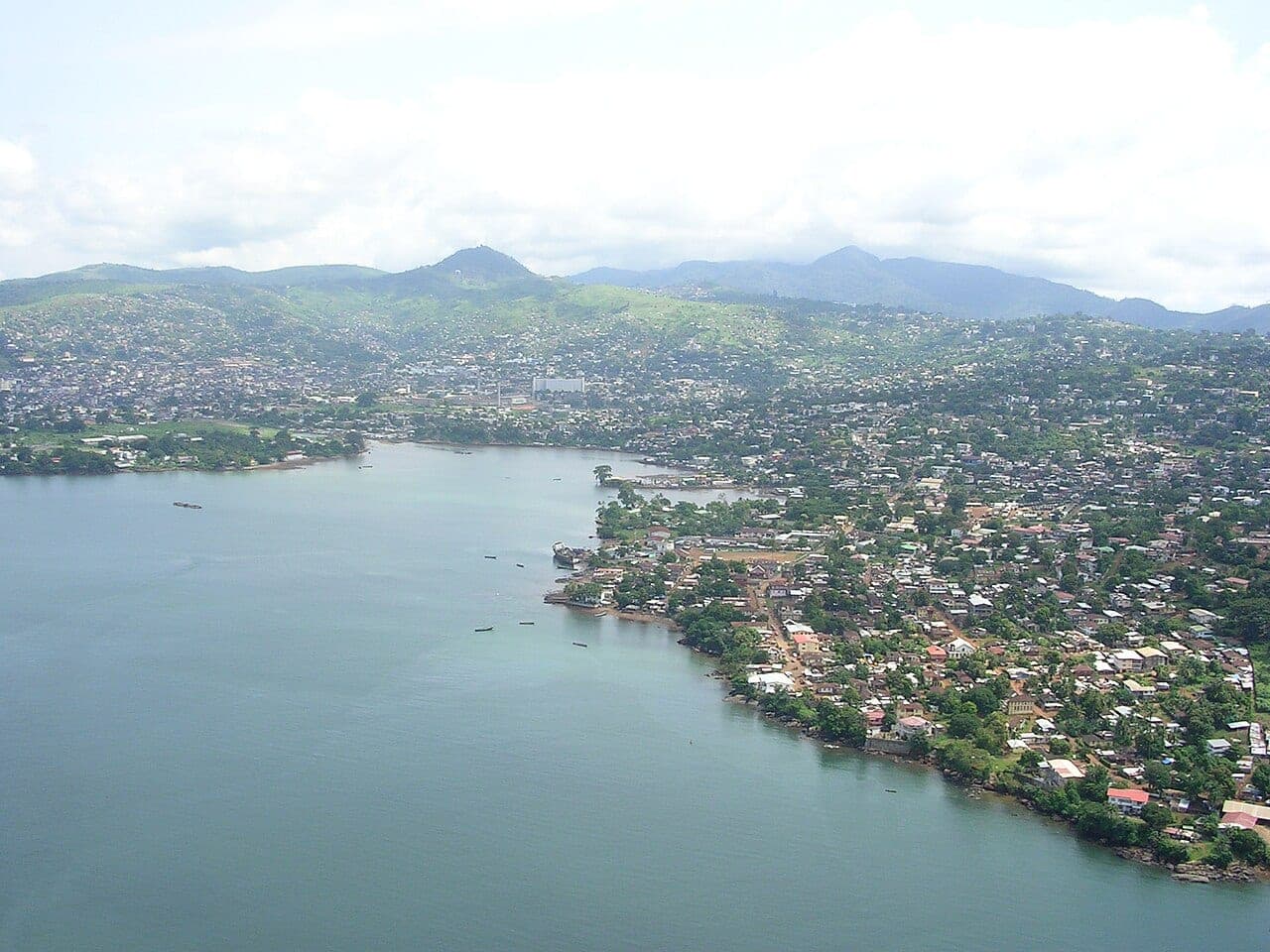
Twenty miles up the Sierra Leone River from Freetown, on an island barely a third of a mile long, stand the roofless walls of Bunce Island. For much of the eighteenth century this British castle was one of the busiest slave-trading posts on the West African coast, and tens of thousands of captives passed through its yard on their way to the rice plantations of South Carolina and Georgia (Wikipedia). For the descendants of those it dispersed, above all the Gullah people of the American South, it remains among the most charged sites of memory in the Atlantic world, and the same estuary that emptied the country of its people later received them back.
At the mouth of the river lies Freetown, founded in stages from 1787 as a home for freed and formerly enslaved people: the Black Poor of London, the Nova Scotian settlers, the Jamaican Maroons and the thousands of "recaptives" or Liberated Africans landed from intercepted slave ships. Their descendants became the Krio, whose language and architecture still mark the capital. Beyond the peninsula live the Temne, Mende, Limba, Kono, Fula and other peoples, whose Poro and Sande societies have transmitted law, medicine and moral instruction for centuries.
The Republic of Sierra Leone occupies some 71,740 square kilometres on the Atlantic coast of West Africa, bordered by Guinea to the north and east and Liberia to the south-east. From mangrove creeks and long beaches the land rises through forest and farmed hills to the Loma Mountains, where Mount Bintumani reaches 1,945 metres. Its defining feature is the Freetown peninsula, a wall of forested mountains beside one of the largest natural harbours in the world, the anchorage that sited the capital (Britannica).
The 2021 census counted about 7.5 million people, a figure revised toward 8.5 million by 2023 (Wikipedia). Roughly eighteen ethnic groups share the country, the largest being the Temne of the north and the Mende of the south and east, each around a third of the population, followed by the Limba, Kono, Fula, Loko, Kuranko and others, with the Krio of the Western Area small but historically influential (Wikipedia). Most Sierra Leoneans are Muslim and a substantial minority Christian, the two faiths living together with notable tolerance. Independent from Britain on 27 April 1961 and a republic since 1971, the country is administered today as five regions.
Freetown. The capital and largest city sits on the peninsula beneath the Lion Mountains, its centre the old settler grid where the Cotton Tree once towered beside the law courts and the National Museum. The Krio inheritance is written into the streetscape, in wooden "board houses" with shuttered upper storeys and dormer windows, and into Fourah Bay College, founded in 1827 and long the oldest Western-style university in sub-Saharan Africa, which earned Freetown the name "the Athens of West Africa" (Wikipedia). The harbour that received the first settlers remains its economic spine.
Bo. The second city and principal town of the Southern Province is the heartland of the Mende and a centre of trade and education; Bo Government Secondary School, founded in 1906 to educate the sons of chiefs, became one of the country's most influential, and the city has long been a political counterweight to Freetown.
Kenema. Capital of the Eastern Province, Kenema lies at the edge of the forest belt and has grown on timber, agriculture and the diamond trade of the eastern districts. It is the gateway to important natural heritage, including the Gola Rainforest and the Tiwai Island wildlife sanctuary on the Moa River.
Makeni. The largest city of the north and seat of the Temne-speaking interior, Makeni is a fast-growing commercial and university town in Bombali District, long a market hub between the northern farmlands and the coast.
Settlement of the region is ancient. By the time written records begin the coast was home to the Bullom and Sherbro, and the Temne and Limba were among the older peoples of the interior; the Mende and others arrived through later movements westward as the western Sudanese empires of Ghana, Mali and Songhai rose and fell, and the sixteenth-century Mane migrations reshaped the map. Muslim Fula and Mandingo traders carried Islam inland along the trade routes, while small states such as the Koya Temne kingdom controlled the estuary. In 1462 the Portuguese navigator Pedro de Sintra charted the peninsula and named it, from the shape or the storms of its mountains, Serra Lyoa (Britannica).
From the sixteenth century the coast was drawn into the transatlantic slave trade, the gravest chapter of the country's past. On Bunce Island, built around 1670 in the estuary, the Royal African Company and later the Grant, Oswald and Anderson firms ran a fortified depot from which captives, many valued for the region's rice-growing knowledge, were shipped to the plantations of the Carolina and Georgia lowcountry (Wikipedia). Tens of thousands of people left through that yard and did not return, and the site is remembered today with the sobriety that history demands.
The nation that grew at the river's mouth began as an answer to that trade. In 1787 British abolitionists led by Granville Sharp settled the "Province of Freedom" with about four hundred of London's Black Poor; that attempt failed, but in 1792 some 1,200 Nova Scotian settlers, Black Loyalists of the American Revolution, founded Freetown, joined from 1800 by Jamaican Maroons (Wikipedia). After Britain abolished the slave trade in 1807, the Royal Navy's West Africa Squadron landed thousands of "recaptives" freed from intercepted ships, and these Liberated Africans, of Yoruba, Igbo, Akan, Kongo and other origins, made the colony home. Out of settlers and recaptives emerged the Krio, a distinct Christian, English-speaking, Atlantic-facing society.
Freetown became a Crown Colony in 1808, and in 1896 Britain declared a Protectorate over the interior, provoking the Hut Tax War of 1898 and Bai Bureh's celebrated resistance. Sierra Leone became independent under Sir Milton Margai in 1961 and a republic in 1971. Between 1991 and 2002 it endured a civil war, entangled with the trade in so-called blood diamonds, that displaced much of the population before peace was declared in January 2002 (The Conversation). A Truth and Reconciliation Commission, which reported in 2004, and a hybrid Special Court for Sierra Leone documented the conflict and tried those bearing the greatest responsibility. Since then the country has remained at peace, recovering also from the Ebola epidemic of 2014 to 2016.
The name comes to English through Italian and Spanish renderings of the Portuguese Serra Lyoa, usually translated "lioness mountains" or "lion mountains"; the modern form Sierra Leone dates from the colonial period (Wikipedia). English is the official language of government, law and education, but the true lingua franca is Krio, an English-based creole spoken by the great majority as a first or second tongue and understood across every ethnic line (Wikipedia).
Krio is itself a record of the country's founding: its grammar and much of its vocabulary are English, overlaid with Yoruba and other West African elements carried by the Liberated Africans, alongside traces of Portuguese and of the wider Atlantic creoles. Beyond the peninsula the major indigenous languages are Mende in the south and east and Temne in the north, each with millions of speakers, together with Limba, Kono, Kuranko, Fula, Susu and Sherbro.
Krio culture is one of the country's most visible signatures, blending West African, British and North American elements in the shuttered board houses of Freetown, a Victorian and Edwardian formality of dress and manners, and a repertoire of foods and celebrations (Wikipedia). Yet the older institutions of the interior matter just as much. Across much of the country the Poro society for men and the Sande society, called Bondo among the Temne, for women serve as schools of adulthood, transmitting law, craft, medicine and moral instruction to each generation, and their leaders hold real authority in community affairs.
Sande is home to one of West Africa's most remarkable art forms: the Sowei, or Nowo, a polished black wooden helmet mask worn at initiations and public ceremonies, and among the very few African masking traditions in which the masks are danced by women (Wikipedia); its features present an ideal of composure rather than a portrait. Alongside the carvers work the dyers, whose indigo and tie-dyed gara is among the country's most recognisable crafts, while music runs from the palm-wine guitar of S. E. Rogie and the maringa of Ebenezer Calender to older gumbe drumming, and the national table centres on rice with cassava-leaf plasas, groundnut stew and jollof.
Sierra Leone is a Muslim-majority country, with roughly three-quarters of the population following Islam and about a fifth Christianity, and it is widely noted for the ease between the two (Wikipedia). Islam arrived early along the interior trade routes and is strongest among the Temne, Fula and Mandingo; Christianity took root through the Krio of Freetown and the mission schools and remains prominent in the south and among the professions. What is unusual is how little the two divide the society: interfaith families are common, Muslims and Christians attend one another's ceremonies, and an Inter-Religious Council brings the faiths together, a tolerance that helped hold the country together during and after the war.
Beneath both religions runs the older layer of traditional belief. Ancestors remain present in the affairs of their descendants, consulted, honoured and, when neglected, appeased, and the Poro and Sande societies preside over the passages of life. For many Sierra Leoneans these convictions coexist with mosque or church, so that a single week of observance may hold Quranic recitation or Christian liturgy alongside libation to the ancestors.
Because the faiths sit so close together, ways of mourning often borrow from one another. Muslim practice follows the wider Islamic pattern: the body is washed, shrouded and buried within a day, laid facing Mecca, with graveside prayers, a period of condolence, and gatherings on the third, seventh and fortieth days. Christian and especially Krio funerals centre on the wake-keeping, an evening of hymns and remembrance at the family home before the church service and burial, followed by memorials through the first year.
 Tens of thousands of people were shipped from Bunce Island, many of them to the rice plantations of South Carolina and Georgia because they knew how to grow it. Gullah families trace their descent to this river. Photograph by Pierre Chrzanowski, CC0, via Wikimedia Commons.
The most distinctive rite is the awujoh, the Krio memorial feast of Yoruba origin. Held on the third, seventh and fortieth days after a death, and again after a year, it gathers family and neighbours for a large meal, part of which, with kola nuts and drink, is placed in a hole dug for the deceased; mourners may speak into the hole to address the dead, casting kola to read whether the words are received (Everyculture). Blending Yoruba, Muslim and Christian elements in one ceremony, the awujoh treats remembrance as an ongoing relationship: the dead are fed, consulted and kept within the family. In the interior, funerals of Poro and Sande members carry the societies' own rites, and everywhere the aim is the same, to settle the deceased safely among the ancestors.
Over all of this lies the larger memory of Bunce Island. For Sierra Leoneans and the diaspora alike, the ruined castle in the river is a grave without bodies, a place of mourning for the millions the trade carried away, and its silence is itself a form of remembrance.
Freetown was founded to receive people who had already been taken once, and its records reflect that.
The colony was settled from 1787 with the Black Poor from London, then with the Nova Scotians, formerly enslaved people who had fought for Britain in the American Revolution and been resettled in Canada before crossing again, then with the Jamaican Maroons. Those arrivals are documented by name in the settlement records, and the Book of Negroes, which lists the people evacuated from New York in 1783, connects many of them to plantations in Virginia and the Carolinas. It is one of the few routes by which an African American family can be traced across the Atlantic in both directions.
Then the Liberated Africans. After Britain abolished the trade in 1807 the Royal Navy landed people from intercepted slave ships at Freetown, more than eighty thousand of them, and the Liberated African Register recorded each person with a name, an age, a height and the ship. Those registers survive and are the founding document of the Krio people.
The National Archives at Fourah Bay College hold a great deal of this, in conditions that have been precarious for decades, and digitisation projects have worked to get the Liberated African Registers copied and online.
The civil war from 1991 to 2002 destroyed records and displaced two million people. The Truth and Reconciliation Commission's statements are the record of that period.
National heritage is overseen by the Monuments and Relics Commission, which has protected Bunce Island since 1948, when it became the country's first historic monument (Wikipedia); a project launched in 2010 has worked to stabilise the ruins and plan a Freetown museum. The Sierra Leone National Museum, founded in the late 1950s beside the Cotton Tree, holds the national collections, from Nomoli soapstone figures and Sowei masks to the artefacts of Bai Bureh.
The Cotton Tree itself, the great kapok under which settlers are said to have gathered to give thanks in 1792, was the enduring emblem of Freetown, printed on banknotes and stamps (Wikipedia); in May 2023 much of it came down in a storm, a loss the government called a blow to the national story. The most deliberate act of preservation is the Sierra Leone Peace Museum, opened on the former grounds of the Special Court and re-launched in 2019, which keeps a full copy of the Special Court archives, a memorial to victims of the war and a garden of remembrance (RSCSL).
Some of the country's most important archives now live partly online. The records of the Truth and Reconciliation Commission, including its multi-volume final report, and the case archives of the Special Court for Sierra Leone, whose originals are held at The Hague with a full copy in Freetown, have been digitised and made publicly accessible, so that the documentary memory of the war reaches far beyond the buildings that hold it (RSCSL). The research that reconnected Sierra Leone with the Gullah diaspora, from Joseph Opala's work on Bunce Island to the documentation of individual captives, has likewise been carried into genealogical and educational resources shared across the Atlantic, though much of the country's oral heritage remains unrecorded.
Sierra Leone's most far-reaching cultural connection runs across the Atlantic to the Gullah, or Geechee, people of the South Carolina and Georgia coast, whose language, rice culture and crafts preserve unusually direct links to the Rice Coast from which their ancestors were taken through Bunce Island (Wikipedia). Since the 1980s a series of documented "homecomings", beginning with the delegation filmed for Family Across the Sea and continuing with the reconstructed journey of an enslaved girl called Priscilla, has brought Gullah families to the island and Sierra Leonean leaders to the American South, turning shared history into living relationship.
That diaspora consciousness runs alongside a growing presence in the wider world, from writers such as Aminatta Forna, Syl Cheney-Coker and Ishmael Beah to musicians and athletes of Sierra Leonean heritage in Britain and North America, giving a small country an outsized reach into the memory of the Atlantic.
A homecoming across two centuries. Through the research of Joseph Opala and others, descendants of the Gullah traced their origins to the Rice Coast and to Bunce Island itself, and the return journeys that followed, including the homecoming built around the girl Priscilla shipped to Charleston in 1756, reconnected American families with the country their ancestors left in chains (Wikipedia).
Turning the court into a museum. Rather than dismantle the site of the Special Court when its work was done, Sierra Leone reopened the compound in 2019 as the Peace Museum, keeping a full copy of the war-crimes archives, a memorial to victims and a garden of remembrance on the ground where justice was heard (RSCSL).
Saving the western chimpanzee. Founded in 1995 outside Freetown, the Tacugama Chimpanzee Sanctuary has rescued and rehabilitated orphaned western chimpanzees for three decades, and its advocacy helped persuade the government to name the endangered species the national animal in 2019, binding conservation to national identity (Tacugama).
Peace that has held. More than twenty years after the war was declared over, Sierra Leone has sustained its peace through repeated elections, and recovered from the Ebola epidemic of 2014 to 2016, a record of resilience its truth-telling and reconciliation institutions helped make possible (The Conversation).
Tens of thousands of people were shipped from Bunce Island, many of them to the rice plantations of South Carolina and Georgia because they knew how to grow it. Gullah families trace their descent to this river. Photograph by Pierre Chrzanowski, CC0, via Wikimedia Commons.
The most distinctive rite is the awujoh, the Krio memorial feast of Yoruba origin. Held on the third, seventh and fortieth days after a death, and again after a year, it gathers family and neighbours for a large meal, part of which, with kola nuts and drink, is placed in a hole dug for the deceased; mourners may speak into the hole to address the dead, casting kola to read whether the words are received (Everyculture). Blending Yoruba, Muslim and Christian elements in one ceremony, the awujoh treats remembrance as an ongoing relationship: the dead are fed, consulted and kept within the family. In the interior, funerals of Poro and Sande members carry the societies' own rites, and everywhere the aim is the same, to settle the deceased safely among the ancestors.
Over all of this lies the larger memory of Bunce Island. For Sierra Leoneans and the diaspora alike, the ruined castle in the river is a grave without bodies, a place of mourning for the millions the trade carried away, and its silence is itself a form of remembrance.
Freetown was founded to receive people who had already been taken once, and its records reflect that.
The colony was settled from 1787 with the Black Poor from London, then with the Nova Scotians, formerly enslaved people who had fought for Britain in the American Revolution and been resettled in Canada before crossing again, then with the Jamaican Maroons. Those arrivals are documented by name in the settlement records, and the Book of Negroes, which lists the people evacuated from New York in 1783, connects many of them to plantations in Virginia and the Carolinas. It is one of the few routes by which an African American family can be traced across the Atlantic in both directions.
Then the Liberated Africans. After Britain abolished the trade in 1807 the Royal Navy landed people from intercepted slave ships at Freetown, more than eighty thousand of them, and the Liberated African Register recorded each person with a name, an age, a height and the ship. Those registers survive and are the founding document of the Krio people.
The National Archives at Fourah Bay College hold a great deal of this, in conditions that have been precarious for decades, and digitisation projects have worked to get the Liberated African Registers copied and online.
The civil war from 1991 to 2002 destroyed records and displaced two million people. The Truth and Reconciliation Commission's statements are the record of that period.
National heritage is overseen by the Monuments and Relics Commission, which has protected Bunce Island since 1948, when it became the country's first historic monument (Wikipedia); a project launched in 2010 has worked to stabilise the ruins and plan a Freetown museum. The Sierra Leone National Museum, founded in the late 1950s beside the Cotton Tree, holds the national collections, from Nomoli soapstone figures and Sowei masks to the artefacts of Bai Bureh.
The Cotton Tree itself, the great kapok under which settlers are said to have gathered to give thanks in 1792, was the enduring emblem of Freetown, printed on banknotes and stamps (Wikipedia); in May 2023 much of it came down in a storm, a loss the government called a blow to the national story. The most deliberate act of preservation is the Sierra Leone Peace Museum, opened on the former grounds of the Special Court and re-launched in 2019, which keeps a full copy of the Special Court archives, a memorial to victims of the war and a garden of remembrance (RSCSL).
Some of the country's most important archives now live partly online. The records of the Truth and Reconciliation Commission, including its multi-volume final report, and the case archives of the Special Court for Sierra Leone, whose originals are held at The Hague with a full copy in Freetown, have been digitised and made publicly accessible, so that the documentary memory of the war reaches far beyond the buildings that hold it (RSCSL). The research that reconnected Sierra Leone with the Gullah diaspora, from Joseph Opala's work on Bunce Island to the documentation of individual captives, has likewise been carried into genealogical and educational resources shared across the Atlantic, though much of the country's oral heritage remains unrecorded.
Sierra Leone's most far-reaching cultural connection runs across the Atlantic to the Gullah, or Geechee, people of the South Carolina and Georgia coast, whose language, rice culture and crafts preserve unusually direct links to the Rice Coast from which their ancestors were taken through Bunce Island (Wikipedia). Since the 1980s a series of documented "homecomings", beginning with the delegation filmed for Family Across the Sea and continuing with the reconstructed journey of an enslaved girl called Priscilla, has brought Gullah families to the island and Sierra Leonean leaders to the American South, turning shared history into living relationship.
That diaspora consciousness runs alongside a growing presence in the wider world, from writers such as Aminatta Forna, Syl Cheney-Coker and Ishmael Beah to musicians and athletes of Sierra Leonean heritage in Britain and North America, giving a small country an outsized reach into the memory of the Atlantic.
A homecoming across two centuries. Through the research of Joseph Opala and others, descendants of the Gullah traced their origins to the Rice Coast and to Bunce Island itself, and the return journeys that followed, including the homecoming built around the girl Priscilla shipped to Charleston in 1756, reconnected American families with the country their ancestors left in chains (Wikipedia).
Turning the court into a museum. Rather than dismantle the site of the Special Court when its work was done, Sierra Leone reopened the compound in 2019 as the Peace Museum, keeping a full copy of the war-crimes archives, a memorial to victims and a garden of remembrance on the ground where justice was heard (RSCSL).
Saving the western chimpanzee. Founded in 1995 outside Freetown, the Tacugama Chimpanzee Sanctuary has rescued and rehabilitated orphaned western chimpanzees for three decades, and its advocacy helped persuade the government to name the endangered species the national animal in 2019, binding conservation to national identity (Tacugama).
Peace that has held. More than twenty years after the war was declared over, Sierra Leone has sustained its peace through repeated elections, and recovered from the Ebola epidemic of 2014 to 2016, a record of resilience its truth-telling and reconciliation institutions helped make possible (The Conversation).
National Overview
Notable Cities
Historical Foundations
Linguistic and Etymological Roots
Cultural Identity
Religion and Spirituality
Remembrance and Mourning Traditions
Tracing a Family in Sierra Leone
Heritage Preservation Efforts
Digital Heritage
Contemporary Cultural Influences
Success Stories
References and resources
- Encyclopaedia Britannica: Sierra Leone: geography, peoples and history.
- Wikipedia: Sierra Leone: overview, demographics and the origin of the name.
- Wikipedia: Bunce Island: the slave-trading castle, the Gullah connection and its preservation.
- Wikipedia: Krio people: the settlers, Maroons and Liberated Africans who founded Freetown.
- Wikipedia: Cotton Tree (Sierra Leone): the founding symbol of Freetown and its fall in 2023.
- Wikipedia: Sande society: the women's society and the Sowei mask tradition.
- Everyculture: Creoles of Sierra Leone: Krio religion, rites of passage and the awujoh feast.
- Residual Special Court for Sierra Leone: Peace Museum: the war-crimes archive, memorial and garden of remembrance.
- The Conversation: Sierra Leone at peace after civil war: the end of the war and the recovery.
- Tacugama Chimpanzee Sanctuary: conservation of the western chimpanzee, the national animal.