Heritage · Country
Guinea-Bissau Culture and Heritage
On the Bijagós islands, women lead the ceremonies that turn the dead into ancestors, while eighty-eight islands guard sacred groves and saltwater hippos. This is how Guinea-Bissau remembers, from the Kaabu kingdom and the rivers of the slave trade to the liberation led by Amílcar Cabral.Written to last.
By Confinity Heritage Editorial · Updated 2026-07-31 · 8-minute readQuiet tools, kept out of the way.
On the islands of the Bijagós, off the low green coast of Guinea-Bissau, the dead are not simply left behind. In this matrilineal society women lead the great ceremonies, and a young man who dies before he has been initiated cannot yet become an ancestor; the living must complete his passage for him, so that his soul can reach the world of those who came before. The Bijagó keep sacred islands and forbidden groves where entry is restricted, and they have guarded them, along with their language and their gods, through centuries of slaving and colonial rule. Here remembrance is an act of care, and it has also been an act of survival.
Guinea-Bissau is one of West Africa's smaller and least-visited nations, but its memory runs deep. This coast was the western edge of the Kaabu kingdom, a successor of the Mali Empire; its river estuaries were funnels of the transatlantic slave trade, a history the country carries soberly; and it was here that Amílcar Cabral and the PAIGC waged one of Africa's most studied wars of liberation, winning independence in 1973 and 1974. This profile traces how Guinea-Bissau remembers, from the fanado of the Bijagós and the funerals of the Balanta to the mosque, the church and the tomb of Cabral in Bissau.
Guinea-Bissau is a small country on the Atlantic coast of West Africa, bordered by Senegal to the north and Guinea to the south and east, with a mainland of tidal rivers and mangrove and an Atlantic frontier broken into the Bijagós Archipelago, some eighty-eight islands and islets of which around twenty are permanently inhabited. Much of the country lies barely above sea level, threaded by the Geba, Cacheu and Corubal rivers, whose estuaries shaped both its ecology and its history. Around two million people live here, according to Britannica, among the most ethnically varied populations of the region.
The largest community is the Balanta, rice farmers of the coast and interior, alongside the Fula and Mandinka of the eastern uplands, and the Papel, Manjaco, Mancanha and Bijagó of the coastlands and islands. Cashew nuts dominate the economy and the export trade, grown on smallholdings across the country. Since independence Guinea-Bissau has seen repeated political turbulence and several changes of government, a difficult modern record that has done little to dislodge the strength of its village cultures, its religious traditions and the ceremonies through which its peoples mark birth, initiation and death.
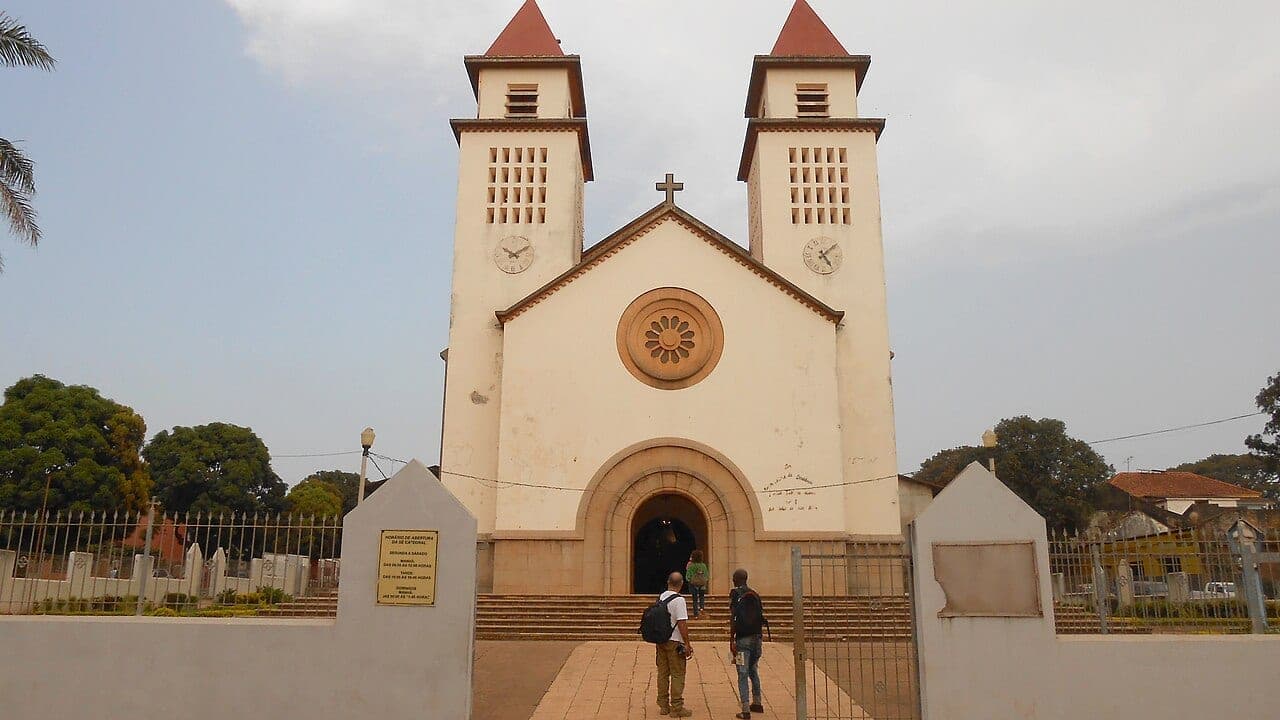
Bissau. The capital and only large city sits on the Geba estuary, where a Portuguese fort was established in 1687 to command the river trade. Its old core, Bissau Velho, keeps the pastel façades and shaded arcades of a colonial port town, and the Sé Catedral de Nossa Senhora da Candelária rises over the centre. The eighteenth-century Fortaleza de São José da Amura still stands and now shelters the mausoleum of Amílcar Cabral and other heroes of the liberation. Bissau is the seat of the National Ethnographic Museum and the hub of the country's cultural life.
Bafatá. The second city, on the banks of the Geba in the eastern interior, grew as a river trading centre and retains a graceful, if weathered, colonial quarter. It is best known as the birthplace, in 1924, of Amílcar Cabral, and it keeps his memory as a point of local pride.
Gabú. The main town of the east, in country long settled by Fula and Mandinka, was renamed after independence in honour of the Kaabu kingdom, whose heartland this was. It remains a crossroads of trade and of Muslim scholarship close to the Guinean frontier.
Bolama. On its own island south of the capital, Bolama was the first capital of Portuguese Guinea, from 1879 until the seat of government moved to Bissau in 1941, as recorded by Britannica. Its avenues of decaying colonial buildings, the Governor's Palace and cathedral among them, make it one of the most evocative and endangered heritage sites in the country.
Long before Europeans reached this coast, the land was home to the ancestors of today's peoples, and its interior fell within the orbit of the great Sahelian empires. The Kaabu kingdom, centred on what is now north-eastern Guinea-Bissau, began as a western province of the Mali Empire, conquered in the thirteenth century by Tiramakhan Traoré, a general of Sundiata Keita. As Mali declined, Kaabu emerged as an independent Mandinka state that endured into the nineteenth century, until Fula armies overran its capital at the Battle of Kansala in 1867, where, by tradition, the defenders chose to ignite their own powder stores rather than surrender.
Portuguese navigators reached these rivers in the mid-fifteenth century, and the estuaries of the Geba and Cacheu soon became posts of the Atlantic slave trade. For some three centuries, from fortified towns such as Cacheu and Bissau, enslaved Africans were shipped from this coast to the Americas, a trade that inflicted immense and lasting human suffering and that the country remembers without ornament. Portuguese control, however, remained largely confined to these riverside enclaves. The peoples of the interior and the islands resisted colonial authority for generations, and Portugal did not impose administrative control over much of the territory until the so-called pacification campaigns of the early twentieth century, opposed island by island, notably by the Bijagó and the Balanta, into the 1930s.
The modern nation was forged in the struggle against that rule. In 1956 Amílcar Cabral, an agronomist born in Bafatá, co-founded the African Party for the Independence of Guinea and Cape Verde, the PAIGC, which from 1963 waged an armed liberation war across the countryside. Cabral built schools, clinics and courts in the liberated zones and became one of the most influential theorists of African independence, but he was assassinated in Conakry on 20 January 1973, months before victory. The PAIGC declared independence on 24 September 1973, and Portugal recognised it on 10 September 1974, following the Carnation Revolution in Lisbon. Cabral's brother Luís became the first president. The decades since have been marked by coups and instability, but that later turbulence has not erased the founding memory of the liberation itself.
The name Guinea is generally traced to a Berber word for the lands of West Africa, used by Saharan traders, and the qualifier Bissau, the capital's name, was added at independence to distinguish the country from neighbouring Guinea, once Portuguese Guinea rather than French. The official language is Portuguese, but it is the first language of only a small minority.
The true lingua franca is Guinea-Bissau Creole, known as Kriol or Crioulo, a Portuguese-based creole that grew from the meeting of Portuguese with West African languages along these rivers and is now spoken, as a first or second tongue, by most of the population. It is the language of the market, the radio and popular song, and one of the strongest unifying threads in a country of many peoples. Alongside it live the ethnic languages: Balanta, of the Atlantic branch of the Niger-Congo family and the mother tongue of the largest community; Fula, or Pulaar, spoken across the Muslim east; and Mandinka, of the Mande branch, the inheritance of the Kaabu heartland. Each carries its own store of proverb, praise-poetry and genealogy, and the survival of these languages is inseparable from the survival of the customs they name.
The country's most distinctive culture is that of the Bijagó of the archipelago, whose society is organised matrilineally: descent and clan pass through the mother, and women hold decisive authority in family, land and religion. In the older order, women chose their husbands and could initiate divorce, and the memory of powerful priestess-queens, above all Okinka Pampa of Orango, who reigned in the early twentieth century, remains alive. Bijagó carvers are renowned for their sculpture and for the zoomorphic masks worn in initiation, above all the cattle and bull masks of the young men and the images of shark and stingray, held today in museums worldwide.
 The Bijagos are a matrilineal society in which women choose husbands and hold the sacred houses, and the islands are divided into zones that people move through as they age. Image by NASA Earth Observatory, public domain, via Wikimedia Commons.
Music carries the wider national identity. Gumbe, the country's signature popular style, drew together rhythms from Guinea-Bissau's many peoples over calabash percussion and interlocking guitars; it took shape around independence, and Ernesto Dabó's early recording is often named the first gumbe release. The Bissau Carnival, held before Lent, has become a national showcase in which every region parades its masks and costumes, blending the church calendar with African masquerade. At the table, rice grown in the Balanta paddies is the staple, eaten with palm oil, fish and shellfish from the estuaries and with peanut and cashew from the interior, in stews and jollof-style dishes shared across the region.
Guinea-Bissau's spiritual life rests on three inheritances held, for many families, without contradiction. Traditional African religion remains strong, especially among the Balanta, Papel and Bijagó of the coast and islands, and centres on ancestors, on the spirits known as irã that inhabit sacred groves and waters, and on the shrines and diviners who mediate between the living and the unseen. On the Bijagós, this belief has kept whole islands set apart as sacred and closed.
Islam arrived overland with the trade and teaching of the Sahel and predominates among the Fula and Mandinka of the east, generally in Sunni form shaped by Sufi brotherhoods, so that the mosque and the Qur'anic school anchor community life in towns such as Gabú. Christianity, chiefly Roman Catholicism, came with the Portuguese and is concentrated in Bissau and the towns, with Protestant congregations more recently established. According to Britannica, the country is roughly divided between a Muslim near-half, a substantial body of adherents of traditional religion, and a Christian minority, and in practice the boundaries are porous: a Muslim or Christian family will often still honour the ancestors and consult the traditional shrine.
Among the Bijagó, death and remembrance are bound to the age-grade system and its initiation, the fanado. A man must pass through the stages of initiation to become a full adult and, in time, an honoured ancestor. If he dies before completing them, the community holds that his soul cannot rest, and so relatives, usually women, undertake the ritual known as the defuntu, in which they take on the identity of the uninitiated dead and perform on their behalf the ceremonies he never finished, allowing his spirit to pass on. It is one of West Africa's most striking expressions of the belief that the living owe the dead completion as well as grief. Initiation itself may require long seclusion in the forest and instruction in the ways of the ancestors.
Other peoples keep their own rites. Balanta funerals are known for their scale, with drumming, dancing and the sacrifice of cattle to honour the dead and settle their place among the ancestors, sometimes long after burial. For the Muslim Fula and Mandinka, the dead are washed, shrouded and buried swiftly facing Mecca, with Qur'anic prayer and a defined period of mourning. Catholic families keep the wake, the funeral mass and the graveside, followed by remembrance masses and by visits to the cemetery, especially around All Souls' Day. Above all these runs the memory of Amílcar Cabral: his remains lie in the Fortaleza de São José da Amura in Bissau, his birthplace at Bafatá is honoured, and 20 January, the anniversary of his assassination, is observed as a day of national remembrance for the founder and the heroes of independence.
Guinea-Bissau's records are Portuguese in name and Bijagó, Balanta and Fula in substance.
Portuguese colonial administration was thin and largely coastal, and the état civil equivalent reached a small share of the population. Catholic parish registers cover the towns and the Cape Verdean-descended community. The colonial series is split between Bissau and the Arquivo Histórico Ultramarino in Lisbon, and the National Institute for Studies and Research in Bissau, founded after independence, holds the liberation movement's own archive, which is the most complete national record the country has.
That archive is Amílcar Cabral's. The PAIGC ran a state in the liberated zones during the war of 1963 to 1974, with schools, clinics and record-keeping, and Cabral's insistence on documentation, including his own writings on culture as the ground of resistance, produced files that survive.
The Bijagós islands hold a different system. Society there is matrilineal in important respects, women choose husbands and lead the ceremonies that turn the dead into ancestors, and the sacred groves attached to each island are tended by lineages. None of it is written down and it has outlasted everything that was.
Balanta, Fula and Mandinka communities keep their own descent traditions, the Fula and Mandinka with a griot layer, and Islamic scholarship in the east has left Arabic manuscripts.
Civil registration is incomplete, and a substantial share of the population has no birth certificate, which affects schooling and voting.
The centrepiece of natural and cultural preservation is the Bijagós Archipelago. Recognised as the Bolama-Bijagós Biosphere Reserve under UNESCO's Man and the Biosphere programme in 1996, its coastal and marine ecosystems were inscribed in July 2025 on the UNESCO World Heritage List, a designation that rests as much on the Bijagó system of sacred sites and customary management as on the islands' wildlife. National parks at Orango and at João Vieira and Poilão, managed with local communities through the national biodiversity institute, protect saltwater hippos, manatees, turtles and vast flocks of migratory shorebirds.
On the mainland, the colonial town of Bolama presents a harder task: its decaying avenues form one of West Africa's most complete ensembles of early colonial architecture, but they are fragile and largely unrestored. In Bissau, the National Ethnographic Museum holds the country's collections of masks, statuary and ritual objects; forced to close during the 1998 and 1999 civil conflict, it reopened to the public in 2017, and works alongside the National Institute of Studies and Research, whose archive gathers the documentary memory of the nation.
For a country of limited resources, much of Guinea-Bissau's documented memory now lives online through partnerships and the wider Lusophone and pan-African world. The writings and speeches of Amílcar Cabral, among the most important political texts to come out of Africa's independence era, have been digitised and translated across scholarly and activist archives, keeping his thought available far beyond Bissau. The Amílcar Cabral Foundation and allied bodies preserve and circulate documents, photographs and film of the liberation struggle and of the PAIGC's liberated zones.
Ethnographers and museums abroad have published photographic and object records of Bijagó masks and initiation, and international conservation bodies maintain open data on the archipelago's ecology and protected areas. Within the country, radio in Kriol carries news, music and the announcement of deaths and funerals across islands and villages that print rarely reaches, while diaspora networks in Portugal, Senegal, France and beyond share photographs, obituaries and festival footage that keep families connected to home. As Confinity's own work insists, memory endures only when each generation copies it forward, and for Guinea-Bissau that copying increasingly happens on the airwaves and the phone.
Guinea-Bissau's cultural reach has always exceeded its size. Amílcar Cabral remains a reference point for liberation and postcolonial thought worldwide, cited far beyond the country he freed. In music, gumbe artists have carried the national sound abroad, and figures of the diaspora, from the Paris-based to the Lisbon scene, have blended it with jazz, funk and Cape Verdean styles for international audiences. Bijagó sculpture holds an honoured place in the study and collecting of African art.
At home, the Bissau Carnival, the country's musicians and a small but determined community of writers and filmmakers sustain a national conversation about identity conducted largely in Kriol. The diaspora is central to this life: remittances, associations and the returns for family ceremonies knit together the Guinea-Bissau of the rivers and islands with its communities across West Africa and Europe. Increasingly the country presents its heritage, the Bijagós above all, as a resource for a careful, community-based tourism that keeps benefit and control in local hands.
The clearest achievement is the community conservation of the Bijagós. The islands' biodiversity has survived not in spite of the Bijagó but because of them: their sacred sites, seasonal restrictions and customary rules have long protected forests, reefs and nesting beaches, and modern conservation has worked with that system rather than against it. Poilão island is one of the most important green-turtle nesting sites in the Atlantic, safeguarded within a national park that villages themselves helped design. The saltwater hippos of Orango, found in few other places on earth, survive under the same compact between tradition and protection.
The World Heritage inscription of July 2025 recognised this model on the international stage, honouring both the ecology of the archipelago and the Bijagó culture that has sustained it. Alongside it, the reopening of the National Ethnographic Museum in 2017, after the losses of civil conflict, restored a home for the country's masks and memory, a quiet but real reclaiming of heritage held in trust for the future.
The Bijagos are a matrilineal society in which women choose husbands and hold the sacred houses, and the islands are divided into zones that people move through as they age. Image by NASA Earth Observatory, public domain, via Wikimedia Commons.
Music carries the wider national identity. Gumbe, the country's signature popular style, drew together rhythms from Guinea-Bissau's many peoples over calabash percussion and interlocking guitars; it took shape around independence, and Ernesto Dabó's early recording is often named the first gumbe release. The Bissau Carnival, held before Lent, has become a national showcase in which every region parades its masks and costumes, blending the church calendar with African masquerade. At the table, rice grown in the Balanta paddies is the staple, eaten with palm oil, fish and shellfish from the estuaries and with peanut and cashew from the interior, in stews and jollof-style dishes shared across the region.
Guinea-Bissau's spiritual life rests on three inheritances held, for many families, without contradiction. Traditional African religion remains strong, especially among the Balanta, Papel and Bijagó of the coast and islands, and centres on ancestors, on the spirits known as irã that inhabit sacred groves and waters, and on the shrines and diviners who mediate between the living and the unseen. On the Bijagós, this belief has kept whole islands set apart as sacred and closed.
Islam arrived overland with the trade and teaching of the Sahel and predominates among the Fula and Mandinka of the east, generally in Sunni form shaped by Sufi brotherhoods, so that the mosque and the Qur'anic school anchor community life in towns such as Gabú. Christianity, chiefly Roman Catholicism, came with the Portuguese and is concentrated in Bissau and the towns, with Protestant congregations more recently established. According to Britannica, the country is roughly divided between a Muslim near-half, a substantial body of adherents of traditional religion, and a Christian minority, and in practice the boundaries are porous: a Muslim or Christian family will often still honour the ancestors and consult the traditional shrine.
Among the Bijagó, death and remembrance are bound to the age-grade system and its initiation, the fanado. A man must pass through the stages of initiation to become a full adult and, in time, an honoured ancestor. If he dies before completing them, the community holds that his soul cannot rest, and so relatives, usually women, undertake the ritual known as the defuntu, in which they take on the identity of the uninitiated dead and perform on their behalf the ceremonies he never finished, allowing his spirit to pass on. It is one of West Africa's most striking expressions of the belief that the living owe the dead completion as well as grief. Initiation itself may require long seclusion in the forest and instruction in the ways of the ancestors.
Other peoples keep their own rites. Balanta funerals are known for their scale, with drumming, dancing and the sacrifice of cattle to honour the dead and settle their place among the ancestors, sometimes long after burial. For the Muslim Fula and Mandinka, the dead are washed, shrouded and buried swiftly facing Mecca, with Qur'anic prayer and a defined period of mourning. Catholic families keep the wake, the funeral mass and the graveside, followed by remembrance masses and by visits to the cemetery, especially around All Souls' Day. Above all these runs the memory of Amílcar Cabral: his remains lie in the Fortaleza de São José da Amura in Bissau, his birthplace at Bafatá is honoured, and 20 January, the anniversary of his assassination, is observed as a day of national remembrance for the founder and the heroes of independence.
Guinea-Bissau's records are Portuguese in name and Bijagó, Balanta and Fula in substance.
Portuguese colonial administration was thin and largely coastal, and the état civil equivalent reached a small share of the population. Catholic parish registers cover the towns and the Cape Verdean-descended community. The colonial series is split between Bissau and the Arquivo Histórico Ultramarino in Lisbon, and the National Institute for Studies and Research in Bissau, founded after independence, holds the liberation movement's own archive, which is the most complete national record the country has.
That archive is Amílcar Cabral's. The PAIGC ran a state in the liberated zones during the war of 1963 to 1974, with schools, clinics and record-keeping, and Cabral's insistence on documentation, including his own writings on culture as the ground of resistance, produced files that survive.
The Bijagós islands hold a different system. Society there is matrilineal in important respects, women choose husbands and lead the ceremonies that turn the dead into ancestors, and the sacred groves attached to each island are tended by lineages. None of it is written down and it has outlasted everything that was.
Balanta, Fula and Mandinka communities keep their own descent traditions, the Fula and Mandinka with a griot layer, and Islamic scholarship in the east has left Arabic manuscripts.
Civil registration is incomplete, and a substantial share of the population has no birth certificate, which affects schooling and voting.
The centrepiece of natural and cultural preservation is the Bijagós Archipelago. Recognised as the Bolama-Bijagós Biosphere Reserve under UNESCO's Man and the Biosphere programme in 1996, its coastal and marine ecosystems were inscribed in July 2025 on the UNESCO World Heritage List, a designation that rests as much on the Bijagó system of sacred sites and customary management as on the islands' wildlife. National parks at Orango and at João Vieira and Poilão, managed with local communities through the national biodiversity institute, protect saltwater hippos, manatees, turtles and vast flocks of migratory shorebirds.
On the mainland, the colonial town of Bolama presents a harder task: its decaying avenues form one of West Africa's most complete ensembles of early colonial architecture, but they are fragile and largely unrestored. In Bissau, the National Ethnographic Museum holds the country's collections of masks, statuary and ritual objects; forced to close during the 1998 and 1999 civil conflict, it reopened to the public in 2017, and works alongside the National Institute of Studies and Research, whose archive gathers the documentary memory of the nation.
For a country of limited resources, much of Guinea-Bissau's documented memory now lives online through partnerships and the wider Lusophone and pan-African world. The writings and speeches of Amílcar Cabral, among the most important political texts to come out of Africa's independence era, have been digitised and translated across scholarly and activist archives, keeping his thought available far beyond Bissau. The Amílcar Cabral Foundation and allied bodies preserve and circulate documents, photographs and film of the liberation struggle and of the PAIGC's liberated zones.
Ethnographers and museums abroad have published photographic and object records of Bijagó masks and initiation, and international conservation bodies maintain open data on the archipelago's ecology and protected areas. Within the country, radio in Kriol carries news, music and the announcement of deaths and funerals across islands and villages that print rarely reaches, while diaspora networks in Portugal, Senegal, France and beyond share photographs, obituaries and festival footage that keep families connected to home. As Confinity's own work insists, memory endures only when each generation copies it forward, and for Guinea-Bissau that copying increasingly happens on the airwaves and the phone.
Guinea-Bissau's cultural reach has always exceeded its size. Amílcar Cabral remains a reference point for liberation and postcolonial thought worldwide, cited far beyond the country he freed. In music, gumbe artists have carried the national sound abroad, and figures of the diaspora, from the Paris-based to the Lisbon scene, have blended it with jazz, funk and Cape Verdean styles for international audiences. Bijagó sculpture holds an honoured place in the study and collecting of African art.
At home, the Bissau Carnival, the country's musicians and a small but determined community of writers and filmmakers sustain a national conversation about identity conducted largely in Kriol. The diaspora is central to this life: remittances, associations and the returns for family ceremonies knit together the Guinea-Bissau of the rivers and islands with its communities across West Africa and Europe. Increasingly the country presents its heritage, the Bijagós above all, as a resource for a careful, community-based tourism that keeps benefit and control in local hands.
The clearest achievement is the community conservation of the Bijagós. The islands' biodiversity has survived not in spite of the Bijagó but because of them: their sacred sites, seasonal restrictions and customary rules have long protected forests, reefs and nesting beaches, and modern conservation has worked with that system rather than against it. Poilão island is one of the most important green-turtle nesting sites in the Atlantic, safeguarded within a national park that villages themselves helped design. The saltwater hippos of Orango, found in few other places on earth, survive under the same compact between tradition and protection.
The World Heritage inscription of July 2025 recognised this model on the international stage, honouring both the ecology of the archipelago and the Bijagó culture that has sustained it. Alongside it, the reopening of the National Ethnographic Museum in 2017, after the losses of civil conflict, restored a home for the country's masks and memory, a quiet but real reclaiming of heritage held in trust for the future.
National Overview
Notable Cities
Historical Foundations
Linguistic and Etymological Roots
Cultural Identity
Religion and Spirituality
Remembrance and Mourning Traditions
Tracing a Family in Guinea-Bissau
Heritage Preservation Efforts
Digital Heritage
Contemporary Cultural Influences
Success Stories
References and resources
- UNESCO World Heritage Centre: Coastal and Marine Ecosystems of the Bijagós Archipelago
- Britannica: Guinea-Bissau
- Britannica: Amílcar Lopes Cabral
- Britannica: Bolama
- Wikipedia: Kaabu
- Wikipedia: Guinea-Bissau War of Independence
- Wikipedia: Guinea-Bissau Creole
- Wikipedia: Gumbe
- Wikipedia: National Ethnographic Museum (Guinea-Bissau)
- Wikipedia: Okinka Pampa
- Wikipedia: Bijago art
- Minority Rights Group: Guinea-Bissau