Heritage · Country
Senegal Culture and Heritage
On a small island off Dakar, a pink house with a door onto the open Atlantic has become one of the world's gravest places of memory. This is a guide to Senegal's heritage, from the Sufi holy city of Touba to the griots who keep the past alive by voice.Written to last.
By Confinity Heritage Editorial · Updated 2026-07-31 · 8-minute readQuiet tools, kept out of the way.
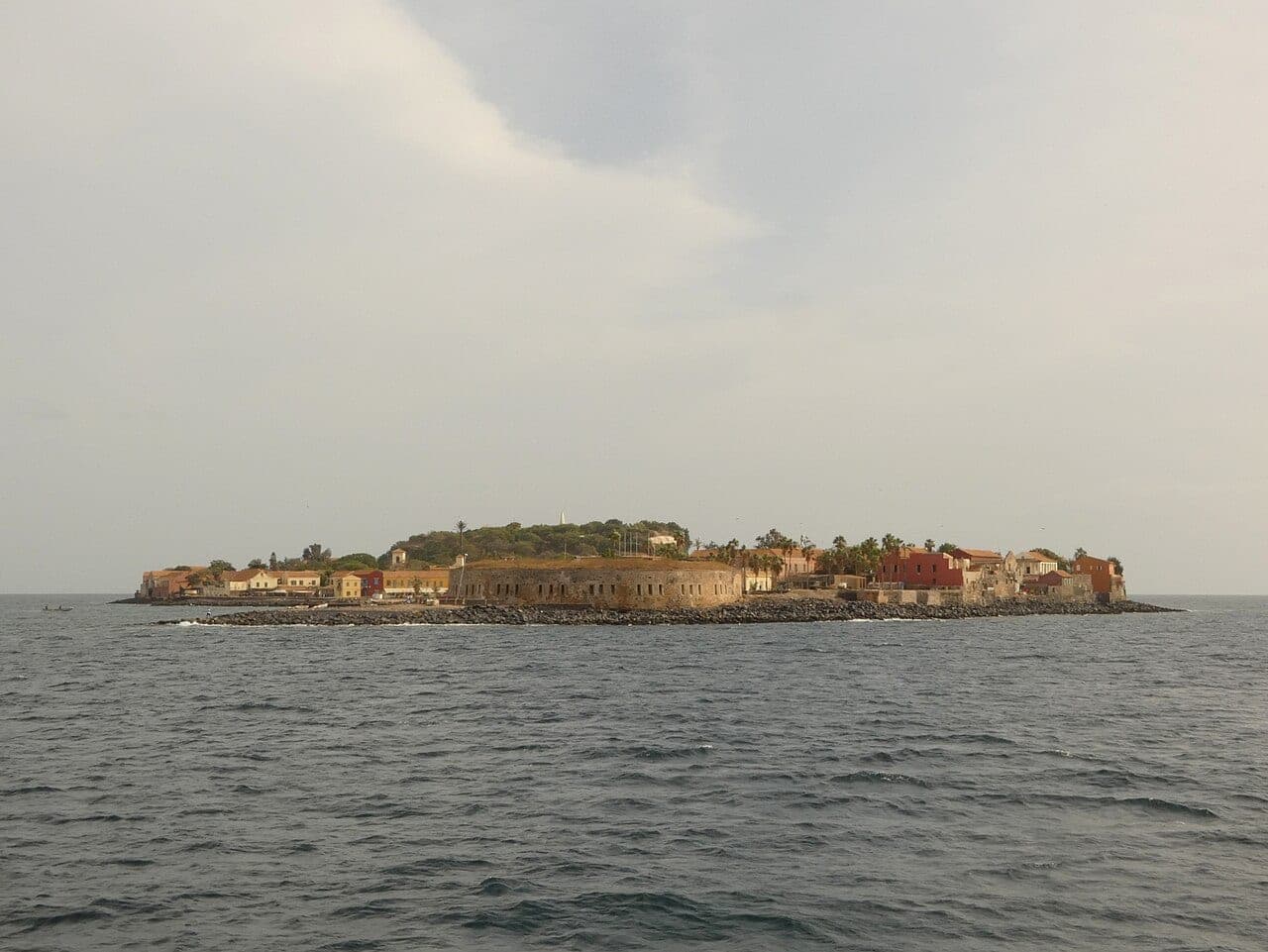
Senegal occupies the western tip of the African mainland, the place where the continent reaches furthest towards the Americas. That geography is the source of both its openness and its deepest wound. Off the coast at Dakar lies the small island of Gorée, where a pink two-storey house keeps a narrow doorway opening straight onto the ocean. Millions of visitors, among them heads of state and the descendants of the enslaved, have walked to that threshold to stand where captive Africans were held before the crossing. Whatever the exact numbers, and historians continue to weigh them, the place carries a moral weight that argument cannot lessen.
Senegal is also a country that has turned remembrance into a way of life. Its people speak of teranga, a Wolof word for hospitality so central that the national football team is named for it. Its history is guarded by griots, hereditary keepers of memory who recite lineages going back centuries. Its faith is lived through powerful Sufi brotherhoods whose annual pilgrimages gather millions in the desert city of Touba. And its first president was a poet who taught the world a new word for African dignity.
Senegal covers roughly 196,722 square kilometres of the West African coast, bordered by Mauritania to the north, Mali to the east, and Guinea and Guinea-Bissau to the south, according to Encyclopaedia Britannica. It almost entirely surrounds The Gambia, a narrow English-speaking state that follows its river inland, a shape left by rival French and British claims. The land is mostly flat and low-lying savanna, watered by the Senegal River in the north and the Casamance in the far south, with the Cap-Vert peninsula pushing out to the westernmost point of continental Africa.
The population is roughly 18 million, young and growing, and concentrated on the coast around Dakar. About 95 percent of Senegalese are Muslim, most of them members of Sufi orders, with a Christian minority of around 4 percent and a small number who keep older traditions. The largest peoples are the Wolof, followed by the Fula (also called Fulani or Peul), the Serer, and smaller communities of Jola, Mandinka and Soninke. Since independence in 1960 the country has held regular elections and transferred power peacefully between rivals more than once, a record of civilian democratic continuity that few states on the continent can match.
Dakar. The capital sits on the Cap-Vert peninsula and is the economic and cultural engine of French-speaking West Africa. Founded in 1857 and made the capital of the whole federation of French West Africa in 1902, it holds the presidency, the University of Cheikh Anta Diop, the Museum of Black Civilisations, and the towering African Renaissance Monument on a hill above the sea. Its recording studios and art scene set trends heard across the region.
Saint-Louis. The old colonial capital, laid out on an island in the mouth of the Senegal River, was the first French settlement in the country, established in 1659 and named for the sainted King Louis IX. Its grid of faded balconied houses earned it a place on the World Heritage List in 2000, and each spring the city fills for one of Africa's oldest jazz festivals.
Touba. The holy city of the Mouride brotherhood did not exist before 1887, when the Sufi teacher Amadou Bamba founded it in the semi-arid heartland. Its Great Mosque, among the largest in Africa, rises over the tomb of the founder and draws several million pilgrims for the annual Grand Magal. Touba is administered by the brotherhood rather than the ordinary state, and its rules are stricter than those of secular Senegal.
Gorée. A short ferry from Dakar, this island of narrow lanes and ochre houses is inseparable from the memory of the Atlantic trade. Ruled in turn by Portuguese, Dutch, English and French, it now holds the House of Slaves and its museum, a place of quiet pilgrimage rather than sightseeing, where visitors are asked to slow down and consider what happened there.
The land that became Senegal lay at the western edge of the great Sahelian empires. It was touched by the Ghana Empire, the Soninke state that controlled trans-Saharan gold routes from around the eighth century, and later by the Mali Empire, which at its height reached the Atlantic. From roughly the fourteenth century the Jolof Empire arose, a confederation of Wolof states that by the sixteenth century had split into the rival kingdoms of Kajoor, Bawol, Waalo, Siin and Saluum, whose nobles and griots shaped much of the culture that endures today.
Then came the ocean trade. From the fifteenth to the nineteenth century, European powers built fortified trading posts along the coast, and Gorée became one of them. It served as a warehouse and holding point in the traffic in human beings that carried millions of Africans across the Atlantic in chains, a system whose cruelty is recorded by UNESCO in the contrast between the island's cramped slave quarters and the merchants' elegant houses above them. Scholars debate how many captives passed through Gorée itself as opposed to larger ports along the coast, yet the island has been chosen by the world as a site to mourn the whole of that history, and the burden it carries is real.
In the nineteenth century France moved inland, conquering the Wolof kingdoms and governing from Saint-Louis before the seat of power shifted to Dakar. Uniquely in the empire, the inhabitants of four coastal communes, including Saint-Louis and Gorée, gained French citizenship and sent a deputy to Paris. Independence came on 4 April 1960 under Léopold Sédar Senghor, a poet and philosopher. Senghor governed for twenty years and then, in 1980, became the first African president to relinquish power voluntarily, setting a precedent for the stable succession the country has largely kept since.
French remains the official language, the medium of government, courts and higher schooling, but it is the mother tongue of very few. The true common language is Wolof, spoken by around four in five Senegalese as a first or second language and serving as the lingua franca of the streets and markets, according to a survey of the country's languages. Alongside it are Pulaar (the language of the Fula), Serer, Jola, Mandinka and Soninke, several of them recognised as national languages and written in adapted Latin and Arabic scripts.
The name Senegal comes from the river, and its origin is contested. Modern historians most often trace it to the Sanhaja, the Berber people who lived along the northern bank and whose name reached Europeans through Portuguese transcription. Best loved, though, is a folk etymology: that the name grew from the Wolof phrase sunu gaal, "our canoe", supposedly exchanged between Portuguese sailors and Wolof fishermen. Historically doubtful, the phrase has been embraced as an emblem of national solidarity, the idea that all Senegalese are in one boat together.
At the centre of Senegalese cultural life stands the griot, called géwël in Wolof, a member of a hereditary caste of oral historians, musicians and praise-singers. Griots keep genealogies, recite the deeds of ancestors at weddings and namings, and mediate disputes; without them much of the region's history would be lost. Their art feeds directly into the country's music. Mbalax, the dominant popular style, weaves the polyrhythms of the sabar drum through modern arrangements, and its dances are a fixture of celebration. The sabar, played with one hand and a thin stick, once carried messages across villages.
Senegalese artists work in equally distinctive visual forms. Reverse-glass painting, known as sous-verre or souwère, applies bright images of saints, proverbs and daily scenes to the back of a pane of glass, a folk art particular to the country. Weavers produce indigo-dyed and strip-woven cloth, and tailors turn wax prints into flowing boubou robes. The cuisine is led by thieboudienne, a one-pot dish of fish, broken rice and tomato whose name means simply "rice and fish" in Wolof. Credited to the nineteenth-century Saint-Louis cook Penda Mbaye, it was added to UNESCO's list of intangible cultural heritage in 2021, joined on the Senegalese table by yassa, chicken or fish in an onion and lemon sauce, and the peanut stew maafe.
Senegalese Islam is defined less by the mosque than by the Sufi brotherhood, the tariqa, a chain of spiritual guidance running from a living sheikh back to a revered founder. The two largest are the Tijaniyya, the most numerous, with major centres at Tivaouane and Kaolack, and the Muridiyya, or Mouride order, founded by Amadou Bamba (1853–1927), a scholar and poet whom the French exiled for years because they feared his following. Bamba preached self-discipline and hard work rather than armed resistance, and his disciples built the holy city of Touba around his teaching. Smaller orders, the Qadiriyya and the Layene, complete the picture.
The great expression of this faith is pilgrimage. The Grand Magal of Touba marks the day Bamba was sent into exile and gathers several million Mourides each year, one of the largest religious assemblies in Africa; the Tijaniyya hold their own Gamou at Tivaouane to mark the Prophet's birth. A Christian minority, mostly Roman Catholic, worships alongside this majority, and Senghor himself was a Serer Catholic who governed a Muslim nation without incident; the Marian pilgrimage to Poponguine draws thousands each Whit weekend. Older beliefs persist too, above all in the Serer religion, which honours a supreme deity called Roog and venerates the pangool, the ancestral spirits and protective saints of the family, as documented in accounts of the Serer people.
As a mainly Muslim country, Senegal follows Islamic funerary practice. The body is washed by close relatives, wrapped in plain white cloth, and buried quickly, usually within a day, laid on its right side facing Mecca. Grief is expressed with restraint; loud wailing is discouraged in favour of prayer and the recitation of the Qur'an. What follows is deeply communal: neighbours, colleagues and distant kin gather at the family home to offer condolences, and the household feeds them all, with formal gatherings held again on set days after the death. In this the funeral becomes an obligation of belonging, a shared labour that no bereaved family is left to carry alone.
 Goree is a place of pilgrimage for the African diaspora. Historians disagree sharply about how many people were shipped from this particular island, and the island's meaning has not depended on the answer. Photograph by Warren McKenzie, CC BY-SA 4.0, via Wikimedia Commons.
The Sufi orders add their own layer of remembrance. Pilgrimage to the tombs of the founding saints, the ziyara, is an act of devotion and of memory, and the annual Magal and Gamou are in essence vast commemorations of the dead teachers who gave the brotherhoods their shape.
Above all these private and communal rites sits a national act of remembrance: the keeping of Gorée. The island's House of Slaves is preserved not as a museum of objects but as a place of pilgrimage and reckoning, where the Door of No Return frames the ocean that carried the enslaved away. Senegal has made itself a custodian of that memory on behalf of a scattered people, and the sobriety expected of every visitor is itself a mourning tradition, one the whole world is asked to share.
Senegalese genealogy is professional work, and the professionals are the griots.
Griot families, the géwël in Wolof and the gawlo among the Fula, are hereditary keepers of lineage and history, attached to noble families across generations, and they can recite descent, alliances and the deeds attached to them at length. The knowledge is transmitted within griot families and performed at naming ceremonies, weddings and funerals, which are precisely the occasions when a genealogy needs to be stated publicly. The epic of Sunjata, the founding narrative of the Mali empire, is carried by this tradition across the whole region.
The Sufi brotherhoods are the other institution. The Mouride and Tijani orders organise a very large share of Senegalese society, and the lineages of their founding families, the Mbacké and the Niasse, are documented in detail and matter socially.
The written state record is French. An état civil was applied first in the four communes, whose residents held French citizenship from the nineteenth century, and unevenly elsewhere. Files are split between the Archives nationales du Sénégal in Dakar and the overseas archives at Aix-en-Provence, which also hold the records of French West Africa as a whole.
Gorée is the site everyone visits, and the historians are clear that its role in the trade was modest compared with Saint-Louis and the Gambia river. The record of the trade itself is in the ledgers of the companies that ran it, kept in Nantes, Bordeaux and Lisbon.
Senegal holds seven UNESCO World Heritage sites, a striking number for its size. Two came in the first years of the programme: the island of Gorée in 1978 and, in 1981, both the Niokolo-Koba National Park and the Djoudj National Bird Sanctuary, a wetland in the Senegal River delta that shelters more than a million migratory birds, among them pelicans and flamingos. The island of Saint-Louis followed in 2000 as an example of colonial town planning in Africa.
The later inscriptions reach further into the deep and living past. The Stone Circles of Senegambia, shared with The Gambia and listed in 2006, comprise more than a thousand megalithic monuments raised over burial grounds between roughly the third century BC and the sixteenth century AD, a landscape of the dead built by peoples whose names are lost. The Saloum Delta, added in 2011, preserves shell mounds accumulated over two millennia amid its mangroves. And the cultural landscape of Bassari Country in the southeast, listed in 2012, protects the terraced villages and initiation rites of the Bassari, Fula and Bedik peoples. National custody runs through the Institut Fondamental d'Afrique Noire in Dakar, founded in 1936, which holds major collections of West African art and manuscripts.
Senegal's memory is increasingly held online as well as on paper and stone. The government and international partners have digitised parts of the Gorée archives and made the island accessible through virtual tours and photographic surveys, so that those unable to travel can still approach the site with care. The manuscript traditions of the Sufi brotherhoods, thousands of works of poetry and jurisprudence in Arabic and in Wolof written in Arabic script, are being catalogued and scanned by libraries and university projects, preserving a written culture that colonial rule long overlooked.
The country's oral heritage is being recorded too. Ethnomusicologists have captured griot recitations, sabar rhythms and the repertoires of mbalax pioneers, and Senegalese scholars use digital tools to document endangered forms of Pulaar, Serer and Jola alongside the dominant Wolof. Museums in Dakar have begun to publish collection images and exhibition material online, extending access far beyond the capital.
Senegal's cultural reach is out of all proportion to its size. In music, Youssou N'Dour, the singer who carried mbalax to the world and won a Grammy in 2005, has been called one of the most famous performers in Africa, and he is joined by the Fula griot-descended star Baaba Maal and the guitarist Ismaël Lô. The Senegalese-American singer Akon and, in sport, the footballer Sadio Mané have become global names, while the national side, the Lions of Teranga, won the Africa Cup of Nations in 2021.
In the visual arts, the Dakar Biennale, known as Dak'Art and founded in 1992, has grown into the leading showcase of contemporary African art, and the Museum of Black Civilisations, opened in the capital in 2018, offers a continental home for work long dispersed abroad. Senegalese cinema, pioneered by Ousmane Sembène, the father of African film, continues through a new generation of directors whose work reaches festivals worldwide. Through all of it runs the ethic of teranga, an image of Senegal as a place of welcome that its diaspora carries abroad.
A dish recognised by the world. In 2021 UNESCO added thieboudienne to its list of intangible cultural heritage, honouring not only a recipe but the communal act of sharing a single platter and the Saint-Louis cook Penda Mbaye credited with inventing it.
A homecoming for stolen things. In 2019 France returned to Senegal the sword long attributed to El Hadj Umar Tall, the nineteenth-century religious leader and state-builder, an early move in the wider restitution of African objects taken during the colonial era.
One of the world's great pilgrimages. The Grand Magal of Touba has grown into one of the largest annual gatherings on earth, drawing several million Mourides to a city the brotherhood built from nothing in the desert, a demonstration that Senegalese Islam organises itself, feeds itself and remembers its own.
A city saved from the tide. The listing of Saint-Louis as a World Heritage site in 2000 spurred restoration of its colonial architecture and drew attention to the threat rising seas pose to the low island, turning international recognition into practical effort to keep the old capital standing.
Goree is a place of pilgrimage for the African diaspora. Historians disagree sharply about how many people were shipped from this particular island, and the island's meaning has not depended on the answer. Photograph by Warren McKenzie, CC BY-SA 4.0, via Wikimedia Commons.
The Sufi orders add their own layer of remembrance. Pilgrimage to the tombs of the founding saints, the ziyara, is an act of devotion and of memory, and the annual Magal and Gamou are in essence vast commemorations of the dead teachers who gave the brotherhoods their shape.
Above all these private and communal rites sits a national act of remembrance: the keeping of Gorée. The island's House of Slaves is preserved not as a museum of objects but as a place of pilgrimage and reckoning, where the Door of No Return frames the ocean that carried the enslaved away. Senegal has made itself a custodian of that memory on behalf of a scattered people, and the sobriety expected of every visitor is itself a mourning tradition, one the whole world is asked to share.
Senegalese genealogy is professional work, and the professionals are the griots.
Griot families, the géwël in Wolof and the gawlo among the Fula, are hereditary keepers of lineage and history, attached to noble families across generations, and they can recite descent, alliances and the deeds attached to them at length. The knowledge is transmitted within griot families and performed at naming ceremonies, weddings and funerals, which are precisely the occasions when a genealogy needs to be stated publicly. The epic of Sunjata, the founding narrative of the Mali empire, is carried by this tradition across the whole region.
The Sufi brotherhoods are the other institution. The Mouride and Tijani orders organise a very large share of Senegalese society, and the lineages of their founding families, the Mbacké and the Niasse, are documented in detail and matter socially.
The written state record is French. An état civil was applied first in the four communes, whose residents held French citizenship from the nineteenth century, and unevenly elsewhere. Files are split between the Archives nationales du Sénégal in Dakar and the overseas archives at Aix-en-Provence, which also hold the records of French West Africa as a whole.
Gorée is the site everyone visits, and the historians are clear that its role in the trade was modest compared with Saint-Louis and the Gambia river. The record of the trade itself is in the ledgers of the companies that ran it, kept in Nantes, Bordeaux and Lisbon.
Senegal holds seven UNESCO World Heritage sites, a striking number for its size. Two came in the first years of the programme: the island of Gorée in 1978 and, in 1981, both the Niokolo-Koba National Park and the Djoudj National Bird Sanctuary, a wetland in the Senegal River delta that shelters more than a million migratory birds, among them pelicans and flamingos. The island of Saint-Louis followed in 2000 as an example of colonial town planning in Africa.
The later inscriptions reach further into the deep and living past. The Stone Circles of Senegambia, shared with The Gambia and listed in 2006, comprise more than a thousand megalithic monuments raised over burial grounds between roughly the third century BC and the sixteenth century AD, a landscape of the dead built by peoples whose names are lost. The Saloum Delta, added in 2011, preserves shell mounds accumulated over two millennia amid its mangroves. And the cultural landscape of Bassari Country in the southeast, listed in 2012, protects the terraced villages and initiation rites of the Bassari, Fula and Bedik peoples. National custody runs through the Institut Fondamental d'Afrique Noire in Dakar, founded in 1936, which holds major collections of West African art and manuscripts.
Senegal's memory is increasingly held online as well as on paper and stone. The government and international partners have digitised parts of the Gorée archives and made the island accessible through virtual tours and photographic surveys, so that those unable to travel can still approach the site with care. The manuscript traditions of the Sufi brotherhoods, thousands of works of poetry and jurisprudence in Arabic and in Wolof written in Arabic script, are being catalogued and scanned by libraries and university projects, preserving a written culture that colonial rule long overlooked.
The country's oral heritage is being recorded too. Ethnomusicologists have captured griot recitations, sabar rhythms and the repertoires of mbalax pioneers, and Senegalese scholars use digital tools to document endangered forms of Pulaar, Serer and Jola alongside the dominant Wolof. Museums in Dakar have begun to publish collection images and exhibition material online, extending access far beyond the capital.
Senegal's cultural reach is out of all proportion to its size. In music, Youssou N'Dour, the singer who carried mbalax to the world and won a Grammy in 2005, has been called one of the most famous performers in Africa, and he is joined by the Fula griot-descended star Baaba Maal and the guitarist Ismaël Lô. The Senegalese-American singer Akon and, in sport, the footballer Sadio Mané have become global names, while the national side, the Lions of Teranga, won the Africa Cup of Nations in 2021.
In the visual arts, the Dakar Biennale, known as Dak'Art and founded in 1992, has grown into the leading showcase of contemporary African art, and the Museum of Black Civilisations, opened in the capital in 2018, offers a continental home for work long dispersed abroad. Senegalese cinema, pioneered by Ousmane Sembène, the father of African film, continues through a new generation of directors whose work reaches festivals worldwide. Through all of it runs the ethic of teranga, an image of Senegal as a place of welcome that its diaspora carries abroad.
A dish recognised by the world. In 2021 UNESCO added thieboudienne to its list of intangible cultural heritage, honouring not only a recipe but the communal act of sharing a single platter and the Saint-Louis cook Penda Mbaye credited with inventing it.
A homecoming for stolen things. In 2019 France returned to Senegal the sword long attributed to El Hadj Umar Tall, the nineteenth-century religious leader and state-builder, an early move in the wider restitution of African objects taken during the colonial era.
One of the world's great pilgrimages. The Grand Magal of Touba has grown into one of the largest annual gatherings on earth, drawing several million Mourides to a city the brotherhood built from nothing in the desert, a demonstration that Senegalese Islam organises itself, feeds itself and remembers its own.
A city saved from the tide. The listing of Saint-Louis as a World Heritage site in 2000 spurred restoration of its colonial architecture and drew attention to the threat rising seas pose to the low island, turning international recognition into practical effort to keep the old capital standing.
National Overview
Notable Cities
Historical Foundations
Linguistic and Etymological Roots
Cultural Identity
Religion and Spirituality
Remembrance and Mourning Traditions
Tracing a Family in Senegal
Heritage Preservation Efforts
Digital Heritage
Contemporary Cultural Influences
Success Stories
References and resources
- UNESCO World Heritage Centre: Island of Gorée: the 1978 inscription and its statement of significance.
- UNESCO World Heritage Centre: Senegal: the state-party page listing all seven World Heritage sites.
- Encyclopaedia Britannica: Senegal: geography, peoples, history and government.
- Encyclopaedia Britannica: Léopold Sédar Senghor: the poet-president and the Negritude movement.
- Wikipedia: Amadou Bamba: the founder of the Mouride brotherhood.
- Wikipedia: Grand Magal of Touba: the annual Mouride pilgrimage.
- Wikipedia: Thieboudienne: the national dish and its UNESCO listing.
- Wikipedia: Mbalax: the popular music of Senegal and its sabar roots.
- Wikipedia: Languages of Senegal: French, Wolof and the national languages.
- Wikipedia: Serer people: the Serer, the Roog deity and the pangool.