Heritage · Country
Gibraltar Culture and Heritage
A limestone promontory of under seven square kilometres at the mouth of the Mediterranean, Gibraltar holds caves where Neanderthals sheltered longer than almost anywhere else on earth. This is a guide to its heritage: the Moorish castle, the siege tunnels, the four synagogues and the Llanito its people still speak.Written to last.
By Confinity Heritage Editorial · Updated 2026-08-17 · 8-minute readQuiet tools, kept out of the way.
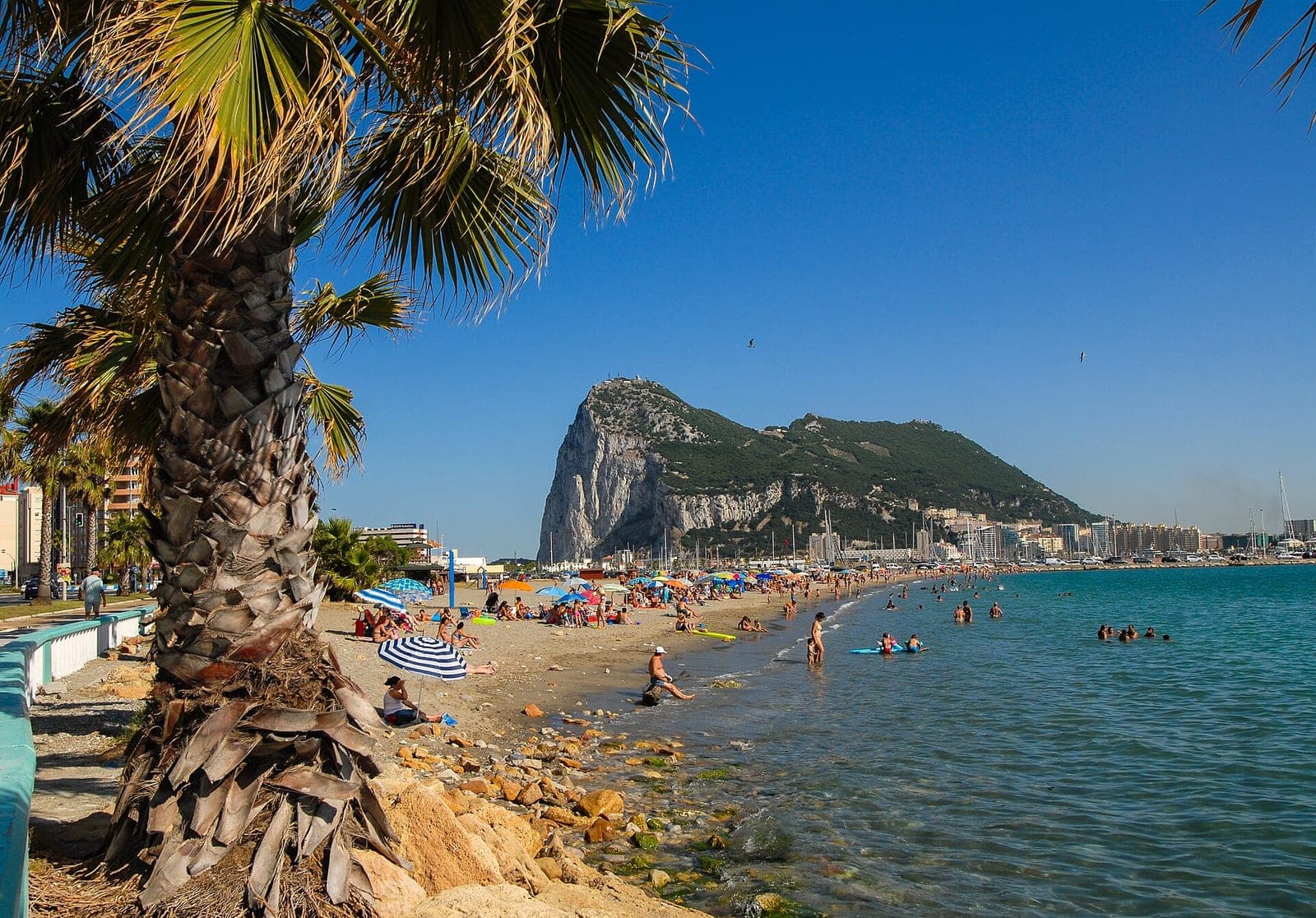
Gibraltar is a place where the record of human habitation runs back past our own species. At the southern end of a limestone promontory of less than seven square kilometres, a run of sea caves sheltered Neanderthals for tens of thousands of years, and the excavators there have argued these were among the last of them anywhere. In 1848, eight years before the find in Germany's Neander Valley that gave the species its name, a skull came out of Forbes' Quarry on the north face of the Rock. Nobody yet knew what they were looking at.
Everything after that arrived by sea and left something behind. A Berber army under Tariq ibn Ziyad crossed in 711 and gave the Rock the name it still carries; Muslim rulers held it for most of the following seven centuries; Castile took it for good in 1462, an Anglo-Dutch fleet took it in 1704, and the Treaty of Utrecht made that transfer permanent nine years later. The people who live below the Rock today descend from Genoese boatmen, Maltese and Portuguese labourers, Sephardi families from Morocco, Spanish neighbours and British garrisons, and among themselves they speak a vernacular nobody else speaks.
Gibraltar is a British Overseas Territory of 6.8 square kilometres on the southern coast of Spain, joined to the mainland by a low sandy isthmus and dominated by the Rock, a ridge of Jurassic limestone that rises to 426 metres and drops away in near-vertical cliffs on its eastern side (Britannica). Around 34,000 people live at its foot, most of them in the town on the western slope and on ground reclaimed from the bay. The territory runs its own affairs under the 2006 Constitution, while the United Kingdom keeps responsibility for defence and external relations; Spain maintains a claim, and Gibraltar remains on the United Nations list of non-self-governing territories. English is official and Catholicism the majority religion, and the economy rests on financial services, shipping, online gaming and tourism. The Barbary macaques on the upper Rock are the only wild monkey population in Europe, and by long habit the garrison has treated their presence as a condition of its own.
The town. Gibraltar is a single urban territory, and its old town climbs from the port in a grid of lanes above Main Street. Grand Casemates Square opens onto the sixteenth-century city walls; the Convent, a Franciscan friary founded in 1531, has been the governor's residence since 1728; the Garrison Library of 1793 holds one of the fullest collections of Gibraltariana anywhere; and the Gibraltar National Museum sits above a fourteenth-century Moorish bath house.
Catalan Bay. On the eastern side of the Rock, reached through a tunnel, La Caleta was settled by Genoese fishermen and kept its own accent, patron saint and festival long after the town had absorbed everyone else.
Europa Point. The southern tip looks across fourteen kilometres of water to Morocco. Within a few hundred metres stand the Shrine of Our Lady of Europe, a Christian sanctuary on the site of a mosque, the Ibrahim-al-Ibrahim Mosque opened in 1997, and the Trinity Lighthouse, which has marked the strait since 1841.
The Upper Rock. Above the town lies a nature reserve of macaques, migrating raptors and tunnels: St Michael's Cave, a wartime hospital and now a concert chamber; the Great Siege Tunnels cut by hand in the 1780s; and, on the sea cliffs below, the Gorham's Cave Complex, best seen from a boat.
The oldest chapters here belong to another people. Gorham's Cave and its neighbours, inscribed by UNESCO in 2016 under cultural criterion (iii), preserve deposits laid down over roughly 125,000 years, including hearths, stone tools, and the bones of birds, seals, dolphins and shellfish that Neanderthals caught and butchered (UNESCO). In 2012 archaeologists found a deliberate cross-hatched engraving cut into the bedrock of Gorham's Cave beneath undisturbed deposits more than 39,000 years old, one of the few pieces of abstract mark-making attributed to Neanderthals anywhere. The excavation team has argued that they persisted at Gibraltar until roughly 28,000 years ago, later than at any other known site, a claim other researchers dispute on dating grounds and one that remains among the liveliest arguments in the field (Gorham's Cave).
 Gibraltar drawn in 1720, six years after the Treaty of Utrecht handed it to Britain and while the arguments about that transfer were still fresh. Public domain, via Wikimedia Commons.
The skull from Forbes' Quarry belongs to the same story. Presented to the Gibraltar Scientific Society on 3 March 1848 by Lieutenant Edmund Flint, it was catalogued as an ancient human, put in a cupboard at the Garrison Library and effectively forgotten until the Neander Valley find and Darwin's work gave it meaning; it reached the British Association only in 1864, where Darwin and Thomas Huxley examined it (Gibraltar 1). Had it been understood in 1848, the species might now be called Calpican. The original is in the Natural History Museum in London and a cast is displayed in Gibraltar; Dorothy Garrod's excavation at Devil's Tower in 1925 and 1926 added the partial skull of a Neanderthal child of about four.
Recorded history begins with the Pillars of Hercules and a Phoenician and Carthaginian shrine in Gorham's Cave, where sailors left lamps and votive offerings between the eighth and third centuries BC. In April 711 Tariq ibn Ziyad crossed from North Africa and the promontory became Jabal Tariq. Muslim rule lasted, with a Castilian interruption from 1309 to 1333, until a Castilian force took the town by surprise in August 1462 and expelled its inhabitants; the Moorish Castle's Tower of Homage, rebuilt by the Marinids after 1333, remains the plainest mark of those centuries (History of Gibraltar). In August 1704 an Anglo-Dutch fleet under Sir George Rooke took Gibraltar for the Habsburg claimant to the Spanish throne, most of the Spanish population left for San Roque with the town's records, and Article X of the Treaty of Utrecht ceded the town, castle and fortifications to Britain in 1713.
Two later episodes shaped the population as much as any treaty. The Great Siege of 1779 to 1783 was the longest siege British forces have ever endured, and during its three years and seven months Sergeant Major Henry Ince and his miners drove galleries through the north face to place guns where none could otherwise be sited, while red-hot shot destroyed all ten of the floating batteries built to reduce the Rock (Great Siege of Gibraltar). In 1940 almost the whole civilian population, some 16,700 people, was evacuated so the Rock could become a fortress; families went first to French Morocco, then to Madeira, Jamaica, London and Northern Ireland, while tunnelling crews hollowed out the Rock behind them. The last evacuees came home in 1951.
Sovereignty over Gibraltar is disputed, and the two governments read the same documents differently. The United Kingdom holds the territory under Article X of Utrecht and states that it will not enter into arrangements under which Gibraltarians would pass under the sovereignty of another state against their freely and democratically expressed wishes. Spain regards the cession as a colonial anachronism to be undone, applies the United Nations doctrine of territorial integrity to the case, and holds that the isthmus joining the Rock to the mainland was never ceded at Utrecht. Gibraltarians have been asked twice. On 10 September 1967 they voted 12,138 to 44 to keep their link with Britain rather than pass under Spanish sovereignty, on a turnout near 97 per cent; Spain rejected the result, the UN General Assembly declined to treat it as decisive, and the frontier was closed from 1969 until 1985 (1967 referendum). On 7 November 2002, offered a British and Spanish framework for shared sovereignty, they rejected it by 17,900 votes to 187; Spain called the poll illegal and the British government of the day said it would not recognise it either (2002 referendum). The 1967 vote is commemorated each year as National Day.
The name is the oldest surviving loan in the place. Jabal Tariq, the mountain of Tariq, wore down through Castilian into Gibraltar, so that a British territory is known by an Arabic phrase honouring a Berber commander.
English is the official language, used in government, the courts and schooling, but the mother tongue of most Gibraltarians is Llanito, also written Yanito. Its base is Andalusian Spanish, and into that base are set English words and whole English clauses, along with some five hundred terms from the medieval Genoese dialect of Ligurian, a legacy of the eighteenth century when about a third of the civilian male population came from Genoa (Llanito). There are borrowings from Haketía, the Judeo-Spanish of northern Morocco, and from Maltese, Portuguese and Moroccan Arabic; there are English idioms rebuilt with Spanish parts, so that "I'll call you back" becomes te llamo p'atrás; and there is a habit of switching languages inside a single sentence that visitors find hard to follow and that Gibraltarians navigate without thinking. The name itself is contested, whether from llano for the flat ground below the Rock, from a Genoese pronunciation of Gianni, or from an English Johnny. Llanito has no official status and no standard spelling, and younger speakers use less of it than their grandparents did, which is why the two dictionaries that exist matter: Manuel Cavilla's Diccionario Yanito of 1978 and Tito Vallejo's Yanito Dictionary of 2001.
Gibraltarian identity was assembled out of arrivals. The Spanish inhabitants left in 1704, and the town that filled up afterwards was Genoese, Menorcan, Portuguese, Maltese, Jewish, Moroccan, British and Indian by turns, held together by the garrison economy, intermarriage and Catholicism. What emerged is a small people with a strong sense of itself: British by allegiance, Mediterranean by habit, bilingual by default. National Day on 10 September fills the streets with red and white, the colours of the city arms granted by Castile in 1502, which still show a castle and a key.
The food records the same mixture. Calentita, a baked chickpea-flour batter descended from Genoese farinata, is treated as the national dish and gives its name to a summer festival. The Gibraltar Chronicle, founded in 1801 and still published daily, is among the oldest English-language newspapers in continuous print anywhere, and it earned its place in the record by printing the first full account of Trafalgar and the death of Nelson well before the news reached the London papers (Gibraltar Chronicle). One of literature's more surprising Gibraltarians is fictional: Molly Bloom, whose closing monologue in Joyce's Ulysses returns again and again to a girlhood on the Rock.
Roman Catholics account for roughly seven in ten Gibraltarians, and the Cathedral of St Mary the Crowned on Main Street occupies the site of the town's principal mosque, keeping its Moorish courtyard. The Church of England's Cathedral of the Holy Trinity, built in the 1830s in a Moorish revival style, serves a smaller congregation, and the Shrine of Our Lady of Europe at Europa Point has drawn sailors' devotions since the fourteenth century.
Gibraltar also holds one of the longest continuous Jewish presences in Europe. A community is recorded on the Rock in 1356, appealing for the ransom of Jews taken by pirates; Jews were expelled under Spanish rule and returned after 1704, their settlement secured by the Anglo-Moroccan treaty of 1729, which guaranteed the rights of the Emperor of Morocco's subjects, Muslim and Jewish alike, in British territory (History of the Jews in Gibraltar). Four synagogues remain in use in a town this size: Sha'ar Hashamayim, the Great Synagogue on Engineer Lane; Nefusot Yehuda, known as the Flemish Synagogue; Etz Hayim, the Little Synagogue; and the Abudarham Synagogue of 1820. The community numbers under a thousand people and sustains kosher butchers, a school and a burial society. Muslims, about four per cent of the population, worship at the Europa Point mosque, and there is a Hindu temple in the town.
The cemetery Gibraltarians show visitors first is a small triangular plot in the old Southport Ditch, consecrated in 1798 and called the Trafalgar Cemetery. Only two of the men buried there died of wounds from the battle itself, Lieutenant William Forster of HMS Colossus and Captain Thomas Norman of HMS Mars, since most of Trafalgar's dead were buried at sea; the majority of the graves belong to victims of the yellow fever epidemics of 1804, 1813 and 1814, which killed thousands in a town with nowhere to go (Trafalgar Cemetery). Restored in the 1980s and now a Grade A listed site in the care of the Gibraltar Heritage Trust, it hosts a service on the Sunday nearest 21 October, with names read out and wreaths laid at the anchor memorial.
The working burial ground has been the North Front Cemetery under the north face of the Rock since 1856, and it holds Commonwealth war graves beside family plots going back five generations. The Jewish cemetery at Jews' Gate on Windmill Hill, in use until 1848, keeps the flat Sephardi tombstones of the community's founding families. Catholic mourning here follows the Andalusian pattern more than the English one: the rosary said in the house the evening before the funeral, a requiem Mass, burial where the family can choose it, and a month's mind Mass afterwards. Families visit on All Souls' Day and clean the stones by hand.
Gibraltar also carries a collective memory of separation. The evacuation of 1940 removed almost every civilian, and many spent eleven years in Nissen huts in Northern Ireland, camps in Jamaica or hotels in Madeira, with children born abroad who saw the Rock for the first time as teenagers. That generation is remembered on purpose: the government has held formal tributes to the evacuees, survivors' testimony has been gathered on film, and the Madeira years are marked by families who still travel back. In a place this small the story reaches almost every household, and it is told at kitchen tables as much as in museums.
Gibraltar's records are small in volume and unusually informative, because everybody who has ever lived here had to be counted at the gate.
The garrison was a controlled space, and civilians needed permits to reside. The permit lists, censuses and residency registers kept by the military governor from the eighteenth century therefore name the civilian population repeatedly, with occupation and place of origin, and they record a community assembled from Genoa, Menorca, Portugal, Morocco and Britain. The Gibraltar National Archives hold them.
Catholic parish registers for St Mary the Crowned begin in the eighteenth century and are the main vital record; Anglican, Jewish and Methodist congregations kept their own. The Jewish community, present since the eighteenth century and largely of Moroccan origin, maintained its own registers and cemeteries, which are well preserved.
Civil registration dates from the nineteenth century and is held by the Registrar.
The single event that touches almost every Gibraltarian family is the evacuation. In 1940 the entire civilian population, some sixteen thousand people, was removed to Britain, Madeira, Jamaica and Northern Ireland, and many did not return until 1951. The evacuation lists, the camp records in Northern Ireland and the shipping manifests are a complete census of the Gibraltarian people at a moment in time, and they are held in Gibraltar and in Britain.
The closed frontier with Spain from 1969 to 1985 is the other break, dividing families across a line for sixteen years.
The Gorham's Cave Complex is Gibraltar's only World Heritage Site and the only one inscribed for Neanderthal occupation. The Gibraltar National Museum, whose director Clive Finlayson and his colleague Geraldine Finlayson began the modern programme of excavation in the 1990s, is the site's management authority, and the current conservation management plan runs from 2023 to 2028; access is controlled and excavation continues each season with university teams. The Gibraltar Heritage Trust, established by statute in 1989, maintains the Trafalgar Cemetery, the city walls and a register of listed buildings.
The fortifications are their own preservation problem. The galleries driven into the Rock, from Ince's tunnels of 1782 to the wartime excavations of 1940 to 1945, total roughly 50 kilometres, more than the length of Gibraltar's roads, and the sections open to visitors are a small fraction of what exists (Tunnels of Gibraltar). The Moorish Castle's Tower of Homage held Gibraltar's prison until 2010 and has since been conserved as a monument.
For a territory this size the documentary record is unusually accessible. The Gibraltar National Archives holds government, court and shipping records and has been digitising selected collections, including material connected to Nelson and the Napoleonic fleet, while the Garrison Library's Gibraltariana collection is being catalogued and imaged. The World Heritage Site maintains its own portal at gorhamscave.gi, publishing excavation reports, management plans and the nomination documents. Family historians work with parish registers, evacuation lists and census returns; because the population has always been small and largely intermarried, a Gibraltarian tracing a line to the eighteenth century usually finds Genoese, Jewish and Portuguese ancestors in one tree.
Modern Gibraltar exports finance, shipping services and online gaming, and takes in thousands of cross-border workers a day from Spain, which makes the frontier a daily fact of life and gives the territory a close interest in whatever arrangements follow the United Kingdom's departure from the European Union, for which Gibraltar voted overwhelmingly to remain. Its cultural output is small in scale and specific in flavour: the Gibraltar Music Festival and the Calentita food festival, the novels and essays of M. G. Sanchez on Gibraltarian identity, a national football team admitted to UEFA in 2013, and a Llanito presence online that has given the vernacular a written form it never had in print. Millions of visitors arrive each year for the macaques and the caves, which puts steady pressure on a nature reserve covering most of the territory's undeveloped land.
A cave complex recognised on its own terms. Gorham's Cave was inscribed in 2016 for the record it holds of Neanderthal life, the first listing of its kind, and it is managed by Gibraltar's own museum.
A skull restored to its place in the story. The Forbes' Quarry cranium of 1848 sat in a cupboard for sixteen years before anyone understood it; it is now recognised as the first adult Neanderthal skull ever found.
Four working synagogues in a town of 34,000. Gibraltar's Jewish community, refounded after 1729, has kept all four synagogues in use and its cemeteries maintained for nearly three centuries.
A vernacular getting written down. Llanito had no dictionary until 1978 and now has two, along with recording projects and an informal literature online, giving a spoken mixture its first durable record.
Gibraltar drawn in 1720, six years after the Treaty of Utrecht handed it to Britain and while the arguments about that transfer were still fresh. Public domain, via Wikimedia Commons.
The skull from Forbes' Quarry belongs to the same story. Presented to the Gibraltar Scientific Society on 3 March 1848 by Lieutenant Edmund Flint, it was catalogued as an ancient human, put in a cupboard at the Garrison Library and effectively forgotten until the Neander Valley find and Darwin's work gave it meaning; it reached the British Association only in 1864, where Darwin and Thomas Huxley examined it (Gibraltar 1). Had it been understood in 1848, the species might now be called Calpican. The original is in the Natural History Museum in London and a cast is displayed in Gibraltar; Dorothy Garrod's excavation at Devil's Tower in 1925 and 1926 added the partial skull of a Neanderthal child of about four.
Recorded history begins with the Pillars of Hercules and a Phoenician and Carthaginian shrine in Gorham's Cave, where sailors left lamps and votive offerings between the eighth and third centuries BC. In April 711 Tariq ibn Ziyad crossed from North Africa and the promontory became Jabal Tariq. Muslim rule lasted, with a Castilian interruption from 1309 to 1333, until a Castilian force took the town by surprise in August 1462 and expelled its inhabitants; the Moorish Castle's Tower of Homage, rebuilt by the Marinids after 1333, remains the plainest mark of those centuries (History of Gibraltar). In August 1704 an Anglo-Dutch fleet under Sir George Rooke took Gibraltar for the Habsburg claimant to the Spanish throne, most of the Spanish population left for San Roque with the town's records, and Article X of the Treaty of Utrecht ceded the town, castle and fortifications to Britain in 1713.
Two later episodes shaped the population as much as any treaty. The Great Siege of 1779 to 1783 was the longest siege British forces have ever endured, and during its three years and seven months Sergeant Major Henry Ince and his miners drove galleries through the north face to place guns where none could otherwise be sited, while red-hot shot destroyed all ten of the floating batteries built to reduce the Rock (Great Siege of Gibraltar). In 1940 almost the whole civilian population, some 16,700 people, was evacuated so the Rock could become a fortress; families went first to French Morocco, then to Madeira, Jamaica, London and Northern Ireland, while tunnelling crews hollowed out the Rock behind them. The last evacuees came home in 1951.
Sovereignty over Gibraltar is disputed, and the two governments read the same documents differently. The United Kingdom holds the territory under Article X of Utrecht and states that it will not enter into arrangements under which Gibraltarians would pass under the sovereignty of another state against their freely and democratically expressed wishes. Spain regards the cession as a colonial anachronism to be undone, applies the United Nations doctrine of territorial integrity to the case, and holds that the isthmus joining the Rock to the mainland was never ceded at Utrecht. Gibraltarians have been asked twice. On 10 September 1967 they voted 12,138 to 44 to keep their link with Britain rather than pass under Spanish sovereignty, on a turnout near 97 per cent; Spain rejected the result, the UN General Assembly declined to treat it as decisive, and the frontier was closed from 1969 until 1985 (1967 referendum). On 7 November 2002, offered a British and Spanish framework for shared sovereignty, they rejected it by 17,900 votes to 187; Spain called the poll illegal and the British government of the day said it would not recognise it either (2002 referendum). The 1967 vote is commemorated each year as National Day.
The name is the oldest surviving loan in the place. Jabal Tariq, the mountain of Tariq, wore down through Castilian into Gibraltar, so that a British territory is known by an Arabic phrase honouring a Berber commander.
English is the official language, used in government, the courts and schooling, but the mother tongue of most Gibraltarians is Llanito, also written Yanito. Its base is Andalusian Spanish, and into that base are set English words and whole English clauses, along with some five hundred terms from the medieval Genoese dialect of Ligurian, a legacy of the eighteenth century when about a third of the civilian male population came from Genoa (Llanito). There are borrowings from Haketía, the Judeo-Spanish of northern Morocco, and from Maltese, Portuguese and Moroccan Arabic; there are English idioms rebuilt with Spanish parts, so that "I'll call you back" becomes te llamo p'atrás; and there is a habit of switching languages inside a single sentence that visitors find hard to follow and that Gibraltarians navigate without thinking. The name itself is contested, whether from llano for the flat ground below the Rock, from a Genoese pronunciation of Gianni, or from an English Johnny. Llanito has no official status and no standard spelling, and younger speakers use less of it than their grandparents did, which is why the two dictionaries that exist matter: Manuel Cavilla's Diccionario Yanito of 1978 and Tito Vallejo's Yanito Dictionary of 2001.
Gibraltarian identity was assembled out of arrivals. The Spanish inhabitants left in 1704, and the town that filled up afterwards was Genoese, Menorcan, Portuguese, Maltese, Jewish, Moroccan, British and Indian by turns, held together by the garrison economy, intermarriage and Catholicism. What emerged is a small people with a strong sense of itself: British by allegiance, Mediterranean by habit, bilingual by default. National Day on 10 September fills the streets with red and white, the colours of the city arms granted by Castile in 1502, which still show a castle and a key.
The food records the same mixture. Calentita, a baked chickpea-flour batter descended from Genoese farinata, is treated as the national dish and gives its name to a summer festival. The Gibraltar Chronicle, founded in 1801 and still published daily, is among the oldest English-language newspapers in continuous print anywhere, and it earned its place in the record by printing the first full account of Trafalgar and the death of Nelson well before the news reached the London papers (Gibraltar Chronicle). One of literature's more surprising Gibraltarians is fictional: Molly Bloom, whose closing monologue in Joyce's Ulysses returns again and again to a girlhood on the Rock.
Roman Catholics account for roughly seven in ten Gibraltarians, and the Cathedral of St Mary the Crowned on Main Street occupies the site of the town's principal mosque, keeping its Moorish courtyard. The Church of England's Cathedral of the Holy Trinity, built in the 1830s in a Moorish revival style, serves a smaller congregation, and the Shrine of Our Lady of Europe at Europa Point has drawn sailors' devotions since the fourteenth century.
Gibraltar also holds one of the longest continuous Jewish presences in Europe. A community is recorded on the Rock in 1356, appealing for the ransom of Jews taken by pirates; Jews were expelled under Spanish rule and returned after 1704, their settlement secured by the Anglo-Moroccan treaty of 1729, which guaranteed the rights of the Emperor of Morocco's subjects, Muslim and Jewish alike, in British territory (History of the Jews in Gibraltar). Four synagogues remain in use in a town this size: Sha'ar Hashamayim, the Great Synagogue on Engineer Lane; Nefusot Yehuda, known as the Flemish Synagogue; Etz Hayim, the Little Synagogue; and the Abudarham Synagogue of 1820. The community numbers under a thousand people and sustains kosher butchers, a school and a burial society. Muslims, about four per cent of the population, worship at the Europa Point mosque, and there is a Hindu temple in the town.
The cemetery Gibraltarians show visitors first is a small triangular plot in the old Southport Ditch, consecrated in 1798 and called the Trafalgar Cemetery. Only two of the men buried there died of wounds from the battle itself, Lieutenant William Forster of HMS Colossus and Captain Thomas Norman of HMS Mars, since most of Trafalgar's dead were buried at sea; the majority of the graves belong to victims of the yellow fever epidemics of 1804, 1813 and 1814, which killed thousands in a town with nowhere to go (Trafalgar Cemetery). Restored in the 1980s and now a Grade A listed site in the care of the Gibraltar Heritage Trust, it hosts a service on the Sunday nearest 21 October, with names read out and wreaths laid at the anchor memorial.
The working burial ground has been the North Front Cemetery under the north face of the Rock since 1856, and it holds Commonwealth war graves beside family plots going back five generations. The Jewish cemetery at Jews' Gate on Windmill Hill, in use until 1848, keeps the flat Sephardi tombstones of the community's founding families. Catholic mourning here follows the Andalusian pattern more than the English one: the rosary said in the house the evening before the funeral, a requiem Mass, burial where the family can choose it, and a month's mind Mass afterwards. Families visit on All Souls' Day and clean the stones by hand.
Gibraltar also carries a collective memory of separation. The evacuation of 1940 removed almost every civilian, and many spent eleven years in Nissen huts in Northern Ireland, camps in Jamaica or hotels in Madeira, with children born abroad who saw the Rock for the first time as teenagers. That generation is remembered on purpose: the government has held formal tributes to the evacuees, survivors' testimony has been gathered on film, and the Madeira years are marked by families who still travel back. In a place this small the story reaches almost every household, and it is told at kitchen tables as much as in museums.
Gibraltar's records are small in volume and unusually informative, because everybody who has ever lived here had to be counted at the gate.
The garrison was a controlled space, and civilians needed permits to reside. The permit lists, censuses and residency registers kept by the military governor from the eighteenth century therefore name the civilian population repeatedly, with occupation and place of origin, and they record a community assembled from Genoa, Menorca, Portugal, Morocco and Britain. The Gibraltar National Archives hold them.
Catholic parish registers for St Mary the Crowned begin in the eighteenth century and are the main vital record; Anglican, Jewish and Methodist congregations kept their own. The Jewish community, present since the eighteenth century and largely of Moroccan origin, maintained its own registers and cemeteries, which are well preserved.
Civil registration dates from the nineteenth century and is held by the Registrar.
The single event that touches almost every Gibraltarian family is the evacuation. In 1940 the entire civilian population, some sixteen thousand people, was removed to Britain, Madeira, Jamaica and Northern Ireland, and many did not return until 1951. The evacuation lists, the camp records in Northern Ireland and the shipping manifests are a complete census of the Gibraltarian people at a moment in time, and they are held in Gibraltar and in Britain.
The closed frontier with Spain from 1969 to 1985 is the other break, dividing families across a line for sixteen years.
The Gorham's Cave Complex is Gibraltar's only World Heritage Site and the only one inscribed for Neanderthal occupation. The Gibraltar National Museum, whose director Clive Finlayson and his colleague Geraldine Finlayson began the modern programme of excavation in the 1990s, is the site's management authority, and the current conservation management plan runs from 2023 to 2028; access is controlled and excavation continues each season with university teams. The Gibraltar Heritage Trust, established by statute in 1989, maintains the Trafalgar Cemetery, the city walls and a register of listed buildings.
The fortifications are their own preservation problem. The galleries driven into the Rock, from Ince's tunnels of 1782 to the wartime excavations of 1940 to 1945, total roughly 50 kilometres, more than the length of Gibraltar's roads, and the sections open to visitors are a small fraction of what exists (Tunnels of Gibraltar). The Moorish Castle's Tower of Homage held Gibraltar's prison until 2010 and has since been conserved as a monument.
For a territory this size the documentary record is unusually accessible. The Gibraltar National Archives holds government, court and shipping records and has been digitising selected collections, including material connected to Nelson and the Napoleonic fleet, while the Garrison Library's Gibraltariana collection is being catalogued and imaged. The World Heritage Site maintains its own portal at gorhamscave.gi, publishing excavation reports, management plans and the nomination documents. Family historians work with parish registers, evacuation lists and census returns; because the population has always been small and largely intermarried, a Gibraltarian tracing a line to the eighteenth century usually finds Genoese, Jewish and Portuguese ancestors in one tree.
Modern Gibraltar exports finance, shipping services and online gaming, and takes in thousands of cross-border workers a day from Spain, which makes the frontier a daily fact of life and gives the territory a close interest in whatever arrangements follow the United Kingdom's departure from the European Union, for which Gibraltar voted overwhelmingly to remain. Its cultural output is small in scale and specific in flavour: the Gibraltar Music Festival and the Calentita food festival, the novels and essays of M. G. Sanchez on Gibraltarian identity, a national football team admitted to UEFA in 2013, and a Llanito presence online that has given the vernacular a written form it never had in print. Millions of visitors arrive each year for the macaques and the caves, which puts steady pressure on a nature reserve covering most of the territory's undeveloped land.
A cave complex recognised on its own terms. Gorham's Cave was inscribed in 2016 for the record it holds of Neanderthal life, the first listing of its kind, and it is managed by Gibraltar's own museum.
A skull restored to its place in the story. The Forbes' Quarry cranium of 1848 sat in a cupboard for sixteen years before anyone understood it; it is now recognised as the first adult Neanderthal skull ever found.
Four working synagogues in a town of 34,000. Gibraltar's Jewish community, refounded after 1729, has kept all four synagogues in use and its cemeteries maintained for nearly three centuries.
A vernacular getting written down. Llanito had no dictionary until 1978 and now has two, along with recording projects and an informal literature online, giving a spoken mixture its first durable record.
National Overview
Notable Cities
Historical Foundations
Linguistic and Etymological Roots
Cultural Identity
Religion and Spirituality
Remembrance and Mourning Traditions
Tracing a Family in Gibraltar
Heritage Preservation Efforts
Digital Heritage
Contemporary Cultural Influences
Success Stories
References and resources
- UNESCO, Gorham's Cave Complex: the 2016 inscription and its criterion.
- Gorham's Cave Complex World Heritage Site: management plans, excavation reports.
- Gorham's Cave, Wikipedia: the 2012 engraving and the dating debate.
- Gibraltar 1, Wikipedia: the Forbes' Quarry skull and its belated recognition.
- History of Gibraltar, Wikipedia: 711, 1462, 1704 and the Treaty of Utrecht.
- Great Siege of Gibraltar, Wikipedia: the 1779 to 1783 siege and the tunnelling.
- Evacuation of the Gibraltarian civilian population, Wikipedia: the 1940 removal and the return in 1951.
- 1967 Gibraltar sovereignty referendum, Wikipedia: results and the frontier closure.
- 2002 Gibraltar sovereignty referendum, Wikipedia: the joint sovereignty proposal and its rejection.
- Llanito, Wikipedia: the vernacular, its borrowings and its dictionaries.
- History of the Jews in Gibraltar, Wikipedia: the community from 1356, the four synagogues.
- Trafalgar Cemetery, Wikipedia: the yellow fever dead and the annual service.
- Encyclopaedia Britannica, Gibraltar: geography, government, population.