Heritage · Country
Jamaica Culture and Heritage
From the misted ridges of the Blue and John Crow Mountains, where the Windward Maroons fought free, to the sunken streets of Port Royal beneath Kingston Harbour, Jamaica carries a memory forged in resistance and set to music. A guide to the island's heritage and to the Nine Night wake with which Jamaicans sing their dead across to the other side.Written to last.
By Confinity Heritage Editorial · Updated 2026-07-31 · 8-minute readQuiet tools, kept out of the way.
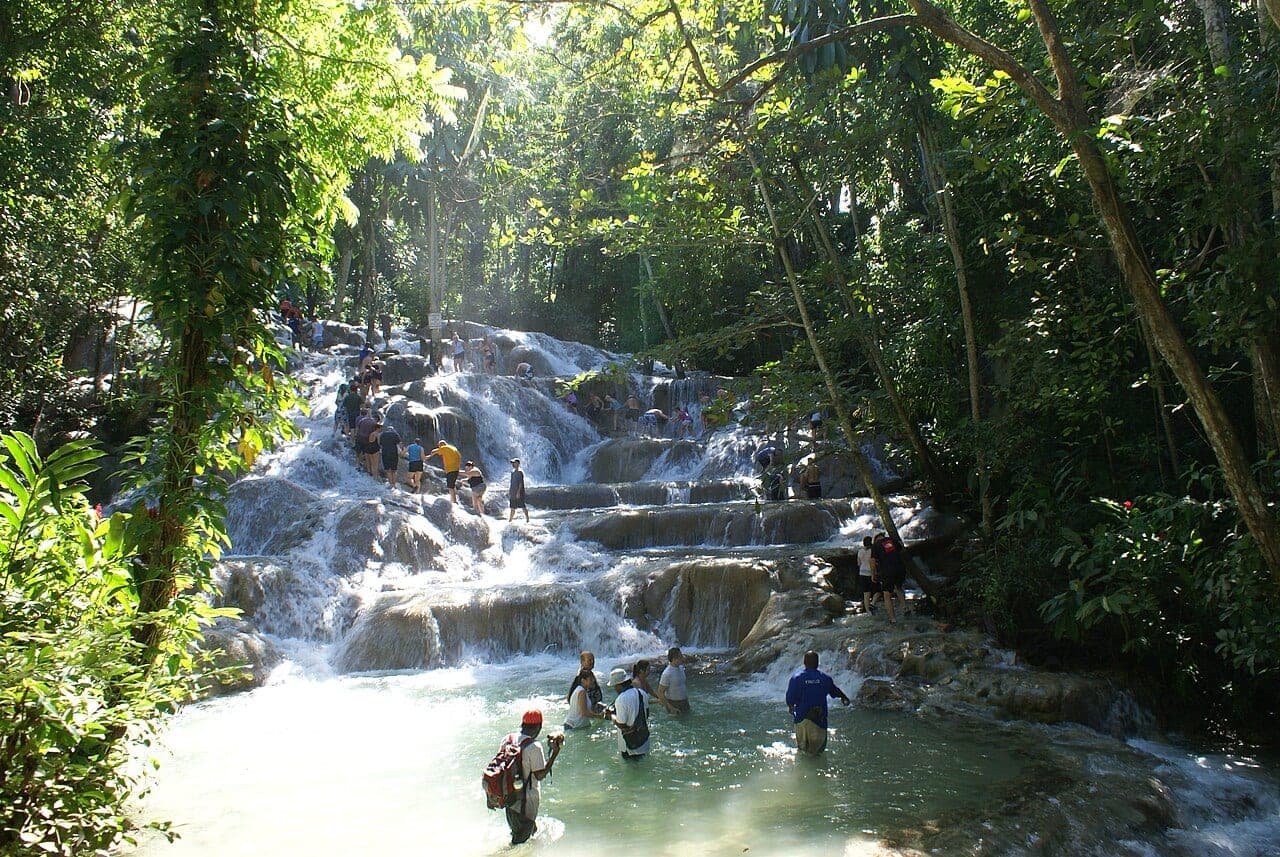
Jamaica is a mountainous island at the heart of the Caribbean, the largest of the region's English-speaking nations, whose Indigenous name endures inside the one the world now uses. The Taíno called it Xaymaca, usually read as the land of wood and water (Wiktionary). From the misted ridges of the Blue and John Crow Mountains, where self-freed Africans built a community beyond colonial reach and fought the British to a standstill, to the Kingston recording rooms where ska gave way to rocksteady and then reggae, the island has repeatedly turned a hard past into forms of expression carried far beyond its shores.
Memory is the island's binding thread. Jamaicans keep their dead through the Nine Night, a wake held over the days after a death and reaching its height on the ninth, when the community gathers to sing, tell stories and set the departed spirit on its way (Wikipedia). Around that shared custom cluster distinct ways of grieving: Christian burials and hymns, Rastafari observance, and the drum-led Afro-Jamaican rites of Kumina and Revival.
Jamaica lies about 145 kilometres south of Cuba, the third largest island in the Caribbean after Cuba and Hispaniola. Its 10,991 square kilometres rise from coastal plains into a spine of limestone hills and the Blue Mountains, which reach 2,256 metres at Blue Mountain Peak. The population is roughly 2.8 million, and the country is divided into three historic counties, Cornwall, Middlesex and Surrey, and fourteen parishes (Britannica; Parishes of Jamaica).
English is the official language, while Jamaican Patois is the mother tongue of daily life. Independent since 1962, Jamaica is a parliamentary democracy and Commonwealth realm, its economy resting on tourism, bauxite and alumina, agriculture and remittances from a diaspora that may rival the home population in size. Kingston, on the south-east coast, has been the capital since 1872 and anchors the island's cultural and commercial life.
Kingston. Founded in 1692 for refugees from the Port Royal earthquake and made capital in 1872, Kingston is the largest predominantly English-speaking city south of the United States mainland and the engine of Jamaican music. In West Kingston districts such as Trench Town, the sound-system culture of the 1950s grew into the industry that produced ska, rocksteady and reggae, much of it at Clement "Coxsone" Dodd's Studio One (Wikipedia). The Bob Marley Museum occupies the singer's former home at 56 Hope Road, and the Institute of Jamaica, National Gallery and National Library hold the nation's collections downtown.
Montego Bay. The island's second city and its tourism capital, "MoBay" grew around a sugar-shipping harbour in St James, on the north-west coast. Its central Sam Sharpe Square honours the enslaved Baptist deacon who led the 1831 Christmas Rebellion, or Baptist War, the largest slave revolt in Jamaica's history; Sharpe was hanged in the town in 1832 and is today a National Hero (Wikipedia).
Spanish Town. Founded by the Spanish around 1534 as Villa de la Vega and held as the island's capital under both Spanish and British rule until 1872, Spanish Town is among the oldest continuously occupied European-founded towns in the Americas (Wikipedia). Its Georgian square, the Rodney Memorial and the ruined House of Assembly recall the colonial seat of government, and it was here that full emancipation, the end of apprenticeship, was proclaimed in 1838.
Port Royal. On a sand spit at the mouth of Kingston Harbour, Port Royal was in the seventeenth century one of the busiest and most notorious ports in the Americas, a base for buccaneers such as Henry Morgan and a byword for wealth and vice. On 7 June 1692 an earthquake and tsunami dropped much of the town beneath the sea and killed thousands (Wikipedia). The submerged streets are among the most important underwater archaeological sites anywhere, and Jamaica has placed Port Royal on its UNESCO tentative list.
The first Jamaicans were the Taíno, Arawak-speaking people who reached the island from South America and had settled it in coastal and riverside villages well over a thousand years ago; they knew it as Xaymaca (Minority Rights Group). Columbus sighted the island in 1494, and Spanish settlement began in 1509 at Sevilla la Nueva near present-day St Ann's Bay, later shifting inland to Villa de la Vega. Within a few generations the Taíno population collapsed under forced labour, dislocation and introduced disease, one of the earliest and gravest losses in the island's past.
 Two thirds of Port Royal slid into the harbour in the earthquake of 1692, and the drowned town on the seabed is one of the best preserved underwater archaeological sites anywhere. Photograph by Raychristofer, CC BY-SA 4.0, via Wikimedia Commons.
England seized Jamaica from Spain in 1655 and, over the next century and a half, made it one of the most profitable and most brutal plantation colonies in the Atlantic world. Sugar estates worked by enslaved Africans generated immense wealth for absentee owners while imposing extreme violence and early death on the people who produced it, and hundreds of thousands were trafficked to the island across the era of slavery. It is the central fact of Jamaica's formation: the island's culture, religion and remembrance cannot be understood apart from it.
Resistance was continuous. Africans who escaped the estates, with others freed during the Spanish withdrawal, formed independent communities in the mountains and became known as the Maroons. After decades of guerrilla war the colonial government sued for peace: the Leeward Maroons under Cudjoe signed a treaty in 1739, and the Windward Maroons of the Blue Mountains, whose most celebrated leader was Nanny, agreed terms the same year, with a land patent granted to Nanny in 1740 (National Library of Jamaica). The treaties recognised Maroon freedom and land, and communities such as Accompong and Moore Town descend directly from them.
Slavery's end came through both reform in Britain and revolt at home. Samuel Sharpe's 1831 rebellion, suppressed with great bloodshed, hardened opinion in Parliament, and the Slavery Abolition Act took effect in Jamaica on 1 August 1834. Freedom was at first only partial: most formerly enslaved people were bound to their former owners under an "apprenticeship" system, and full emancipation followed on 1 August 1838 after it collapsed under protest (National Library of Jamaica). Injustice persisted, and in 1865 the Morant Bay rebellion led by Paul Bogle, and the execution of George William Gordon, exposed the failures of the post-slavery order.
Jamaica moved toward self-rule through the labour unrest of 1938 and the movements that still frame its politics, and on 6 August 1962 it became the first English-speaking Caribbean colony to gain independence, with Alexander Bustamante as its first prime minister (Jamaica Information Service). Seven figures from this history, among them Nanny of the Maroons, Samuel Sharpe, Marcus Garvey and Bustamante, are honoured as National Heroes.
Jamaica is officially English-speaking, a legacy of British rule that makes it the largest Anglophone nation in the Caribbean. Alongside standard Jamaican English, almost everyone speaks Jamaican Patois, or Patwa, an English-lexicon creole built on West African grammatical foundations during slavery. Long dismissed as "broken English", Patois is now recognised as a language in its own right, the vehicle of Jamaican song, proverb, humour and, increasingly, literature.
The island's name preserves its deepest linguistic root: Xaymaca, the Taíno word behind Jamaica, is generally translated as "land of wood and water" or "land of springs", and it survived every change of colonial master (Wiktionary). Other tongues thread through Jamaican speech. The Maroons preserve Kromanti, a ritual language with Akan roots used in ceremony, and Rastafari created its own reshaped English, sometimes called Iyaric, in which "I and I" can replace "we" to affirm a shared divine presence.
Few small nations have shaped global culture as Jamaica has through music. The folk form mento gave way in the early 1960s to ska, the horn-driven sound of groups such as the Skatalites; ska slowed around 1966 into the cooler rocksteady, and by the decade's end into reggae, with its off-beat guitar and heavy bass (Wikipedia). Reggae found its greatest ambassador in Bob Marley, born in the village of Nine Mile in 1945, who carried its message of dignity and resistance to the world before his death in 1981 (Britannica). From reggae grew dancehall, whose sound-system and "riddim" techniques, pioneered in Kingston, have shaped popular music worldwide.
Music is inseparable from Rastafari, the spiritual movement that arose in Jamaica in the 1930s and gave reggae much of its imagery and ethics. Older folk traditions endure too: Jonkonnu, a masked procession of characters such as Pitchy Patchy, Horse Head and the King and Queen, descends from the celebrations enslaved people were permitted at Christmas and carries African roots (Jamaica Information Service). At the table, ackee and saltfish is the national dish, jerk seasoning smokes over pimento wood, and rice and peas, curried goat and the flaky beef patty are eaten across the island and its diaspora.
Jamaica is among the most church-filled countries on earth and is overwhelmingly Christian. Protestant denominations predominate, with large Baptist, Pentecostal, Seventh-day Adventist, Anglican and Methodist communities, a pattern rooted in the missionary work that reached the enslaved population from the eighteenth century onward. Churches remain central to community life, education and the rites of passage.
Rastafari, though a minority faith, shapes Jamaican identity far beyond its numbers. It grew in the 1930s from the teachings associated with Marcus Garvey and from the 1930 crowning of Haile Selassie I as emperor of Ethiopia, whom adherents revere; the preacher Leonard Howell is often named among its founders (HISTORY). Its emphasis on African redemption, natural living and the sacredness of the person has spread worldwide through reggae.
Beneath and alongside the churches run the Afro-Jamaican traditions that carried African cosmologies through slavery and after. Kumina, strongest in the parish of St Thomas, centres on ancestral spirits and Central African, chiefly Kongo, drumming and dance, brought largely by indentured Africans after emancipation (Wikipedia). Revival, which arose in the Great Revival of 1860-1861, blends Christian and African elements into two related orders, Zion and Pukkumina (also called Pocomania), marked by drumming, hand-clapping, spirit possession and the rhythmic movement called trumping. These are living faiths, treated here with the seriousness their practitioners give them.
Jamaican mourning is communal, unhurried and often warm in the face of grief. Its central rite is the Nine Night, also called Dead Yard, a series of gatherings over the nine nights following a death. In older belief a person is more than the body: the spirit, or duppy, is thought to linger near home for nine nights before departing, and the wake helps to see it safely on its way (Wikipedia).
On the ninth night especially, family, neighbours and friends fill the yard of the deceased from evening until dawn. There is food and white rum, hymn-singing and secular song, the telling of Anansi trickster tales and stories of the dead, dominoes and laughter alongside tears. Custom in many districts calls for rearranging the room where the person died and turning the mattress, so that the spirit understands it must move on. The tradition's African origins are usually traced to Akan and wider West African practice, and it travelled with Jamaicans into Britain and North America, where Nine Night is still kept (After.com).
The formal funeral that follows is most often Christian, with a church service, burial and a repast; grand "send-offs" and family reunions across the diaspora are common, and graves are often on family land and carefully tended. Within Kumina, mourning takes the form of ceremonies in which drumming and dance summon the ancestors and the newly dead into the company of the living, while Revival wakes and "set-up" gatherings bring their own hymns and rhythms. Across all of these the conviction is the same: that the dead remain part of the family, and that seeing them off is a duty owed by the whole community.
Jamaican records are unusually good for the Caribbean, and the reason is that the British administration was thorough about property, and enslaved people were classed as property.
Parish registers of baptism, marriage and burial begin in 1664, among the earliest in the English-speaking Americas, and the Island Record Office holds them along with deeds, wills and civil registration from 1878. The Jamaica Archives at Spanish Town hold the rest.
The slave registers are the central source. From 1817, in response to abolitionist pressure to prevent illegal importation, every owner in the British Caribbean had to register the enslaved people they held, and to update the return every three years until emancipation. The Jamaican returns name individuals with age, colour, country of origin and, crucially, the mother, so a family can often be assembled across the returns of 1817, 1820, 1823, 1826, 1829 and 1832. After 1834 the compensation records name the owners who were paid, and the apprenticeship and baptism records name the people who were not.
Surnames usually appear at emancipation or at baptism, which is where Jamaican family research typically has to cross from a name to a person.
The modern layer is the diaspora. Around a million people of Jamaican descent live in Britain, the United States and Canada, and the Windrush generation's papers, or the absence of them, became a documented scandal in Britain when people who had lived there for fifty years were asked for proof they had never been required to keep.
Jamaica's foremost heritage site is the Blue and John Crow Mountains, inscribed on the UNESCO World Heritage List in 2015 as the country's first such site and the first mixed natural and cultural property in the insular Caribbean (UNESCO). Its forests are a biodiversity refuge and the landscape of Maroon survival: the Nanny Town Heritage Route traces the trails, hideouts and settlements from which the Windward Maroons resisted the British. The music of the Moore Town Maroons had already been proclaimed by UNESCO a Masterpiece of the Oral and Intangible Heritage of Humanity.
Other sites carry the colonial and pre-colonial past. Port Royal's sunken city and Seville Heritage Park, where Spanish, Taíno and enslaved-African histories meet near St Ann's Bay, both sit on Jamaica's UNESCO tentative list and are managed, with hundreds of other monuments, by the Jamaica National Heritage Trust (JNHT). Custody of the nation's collections rests largely with the Institute of Jamaica, founded in 1879, whose divisions include the National Museum, the National Gallery, the National Library and the African Caribbean Institute of Jamaica with its Jamaica Memory Bank (Institute of Jamaica).
Jamaica's institutions have moved steadily to open their holdings online. The National Library of Jamaica maintains digital collections of photographs, manuscripts, maps and historic newspapers, and the African Caribbean Institute's Jamaica Memory Bank records the oral histories, songs and customs of elders (National Library of Jamaica). Genealogists trace ancestors through registers and church records now being digitised, and Jamaican materials reach a wide audience through the Digital Library of the Caribbean. The Jamaica Music Museum documents the recordings behind the island's global sound.
Jamaica's cultural reach continues to outstrip its size. In 2018 UNESCO inscribed reggae music of Jamaica on its Representative List of the Intangible Cultural Heritage of Humanity, recognising a form born among marginalised communities in western Kingston that had become a global voice on justice, love and faith (UNESCO).
On the track the island is a sprinting power out of all proportion to its population, producing champions such as Usain Bolt and Shelly-Ann Fraser-Pryce and a run of Olympic and world titles that is a source of enormous national pride. A diaspora nearly as large as the home population keeps the culture in circulation: Jamaican food, music, faith and speech are woven into the life of London, New York and Toronto, and events from Notting Hill Carnival to reggae festivals carry the island's influence around the world.
A mountain range recognised. The 2015 World Heritage inscription of the Blue and John Crow Mountains gave international standing to a biodiversity refuge and to the Maroon story of resistance written into its trails, and made it Jamaica's first World Heritage Site (UNESCO).
Reggae protected as heritage. In 2018 the music of Jamaica joined UNESCO's intangible heritage list, a rare honour for a popular genre and a formal acknowledgement of reggae's role in global culture (UNESCO).
The Maroons endure. Communities such as Accompong and Moore Town, descended from the treaty settlements of 1739 and 1740, still keep their own traditions and leadership; Accompong's festival each 6 January marks the treaty's anniversary and draws visitors from across the world.
Nine Mile and a global legacy. Bob Marley's birthplace and mausoleum at Nine Mile has become a place of pilgrimage, and his music continues to introduce new generations worldwide to Jamaica and its history (Britannica).
Two thirds of Port Royal slid into the harbour in the earthquake of 1692, and the drowned town on the seabed is one of the best preserved underwater archaeological sites anywhere. Photograph by Raychristofer, CC BY-SA 4.0, via Wikimedia Commons.
England seized Jamaica from Spain in 1655 and, over the next century and a half, made it one of the most profitable and most brutal plantation colonies in the Atlantic world. Sugar estates worked by enslaved Africans generated immense wealth for absentee owners while imposing extreme violence and early death on the people who produced it, and hundreds of thousands were trafficked to the island across the era of slavery. It is the central fact of Jamaica's formation: the island's culture, religion and remembrance cannot be understood apart from it.
Resistance was continuous. Africans who escaped the estates, with others freed during the Spanish withdrawal, formed independent communities in the mountains and became known as the Maroons. After decades of guerrilla war the colonial government sued for peace: the Leeward Maroons under Cudjoe signed a treaty in 1739, and the Windward Maroons of the Blue Mountains, whose most celebrated leader was Nanny, agreed terms the same year, with a land patent granted to Nanny in 1740 (National Library of Jamaica). The treaties recognised Maroon freedom and land, and communities such as Accompong and Moore Town descend directly from them.
Slavery's end came through both reform in Britain and revolt at home. Samuel Sharpe's 1831 rebellion, suppressed with great bloodshed, hardened opinion in Parliament, and the Slavery Abolition Act took effect in Jamaica on 1 August 1834. Freedom was at first only partial: most formerly enslaved people were bound to their former owners under an "apprenticeship" system, and full emancipation followed on 1 August 1838 after it collapsed under protest (National Library of Jamaica). Injustice persisted, and in 1865 the Morant Bay rebellion led by Paul Bogle, and the execution of George William Gordon, exposed the failures of the post-slavery order.
Jamaica moved toward self-rule through the labour unrest of 1938 and the movements that still frame its politics, and on 6 August 1962 it became the first English-speaking Caribbean colony to gain independence, with Alexander Bustamante as its first prime minister (Jamaica Information Service). Seven figures from this history, among them Nanny of the Maroons, Samuel Sharpe, Marcus Garvey and Bustamante, are honoured as National Heroes.
Jamaica is officially English-speaking, a legacy of British rule that makes it the largest Anglophone nation in the Caribbean. Alongside standard Jamaican English, almost everyone speaks Jamaican Patois, or Patwa, an English-lexicon creole built on West African grammatical foundations during slavery. Long dismissed as "broken English", Patois is now recognised as a language in its own right, the vehicle of Jamaican song, proverb, humour and, increasingly, literature.
The island's name preserves its deepest linguistic root: Xaymaca, the Taíno word behind Jamaica, is generally translated as "land of wood and water" or "land of springs", and it survived every change of colonial master (Wiktionary). Other tongues thread through Jamaican speech. The Maroons preserve Kromanti, a ritual language with Akan roots used in ceremony, and Rastafari created its own reshaped English, sometimes called Iyaric, in which "I and I" can replace "we" to affirm a shared divine presence.
Few small nations have shaped global culture as Jamaica has through music. The folk form mento gave way in the early 1960s to ska, the horn-driven sound of groups such as the Skatalites; ska slowed around 1966 into the cooler rocksteady, and by the decade's end into reggae, with its off-beat guitar and heavy bass (Wikipedia). Reggae found its greatest ambassador in Bob Marley, born in the village of Nine Mile in 1945, who carried its message of dignity and resistance to the world before his death in 1981 (Britannica). From reggae grew dancehall, whose sound-system and "riddim" techniques, pioneered in Kingston, have shaped popular music worldwide.
Music is inseparable from Rastafari, the spiritual movement that arose in Jamaica in the 1930s and gave reggae much of its imagery and ethics. Older folk traditions endure too: Jonkonnu, a masked procession of characters such as Pitchy Patchy, Horse Head and the King and Queen, descends from the celebrations enslaved people were permitted at Christmas and carries African roots (Jamaica Information Service). At the table, ackee and saltfish is the national dish, jerk seasoning smokes over pimento wood, and rice and peas, curried goat and the flaky beef patty are eaten across the island and its diaspora.
Jamaica is among the most church-filled countries on earth and is overwhelmingly Christian. Protestant denominations predominate, with large Baptist, Pentecostal, Seventh-day Adventist, Anglican and Methodist communities, a pattern rooted in the missionary work that reached the enslaved population from the eighteenth century onward. Churches remain central to community life, education and the rites of passage.
Rastafari, though a minority faith, shapes Jamaican identity far beyond its numbers. It grew in the 1930s from the teachings associated with Marcus Garvey and from the 1930 crowning of Haile Selassie I as emperor of Ethiopia, whom adherents revere; the preacher Leonard Howell is often named among its founders (HISTORY). Its emphasis on African redemption, natural living and the sacredness of the person has spread worldwide through reggae.
Beneath and alongside the churches run the Afro-Jamaican traditions that carried African cosmologies through slavery and after. Kumina, strongest in the parish of St Thomas, centres on ancestral spirits and Central African, chiefly Kongo, drumming and dance, brought largely by indentured Africans after emancipation (Wikipedia). Revival, which arose in the Great Revival of 1860-1861, blends Christian and African elements into two related orders, Zion and Pukkumina (also called Pocomania), marked by drumming, hand-clapping, spirit possession and the rhythmic movement called trumping. These are living faiths, treated here with the seriousness their practitioners give them.
Jamaican mourning is communal, unhurried and often warm in the face of grief. Its central rite is the Nine Night, also called Dead Yard, a series of gatherings over the nine nights following a death. In older belief a person is more than the body: the spirit, or duppy, is thought to linger near home for nine nights before departing, and the wake helps to see it safely on its way (Wikipedia).
On the ninth night especially, family, neighbours and friends fill the yard of the deceased from evening until dawn. There is food and white rum, hymn-singing and secular song, the telling of Anansi trickster tales and stories of the dead, dominoes and laughter alongside tears. Custom in many districts calls for rearranging the room where the person died and turning the mattress, so that the spirit understands it must move on. The tradition's African origins are usually traced to Akan and wider West African practice, and it travelled with Jamaicans into Britain and North America, where Nine Night is still kept (After.com).
The formal funeral that follows is most often Christian, with a church service, burial and a repast; grand "send-offs" and family reunions across the diaspora are common, and graves are often on family land and carefully tended. Within Kumina, mourning takes the form of ceremonies in which drumming and dance summon the ancestors and the newly dead into the company of the living, while Revival wakes and "set-up" gatherings bring their own hymns and rhythms. Across all of these the conviction is the same: that the dead remain part of the family, and that seeing them off is a duty owed by the whole community.
Jamaican records are unusually good for the Caribbean, and the reason is that the British administration was thorough about property, and enslaved people were classed as property.
Parish registers of baptism, marriage and burial begin in 1664, among the earliest in the English-speaking Americas, and the Island Record Office holds them along with deeds, wills and civil registration from 1878. The Jamaica Archives at Spanish Town hold the rest.
The slave registers are the central source. From 1817, in response to abolitionist pressure to prevent illegal importation, every owner in the British Caribbean had to register the enslaved people they held, and to update the return every three years until emancipation. The Jamaican returns name individuals with age, colour, country of origin and, crucially, the mother, so a family can often be assembled across the returns of 1817, 1820, 1823, 1826, 1829 and 1832. After 1834 the compensation records name the owners who were paid, and the apprenticeship and baptism records name the people who were not.
Surnames usually appear at emancipation or at baptism, which is where Jamaican family research typically has to cross from a name to a person.
The modern layer is the diaspora. Around a million people of Jamaican descent live in Britain, the United States and Canada, and the Windrush generation's papers, or the absence of them, became a documented scandal in Britain when people who had lived there for fifty years were asked for proof they had never been required to keep.
Jamaica's foremost heritage site is the Blue and John Crow Mountains, inscribed on the UNESCO World Heritage List in 2015 as the country's first such site and the first mixed natural and cultural property in the insular Caribbean (UNESCO). Its forests are a biodiversity refuge and the landscape of Maroon survival: the Nanny Town Heritage Route traces the trails, hideouts and settlements from which the Windward Maroons resisted the British. The music of the Moore Town Maroons had already been proclaimed by UNESCO a Masterpiece of the Oral and Intangible Heritage of Humanity.
Other sites carry the colonial and pre-colonial past. Port Royal's sunken city and Seville Heritage Park, where Spanish, Taíno and enslaved-African histories meet near St Ann's Bay, both sit on Jamaica's UNESCO tentative list and are managed, with hundreds of other monuments, by the Jamaica National Heritage Trust (JNHT). Custody of the nation's collections rests largely with the Institute of Jamaica, founded in 1879, whose divisions include the National Museum, the National Gallery, the National Library and the African Caribbean Institute of Jamaica with its Jamaica Memory Bank (Institute of Jamaica).
Jamaica's institutions have moved steadily to open their holdings online. The National Library of Jamaica maintains digital collections of photographs, manuscripts, maps and historic newspapers, and the African Caribbean Institute's Jamaica Memory Bank records the oral histories, songs and customs of elders (National Library of Jamaica). Genealogists trace ancestors through registers and church records now being digitised, and Jamaican materials reach a wide audience through the Digital Library of the Caribbean. The Jamaica Music Museum documents the recordings behind the island's global sound.
Jamaica's cultural reach continues to outstrip its size. In 2018 UNESCO inscribed reggae music of Jamaica on its Representative List of the Intangible Cultural Heritage of Humanity, recognising a form born among marginalised communities in western Kingston that had become a global voice on justice, love and faith (UNESCO).
On the track the island is a sprinting power out of all proportion to its population, producing champions such as Usain Bolt and Shelly-Ann Fraser-Pryce and a run of Olympic and world titles that is a source of enormous national pride. A diaspora nearly as large as the home population keeps the culture in circulation: Jamaican food, music, faith and speech are woven into the life of London, New York and Toronto, and events from Notting Hill Carnival to reggae festivals carry the island's influence around the world.
A mountain range recognised. The 2015 World Heritage inscription of the Blue and John Crow Mountains gave international standing to a biodiversity refuge and to the Maroon story of resistance written into its trails, and made it Jamaica's first World Heritage Site (UNESCO).
Reggae protected as heritage. In 2018 the music of Jamaica joined UNESCO's intangible heritage list, a rare honour for a popular genre and a formal acknowledgement of reggae's role in global culture (UNESCO).
The Maroons endure. Communities such as Accompong and Moore Town, descended from the treaty settlements of 1739 and 1740, still keep their own traditions and leadership; Accompong's festival each 6 January marks the treaty's anniversary and draws visitors from across the world.
Nine Mile and a global legacy. Bob Marley's birthplace and mausoleum at Nine Mile has become a place of pilgrimage, and his music continues to introduce new generations worldwide to Jamaica and its history (Britannica).
National Overview
Notable Cities
Historical Foundations
Linguistic and Etymological Roots
Cultural Identity
Religion and Spirituality
Remembrance and Mourning Traditions
Tracing a Family in Jamaica
Heritage Preservation Efforts
Digital Heritage
Contemporary Cultural Influences
Success Stories
References and resources
- UNESCO: Blue and John Crow Mountains. Jamaica's 2015 mixed World Heritage site.
- UNESCO Intangible Cultural Heritage: Reggae music of Jamaica. The 2018 listing.
- Institute of Jamaica. The national museums, gallery and library.
- Jamaica National Heritage Trust: Seville Heritage Park. The heritage trust and its sites.
- National Library of Jamaica. Digital collections and history notes.
- National Library of Jamaica: The Jamaican Maroons. The Maroon wars and the 1739 and 1740 treaties.
- Encyclopaedia Britannica: Jamaica. Geography, history and politics.
- Encyclopaedia Britannica: Bob Marley. The reggae musician's life and legacy.
- Wikipedia: Nine nights. The Nine Night wake and its origins.
- Wikipedia: 1692 Jamaica earthquake. The destruction of Port Royal.