Heritage · Country
United Kingdom Culture and Heritage
Four nations, one crown, and five thousand years of memory written into stone, parchment and pixel, from Stonehenge to the searchable census. This is the heritage of the United Kingdom and the customs, from the poppy to the two-minute silence, by which the British remember their dead.Written to last.
By Confinity Heritage Editorial · Updated 2026-07-31 · 8-minute readQuiet tools, kept out of the way.
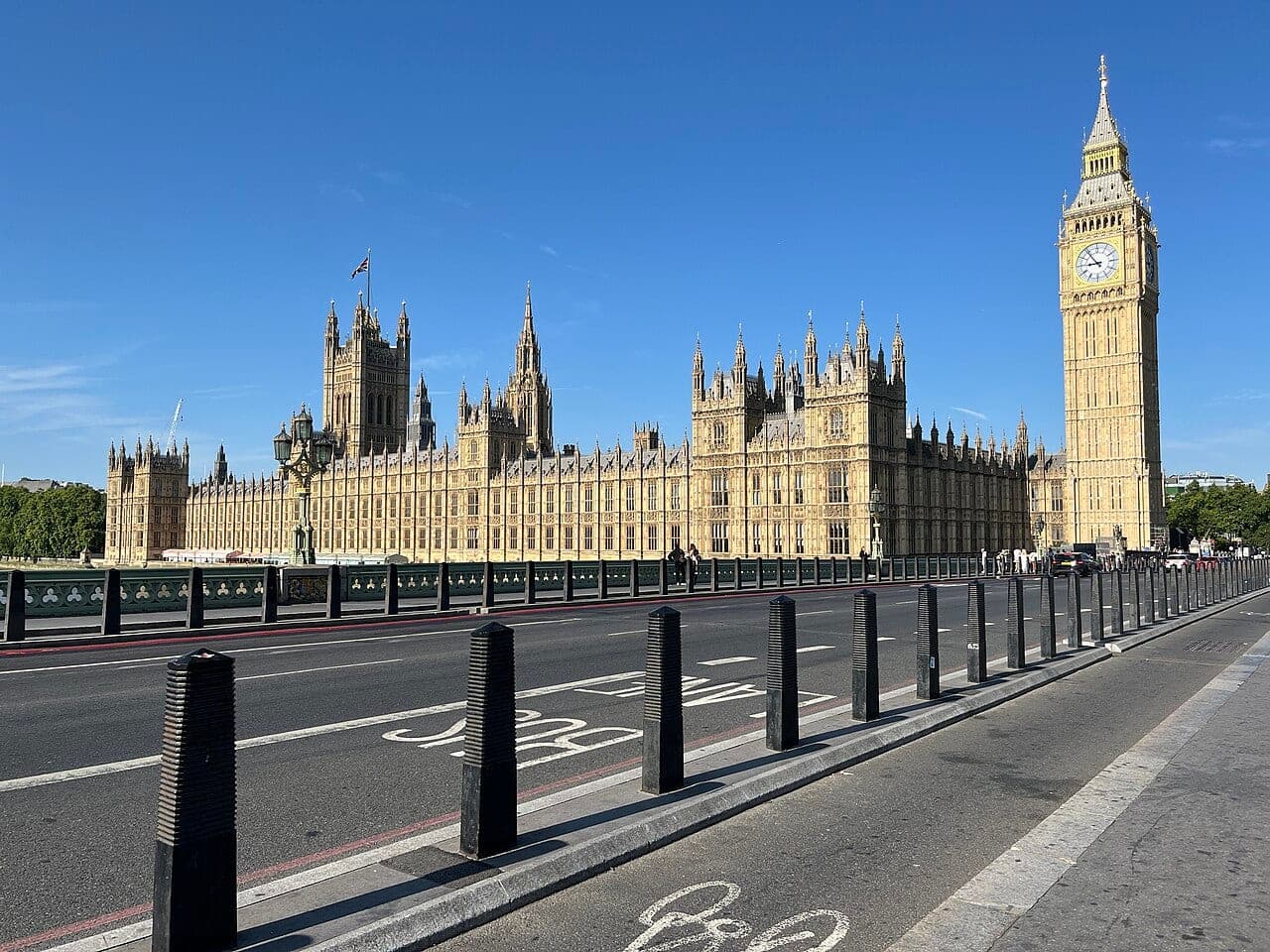
The United Kingdom of Great Britain and Northern Ireland is a single state assembled from four nations, and its memory is layered like the ground beneath it. On Salisbury Plain a circle of sarsen stones older than the pyramids still catches the midsummer sun; a Roman wall crosses the north; a Norman keep guards the Thames; and in almost every parish a memorial carries the names of the local war dead. England, Scotland, Wales and Northern Ireland each keep their own languages, churches and griefs, yet share a crown, a parliament at Westminster and a deep habit of writing lives down.
That habit reaches from the Domesday Book of 1086 to the digitised census, and it sits beside a grammar of mourning the world now knows: the poppy, the two-minute silence, the empty tomb on Whitehall.
The United Kingdom occupies most of the archipelago off north-west Europe: the island of Great Britain, holding England, Scotland and Wales, and the north-eastern corner of Ireland. Its population passed 68 million in the early 2020s, roughly 85 per cent of them in England. The land runs from the chalk downs of the south to the Welsh mountains, the Scottish Highlands and the drumlins of Ulster, nowhere far from the sea.
The state was assembled over centuries, and its parts remember that they were once separate. Wales was incorporated with England under the Tudors in the 1530s and 1540s; the crowns of Scotland and England were joined in 1603 and their parliaments in 1707 to make Great Britain; Ireland was added in 1801; and after most of Ireland left in 1922 the country took its present name in 1927 (UK Parliament). Since 1999 Scotland, Wales and Northern Ireland have had devolved legislatures, while England is governed from Westminster, and migration since 1948 has made all four nations more diverse.
London. Founded by the Romans as Londinium on the Thames, the capital has led the island for a thousand years and is now a global city of nine million. Westminster Abbey, where monarchs have been crowned since 1066, the Tower of London and the British Museum cluster within a few miles, and the Cenotaph on Whitehall focuses the nation's remembrance.
Edinburgh. Scotland's capital pairs a medieval Old Town below its castle rock with a Georgian New Town, together a UNESCO World Heritage Site; it holds the Scottish Parliament, reconvened in 1999, and the August Fringe, the largest arts festival on earth.
Cardiff. The Welsh capital, Caerdydd, grew rich shipping coal and is now the seat of the Senedd, the Welsh Parliament established in 1999, its castle layering Roman, Norman and Victorian work on one site.
Belfast. The capital of Northern Ireland built RMS Titanic, launched from Harland and Wolff in 1911; it carries the memory of the Troubles in its murals and peace walls, and Stormont houses the Northern Ireland Assembly.
Other cities. Glasgow built ships for the empire; Liverpool handled the Atlantic trade, including the slave trade it now confronts in the International Slavery Museum, and gave the world the Beatles; Manchester and Birmingham drove the industrial age; and Bath, York, Oxford and Cambridge keep older Britain alive.
Britain's first monuments are Neolithic: from around 3000 BC communities raised Stonehenge on Salisbury Plain and the circle at Avebury, built Skara Brae in Orkney and set the standing stones of Callanish, several now World Heritage Sites. The Romans invaded in AD 43 under Claudius and held the south for nearly four centuries, founding London, Bath and York and marking their frontier with Hadrian's Wall, begun in AD 122, and the Antonine Wall across central Scotland.
 The wall was a frontier for nearly three centuries, and much of the stone that is missing from it was carried away to build farms, churches and roads. Photograph by Lieven Smits, CC BY-SA 4.0, via Wikimedia Commons.
After the legions left around AD 410, Angles, Saxons and Jutes settled the lowlands and gave England its name and early kingdoms, while Celtic peoples held Wales, Cornwall, Scotland and Ireland; the ship burial at Sutton Hoo, its helmet now in the British Museum, shows the wealth of that world. Viking raids from the 790s turned to settlement. In 1066 the Norman duke William defeated the last Anglo-Saxon king at Hastings, seized the crown, built the Tower of London and ordered the Domesday Book of 1086, a survey unmatched in medieval Europe.
Two institutions from the medieval kingdom went out to the world. Magna Carta, sealed by King John at Runnymede in 1215, set down the principle that the ruler too is bound by law; four originals survive, two in the British Library. Parliament took shape in the same century and won the power over taxation that would check the crown. Wales was joined to England by the Laws in Wales Acts of 1535 and 1542, and Henry VIII's break with Rome created the Church of England and the parish registers of family history. The crowns of Scotland and England were united in 1603, and the two kingdoms merged into Great Britain in 1707 (Britannica).
The eighteenth and nineteenth centuries made Britain the first industrial nation and the centre of the largest empire in history, and those stories are inseparable from a third. Britain grew wealthy in part through the transatlantic slave trade: from the mid-seventeenth century British ships carried around 3.1 million enslaved Africans across the Atlantic, of whom roughly 2.7 million survived the crossing, and by the mid-eighteenth century Britain was the largest slave-trading nation (The National Archives). A campaign led by William Wilberforce, Thomas Clarkson and Olaudah Equiano, and driven as much by the resistance of enslaved people themselves, secured the Slave Trade Act of 1807 and the Slavery Abolition Act of 1833, which freed most of the enslaved from 1834. The abolition was hard-won, but its terms are sobering: the government paid 20 million pounds in compensation, some 40 per cent of its annual budget, to former owners rather than to the people they had enslaved, a debt taxpayers finished repaying only in 2015. Alongside came the Industrial Revolution, begun around the 1760s: Abraham Darby's Iron Bridge of 1779, James Watt's steam engine and the Stockton and Darlington Railway of 1825 reshaped the world, at a human cost that drove the rise of trade unions and democracy.
The twentieth century brought two world wars, with nearly 900,000 United Kingdom dead in the First World War alone. Most of Ireland left the union in 1922; after 1945 came the loss of empire, the National Health Service in 1948 and the ship Empire Windrush, the start of the migrations that remade Britain. Later came the Troubles in Northern Ireland, settled by the Good Friday Agreement of 1998, devolution in 1999, and departure from the European Union in 2020.
The United Kingdom is a country of several languages under one dominant tongue. English, a Germanic language brought by the Anglo-Saxons, absorbed Norse and Norman French words to become the speech of Chaucer and then, standardised by print after 1476 and the King James Bible of 1611, a global language now spoken by over a billion people. It shares the islands with older Celtic languages. Welsh (Cymraeg), the strongest, was spoken by about 538,000 people, some 18 per cent of Wales, at the 2021 census (GOV.WALES). Scottish Gaelic had around 70,000 speakers in the 2022 census, and Irish (Gaeilge) some 228,000 people claiming ability in Northern Ireland in 2021. Scots, the Germanic sister-tongue of English, was claimed by more than 1.5 million people in Scotland, and Cornish, extinct by the eighteenth century, has been revived to several hundred fluent speakers and won national minority recognition in 2014.
The names carry this layered past. Britain descends from a Celtic word recorded by Greek writers as Pretannia, probably meaning the painted people, surviving in the Welsh Prydain; Great Britain distinguished the large island from Brittany across the Channel. England is the land of the Angles; Wales comes from an Old English word for foreigner, while the Welsh call their country Cymru; Scotland takes its name from the Scoti, and Ireland from the goddess Ériu.
No writer has shaped the language more than William Shakespeare, born in Stratford-upon-Avon in 1564, whose 38 plays and 154 sonnets are performed worldwide. He heads a literary inheritance the four nations share: Chaucer, Austen, the Brontës, Dickens and Orwell in England; Robert Burns, marked each 25 January with haggis and verse, and Walter Scott in Scotland; the eisteddfod poets and Dylan Thomas in Wales; and Seamus Heaney and the Belfast-born C. S. Lewis from the north of Ireland. Music runs as deep, from Purcell and Elgar to Welsh male voice choirs, the Highland pipes, Irish sessions and the pop revolution the Beatles began in Liverpool.
Britain also codified much of the world's sport: association football's rules were settled in London in 1863, rugby takes its name from an English school and its fiercest devotion from Wales, golf was formalised at St Andrews, and tennis's oldest championship is played at Wimbledon. Everyday culture keeps its own institutions: the pub, descendant of the medieval alehouse, and the cup of tea, a colonial import that became the national drink.
The United Kingdom has no single religious settlement, but four. The Church of England, born of Henry VIII's break with Rome, is established, with the monarch as its Supreme Governor and the Archbishop of Canterbury at its head, and its 42 mostly medieval cathedrals are among the country's greatest buildings. Scotland's national church, the Presbyterian Kirk, is not established in the same way; the Church in Wales was disestablished in 1920 and the Church of Ireland in 1871. Roman Catholicism, emancipated in 1829, stayed strong in Ireland and among later migrants, while Nonconformist chapels shaped Wales and the industrial north.
Modern Britain is at once highly secular and genuinely multifaith. At the 2021 census fewer than half the people of England and Wales, 46.2 per cent, called themselves Christian for the first time; Scotland's 2022 census found a majority with no religion; and in Northern Ireland those from a Catholic background outnumbered those from a Protestant one for the first time since partition (NISRA). Islam is the largest minority faith, and Hindu, Sikh, Jewish and Buddhist communities are well established, so that mosques, mandirs and gurdwaras share the skyline with parish spires.
Britain's most distinctive contribution to public mourning grew out of the First World War. Because the war dead were buried where they fell, under the Commonwealth War Graves Commission's principle of identical headstones for all ranks, communities at home built their own memorials, and the Imperial War Museums' register now records more than 100,000 across the United Kingdom. The empty tomb, or cenotaph, that Edwin Lutyens designed for Whitehall was first raised in wood for the peace parade of July 1919 and rebuilt in Portland stone, unveiled by King George V at eleven o'clock on 11 November 1920; the same day an unknown soldier was buried among kings in Westminster Abbey as the Unknown Warrior. Lutyens gave the Cenotaph no religious symbol, that it might honour the dead of every creed (Imperial War Museums).
Two customs bind the nation each November. On Remembrance Sunday and at eleven o'clock on Armistice Day the country falls silent for two minutes, a practice first observed in 1919. The red poppy, adopted for the first Poppy Appeal in 1921, is worn on the lapel and laid at every memorial, and the fourth stanza of Laurence Binyon's poem "For the Fallen", published in September 1914, is recited: "They shall grow not old, as we that are left grow old."
Around this civic remembrance the country keeps its private rites. Christian funerals remain common, though cremation, legalised in 1902, is now chosen for most, and woodland burial, pioneered in Britain from 1993, is a growing alternative; the Victorian cemeteries such as Highgate survive from an age that turned mourning into an art. Communities layer their own farewells over the shared calendar: Muslim burial within a day and without cremation, Hindu and Sikh cremation, Jewish burial tended by the chevra kadisha, Caribbean nine-night wakes, and the minute's applause that rises from football grounds for the lately dead.
The United Kingdom is three record systems, and the first thing to establish is which one a family belongs to. Civil registration began in England and Wales on 1 July 1837, in Scotland on 1 January 1855 and in Ireland, for the whole island, in 1864. Scotland's is the best of the three by some distance: a Scottish marriage certificate names both mothers, including their maiden names, where an English one does not.
The census runs every ten years from 1841 and is open to 1921. The 1931 census for England and Wales was destroyed by fire in 1942, in a store in Hayes, and no census was taken in 1941, so there is a thirty-year hole in the middle of the twentieth century. The 1939 Register, compiled for identity cards at the outbreak of war, is the substitute and is a good one.
Parish registers begin in 1538, when Thomas Cromwell ordered every parish to keep one, which makes England's the oldest continuous vital record in Europe. Survival from that decade is patchy; from the seventeenth century it is generally good.
Access is uneven in a way worth knowing before you spend money. ScotlandsPeople, run by the National Records of Scotland, sells images of the actual registers cheaply and is the model of how this should work. In England and Wales the General Register Office holds the certificates and charges for each one, while the indexes and most parish material sit behind commercial subscriptions, so the same research costs more south of the border than north of it.
Britain helped invent the modern heritage movement. The Society for the Protection of Ancient Buildings, founded by William Morris in 1877, set the principle of repair over restoration, and the National Trust followed in 1895, now one of Europe's largest conservation charities with more than five million members. The state protects historic places through listing, run by Historic England and its counterparts Historic Environment Scotland, Cadw in Wales and the Historic Environment Division in Northern Ireland, while English Heritage cares for Stonehenge and the National Trust for Scotland guards Culloden.
The United Kingdom holds more than thirty UNESCO World Heritage Sites across its four nations and overseas territories, mapping the whole story: Stonehenge and Avebury, Hadrian's Wall, the Tower of London and Westminster, Georgian Bath and Durham Cathedral, industrial Ironbridge and New Lanark, the Welsh slate landscape and the castles of Edward I, the Giant's Causeway, Neolithic Orkney and the recently inscribed Flow Country peatlands (UNESCO). Liverpool's waterfront was struck off the list in 2021 after development eroded it, a rare cautionary reversal. The great museums are central too: the British Museum, founded in 1753 as the first free national public museum, the Tate galleries, the National Museum of Scotland, Amgueddfa Cymru and the Ulster Museum.
The digitisation of Britain's records has made family history one of the most popular pursuits. The National Archives at Kew has put the Domesday Book online and, with Findmypast, released the 1921 census of England and Wales in 2022, the largest such project in its history. Parish and civil records flow onto Ancestry, Findmypast and FamilySearch; ScotlandsPeople serves the Scottish records, the Public Record Office of Northern Ireland the Ulster ones, and the National Library of Wales the Welsh. The Commonwealth War Graves Commission makes every one of its 1.7 million casualties searchable, and University College London's Legacies of British Slavery database has made public the records of who was compensated in 1834, turning a painful history into searchable evidence.
Britain's cultural reach remains far out of proportion to its size. The English language, the Premier League, British music, film and television, and the BBC carry the country's influence around the world, and heritage itself is a major industry. The four nations keep renewing distinct traditions, from the Welsh Eisteddfod to the Highland games. The deepest current is the conversation between a long memory and a plural present: the Notting Hill Carnival, born of London's Caribbean community, draws around two million people each August, and debates over statues and the legacies of empire, sharpened when a statue of the slave trader Edward Colston was toppled in Bristol in 2020, show a nation arguing openly about what it should remember.
The king in the car park. In 2012 archaeologists at the University of Leicester found the skeleton of King Richard III, killed in 1485, beneath a council car park. Identified through DNA from his sister's descendants, the last Plantagenet king was reburied in Leicester Cathedral in 2015 with full honours.
A moat of poppies. In 2014 the moat of the Tower of London filled with 888,246 ceramic poppies, one for every British and colonial soldier who died in the First World War, planted by 17,500 volunteers and seen by millions.
A wall of hearts. From March 2021 bereaved families painted red hearts on a wall opposite Parliament, one for each person in the United Kingdom who died with Covid-19; volunteers still repaint its more than 240,000 hearts, a memorial made by the mourners themselves.
The wall was a frontier for nearly three centuries, and much of the stone that is missing from it was carried away to build farms, churches and roads. Photograph by Lieven Smits, CC BY-SA 4.0, via Wikimedia Commons.
After the legions left around AD 410, Angles, Saxons and Jutes settled the lowlands and gave England its name and early kingdoms, while Celtic peoples held Wales, Cornwall, Scotland and Ireland; the ship burial at Sutton Hoo, its helmet now in the British Museum, shows the wealth of that world. Viking raids from the 790s turned to settlement. In 1066 the Norman duke William defeated the last Anglo-Saxon king at Hastings, seized the crown, built the Tower of London and ordered the Domesday Book of 1086, a survey unmatched in medieval Europe.
Two institutions from the medieval kingdom went out to the world. Magna Carta, sealed by King John at Runnymede in 1215, set down the principle that the ruler too is bound by law; four originals survive, two in the British Library. Parliament took shape in the same century and won the power over taxation that would check the crown. Wales was joined to England by the Laws in Wales Acts of 1535 and 1542, and Henry VIII's break with Rome created the Church of England and the parish registers of family history. The crowns of Scotland and England were united in 1603, and the two kingdoms merged into Great Britain in 1707 (Britannica).
The eighteenth and nineteenth centuries made Britain the first industrial nation and the centre of the largest empire in history, and those stories are inseparable from a third. Britain grew wealthy in part through the transatlantic slave trade: from the mid-seventeenth century British ships carried around 3.1 million enslaved Africans across the Atlantic, of whom roughly 2.7 million survived the crossing, and by the mid-eighteenth century Britain was the largest slave-trading nation (The National Archives). A campaign led by William Wilberforce, Thomas Clarkson and Olaudah Equiano, and driven as much by the resistance of enslaved people themselves, secured the Slave Trade Act of 1807 and the Slavery Abolition Act of 1833, which freed most of the enslaved from 1834. The abolition was hard-won, but its terms are sobering: the government paid 20 million pounds in compensation, some 40 per cent of its annual budget, to former owners rather than to the people they had enslaved, a debt taxpayers finished repaying only in 2015. Alongside came the Industrial Revolution, begun around the 1760s: Abraham Darby's Iron Bridge of 1779, James Watt's steam engine and the Stockton and Darlington Railway of 1825 reshaped the world, at a human cost that drove the rise of trade unions and democracy.
The twentieth century brought two world wars, with nearly 900,000 United Kingdom dead in the First World War alone. Most of Ireland left the union in 1922; after 1945 came the loss of empire, the National Health Service in 1948 and the ship Empire Windrush, the start of the migrations that remade Britain. Later came the Troubles in Northern Ireland, settled by the Good Friday Agreement of 1998, devolution in 1999, and departure from the European Union in 2020.
The United Kingdom is a country of several languages under one dominant tongue. English, a Germanic language brought by the Anglo-Saxons, absorbed Norse and Norman French words to become the speech of Chaucer and then, standardised by print after 1476 and the King James Bible of 1611, a global language now spoken by over a billion people. It shares the islands with older Celtic languages. Welsh (Cymraeg), the strongest, was spoken by about 538,000 people, some 18 per cent of Wales, at the 2021 census (GOV.WALES). Scottish Gaelic had around 70,000 speakers in the 2022 census, and Irish (Gaeilge) some 228,000 people claiming ability in Northern Ireland in 2021. Scots, the Germanic sister-tongue of English, was claimed by more than 1.5 million people in Scotland, and Cornish, extinct by the eighteenth century, has been revived to several hundred fluent speakers and won national minority recognition in 2014.
The names carry this layered past. Britain descends from a Celtic word recorded by Greek writers as Pretannia, probably meaning the painted people, surviving in the Welsh Prydain; Great Britain distinguished the large island from Brittany across the Channel. England is the land of the Angles; Wales comes from an Old English word for foreigner, while the Welsh call their country Cymru; Scotland takes its name from the Scoti, and Ireland from the goddess Ériu.
No writer has shaped the language more than William Shakespeare, born in Stratford-upon-Avon in 1564, whose 38 plays and 154 sonnets are performed worldwide. He heads a literary inheritance the four nations share: Chaucer, Austen, the Brontës, Dickens and Orwell in England; Robert Burns, marked each 25 January with haggis and verse, and Walter Scott in Scotland; the eisteddfod poets and Dylan Thomas in Wales; and Seamus Heaney and the Belfast-born C. S. Lewis from the north of Ireland. Music runs as deep, from Purcell and Elgar to Welsh male voice choirs, the Highland pipes, Irish sessions and the pop revolution the Beatles began in Liverpool.
Britain also codified much of the world's sport: association football's rules were settled in London in 1863, rugby takes its name from an English school and its fiercest devotion from Wales, golf was formalised at St Andrews, and tennis's oldest championship is played at Wimbledon. Everyday culture keeps its own institutions: the pub, descendant of the medieval alehouse, and the cup of tea, a colonial import that became the national drink.
The United Kingdom has no single religious settlement, but four. The Church of England, born of Henry VIII's break with Rome, is established, with the monarch as its Supreme Governor and the Archbishop of Canterbury at its head, and its 42 mostly medieval cathedrals are among the country's greatest buildings. Scotland's national church, the Presbyterian Kirk, is not established in the same way; the Church in Wales was disestablished in 1920 and the Church of Ireland in 1871. Roman Catholicism, emancipated in 1829, stayed strong in Ireland and among later migrants, while Nonconformist chapels shaped Wales and the industrial north.
Modern Britain is at once highly secular and genuinely multifaith. At the 2021 census fewer than half the people of England and Wales, 46.2 per cent, called themselves Christian for the first time; Scotland's 2022 census found a majority with no religion; and in Northern Ireland those from a Catholic background outnumbered those from a Protestant one for the first time since partition (NISRA). Islam is the largest minority faith, and Hindu, Sikh, Jewish and Buddhist communities are well established, so that mosques, mandirs and gurdwaras share the skyline with parish spires.
Britain's most distinctive contribution to public mourning grew out of the First World War. Because the war dead were buried where they fell, under the Commonwealth War Graves Commission's principle of identical headstones for all ranks, communities at home built their own memorials, and the Imperial War Museums' register now records more than 100,000 across the United Kingdom. The empty tomb, or cenotaph, that Edwin Lutyens designed for Whitehall was first raised in wood for the peace parade of July 1919 and rebuilt in Portland stone, unveiled by King George V at eleven o'clock on 11 November 1920; the same day an unknown soldier was buried among kings in Westminster Abbey as the Unknown Warrior. Lutyens gave the Cenotaph no religious symbol, that it might honour the dead of every creed (Imperial War Museums).
Two customs bind the nation each November. On Remembrance Sunday and at eleven o'clock on Armistice Day the country falls silent for two minutes, a practice first observed in 1919. The red poppy, adopted for the first Poppy Appeal in 1921, is worn on the lapel and laid at every memorial, and the fourth stanza of Laurence Binyon's poem "For the Fallen", published in September 1914, is recited: "They shall grow not old, as we that are left grow old."
Around this civic remembrance the country keeps its private rites. Christian funerals remain common, though cremation, legalised in 1902, is now chosen for most, and woodland burial, pioneered in Britain from 1993, is a growing alternative; the Victorian cemeteries such as Highgate survive from an age that turned mourning into an art. Communities layer their own farewells over the shared calendar: Muslim burial within a day and without cremation, Hindu and Sikh cremation, Jewish burial tended by the chevra kadisha, Caribbean nine-night wakes, and the minute's applause that rises from football grounds for the lately dead.
The United Kingdom is three record systems, and the first thing to establish is which one a family belongs to. Civil registration began in England and Wales on 1 July 1837, in Scotland on 1 January 1855 and in Ireland, for the whole island, in 1864. Scotland's is the best of the three by some distance: a Scottish marriage certificate names both mothers, including their maiden names, where an English one does not.
The census runs every ten years from 1841 and is open to 1921. The 1931 census for England and Wales was destroyed by fire in 1942, in a store in Hayes, and no census was taken in 1941, so there is a thirty-year hole in the middle of the twentieth century. The 1939 Register, compiled for identity cards at the outbreak of war, is the substitute and is a good one.
Parish registers begin in 1538, when Thomas Cromwell ordered every parish to keep one, which makes England's the oldest continuous vital record in Europe. Survival from that decade is patchy; from the seventeenth century it is generally good.
Access is uneven in a way worth knowing before you spend money. ScotlandsPeople, run by the National Records of Scotland, sells images of the actual registers cheaply and is the model of how this should work. In England and Wales the General Register Office holds the certificates and charges for each one, while the indexes and most parish material sit behind commercial subscriptions, so the same research costs more south of the border than north of it.
Britain helped invent the modern heritage movement. The Society for the Protection of Ancient Buildings, founded by William Morris in 1877, set the principle of repair over restoration, and the National Trust followed in 1895, now one of Europe's largest conservation charities with more than five million members. The state protects historic places through listing, run by Historic England and its counterparts Historic Environment Scotland, Cadw in Wales and the Historic Environment Division in Northern Ireland, while English Heritage cares for Stonehenge and the National Trust for Scotland guards Culloden.
The United Kingdom holds more than thirty UNESCO World Heritage Sites across its four nations and overseas territories, mapping the whole story: Stonehenge and Avebury, Hadrian's Wall, the Tower of London and Westminster, Georgian Bath and Durham Cathedral, industrial Ironbridge and New Lanark, the Welsh slate landscape and the castles of Edward I, the Giant's Causeway, Neolithic Orkney and the recently inscribed Flow Country peatlands (UNESCO). Liverpool's waterfront was struck off the list in 2021 after development eroded it, a rare cautionary reversal. The great museums are central too: the British Museum, founded in 1753 as the first free national public museum, the Tate galleries, the National Museum of Scotland, Amgueddfa Cymru and the Ulster Museum.
The digitisation of Britain's records has made family history one of the most popular pursuits. The National Archives at Kew has put the Domesday Book online and, with Findmypast, released the 1921 census of England and Wales in 2022, the largest such project in its history. Parish and civil records flow onto Ancestry, Findmypast and FamilySearch; ScotlandsPeople serves the Scottish records, the Public Record Office of Northern Ireland the Ulster ones, and the National Library of Wales the Welsh. The Commonwealth War Graves Commission makes every one of its 1.7 million casualties searchable, and University College London's Legacies of British Slavery database has made public the records of who was compensated in 1834, turning a painful history into searchable evidence.
Britain's cultural reach remains far out of proportion to its size. The English language, the Premier League, British music, film and television, and the BBC carry the country's influence around the world, and heritage itself is a major industry. The four nations keep renewing distinct traditions, from the Welsh Eisteddfod to the Highland games. The deepest current is the conversation between a long memory and a plural present: the Notting Hill Carnival, born of London's Caribbean community, draws around two million people each August, and debates over statues and the legacies of empire, sharpened when a statue of the slave trader Edward Colston was toppled in Bristol in 2020, show a nation arguing openly about what it should remember.
The king in the car park. In 2012 archaeologists at the University of Leicester found the skeleton of King Richard III, killed in 1485, beneath a council car park. Identified through DNA from his sister's descendants, the last Plantagenet king was reburied in Leicester Cathedral in 2015 with full honours.
A moat of poppies. In 2014 the moat of the Tower of London filled with 888,246 ceramic poppies, one for every British and colonial soldier who died in the First World War, planted by 17,500 volunteers and seen by millions.
A wall of hearts. From March 2021 bereaved families painted red hearts on a wall opposite Parliament, one for each person in the United Kingdom who died with Covid-19; volunteers still repaint its more than 240,000 hearts, a memorial made by the mourners themselves.
National Overview
Notable Cities
Historical Foundations
Linguistic and Etymological Roots
Cultural Identity
Religion and Spirituality
Remembrance and Mourning Traditions
Tracing a Family in United Kingdom
Heritage Preservation Efforts
Digital Heritage
Contemporary Cultural Influences
Success Stories
References and resources
- UNESCO World Heritage Centre: United Kingdom: the state-party page listing every UK World Heritage Site.
- Historic England: The National Heritage List for England: the statutory register of listed buildings and monuments.
- National Trust: About us: the conservation charity founded in 1895.
- Royal British Legion: The story of the poppy: the poppy and the Poppy Appeal since 1921.
- Imperial War Museums: What is the Cenotaph?: the Cenotaph and the Unknown Warrior.
- Commonwealth War Graves Commission: the database of 1.7 million commemorated war dead.
- The National Archives: 1921 Census of England and Wales: the largest digitisation project in the archives' history.
- UCL: Legacies of British Slavery: the database of British slave-ownership and abolition compensation.
- Encyclopaedia Britannica: United Kingdom: geography, history and political background.