Heritage · Country
Mauritius Culture and Heritage
On a mountain at the island's south-western tip escaped enslaved people found refuge, and their descendants made Le Morne a place of remembrance; at a stone depot in Port Louis close to half a million indentured labourers stepped ashore into an unknown life. Mauritius keeps both histories at its heart, and around them a society drawn from four ancestral homelands mourns in Hindu, Christian, Muslim and Creole voices at once.Written to last.
By Confinity Heritage Editorial · Updated 2026-07-31 · 8-minute readQuiet tools, kept out of the way.
Mauritius is a volcanic island in the western Indian Ocean, roughly two thousand kilometres off the south-eastern coast of Africa, that carried no human population until European ships arrived. Within a century of settlement it had lost its most famous creature, the flightless dodo, to an extinction so swift that the bird became the emblem of a whole idea, the disappearance of a species at human hands. In that span the island gained a society assembled from four continents by the hardest of means: enslaved people brought from Africa and Madagascar to clear the forest and cut sugarcane, and, after slavery, indentured labourers brought from India to take their place.
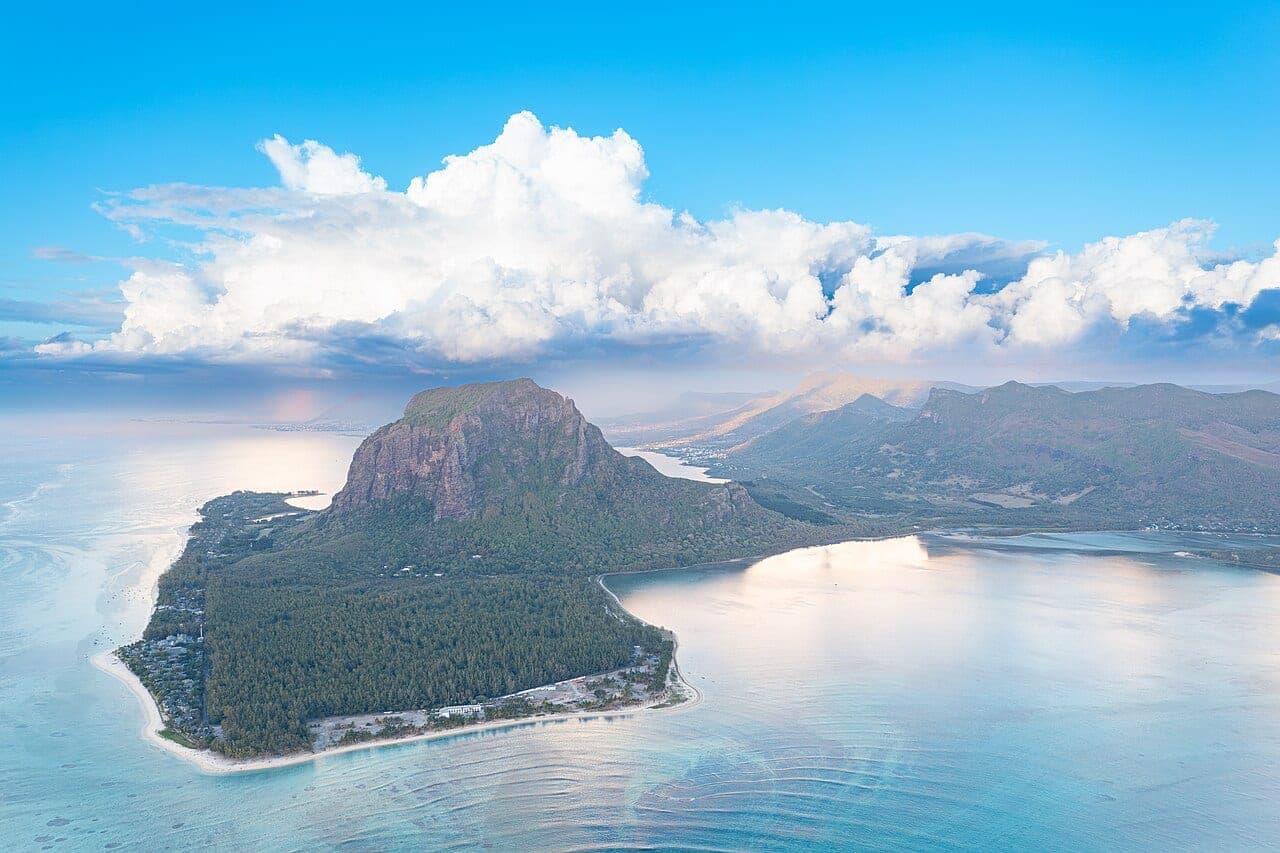
Out of that history the island built one of the more plural nations on Earth, where Hindu temple, Catholic church, mosque and Chinese pagoda stand within a short walk of one another, and where remembrance is kept in several languages at once. Two landscapes hold the weight of the founding sorrows. Le Morne Brabant, the basalt mountain at the south-western tip, sheltered people who had freed themselves from slavery and is now a monument to their resistance. The Aapravasi Ghat in Port Louis, the depot where the indentured stepped ashore, is a place of memory for the global indenture diaspora.
The Republic of Mauritius lies east of Madagascar in the Mascarene Islands, its main island ringed by a coral reef and rising to a central plateau of extinct craters and, once, dense forest now largely given over to cane. The state also includes the island of Rodrigues and smaller dependencies, and it maintains a longstanding sovereignty claim over the Chagos Archipelago. Home to some 1.26 million people on a little over 2,000 square kilometres, it is among the more densely settled countries in Africa.
No community here is a minority of accident; each is a founding population. People of Indian descent make up roughly two-thirds of the country, the Creole population of largely African and Malagasy ancestry about 28 per cent, and the Sino-Mauritian and Franco-Mauritian communities a few per cent each. Mauritius has no constitutionally named official language; English and French both function officially while Mauritian Creole is the mother tongue of the great majority. Independent since 1968 and a republic since 1992, the island turned its sugar economy toward textiles, tourism, financial services and technology, a shift that lends its heritage work both resources and pressures.
Port Louis. The capital and chief port, founded by the French in the 1730s under the governor Mahé de Labourdonnais, curves around a harbour beneath the Pouce and Signal mountains. It holds the country's dense institutional memory: the Aapravasi Ghat on the waterfront, the Blue Penny Museum and the Natural History Museum, the Jummah Mosque of the 1850s, Chinatown, the Central Market, and the Champ de Mars racecourse where independence was proclaimed in 1968.
Curepipe. A cooler town in the central highlands, Curepipe grew quickly after a malaria epidemic in 1867 drove people up from the coast to the healthier plateau, becoming a municipality in 1890. Above it opens the Trou aux Cerfs, a grassed volcanic crater, and nearby the Curepipe Botanic Gardens, laid out from 1870, keep rare highland plants.
Mahebourg. Founded in 1805 on the south-eastern coast and named for Labourdonnais, Mahebourg looks out over the bay where the Battle of Grand Port was fought in 1810, the one naval victory of the Napoleonic fleet inscribed on the Arc de Triomphe. Its National History Museum, in an eighteenth-century mansion that served as a field hospital for both fleets, gathers relics of that battle.
Grand Baie. Once a fishing village on the northern coast, Grand Baie is now the island's principal seaside resort, its calm lagoon lined with hotels and restaurants and a base for boats to the northern islets.
Mauritius was one of the last habitable places on Earth to be reached by people. Arab and Portuguese sailors charted it by the early sixteenth century but none stayed, and its forests, giant tortoises and dodos remained undisturbed. In 1598 a Dutch fleet under Wybrand van Warwyck landed at Grand Port and named the island for Prince Maurice of Nassau. The Dutch settled in earnest from 1638, cut its ebony forests, introduced sugarcane, deer, pigs and rats, and within decades the dodo was gone, its last credible sighting recorded in 1662. Finding the colony unprofitable, the Dutch abandoned it by 1710.
 Escaped enslaved people sheltered on Le Morne, and oral tradition holds that some threw themselves from the cliff when a party climbed up in 1835 to tell them slavery had been abolished. Photograph by dronepicr, CC BY 2.0, via Wikimedia Commons.
France claimed the empty island in 1715, renamed it Isle de France, and from the 1720s built its plantation economy. Sugar demanded labour, and that labour was enslaved: tens of thousands of people were shipped from Mozambique, West Africa and Madagascar to clear land and work the mills under a regime codified by the Code Noir. Britain took the island in 1810 and kept it under the Treaty of Paris in 1814, restoring the name Mauritius while leaving French law, language and the planters in place. The British Parliament abolished slavery across the empire in 1833, and in Mauritius emancipation took effect in 1834, followed by several years of compelled "apprenticeship" before the freed were fully released.
To keep the plantations running, the colonial government turned to indenture. In what officials called a great experiment in replacing enslaved labour, the ship Atlas reached Port Louis on 2 November 1834 carrying thirty-six labourers from India. Over the following decades more than 450,000 indentured immigrants passed through the immigration depot, most from India, bound by contract to estates under conditions that were often harsh and closely policed. Their arrival is the ancestry of a large majority of Mauritians today. The island gained independence on 12 March 1968 under Prime Minister Seewoosagur Ramgoolam, and became a republic within the Commonwealth on 12 March 1992.
Language in Mauritius maps its layered settlement. English is the language of Parliament, the courts and administration; French dominates the press, broadcasting and much daily commerce; and Mauritian Creole, a French-lexified creole shaped on the plantations, is the shared mother tongue of roughly nine in ten people at home. It grew from the meeting of enslaved Africans and Malagasy with French colonists and later arrivals, and now carries the island's songs, jokes and everyday intimacy across every community.
Alongside these run the ancestral languages of the immigrant communities. Bhojpuri, brought by indentured labourers from northern India, was long the second household language of rural Mauritius, though its everyday use has declined across generations. Hindi, Tamil, Telugu, Marathi, Urdu, Mandarin and Hakka are taught, broadcast and used in worship, sustaining ties to homelands of origin. The island's own name records its Dutch chapter: Mauritius honours Prince Maurice van Nassau, replacing the Portuguese Ilha do Cirne and the Arab Dina Arobi, and giving way to the French Isle de France before the British restored the Dutch form in 1810.
The signature art of Mauritius is the sega, the music and dance that enslaved Africans and Malagasy made in the evenings on the plantations, singing of sorrow, longing and hope. Its heartbeat is the ravanne, a goatskin frame drum warmed at the fire before it is played, joined by the maravanne rattle and the musical bow; the dance keeps the feet close to the ground, a memory of chained ancestors who could not lift them freely. Sega tipik, the traditional form, was inscribed on UNESCO's list of intangible cultural heritage in 2014, and its descendants include seggae, the fusion of sega and reggae carried by the singer Kaya, and the Bhojpuri folk singing called geet-gawai.
The calendar of festivals belongs to everyone in practice, whatever its origin. The Tamil community observes Cavadee with acts of penance; Hindus keep Divali and, above all, Maha Shivaratri, when hundreds of thousands walk in white to the crater lake of Grand Bassin in one of the largest Hindu pilgrimages outside India; Muslims mark Eid; and Mauritius celebrates the Chinese Spring Festival as a public holiday. The table is where the cultures most plainly meet: dholl puri and roti, briyani, the Creole rougaille and cari, Chinese noodles and boulettes, and street snacks such as gateaux piments, eaten across every community with little thought to where each began.
Mauritius is among the few countries where the major world religions are each substantial and each at home. Hinduism is the largest faith, followed by close to half the population and expressed in temples across the island and in the pilgrimage to Grand Bassin, the sacred lake the devout call Ganga Talao, the Lake of the Ganges. The many Hindu traditions, drawn from northern and southern India, keep their own languages, deities and festivals within a shared devotional life.
Christianity, chiefly Roman Catholicism inherited from the French period, is the faith of roughly a third of Mauritians, strongest in the Creole community. Its most beloved figure is the nineteenth-century missionary Jacques-Désiré Laval, remembered for his work among the newly freed and beatified in 1979, whose tomb at Sainte-Croix draws pilgrims of every faith each September. Islam, brought by traders and indentured immigrants, is followed by around a sixth of the population, with the Jummah Mosque in the capital among its oldest centres. Buddhism, alongside Confucian and Christian practice, is kept chiefly within the Sino-Mauritian community. In ordinary life the boundaries are porous: neighbours attend one another's feasts, and the holidays of four religions structure the shared year.
Because Mauritius holds so many faiths, it holds many ways of grieving, each carried from a homeland and each honoured by the others. Hindu families cremate their dead, often at a riverside or seaside ground, and observe a sequence of rites over the days and the year that follow, with periods set aside to remember the ancestors. Muslim families bury their dead soon after death according to Islamic practice, following the janazah prayer, with gatherings of recitation in the days after. Catholic and Creole families keep a funeral Mass and burial, and across the Christian community All Saints' Day, La Toussaint at the start of November, is the great day of the dead, when graves are cleaned and dressed with flowers and candles. Sino-Mauritian families tend ancestral graves and keep the rites of tomb-sweeping carried from China. That four such different calendars of grief are kept side by side, without friction, is one of the quieter achievements of the island.
Escaped enslaved people sheltered on Le Morne, and oral tradition holds that some threw themselves from the cliff when a party climbed up in 1835 to tell them slavery had been abolished. Photograph by dronepicr, CC BY 2.0, via Wikimedia Commons.
France claimed the empty island in 1715, renamed it Isle de France, and from the 1720s built its plantation economy. Sugar demanded labour, and that labour was enslaved: tens of thousands of people were shipped from Mozambique, West Africa and Madagascar to clear land and work the mills under a regime codified by the Code Noir. Britain took the island in 1810 and kept it under the Treaty of Paris in 1814, restoring the name Mauritius while leaving French law, language and the planters in place. The British Parliament abolished slavery across the empire in 1833, and in Mauritius emancipation took effect in 1834, followed by several years of compelled "apprenticeship" before the freed were fully released.
To keep the plantations running, the colonial government turned to indenture. In what officials called a great experiment in replacing enslaved labour, the ship Atlas reached Port Louis on 2 November 1834 carrying thirty-six labourers from India. Over the following decades more than 450,000 indentured immigrants passed through the immigration depot, most from India, bound by contract to estates under conditions that were often harsh and closely policed. Their arrival is the ancestry of a large majority of Mauritians today. The island gained independence on 12 March 1968 under Prime Minister Seewoosagur Ramgoolam, and became a republic within the Commonwealth on 12 March 1992.
Language in Mauritius maps its layered settlement. English is the language of Parliament, the courts and administration; French dominates the press, broadcasting and much daily commerce; and Mauritian Creole, a French-lexified creole shaped on the plantations, is the shared mother tongue of roughly nine in ten people at home. It grew from the meeting of enslaved Africans and Malagasy with French colonists and later arrivals, and now carries the island's songs, jokes and everyday intimacy across every community.
Alongside these run the ancestral languages of the immigrant communities. Bhojpuri, brought by indentured labourers from northern India, was long the second household language of rural Mauritius, though its everyday use has declined across generations. Hindi, Tamil, Telugu, Marathi, Urdu, Mandarin and Hakka are taught, broadcast and used in worship, sustaining ties to homelands of origin. The island's own name records its Dutch chapter: Mauritius honours Prince Maurice van Nassau, replacing the Portuguese Ilha do Cirne and the Arab Dina Arobi, and giving way to the French Isle de France before the British restored the Dutch form in 1810.
The signature art of Mauritius is the sega, the music and dance that enslaved Africans and Malagasy made in the evenings on the plantations, singing of sorrow, longing and hope. Its heartbeat is the ravanne, a goatskin frame drum warmed at the fire before it is played, joined by the maravanne rattle and the musical bow; the dance keeps the feet close to the ground, a memory of chained ancestors who could not lift them freely. Sega tipik, the traditional form, was inscribed on UNESCO's list of intangible cultural heritage in 2014, and its descendants include seggae, the fusion of sega and reggae carried by the singer Kaya, and the Bhojpuri folk singing called geet-gawai.
The calendar of festivals belongs to everyone in practice, whatever its origin. The Tamil community observes Cavadee with acts of penance; Hindus keep Divali and, above all, Maha Shivaratri, when hundreds of thousands walk in white to the crater lake of Grand Bassin in one of the largest Hindu pilgrimages outside India; Muslims mark Eid; and Mauritius celebrates the Chinese Spring Festival as a public holiday. The table is where the cultures most plainly meet: dholl puri and roti, briyani, the Creole rougaille and cari, Chinese noodles and boulettes, and street snacks such as gateaux piments, eaten across every community with little thought to where each began.
Mauritius is among the few countries where the major world religions are each substantial and each at home. Hinduism is the largest faith, followed by close to half the population and expressed in temples across the island and in the pilgrimage to Grand Bassin, the sacred lake the devout call Ganga Talao, the Lake of the Ganges. The many Hindu traditions, drawn from northern and southern India, keep their own languages, deities and festivals within a shared devotional life.
Christianity, chiefly Roman Catholicism inherited from the French period, is the faith of roughly a third of Mauritians, strongest in the Creole community. Its most beloved figure is the nineteenth-century missionary Jacques-Désiré Laval, remembered for his work among the newly freed and beatified in 1979, whose tomb at Sainte-Croix draws pilgrims of every faith each September. Islam, brought by traders and indentured immigrants, is followed by around a sixth of the population, with the Jummah Mosque in the capital among its oldest centres. Buddhism, alongside Confucian and Christian practice, is kept chiefly within the Sino-Mauritian community. In ordinary life the boundaries are porous: neighbours attend one another's feasts, and the holidays of four religions structure the shared year.
Because Mauritius holds so many faiths, it holds many ways of grieving, each carried from a homeland and each honoured by the others. Hindu families cremate their dead, often at a riverside or seaside ground, and observe a sequence of rites over the days and the year that follow, with periods set aside to remember the ancestors. Muslim families bury their dead soon after death according to Islamic practice, following the janazah prayer, with gatherings of recitation in the days after. Catholic and Creole families keep a funeral Mass and burial, and across the Christian community All Saints' Day, La Toussaint at the start of November, is the great day of the dead, when graves are cleaned and dressed with flowers and candles. Sino-Mauritian families tend ancestral graves and keep the rites of tomb-sweeping carried from China. That four such different calendars of grief are kept side by side, without friction, is one of the quieter achievements of the island.
 Around half a million indentured labourers landed at these steps between 1849 and 1923, most of them from India, and a large share of the Mauritian population traces its arrival to this spot. Photograph by Suyash Dwivedi, CC BY-SA 4.0, via Wikimedia Commons.
Above these private sorrows sit two public memories belonging to the whole nation and beyond. Le Morne Brabant carries the memory of slavery. Through the eighteenth and early nineteenth centuries, people who escaped bondage took refuge on the mountain's wooded cliffs and formed maroon settlements in its caves and on its summit, and oral tradition made the peak a symbol of the fight for freedom and of the suffering that preceded it. Each 1 February, the anniversary of the abolition of slavery, Mauritians gather at Le Morne, where the International Slave Route Monument now stands, to remember ancestors who came from the African mainland, Madagascar, India and South-east Asia.
The Aapravasi Ghat carries the memory of indenture. The stone depot on the Port Louis waterfront is where the indentured landed, were registered and were sent on to the estates, and the steps rising from the water are the threshold across which so many crossed into a new and constrained life. For descendants across the world, from South Africa to the Caribbean and Fiji, the Ghat is the origin point of the modern indenture diaspora. On 2 November, the anniversary of the first arrivals, families return to honour those who made that passage, treating a place of hardship as ground worthy of reverence.
Mauritius keeps two arrival archives, both listed by UNESCO, and between them they account for almost everybody on the island.
Aapravasi Ghat in Port Louis is the immigration depot where close to half a million indentured labourers from India stepped ashore between 1834 and 1920. The colonial administration photographed and registered them, recording name, father's name, caste, village, district and physical description, and the immigration archives held at the Mahatma Gandhi Institute preserve those records with the photographs. For Indo-Mauritian families, and for the descendants of workers who went on from here to South Africa, Fiji and the Caribbean, it is the document that names the village.
Le Morne is the other. The mountain was a refuge for maroons, people who had escaped slavery, and it stands as the memorial for the enslaved population brought from Madagascar, Mozambique and India before abolition in 1835. The slave registers of 1826 to 1835, kept as elsewhere in the British empire, name individuals, and the compensation records name the owners.
French and British administrative records run from the eighteenth century, and Catholic parish registers from the same period. Civil registration began in 1793 under French rule and is continuous, which is unusually early for anywhere outside Europe.
The Chagossians, removed from the archipelago between 1968 and 1973 to make way for a military base, are documented in the files of the removal and in the litigation that has followed it ever since.
Mauritius carries two UNESCO World Heritage Sites, both of them sites of conscience. The Aapravasi Ghat was inscribed in 2006 as the surviving depot that received indentured labourers, recognised for its meaning to the millions worldwide whose ancestors passed through indenture. The Le Morne Cultural Landscape followed in 2008, honoured as a place of refuge for escaped enslaved people and a witness to maroon resistance. Both are cared for by trust funds that combine conservation with research, interpretation centres and oral history.
The island's museums preserve narrower strands of its past. The Blue Penny Museum at the Caudan Waterfront, opened in 2001, keeps the 1847 Post Office stamps, the Blue Penny and the Red Penny, among the rarest in philately, lit only briefly each hour to protect their colour. The Natural History Museum in Port Louis holds dodo remains; the National History Museum at Mahebourg gathers relics of the Battle of Grand Port; and L'Aventure du Sucre, in a former factory at Beau Plan, tells the entwined story of sugar, slavery and indenture.
The most consequential digital heritage work in Mauritius concerns the records of indenture. The immigration archives hold detailed registers documenting each labourer who arrived, and because those documents name the ancestors of a large majority of the population, they are the country's chief instrument of family memory. The Indian immigration records, held largely at the Mahatma Gandhi Institute, cover some 450,000 immigrants who arrived between 1842 and 1910 and are recognised on UNESCO's Memory of the World Register.
Digitisation of these registers, begun in 2010 and continuing since, has opened the archive to descendants who can trace an ancestor's name, ship, village of origin and estate of assignment across oceans and generations. The Aapravasi Ghat and Le Morne heritage trust funds publish research, oral history and educational material online, and international projects increasingly draw Mauritian records into shared, searchable collections. For a diaspora scattered by these very systems, the archive turns an instrument of control into a means of reunion.
Mauritius carries an outsize literary presence for its size, written mostly in French. The Franco-Mauritian writer J.M.G. Le Clézio, whose family roots lie on the island and whose fiction returns to it, received the Nobel Prize in Literature in 2008. Ananda Devi and Nathacha Appanah have brought the island's histories of indenture, migration and memory to an international readership. In music, the sega tradition continues to renew itself, and the legacy of Kaya, whose death in 1999 marked a painful moment in the island's social history, keeps seggae close to questions of Creole identity.
The island's plural model carries beyond its shores, as Mauritian communities in Britain, France, Australia and Canada sustain sega evenings, temple and church life and the food of home. The steady challenge is to keep heritage a living practice rather than a display, so that the customs of remembrance stay with the communities that hold them.
Two sites of conscience recognised. The inscription of the Aapravasi Ghat in 2006 and of Le Morne in 2008 placed the memory of indenture and of slavery on the World Heritage List, and gave each a trust fund charged with conservation, research and public education.
An archive turned toward its descendants. The recognition of the indenture records on UNESCO's Memory of the World Register, and their ongoing digitisation, has let thousands of Mauritians and members of the diaspora recover the names, ships and origins of ancestors who arrived under indenture.
Sega kept alive. The 2014 inscription of sega tipik as intangible cultural heritage affirmed a tradition born in slavery as a national art, sustaining the ravanne, the songs and the dance for new generations.
A literature of memory read worldwide. From Le Clézio's Nobel to the standing of Ananda Devi and Nathacha Appanah, Mauritian writers have carried the island's histories of migration and remembrance to readers far beyond it.
Around half a million indentured labourers landed at these steps between 1849 and 1923, most of them from India, and a large share of the Mauritian population traces its arrival to this spot. Photograph by Suyash Dwivedi, CC BY-SA 4.0, via Wikimedia Commons.
Above these private sorrows sit two public memories belonging to the whole nation and beyond. Le Morne Brabant carries the memory of slavery. Through the eighteenth and early nineteenth centuries, people who escaped bondage took refuge on the mountain's wooded cliffs and formed maroon settlements in its caves and on its summit, and oral tradition made the peak a symbol of the fight for freedom and of the suffering that preceded it. Each 1 February, the anniversary of the abolition of slavery, Mauritians gather at Le Morne, where the International Slave Route Monument now stands, to remember ancestors who came from the African mainland, Madagascar, India and South-east Asia.
The Aapravasi Ghat carries the memory of indenture. The stone depot on the Port Louis waterfront is where the indentured landed, were registered and were sent on to the estates, and the steps rising from the water are the threshold across which so many crossed into a new and constrained life. For descendants across the world, from South Africa to the Caribbean and Fiji, the Ghat is the origin point of the modern indenture diaspora. On 2 November, the anniversary of the first arrivals, families return to honour those who made that passage, treating a place of hardship as ground worthy of reverence.
Mauritius keeps two arrival archives, both listed by UNESCO, and between them they account for almost everybody on the island.
Aapravasi Ghat in Port Louis is the immigration depot where close to half a million indentured labourers from India stepped ashore between 1834 and 1920. The colonial administration photographed and registered them, recording name, father's name, caste, village, district and physical description, and the immigration archives held at the Mahatma Gandhi Institute preserve those records with the photographs. For Indo-Mauritian families, and for the descendants of workers who went on from here to South Africa, Fiji and the Caribbean, it is the document that names the village.
Le Morne is the other. The mountain was a refuge for maroons, people who had escaped slavery, and it stands as the memorial for the enslaved population brought from Madagascar, Mozambique and India before abolition in 1835. The slave registers of 1826 to 1835, kept as elsewhere in the British empire, name individuals, and the compensation records name the owners.
French and British administrative records run from the eighteenth century, and Catholic parish registers from the same period. Civil registration began in 1793 under French rule and is continuous, which is unusually early for anywhere outside Europe.
The Chagossians, removed from the archipelago between 1968 and 1973 to make way for a military base, are documented in the files of the removal and in the litigation that has followed it ever since.
Mauritius carries two UNESCO World Heritage Sites, both of them sites of conscience. The Aapravasi Ghat was inscribed in 2006 as the surviving depot that received indentured labourers, recognised for its meaning to the millions worldwide whose ancestors passed through indenture. The Le Morne Cultural Landscape followed in 2008, honoured as a place of refuge for escaped enslaved people and a witness to maroon resistance. Both are cared for by trust funds that combine conservation with research, interpretation centres and oral history.
The island's museums preserve narrower strands of its past. The Blue Penny Museum at the Caudan Waterfront, opened in 2001, keeps the 1847 Post Office stamps, the Blue Penny and the Red Penny, among the rarest in philately, lit only briefly each hour to protect their colour. The Natural History Museum in Port Louis holds dodo remains; the National History Museum at Mahebourg gathers relics of the Battle of Grand Port; and L'Aventure du Sucre, in a former factory at Beau Plan, tells the entwined story of sugar, slavery and indenture.
The most consequential digital heritage work in Mauritius concerns the records of indenture. The immigration archives hold detailed registers documenting each labourer who arrived, and because those documents name the ancestors of a large majority of the population, they are the country's chief instrument of family memory. The Indian immigration records, held largely at the Mahatma Gandhi Institute, cover some 450,000 immigrants who arrived between 1842 and 1910 and are recognised on UNESCO's Memory of the World Register.
Digitisation of these registers, begun in 2010 and continuing since, has opened the archive to descendants who can trace an ancestor's name, ship, village of origin and estate of assignment across oceans and generations. The Aapravasi Ghat and Le Morne heritage trust funds publish research, oral history and educational material online, and international projects increasingly draw Mauritian records into shared, searchable collections. For a diaspora scattered by these very systems, the archive turns an instrument of control into a means of reunion.
Mauritius carries an outsize literary presence for its size, written mostly in French. The Franco-Mauritian writer J.M.G. Le Clézio, whose family roots lie on the island and whose fiction returns to it, received the Nobel Prize in Literature in 2008. Ananda Devi and Nathacha Appanah have brought the island's histories of indenture, migration and memory to an international readership. In music, the sega tradition continues to renew itself, and the legacy of Kaya, whose death in 1999 marked a painful moment in the island's social history, keeps seggae close to questions of Creole identity.
The island's plural model carries beyond its shores, as Mauritian communities in Britain, France, Australia and Canada sustain sega evenings, temple and church life and the food of home. The steady challenge is to keep heritage a living practice rather than a display, so that the customs of remembrance stay with the communities that hold them.
Two sites of conscience recognised. The inscription of the Aapravasi Ghat in 2006 and of Le Morne in 2008 placed the memory of indenture and of slavery on the World Heritage List, and gave each a trust fund charged with conservation, research and public education.
An archive turned toward its descendants. The recognition of the indenture records on UNESCO's Memory of the World Register, and their ongoing digitisation, has let thousands of Mauritians and members of the diaspora recover the names, ships and origins of ancestors who arrived under indenture.
Sega kept alive. The 2014 inscription of sega tipik as intangible cultural heritage affirmed a tradition born in slavery as a national art, sustaining the ravanne, the songs and the dance for new generations.
A literature of memory read worldwide. From Le Clézio's Nobel to the standing of Ananda Devi and Nathacha Appanah, Mauritian writers have carried the island's histories of migration and remembrance to readers far beyond it.
National Overview
Notable Cities
Historical Foundations
Linguistic and Etymological Roots
Cultural Identity
Religion and Spirituality
Remembrance and Mourning Traditions
Tracing a Family in Mauritius
Heritage Preservation Efforts
Digital Heritage
Contemporary Cultural Influences
Success Stories
References and resources
- UNESCO World Heritage Centre, Aapravasi Ghat, the 2006 inscription of the indenture depot in Port Louis.
- UNESCO World Heritage Centre, Le Morne Cultural Landscape, the 2008 inscription of the mountain of refuge.
- UNESCO, Aapravasi Ghat and the memory of indentured labour, on the depot and the more than 450,000 who passed through it.
- Mahatma Gandhi Institute, Indian Immigration Archives, the indenture registers and their Memory of the World recognition.
- Encyclopaedia Britannica, Aapravasi Ghat, background on the immigration depot and its significance.
- Wikipedia, Sega (genre), the origins of sega and its 2014 UNESCO inscription.
- Wikipedia, the Dodo, the endemic bird and the timeline of its extinction.
- Wikipedia, Blue Penny Museum, the Caudan Waterfront museum and the 1847 stamps.
- Wikipedia, Jacques-Désiré Laval, the missionary revered across faiths and the Sainte-Croix pilgrimage.
- Encyclopaedia Britannica, Mauritius, geography, history and the island's plural society.