Heritage · Country
Canada Culture and Heritage
Canada keeps its past in two official languages and many older ones, from the Norse turf halls of L'Anse aux Meadows to the orange shirts worn each September for the children who never came home from residential schools. This is a young, plural country learning to remember honestly, with reconciliation and remembrance both written into the national calendar.Written to last.
By Confinity Heritage Editorial · Updated 2026-07-31 · 8-minute readQuiet tools, kept out of the way.
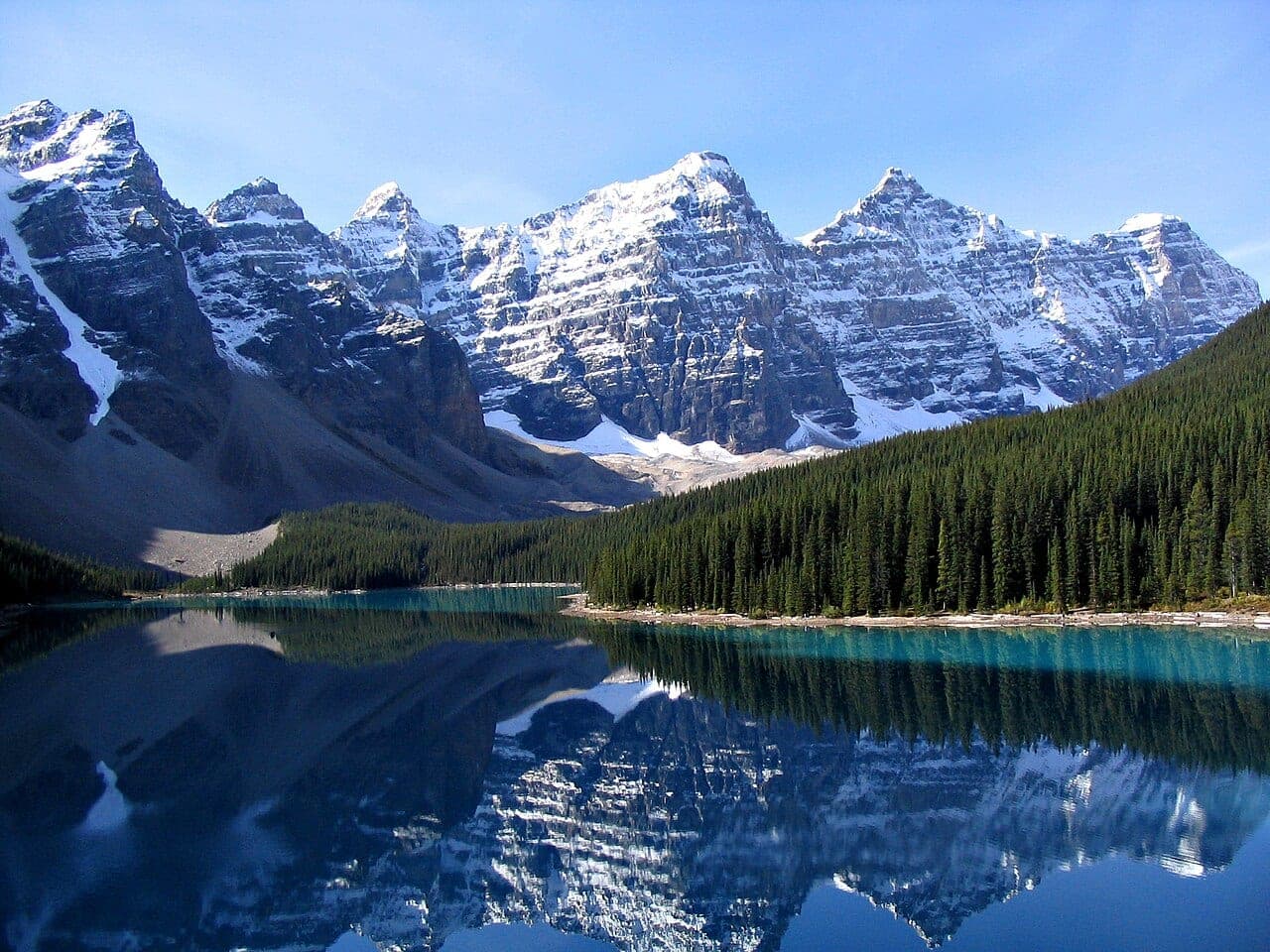
Canada keeps its past in more than one language, and increasingly in more than one voice. The country's own name comes from kanata, an Iroquoian word for a village or settlement, which Jacques Cartier appears to have mistaken in 1535 for the name of a whole land as two young Stadaconans pointed him upriver (Government of Canada). That small act of mishearing set a pattern. The nation was assembled from words, territories and peoples who were here long before Europeans drew any borders: First Nations, Inuit and Métis who had lived across these forests, plains and coasts for thousands of years; French and British settlers who built rival colonies along the St. Lawrence and the Atlantic; and later arrivals from every continent who made Canada one of the most immigrant-shaped societies on earth.
For much of its history the country told that story selectively, celebrating the fur trade and Confederation while burying what was done to the children taken from Indigenous families. In 2015 the Truth and Reconciliation Commission concluded that the residential-school system amounted to cultural genocide, and in 2021 ground-penetrating radar at the former Kamloops Indian Residential School registered what may be hundreds of unmarked graves, turning a grief carried for generations into public national mourning. Canada now sets aside a statutory day each September for that history, wears the poppy each November for its war dead, and runs one of the most ambitious public archives anywhere. What follows is how a bilingual, multicultural country is learning to keep faith with a past it is still uncovering.
Canada is the second-largest country on earth by area, roughly 10 million square kilometres reaching from the Atlantic to the Pacific and north to the High Arctic. It has the longest coastline of any nation, ten provinces and three territories, and a population that passed 41 million in 2024, most of it within a few hundred kilometres of the United States border (Statistics Canada). Ontario, with almost 16 million people, and Quebec, with about 9 million, hold well over half the total, while the vast northern interior is home to a small and largely Indigenous population.
Canada is a parliamentary democracy and a constitutional monarchy: King Charles III is head of state, represented by a Governor General, while real power rests with an elected House of Commons in Ottawa. The country is officially bilingual at the federal level, and its founding Constitution Act of 1867 has been joined since 1982 by a Charter of Rights and Freedoms. Snow, distance and the North figure heavily in how Canadians picture themselves, yet the country is also one of the most urban and most diverse on the planet.
Ottawa. Chosen as capital by Queen Victoria in 1857, Ottawa sits on the Ottawa River between Ontario and Quebec. Its Gothic Revival Parliament buildings look across to the Canadian Museum of History in Gatineau, and the Rideau Canal that runs through the city is a World Heritage Site and, in winter, the world's largest skating rink.
Toronto. The largest city and financial centre, built on land whose Indigenous name it carries, Toronto is among the most multicultural places in the world, with roughly half its residents born outside Canada. It holds the national broadcasting, publishing and film industries, the Royal Ontario Museum, and the CN Tower.
Montreal. The heart of French-speaking North America and long the country's largest city, Montreal keeps a walled old quarter, the Notre-Dame Basilica, and a mixture of French, English and immigrant cultures unlike anywhere else on the continent. It is a centre of Quebec identity, festivals and the arts.
Quebec City. Founded by Samuel de Champlain in 1608, Quebec is the cradle of New France and the only walled city north of Mexico. Its Historic District, crowned by the Chateau Frontenac above the St. Lawrence, is inscribed on the UNESCO World Heritage List as one of the best-preserved colonial townscapes in the Americas.
Winnipeg. At the confluence of the Red and Assiniboine rivers, long a Métis and First Nations meeting place, Winnipeg is home to the Canadian Museum for Human Rights and to the National Centre for Truth and Reconciliation, which makes the city a focus of the country's reckoning with residential schools.
Human presence in what is now Canada reaches back many thousands of years, in Indigenous nations whose oral histories, trade routes and place names still map the land. Around the year 1000 Norse voyagers built a short-lived settlement at L'Anse aux Meadows in Newfoundland, the only confirmed Viking site in North America. Sustained European contact began with Cartier's voyages up the St. Lawrence from 1534, and Champlain's founding of Quebec in 1608 anchored New France, a fur-trading empire that grew through alliance and conflict with Indigenous nations.
 L'Anse aux Meadows is the only confirmed Norse site in North America, occupied briefly around the year 1000 and then left. Photograph by Michel Rathwell, CC BY 2.0, via Wikimedia Commons.
After the Seven Years' War, France ceded its North American colony to Britain by the Treaty of Paris in 1763. The two traditions were held together, uneasily, through the Quebec Act, Loyalist migration from the American Revolution, and rebellions in the 1830s. On 1 July 1867 the British North America Act joined four provinces, Ontario, Quebec, New Brunswick and Nova Scotia, into the Dominion of Canada (The Canadian Encyclopedia). The new country reached the Pacific by transcontinental railway, admitting province after province, while pursuing policies toward Indigenous peoples that included the Indian Act and the residential-school system, which ran from the 1880s until the last school closed in 1996. Canada came of age in the trenches of the First World War, gained full legislative independence with the Statute of Westminster in 1931, patriated its constitution in 1982, and weathered two Quebec sovereignty referendums, in 1980 and 1995, without breaking apart.
Canada's two official languages, English and French, were given equal federal status by the Official Languages Act of 1969, which guarantees the right to deal with the national government in either tongue. French is the majority language of Quebec and a first language for roughly a fifth of Canadians, and Canadian French, from the joual of Montreal streets to the Acadian dialects of the Maritimes, is a living branch of the language rather than a museum piece.
Beneath the two colonial languages lie the far older tongues of the land. The 2021 census recorded more than 70 Indigenous languages, grouped into a dozen families, from Algonquian and Inuit to Athabaskan, Iroquoian, Salish and the Michif of the Métis (Statistics Canada). Cree languages have the most speakers, and Inuktitut remains strong across the Arctic, where it is an official language of Nunavut. Most are endangered after generations of forced assimilation, and the federal Indigenous Languages Act of 2019 was passed to support their revival. The country wears these roots in its map: Canada, Ottawa, Toronto, Quebec, Saskatchewan and Nunavut all carry names from the first peoples of the land.
Canadians have long described their society as a mosaic rather than a melting pot, a country in which newcomers are expected to keep their heritage rather than dissolve it. That idea became official in 1971, when Canada became the first country in the world to adopt an official policy of multiculturalism (Pier 21), and it was written into law by the Canadian Multiculturalism Act of 1988. The national self-image rests less on a single ancestry than on the ability to hold many together within a bilingual frame.
L'Anse aux Meadows is the only confirmed Norse site in North America, occupied briefly around the year 1000 and then left. Photograph by Michel Rathwell, CC BY 2.0, via Wikimedia Commons.
After the Seven Years' War, France ceded its North American colony to Britain by the Treaty of Paris in 1763. The two traditions were held together, uneasily, through the Quebec Act, Loyalist migration from the American Revolution, and rebellions in the 1830s. On 1 July 1867 the British North America Act joined four provinces, Ontario, Quebec, New Brunswick and Nova Scotia, into the Dominion of Canada (The Canadian Encyclopedia). The new country reached the Pacific by transcontinental railway, admitting province after province, while pursuing policies toward Indigenous peoples that included the Indian Act and the residential-school system, which ran from the 1880s until the last school closed in 1996. Canada came of age in the trenches of the First World War, gained full legislative independence with the Statute of Westminster in 1931, patriated its constitution in 1982, and weathered two Quebec sovereignty referendums, in 1980 and 1995, without breaking apart.
Canada's two official languages, English and French, were given equal federal status by the Official Languages Act of 1969, which guarantees the right to deal with the national government in either tongue. French is the majority language of Quebec and a first language for roughly a fifth of Canadians, and Canadian French, from the joual of Montreal streets to the Acadian dialects of the Maritimes, is a living branch of the language rather than a museum piece.
Beneath the two colonial languages lie the far older tongues of the land. The 2021 census recorded more than 70 Indigenous languages, grouped into a dozen families, from Algonquian and Inuit to Athabaskan, Iroquoian, Salish and the Michif of the Métis (Statistics Canada). Cree languages have the most speakers, and Inuktitut remains strong across the Arctic, where it is an official language of Nunavut. Most are endangered after generations of forced assimilation, and the federal Indigenous Languages Act of 2019 was passed to support their revival. The country wears these roots in its map: Canada, Ottawa, Toronto, Quebec, Saskatchewan and Nunavut all carry names from the first peoples of the land.
Canadians have long described their society as a mosaic rather than a melting pot, a country in which newcomers are expected to keep their heritage rather than dissolve it. That idea became official in 1971, when Canada became the first country in the world to adopt an official policy of multiculturalism (Pier 21), and it was written into law by the Canadian Multiculturalism Act of 1988. The national self-image rests less on a single ancestry than on the ability to hold many together within a bilingual frame.
 Head-Smashed-In was used by Plains peoples for some six thousand years, and its interpretive centre was built with Blackfoot involvement from the outset. Photograph by Pazakui, CC BY 4.0, via Wikimedia Commons.
Other threads run just as deep. Hockey is close to a civic religion, from frozen ponds to the Saturday-night broadcast. The Group of Seven and their contemporary Emily Carr taught Canadians to see the northern forest and the coast as subjects worthy of great art. Terry Fox, who ran across much of the country on one leg for cancer research before the disease stopped him in 1980, remains a national figure honoured by an annual run. Regionalism runs strong: Quebec, the Prairies, the Maritimes, British Columbia and the North each carry distinct identities, held together by a shared taste for understatement, civility and self-deprecating humour.
For most of its modern history Canada was shaped by two Christian traditions: a Catholic majority centred on Quebec and Acadia, and Protestant churches dominant in English Canada. The Catholic Church governed much of Quebec's schooling and social life until the Quiet Revolution of the 1960s, when the province rapidly secularised and church attendance collapsed. The same drift has continued nationally, and a growing share of Canadians now report no religious affiliation at all.
At the same time, immigration has made Canada genuinely multi-faith, with significant Sikh, Muslim, Hindu, Jewish and Buddhist communities alongside the historic churches. Distinct from all of these are the spiritual traditions of Indigenous peoples, rooted in relationship with the land, ceremony and ancestors, which were actively suppressed for generations and are now being openly practised and revived. Smudging with sage, sweetgrass, cedar or tobacco, the drum, the sweat lodge and the guidance of Elders have re-entered public life, and are increasingly welcomed at civic events.
Canada's most widely shared act of remembrance is the poppy. Each November, tens of millions of Canadians wear the red flower in the weeks before Remembrance Day on 11 November, when the country falls silent at the eleventh hour to honour those killed in war. The symbol comes from a Canadian poem: "In Flanders Fields", written in May 1915 by Lieutenant-Colonel John McCrae, a military doctor from Guelph, Ontario, after a friend was killed at Ypres (Veterans Affairs Canada). Its image of poppies among the graves became the enduring emblem of Commonwealth remembrance, and McCrae's birthplace in Guelph is preserved as a museum.
A newer day of mourning speaks to a harder memory. Since 2021, 30 September has been the National Day for Truth and Reconciliation, a federal statutory holiday created in direct response to the Truth and Reconciliation Commission's Call to Action 80 (Government of Canada). It coincides with Orange Shirt Day, a grassroots movement begun in 2013 by Phyllis Webstad, a Northern Secwepemc survivor whose new orange shirt was taken from her on her first day at residential school. Canadians wear orange under the words "Every Child Matters" to remember the roughly 150,000 First Nations, Inuit and Métis children who were forced into these institutions, the thousands who died there, and the many who never came home. The day is observed soberly, with survivor testimony, ceremony and support lines for those it wounds, rather than as a celebration.
Indigenous mourning traditions themselves are as varied as the nations that hold them, but many share the guidance of Elders, drumming and song, smudging, and the wrapping and gentle preparation of the body by community members. On the Northwest Coast the potlatch, a ceremonial feast in which the belongings of the dead are redistributed and the mourning period is formally closed, once carried much of this work; it was banned under the Indian Act from 1884 to 1951 and has since been openly revived (The Canadian Encyclopedia). Among the Wendat, the Feast of the Dead gathered the remains of those who had died since the last ceremony into a common grave with great solemnity. These practices, long suppressed, are now recognised as heritage worth protecting in their own right.
Canada's records divide at the Ottawa River, and the eastern side has the better of it. Quebec's Catholic parish registers begin in 1621 and were kept in duplicate under French and then British law, one copy for the parish and one for the courts, which is why they are among the most complete vital records anywhere in the world. The Drouin collection gathers them to the 1940s, more than twelve million records, and a French Canadian family can usually be traced to an immigrant ancestor in the seventeenth century without much difficulty.
Elsewhere registration is provincial and later, generally from the 1860s to the 1920s depending on the province, so the census does more of the work. The federal censuses run from 1851 and are released after ninety-two years, which put the 1931 returns into public view in 2023. Library and Archives Canada holds them, along with the immigration and military records, and publishes a great deal free.
The hardest and most necessary body of records is the one made by the residential school system. From the 1880s to 1996, Indigenous children were removed to church-run schools, and the registers, admission forms and burial records of those schools are now held by the National Centre for Truth and Reconciliation in Winnipeg. They exist because the system that made them was bureaucratic. They are used now to identify children who did not come home, and by families reconstructing a line that the schools were designed to interrupt.
Canada's stewardship of place began early. Banff became the country's first national park in 1885, and in 1911 Canada created what is generally regarded as the world's first national parks service, today known as Parks Canada, which manages the national parks and hundreds of National Historic Sites and also carries the country's obligations under the World Heritage Convention (Parks Canada). The country holds 22 UNESCO World Heritage Sites, cultural, natural and mixed: L'Anse aux Meadows, the walled Historic District of Old Quebec, the port of Old Town Lunenburg, the Rideau Canal, and the Canadian Rocky Mountain Parks among them.
Several of the most important sites carry Indigenous heritage. Head-Smashed-In Buffalo Jump in Alberta preserves a hunting site used by Plains peoples for thousands of years; the abandoned Haida village of SG̱ang Gwaay on Haida Gwaii keeps its weathered mortuary poles; and Pimachiowin Aki, a boreal landscape managed with Anishinaabe First Nations, reflects a shift toward Indigenous-led conservation. That principle now extends to Indigenous Protected and Conserved Areas, to the repatriation of ancestral remains and objects from museums, and to co-management that places the descendants of a site's keepers at the centre of its care.
Canada's national memory is increasingly available online. Library and Archives Canada, custodian of the country's documentary record, has digitised census returns, immigration and passenger records, military service files from both world wars, and vast photographic collections, opening genealogy and research to anyone (Library and Archives Canada). The non-profit Canadiana collections add millions of pages of early Canadian books, newspapers and periodicals, and Digital Museums Canada helps smaller institutions publish online exhibitions.
The most significant digital archive of recent years is devoted to the residential-school record. The National Centre for Truth and Reconciliation, established at the University of Manitoba in 2015, is the permanent home for the millions of documents, photographs and survivor statements gathered by the Truth and Reconciliation Commission, held in trust so that survivors, families and researchers can consult a record that can never again be hidden (NCTR). Indigenous-led projects such as the FirstVoices platform put dictionaries, recordings and lessons for dozens of Indigenous languages online, turning digital tools toward the survival of the country's oldest heritage.
For a country often shy about its own achievements, Canada exports a striking amount of culture. Its writers include the Nobel laureate Alice Munro alongside Margaret Atwood and Michael Ondaatje; its songwriters run from Leonard Cohen and Joni Mitchell to Drake and The Weeknd; and its filmmakers, from James Cameron to Denis Villeneuve, shape Hollywood from the inside. The country's actors and musicians are so woven into North American culture that their nationality often goes unnoticed.
Indigenous creators are increasingly at the centre of this influence rather than its margins. The Inuktitut-language film Atanarjuat drew world attention to Inuit storytelling, and the Inuk throat singer Tanya Tagaq and a wave of Indigenous novelists, playwrights and visual artists have reshaped what Canadian art sounds and looks like. Diaspora communities add their own festivals and cuisines, so that Diwali, Lunar New Year, Caribana and countless other traditions have become part of the Canadian year.
A commission that was heard. After years of survivor testimony, the Truth and Reconciliation Commission delivered its findings in 2015 with 94 Calls to Action, several since acted on, including the 2021 creation of a national statutory day of remembrance.
A record that cannot be hidden again. The National Centre for Truth and Reconciliation preserves the testimony and documents of that commission in permanent public trust, ensuring the survivors' words outlast the survivors themselves.
The mosaic written into law. By adopting official multiculturalism in 1971 and enshrining it in the Multiculturalism Act of 1988, Canada made the coexistence of many heritages a matter of national policy rather than mere tolerance.
Land returning to its keepers. From Pimachiowin Aki to the growing network of Indigenous Protected and Conserved Areas, Canada is beginning to place the care of its most important landscapes back in the hands of the peoples who have known them longest.
A poem that still speaks. More than a century after John McCrae wrote it near a field hospital, "In Flanders Fields" is recited each November across the country and the Commonwealth, keeping the memory of the war dead a shared and living act.
Head-Smashed-In was used by Plains peoples for some six thousand years, and its interpretive centre was built with Blackfoot involvement from the outset. Photograph by Pazakui, CC BY 4.0, via Wikimedia Commons.
Other threads run just as deep. Hockey is close to a civic religion, from frozen ponds to the Saturday-night broadcast. The Group of Seven and their contemporary Emily Carr taught Canadians to see the northern forest and the coast as subjects worthy of great art. Terry Fox, who ran across much of the country on one leg for cancer research before the disease stopped him in 1980, remains a national figure honoured by an annual run. Regionalism runs strong: Quebec, the Prairies, the Maritimes, British Columbia and the North each carry distinct identities, held together by a shared taste for understatement, civility and self-deprecating humour.
For most of its modern history Canada was shaped by two Christian traditions: a Catholic majority centred on Quebec and Acadia, and Protestant churches dominant in English Canada. The Catholic Church governed much of Quebec's schooling and social life until the Quiet Revolution of the 1960s, when the province rapidly secularised and church attendance collapsed. The same drift has continued nationally, and a growing share of Canadians now report no religious affiliation at all.
At the same time, immigration has made Canada genuinely multi-faith, with significant Sikh, Muslim, Hindu, Jewish and Buddhist communities alongside the historic churches. Distinct from all of these are the spiritual traditions of Indigenous peoples, rooted in relationship with the land, ceremony and ancestors, which were actively suppressed for generations and are now being openly practised and revived. Smudging with sage, sweetgrass, cedar or tobacco, the drum, the sweat lodge and the guidance of Elders have re-entered public life, and are increasingly welcomed at civic events.
Canada's most widely shared act of remembrance is the poppy. Each November, tens of millions of Canadians wear the red flower in the weeks before Remembrance Day on 11 November, when the country falls silent at the eleventh hour to honour those killed in war. The symbol comes from a Canadian poem: "In Flanders Fields", written in May 1915 by Lieutenant-Colonel John McCrae, a military doctor from Guelph, Ontario, after a friend was killed at Ypres (Veterans Affairs Canada). Its image of poppies among the graves became the enduring emblem of Commonwealth remembrance, and McCrae's birthplace in Guelph is preserved as a museum.
A newer day of mourning speaks to a harder memory. Since 2021, 30 September has been the National Day for Truth and Reconciliation, a federal statutory holiday created in direct response to the Truth and Reconciliation Commission's Call to Action 80 (Government of Canada). It coincides with Orange Shirt Day, a grassroots movement begun in 2013 by Phyllis Webstad, a Northern Secwepemc survivor whose new orange shirt was taken from her on her first day at residential school. Canadians wear orange under the words "Every Child Matters" to remember the roughly 150,000 First Nations, Inuit and Métis children who were forced into these institutions, the thousands who died there, and the many who never came home. The day is observed soberly, with survivor testimony, ceremony and support lines for those it wounds, rather than as a celebration.
Indigenous mourning traditions themselves are as varied as the nations that hold them, but many share the guidance of Elders, drumming and song, smudging, and the wrapping and gentle preparation of the body by community members. On the Northwest Coast the potlatch, a ceremonial feast in which the belongings of the dead are redistributed and the mourning period is formally closed, once carried much of this work; it was banned under the Indian Act from 1884 to 1951 and has since been openly revived (The Canadian Encyclopedia). Among the Wendat, the Feast of the Dead gathered the remains of those who had died since the last ceremony into a common grave with great solemnity. These practices, long suppressed, are now recognised as heritage worth protecting in their own right.
Canada's records divide at the Ottawa River, and the eastern side has the better of it. Quebec's Catholic parish registers begin in 1621 and were kept in duplicate under French and then British law, one copy for the parish and one for the courts, which is why they are among the most complete vital records anywhere in the world. The Drouin collection gathers them to the 1940s, more than twelve million records, and a French Canadian family can usually be traced to an immigrant ancestor in the seventeenth century without much difficulty.
Elsewhere registration is provincial and later, generally from the 1860s to the 1920s depending on the province, so the census does more of the work. The federal censuses run from 1851 and are released after ninety-two years, which put the 1931 returns into public view in 2023. Library and Archives Canada holds them, along with the immigration and military records, and publishes a great deal free.
The hardest and most necessary body of records is the one made by the residential school system. From the 1880s to 1996, Indigenous children were removed to church-run schools, and the registers, admission forms and burial records of those schools are now held by the National Centre for Truth and Reconciliation in Winnipeg. They exist because the system that made them was bureaucratic. They are used now to identify children who did not come home, and by families reconstructing a line that the schools were designed to interrupt.
Canada's stewardship of place began early. Banff became the country's first national park in 1885, and in 1911 Canada created what is generally regarded as the world's first national parks service, today known as Parks Canada, which manages the national parks and hundreds of National Historic Sites and also carries the country's obligations under the World Heritage Convention (Parks Canada). The country holds 22 UNESCO World Heritage Sites, cultural, natural and mixed: L'Anse aux Meadows, the walled Historic District of Old Quebec, the port of Old Town Lunenburg, the Rideau Canal, and the Canadian Rocky Mountain Parks among them.
Several of the most important sites carry Indigenous heritage. Head-Smashed-In Buffalo Jump in Alberta preserves a hunting site used by Plains peoples for thousands of years; the abandoned Haida village of SG̱ang Gwaay on Haida Gwaii keeps its weathered mortuary poles; and Pimachiowin Aki, a boreal landscape managed with Anishinaabe First Nations, reflects a shift toward Indigenous-led conservation. That principle now extends to Indigenous Protected and Conserved Areas, to the repatriation of ancestral remains and objects from museums, and to co-management that places the descendants of a site's keepers at the centre of its care.
Canada's national memory is increasingly available online. Library and Archives Canada, custodian of the country's documentary record, has digitised census returns, immigration and passenger records, military service files from both world wars, and vast photographic collections, opening genealogy and research to anyone (Library and Archives Canada). The non-profit Canadiana collections add millions of pages of early Canadian books, newspapers and periodicals, and Digital Museums Canada helps smaller institutions publish online exhibitions.
The most significant digital archive of recent years is devoted to the residential-school record. The National Centre for Truth and Reconciliation, established at the University of Manitoba in 2015, is the permanent home for the millions of documents, photographs and survivor statements gathered by the Truth and Reconciliation Commission, held in trust so that survivors, families and researchers can consult a record that can never again be hidden (NCTR). Indigenous-led projects such as the FirstVoices platform put dictionaries, recordings and lessons for dozens of Indigenous languages online, turning digital tools toward the survival of the country's oldest heritage.
For a country often shy about its own achievements, Canada exports a striking amount of culture. Its writers include the Nobel laureate Alice Munro alongside Margaret Atwood and Michael Ondaatje; its songwriters run from Leonard Cohen and Joni Mitchell to Drake and The Weeknd; and its filmmakers, from James Cameron to Denis Villeneuve, shape Hollywood from the inside. The country's actors and musicians are so woven into North American culture that their nationality often goes unnoticed.
Indigenous creators are increasingly at the centre of this influence rather than its margins. The Inuktitut-language film Atanarjuat drew world attention to Inuit storytelling, and the Inuk throat singer Tanya Tagaq and a wave of Indigenous novelists, playwrights and visual artists have reshaped what Canadian art sounds and looks like. Diaspora communities add their own festivals and cuisines, so that Diwali, Lunar New Year, Caribana and countless other traditions have become part of the Canadian year.
A commission that was heard. After years of survivor testimony, the Truth and Reconciliation Commission delivered its findings in 2015 with 94 Calls to Action, several since acted on, including the 2021 creation of a national statutory day of remembrance.
A record that cannot be hidden again. The National Centre for Truth and Reconciliation preserves the testimony and documents of that commission in permanent public trust, ensuring the survivors' words outlast the survivors themselves.
The mosaic written into law. By adopting official multiculturalism in 1971 and enshrining it in the Multiculturalism Act of 1988, Canada made the coexistence of many heritages a matter of national policy rather than mere tolerance.
Land returning to its keepers. From Pimachiowin Aki to the growing network of Indigenous Protected and Conserved Areas, Canada is beginning to place the care of its most important landscapes back in the hands of the peoples who have known them longest.
A poem that still speaks. More than a century after John McCrae wrote it near a field hospital, "In Flanders Fields" is recited each November across the country and the Commonwealth, keeping the memory of the war dead a shared and living act.
National Overview
Notable Cities
Historical Foundations
Linguistic and Etymological Roots
Cultural Identity
Religion and Spirituality
Remembrance and Mourning Traditions
Tracing a Family in Canada
Heritage Preservation Efforts
Digital Heritage
Contemporary Cultural Influences
Success Stories
References and resources
- UNESCO World Heritage Centre: Canada. All 22 Canadian World Heritage sites, cultural, natural and mixed.
- Parks Canada: Canadian Sites on the World Heritage List. The national agency's guide to each inscribed site.
- Government of Canada: Origin of the name "Canada". The kanata etymology and Cartier's voyages.
- The Canadian Encyclopedia: Canadian Confederation. The 1867 union and the birth of the Dominion.
- Understanding the National Day for Truth and Reconciliation. The 30 September holiday and Call to Action 80.
- Orange Shirt Society: Every Child Matters. The origins of Orange Shirt Day and Phyllis Webstad's story.
- National Centre for Truth and Reconciliation. The permanent archive of residential-school records and survivor testimony.
- Veterans Affairs Canada: John McCrae and "In Flanders Fields". The poem, the poppy and Remembrance Day.
- Statistics Canada: Indigenous languages, 2021 Census. More than 70 languages across a dozen families.
- Library and Archives Canada. The national collections and digitised historical records.