Heritage · Country
Trinidad and Tobago Culture and Heritage
Trinidad and Tobago gave the twentieth century its only new acoustic instrument, the steelpan, and gave the world Carnival, calypso and soca from the meeting of Amerindian, African, Indian and European peoples. This guide follows that layered inheritance and the funerary customs, from the Nine Night wake to Hindu shraddha and the drums of Hosay, by which its communities remember their dead.Written to last.
By Confinity Heritage Editorial · Updated 2026-07-31 · 8-minute readQuiet tools, kept out of the way.
Trinidad and Tobago is the southernmost country of the Caribbean, two islands off the Venezuelan coast, once joined to the mainland by land. The oldest human remains in the Caribbean rest here at Banwari Trace, from around 3,400 BC, and the islands went on to draw in Amerindian peoples, Spanish and French planters, the British Crown, enslaved Africans and, after emancipation, indentured labourers from India. From that meeting the small republic produced the steelpan, the only family of acoustic instruments invented and standardised in the twentieth century, along with calypso, soca, chutney and the Carnival that other cities now copy.
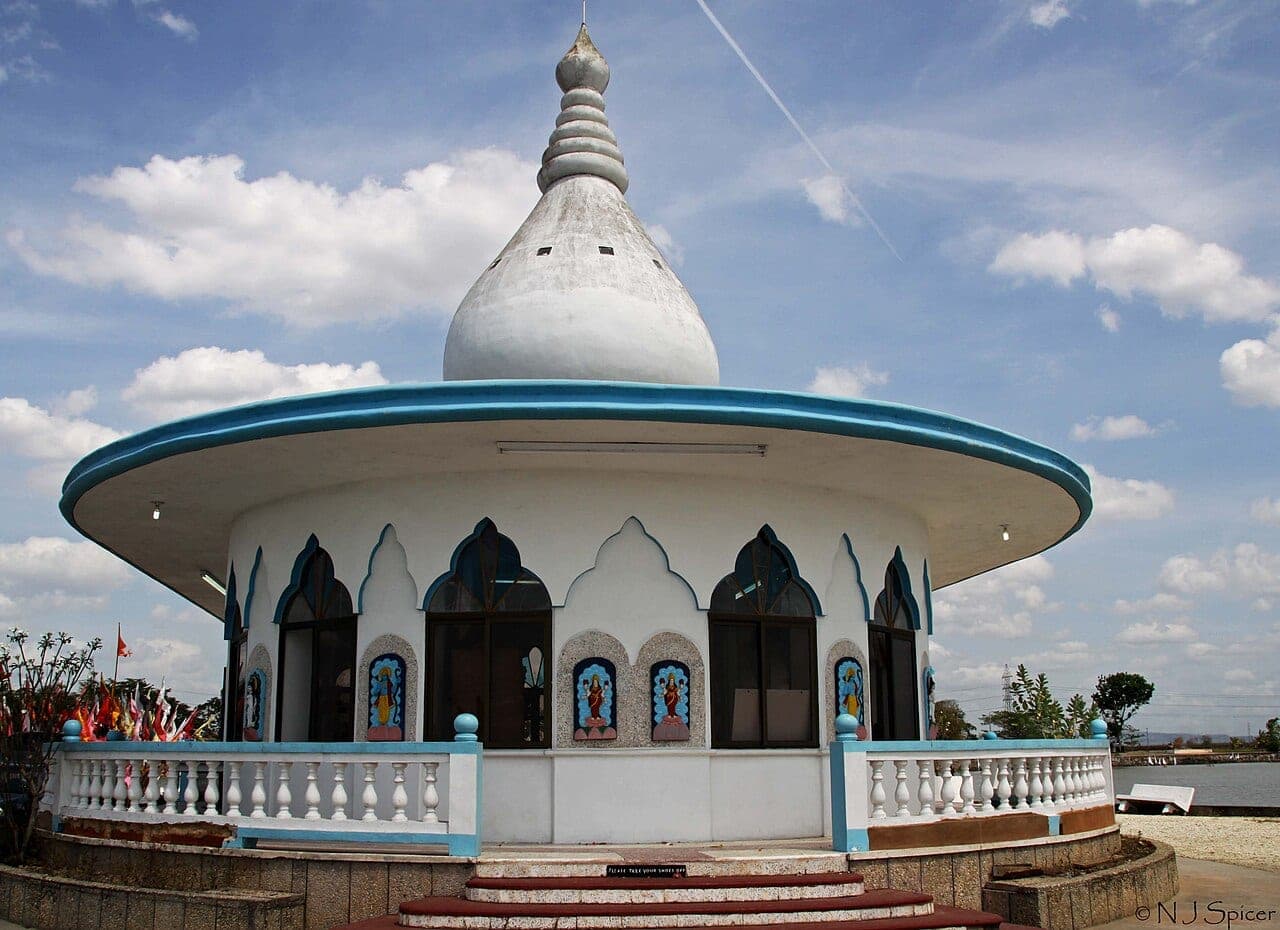
This inheritance is carried as much in how the country remembers as in what it makes. On the shore at Waterloo an offshore Hindu temple, raised by hand by one indentured man refused land to worship on, has become a place of pilgrimage; in St James the tadjah of Hosay is drummed to the sea; in Afro-Trinidadian homes the Nine Night wake sings a spirit on its way.
Trinidad, about 4,768 square kilometres, holds almost all of the people and industry; Tobago, about 300 square kilometres to the north-east, is greener and self-governing through its own House of Assembly. Together they hold around 1.4 million people, and, unusually for the region, their wealth rests on oil and natural gas rather than tourism or sugar. The capital, Port of Spain, sits on the Gulf of Paria beneath the Northern Range. No single ancestry dominates: the 2011 census recorded citizens of Indian and of African descent at roughly a third each, with people of mixed heritage forming most of the rest, alongside smaller Chinese, Portuguese and Levantine communities. That near-balance, the legacy of slavery and the indenture that followed, is the country's defining social fact.
Port of Spain. The capital and engine of national culture. Around the Queen's Park Savannah stand the Edwardian mansions called the Magnificent Seven; each Carnival the Savannah becomes the main stage, and the neighbouring hill district of Laventille is the birthplace of the steelpan.
 Port of Spain is where the steelpan was invented in the 1930s and 1940s, out of oil drums, by people whose drums had been banned. Photograph by xiquinhosilva, CC BY 4.0, via Wikimedia Commons.
San Fernando. The industrial capital of the south, beneath San Fernando Hill, serving the oil and gas belt and the Indo-Trinidadian towns of the central plain; it saw the first recorded observance of Hosay in 1847.
Scarborough. The capital of Tobago, rising from its harbour beneath Fort King George, a British fort that now holds the Tobago Museum. Inland lies the Main Ridge Forest Reserve, protected since 1776 and generally cited as the oldest legal forest reserve in the Western Hemisphere.
Chaguanas. The largest and fastest-growing borough, heartland of Indo-Trinidadian life, home to the Lion House made famous by the novelist V. S. Naipaul and to the permanent Divali Nagar site.
The first Trinidadians were Archaic hunters and fishers who crossed from the South American mainland. Banwari Trace in the south-west, occupied from about 5,000 BC, is the oldest known archaeological site in the Caribbean, and the crouched burial found there in 1969, dated to around 3,400 BC, is the oldest human skeleton in the region. Later came Arawakan-speaking Lokono and Cariban speakers, whose descendants and place names outlasted a conquest and diseases that all but destroyed their communities.
Columbus reached Trinidad on his third voyage in 1498 and named it La Isla de la Trinidad for the Holy Trinity, whether for the day of his landfall or for three hills he sighted from the sea, according to Britannica. Spanish presence stayed thin; Antonio de Berrio took possession in 1592, and for two centuries the island languished while disease and the encomienda decimated the Amerindians. The turning point was the Cedula de Población of 1783, which offered land to Roman Catholic settlers and their enslaved labourers. French planters arrived in numbers, and within a decade sugar and cacao estates, a large enslaved African population and a French-speaking Catholic society had transformed the colony.
Britain seized Trinidad in 1797, when a fleet under Sir Ralph Abercromby forced the Spanish governor to surrender, and the island was ceded in 1802. British rule expanded the plantation economy and the slave society whose sugar was produced through the coerced, brutal and shortened lives of enslaved Africans. The slave trade was abolished in 1807 and slavery by the Act of 1833, with full emancipation at the end of apprenticeship on 1 August 1838. When the freed declined estate labour on the planters' terms, the authorities turned to indenture: the first ship, the Fatel Razack, reached the Gulf of Paria on 30 May 1845 with 225 immigrants from India, and by the time the system ended in 1917 roughly 143,900 Indians had come, most from the Bhojpuri-speaking north, creating the large Indo-Trinidadian community. Indenture was not slavery, but it bound people under penal contracts far from home, and its hardships are remembered soberly each Indian Arrival Day.
Tobago followed its own turbulent path, reputedly changing hands more often than any island in the Caribbean before Britain secured it. The two islands were united as one colony in 1889, and Tobago made a ward in 1899. Trinidad and Tobago won independence within the Commonwealth on 31 August 1962, under the historian and first prime minister Eric Williams, and became a republic on 1 August 1976.
English is the official language of government and schooling, but daily speech runs in creole. Trinidadian Creole and the distinct Tobagonian Creole grew from English meeting the French and French Creole of the plantation era, with African, Spanish and Indian layers; a French-derived patois was once widespread and survives in words and place names. The descendants of indentured Indians long spoke Trinidadian Hindustani, a Caribbean form of Bhojpuri, now faded from daily use but alive in religious life and chutney song, while Spanish endures in the Christmas parang. The names carry the history: Trinidad preserves Columbus's dedication to the Trinity, over an island the Amerindians are said to have called Iere, popularly glossed as the land of the hummingbird; Tobago comes from tobacco, the Spanish tabaco. Caroni, Naparima and Chaguanas keep Amerindian names on the map, the last from the Chaguanes people.
The steelpan is the country's signal gift to the world. It grew in poor urban yards after colonial bans on African drumming pushed Carnival percussion into tuned bamboo, the tamboo bamboo, then into biscuit tins and dustbin lids, and finally into discarded oil drums. Pannists hammered distinct pitches into a single sunken face, producing the only new family of acoustic instruments developed and standardised in the twentieth century. The pan was named the national instrument in 1992, and the annual Panorama remains the summit of the steelband year, according to NALIS.
Song runs alongside it. Calypso, descended from the kaiso of enslaved singers and long a vehicle for satire and coded comment, gave the world the Mighty Sparrow and Lord Kitchener. In the 1970s Garfield Blackman, as Lord Shorty, fused calypso with Indian rhythms to make soca, the "soul of calypso" that now drives Carnival, as Britannica records; from the Indo-Trinidadian villages came chutney, dated in public form to Sundar Popo's 1969 "Nana and Nani," which grew into chutney soca. Carnival, born of French pre-Lenten masquerade and the emancipation-era Canboulay, culminates in J'ouvert, the daybreak revel of mud, oil and paint before the two days of mas, where the towering moko jumbie and blue devil share the streets with the sequinned pretty mas. The table is as plural: doubles of curried chickpeas in fried bara, roti, callaloo of dasheen leaves, pelau, and bake and shark.
Few countries wear their plurality as openly. The 2011 census counted Christians at about 55 per cent, Hindus about 18 and Muslims about 5, according to the national census. Roman Catholicism, from Spanish and French rule, is the largest single church, with Pentecostal, Anglican, Adventist and Presbyterian congregations alongside; Presbyterianism spread among Indo-Trinidadians through the Canadian Mission from the 1860s. Hinduism, carried by the indentured, gives the country one of the largest Hindu shares in the Americas, with mandirs across the central and southern plains and Divali a national holiday. Islam, also brought through indenture and mostly Sunni, sustains mosques nationwide and the public commemoration of Hosay. Older still are the Afro-Trinidadian traditions: the Yoruba-rooted Orisha faith and the Spiritual Baptist or Shouter church, whose worship a 1917 ordinance outlawed until 1951. Spiritual Baptist Liberation Day now joins Christmas, Eid, Divali, Corpus Christi, Emancipation Day and Indian Arrival Day on the calendar, and attending a neighbour's festival across the lines of faith is ordinary here.
Each community keeps its own way of accompanying the dead, and together they make one of the more varied landscapes of mourning in the hemisphere. In many Afro-Trinidadian and wider Christian households a death opens a wake, followed by the Nine Night, shared across the anglophone Caribbean, in which family and neighbours gather for nine evenings of hymn singing, prayer, food and storytelling. On the ninth night, when the spirit is believed to depart, the household is set in order and the parting marked; a fortieth-day remembrance often follows. The Sankey hymns and the presence of the whole community make grief a shared labour.
Hindu families cremate their dead by the antim sanskar rites, historically at the water's edge so the ashes may go to a river or the sea; the grounds at Waterloo and the Shore of Peace are the best known. About thirteen days of mourning close with the shraddha, offerings for the peace and passage of the soul among the ancestors, and the yearly fortnight of Pitri Paksha is set aside for the forebears. Muslim families bury quickly, before sunset where possible, after the janazah prayer, with Quranic recitation in the days that follow. Distinct to Trinidad is Hosay, the local form of the Shia commemoration of the martyrdom of Husayn at Karbala: in St James and Cedros builders raise model mausoleums called tadjah, drummed through the streets to the tassa and finally carried into the sea, as NALIS describes.
Above these rites runs a national work of remembrance for the two migrations that made the country. Emancipation Day on 1 August recalls the ancestors who lived and died enslaved; in 1985 Trinidad and Tobago became the first country in the world to make it a public holiday. Indian Arrival Day on 30 May marks the landing of the Fatel Razack and honours the indentured, whose losses are named without embellishment. The former depot on Nelson Island is preserved as a site of that memory, and the Temple in the Sea is itself a monument to indentured devotion.
Trinidad and Tobago holds three sets of arrival records, and most families here descend from one of them.
The slave registers of 1813 onwards are the earliest, and Trinidad's are unusually informative because the colony was newly British and the registration was thorough: individuals named with age, colour, country of origin and often the mother. The compensation records of 1834 follow.
Indenture is the largest. Between 1845 and 1917 around 143,000 people came from India, and each was issued an emigration pass recording name, father's name, caste, village, district and physical marks. Those passes survive and are indexed, and they are how a Trinidadian family finds a village in Uttar Pradesh. UNESCO added the combined Indian indenture records of Trinidad and Tobago, Fiji, Guyana and Suriname to the Memory of the World Register in 2011. Chinese, Portuguese Madeiran and Syrian-Lebanese arrivals are documented separately.
The third is the free black and coloured migration under the Cedula of Population of 1783, which brought French planters and free people of colour from the other islands and is why a British colony has French surnames and a Catholic majority.
Parish registers, civil registration from 1848, and the National Archives in Port of Spain hold the rest.
Tobago's records are separate and thinner, the island having been administered apart until 1889, and its parish books and estate records are the main source there.
The National Trust of Trinidad and Tobago, set up by Act of Parliament in 1991, is the chief guardian of the built and natural heritage, keeping a register of listed properties that runs into the dozens, from the Magnificent Seven of Port of Spain to Fort King George in Tobago and the Banwari Trace site, on the UNESCO tentative list as the earliest evidence of human life in the islands.
The Temple in the Sea at Waterloo is the most affecting of them. The indentured labourer Sewdass Sadhu built a temple on estate land in the 1940s; the authorities demolished it and fined and briefly jailed him for building without title. Denied ground to worship on, he began carrying stones alone, after work, into the shallows of the Gulf of Paria to raise a temple on land the state could not take, labouring some twenty-five years until his death in 1971. The government completed and rededicated it in the 1990s for the 150th anniversary of Indian arrival, as NALIS recounts. The National Museum and Art Gallery in Port of Spain, in the Royal Victoria Institute of 1892, holds the national collections, and the Tobago Museum keeps the smaller island's story. No site is yet inscribed on the World Heritage List, and heritage bodies keep pressing the case for Banwari Trace.
Much of the documentary memory is opening online. The National Library and Information System Authority, NALIS, keeps digital collections gathering the histories of steelband, Carnival, Hosay and Indian arrival. The National Archives holds the colonial record, including the immigration papers of the indentured, the ship registers and passes that Indo-Trinidadian families now use to trace ancestors to particular villages and vessels. The University of the West Indies at St Augustine adds its Alma Jordan Library's West Indiana collection, part of the Digital Library of the Caribbean, which puts the country's records before researchers worldwide.
Trinidad Carnival is now a global template. The diaspora celebrations, Notting Hill in London, Caribana in Toronto and the West Indian American Day Carnival on Brooklyn's Eastern Parkway, all descend from the Trinidadian model of mas, pan and soca and carry it to millions who may never visit. The steelpan has gone with them into concert halls and schools far beyond the Caribbean. The islands' weight in letters is out of proportion to their size: V. S. Naipaul, born in Chaguanas, won the Nobel Prize in Literature in 2001, beside C. L. R. James, Sam Selvon and Earl Lovelace. What began in the yards of Laventille and the cane villages of Caroni now sounds in cities on four continents.
The pan wins its place. From an instrument once dismissed as the noise of the poor, the steelpan became the national instrument in 1992, its music now an export carried by players around the world.
A temple the state could not take. Sewdass Sadhu's refusal to be denied a place to worship produced, stone by stone, the Temple in the Sea, later completed by the government and now a place of pilgrimage honouring the endurance of the indentured.
Emancipation Day, first in the world. In 1985 Trinidad and Tobago became the first nation to make the anniversary of emancipation a public holiday, turning the memory of slavery into an annual act of remembrance.
The largest Divali outside India. The Divali Nagar at Chaguanas, run by the National Council of Indian Culture since 1986, has grown into what is widely regarded as the largest celebration of Divali outside India, as reported.
Port of Spain is where the steelpan was invented in the 1930s and 1940s, out of oil drums, by people whose drums had been banned. Photograph by xiquinhosilva, CC BY 4.0, via Wikimedia Commons.
San Fernando. The industrial capital of the south, beneath San Fernando Hill, serving the oil and gas belt and the Indo-Trinidadian towns of the central plain; it saw the first recorded observance of Hosay in 1847.
Scarborough. The capital of Tobago, rising from its harbour beneath Fort King George, a British fort that now holds the Tobago Museum. Inland lies the Main Ridge Forest Reserve, protected since 1776 and generally cited as the oldest legal forest reserve in the Western Hemisphere.
Chaguanas. The largest and fastest-growing borough, heartland of Indo-Trinidadian life, home to the Lion House made famous by the novelist V. S. Naipaul and to the permanent Divali Nagar site.
The first Trinidadians were Archaic hunters and fishers who crossed from the South American mainland. Banwari Trace in the south-west, occupied from about 5,000 BC, is the oldest known archaeological site in the Caribbean, and the crouched burial found there in 1969, dated to around 3,400 BC, is the oldest human skeleton in the region. Later came Arawakan-speaking Lokono and Cariban speakers, whose descendants and place names outlasted a conquest and diseases that all but destroyed their communities.
Columbus reached Trinidad on his third voyage in 1498 and named it La Isla de la Trinidad for the Holy Trinity, whether for the day of his landfall or for three hills he sighted from the sea, according to Britannica. Spanish presence stayed thin; Antonio de Berrio took possession in 1592, and for two centuries the island languished while disease and the encomienda decimated the Amerindians. The turning point was the Cedula de Población of 1783, which offered land to Roman Catholic settlers and their enslaved labourers. French planters arrived in numbers, and within a decade sugar and cacao estates, a large enslaved African population and a French-speaking Catholic society had transformed the colony.
Britain seized Trinidad in 1797, when a fleet under Sir Ralph Abercromby forced the Spanish governor to surrender, and the island was ceded in 1802. British rule expanded the plantation economy and the slave society whose sugar was produced through the coerced, brutal and shortened lives of enslaved Africans. The slave trade was abolished in 1807 and slavery by the Act of 1833, with full emancipation at the end of apprenticeship on 1 August 1838. When the freed declined estate labour on the planters' terms, the authorities turned to indenture: the first ship, the Fatel Razack, reached the Gulf of Paria on 30 May 1845 with 225 immigrants from India, and by the time the system ended in 1917 roughly 143,900 Indians had come, most from the Bhojpuri-speaking north, creating the large Indo-Trinidadian community. Indenture was not slavery, but it bound people under penal contracts far from home, and its hardships are remembered soberly each Indian Arrival Day.
Tobago followed its own turbulent path, reputedly changing hands more often than any island in the Caribbean before Britain secured it. The two islands were united as one colony in 1889, and Tobago made a ward in 1899. Trinidad and Tobago won independence within the Commonwealth on 31 August 1962, under the historian and first prime minister Eric Williams, and became a republic on 1 August 1976.
English is the official language of government and schooling, but daily speech runs in creole. Trinidadian Creole and the distinct Tobagonian Creole grew from English meeting the French and French Creole of the plantation era, with African, Spanish and Indian layers; a French-derived patois was once widespread and survives in words and place names. The descendants of indentured Indians long spoke Trinidadian Hindustani, a Caribbean form of Bhojpuri, now faded from daily use but alive in religious life and chutney song, while Spanish endures in the Christmas parang. The names carry the history: Trinidad preserves Columbus's dedication to the Trinity, over an island the Amerindians are said to have called Iere, popularly glossed as the land of the hummingbird; Tobago comes from tobacco, the Spanish tabaco. Caroni, Naparima and Chaguanas keep Amerindian names on the map, the last from the Chaguanes people.
The steelpan is the country's signal gift to the world. It grew in poor urban yards after colonial bans on African drumming pushed Carnival percussion into tuned bamboo, the tamboo bamboo, then into biscuit tins and dustbin lids, and finally into discarded oil drums. Pannists hammered distinct pitches into a single sunken face, producing the only new family of acoustic instruments developed and standardised in the twentieth century. The pan was named the national instrument in 1992, and the annual Panorama remains the summit of the steelband year, according to NALIS.
Song runs alongside it. Calypso, descended from the kaiso of enslaved singers and long a vehicle for satire and coded comment, gave the world the Mighty Sparrow and Lord Kitchener. In the 1970s Garfield Blackman, as Lord Shorty, fused calypso with Indian rhythms to make soca, the "soul of calypso" that now drives Carnival, as Britannica records; from the Indo-Trinidadian villages came chutney, dated in public form to Sundar Popo's 1969 "Nana and Nani," which grew into chutney soca. Carnival, born of French pre-Lenten masquerade and the emancipation-era Canboulay, culminates in J'ouvert, the daybreak revel of mud, oil and paint before the two days of mas, where the towering moko jumbie and blue devil share the streets with the sequinned pretty mas. The table is as plural: doubles of curried chickpeas in fried bara, roti, callaloo of dasheen leaves, pelau, and bake and shark.
Few countries wear their plurality as openly. The 2011 census counted Christians at about 55 per cent, Hindus about 18 and Muslims about 5, according to the national census. Roman Catholicism, from Spanish and French rule, is the largest single church, with Pentecostal, Anglican, Adventist and Presbyterian congregations alongside; Presbyterianism spread among Indo-Trinidadians through the Canadian Mission from the 1860s. Hinduism, carried by the indentured, gives the country one of the largest Hindu shares in the Americas, with mandirs across the central and southern plains and Divali a national holiday. Islam, also brought through indenture and mostly Sunni, sustains mosques nationwide and the public commemoration of Hosay. Older still are the Afro-Trinidadian traditions: the Yoruba-rooted Orisha faith and the Spiritual Baptist or Shouter church, whose worship a 1917 ordinance outlawed until 1951. Spiritual Baptist Liberation Day now joins Christmas, Eid, Divali, Corpus Christi, Emancipation Day and Indian Arrival Day on the calendar, and attending a neighbour's festival across the lines of faith is ordinary here.
Each community keeps its own way of accompanying the dead, and together they make one of the more varied landscapes of mourning in the hemisphere. In many Afro-Trinidadian and wider Christian households a death opens a wake, followed by the Nine Night, shared across the anglophone Caribbean, in which family and neighbours gather for nine evenings of hymn singing, prayer, food and storytelling. On the ninth night, when the spirit is believed to depart, the household is set in order and the parting marked; a fortieth-day remembrance often follows. The Sankey hymns and the presence of the whole community make grief a shared labour.
Hindu families cremate their dead by the antim sanskar rites, historically at the water's edge so the ashes may go to a river or the sea; the grounds at Waterloo and the Shore of Peace are the best known. About thirteen days of mourning close with the shraddha, offerings for the peace and passage of the soul among the ancestors, and the yearly fortnight of Pitri Paksha is set aside for the forebears. Muslim families bury quickly, before sunset where possible, after the janazah prayer, with Quranic recitation in the days that follow. Distinct to Trinidad is Hosay, the local form of the Shia commemoration of the martyrdom of Husayn at Karbala: in St James and Cedros builders raise model mausoleums called tadjah, drummed through the streets to the tassa and finally carried into the sea, as NALIS describes.
Above these rites runs a national work of remembrance for the two migrations that made the country. Emancipation Day on 1 August recalls the ancestors who lived and died enslaved; in 1985 Trinidad and Tobago became the first country in the world to make it a public holiday. Indian Arrival Day on 30 May marks the landing of the Fatel Razack and honours the indentured, whose losses are named without embellishment. The former depot on Nelson Island is preserved as a site of that memory, and the Temple in the Sea is itself a monument to indentured devotion.
Trinidad and Tobago holds three sets of arrival records, and most families here descend from one of them.
The slave registers of 1813 onwards are the earliest, and Trinidad's are unusually informative because the colony was newly British and the registration was thorough: individuals named with age, colour, country of origin and often the mother. The compensation records of 1834 follow.
Indenture is the largest. Between 1845 and 1917 around 143,000 people came from India, and each was issued an emigration pass recording name, father's name, caste, village, district and physical marks. Those passes survive and are indexed, and they are how a Trinidadian family finds a village in Uttar Pradesh. UNESCO added the combined Indian indenture records of Trinidad and Tobago, Fiji, Guyana and Suriname to the Memory of the World Register in 2011. Chinese, Portuguese Madeiran and Syrian-Lebanese arrivals are documented separately.
The third is the free black and coloured migration under the Cedula of Population of 1783, which brought French planters and free people of colour from the other islands and is why a British colony has French surnames and a Catholic majority.
Parish registers, civil registration from 1848, and the National Archives in Port of Spain hold the rest.
Tobago's records are separate and thinner, the island having been administered apart until 1889, and its parish books and estate records are the main source there.
The National Trust of Trinidad and Tobago, set up by Act of Parliament in 1991, is the chief guardian of the built and natural heritage, keeping a register of listed properties that runs into the dozens, from the Magnificent Seven of Port of Spain to Fort King George in Tobago and the Banwari Trace site, on the UNESCO tentative list as the earliest evidence of human life in the islands.
The Temple in the Sea at Waterloo is the most affecting of them. The indentured labourer Sewdass Sadhu built a temple on estate land in the 1940s; the authorities demolished it and fined and briefly jailed him for building without title. Denied ground to worship on, he began carrying stones alone, after work, into the shallows of the Gulf of Paria to raise a temple on land the state could not take, labouring some twenty-five years until his death in 1971. The government completed and rededicated it in the 1990s for the 150th anniversary of Indian arrival, as NALIS recounts. The National Museum and Art Gallery in Port of Spain, in the Royal Victoria Institute of 1892, holds the national collections, and the Tobago Museum keeps the smaller island's story. No site is yet inscribed on the World Heritage List, and heritage bodies keep pressing the case for Banwari Trace.
Much of the documentary memory is opening online. The National Library and Information System Authority, NALIS, keeps digital collections gathering the histories of steelband, Carnival, Hosay and Indian arrival. The National Archives holds the colonial record, including the immigration papers of the indentured, the ship registers and passes that Indo-Trinidadian families now use to trace ancestors to particular villages and vessels. The University of the West Indies at St Augustine adds its Alma Jordan Library's West Indiana collection, part of the Digital Library of the Caribbean, which puts the country's records before researchers worldwide.
Trinidad Carnival is now a global template. The diaspora celebrations, Notting Hill in London, Caribana in Toronto and the West Indian American Day Carnival on Brooklyn's Eastern Parkway, all descend from the Trinidadian model of mas, pan and soca and carry it to millions who may never visit. The steelpan has gone with them into concert halls and schools far beyond the Caribbean. The islands' weight in letters is out of proportion to their size: V. S. Naipaul, born in Chaguanas, won the Nobel Prize in Literature in 2001, beside C. L. R. James, Sam Selvon and Earl Lovelace. What began in the yards of Laventille and the cane villages of Caroni now sounds in cities on four continents.
The pan wins its place. From an instrument once dismissed as the noise of the poor, the steelpan became the national instrument in 1992, its music now an export carried by players around the world.
A temple the state could not take. Sewdass Sadhu's refusal to be denied a place to worship produced, stone by stone, the Temple in the Sea, later completed by the government and now a place of pilgrimage honouring the endurance of the indentured.
Emancipation Day, first in the world. In 1985 Trinidad and Tobago became the first nation to make the anniversary of emancipation a public holiday, turning the memory of slavery into an annual act of remembrance.
The largest Divali outside India. The Divali Nagar at Chaguanas, run by the National Council of Indian Culture since 1986, has grown into what is widely regarded as the largest celebration of Divali outside India, as reported.
National Overview
Notable Cities
Historical Foundations
Linguistic and Etymological Roots
Cultural Identity
Religion and Spirituality
Remembrance and Mourning Traditions
Tracing a Family in Trinidad and Tobago
Heritage Preservation Efforts
Digital Heritage
Contemporary Cultural Influences
Success Stories
References and resources
- Encyclopaedia Britannica: Trinidad and Tobago. Geography, history and political background.
- Encyclopaedia Britannica: Trinidad and Tobago History. Columbus, the Cedula de Población, British capture and independence.
- National Trust of Trinidad and Tobago. The register of listed heritage sites and districts.
- NALIS: Steelband. The origins of the steelpan and its recognition as the national instrument.
- NALIS: Indian Arrival Day. The voyage of the Fatel Razack and the indenture system.
- NALIS: Hosay. The Muharram commemoration and the tadjah in St James.
- NALIS: Sewdass Sadhu Shiv Mandir, the Temple in the Sea. The building and completion of the offshore temple.
- Banwari Trace Archaeological Site, National Trust (PDF). The oldest archaeological site and human remains in the Caribbean.
- Wikipedia: Religion in Trinidad and Tobago. The 2011 census breakdown of faiths.
- Wikipedia: Divali Nagar. The Chaguanas festival and its scale.