Heritage · Country
Malaysia Culture and Heritage
From the shophouse streets of George Town to a mountain the Kadazan-Dusun call the resting place of the dead, Malaysia keeps its past in many languages at once. A guide to a country where Malay, Chinese, Indian and Bornean communities each carry their own way of honouring the departed.Written to last.
By Confinity Heritage Editorial · Updated 2026-07-31 · 8-minute readQuiet tools, kept out of the way.
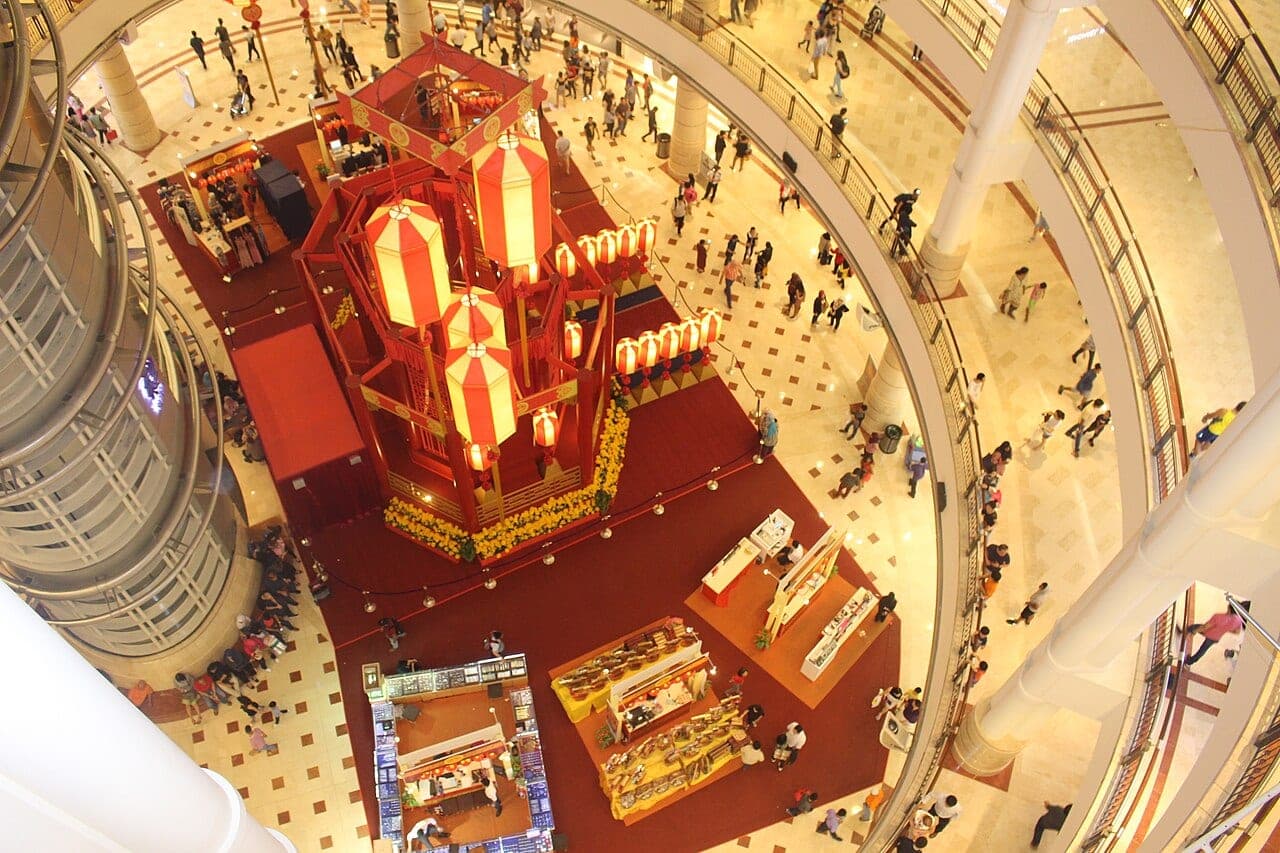
Malaysia is a country that learned to remember in several traditions at once. For more than five centuries the Strait of Malacca has carried the trade of half the world past its western shore, and the peoples who settled along it, Malay, Chinese, Indian, and the many Indigenous communities of the peninsula and Borneo, each brought a distinct way of burying the dead and keeping the ancestors. The result is a nation whose calendar cycles through the fasting month of the Muslims, the tomb-sweeping of the Chinese, the lamps of the Hindus, and the harvest thanksgivings of Sabah and Sarawak, so that remembrance is a conversation held in many voices rather than a single national rite.
That plurality is written into the land as much as the law. In Sabah, the peak of Mount Kinabalu takes its name from the Kadazan-Dusun words for the abode of the dead, the place where ancestral spirits were long thought to gather. In the port cities of Melaka and George Town, mosque, Chinese temple and Hindu shrine stand within a few streets of one another, the record of a crossroads where Islam became the faith of the Malay courts while other communities kept their own gods. This guide follows Malaysia's heritage from those early kingdoms to the present: its cities, its layered faiths, and the customs by which its communities keep faith with those they have lost.
Malaysia straddles the South China Sea in two parts: Peninsular Malaysia, which shares the Malay Peninsula with Thailand and faces Singapore across a narrow strait, and East Malaysia, the states of Sabah and Sarawak on the northern edge of Borneo, the world's third-largest island. Between them the country holds thirteen states and three federal territories, rainforest among the oldest on earth, and a coastline shaped by the monsoon trade that first made it rich.
Its population, estimated by the Department of Statistics at around 34 million in 2024, is one of the most plural in Asia. Malays form the largest single group, and together with the Indigenous peoples they make up the Bumiputera, roughly 70 per cent of citizens; Malaysians of Chinese descent are about 22 per cent and those of Indian descent about 7 per cent (Department of Statistics Malaysia). The Indigenous communities are themselves many: the Orang Asli of the peninsula, and in Borneo the Iban, Bidayuh and Melanau of Sarawak and the Kadazan-Dusun, Bajau and Murut of Sabah. Malaysia is a federal constitutional monarchy with a rotating kingship elected from among the hereditary Malay rulers.
Kuala Lumpur. The capital began in the 1850s as a tin-mining camp at the muddy meeting of the Klang and Gombak rivers, which is what its name records. It grew into the administrative heart of British Malaya and then of the nation, and its skyline now carries the country's modern emblem: the Petronas Towers, twin stainless-steel spires of 451.9 metres completed in 1998, the tallest buildings in the world until 2004 (Britannica).
 George Town's shophouses and mansions were built by Chinese, Indian, Malay and European traders in the same streets, which is the argument its listing rests on. Photograph by CEphoto, Uwe Aranas, CC BY-SA 3.0, via Wikimedia Commons.
Melaka. The city that gives the strait its name was the seat of the Malacca Sultanate, and its historic core is inscribed by UNESCO with George Town as the Historic Cities of the Straits of Malacca. Layers of empire remain within a short walk: the ruined Portuguese gate of A Famosa, the salmon-red Dutch Stadthuys and Christ Church, and the Chinese temples and clan houses of Jonker Street, where the Baba-Nyonya, or Straits Chinese, developed a fused Malay-Chinese culture of their own.
George Town. Founded on Penang Island in 1786 by the British East India Company and named for King George III, it became a free port that drew Chinese, Indian, Arab and European settlers. Its shophouses and clan jetties, the Kapitan Keling Mosque, the Sri Mahamariamman temple and the Kek Lok Si Buddhist complex make it one of the most complete surviving trading towns in Southeast Asia.
Kuching. Across the sea in Borneo, the Sarawak capital grew as the seat of the "White Rajahs" of the Brooke family and keeps their forts and museums of the Indigenous interior, while Kota Kinabalu is the coastal gateway to Sabah and its sacred mountain.
Long before Islam, the peninsula lay within the Indian cultural sphere: from the first millennium Hindu-Buddhist kingdoms rose on the trade routes, the Bujang Valley in Kedah preserving the brick temple platforms, or candi, of one such polity, while the Sumatra-based Srivijaya empire drew the region into a wider Malay-Buddhist world. The decisive turn came around 1400, when a prince named Parameswara founded Melaka. Under his line the Malacca Sultanate became the greatest entrepôt of the eastern seas, a meeting point for the ships of China, India, Arabia and the archipelago, and the ruling house adopted Islam, which spread from Melaka through the Malay courts (Britannica).
George Town's shophouses and mansions were built by Chinese, Indian, Malay and European traders in the same streets, which is the argument its listing rests on. Photograph by CEphoto, Uwe Aranas, CC BY-SA 3.0, via Wikimedia Commons.
Melaka. The city that gives the strait its name was the seat of the Malacca Sultanate, and its historic core is inscribed by UNESCO with George Town as the Historic Cities of the Straits of Malacca. Layers of empire remain within a short walk: the ruined Portuguese gate of A Famosa, the salmon-red Dutch Stadthuys and Christ Church, and the Chinese temples and clan houses of Jonker Street, where the Baba-Nyonya, or Straits Chinese, developed a fused Malay-Chinese culture of their own.
George Town. Founded on Penang Island in 1786 by the British East India Company and named for King George III, it became a free port that drew Chinese, Indian, Arab and European settlers. Its shophouses and clan jetties, the Kapitan Keling Mosque, the Sri Mahamariamman temple and the Kek Lok Si Buddhist complex make it one of the most complete surviving trading towns in Southeast Asia.
Kuching. Across the sea in Borneo, the Sarawak capital grew as the seat of the "White Rajahs" of the Brooke family and keeps their forts and museums of the Indigenous interior, while Kota Kinabalu is the coastal gateway to Sabah and its sacred mountain.
Long before Islam, the peninsula lay within the Indian cultural sphere: from the first millennium Hindu-Buddhist kingdoms rose on the trade routes, the Bujang Valley in Kedah preserving the brick temple platforms, or candi, of one such polity, while the Sumatra-based Srivijaya empire drew the region into a wider Malay-Buddhist world. The decisive turn came around 1400, when a prince named Parameswara founded Melaka. Under his line the Malacca Sultanate became the greatest entrepôt of the eastern seas, a meeting point for the ships of China, India, Arabia and the archipelago, and the ruling house adopted Islam, which spread from Melaka through the Malay courts (Britannica).
 Melaka was taken by the Portuguese in 1511, the Dutch in 1641 and the British in 1824, and each left buildings the next one carried on using. Photograph by Rudolph A. Furtado, public domain, via Wikimedia Commons.
That wealth invited conquest. A Portuguese fleet under Afonso de Albuquerque took Melaka in 1511; the Dutch seized it in 1641; and by the Anglo-Dutch Treaty of 1824 it passed to Britain, which joined it with Penang and Singapore in 1826 as the Straits Settlements. British power then spread across the peninsula, drawn by two commodities that reshaped its society: tin through the nineteenth century, and rubber, which by the early twentieth made Malaya the world's leading producer. To work the mines and plantations the colonial economy brought large numbers of Chinese and Indian labourers, laying down the multiethnic pattern that endures. After the Japanese occupation of 1941 to 1945, the Federation of Malaya won independence on 31 August 1957, the day still marked as Merdeka, and on 16 September 1963 it joined with Singapore, Sabah and Sarawak to form Malaysia; Singapore departed in 1965 (History of Malaysia). After communal violence in Kuala Lumpur in 1969, the government launched the New Economic Policy in 1971, an affirmative-action framework giving the Bumiputera preferences in education, public employment and business ownership; it remains a defining and widely debated feature of national policy.
The national language is Malay, known officially as Bahasa Malaysia, an Austronesian tongue that served for centuries as the trade lingua franca of the archipelago and was long written in the Arabic-derived Jawi script before adopting the Latin alphabet. Alongside it Malaysians speak a spread of Chinese languages, among them Hokkien, Cantonese, Hakka and Mandarin, along with Tamil and the many Indigenous languages of the peninsula and Borneo. English, the colonial administrative language, remains widely used in business and law.
The country's name joins the older ethnic term Malay to a suffix meaning land or region, so that Malaysia reads as the land of the Malays. The root is ancient and contested: many trace it to Sanskrit and Tamil words for mountain, carried by Indian traders who called the peninsula a land of mountains, while others point to Malayu, an early Sumatran kingdom recorded by Chinese pilgrims (Wiktionary). Whatever its source, the term described a people and a maritime culture before it named a modern state.
Malaysian identity is built from its plurality rather than in spite of it. The material culture of the Malay world runs deep: batik and songket textiles, the giant decorated kites called wau, the shadow-puppet theatre of wayang kulit, and the martial art of silat, all coexisting with the lion dances and calligraphy of the Chinese communities and the classical dance and music of the Indian ones. The Baba-Nyonya of Melaka and Penang show how thoroughly these strands can braid together, in a cuisine and dress that are wholly their own.
Food is the clearest common ground: nasi lemak, coconut rice with sambal, is treated as a national dish; satay, laksa in its regional forms, roti canai and the beef stew rendang are eaten across community lines, and the sweet pulled tea called teh tarik is a ritual of its own. The custom of the "open house", in which families welcome friends of every background during their festivals, turns private celebration into shared public life.
Islam is the religion of the Federation under the constitution, and most Malays are Sunni Muslims of the Shafi'i school; the same constitution guarantees the freedom of other communities to practise their faiths, and it is this balance that gives Malaysian religious life its plural character (Britannica). Mosques anchor the Malay towns, and Islamic law governs Muslim family matters through a parallel court system.
The other faiths are woven through the same streets. Buddhism, followed mainly by Malaysians of Chinese descent and often blended with Taoism and Confucian ancestor reverence, fills temples such as Penang's Kek Lok Si; Hinduism, brought by Tamil migration, raises the towered gopurams of temples across the country and draws vast crowds to the Batu Caves shrine of Lord Murugan; and Christianity, present since the Portuguese and strongest in Sabah and Sarawak, counts many of the Borneo Indigenous peoples among its adherents. Older still are the Indigenous belief systems, the reverence for ancestral spirits and sacred places that survives among the Orang Asli and the peoples of Borneo, and that gives Mount Kinabalu its standing as a dwelling of the dead.
Because its communities bury their dead so differently, Malaysia is a clear study in how faith shapes farewell. For Malay Muslims the rite is swift and plain: the body is washed in the ritual cleansing of ghusl, wrapped in a white shroud, the kafan, prayed over in the funeral prayer of solat jenazah, and buried within a day to face Mecca, while embalming, cremation and ornament are avoided and mourners scatter earth into the grave as a reminder that all return to dust. In the days that follow, families gather for the kenduri arwah, communal prayers and a meal for the departed, often on the third, seventh, fortieth and hundredth days.
The Chinese communities keep the dead close through ancestor reverence, an extension of the Confucian ideal of filial piety beyond the grave. Funerals may mix Taoist, Buddhist and folk rites; ancestral tablets and photographs are honoured at home altars and in clan houses, and joss paper and offerings are burned for the dead. The central act of care is Qingming, known in Hokkien as Cheng Beng, the tomb-sweeping festival of early April, when families clean the graves, repaint the inscriptions and lay out food and incense; the seventh lunar month then brings the Hungry Ghost Festival, which tends the wandering dead (Free Malaysia Today).
For the Hindu community, cremation follows the belief in reincarnation: the eldest son or nearest male relative lights the pyre, and the ashes are scattered in a river or the sea, returning the body to the elements while the soul continues its passage. Among the Indigenous peoples of Borneo, older traditions of secondary burial and ancestral honour persist alongside the Christianity and Islam many now follow, and in Sabah the mountain remains the symbolic destination of the departed. Beneath the difference the pattern holds: the dead are not dismissed but tended, on fixed days, by the living who remain.
Malaysian records are three systems that have never fully merged, which reflects how the country was assembled.
British administration ran the Straits Settlements, the Federated and Unfederated Malay States and the Borneo territories differently, so civil registration begins at different dates in different places, generally in the later nineteenth century for the Straits and the twentieth elsewhere. The National Archives in Kuala Lumpur hold the colonial and federal series, with substantial material also at Kew.
For Malay families the practical record is Islamic. Marriage and divorce are registered by the state religious department and the syariah court, and those registers are the vital record. Royal genealogies for the nine states are maintained by the courts themselves and reach back centuries; the Sejarah Melayu, the Malay Annals, is the literary version of the same instinct.
For Chinese Malaysians the record is the clan association and the temple, as in Singapore: surname associations, district guilds and ancestral tablets that name a village in Fujian, Guangdong or Hainan. Cemetery documentation projects have preserved a good deal of that.
For Indian Malaysians it is the estate. Tamil labourers were recruited to the rubber plantations from the 1870s, and estate labour records, temple registers and the kangani recruitment papers document them.
In Sabah and Sarawak the Indigenous record is the longhouse and the oral genealogy, the tusut among the Iban, recited by specialists to considerable depth, and native customary land claims now depend on it.
Malaysia protects its heritage through the National Heritage Act of 2005, administered by the National Heritage Department under a Commissioner of Heritage, which maintains a National Heritage Register of buildings, sites, objects and living traditions (National Heritage Act 2005). Several places carry the further recognition of UNESCO World Heritage listing. Its cultural sites are the twinned historic cities of Melaka and George Town, inscribed in 2008 for five centuries of trade between East and West, and the Lenggong Valley in Perak, inscribed in 2012 for archaeological sites, including the skeleton known as Perak Man, that record human presence across many millennia.
The natural sites lie in Borneo. Kinabalu Park, inscribed in 2000, encloses the sacred peak of Mount Kinabalu and one of Asia's most concentrated botanical collections; Gunung Mulu National Park, inscribed the same year, holds a vast karst landscape of caves, among them some of the largest known chambers, and razor-edged limestone pinnacles. In 2024 the Niah caves of Sarawak, where some of the oldest human remains in the region and ancient rock art were found, joined the list (Malaysia Truly Asia).
The work of memory has moved steadily online. The National Archives of Malaysia, Arkib Negara, and the National Library, Perpustakaan Negara, increasingly digitise the documentary record of the nation, from colonial files to classical Malay manuscripts. The most treasured is the Sejarah Melayu, the Malay Annals or Sulalatus Salatin, the seventeenth-century chronicle that is the chief surviving account of the Malacca court; it was inscribed on UNESCO's Memory of the World Register in 2001 as a document of value to all humanity (UNESCO Memory of the World).
Heritage institutions have followed: the National Heritage Department publishes its register online, museums in Kuala Lumpur, Melaka and Kuching have digitised parts of their collections, and George Town World Heritage Incorporated maintains digital inventories of the port city's buildings and traditions. For a heritage scattered across communities, languages and two land masses, such platforms keep fragile crafts, dialects and rituals accessible as their bearers grow older.
Modern Malaysian culture carries the same plurality into new forms. The mid-century films of P. Ramlee remain a shared inheritance, later directors such as Yasmin Ahmad made the country's ethnic coexistence their subject, and Malaysian writing in Malay, English, Chinese and Tamil reaches a wide readership.
The cuisine has become one of its strongest exports, with nasi lemak, laksa and Nyonya cooking now familiar far beyond Southeast Asia, and its festivals draw visitors to Thaipusam at the Batu Caves, to Chinese New Year in George Town, and to the harvest celebrations of Gawai Dayak in Sarawak and Kaamatan in Sabah. A large diaspora in Singapore, Australia, Britain and beyond keeps these observances alive far from home.
Two cities kept whole. The 2008 inscription of Melaka and George Town recognised whole living port cities, and the conservation that followed has preserved thousands of shophouses and the mixed communities within them, turning a decaying colonial core into a model of lived heritage.
A sacred mountain protected. Mount Kinabalu, revered by the Kadazan-Dusun as the resting place of the ancestral dead, is safeguarded within a World Heritage park that unites Indigenous spiritual meaning with the protection of one of Asia's great centres of plant life.
A shared calendar of remembrance. Through the open-house custom and public recognition of one another's festivals, Malaysians have made the mourning traditions of each community, from the kenduri arwah to Qingming to Hindu cremation, part of a common civic life rather than a private matter for each group.
Melaka was taken by the Portuguese in 1511, the Dutch in 1641 and the British in 1824, and each left buildings the next one carried on using. Photograph by Rudolph A. Furtado, public domain, via Wikimedia Commons.
That wealth invited conquest. A Portuguese fleet under Afonso de Albuquerque took Melaka in 1511; the Dutch seized it in 1641; and by the Anglo-Dutch Treaty of 1824 it passed to Britain, which joined it with Penang and Singapore in 1826 as the Straits Settlements. British power then spread across the peninsula, drawn by two commodities that reshaped its society: tin through the nineteenth century, and rubber, which by the early twentieth made Malaya the world's leading producer. To work the mines and plantations the colonial economy brought large numbers of Chinese and Indian labourers, laying down the multiethnic pattern that endures. After the Japanese occupation of 1941 to 1945, the Federation of Malaya won independence on 31 August 1957, the day still marked as Merdeka, and on 16 September 1963 it joined with Singapore, Sabah and Sarawak to form Malaysia; Singapore departed in 1965 (History of Malaysia). After communal violence in Kuala Lumpur in 1969, the government launched the New Economic Policy in 1971, an affirmative-action framework giving the Bumiputera preferences in education, public employment and business ownership; it remains a defining and widely debated feature of national policy.
The national language is Malay, known officially as Bahasa Malaysia, an Austronesian tongue that served for centuries as the trade lingua franca of the archipelago and was long written in the Arabic-derived Jawi script before adopting the Latin alphabet. Alongside it Malaysians speak a spread of Chinese languages, among them Hokkien, Cantonese, Hakka and Mandarin, along with Tamil and the many Indigenous languages of the peninsula and Borneo. English, the colonial administrative language, remains widely used in business and law.
The country's name joins the older ethnic term Malay to a suffix meaning land or region, so that Malaysia reads as the land of the Malays. The root is ancient and contested: many trace it to Sanskrit and Tamil words for mountain, carried by Indian traders who called the peninsula a land of mountains, while others point to Malayu, an early Sumatran kingdom recorded by Chinese pilgrims (Wiktionary). Whatever its source, the term described a people and a maritime culture before it named a modern state.
Malaysian identity is built from its plurality rather than in spite of it. The material culture of the Malay world runs deep: batik and songket textiles, the giant decorated kites called wau, the shadow-puppet theatre of wayang kulit, and the martial art of silat, all coexisting with the lion dances and calligraphy of the Chinese communities and the classical dance and music of the Indian ones. The Baba-Nyonya of Melaka and Penang show how thoroughly these strands can braid together, in a cuisine and dress that are wholly their own.
Food is the clearest common ground: nasi lemak, coconut rice with sambal, is treated as a national dish; satay, laksa in its regional forms, roti canai and the beef stew rendang are eaten across community lines, and the sweet pulled tea called teh tarik is a ritual of its own. The custom of the "open house", in which families welcome friends of every background during their festivals, turns private celebration into shared public life.
Islam is the religion of the Federation under the constitution, and most Malays are Sunni Muslims of the Shafi'i school; the same constitution guarantees the freedom of other communities to practise their faiths, and it is this balance that gives Malaysian religious life its plural character (Britannica). Mosques anchor the Malay towns, and Islamic law governs Muslim family matters through a parallel court system.
The other faiths are woven through the same streets. Buddhism, followed mainly by Malaysians of Chinese descent and often blended with Taoism and Confucian ancestor reverence, fills temples such as Penang's Kek Lok Si; Hinduism, brought by Tamil migration, raises the towered gopurams of temples across the country and draws vast crowds to the Batu Caves shrine of Lord Murugan; and Christianity, present since the Portuguese and strongest in Sabah and Sarawak, counts many of the Borneo Indigenous peoples among its adherents. Older still are the Indigenous belief systems, the reverence for ancestral spirits and sacred places that survives among the Orang Asli and the peoples of Borneo, and that gives Mount Kinabalu its standing as a dwelling of the dead.
Because its communities bury their dead so differently, Malaysia is a clear study in how faith shapes farewell. For Malay Muslims the rite is swift and plain: the body is washed in the ritual cleansing of ghusl, wrapped in a white shroud, the kafan, prayed over in the funeral prayer of solat jenazah, and buried within a day to face Mecca, while embalming, cremation and ornament are avoided and mourners scatter earth into the grave as a reminder that all return to dust. In the days that follow, families gather for the kenduri arwah, communal prayers and a meal for the departed, often on the third, seventh, fortieth and hundredth days.
The Chinese communities keep the dead close through ancestor reverence, an extension of the Confucian ideal of filial piety beyond the grave. Funerals may mix Taoist, Buddhist and folk rites; ancestral tablets and photographs are honoured at home altars and in clan houses, and joss paper and offerings are burned for the dead. The central act of care is Qingming, known in Hokkien as Cheng Beng, the tomb-sweeping festival of early April, when families clean the graves, repaint the inscriptions and lay out food and incense; the seventh lunar month then brings the Hungry Ghost Festival, which tends the wandering dead (Free Malaysia Today).
For the Hindu community, cremation follows the belief in reincarnation: the eldest son or nearest male relative lights the pyre, and the ashes are scattered in a river or the sea, returning the body to the elements while the soul continues its passage. Among the Indigenous peoples of Borneo, older traditions of secondary burial and ancestral honour persist alongside the Christianity and Islam many now follow, and in Sabah the mountain remains the symbolic destination of the departed. Beneath the difference the pattern holds: the dead are not dismissed but tended, on fixed days, by the living who remain.
Malaysian records are three systems that have never fully merged, which reflects how the country was assembled.
British administration ran the Straits Settlements, the Federated and Unfederated Malay States and the Borneo territories differently, so civil registration begins at different dates in different places, generally in the later nineteenth century for the Straits and the twentieth elsewhere. The National Archives in Kuala Lumpur hold the colonial and federal series, with substantial material also at Kew.
For Malay families the practical record is Islamic. Marriage and divorce are registered by the state religious department and the syariah court, and those registers are the vital record. Royal genealogies for the nine states are maintained by the courts themselves and reach back centuries; the Sejarah Melayu, the Malay Annals, is the literary version of the same instinct.
For Chinese Malaysians the record is the clan association and the temple, as in Singapore: surname associations, district guilds and ancestral tablets that name a village in Fujian, Guangdong or Hainan. Cemetery documentation projects have preserved a good deal of that.
For Indian Malaysians it is the estate. Tamil labourers were recruited to the rubber plantations from the 1870s, and estate labour records, temple registers and the kangani recruitment papers document them.
In Sabah and Sarawak the Indigenous record is the longhouse and the oral genealogy, the tusut among the Iban, recited by specialists to considerable depth, and native customary land claims now depend on it.
Malaysia protects its heritage through the National Heritage Act of 2005, administered by the National Heritage Department under a Commissioner of Heritage, which maintains a National Heritage Register of buildings, sites, objects and living traditions (National Heritage Act 2005). Several places carry the further recognition of UNESCO World Heritage listing. Its cultural sites are the twinned historic cities of Melaka and George Town, inscribed in 2008 for five centuries of trade between East and West, and the Lenggong Valley in Perak, inscribed in 2012 for archaeological sites, including the skeleton known as Perak Man, that record human presence across many millennia.
The natural sites lie in Borneo. Kinabalu Park, inscribed in 2000, encloses the sacred peak of Mount Kinabalu and one of Asia's most concentrated botanical collections; Gunung Mulu National Park, inscribed the same year, holds a vast karst landscape of caves, among them some of the largest known chambers, and razor-edged limestone pinnacles. In 2024 the Niah caves of Sarawak, where some of the oldest human remains in the region and ancient rock art were found, joined the list (Malaysia Truly Asia).
The work of memory has moved steadily online. The National Archives of Malaysia, Arkib Negara, and the National Library, Perpustakaan Negara, increasingly digitise the documentary record of the nation, from colonial files to classical Malay manuscripts. The most treasured is the Sejarah Melayu, the Malay Annals or Sulalatus Salatin, the seventeenth-century chronicle that is the chief surviving account of the Malacca court; it was inscribed on UNESCO's Memory of the World Register in 2001 as a document of value to all humanity (UNESCO Memory of the World).
Heritage institutions have followed: the National Heritage Department publishes its register online, museums in Kuala Lumpur, Melaka and Kuching have digitised parts of their collections, and George Town World Heritage Incorporated maintains digital inventories of the port city's buildings and traditions. For a heritage scattered across communities, languages and two land masses, such platforms keep fragile crafts, dialects and rituals accessible as their bearers grow older.
Modern Malaysian culture carries the same plurality into new forms. The mid-century films of P. Ramlee remain a shared inheritance, later directors such as Yasmin Ahmad made the country's ethnic coexistence their subject, and Malaysian writing in Malay, English, Chinese and Tamil reaches a wide readership.
The cuisine has become one of its strongest exports, with nasi lemak, laksa and Nyonya cooking now familiar far beyond Southeast Asia, and its festivals draw visitors to Thaipusam at the Batu Caves, to Chinese New Year in George Town, and to the harvest celebrations of Gawai Dayak in Sarawak and Kaamatan in Sabah. A large diaspora in Singapore, Australia, Britain and beyond keeps these observances alive far from home.
Two cities kept whole. The 2008 inscription of Melaka and George Town recognised whole living port cities, and the conservation that followed has preserved thousands of shophouses and the mixed communities within them, turning a decaying colonial core into a model of lived heritage.
A sacred mountain protected. Mount Kinabalu, revered by the Kadazan-Dusun as the resting place of the ancestral dead, is safeguarded within a World Heritage park that unites Indigenous spiritual meaning with the protection of one of Asia's great centres of plant life.
A shared calendar of remembrance. Through the open-house custom and public recognition of one another's festivals, Malaysians have made the mourning traditions of each community, from the kenduri arwah to Qingming to Hindu cremation, part of a common civic life rather than a private matter for each group.
National Overview
Notable Cities
Historical Foundations
Linguistic and Etymological Roots
Cultural Identity
Religion and Spirituality
Remembrance and Mourning Traditions
Tracing a Family in Malaysia
Heritage Preservation Efforts
Digital Heritage
Contemporary Cultural Influences
Success Stories
References and resources
- Encyclopaedia Britannica: Malaysia. Geography, society and religion.
- Encyclopaedia Britannica: Melaka. The sultanate and the colonial city.
- Department of Statistics Malaysia, Demographic Statistics 2024. Population and ethnic figures.
- History of Malaysia (Wikipedia). Independence and the formation of Malaysia.
- UNESCO Memory of the World: Sejarah Melayu (The Malay Annals). The chronicle and its 2001 inscription.
- Malaysia's UNESCO World Heritage Sites. Melaka, George Town, Lenggong, Kinabalu, Mulu and Niah.
- National Heritage Act 2005 (Act 645). Conservation law and the National Heritage Register.
- Britannica: Petronas Twin Towers. The Kuala Lumpur landmark.
- Penang Monthly: Marking the End of Life. Funerary customs across the communities.
- Free Malaysia Today: The significance of Qingming. Chinese tomb-sweeping and remembrance.