Heritage · Country
Christmas Island Culture and Heritage
Closer to Java than to Australia, an island of about 1,700 people keeps Taoist temples, a mosque, two Buddhist temples and a Catholic grotto within a few kilometres of one another. This is a guide to Christmas Island's heritage, built by indentured phosphate workers and carried on by their descendants.Written to last.
By Confinity Heritage Editorial · Updated 2026-08-17 · 8-minute readQuiet tools, kept out of the way.
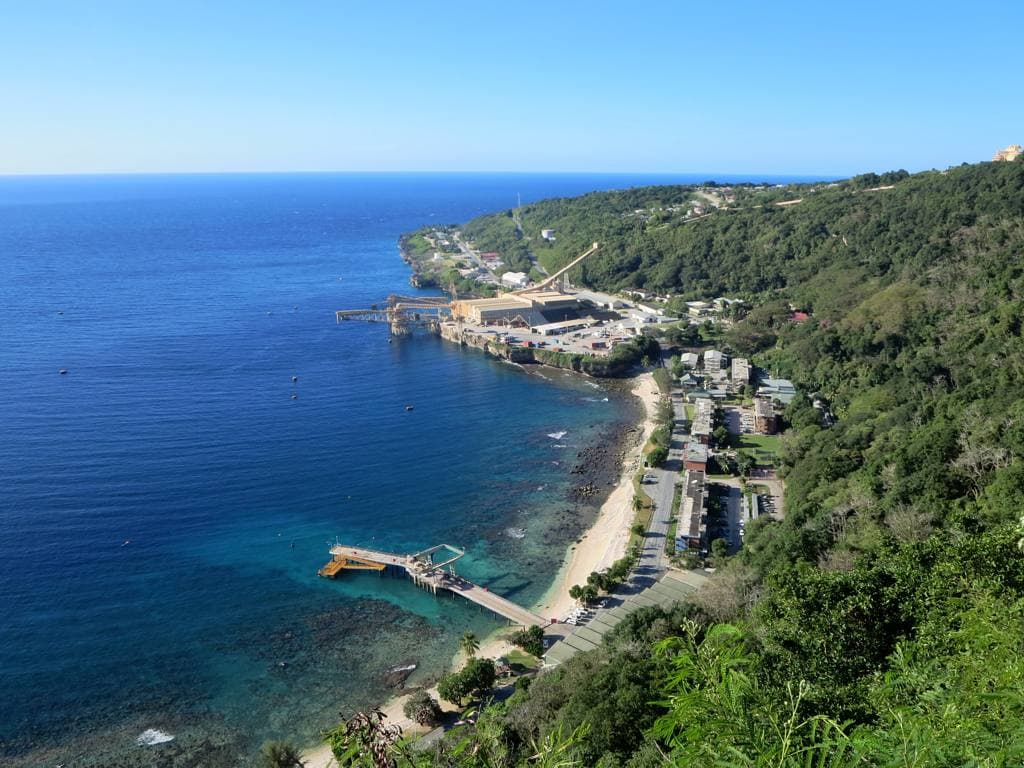
Christmas Island lies in the Indian Ocean about 350 kilometres south of Java and roughly 1,550 kilometres northwest of the Australian mainland. Nobody lived on it until 1888, when Britain annexed it for its phosphate and ran it from Singapore. Everything on the island since then follows from the rock: the company that mined it, the Chinese and Malay workers brought in under indenture to dig it, the settlements built along the cliff above the loading point, and the temples, mosque and cemeteries those workers put up for themselves.
The result is one of the most religiously and linguistically mixed communities in Australia, at a population of fewer than two thousand. Chinese New Year, Hari Raya and the Hungry Ghost Festival are all marked in public here, and Christmas Island is the only Australian jurisdiction with public holidays for Lunar New Year and for the two Muslim Eids. The red crab migration has made the island famous elsewhere; on the island itself, the older story is about the people who were shipped in to work and then stayed, and about what they built while they waited to be treated as residents rather than labour.
Christmas Island is an Australian external territory of about 135 square kilometres, the summit of an old seamount that rises in terraces from the ocean floor to a central plateau some 360 metres above the sea. The 2021 census counted 1,692 residents. Its people are usually described in three groups, of Chinese, Malay and European descent, and the proportions have shifted with the mine and with mainland migration: older estimates put the community at about two-thirds Chinese and a fifth Malay, while the 2021 census records 22.2 per cent reporting Chinese ancestry, 17 per cent Australian, 16.1 per cent Malay and 12.5 per cent English. English is the official language and the language of administration, with Malay, Mandarin and several southern Chinese dialects spoken at home. The Commonwealth administers the territory through an Administrator, with a Shire of Christmas Island providing local government and Western Australian law applied by arrangement. Phosphate mining continues on a reduced scale; a national park covers about 63 per cent of the island, and the settlements occupy a narrow strip along the northeastern shore.
Flying Fish Cove, or The Settlement. The island's main village sits on the one sheltered anchorage, named after HMS Flying Fish, the survey vessel that called in 1887. Everything arrived and left through it. Tai Jin House, the old Administrator's residence on the cliff edge above the cove, is now a museum, and the Tai Pak Kong temple, the port, the shops and the beach are all within a short walk of each other.
Poon Saan. The name is Cantonese for "halfway up the hill", which is exactly where it is, on the terrace above the cove. It has been the centre of the island's Chinese community for generations, with shops, a club, a Baha'i centre and the flats built for mine workers.
Silver City and Drumsite. Silver City takes its name from the aluminium-clad cyclone-proof housing built there in the 1970s, when the island's housing stock was rebuilt. Drumsite, higher again, grew around the mine's transport works. Below them, the Malay kampong holds the mosque and the madrasah built in the 1960s, and remains the heart of the island's Malay community.
A ship of the British East India Company sighted the island in 1615, and Captain William Mynors of the Royal Mary named it when he passed on Christmas Day 1643. It stayed uninhabited. In 1887 a survey by HMS Egeria brought back rock samples that the naturalist John Murray identified as nearly pure phosphate of lime, and Britain annexed the island on 6 June 1888. George Clunies-Ross, whose family held the Cocos Islands, established a small settlement at Flying Fish Cove to cut timber, and in 1897 he and Murray were granted a lease through the Christmas Island Phosphate Company.
Mining began in 1899 with indentured workers recruited from Singapore, British Malaya and China, most of them Chinese men on short contracts, and the early conditions were severe: accommodation was poor, the work was hard rock mining in the tropics, and a beriberi epidemic between 1900 and 1904 killed a large number of the Chinese labourers, who were buried near the original hospital at Rocky Point. The island was administered as part of the Straits Settlements from Singapore, and its workforce had no political rights of any kind.
Japan invaded in March 1942 to secure the phosphate. On the night of 10 to 11 March, before the landing, Indian troops of the garrison mutinied and killed a British officer and four non-commissioned officers in their quarters, and the remaining European staff were held under threat of execution. The Japanese occupied the island with a garrison of around 850 and shipped more than 60 per cent of the population to prison camps at Surabaya in November 1943. British forces returned in October 1945, and five of the mutineers were sentenced to death in 1947, the sentences later commuted to life imprisonment after representations from the Indian government.
Sovereignty passed to Australia on 1 October 1958, with a payment to Singapore in compensation for the loss of phosphate revenue. Change after that came mainly through the workforce. The Union of Christmas Island Workers was formed in March 1974 after the phosphate authority sacked and deported the administration's chief interpreter, and more than 1,100 workers struck until he was reinstated (Australian Trade Union Institute). Under general secretary Gordon Bennett, elected in 1978, the union pressed for wage parity with mainland Australia, drew the support of ACTU president Bob Hawke, who flew to the island, and over the following decade won pay parity, citizenship and residence rights, better housing and local government. The mine closed in 1987 and reopened under new ownership in 1991; the Shire of Christmas Island was established in 1992.
English is the official language, and the 2021 census recorded it as the main home language for about 29 per cent of residents, with Mandarin at 17 per cent and Malay at 17 per cent, alongside Cantonese, Hokkien, Hakka and other southern Chinese dialects. Older residents commonly move between three or four languages in a day, and the island's Malay is close to the Malay of Malaysia and the Cocos Islands rather than a separate creole.
The map records the same mixture. Poon Saan is Cantonese for halfway up the hill. Tai Jin House takes its name from the Chinese term for a senior official, which is what its occupant was, and Kampong is the Malay word for village used as a proper name. Flying Fish Cove, Egeria Point and Smith Point come from the Royal Navy survey; Drumsite, Silver City and Phosphate Hill from the mine; The Dales, Dolly Beach, Lily Beach and Margaret Knoll from the surveyors and administrators who named them. The island's own name is the plainest of all, being nothing more than the date on which a passing captain happened to see it, which means the one thing every Australian knows about the place is an accident of a ship's calendar in 1643.
The island's culture is the culture of three communities that arrived separately and have lived alongside each other for more than a century. Chinese New Year is the biggest event of the year, marked with lion dancing, open houses, temple visits and fireworks, and observed with two public holidays, which no other Australian jurisdiction grants. Hari Raya Puasa at the end of Ramadan and Hari Raya Haji are also public holidays, with open houses in the kampong and food shared well beyond the Malay community. Territory Day, on the first Monday in October, marks the 1958 transfer to Australia.
 Tens of millions of red crabs cross the island to the sea each year, and Christmas Island closes roads and has built bridges and underpasses for them. Photograph by Ian Usher, CC BY-SA 3.0, via Wikimedia Commons.
Food is where the mixing is most obvious, with Chinese and Malay cooking sold from the same small clubs and stalls that have fed the island since the mine's canteens closed. The union era left its own inheritance: a strong sense that this is a working community that had to argue its way into equal standing. The crab migration provides an annual rhythm shared by everyone, when roads close and residents change their driving habits for weeks at a time.
Religion is the most striking thing about Christmas Island. Within a few kilometres there are Taoist temples, a mosque and madrasah, two Buddhist temples, a Catholic church and grotto, a Uniting Church and a Baha'i centre, all serving a population smaller than a country town's. The two oldest and largest temples, Tai Pak Kong and Soon Tian Kong, were built in the early twentieth century by labourers from Guangdong, are dedicated to gods of protection and prosperity, and are heritage-listed; small shrines stand along the roads and at the mine sites. The Christmas Island Mahayana Buddhist Society runs a complex at The Settlement with one temple for Guan Yin and another for Di Zang, and a bodhi tree planted in its garden in 1995 (ABC Religion and Ethics).
The mosque and the madrasah in the kampong, both built in the 1960s, anchor Malay religious life and Islamic education on the island. The Catholic parish serves The Settlement, and a grotto shrine at a freshwater spring is a place of quiet visiting for people of several faiths. The 2021 census recorded Islam at 22.1 per cent, Buddhism at 15.2 per cent and Catholicism at 7.3 per cent, though the figures understate Taoist practice, which many residents record as Buddhist or as no religion while still keeping the temple calendar. Chinese New Year, Qing Ming, the Hungry Ghost Festival, the Moon Cake Festival, Vesak and the two Eids are all publicly observed, which means the island's religious year is effectively three years running at once, and everyone knows the dates of all of them.
The cemeteries record the island's labour history directly. Two large Chinese burial grounds, one at The Settlement and one on Phosphate Hill, were laid out according to feng shui principles, on slopes with the right relation to water and hill. The older ground near the mine was in use until the 1920s, and many of the men buried there died young, of accident or of the beriberi that swept the workforce between 1900 and 1904 (Christmas Island Archives). Most were single men on short contracts, far from their families, and the graves are the only record some of them have.
Their descendants keep them. At Qing Ming in early April, families clean the graves, clear weeds, repaint inscriptions and lay offerings of food, incense and paper money. During the seventh lunar month, the Hungry Ghost Festival brings offerings for the wandering dead as well as for family ancestors, with the temples holding services and food and paper goods burnt outside. Muslim burial in the kampong cemetery follows the usual pattern of prompt burial, simple graves and the body laid facing Mecca, and the Christian cemetery is close by. The cemeteries sit within a short drive of each other, each maintained by its own community, which is as clear a picture of the island's arrangement as anything on it.
There's a newer memorial as well. On 15 December 2010 a boat carrying asylum seekers from Indonesia, known to the authorities as SIEV 221, lost engine power in heavy weather and was driven onto the rocks at Rocky Point, in sight of houses. Around sixty residents gathered on the cliffs and threw life jackets into the water, though the wind blew many of them back against the rock face, and only one person reached shore unaided before Customs vessels arrived at daybreak and pulled 41 people from the sea. Reports at the time counted 48 dead; the 2012 coronial inquest recorded 50, with 30 bodies recovered. A parliamentary committee in 2011 described the rescue effort by islanders and Customs personnel as brave, and the coroner found the disaster had been generally foreseeable and criticised the surveillance and rescue resources available. A public memorial with the vessel's damaged propeller was placed at Smith Point in 2011, and the anniversary is marked on the island by people who watched it happen.
Christmas Island's records are phosphate records, and they name three separate migrations.
The British Phosphate Commissioners and their predecessors worked the island from 1899, and the labour was indentured: Chinese workers recruited chiefly from Singapore and southern China, Malays, and Sikhs from Punjab who worked as police. The company kept employment, housing, medical and death records, and those are the fullest documentation of the island's population for its first seventy years. Conditions were poor and mortality was high in the early decades.
The island was administered from Singapore, then transferred to Australia in 1958, so records are split between Canberra, Singapore and London. The National Archives of Australia holds the Australian series.
The Japanese occupation between 1942 and 1945 removed most of the population to Java, and a mutiny by Indian troops in 1942 led to the killing of the British officers; the courts martial that followed are documented.
Chinese temples, the Malay mosque and the Sikh gurdwara are the community institutions, and their own records carry what the company's do not.
The recent record is the detention centre. From 2001 Christmas Island held asylum seekers under Australia's offshore processing arrangements, and the files made there are about people whose family histories belong to Afghanistan, Iraq, Iran, Sri Lanka and Myanmar. Islanders and detainees occupied the same small island for two decades with almost no connection between their records.
Christmas Island National Park was declared on 21 February 1980 and extended in 1986 and 1989; it now covers about 85 square kilometres, or roughly 63 per cent of the island, protecting the rainforest, the crab habitat and the seabird colonies (Parks Australia). Parks Australia also manages Tai Jin House, the 1940s Administrator's residence above Flying Fish Cove, which now serves as the island's museum and holds material on the phosphate era, the occupation and the communities.
Cultural heritage work has been slower than natural heritage work. The temples and shrines were surveyed and a conservation plan prepared in 2016, though it has been only partly implemented, and several of the older structures need work. The mining landscape itself is heritage in its own right, from the cantilever loader over the cove to the abandoned railway and drying plant, and rehabilitation of mined-out fields runs alongside conservation of what remains. The Christmas Island Historical Society and the volunteers behind the island's archives have done much of the documentary preservation, gathering photographs, company records, oral testimony and personal papers that no institution on the mainland was collecting.
The Christmas Island Archives project has put a large body of the island's documentary record online, including photographs, company and administration records, coins and ephemera, and a virtual museum of the collection. It has been selected for preservation by the State Library of Western Australia and is archived in perpetuity through PANDORA, the National Library of Australia's web archive, which matters for a small community whose records would otherwise sit in private houses in a cyclone belt. Christmas Island Stories, an oral history site, publishes first-person accounts from Chinese, Malay and European residents about work, migration and family life (Christmas Island Stories). Administrative files from the Singapore period and after are held by the National Archives of Australia and increasingly digitised.
Two things carry the island's name today. The first is the red crab migration, when tens of millions of crabs leave the forest at the start of the wet season, usually in October or November, and move to the coast to breed, timed so that the females release their eggs at the turn of the high tide in the last quarter of the moon. Adult numbers have been estimated at more than 40 million, though the accidental introduction of the yellow crazy ant killed an estimated 10 to 15 million crabs before a biological control programme was mounted. The island closes roads, funnels the crabs through underpasses with aluminium barriers, and has built a five-metre crab bridge over Murray Road (Wikipedia). The migration draws visitors and film crews, and tourism now sits alongside phosphate as the island's income.
The second is immigration detention. Christmas Island was excised from Australia's migration zone in 2001, temporary facilities opened at Phosphate Hill late that year, and a purpose-built centre at North West Point, costing about $208 million, opened in 2008. Detainee numbers rose above 2,000 in 2010 and reached nearly 3,000 in 2013. There were serious disturbances in 2011 and 2015, hunger strikes in 2014, and the facility closed in October 2018, was reopened in early 2019, used for COVID-19 quarantine of evacuees from Wuhan in February 2020, held small numbers thereafter, and had no detainees by the end of 2023. The centre reshaped the island's economy through contract work and housing pressure, and local representatives repeatedly objected that decisions to open, close and reopen it were made without notice to the community and that the island lacked the medical services such a facility required. The two things the island is known for outside it, crabs and detention, are both largely about the island being remote, which is exactly the quality its own residents have spent a century working around.
Equal pay and the right to stay. Between 1974 and the late 1980s the Union of Christmas Island Workers won wage parity with mainland Australia, citizenship and residence rights, better housing and local government for a workforce that had been recruited under indenture and had no political standing at all.
Temples kept in use. Tai Pak Kong and Soon Tian Kong, built by Guangdong labourers in the early 1900s, are heritage-listed and still in daily use, and the Buddhist society's temples and the kampong mosque have added to rather than replaced them.
The archives saved. A volunteer project digitised the island's photographs, records and ephemera and secured them through the State Library of Western Australia and the National Library's web archive.
Crabs given right of way. Road closures, underpasses, a purpose-built crab bridge and a biological control programme against the yellow crazy ant have kept one of the largest land migrations on earth running through an inhabited island.
Tens of millions of red crabs cross the island to the sea each year, and Christmas Island closes roads and has built bridges and underpasses for them. Photograph by Ian Usher, CC BY-SA 3.0, via Wikimedia Commons.
Food is where the mixing is most obvious, with Chinese and Malay cooking sold from the same small clubs and stalls that have fed the island since the mine's canteens closed. The union era left its own inheritance: a strong sense that this is a working community that had to argue its way into equal standing. The crab migration provides an annual rhythm shared by everyone, when roads close and residents change their driving habits for weeks at a time.
Religion is the most striking thing about Christmas Island. Within a few kilometres there are Taoist temples, a mosque and madrasah, two Buddhist temples, a Catholic church and grotto, a Uniting Church and a Baha'i centre, all serving a population smaller than a country town's. The two oldest and largest temples, Tai Pak Kong and Soon Tian Kong, were built in the early twentieth century by labourers from Guangdong, are dedicated to gods of protection and prosperity, and are heritage-listed; small shrines stand along the roads and at the mine sites. The Christmas Island Mahayana Buddhist Society runs a complex at The Settlement with one temple for Guan Yin and another for Di Zang, and a bodhi tree planted in its garden in 1995 (ABC Religion and Ethics).
The mosque and the madrasah in the kampong, both built in the 1960s, anchor Malay religious life and Islamic education on the island. The Catholic parish serves The Settlement, and a grotto shrine at a freshwater spring is a place of quiet visiting for people of several faiths. The 2021 census recorded Islam at 22.1 per cent, Buddhism at 15.2 per cent and Catholicism at 7.3 per cent, though the figures understate Taoist practice, which many residents record as Buddhist or as no religion while still keeping the temple calendar. Chinese New Year, Qing Ming, the Hungry Ghost Festival, the Moon Cake Festival, Vesak and the two Eids are all publicly observed, which means the island's religious year is effectively three years running at once, and everyone knows the dates of all of them.
The cemeteries record the island's labour history directly. Two large Chinese burial grounds, one at The Settlement and one on Phosphate Hill, were laid out according to feng shui principles, on slopes with the right relation to water and hill. The older ground near the mine was in use until the 1920s, and many of the men buried there died young, of accident or of the beriberi that swept the workforce between 1900 and 1904 (Christmas Island Archives). Most were single men on short contracts, far from their families, and the graves are the only record some of them have.
Their descendants keep them. At Qing Ming in early April, families clean the graves, clear weeds, repaint inscriptions and lay offerings of food, incense and paper money. During the seventh lunar month, the Hungry Ghost Festival brings offerings for the wandering dead as well as for family ancestors, with the temples holding services and food and paper goods burnt outside. Muslim burial in the kampong cemetery follows the usual pattern of prompt burial, simple graves and the body laid facing Mecca, and the Christian cemetery is close by. The cemeteries sit within a short drive of each other, each maintained by its own community, which is as clear a picture of the island's arrangement as anything on it.
There's a newer memorial as well. On 15 December 2010 a boat carrying asylum seekers from Indonesia, known to the authorities as SIEV 221, lost engine power in heavy weather and was driven onto the rocks at Rocky Point, in sight of houses. Around sixty residents gathered on the cliffs and threw life jackets into the water, though the wind blew many of them back against the rock face, and only one person reached shore unaided before Customs vessels arrived at daybreak and pulled 41 people from the sea. Reports at the time counted 48 dead; the 2012 coronial inquest recorded 50, with 30 bodies recovered. A parliamentary committee in 2011 described the rescue effort by islanders and Customs personnel as brave, and the coroner found the disaster had been generally foreseeable and criticised the surveillance and rescue resources available. A public memorial with the vessel's damaged propeller was placed at Smith Point in 2011, and the anniversary is marked on the island by people who watched it happen.
Christmas Island's records are phosphate records, and they name three separate migrations.
The British Phosphate Commissioners and their predecessors worked the island from 1899, and the labour was indentured: Chinese workers recruited chiefly from Singapore and southern China, Malays, and Sikhs from Punjab who worked as police. The company kept employment, housing, medical and death records, and those are the fullest documentation of the island's population for its first seventy years. Conditions were poor and mortality was high in the early decades.
The island was administered from Singapore, then transferred to Australia in 1958, so records are split between Canberra, Singapore and London. The National Archives of Australia holds the Australian series.
The Japanese occupation between 1942 and 1945 removed most of the population to Java, and a mutiny by Indian troops in 1942 led to the killing of the British officers; the courts martial that followed are documented.
Chinese temples, the Malay mosque and the Sikh gurdwara are the community institutions, and their own records carry what the company's do not.
The recent record is the detention centre. From 2001 Christmas Island held asylum seekers under Australia's offshore processing arrangements, and the files made there are about people whose family histories belong to Afghanistan, Iraq, Iran, Sri Lanka and Myanmar. Islanders and detainees occupied the same small island for two decades with almost no connection between their records.
Christmas Island National Park was declared on 21 February 1980 and extended in 1986 and 1989; it now covers about 85 square kilometres, or roughly 63 per cent of the island, protecting the rainforest, the crab habitat and the seabird colonies (Parks Australia). Parks Australia also manages Tai Jin House, the 1940s Administrator's residence above Flying Fish Cove, which now serves as the island's museum and holds material on the phosphate era, the occupation and the communities.
Cultural heritage work has been slower than natural heritage work. The temples and shrines were surveyed and a conservation plan prepared in 2016, though it has been only partly implemented, and several of the older structures need work. The mining landscape itself is heritage in its own right, from the cantilever loader over the cove to the abandoned railway and drying plant, and rehabilitation of mined-out fields runs alongside conservation of what remains. The Christmas Island Historical Society and the volunteers behind the island's archives have done much of the documentary preservation, gathering photographs, company records, oral testimony and personal papers that no institution on the mainland was collecting.
The Christmas Island Archives project has put a large body of the island's documentary record online, including photographs, company and administration records, coins and ephemera, and a virtual museum of the collection. It has been selected for preservation by the State Library of Western Australia and is archived in perpetuity through PANDORA, the National Library of Australia's web archive, which matters for a small community whose records would otherwise sit in private houses in a cyclone belt. Christmas Island Stories, an oral history site, publishes first-person accounts from Chinese, Malay and European residents about work, migration and family life (Christmas Island Stories). Administrative files from the Singapore period and after are held by the National Archives of Australia and increasingly digitised.
Two things carry the island's name today. The first is the red crab migration, when tens of millions of crabs leave the forest at the start of the wet season, usually in October or November, and move to the coast to breed, timed so that the females release their eggs at the turn of the high tide in the last quarter of the moon. Adult numbers have been estimated at more than 40 million, though the accidental introduction of the yellow crazy ant killed an estimated 10 to 15 million crabs before a biological control programme was mounted. The island closes roads, funnels the crabs through underpasses with aluminium barriers, and has built a five-metre crab bridge over Murray Road (Wikipedia). The migration draws visitors and film crews, and tourism now sits alongside phosphate as the island's income.
The second is immigration detention. Christmas Island was excised from Australia's migration zone in 2001, temporary facilities opened at Phosphate Hill late that year, and a purpose-built centre at North West Point, costing about $208 million, opened in 2008. Detainee numbers rose above 2,000 in 2010 and reached nearly 3,000 in 2013. There were serious disturbances in 2011 and 2015, hunger strikes in 2014, and the facility closed in October 2018, was reopened in early 2019, used for COVID-19 quarantine of evacuees from Wuhan in February 2020, held small numbers thereafter, and had no detainees by the end of 2023. The centre reshaped the island's economy through contract work and housing pressure, and local representatives repeatedly objected that decisions to open, close and reopen it were made without notice to the community and that the island lacked the medical services such a facility required. The two things the island is known for outside it, crabs and detention, are both largely about the island being remote, which is exactly the quality its own residents have spent a century working around.
Equal pay and the right to stay. Between 1974 and the late 1980s the Union of Christmas Island Workers won wage parity with mainland Australia, citizenship and residence rights, better housing and local government for a workforce that had been recruited under indenture and had no political standing at all.
Temples kept in use. Tai Pak Kong and Soon Tian Kong, built by Guangdong labourers in the early 1900s, are heritage-listed and still in daily use, and the Buddhist society's temples and the kampong mosque have added to rather than replaced them.
The archives saved. A volunteer project digitised the island's photographs, records and ephemera and secured them through the State Library of Western Australia and the National Library's web archive.
Crabs given right of way. Road closures, underpasses, a purpose-built crab bridge and a biological control programme against the yellow crazy ant have kept one of the largest land migrations on earth running through an inhabited island.
National Overview
Notable Cities
Historical Foundations
Linguistic and Etymological Roots
Cultural Identity
Religion and Spirituality
Remembrance and Mourning Traditions
Tracing a Family in Christmas Island
Heritage Preservation Efforts
Digital Heritage
Contemporary Cultural Influences
Success Stories
References and resources
- Parks Australia, Christmas Island National Park: the park's extent, natural values and cultural sites including Tai Jin House.
- Christmas Island, Wikipedia: geography, census data, annexation, mining and administration.
- Christmas Island red crab, Wikipedia: population estimates, migration timing and the crazy ant programme.
- ABC Religion and Ethics, Chinese religions on Christmas Island: the temples, festivals, cemeteries and the 2016 conservation plan.
- Christmas Island Archives: the digitised photographs, records and virtual museum of the island's history.
- Christmas Island Stories: oral histories from the island's Chinese, Malay and European families.
- Australian Trade Union Institute, the 1979 strike: the union's formation, the strikes and the campaign for wage parity.
- Union of Christmas Island Workers, Wikipedia: the organisation's history and its role in citizenship and local government.
- 2010 Christmas Island boat disaster, Wikipedia: SIEV 221, the rescue, the inquiries and the Smith Point memorial.
- Christmas Island Immigration Reception and Processing Centre, Wikipedia: the centre's construction, capacity, incidents and closures.
- Islam in Christmas Island, Wikipedia: the Malay community, the kampong mosque and the observance of the Eids.
- Encyclopaedia Britannica, Christmas Island: overview of the territory, its phosphate industry and its history.