Heritage · Country
Hong Kong Culture and Heritage
Before the British flag went up in 1841, this shore held fishing anchorages, salt pans and walled clan villages worked by lineages settled since the eleventh century. A guide to Hong Kong's heritage, from Cantonese opera and the Cheung Chau bun towers to the grave-sweeping seasons of a city short of room for its dead.Written to last.
By Confinity Heritage Editorial · Updated 2026-08-17 · 8-minute readQuiet tools, kept out of the way.
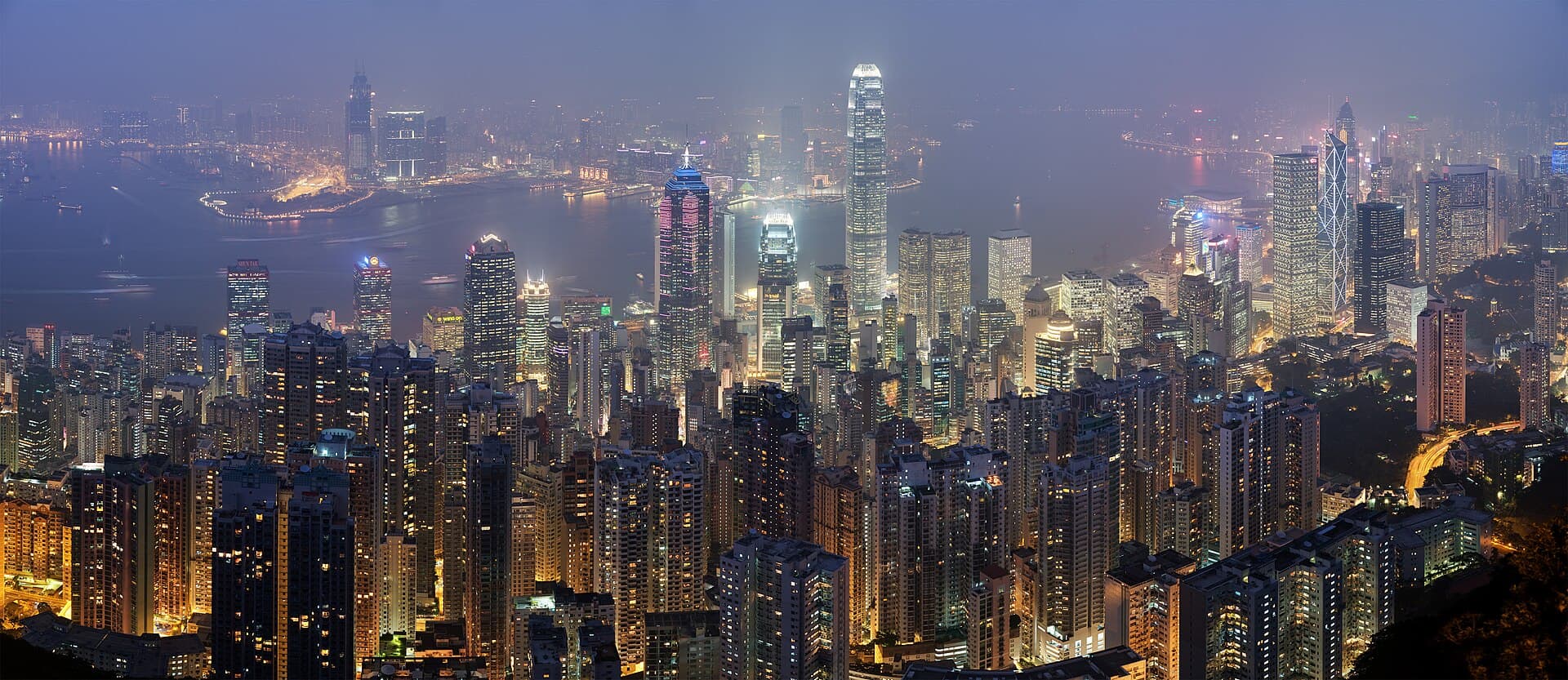
Hong Kong is usually said to begin in 1841, when a British naval party raised a flag at Possession Point on a thinly settled island at the mouth of the Pearl River. The ground under that flag was already old. The Tang clan had farmed the plains of the New Territories since the eleventh century and walled its villages against pirates; salt was worked under imperial monopoly at Kowloon in the Song dynasty; and the harbour carried a Cantonese name, Heung Gong, "fragrant harbour", thought to come from the incense wood shipped out through a bay on the island's southern shore.
What followed was a century and a half of arrival and departure: British administration and a leased hinterland, three years and eight months of Japanese occupation, hundreds of thousands of refugees from the mainland civil war, a manufacturing boom housed in resettlement blocks, and the return of sovereignty to China in 1997. Through all of it a Cantonese-speaking population kept practices that outlasted every administration: temple festivals timed by the lunar calendar, an opera tradition sung in a language whose written form its own speakers had to invent, and two seasons each year in which entire families climb hillsides to clean the graves of their dead. This guide follows that inheritance and the people now working to keep it.
Hong Kong is a special administrative region of the People's Republic of China, covering about 1,100 square kilometres on the eastern side of the Pearl River estuary and holding roughly 7.5 million people (Britannica). It is made up of Hong Kong Island, the Kowloon peninsula, the mainland New Territories and more than two hundred outlying islands, of which the largest, Lantau, is bigger than Hong Kong Island itself. Only about a quarter of the land is built on; hills, country parks and reservoirs take the rest, which is why a city of that density keeps a hiking trail twenty minutes from a bank headquarters. Chinese and English are both official languages, and Cantonese is the everyday tongue of the great majority. Since 1 July 1997 the territory has been governed under the Basic Law and the framework known as "one country, two systems", which preserves a separate legal system, currency and customs territory within China.
Central and Sheung Wan. The oldest colonial ground and, awkwardly for a district of glass towers, the densest concentration of surviving heritage in the territory. Man Mo Temple on Hollywood Road, built around 1847 and dedicated to the god of literature and the god of war, was long where Chinese residents settled disputes by oath rather than in a British court; it is a declared monument, still run by the Tung Wah Group of Hospitals. Uphill are Tai Kwun, the former Central Police Station compound, and PMQ, the former Police Married Quarters raised on the foundations of Hong Kong's first public secondary school.
Kowloon. Across the harbour, the 1915 clock tower is all that remains of the terminus where passengers boarded trains for Canton and, in principle, London. Yau Ma Tei keeps a Tin Hau temple, a jade market and the pre-war Yau Ma Tei Theatre, now a home for young Cantonese opera performers. Wong Tai Sin Temple, on its present site since 1921, draws crowds who shake bamboo fortune sticks until one falls.
The New Territories. The clan heartland. Ping Shan, seat of the Tang, carries the territory's first heritage trail, opened in 1993, linking ancestral halls, a study hall and Tsui Sing Lau, the only ancient pagoda left in Hong Kong. At Kam Tin the walled village of Kat Hing Wai still shows the ring wall and corner towers built against raiders in the seventeenth century. On the outlying islands, Cheung Chau holds the Pak Tai temple and the bun festival, and Tai O on Lantau keeps stilt houses over a tidal creek and a shrimp-paste trade older than the colony.
Long before any European chart named the place, the Pearl River estuary was administered ground. A Song dynasty salt field operated at Kowloon under imperial monopoly, and from the eleventh century five great lineages, the Tang, Hau, Pang, Liu and Man, settled the fertile plains of the New Territories, building ancestral halls and walled villages that survive today. Coastal fishing communities, known collectively as Tanka, lived aboard their boats; Hakka farmers came later and took the poorer hill land.
The British occupied Hong Kong Island in January 1841 during the First Opium War, and the Treaty of Nanking ceded it the following year. Kowloon was added by the Convention of Peking in 1860, and in 1898 the Second Convention of Peking leased the New Territories for ninety-nine years, an expiry date that would eventually decide the fate of the whole territory (Britannica). Japanese forces took Hong Kong after an eighteen-day battle in December 1941, and the occupation lasted until August 1945, cutting the population by more than half through flight, deportation and starvation.
Postwar Hong Kong was made by refugees. The Chinese civil war and its aftermath pushed hundreds of thousands across the border into squatter settlements on the hillsides, and after a fire destroyed one such settlement at Shek Kip Mei on Christmas night in 1953 the government began the resettlement programme that grew into one of the largest public housing systems anywhere. Textiles, plastics and electronics followed, then finance. Britain and China signed a joint declaration in 1984 setting out the return of sovereignty, and at midnight on 1 July 1997 Hong Kong became a special administrative region of China.
Cantonese is the mother tongue of the large majority of Hong Kong people and the language of its schools, courts, films and funerals. It has six or nine tones depending on how you count, and preserves final consonants lost in Mandarin, which is why Tang dynasty poetry rhymes in Cantonese and often does not in Putonghua. Hong Kong writes Chinese in traditional characters, and over the twentieth century its speakers developed a written Cantonese for the words standard written Chinese has no character for, coining or reviving forms such as 唔 for "not" and 嘅 for the possessive. The Linguistic Society of Hong Kong published the Jyutping romanisation scheme in 1993 (Linguistic Society of Hong Kong).
Place names read as a plain description of the coast. Kowloon, Gau Lung, means "nine dragons", for the eight peaks behind the peninsula plus, by a story told of a boy emperor, the emperor himself. Tsim Sha Tsui is "sharp sandy point". Aberdeen is Heung Gong Tsai, "little fragrant harbour", the anchorage from which the whole territory most likely took its name, since incense wood grown in the hills was shipped from there to Guangzhou.
Cantonese opera is the oldest continuous performing art in the territory, sung in Cantonese with string and percussion accompaniment, elaborate face painting and fight sequences drawn from martial arts. UNESCO inscribed it on the Representative List of the Intangible Cultural Heritage of Humanity in 2009, jointly for Guangdong, Hong Kong and Macao (UNESCO). Hong Kong built it a permanent home in 2019 when the Xiqu Centre opened at the western end of the harbour.
The government began cataloguing the rest of that inheritance in earnest only recently. A territory-wide survey produced a first intangible cultural heritage inventory of 480 items in 2014, and a Representative List of twenty items followed in 2017, covering the Cheung Chau Jiao Festival, the Tai Hang fire dragon dance, the Yu Lan festival of the Chiu Chow community, Cantonese opera, the paper crafting technique and the making of herbal tea (Intangible Cultural Heritage Office).
Food carries as much memory as any of it. Yum cha, the morning ritual of tea and dim sum, came south from Guangzhou; the cha chaan teng, the postwar diner serving milk tea strained through a cloth sock and macaroni in soup, records what a colonial port did with British ingredients. Kitchens keep a calendar too: poon choi at village feasts, mooncakes at mid-autumn, turnip cake at Lunar New Year.
Hong Kong practice is layered rather than exclusive. A household may keep an ancestral tablet, a Tou Dei earth-god shrine at the doorway and a red altar to Kwan Tai in the shop, visit a Taoist temple at New Year and a Buddhist monastery at Ching Ming, and see no contradiction. Tin Hau, the sea goddess also known as Mazu, has more than seventy temples across the territory, a map of where fishing communities once lived; the oldest, at Joss House Bay, traces its founding to 1266. Christianity accounts for roughly a tenth of the population, with Catholic and Anglican dioceses that run a large share of the schools, and there are long-established Muslim, Hindu, Sikh and Jewish communities.
 The coils at Man Mo burn for weeks, each one paid for by a family and hung with a card naming who it is for. Photograph by Aethelfirth, CC BY-SA 4.0, via Wikimedia Commons.
The festivals are where belief becomes public. On Cheung Chau, the Tai Ping Ching Chiu, the Jiao festival of peace, closes the island's kitchens to meat for three days while three towers of buns are raised outside Pak Tai temple and, at midnight, climbers race up them; the rite began as a plague-cleansing ceremony and is now on China's national list of intangible cultural heritage. In Tai Hang, a dragon of straw stuck with tens of thousands of burning incense sticks winds through the lanes for three nights each mid-autumn, first danced, by local account, to end an epidemic in the 1880s.
Hong Kong keeps two grave-sweeping seasons, and both are public holidays. At Ching Ming in early April and again at Chung Yeung on the ninth day of the ninth lunar month, families travel to hillside cemeteries with brushes, buckets and folding stools, clear the weeds from a headstone, repaint the incised characters, lay out roast pork, fruit, tea and wine, bow in order of seniority, and burn offerings. What is burned has kept pace with the living. Alongside joss paper and hell bank notes, paper craftsmen fold and paste full-sized houses, cars, mahjong sets, dim sum baskets and mobile phones, on the understanding that the dead should want for nothing their descendants have. The paper crafting technique joined the territory's Representative List in 2017, which is what happens to a trade when the shops that practise it start closing.
Funerals follow Taoist or Buddhist rites in the parlours of Hung Hom, with mourners in white or unbleached hemp, an all-night vigil and, in the Taoist form, the po dei juk, the "breaking of hell's gate" ritual in which a priest smashes roof tiles with a sword to release the soul. That rite reached a wide audience again in 2024, when a Hong Kong drama took its Chinese title from the ceremony and became one of the biggest local box-office successes in years.
It needs that conversation. Cremation now accounts for the overwhelming majority of deaths, and the ashes need a niche in a columbarium, of which there are far too few. Public niches are cheap and the queues run for years; private ones have sold for six-figure sums. The government promotes what it calls green burial, the scattering of ashes in one of fourteen Gardens of Remembrance or in three designated areas of Hong Kong waters, and keeps a central register where people can record that wish in advance (Green Burial, HKSAR Government). Uptake has climbed slowly to roughly one in seven deaths, against a strong preference for a fixed place a family can visit.
Older Cantonese practice made the grave temporary. Bones were exhumed after six or seven years, cleaned, and reburied in a glazed urn known as a kam taap, a "golden pagoda", set into a hillside grave shaped like an armchair with the slope at its back. The custom assumed a village to return to. That assumption was what a group of Chinese community leaders challenged in 1913, when they petitioned the governor for land at Aberdeen for a permanent, non-religious Chinese cemetery, arguing that Hong Kong was their home and its residents should be buried in its soil. The government granted the ground and the Hong Kong Chinese Permanent Cemetery opened two years later, run by a board drawn from the Chinese community itself, which still manages cemeteries at Aberdeen, Tsuen Wan, Chai Wan and Tseung Kwan O (Board of Management of the Chinese Permanent Cemeteries). A burial ground is rarely just a burial ground. That one was an argument about belonging, settled in stone.
Hong Kong's records are colonial in form and Chinese in substance, and the interesting parts are the ones the government did not create.
Civil registration of births, marriages and deaths runs from the nineteenth century and is held by the Immigration Department, with the Public Records Office holding the administrative series. Anglican, Catholic and other church registers cover the vital events of those communities.
The deeper record belongs to the walled villages of the New Territories. The Punti clans, Tang, Hau, Pang, Liu and Man among them, have been here since the Song dynasty and maintain zupu, clan genealogies, in ancestral halls that are still in use. Under the New Territories lease of 1898 the colonial government carried out a land survey and registered indigenous villagers, and the Small House Policy still ties a right to build to descent through the male line from a resident of 1898. That makes the clan genealogy a legal document with a cash value, and it is maintained accordingly.
The refugee waves are the modern record and the hardest one. Hundreds of thousands arrived from the mainland in the late 1940s and after, and again during the famine years and the Cultural Revolution, frequently without papers and under names that were not always their own. For those families the identity card application, made on the strength of testimony, is often the earliest document, and the village on the other side of the border is remembered rather than certified.
Statutory protection runs through the Antiquities and Monuments Ordinance of 1976, administered by the Antiquities and Monuments Office, which has declared more than 130 monuments and graded many hundreds of other buildings (Antiquities and Monuments Office). Hong Kong has no UNESCO World Heritage Site. Its one UNESCO designation is the Global Geopark established in 2011 over the hexagonal volcanic columns of the eastern waters.
The conservation movement as the city now knows it dates from two demolitions. The Star Ferry pier at Edinburgh Place came down in December 2006 and Queen's Pier followed in 2007, both cleared for reclamation, and both drew sit-ins, hunger strikes and a public argument about collective memory that had not been heard before at that volume. The government's response was institutional: a Commissioner for Heritage's Office in 2008, and a Revitalising Historic Buildings Through Partnership Scheme that began handing government-owned buildings to non-profit operators.
Some results have been unusually good. The Blue House cluster in Wan Chai, three pre-war tenement blocks on Stone Nullah Lane, was conserved on a "retain house and tenant" principle that kept the sitting residents in place through the works, and in 2017 it won the Award of Excellence, the top honour in the UNESCO Asia-Pacific Awards for Cultural Heritage Conservation, the first time Hong Kong had taken that prize (HKSAR Government). Tai Kwun, the Central Police Station, Victoria Prison and Magistracy compound, reopened as an arts and heritage site in 2018 after a decade of work funded by the Jockey Club, and took an Award of Excellence of its own the following year.
The main public archive of everyday Hong Kong is Hong Kong Memory, a collection of photographs, oral history recordings, maps and documents built with support from the Lord Wilson Heritage Trust and open to anyone (Hong Kong Memory). The Intangible Cultural Heritage Office publishes its inventory and Representative List online with video documentation of each item. The Public Records Office holds the government's archive, the Hong Kong Film Archive preserves a cinema that was for a time among the most prolific in the world, and the public libraries have digitised runs of local newspapers going back to the nineteenth century.
Alongside the institutions is a durable amateur record. Gwulo, a community site whose name is the Cantonese for "old", has gathered tens of thousands of photographs, place records and personal accounts of pre-war and wartime Hong Kong, much of it from families overseas who kept boxes nobody in Hong Kong knew existed. A scattered population can reassemble a city's memory, provided there is somewhere to put it.
Hong Kong's largest cultural export has been its cinema. From the martial arts films of Bruce Lee and the choreographed gunplay of John Woo to the interior worlds of Wong Kar-wai, its studios shaped how action and longing look on screen, and Cantopop carried the language into karaoke rooms from Kuala Lumpur to Vancouver. The West Kowloon Cultural District has since added institutions at scale: the Xiqu Centre in 2019, the M+ museum of visual culture in 2021, and the Hong Kong Palace Museum, showing works on rotating loan from Beijing, in 2022.
Recent politics forms part of the context in which heritage work now happens. Large protests over a proposed extradition bill ran through 2019, and in June 2020 a national security law for Hong Kong was enacted by the Standing Committee of China's National People's Congress (Britannica). Assessments of what has followed differ sharply along political lines, and this guide takes no position on them. Two things can be stated factually: some independent community and oral-history projects have closed or relocated since 2020, and a substantial wave of emigration, much of it through the British National (Overseas) visa route opened in January 2021, has carried Cantonese-speaking households to Britain, Canada, Taiwan and Australia (UK Home Office). Diaspora associations, Cantonese schools and family archives abroad have grown accordingly, which is its own kind of preservation.
Tenants kept in their own building. The Blue House cluster in Wan Chai was restored without evicting the people living there, and became the first Hong Kong project to win the top award in the UNESCO Asia-Pacific heritage programme.
A police compound given back to the public. Tai Kwun returned sixteen historic buildings on the Central Police Station site to use for exhibitions, performance and public space after a decade of conservation work.
A clan's ground made walkable. The Ping Shan Heritage Trail, opened in 1993, was the first of its kind in Hong Kong and gave the Tang lineage's ancestral halls, study hall and pagoda a public frame without turning them into a museum.
A dispersed city's photographs, gathered back. Gwulo and Hong Kong Memory have brought tens of thousands of images and recordings out of private hands into a searchable public record.
The coils at Man Mo burn for weeks, each one paid for by a family and hung with a card naming who it is for. Photograph by Aethelfirth, CC BY-SA 4.0, via Wikimedia Commons.
The festivals are where belief becomes public. On Cheung Chau, the Tai Ping Ching Chiu, the Jiao festival of peace, closes the island's kitchens to meat for three days while three towers of buns are raised outside Pak Tai temple and, at midnight, climbers race up them; the rite began as a plague-cleansing ceremony and is now on China's national list of intangible cultural heritage. In Tai Hang, a dragon of straw stuck with tens of thousands of burning incense sticks winds through the lanes for three nights each mid-autumn, first danced, by local account, to end an epidemic in the 1880s.
Hong Kong keeps two grave-sweeping seasons, and both are public holidays. At Ching Ming in early April and again at Chung Yeung on the ninth day of the ninth lunar month, families travel to hillside cemeteries with brushes, buckets and folding stools, clear the weeds from a headstone, repaint the incised characters, lay out roast pork, fruit, tea and wine, bow in order of seniority, and burn offerings. What is burned has kept pace with the living. Alongside joss paper and hell bank notes, paper craftsmen fold and paste full-sized houses, cars, mahjong sets, dim sum baskets and mobile phones, on the understanding that the dead should want for nothing their descendants have. The paper crafting technique joined the territory's Representative List in 2017, which is what happens to a trade when the shops that practise it start closing.
Funerals follow Taoist or Buddhist rites in the parlours of Hung Hom, with mourners in white or unbleached hemp, an all-night vigil and, in the Taoist form, the po dei juk, the "breaking of hell's gate" ritual in which a priest smashes roof tiles with a sword to release the soul. That rite reached a wide audience again in 2024, when a Hong Kong drama took its Chinese title from the ceremony and became one of the biggest local box-office successes in years.
It needs that conversation. Cremation now accounts for the overwhelming majority of deaths, and the ashes need a niche in a columbarium, of which there are far too few. Public niches are cheap and the queues run for years; private ones have sold for six-figure sums. The government promotes what it calls green burial, the scattering of ashes in one of fourteen Gardens of Remembrance or in three designated areas of Hong Kong waters, and keeps a central register where people can record that wish in advance (Green Burial, HKSAR Government). Uptake has climbed slowly to roughly one in seven deaths, against a strong preference for a fixed place a family can visit.
Older Cantonese practice made the grave temporary. Bones were exhumed after six or seven years, cleaned, and reburied in a glazed urn known as a kam taap, a "golden pagoda", set into a hillside grave shaped like an armchair with the slope at its back. The custom assumed a village to return to. That assumption was what a group of Chinese community leaders challenged in 1913, when they petitioned the governor for land at Aberdeen for a permanent, non-religious Chinese cemetery, arguing that Hong Kong was their home and its residents should be buried in its soil. The government granted the ground and the Hong Kong Chinese Permanent Cemetery opened two years later, run by a board drawn from the Chinese community itself, which still manages cemeteries at Aberdeen, Tsuen Wan, Chai Wan and Tseung Kwan O (Board of Management of the Chinese Permanent Cemeteries). A burial ground is rarely just a burial ground. That one was an argument about belonging, settled in stone.
Hong Kong's records are colonial in form and Chinese in substance, and the interesting parts are the ones the government did not create.
Civil registration of births, marriages and deaths runs from the nineteenth century and is held by the Immigration Department, with the Public Records Office holding the administrative series. Anglican, Catholic and other church registers cover the vital events of those communities.
The deeper record belongs to the walled villages of the New Territories. The Punti clans, Tang, Hau, Pang, Liu and Man among them, have been here since the Song dynasty and maintain zupu, clan genealogies, in ancestral halls that are still in use. Under the New Territories lease of 1898 the colonial government carried out a land survey and registered indigenous villagers, and the Small House Policy still ties a right to build to descent through the male line from a resident of 1898. That makes the clan genealogy a legal document with a cash value, and it is maintained accordingly.
The refugee waves are the modern record and the hardest one. Hundreds of thousands arrived from the mainland in the late 1940s and after, and again during the famine years and the Cultural Revolution, frequently without papers and under names that were not always their own. For those families the identity card application, made on the strength of testimony, is often the earliest document, and the village on the other side of the border is remembered rather than certified.
Statutory protection runs through the Antiquities and Monuments Ordinance of 1976, administered by the Antiquities and Monuments Office, which has declared more than 130 monuments and graded many hundreds of other buildings (Antiquities and Monuments Office). Hong Kong has no UNESCO World Heritage Site. Its one UNESCO designation is the Global Geopark established in 2011 over the hexagonal volcanic columns of the eastern waters.
The conservation movement as the city now knows it dates from two demolitions. The Star Ferry pier at Edinburgh Place came down in December 2006 and Queen's Pier followed in 2007, both cleared for reclamation, and both drew sit-ins, hunger strikes and a public argument about collective memory that had not been heard before at that volume. The government's response was institutional: a Commissioner for Heritage's Office in 2008, and a Revitalising Historic Buildings Through Partnership Scheme that began handing government-owned buildings to non-profit operators.
Some results have been unusually good. The Blue House cluster in Wan Chai, three pre-war tenement blocks on Stone Nullah Lane, was conserved on a "retain house and tenant" principle that kept the sitting residents in place through the works, and in 2017 it won the Award of Excellence, the top honour in the UNESCO Asia-Pacific Awards for Cultural Heritage Conservation, the first time Hong Kong had taken that prize (HKSAR Government). Tai Kwun, the Central Police Station, Victoria Prison and Magistracy compound, reopened as an arts and heritage site in 2018 after a decade of work funded by the Jockey Club, and took an Award of Excellence of its own the following year.
The main public archive of everyday Hong Kong is Hong Kong Memory, a collection of photographs, oral history recordings, maps and documents built with support from the Lord Wilson Heritage Trust and open to anyone (Hong Kong Memory). The Intangible Cultural Heritage Office publishes its inventory and Representative List online with video documentation of each item. The Public Records Office holds the government's archive, the Hong Kong Film Archive preserves a cinema that was for a time among the most prolific in the world, and the public libraries have digitised runs of local newspapers going back to the nineteenth century.
Alongside the institutions is a durable amateur record. Gwulo, a community site whose name is the Cantonese for "old", has gathered tens of thousands of photographs, place records and personal accounts of pre-war and wartime Hong Kong, much of it from families overseas who kept boxes nobody in Hong Kong knew existed. A scattered population can reassemble a city's memory, provided there is somewhere to put it.
Hong Kong's largest cultural export has been its cinema. From the martial arts films of Bruce Lee and the choreographed gunplay of John Woo to the interior worlds of Wong Kar-wai, its studios shaped how action and longing look on screen, and Cantopop carried the language into karaoke rooms from Kuala Lumpur to Vancouver. The West Kowloon Cultural District has since added institutions at scale: the Xiqu Centre in 2019, the M+ museum of visual culture in 2021, and the Hong Kong Palace Museum, showing works on rotating loan from Beijing, in 2022.
Recent politics forms part of the context in which heritage work now happens. Large protests over a proposed extradition bill ran through 2019, and in June 2020 a national security law for Hong Kong was enacted by the Standing Committee of China's National People's Congress (Britannica). Assessments of what has followed differ sharply along political lines, and this guide takes no position on them. Two things can be stated factually: some independent community and oral-history projects have closed or relocated since 2020, and a substantial wave of emigration, much of it through the British National (Overseas) visa route opened in January 2021, has carried Cantonese-speaking households to Britain, Canada, Taiwan and Australia (UK Home Office). Diaspora associations, Cantonese schools and family archives abroad have grown accordingly, which is its own kind of preservation.
Tenants kept in their own building. The Blue House cluster in Wan Chai was restored without evicting the people living there, and became the first Hong Kong project to win the top award in the UNESCO Asia-Pacific heritage programme.
A police compound given back to the public. Tai Kwun returned sixteen historic buildings on the Central Police Station site to use for exhibitions, performance and public space after a decade of conservation work.
A clan's ground made walkable. The Ping Shan Heritage Trail, opened in 1993, was the first of its kind in Hong Kong and gave the Tang lineage's ancestral halls, study hall and pagoda a public frame without turning them into a museum.
A dispersed city's photographs, gathered back. Gwulo and Hong Kong Memory have brought tens of thousands of images and recordings out of private hands into a searchable public record.
National Overview
Notable Cities
Historical Foundations
Linguistic and Etymological Roots
Cultural Identity
Religion and Spirituality
Remembrance and Mourning Traditions
Tracing a Family in Hong Kong
Heritage Preservation Efforts
Digital Heritage
Contemporary Cultural Influences
Success Stories
References and resources
- Encyclopaedia Britannica, Hong Kong: geography, population and society.
- Encyclopaedia Britannica, History of Hong Kong: the treaty cessions, the 1898 lease, the occupation and the handover.
- UNESCO, Yueju opera: Cantonese opera and its 2009 inscription.
- Intangible Cultural Heritage Office, Representative List: the twenty items of 2017 and the 480-item inventory behind them.
- Antiquities and Monuments Office: declared monuments under the 1976 ordinance.
- Green Burial, HKSAR Government: Gardens of Remembrance, sea burial areas and the central register.
- Board of Management of the Chinese Permanent Cemeteries: the cemeteries founded from 1913.
- HKSAR Government, 2017 Asia-Pacific Heritage Awards: the Blue House cluster and its Award of Excellence.
- Hong Kong Memory: oral histories, photographs and documents.
- Linguistic Society of Hong Kong, Jyutping: the 1993 Cantonese romanisation scheme.
- Heritage Conservation, Development Bureau: the revitalisation scheme and the Commissioner for Heritage's Office.
- UK Home Office, British National (Overseas) visa: the emigration route opened in 2021.