Heritage · Country
Catalonia Culture and Heritage
Every 23 April, Catalans give each other books and roses in the street; every autumn they eat pine-nut panellets and climb to the wall of niches where their dead are shelved. A guide to Catalan heritage, from Romanesque murals carried down from the Pyrenees to human towers and graves still being opened.Written to last.
By Confinity Heritage Editorial · Updated 2026-08-17 · 8-minute readQuiet tools, kept out of the way.
Twice a year Catalonia says out loud what it cares about. On 23 April, the feast of Sant Jordi, the pavements of every town fill with trestle tables of books and buckets of roses. Six months later, on the last night of October, the same families roast chestnuts for the castanyada, eat marzipan and pine-nut cakes called panellets, and then walk up to the cemetery on 1 November to wash the plaque on a niche in a wall of niches, where their grandparents are shelved four high with the flower-holders screwed in beneath the names.
Between those two habits, the book and the grave, sits a heritage of unusual density: a Romance language spoken by millions and banned within living memory, a Pyrenean valley of Romanesque churches whose painted apses were peeled off the plaster in the 1920s and carried to Barcelona to stop them being sold to America, an architecture of Modernisme the world recognises without always knowing whose it is, and a still-open ledger of Civil War dead in unmarked ditches that the regional government is now mapping and exhuming.
Catalonia occupies about 32,000 square kilometres in Spain's north-eastern corner, with roughly 8 million residents, close to a sixth of Spain's population, packed mostly into the coastal strip around Barcelona. The land rises from the Costa Brava through inland plains and vineyards to the high Pyrenees, where peaks pass 3,000 metres and the Vall de Boí lies under snow for much of the year; in the south the Ebro spreads into a delta of rice fields and lagoons, and in the middle the serrated ridge of Montserrat comes out of the plain like a set of stone fingers. It is one of Spain's seventeen autonomous communities, governed by the Generalitat with its own parliament, police force (the Mossos d'Esquadra) and public broadcaster. Catalan and Spanish are both official, and so is Aranese, a variety of Occitan spoken by a few thousand people in the Val d'Aran.
Barcelona. Founded as the Roman colony of Barcino and capital of the medieval counts, Barcelona carries three heritages on the same streets: a Gothic Quarter with the cathedral, the fourteenth-century Santa Maria del Mar and stretches of Roman wall; the Eixample grid laid out by Ildefons Cerdà from 1859, which carries the Modernisme of Gaudí; and the Sagrada Família, begun in 1882 and under construction ever since, now the most-visited monument in Spain. The Museu Nacional d'Art de Catalunya on Montjuïc holds the Romanesque murals.
Girona. A walled city on the Onyar with one of the best-preserved Jewish quarters in Europe, the Call, whose stepped lanes housed a community of scholars until the expulsion of 1492. Its cathedral has the world's widest Gothic nave.
Tarragona. Roman Tarraco was capital of Hispania Citerior, and its amphitheatre, circus, forum and aqueduct are inscribed as a World Heritage Site. Tarragona also hosts the biennial Concurs de Castells, where the tower teams compete in a bullring before ten thousand people.
Catalonia takes its political shape from the counties formed in the Frankish march south of the Pyrenees, of which Barcelona became the strongest. Joined by marriage to Aragon in 1137, it built a Mediterranean trading power reaching Sicily, Sardinia, Naples and Athens, governed at home through the Corts, an early representative assembly, and a standing committee called the Diputació del General, from which the modern Generalitat takes its name. Those institutions survived the union with Castile in 1469 but not the War of the Spanish Succession: Barcelona fell on 11 September 1714 after a fourteen-month siege, and the Nueva Planta decrees abolished the Corts, the Generalitat and the official use of Catalan. That date is now the Diada, Catalonia's national day, unusual among national days in commemorating a defeat.
The nineteenth century brought industry and the Renaixença, a literary revival dated from Bonaventura Carles Aribau's 1833 ode "La Pàtria", and self-government returned with the Mancomunitat of 1914 and the restored Generalitat of 1931. Then the Civil War: the Republic's last great offensive was fought and lost on the Ebro between July and November 1938, Barcelona fell in January 1939, and half a million people crossed into France in the retirada. President Lluís Companys was arrested in France by the Gestapo, handed to Franco, tried by court martial and shot at Montjuïc castle on 15 October 1940. Under the dictatorship, Catalan was driven out of schools, administration and publishing.
Self-government returned with democracy: Josep Tarradellas came home from exile in 1977, and a Statute of Autonomy followed in 1979. A new Statute, endorsed in a Catalan referendum on 18 June 2006 by 73 per cent of those voting on a turnout of 49 per cent, was challenged by the Popular Party, and on 28 June 2010 the Constitutional Court annulled fourteen articles and reinterpreted twenty-seven more, ruling among other things that the description of Catalonia as a nation in the preamble carried no legal force; a Barcelona demonstration the following month drew over a million people.
In November 2014 the Generalitat held a non-binding consultation on independence after the Constitutional Court suspended it, and on 1 October 2017 it held a referendum the Constitutional Court had also suspended and which Spain regards as illegal and without validity. The Catalan government reported 2.29 million votes cast, about 43 per cent of the register, and 92 per cent in favour, figures Madrid doesn't accept; the day was marked by police operations to stop the vote, in which the Catalan health service recorded more than a thousand civilian injuries. Parliament declared independence on 27 October, the Senate authorised direct rule under Article 155 of the constitution, the Catalan government was dismissed and elections called. Nine leaders were convicted of sedition on 14 October 2019, with sentences of nine to thirteen years, the court rejecting the heavier charge of rebellion; they were pardoned in June 2021, and an amnesty law covering the events passed in 2024 and was upheld by the Constitutional Court in June 2025, though its application to some defendants remains before the courts.
Supporters of independence describe the process as the exercise of a right to decide that Spain has refused to recognise; the Spanish state and the Catalan parties opposed to independence describe it as a breach of a constitution Catalan voters approved in 1978 and of the rights of the roughly half of Catalans who don't want a separate state. Polling by the Generalitat's own research centre has put support for independence between the high thirties and the mid forties in recent years, with opposition a little ahead, and neither position holding a settled majority.
Catalan is a Romance language of the Gallo-Romance group, closer in structure to Occitan than to Castilian, with a literary record running from the sermons of Ramon Llull in the thirteenth century through the Valencian poetry of Ausiàs March and the novel Tirant lo Blanc. Ethnologue counts something over nine million speakers across Catalonia, Valencia, the Balearics, eastern Aragon, Andorra, where it is the sole official language, and the Roussillon. Within Catalonia, the 2023 official survey on language use found that about four in five residents can speak it, rising above 90 per cent among fifteen to twenty-four-year-olds, while the share who use it as their most habitual language fell below a third for the first time, a gap between competence and daily use that language planners now treat as the central problem.
The suppression under Franco was thorough. Catalan disappeared from official life, from schools, from the courts and largely from print, and a generation grew up literate in Spanish and illiterate in the language they spoke at home. What followed after 1975 is known as normalització: the Llei de normalització lingüística of 1983, the founding of the broadcaster TV3 in the same year, a schooling model in which Catalan is the normal medium of instruction, and adult language centres for newcomers. The policy has been litigated repeatedly, with Spanish courts ordering minimum quotas of Castilian in classrooms and Catalan institutions resisting them.
The signature Catalan image is a tower of people. The castells, built by teams called colles since the late eighteenth century in the Camp de Tarragona, raise five to ten levels of climbers on a packed base called the pinya, topped by a child who crosses the summit and raises a hand; the motto is força, equilibri, valor i seny, strength, balance, courage and good sense, and UNESCO inscribed the practice in 2010. The sardana is a circle dance anyone may join, counted out in long and short steps to a cobla band led by the reedy tenora. A correfoc is a fire run, in which devils and dragons loose sparks over a crowd that presses in close, dressed in old cotton and hats.
 The frescoes of the Vall de Boi were cut from the church walls in the 1920s and moved to Barcelona to stop them being sold abroad, and copies now stand in their place. Photograph by Francesco Bini, CC BY-SA 4.0, via Wikimedia Commons.
Christmas produces two figures nobody outside Catalonia expects. The caganer is a small squatting man with his trousers down, tucked into a corner of the nativity scene, understood as a fertiliser of the ground and a reminder that the holy story happened among ordinary bodily life. The Tió de Nadal is a hollow log with a painted face and a red hat, fed and covered with a blanket through December, then beaten with sticks on Christmas Eve while children sing at it until it produces sweets. Sant Jordi on 23 April is the great civic day: booksellers and florists take over the streets, well over a million books change hands, and UNESCO chose the same date for World Book Day. The table is regional and specific: pa amb tomàquet, calçots scorched over vine wood and eaten with romesco, escudella, and the cava of the Penedès.
Catalonia is formally Catholic and practically secular, with low Mass attendance and a high share of the young declaring no religion, but its religious architecture and its patron cults remain central to how the place understands itself. The mountain abbey of Montserrat, Benedictine since the eleventh century, holds the twelfth-century polychrome wooden statue of the Virgin known as La Moreneta for her dark face, named patron of Catalonia in 1881, and the Escolania, a boys' choir with roots in the fourteenth century and among the oldest in Europe. Through the dictatorship the monastery published in Catalan and sheltered dissenters, which gave the shrine a civic meaning as well as a devotional one.
The frescoes of the Vall de Boi were cut from the church walls in the 1920s and moved to Barcelona to stop them being sold abroad, and copies now stand in their place. Photograph by Francesco Bini, CC BY-SA 4.0, via Wikimedia Commons.
Christmas produces two figures nobody outside Catalonia expects. The caganer is a small squatting man with his trousers down, tucked into a corner of the nativity scene, understood as a fertiliser of the ground and a reminder that the holy story happened among ordinary bodily life. The Tió de Nadal is a hollow log with a painted face and a red hat, fed and covered with a blanket through December, then beaten with sticks on Christmas Eve while children sing at it until it produces sweets. Sant Jordi on 23 April is the great civic day: booksellers and florists take over the streets, well over a million books change hands, and UNESCO chose the same date for World Book Day. The table is regional and specific: pa amb tomàquet, calçots scorched over vine wood and eaten with romesco, escudella, and the cava of the Penedès.
Catalonia is formally Catholic and practically secular, with low Mass attendance and a high share of the young declaring no religion, but its religious architecture and its patron cults remain central to how the place understands itself. The mountain abbey of Montserrat, Benedictine since the eleventh century, holds the twelfth-century polychrome wooden statue of the Virgin known as La Moreneta for her dark face, named patron of Catalonia in 1881, and the Escolania, a boys' choir with roots in the fourteenth century and among the oldest in Europe. Through the dictatorship the monastery published in Catalan and sheltered dissenters, which gave the shrine a civic meaning as well as a devotional one.
 Candles left at Montserrat, where the monastery kept publishing in Catalan through the years the language was banned from public life. Photograph by Kritzolina, CC BY-SA 4.0, via Wikimedia Commons.
The older monastic heritage lies inland. Poblet, founded in 1151 and inscribed by UNESCO in 1991, is the royal pantheon of the Crown of Aragon, its alabaster tombs smashed in the anticlerical violence of 1835 and painstakingly reassembled in the twentieth century; its sister house at Santes Creus keeps a Gothic cloister and royal tombs of its own. The festa major still organises the year in most Catalan towns.
A Catalan funeral now normally takes place within a day or two at a tanatori, the funeral home that has largely replaced the wake at home, and the body is usually cremated or slid into a nínxol, one of the niches stacked four or five high in a cemetery wall, which the family rents, tends, repaints and refills across generations. Barcelona's Poblenou and Montjuïc cemeteries show the form at its most theatrical, corridors of names with a ladder on rails so visitors can reach the upper rows. All Saints is the day the whole country goes, and the night before belongs to the castanyada, a feast of roast chestnuts, sweet potato, moscatell and panellets, the almond-paste cakes rolled in pine nuts that are made only in this season and are, in effect, a food for the dead eaten by the living.
The harder remembrance is political. The Ebro battlefields around Corbera d'Ebre, where the bombed village has been left in ruins above the rebuilt town, are run as memorial spaces by a public consortium, with trenches, observation posts and cemeteries signposted across the hills. In Barcelona, the Fossar de la Pedrera is an old quarry on the flank of Montjuïc into which thousands of people executed or dead in prison under Franco were tipped without names; laid out as a memorial garden in the 1980s, it holds the grave of Lluís Companys and a monument listing the Republic's dead.
That work is unfinished and public. The Generalitat's democratic-memory directorate keeps a census of the disappeared with more than 8,400 names, publishes an online Map of Graves documenting over a thousand mass graves, and has run since 2017 a plan of exhumations paired with a genetic identification programme that collects DNA from descendants and matches it against remains recovered from the ground. Identifications come slowly, in ones and twos, and each one closes a file open since the 1930s.
Catalan records are the best-preserved regional archive in Spain, and the reason is that Catalonia kept its own institutions for a very long time.
Parish registers survive from the fifteenth century in places, earlier than most of Europe, and the diocesan archives of Barcelona, Girona, Vic and Tarragona hold them. The Arxiu de la Corona d'Aragó in Barcelona holds the records of the Crown of Aragon from the ninth century, one of the oldest continuous state archives in the world, and it documents Catalan families through charters, land grants and court cases across seven hundred years.
The notarial record is the workhorse. Catalan notaries recorded marriage contracts, wills and land transfers in enormous quantity, and Catalan inheritance custom, which passed the house and land undivided to a single heir, the hereu or the pubilla, means the capítols matrimonials name the family in detail at every generation. A Catalan masia, a farmhouse, often carries the same family name for centuries because of it.
The absence is the Civil War and after. Catalonia was on the losing side, the Francoist repression executed and imprisoned people whose records are in military tribunal files, and the Catalan language was banned from public life, so records between 1939 and the 1970s are in Castilian and names were often Castilianised.
The Memorial Democràtic and the exhumation programmes have been working through the mass graves and the deportations to Mauthausen, where several thousand Catalans died.
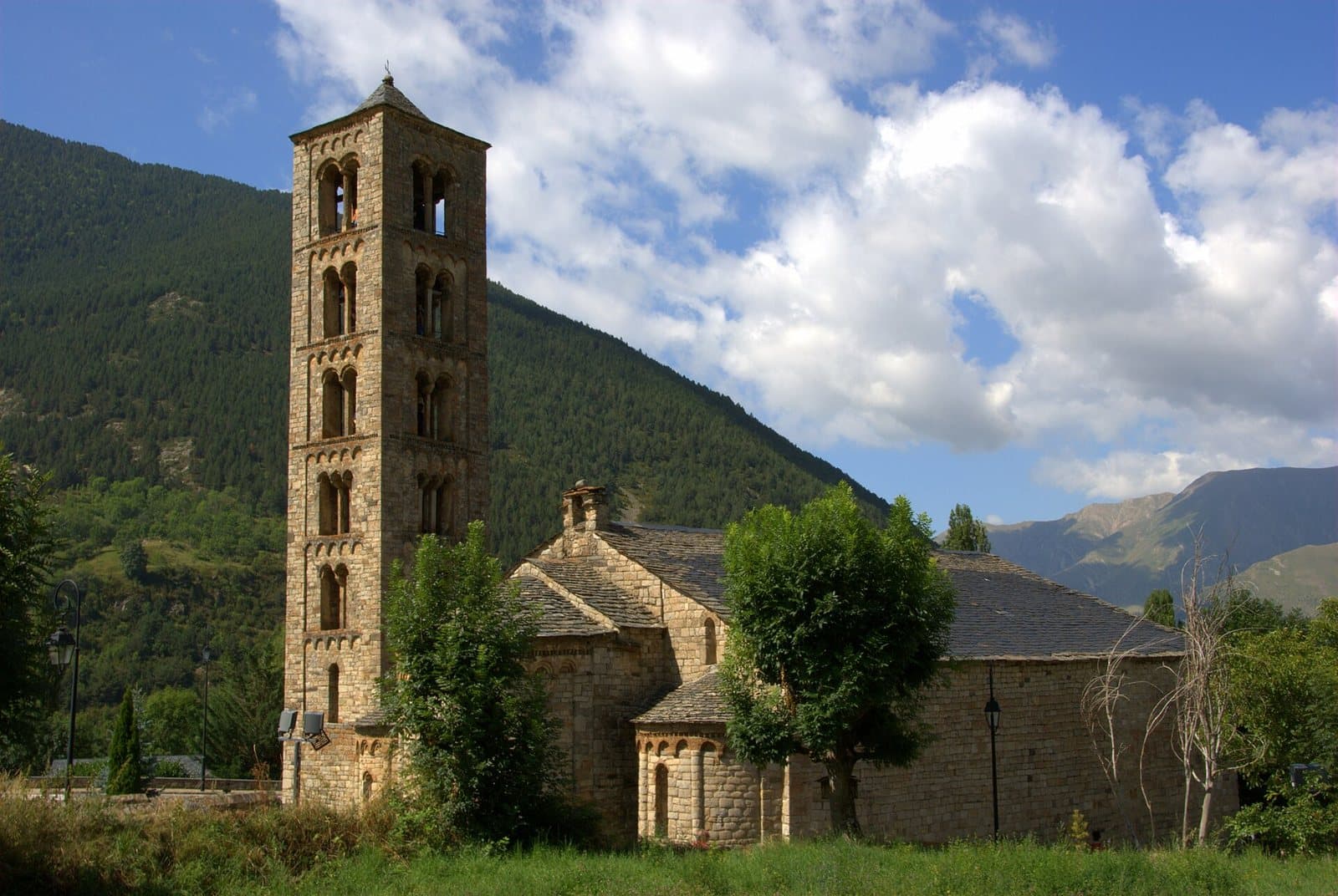
Catalonia holds an unusual share of Spain's World Heritage. The works of Antoni Gaudí were inscribed in 1984 and extended in 2005, covering Park Güell, Casa Milà, Casa Batlló, the Nativity facade and crypt of the Sagrada Família and the crypt of the Colònia Güell. The Palau de la Música Catalana and the Hospital de Sant Pau, both by Lluís Domènech i Montaner, were inscribed together in 1997. Poblet was listed in 1991, Roman Tarraco in 2000, and the same year brought the Catalan Romanesque Churches of the Vall de Boí, nine early churches of Lombard type in one narrow valley, of which Sant Climent and Santa Maria de Taüll are the best known.
The institutions behind them are largely Catalan: the Agència Catalana del Patrimoni Cultural manages monuments and museum sites, the Bé Cultural d'Interès Nacional is the top level of legal protection, and the Institut d'Estudis Catalans, founded in 1907, remains the language academy. Living traditions have their own guardians, from the Coordinadora de Colles Castelleres to the geganters associations.
Catalonia digitised early and openly. The Memòria Digital de Catalunya, run by a consortium of libraries, publishes digitised books, photographs and posters; ARCA opens a century and a half of Catalan periodicals; and the Arxiu Nacional de Catalunya holds the papers of the Generalitat, of exile organisations and of individual families, much of it now scanned.
Two things matter especially for family memory. The Map of Graves and the register of the disappeared are public and searchable, so a family anywhere in the world can look up a village and see what is known about the ditch outside it. And the MNAC publishes its Romanesque murals in high resolution, so the apse of Sant Climent can be read closely by someone who will never climb the valley it came from.
Catalan culture exports more than its size suggests. Barcelona's architecture is among the most photographed subjects on earth, and Catalan chefs, from the Roca brothers to the alumni of elBulli, reshaped restaurant cooking in the 2000s. Catalan cinema had a conspicuous run in the 2020s, with Carla Simón's Alcarràs, shot in the peach orchards of Lleida with a cast of local farmers, taking the Golden Bear in 2022.
The heritage argument runs alongside. Mass tourism has pushed Barcelona into a long quarrel about housing and what a historic centre is for; the constitutional question keeps a fourteenth-century assembly and a 1714 siege in the newspapers as current business; and a population in which roughly a sixth of residents were born abroad now fills the castell teams, the language classrooms and the parish festivals, which will change what Catalan heritage means in the next generation.
The murals came down the mountain. In 1919, after an art dealer sold the paintings of the Castell de Mur monastery to the Museum of Fine Arts in Boston, Barcelona's Junta de Museus and its director Joaquim Folch i Torres brought the Italian restorer Franco Steffanoni and his assistants Arturo Cividini and Arturo Dalmati to Catalonia. Between 1919 and 1923 they used the strappo technique, lifting only the paint layer and leaving the plaster on the wall, to take the apse paintings out of remote Pyrenean churches and carry them to Barcelona. The originals hang in the MNAC, reproductions sit in the churches, and the valley was inscribed by UNESCO in 2000.
A language put back into school. Catalan went from being excluded from education to being its normal medium in a generation. Around four in five residents can now speak it, and among fifteen to twenty-four-year-olds the figure passes 90 per cent, the product of the 1983 normalisation law, the school model built on it and a public broadcaster launched the same year.
Human towers on the UNESCO list. The castells, once a local custom of a few towns in the Camp de Tarragona, were inscribed as Intangible Cultural Heritage in 2010 after a long campaign by the colles themselves. The teams have since opened fully to women and girls, whose lighter build changed what structures were possible, and now number in the hundreds.
Sant Pau reopened. Domènech i Montaner's hospital, a World Heritage Site since 1997 and still treating patients until 2009, was restored pavilion by pavilion and reopened from 2014 as a public site. Visitors walk the tiled tunnels built to move patients between wards.
Names returned to the disappeared. Since 2017 the Generalitat has combined a plan of exhumations with a genetic identification programme, holding thousands of DNA profiles from relatives against remains lifted from mapped graves. Each identification hands a family a body and a place, eighty-odd years after the burial.
Candles left at Montserrat, where the monastery kept publishing in Catalan through the years the language was banned from public life. Photograph by Kritzolina, CC BY-SA 4.0, via Wikimedia Commons.
The older monastic heritage lies inland. Poblet, founded in 1151 and inscribed by UNESCO in 1991, is the royal pantheon of the Crown of Aragon, its alabaster tombs smashed in the anticlerical violence of 1835 and painstakingly reassembled in the twentieth century; its sister house at Santes Creus keeps a Gothic cloister and royal tombs of its own. The festa major still organises the year in most Catalan towns.
A Catalan funeral now normally takes place within a day or two at a tanatori, the funeral home that has largely replaced the wake at home, and the body is usually cremated or slid into a nínxol, one of the niches stacked four or five high in a cemetery wall, which the family rents, tends, repaints and refills across generations. Barcelona's Poblenou and Montjuïc cemeteries show the form at its most theatrical, corridors of names with a ladder on rails so visitors can reach the upper rows. All Saints is the day the whole country goes, and the night before belongs to the castanyada, a feast of roast chestnuts, sweet potato, moscatell and panellets, the almond-paste cakes rolled in pine nuts that are made only in this season and are, in effect, a food for the dead eaten by the living.
The harder remembrance is political. The Ebro battlefields around Corbera d'Ebre, where the bombed village has been left in ruins above the rebuilt town, are run as memorial spaces by a public consortium, with trenches, observation posts and cemeteries signposted across the hills. In Barcelona, the Fossar de la Pedrera is an old quarry on the flank of Montjuïc into which thousands of people executed or dead in prison under Franco were tipped without names; laid out as a memorial garden in the 1980s, it holds the grave of Lluís Companys and a monument listing the Republic's dead.
That work is unfinished and public. The Generalitat's democratic-memory directorate keeps a census of the disappeared with more than 8,400 names, publishes an online Map of Graves documenting over a thousand mass graves, and has run since 2017 a plan of exhumations paired with a genetic identification programme that collects DNA from descendants and matches it against remains recovered from the ground. Identifications come slowly, in ones and twos, and each one closes a file open since the 1930s.
Catalan records are the best-preserved regional archive in Spain, and the reason is that Catalonia kept its own institutions for a very long time.
Parish registers survive from the fifteenth century in places, earlier than most of Europe, and the diocesan archives of Barcelona, Girona, Vic and Tarragona hold them. The Arxiu de la Corona d'Aragó in Barcelona holds the records of the Crown of Aragon from the ninth century, one of the oldest continuous state archives in the world, and it documents Catalan families through charters, land grants and court cases across seven hundred years.
The notarial record is the workhorse. Catalan notaries recorded marriage contracts, wills and land transfers in enormous quantity, and Catalan inheritance custom, which passed the house and land undivided to a single heir, the hereu or the pubilla, means the capítols matrimonials name the family in detail at every generation. A Catalan masia, a farmhouse, often carries the same family name for centuries because of it.
The absence is the Civil War and after. Catalonia was on the losing side, the Francoist repression executed and imprisoned people whose records are in military tribunal files, and the Catalan language was banned from public life, so records between 1939 and the 1970s are in Castilian and names were often Castilianised.
The Memorial Democràtic and the exhumation programmes have been working through the mass graves and the deportations to Mauthausen, where several thousand Catalans died.
Catalonia holds an unusual share of Spain's World Heritage. The works of Antoni Gaudí were inscribed in 1984 and extended in 2005, covering Park Güell, Casa Milà, Casa Batlló, the Nativity facade and crypt of the Sagrada Família and the crypt of the Colònia Güell. The Palau de la Música Catalana and the Hospital de Sant Pau, both by Lluís Domènech i Montaner, were inscribed together in 1997. Poblet was listed in 1991, Roman Tarraco in 2000, and the same year brought the Catalan Romanesque Churches of the Vall de Boí, nine early churches of Lombard type in one narrow valley, of which Sant Climent and Santa Maria de Taüll are the best known.
The institutions behind them are largely Catalan: the Agència Catalana del Patrimoni Cultural manages monuments and museum sites, the Bé Cultural d'Interès Nacional is the top level of legal protection, and the Institut d'Estudis Catalans, founded in 1907, remains the language academy. Living traditions have their own guardians, from the Coordinadora de Colles Castelleres to the geganters associations.
Catalonia digitised early and openly. The Memòria Digital de Catalunya, run by a consortium of libraries, publishes digitised books, photographs and posters; ARCA opens a century and a half of Catalan periodicals; and the Arxiu Nacional de Catalunya holds the papers of the Generalitat, of exile organisations and of individual families, much of it now scanned.
Two things matter especially for family memory. The Map of Graves and the register of the disappeared are public and searchable, so a family anywhere in the world can look up a village and see what is known about the ditch outside it. And the MNAC publishes its Romanesque murals in high resolution, so the apse of Sant Climent can be read closely by someone who will never climb the valley it came from.
Catalan culture exports more than its size suggests. Barcelona's architecture is among the most photographed subjects on earth, and Catalan chefs, from the Roca brothers to the alumni of elBulli, reshaped restaurant cooking in the 2000s. Catalan cinema had a conspicuous run in the 2020s, with Carla Simón's Alcarràs, shot in the peach orchards of Lleida with a cast of local farmers, taking the Golden Bear in 2022.
The heritage argument runs alongside. Mass tourism has pushed Barcelona into a long quarrel about housing and what a historic centre is for; the constitutional question keeps a fourteenth-century assembly and a 1714 siege in the newspapers as current business; and a population in which roughly a sixth of residents were born abroad now fills the castell teams, the language classrooms and the parish festivals, which will change what Catalan heritage means in the next generation.
The murals came down the mountain. In 1919, after an art dealer sold the paintings of the Castell de Mur monastery to the Museum of Fine Arts in Boston, Barcelona's Junta de Museus and its director Joaquim Folch i Torres brought the Italian restorer Franco Steffanoni and his assistants Arturo Cividini and Arturo Dalmati to Catalonia. Between 1919 and 1923 they used the strappo technique, lifting only the paint layer and leaving the plaster on the wall, to take the apse paintings out of remote Pyrenean churches and carry them to Barcelona. The originals hang in the MNAC, reproductions sit in the churches, and the valley was inscribed by UNESCO in 2000.
A language put back into school. Catalan went from being excluded from education to being its normal medium in a generation. Around four in five residents can now speak it, and among fifteen to twenty-four-year-olds the figure passes 90 per cent, the product of the 1983 normalisation law, the school model built on it and a public broadcaster launched the same year.
Human towers on the UNESCO list. The castells, once a local custom of a few towns in the Camp de Tarragona, were inscribed as Intangible Cultural Heritage in 2010 after a long campaign by the colles themselves. The teams have since opened fully to women and girls, whose lighter build changed what structures were possible, and now number in the hundreds.
Sant Pau reopened. Domènech i Montaner's hospital, a World Heritage Site since 1997 and still treating patients until 2009, was restored pavilion by pavilion and reopened from 2014 as a public site. Visitors walk the tiled tunnels built to move patients between wards.
Names returned to the disappeared. Since 2017 the Generalitat has combined a plan of exhumations with a genetic identification programme, holding thousands of DNA profiles from relatives against remains lifted from mapped graves. Each identification hands a family a body and a place, eighty-odd years after the burial.
National Overview
Notable Cities
Historical Foundations
Linguistic and Etymological Roots
Cultural Identity
Religion and Spirituality
Remembrance and Mourning Traditions
Tracing a Family in Catalonia
Heritage Preservation Efforts
Digital Heritage
Contemporary Cultural Influences
Success Stories
References and resources
- UNESCO, Catalan Romanesque Churches of the Vall de Boí: nine Lombard Romanesque churches, inscribed 2000.
- UNESCO, Palau de la Música Catalana and Hospital de Sant Pau: Domènech i Montaner's two works, inscribed 1997.
- UNESCO, Human towers: the castells, inscribed 2010.
- MNAC, taking down and transferring mural painting: the strappo campaign, 1919 to 1923.
- Generalitat de Catalunya, Mapa de fosses: the public map of Civil War mass graves.
- Generalitat de Catalunya, plans de fosses: exhumation plans and genetic identification.
- Enquesta d'usos lingüístics de la població 2023: official data on knowledge and use of Catalan.
- Arxiu Nacional de Catalunya: the national archive of the Generalitat, exile bodies and families.
- Encyclopaedia Britannica, Catalonia: geography, history and politics.