Heritage · University
Cheikh Anta Diop University: History and Overview
Created on 24 February 1957 as the Université de Dakar, the eighteenth French public university, it was renamed on 30 March 1987 for the Senegalese historian Cheikh Anta Diop, a year after his death. Its campus in the Fann district of Dakar runs along a single avenue to a library facing the Atlantic, and its research institutes include one for applied nuclear technology and one for Egyptology.Written to last.
By Confinity Heritage Editorial · 2026-08-25 · 8-minute readQuiet tools, kept out of the way.
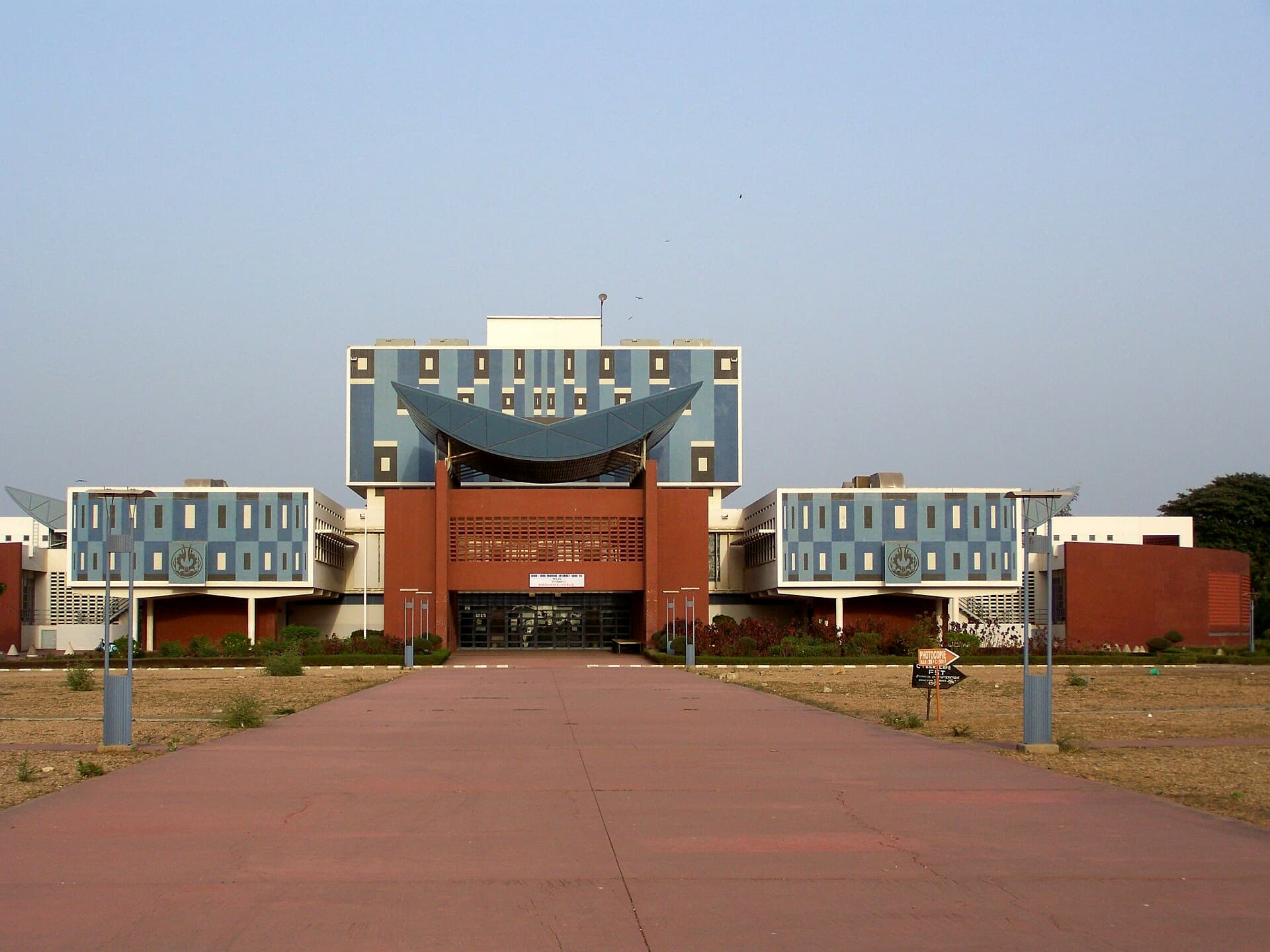
Cheikh Anta Diop University occupies the Fann district of Dakar, on the Cap-Vert peninsula, laid out along a single avenue that runs the length of the campus and ends at a library facing the Atlantic. It is the oldest and largest university in Senegal, created on 24 February 1957 as the Université de Dakar, inaugurated on 9 December 1959, and constituted as the eighteenth French public university, its faculties attached academically to Paris and Bordeaux. It took its present name on 30 March 1987.
The man it commemorates spent his working life arguing that ancient Egypt had been a Black African civilisation, and that the scholarship saying otherwise had an interest in the answer. Cheikh Anta Diop registered a thesis on the pre-dynastic Egyptians in Paris in 1951 and never defended it, because no jury could be assembled to hear it. Thirty-six years later the university the French colonial administration had built in Dakar took his name. It still teaches in French. It also keeps an Institute of Egyptology.
Higher education in Dakar began as a colonial medical service. A decree of 14 January 1918 created the école africaine de médecine, which the university's own history calls the first outline of higher education in Africa, and which trained African medical auxiliaries for French West Africa. In 1936 the Popular Front government in Paris founded the Institut français d'Afrique noire, IFAN, under the naturalist Théodore Monod; it opened in Dakar in 1938 to study the languages and cultures of the peoples France governed. A decree of 6 April 1950 gathered the scattered higher schools into the Institut des Hautes Études de Dakar, attached academically to Bordeaux.
On 24 February 1957 those schools were replaced by independent faculties and the result was declared the eighteenth French university, tied now to Paris as well as Bordeaux. It was inaugurated on 9 December 1959, six months before independence, and what it mostly taught at first was other people's children: in 1960 it enrolled 1,018 students, of whom 39 per cent were Senegalese.
Independence changed the flag before it changed the institution. Eight years on the university was still French in staff, teaching and much of its student body; its medical faculty was still tied to Bordeaux, and until 1967 French students in that faculty outnumbered Senegalese ones. On 27 May 1968 the students struck and blockaded the campus after the government split the value of their grants and cut the monthly payments from twelve to ten; they also demanded the Africanisation of the university. Security forces stormed the campus on 29 May, a student named Salmon Khoury was killed, others were held in military camps around the city, the country's only trade union confederation called a general strike, and Senegal spent three days in riots.
Diop died in Dakar on 7 February 1986. On 30 March 1987 the Université de Dakar became the Université Cheikh Anta Diop de Dakar. His biographer records that many in Senegal thought the gesture a heresy, given how little the institution had done for him while he lived. Universities of the same colonial generation had answered the question differently: the University of Ghana at Legon founded an Institute of African Studies in the first years of independence and charged it with studying Africa on African terms. Dakar reformed its curriculum and changed its name.
The campus is organised around one axis, with the main teaching and research buildings raised along it over the decades. At its far end, facing the ocean, stands the central library, whose place on the master plan was fixed by Rector Capelle while the institution was still the Institut des Hautes Études. Its foundation stone was laid on 10 December 1959 by André Boulloche, the French education minister; building began in 1961 and finished three years later; and President Léopold Sédar Senghor opened it on 20 November 1965, alongside the new faculty of letters. It offered 350 seats in four reading rooms and stacks for 450,000 volumes on thirteen kilometres of shelving.
 The library at the end of the campus axis in 1967, two years after Senghor opened it and before the extensions of the 1990s. Photograph by Phillip Capper, CC BY 2.0, via Wikimedia Commons.
The emblem came from the same years. Théodore Monod, then director of IFAN, designed it: two roan antelopes facing one another across a torch, taken from the agrarian masks of the Bambara of Ségou in Mali. Rector Lucien Paye assigned it to the University of Dakar, and it still appears on the seal and the diplomas. The motto is Lux Mea Lex, light is my law.
Teaching follows the French pattern of end-of-year examinations and is conducted in French outside the language departments. Six faculties cover letters and human sciences, science and technology, law and political science, economics and management, health sciences and education, alongside eight schools of faculty rank and twenty-seven university institutes. Two of those read as a portrait of the man on the gate: the Institute of Applied Nuclear Technology and the Institute of Egyptology. A third, the Centre de Linguistique Appliquée de Dakar, was created in 1964 and works across Wolof, Pulaar, Sereer, Joola and six other languages, carrying much of the labour of standardising written Wolof.
IFAN came to the university in 1960 and kept its initials while changing what they stood for: in 1966 the Institut français d'Afrique noire became the Institut fondamental d'Afrique noire, and it carries Diop's name now too. Its museum on Place Soweto was renamed in December 2007 for Monod.
Cheikh Anta Diop was born on 29 December 1923 at Caytu in the Baol, the Wolof-speaking interior and a stronghold of the Mouride brotherhood. He took two baccalaureates in 1945, one scientific and one literary, went to Paris the next year on a scholarship from the Dakar municipality, and read for a licence in philosophy at the Sorbonne, which he took in June 1948, adding two diplomas in chemistry by 1950.
In 1949 he registered for a doctorate under Gaston Bachelard on the cultural future of African thought, and in 1951 a second subject under the ethnologist Marcel Griaule: who were the pre-dynastic Egyptians? The fields the work crossed were too many, and no jury would form to examine it. The argument reached the public as a book instead, Nations nègres et culture, published by Présence africaine in 1954. It held that pharaonic Egypt had been peopled by Black Africans, that its language and culture had carried west, and that European scholarship had arranged the evidence to arrive somewhere else. He re-registered in 1956 on the political and social systems of Europe and Africa, and defended in January 1960. The jury awarded only the lowest passing distinction, which all but closed a university teaching career to him.
He came home to politics and a laboratory. He founded the Bloc des Masses Sénégalaises in 1961 in opposition to Senghor, spent a month in prison at Diourbel in 1962, saw that party banned in 1963 and its successor, the Front National Sénégalais, banned in 1964. For more than a decade afterwards he worked at IFAN, running its carbon-14 laboratory and publishing its first readings in Dakar in 1968. In 1966 the World Festival of Negro Arts in Dakar named him, jointly with W. E. B. Du Bois, the writer of greatest influence on the Black world. He had boycotted the festival.
Institutional recognition arrived through UNESCO. Invited in 1971 onto the international scientific committee drafting the General History of Africa, he accepted on the condition that a full meeting be convened on his Egyptian theses. That became the symposium of 28 January to 3 February 1974, held in the Egyptian capital, where Cairo University had been teaching the modern humanities since 1908. Diop laid out anthropological, linguistic and physical evidence for a close relation between the ancient Egyptians and populations further south, and the responses ran from flat objection to enthusiastic agreement. He wrote the volume's opening chapter on the peopling of ancient Egypt all the same: the man who could not find a jury in Paris wrote the first chapter of the standard history of his continent.
Its graduates staffed the first generation of independent West African government. Abdou Diouf read law at Dakar before the Sorbonne and was President of Senegal from 1981 to 2000. Abdoulaye Wade, who succeeded him and held the office until 2012, had been dean of the faculty of law and economics on the same campus. The alumni rolls also carry Ibrahim Boubacar Keïta and Thomas Boni Yayi, later presidents of Mali and Benin.
Souleymane Mboup took a doctorate in pharmacy at Dakar in 1976 and returned to the faculty of medicine and pharmacy as a professor of microbiology. In 1985, working from his laboratory there with colleagues at Harvard and two French universities, his team identified a second human immunodeficiency virus, HIV-2, found principally in West Africa.
The philosopher Souleymane Bachir Diagne returned from France in 1982 to teach at Dakar and became vice-dean of the humanities faculty before moving to Columbia. Mbaye Diagne, the Senegalese officer credited with saving many lives in Kigali in 1994 before he was killed, was a graduate. On 30 June 1992, two years out of prison, Nelson Mandela accepted an honorary doctorate here and told the hall he understood the award less as a personal honour than as support for a shared struggle.
Enrolment has outrun the buildings. Registration passed 40,000 by 2000 on a campus with roughly 5,000 residential places, and most students from outside Dakar find rooms in the city. The university counted 89,768 students in 2024, taught by 1,511 teaching and research staff, with 46 nationalities on its registers. The central library now seats 1,729 readers, at the head of a network of eighteen federated libraries.
In November 2025 the rector, Alioune Badara Kandji, was elected president of the Agence universitaire de la Francophonie at its general assembly in Dakar. The university named for a scholar who spent his life contesting French intellectual authority now supplies the chair of the world's association of French-language universities.
The campus lies in Fann, a short drive from the Plateau, and the avenue through it ends at the library, the building most visitors photograph. Reading rooms are for members of the university, but the axis, the faculty buildings and the emblem are open to anyone walking through. The clearest public window on its collections is off campus, at the Théodore Monod African Art Museum on Place Soweto, which belongs to IFAN. From the same quarter the ferry runs out to Gorée, twenty minutes offshore, where the Maison des Esclaves frames the Atlantic in a doorway. The two sit a few kilometres apart, and between them they hold both halves of what this university is named for.
The library at the end of the campus axis in 1967, two years after Senghor opened it and before the extensions of the 1990s. Photograph by Phillip Capper, CC BY 2.0, via Wikimedia Commons.
The emblem came from the same years. Théodore Monod, then director of IFAN, designed it: two roan antelopes facing one another across a torch, taken from the agrarian masks of the Bambara of Ségou in Mali. Rector Lucien Paye assigned it to the University of Dakar, and it still appears on the seal and the diplomas. The motto is Lux Mea Lex, light is my law.
Teaching follows the French pattern of end-of-year examinations and is conducted in French outside the language departments. Six faculties cover letters and human sciences, science and technology, law and political science, economics and management, health sciences and education, alongside eight schools of faculty rank and twenty-seven university institutes. Two of those read as a portrait of the man on the gate: the Institute of Applied Nuclear Technology and the Institute of Egyptology. A third, the Centre de Linguistique Appliquée de Dakar, was created in 1964 and works across Wolof, Pulaar, Sereer, Joola and six other languages, carrying much of the labour of standardising written Wolof.
IFAN came to the university in 1960 and kept its initials while changing what they stood for: in 1966 the Institut français d'Afrique noire became the Institut fondamental d'Afrique noire, and it carries Diop's name now too. Its museum on Place Soweto was renamed in December 2007 for Monod.
Cheikh Anta Diop was born on 29 December 1923 at Caytu in the Baol, the Wolof-speaking interior and a stronghold of the Mouride brotherhood. He took two baccalaureates in 1945, one scientific and one literary, went to Paris the next year on a scholarship from the Dakar municipality, and read for a licence in philosophy at the Sorbonne, which he took in June 1948, adding two diplomas in chemistry by 1950.
In 1949 he registered for a doctorate under Gaston Bachelard on the cultural future of African thought, and in 1951 a second subject under the ethnologist Marcel Griaule: who were the pre-dynastic Egyptians? The fields the work crossed were too many, and no jury would form to examine it. The argument reached the public as a book instead, Nations nègres et culture, published by Présence africaine in 1954. It held that pharaonic Egypt had been peopled by Black Africans, that its language and culture had carried west, and that European scholarship had arranged the evidence to arrive somewhere else. He re-registered in 1956 on the political and social systems of Europe and Africa, and defended in January 1960. The jury awarded only the lowest passing distinction, which all but closed a university teaching career to him.
He came home to politics and a laboratory. He founded the Bloc des Masses Sénégalaises in 1961 in opposition to Senghor, spent a month in prison at Diourbel in 1962, saw that party banned in 1963 and its successor, the Front National Sénégalais, banned in 1964. For more than a decade afterwards he worked at IFAN, running its carbon-14 laboratory and publishing its first readings in Dakar in 1968. In 1966 the World Festival of Negro Arts in Dakar named him, jointly with W. E. B. Du Bois, the writer of greatest influence on the Black world. He had boycotted the festival.
Institutional recognition arrived through UNESCO. Invited in 1971 onto the international scientific committee drafting the General History of Africa, he accepted on the condition that a full meeting be convened on his Egyptian theses. That became the symposium of 28 January to 3 February 1974, held in the Egyptian capital, where Cairo University had been teaching the modern humanities since 1908. Diop laid out anthropological, linguistic and physical evidence for a close relation between the ancient Egyptians and populations further south, and the responses ran from flat objection to enthusiastic agreement. He wrote the volume's opening chapter on the peopling of ancient Egypt all the same: the man who could not find a jury in Paris wrote the first chapter of the standard history of his continent.
Its graduates staffed the first generation of independent West African government. Abdou Diouf read law at Dakar before the Sorbonne and was President of Senegal from 1981 to 2000. Abdoulaye Wade, who succeeded him and held the office until 2012, had been dean of the faculty of law and economics on the same campus. The alumni rolls also carry Ibrahim Boubacar Keïta and Thomas Boni Yayi, later presidents of Mali and Benin.
Souleymane Mboup took a doctorate in pharmacy at Dakar in 1976 and returned to the faculty of medicine and pharmacy as a professor of microbiology. In 1985, working from his laboratory there with colleagues at Harvard and two French universities, his team identified a second human immunodeficiency virus, HIV-2, found principally in West Africa.
The philosopher Souleymane Bachir Diagne returned from France in 1982 to teach at Dakar and became vice-dean of the humanities faculty before moving to Columbia. Mbaye Diagne, the Senegalese officer credited with saving many lives in Kigali in 1994 before he was killed, was a graduate. On 30 June 1992, two years out of prison, Nelson Mandela accepted an honorary doctorate here and told the hall he understood the award less as a personal honour than as support for a shared struggle.
Enrolment has outrun the buildings. Registration passed 40,000 by 2000 on a campus with roughly 5,000 residential places, and most students from outside Dakar find rooms in the city. The university counted 89,768 students in 2024, taught by 1,511 teaching and research staff, with 46 nationalities on its registers. The central library now seats 1,729 readers, at the head of a network of eighteen federated libraries.
In November 2025 the rector, Alioune Badara Kandji, was elected president of the Agence universitaire de la Francophonie at its general assembly in Dakar. The university named for a scholar who spent his life contesting French intellectual authority now supplies the chair of the world's association of French-language universities.
The campus lies in Fann, a short drive from the Plateau, and the avenue through it ends at the library, the building most visitors photograph. Reading rooms are for members of the university, but the axis, the faculty buildings and the emblem are open to anyone walking through. The clearest public window on its collections is off campus, at the Théodore Monod African Art Museum on Place Soweto, which belongs to IFAN. From the same quarter the ferry runs out to Gorée, twenty minutes offshore, where the Maison des Esclaves frames the Atlantic in a doorway. The two sit a few kilometres apart, and between them they hold both halves of what this university is named for.
History
Campus and academics
The thesis without a jury
Scholarship
The university today
Visiting
References and resources
- Cheikh Anta Diop University (official)
- Cheikh Anta Diop University: Historique (official)
- Cheikh Anta Diop University: Emblème de l'UCAD (official)
- Cheikh Anta Diop University: Instituts d'Université (official)
- Bibliothèque universitaire de l'UCAD: Historique (official)
- Bibliothèque universitaire de l'UCAD: Présentation (official)
- Centre de Linguistique Appliquée de Dakar: Présentation (official)
- Maitron: Cheikh Anta Diop, by Martin Mourre
- Omar Guèye on May 1968 in Senegal (interview)
- Nelson Mandela: address on accepting an honorary doctorate at Dakar, 30 June 1992
- Wikipedia: Cheikh Anta Diop University
- Wikipedia: Cheikh Anta Diop
- Wikipedia: Institut Fondamental d'Afrique Noire
- Wikipedia: Théodore Monod African Art Museum
- Wikipedia: Souleymane Mboup