Heritage · University
Complutense University of Madrid: History and Overview
Founded by Cardinal Cisneros at Alcalá de Henares in 1499 and moved to Madrid in 1836, the Complutense University of Madrid is Spain's largest university. Its founding project was the Complutensian Polyglot Bible, the first printed polyglot edition of the whole Bible, and its later faculty included Santiago Ramón y Cajal, who drew the cells of memory.Written to last.
By Confinity Heritage Editorial · 2026-08-25 · 8-minute readQuiet tools, kept out of the way.
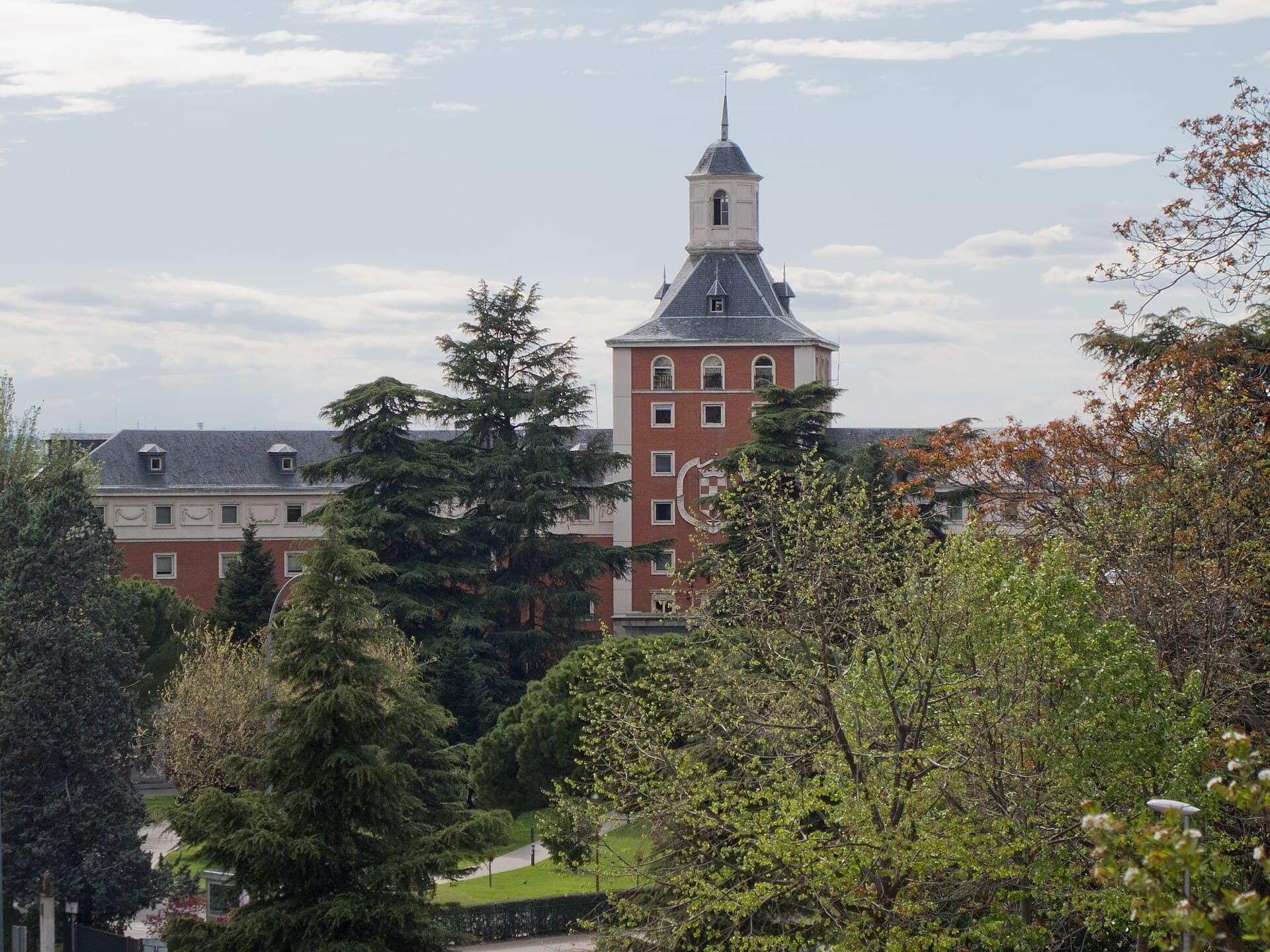
The Complutense University of Madrid is the largest university in Spain, and its name is older than the city it lives in. Complutum was the Roman town that became Alcalá de Henares, some thirty kilometres east of Madrid, and it was there, in 1499, that Cardinal Francisco Jiménez de Cisneros obtained a papal bull to found a university. The institution taught at Alcalá for more than three centuries, moved to the capital in 1836, and carried the old Roman name with it when it was formally renamed the Universidad Complutense in 1970.
What makes the university unusual among old European foundations is how concrete its founding purpose was. Cisneros assembled scholars for a single vast project, a printed Bible with its original languages set side by side, so that the text could be fixed and preserved on the page. The university began, in effect, as a workshop for setting sacred memory in type. Four centuries later, on the Madrid campus, a professor named Santiago Ramón y Cajal was drawing, in ink, the individual cells through which memory itself runs. Few institutions have recorded the past at both of those scales.
Cisneros, Archbishop of Toledo and twice regent of Castile, secured the founding bull from Pope Alexander VI in 1499, and the Colegio Mayor de San Ildefonso opened its doors to students at Alcalá de Henares in 1508. Cisneros planned Alcalá deliberately as a university town, and it grew into one of the intellectual centres of Renaissance Spain. It was a younger, more reform-minded counterpart to the elder University of Salamanca, with a particular strength in languages, theology and the new humanist learning.
The Alcalá centuries gave the university its literary roll. Lope de Vega studied there, and so did Francisco de Quevedo; Pedro Calderón de la Barca passed through both Alcalá and Salamanca on his way to the priesthood he never quite took up. Miguel de Cervantes was born in Alcalá in 1547, a son of the university town rather than a student of the university, and the connection is still worn proudly by both institutions that descend from Cisneros's foundation.
By the early nineteenth century the university at Alcalá had declined, and in 1836 the liberal government closed it and transferred the institution to Madrid, where it became the Universidad Central. The move concentrated Spanish academic life in the capital to a remarkable degree: from the reforms of the 1840s until 1954, the Central University was the only university in Spain permitted to award doctoral degrees, which meant that for over a century nearly every Spanish scholar of rank passed through it. The buildings left behind eventually housed a new University of Alcalá, refounded in 1977. The Madrid institution took back the ancient name in 1970 and has been the Universidad Complutense de Madrid ever since.
The university's principal home is the Ciudad Universitaria, the "university city" in the Moncloa district of northwest Madrid. King Alfonso XIII signed the decree creating it in 1927, giving royal land and a lottery's proceeds to build a modern campus of faculties, laboratories and residence halls on the high ground above the Manzanares.
The campus was barely finished when the war reached it. In November 1936, during the Battle of Madrid, the front line of the Spanish Civil War ran directly through the Ciudad Universitaria, and for days the new buildings were fought over floor by floor. The Hospital Clínico and the Faculty of Philosophy and Letters were shattered by artillery and mining; soldiers barricaded windows with the thickest volumes the libraries could supply, and books that stopped bullets, their pages torn through, survive in the university's collections. The front then froze in place, and the campus remained a trench-cut battlefield until the war ended in 1939. The university rebuilt through the 1940s, so that the present campus is partly the optimistic architecture of the 1930s and partly its own reconstruction: few universities anywhere have been, literally, a battlefield, and then resumed teaching on the same ground.
Today the Complutense teaches across the full range of a comprehensive university, with faculties of law, medicine, philosophy, philology, sciences, economics, education, fine arts and more, spread over the Moncloa campus and a second campus at Somosaguas. Its rare books and manuscripts are kept in the Biblioteca Histórica Marqués de Valdecilla in the city centre, a research library whose holdings descend in part from Cisneros's own college at Alcalá.
The Complutensian Polyglot Bible is the university's founding monument. Between 1514 and 1517, at the press of Arnao Guillén de Brocar in Alcalá, Cisneros's scholars produced the first printed polyglot edition of the entire Bible: six folio volumes in which the Hebrew, Greek and Latin texts run in parallel columns, with an Aramaic paraphrase of the Pentateuch printed below and a sixth volume of dictionaries and grammatical aids. The Greek New Testament volume came off the press in 1514, ahead of Erasmus's edition, though papal authorisation delayed the work's circulation until about 1520. Around six hundred copies were printed. Cisneros lived just long enough to see the volumes completed, and died in 1517 before they reached readers.
Teams of Hebraists, Hellenists and Latinists spent years collating manuscripts so that a text transmitted by hand for more than a millennium could be fixed, letter by letter, in a form that would not drift again. The Polyglot was memory engineering on the scale of a generation, and the university existed, at first, largely to carry it out.
The second act came in Madrid. Santiago Ramón y Cajal held the chair of histology at the Central University's medical faculty from 1892 until his retirement, and in those rooms he established that the nervous system is built of individual cells, the neurons, communicating across gaps. He recorded what his microscope showed him in thousands of pen-and-ink drawings of such clarity that neuroscientists still publish them, and he shared the Nobel Prize in Physiology or Medicine in 1906. Cajal was the cartographer of memory's hardware, the first to draw the cells whose connections hold what a mind retains. A university that began by fixing a sacred text in print ended up mapping remembering itself in ink.
The Nobel roll of the Central and Complutense eras is long for a Spanish institution. José Echegaray, mathematician, engineer and dramatist, held a chair at the Central University and received the Nobel Prize in Literature in 1904. Cajal's prize followed in 1906. Severo Ochoa trained in medicine at the university in the 1920s, worked in the laboratory tradition Cajal had built, and won the Nobel Prize in Physiology or Medicine in 1959 for his work on the synthesis of RNA. In literature, the poet Vicente Aleixandre, a Nobel laureate in 1977, and the novelist Camilo José Cela, a laureate in 1989, both studied at the university, and Mario Vargas Llosa, the Peruvian novelist who won in 2010, took his doctorate at the Complutense in 1971 with a thesis on Gabriel García Márquez.
Beyond the laureates, the university's graduates thread through modern Spanish public life. José Ortega y Gasset taught at the Central University, and generations of jurists, ministers, physicians and writers, including a large share of the country's heads of government across the nineteenth and twentieth centuries, passed through its faculties.
The Complutense is Spain's largest university, with a student body of around 70,000, and among the largest in Europe. It is consistently the most in-demand destination for students in the Spanish-speaking world, and its humanities faculties serve as the scholarly hinterland for Madrid's great cultural institutions, the Museo del Prado above all, whose curators and catalogue authors have long come from its ranks. The university remains public, admits by the national examination system, and teaches at every level from undergraduate degrees to the doctorates it once held exclusive rights to award.
The Ciudad Universitaria is open ground, crossed by ordinary Madrid life, and can be reached directly by the Metro station of the same name. Visitors can walk the campus freely, past the rebuilt faculties and the rationalist buildings of the 1930s, and the Faro de Moncloa observation tower at the campus edge gives a view over the whole university city. In the centre of Madrid, the Biblioteca Histórica Marqués de Valdecilla on Calle del Noviciado mounts regular exhibitions from the university's early collections, which include copies of the Complutensian Polyglot. Alcalá de Henares, half an hour away by commuter train, completes the story: the facade of Cisneros's Colegio de San Ildefonso still faces its plaza, and the town's old colleges, now the University of Alcalá, are a World Heritage Site well worth the day trip.
History
Campus and academics
The Polyglot and the neuron
Scholarship
The university today
Visiting
References and resources
- Complutense University of Madrid (official)
- UCM: Historical Library Marqués de Valdecilla (official)
- Britannica: Complutense University of Madrid
- Wikipedia: Complutense University of Madrid
- Wikipedia: Complutensian Polyglot Bible
- Wikipedia: Ciudad Universitaria of Madrid
- Nobel Prize: Santiago Ramón y Cajal (facts)