Heritage · Museum
Van Gogh Museum: History, Collection and Visitor Guide
The Van Gogh Museum in Amsterdam opened in 1973 and holds the world's largest collection of Vincent van Gogh's paintings, drawings and letters.Written to last.
By Confinity Heritage Editorial · Updated 2026-07-31 · 7-minute readQuiet tools, kept out of the way.
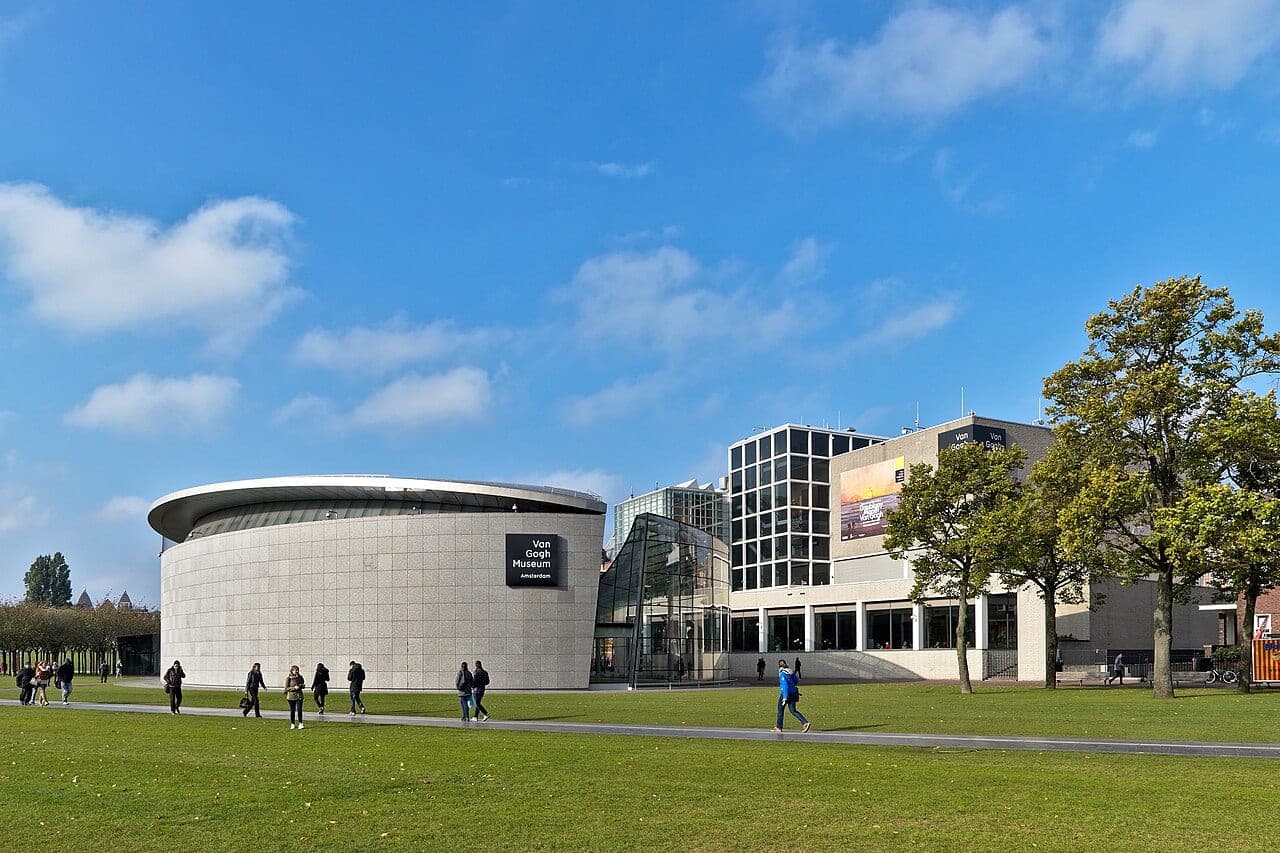
The Van Gogh Museum in Amsterdam holds the largest collection of works by Vincent van Gogh anywhere in the world. It opened on 2 June 1973 and sits on Museumplein in the Amsterdam-Zuid district, a short walk from the Rijksmuseum and the Stedelijk Museum. The core of its holdings passed down through the artist's own family, beginning with his younger brother Theo, and today numbers more than 200 paintings alongside hundreds of drawings and letters. With roughly 2.3 million visitors in 2017, it ranks among the most visited museums in the Netherlands.
Van Gogh sold almost nothing during his lifetime, and at his death in 1890 most of his paintings and drawings remained with his brother Theo van Gogh, an art dealer who had supported him for years. Theo died only six months later, and the collection passed to his widow, Johanna van Gogh-Bonger, who spent decades cataloguing the work, lending it to exhibitions and publishing Vincent's letters, doing much to build his reputation. Ownership then moved to her son, Vincent Willem van Gogh, the artist's nephew and namesake, who inherited the collection in 1925.
For years the paintings were shown on loan at the Stedelijk Museum. In 1962 Vincent Willem transferred the family holdings to the state-initiated Vincent van Gogh Foundation, on the condition that a dedicated museum be built to house them. The Dutch government commissioned a permanent home, and the main building, designed by the De Stijl architect Gerrit Rietveld, opened in 1973. Rietveld had died in 1964, and his design was completed by his partners.
The museum expanded in 1998–1999 with a free-standing exhibition wing by the Japanese architect Kisho Kurokawa, an elliptical, partly sunken structure set behind the Rietveld building for temporary shows. In 2015 a new glass entrance hall opened, linking the two buildings and giving the museum more room for its growing crowds. It was based on a sketch by Kurokawa's office and realised by Hans van Heeswijk Architects, and it opened to the public on 5 September 2015.
The museum owns more than 200 paintings by Van Gogh, around 500 drawings and more than 700 of his letters, the fullest record of any single artist of his period gathered in one place. The paintings span his short career, from the dark rural scenes of his early years in the Netherlands to the intense colour of his final months in France.
 Rietveld designed the main building; the half-sunken elliptical wing behind it is Kisho Kurokawa's, added in 1999 for temporary exhibitions. Photograph by Sebastian Koppehel, CC BY 4.0, via Wikimedia Commons.
Among the best known is The Potato Eaters (1885), the sombre peasant group he regarded as one of his most important early works. From his time in the south of France come a version of the Sunflowers (1889), among the most reproduced images in Western art, and Almond Blossom (1890), painted to celebrate the birth of his nephew and given to the newborn Vincent Willem, who would later help found the museum. The collection also holds several of the self-portraits that track the artist through changing moods and styles.
Because the family collection grew out of Theo's work as a dealer, the museum also holds paintings by Van Gogh's contemporaries, including Claude Monet, Paul Gauguin, Édouard Manet and Henri de Toulouse-Lautrec, which set his work in the context of the art of his day. The archive of letters, most of them written to Theo, is a central resource for understanding both the paintings and the artist's thinking.
More than a picture gallery, the museum is the main centre for the study of Van Gogh's life and work. Its combination of paintings, drawings, letters and documents lets scholars and visitors follow how individual pictures came to be made and read them against the artist's own words. The letters in particular have shaped the popular image of Van Gogh as a figure who wrote about his aims and struggles with unusual candour.
That mixture of art and biography draws very large audiences. The museum regularly reports well over a million visitors a year and is consistently one of the most visited museums in the Netherlands, alongside the neighbouring Rijksmuseum. It lends works to exhibitions abroad, runs a substantial research and conservation programme, and has become one of the images most associated with Amsterdam as a cultural city.
The museum stands on Museumplein and is reached through the 2015 entrance hall on the square. Because of the crowds, admission is by timed ticket booked online in advance for a specific date and time; tickets are often unavailable at the door, so booking ahead is strongly advised. Opening hours run daily, with later closing on some evenings, and details are worth checking on the official site before a visit.
The building is step-free and accessible, with lifts to all floors and wheelchairs available to borrow, and the permanent collection is arranged over several levels in roughly chronological order. The Kurokawa wing hosts changing temporary exhibitions that sometimes require a separate ticket. Public transport stops near Museumplein serve the museum, and the Rijksmuseum and Stedelijk Museum are both within a few minutes' walk for anyone making a day of the museum quarter.
Rietveld designed the main building; the half-sunken elliptical wing behind it is Kisho Kurokawa's, added in 1999 for temporary exhibitions. Photograph by Sebastian Koppehel, CC BY 4.0, via Wikimedia Commons.
Among the best known is The Potato Eaters (1885), the sombre peasant group he regarded as one of his most important early works. From his time in the south of France come a version of the Sunflowers (1889), among the most reproduced images in Western art, and Almond Blossom (1890), painted to celebrate the birth of his nephew and given to the newborn Vincent Willem, who would later help found the museum. The collection also holds several of the self-portraits that track the artist through changing moods and styles.
Because the family collection grew out of Theo's work as a dealer, the museum also holds paintings by Van Gogh's contemporaries, including Claude Monet, Paul Gauguin, Édouard Manet and Henri de Toulouse-Lautrec, which set his work in the context of the art of his day. The archive of letters, most of them written to Theo, is a central resource for understanding both the paintings and the artist's thinking.
More than a picture gallery, the museum is the main centre for the study of Van Gogh's life and work. Its combination of paintings, drawings, letters and documents lets scholars and visitors follow how individual pictures came to be made and read them against the artist's own words. The letters in particular have shaped the popular image of Van Gogh as a figure who wrote about his aims and struggles with unusual candour.
That mixture of art and biography draws very large audiences. The museum regularly reports well over a million visitors a year and is consistently one of the most visited museums in the Netherlands, alongside the neighbouring Rijksmuseum. It lends works to exhibitions abroad, runs a substantial research and conservation programme, and has become one of the images most associated with Amsterdam as a cultural city.
The museum stands on Museumplein and is reached through the 2015 entrance hall on the square. Because of the crowds, admission is by timed ticket booked online in advance for a specific date and time; tickets are often unavailable at the door, so booking ahead is strongly advised. Opening hours run daily, with later closing on some evenings, and details are worth checking on the official site before a visit.
The building is step-free and accessible, with lifts to all floors and wheelchairs available to borrow, and the permanent collection is arranged over several levels in roughly chronological order. The Kurokawa wing hosts changing temporary exhibitions that sometimes require a separate ticket. Public transport stops near Museumplein serve the museum, and the Rijksmuseum and Stedelijk Museum are both within a few minutes' walk for anyone making a day of the museum quarter.
History
The collection