Heritage · Museum
Tate Modern: History, Collection and Visitor Guide
Britain's national museum of modern and contemporary art, opened in 2000 in the former Bankside Power Station. Free entry to the collection.Written to last.
By Confinity Heritage Editorial · Updated 2026-07-31 · 7-minute readQuiet tools, kept out of the way.
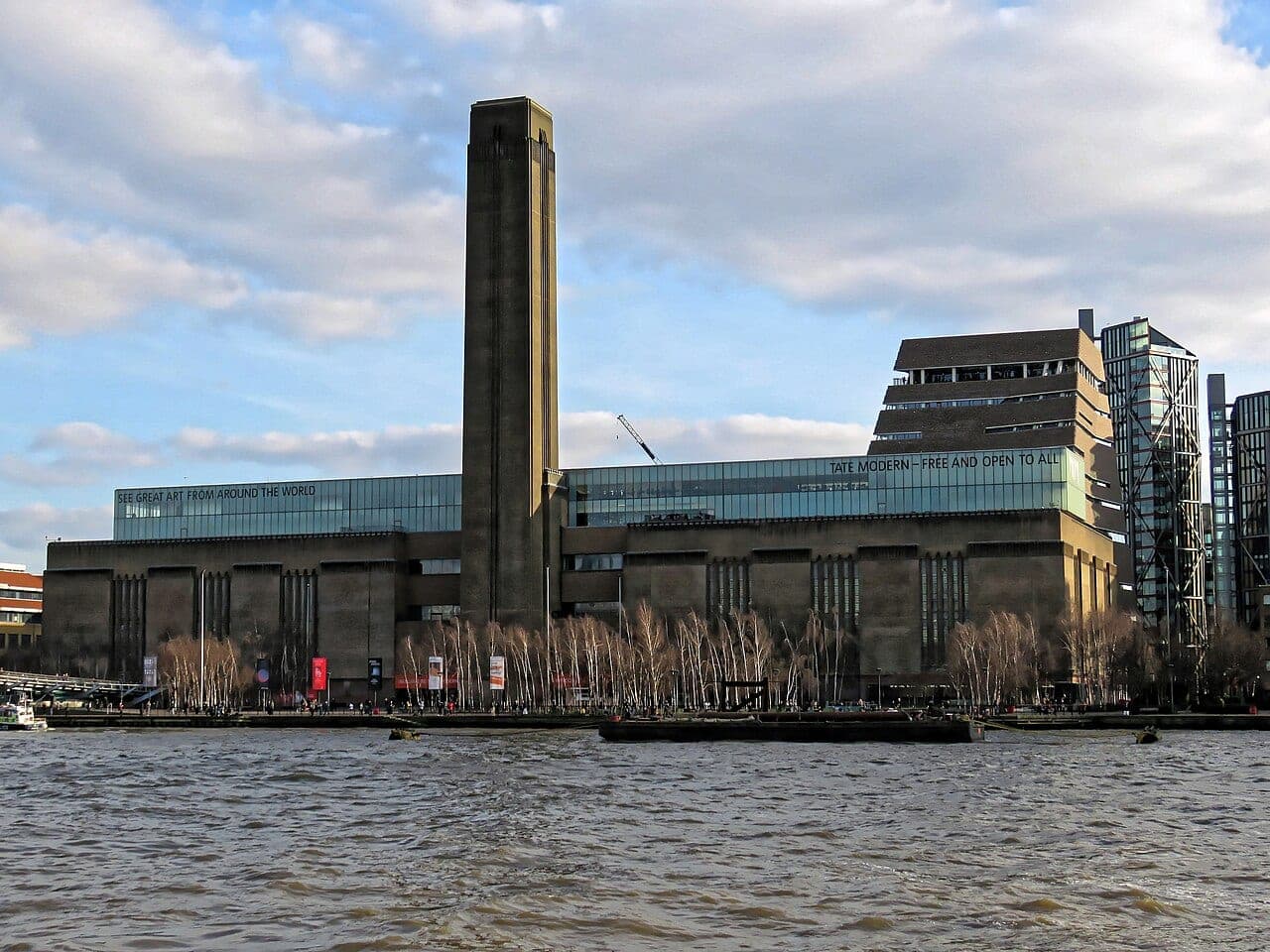
Tate Modern is Britain's national museum of modern and contemporary art, housed on the south bank of the River Thames in central London. It opened in 2000 inside a decommissioned power station, and within a few years it had become one of the most visited museums of its kind anywhere. Entry to its collection is free, in keeping with the founding idea of the wider Tate organisation: that a national collection should be open to everyone.
The building itself is part of the appeal. Directly across the water from St Paul's Cathedral, the former Bankside Power Station keeps its industrial bulk, a long brick block with a single central chimney, while its interior has been reworked into galleries, a cavernous public hall, and viewing levels over the city. The result pairs the scale of heavy industry with the display of art made from 1900 to the present.
Tate began in 1897 as the National Gallery of British Art at Millbank, funded by the sugar magnate Sir Henry Tate. Over the following century its holdings grew to cover both British art and international modern art, until a single site could no longer show them well. The solution, completed in 2000, was to split Tate across four galleries: Tate Britain and Tate Modern in London, along with Tate Liverpool and Tate St Ives. Tate Britain took the national collection of British art, while Tate Modern took international modern and contemporary work.
Finding a home for the new modern-art gallery led Tate to Bankside Power Station. The building had been designed by Sir Giles Gilbert Scott, the architect of Battersea Power Station and the classic red telephone box, and was constructed in two phases between 1947 and 1963. It stopped generating electricity in 1981 and stood empty for years, at risk of demolition. Tate saw in its huge oil-fired hall a space no purpose-built gallery could match.
An international competition to convert the station was won in 1995 by the Swiss firm Herzog & de Meuron. Their approach kept the exterior largely intact and preserved the sense of the original structure, rather than disguising it. The conversion, costing around £134 million, added a two-storey glass "lightbeam" along the roof and carved gallery floors from the former boiler house. Tate Modern opened to the public in May 2000.
Demand quickly outgrew the first design. In June 2016 Tate opened the Blavatnik Building, first known as the Switch House, a folded brick tower also designed by Herzog & de Meuron and rising from the former oil tanks at the south of the site. It added roughly sixty percent more display space and a free public viewing level with panoramic views across London.
The heart of Tate Modern is the Turbine Hall, the vast chamber that once held the station's electricity generators. It runs about 155 metres long and rises some 35 metres, the height of a five-storey building, and a gentle ramp draws visitors down into it from the west. Entry to the hall is free, and it works as a covered public space as much as a gallery.
 The hall ran the length of the power station and held the generators. Herzog and de Meuron left it empty, which turned an engineering space into the largest room for art in the country. Photograph by kp-snaps, CC BY-SA 4.0, via Wikimedia Commons.
From the opening, Tate used the hall for a rolling series of large-scale commissions, inviting artists to respond to its scale. The Unilever Series ran from 2000 to 2012 and produced some of the museum's defining moments, among them Olafur Eliasson's glowing artificial sun in The Weather Project (2003) and Ai Weiwei's field of porcelain sunflower seeds (2010). After a pause, the commissions resumed in 2015 as the Hyundai Commission, opening with a work by Abraham Cruzvillegas. These installations, changing roughly once a year, have become one of the most closely watched events in contemporary art.
Tate Modern holds the national collection of international modern and contemporary art created from 1900 onward. It ranges across the movements that shaped the last century, including Cubism, Surrealism, Abstract Expressionism, Pop art, and Minimalism, alongside a growing body of recent work in film, photography, performance, and installation.
Rather than march the visitor through a single chronological line, the galleries are largely hung by theme, grouping works from different periods and places around shared ideas and questions. A room might set a historic painting beside a recent video, or gather artists working on the body, the city, or abstraction across several decades. The display is refreshed regularly, and the museum has made a sustained effort to widen its holdings beyond the traditional European and North American canon to include artists from Africa, Asia, Latin America, and the Middle East.
Tate Modern is among the most visited modern-art museums in the world, drawing millions of people each year and ranking as the most popular art gallery in the United Kingdom. Its free collection and its programme of major exhibitions have helped introduce very large audiences to twentieth- and twenty-first-century art.
Its impact reaches beyond its walls. When it opened, the stretch of Bankside around it was a neglected industrial quarter. The museum anchored a wider regeneration of the South Bank, drawing restaurants, galleries, and walkers to the riverside path, and the Millennium Bridge, built to link it directly to the City, turned the north and south banks into a continuous route past St Paul's. Tate Modern is now one of the fixed points of cultural London.
Tate Modern is at Bankside, London SE1 9TG, on the south bank of the Thames. Admission to the collection is free; special exhibitions are ticketed. The pedestrian Millennium Bridge crosses the river from the front of the museum to St Paul's, making the walk from the City one of the best approaches. The nearest stations are Southwark and Blackfriars, with London Bridge a short walk further east, and a Tate to Tate boat service links the museum with Tate Britain upriver.
Because opening hours and exhibition schedules change, it is worth checking the official Tate website before a visit. The building's free viewing levels, the Turbine Hall, and the collection galleries can each fill an afternoon on their own.
The hall ran the length of the power station and held the generators. Herzog and de Meuron left it empty, which turned an engineering space into the largest room for art in the country. Photograph by kp-snaps, CC BY-SA 4.0, via Wikimedia Commons.
From the opening, Tate used the hall for a rolling series of large-scale commissions, inviting artists to respond to its scale. The Unilever Series ran from 2000 to 2012 and produced some of the museum's defining moments, among them Olafur Eliasson's glowing artificial sun in The Weather Project (2003) and Ai Weiwei's field of porcelain sunflower seeds (2010). After a pause, the commissions resumed in 2015 as the Hyundai Commission, opening with a work by Abraham Cruzvillegas. These installations, changing roughly once a year, have become one of the most closely watched events in contemporary art.
Tate Modern holds the national collection of international modern and contemporary art created from 1900 onward. It ranges across the movements that shaped the last century, including Cubism, Surrealism, Abstract Expressionism, Pop art, and Minimalism, alongside a growing body of recent work in film, photography, performance, and installation.
Rather than march the visitor through a single chronological line, the galleries are largely hung by theme, grouping works from different periods and places around shared ideas and questions. A room might set a historic painting beside a recent video, or gather artists working on the body, the city, or abstraction across several decades. The display is refreshed regularly, and the museum has made a sustained effort to widen its holdings beyond the traditional European and North American canon to include artists from Africa, Asia, Latin America, and the Middle East.
Tate Modern is among the most visited modern-art museums in the world, drawing millions of people each year and ranking as the most popular art gallery in the United Kingdom. Its free collection and its programme of major exhibitions have helped introduce very large audiences to twentieth- and twenty-first-century art.
Its impact reaches beyond its walls. When it opened, the stretch of Bankside around it was a neglected industrial quarter. The museum anchored a wider regeneration of the South Bank, drawing restaurants, galleries, and walkers to the riverside path, and the Millennium Bridge, built to link it directly to the City, turned the north and south banks into a continuous route past St Paul's. Tate Modern is now one of the fixed points of cultural London.
Tate Modern is at Bankside, London SE1 9TG, on the south bank of the Thames. Admission to the collection is free; special exhibitions are ticketed. The pedestrian Millennium Bridge crosses the river from the front of the museum to St Paul's, making the walk from the City one of the best approaches. The nearest stations are Southwark and Blackfriars, with London Bridge a short walk further east, and a Tate to Tate boat service links the museum with Tate Britain upriver.
Because opening hours and exhibition schedules change, it is worth checking the official Tate website before a visit. The building's free viewing levels, the Turbine Hall, and the collection galleries can each fill an afternoon on their own.
History
The building and Turbine Hall