Heritage · Country
Tajikistan Culture and Heritage
At the roof of the world, Tajikistan keeps the deep memory of Persian civilization: the five-thousand-year settlement of Sarazm, the Samanid poets of Bukhara, and the lamp-lit mourning of the Pamirs. This is a guide to how a mountain nation remembers, from Rudaki's verses to the forty days of grief that follow a death.Written to last.
By Confinity Heritage Editorial · Updated 2026-07-31 · 8-minute readQuiet tools, kept out of the way.
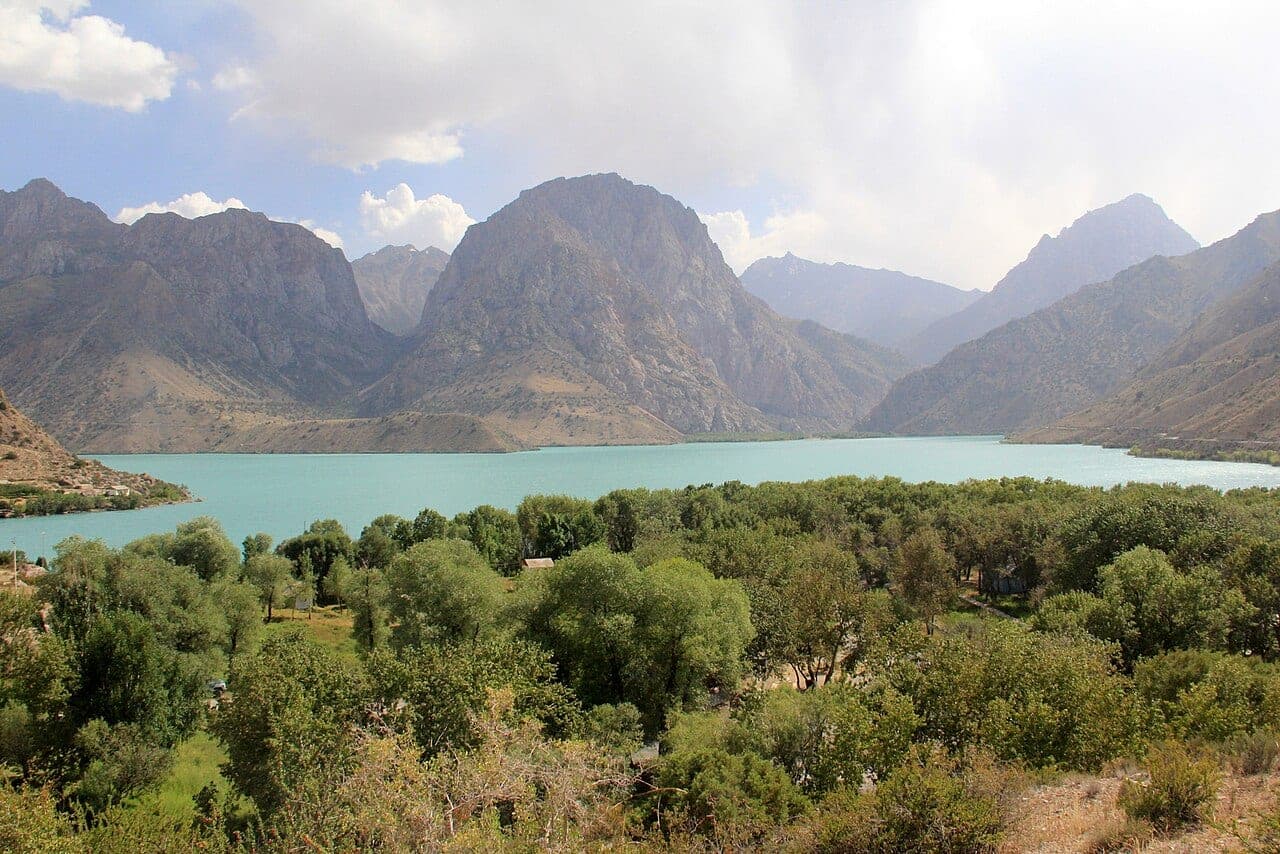
Tajikistan is a nation of mountains and memory. More than nine tenths of its territory rises into ranges that culminate in the Pamirs, the knot of high country long called the Roof of the World, where Ismoil Somoni Peak reaches 7,495 metres and the Fedchenko Glacier runs longer than any ice stream outside the polar regions (UNESCO World Heritage Datasheet). Landlocked between Uzbekistan, Kyrgyzstan, China and Afghanistan, it is the only Persian-speaking republic of the former Soviet Union, and its people trace their language and their sense of themselves to the same Persianate world that produced Samarkand, Bukhara and the poetry of the Samanid court.
That inheritance is the thread this profile follows. In the Zarafshan valley stand the mud-brick remains of Sarazm, among the oldest settled places in Central Asia; on the southern plains lay the monastery of Ajina-Tepa, whose reclining Buddha now rests in Dushanbe; and in the villages of the high Pamirs families still light the charogh, the lamp that sees a soul into the next world. What follows traces the buildings, languages, verse and customs by which a mountain nation keeps its dead and its past close, from Sarazm and Sogdiana to the Samanids, the songs of Rudaki, and the ways Sunni and Ismaili Tajiks mourn and remember.
The Republic of Tajikistan covers roughly 143,100 square kilometres, of which more than ninety per cent is mountain. Three great systems meet here: the Fann and Zarafshan ranges of the northwest, where the turquoise lake of Iskanderkul sits beneath snow peaks, the Gissar and Karategin uplands of the centre, and the vast Pamir plateau of the east, whose highlands form the Gorno-Badakhshan Autonomous Region. Their rivers, the Vakhsh, the Panj and the Zarafshan, feed the Amu Darya and make the country the water tower of Central Asia (UNESCO).
The population is around ten million, the great majority ethnic Tajiks, a Persian-speaking people, with sizeable Uzbek and Kyrgyz communities and, in the high east, the distinct Pamiri peoples of Badakhshan. Tajik is the state language, while Russian remains widely used in administration and commerce. Tajikistan declared independence from the Soviet Union in 1991 and is a presidential republic led since the mid-1990s by Emomali Rahmon, with its capital at Dushanbe. Its currency, the somoni, and its highest peak both carry the name of Ismail Samani, the tenth-century amir whose dynasty Tajiks regard as their first state (Encyclopaedia Britannica).
Dushanbe. The capital takes its name from the Tajik word for Monday, a memory of the weekly market that once gathered at the meeting of the Varzob and Kofarnihon valleys. As late as 1920 it was a village of a few hundred people; chosen as the capital of the Tajik Autonomous Soviet Republic, it grew through the Soviet decades, spent thirty years under the name Stalinabad, and reverted to Dushanbe in 1961 (Encyclopaedia Iranica). Today it is a city of more than a million along the tree-lined Rudaki Avenue, home to the National Museum, the National Museum of Antiquities and a towering statue of Ismoil Somoni at its ceremonial heart.
Khujand. The country's second city and the capital of northern Sughd province is one of the oldest continuously inhabited places in Central Asia, with an urban record reaching back some two and a half thousand years. It is identified with Cyropolis, founded near the Achaemenid frontier, and with Alexandria Eschate, the "farthest Alexandria" that Alexander the Great established on the Syr Darya (Encyclopaedia Britannica). A Silk Road crossroads sacked by the Mongols and taken by Russia in 1866, it keeps a restored citadel and the Panjshanbe bazaar, and remains the centre of the atlas and adras silk trade.
Bokhtar. Capital of the southern Khatlon region and long known as Qurghonteppa, the city was renamed Bokhtar in 2018 after ancient Bactria. It anchors the Vakhsh valley cotton lands, and nearby lie the excavated ruins of Ajina-Tepa, the seventh- and eighth-century Buddhist monastery that yielded Central Asia's largest surviving Buddha.
Khorugh. The administrative centre of Gorno-Badakhshan sits at about 2,200 metres where the Gunt river joins the Panj, on the border with Afghanistan. It is the urban heart of the Pamiri Ismaili world, home to a campus of the University of Central Asia and a public life shaped by the Aga Khan Development Network.
Human settlement in this land is very old. At Sarazm in the Zarafshan valley, a proto-urban centre grew from the fourth to the late third millennium BCE, trading copper, turquoise and craft goods across a network reaching from the Aral steppes to the Iranian plateau and the Indus (UNESCO). In the first millennium BCE the region belonged to the Iranian-speaking worlds of Bactria, south of the Amu Darya, and Sogdiana, in the Zarafshan basin. These lands passed under the Achaemenid Persian Empire, then, after Alexander's campaigns, into the Hellenistic and Greco-Bactrian kingdoms, before the Kushan Empire of the early centuries CE carried Buddhism through the valleys and raised monasteries such as the one later buried at Ajina-Tepa.
The Sogdian cities flourished as Silk Road merchants until the Arab conquest of the eighth century brought Islam; ancient Panjakent, whose painted halls have been called a Sogdian Pompeii, fell to Arab armies around 722 (Penjikent murals, Wikipedia). Out of the new Muslim order came the age Tajiks hold dearest. The Samanid dynasty, ruling from Bukhara across the ninth and tenth centuries and regarded as the first Tajik state, presided over a Persian cultural revival; under Ismail Samani the court gathered scholars and poets whose names still resonate, among them Rudaki and the physician Ibn Sina (Ismail Samani, Wikipedia).
After the Samanids fell around 999 the region passed through a succession of Turkic and Persian powers, the Mongol conquest under Genghis Khan in the thirteenth century, and later the Timurids and the khanates. By the nineteenth century the Tajik lands were divided between the Emirate of Bukhara and the Khanate of Kokand. The Russian Empire absorbed the north from the 1860s, taking Khujand in 1866, while the Pamir frontier was fixed by Anglo-Russian agreement in 1895. After the revolution the Soviet authorities created a Tajik Autonomous Republic in 1924 and a full Tajik Soviet Socialist Republic in 1929, drawing borders that left the great Persian cities of Samarkand and Bukhara in neighbouring Uzbekistan. Tajikistan declared independence on 9 September 1991. A civil war followed from 1992 to 1997 between the government and an opposition alliance; it was ended by the General Agreement on the Establishment of Peace and National Accord, signed in Moscow on 27 June 1997, which brought the opposition into a power-sharing settlement (Conciliation Resources).
Tajik is a variety of Persian, close to the Persian of Iran and the Dari of Afghanistan, and its literary tradition is the shared classical Persian canon. Under Soviet rule it was recast in a Cyrillic alphabet, which it retains, though the Perso-Arabic script of its classical poets is again valued. The name Tajik itself is old and much debated; the widely accepted scholarly derivation traces it through Middle Persian and Sogdian forms to a word first meaning "Arab" and later applied by Turkic speakers to the settled Persian-speaking population around them (Encyclopaedia Iranica).
Beneath the Persian surface lie older and rarer tongues. Sogdian, the Eastern Iranian language of the Silk Road merchants, is long extinct but survives in the frescoes and documents of Panjakent and Mount Mugh; its nearest living descendant, Yaghnobi, is still spoken by a small community in the Yaghnob valley. In the Pamirs a whole family of Eastern Iranian Pamiri languages, Shughni, Rushani, Wakhi, Ishkashimi and others, remain in daily use, distinct from Tajik and largely unwritten, carried through song, prayer and the memory of households.
At the centre of Tajik cultural memory is poetry. Rudaki, born near Panjakent in the mid-ninth century and honoured as the father of Persian literature, served the Samanid court at Bukhara and composed a vast body of verse of which only fragments survive; his tomb near Panjrud is a place of pilgrimage (Koryo Tours). Through him Tajiks claim the whole classical inheritance that runs on through Ferdowsi's Shahnameh, the Book of Kings completed around 1010, and the later masters Khayyam, Rumi, Saadi and Hafiz.
Material culture is equally distinctive. In Badakhshan the traditional Pamiri house, the chid, has kept its form for two thousand years: a single room lit from above, resting on five wooden pillars whose meaning was once read in the elements of earth, water, fire, air and ether and is now understood through the sacred figures of Ismaili Islam (maat). Music carries the same layered memory: shashmaqam, the classical suite of six modal cycles developed over centuries in Bukhara and Samarkand and shared with Uzbekistan, joins sung Persian poetry to lutes, fiddles and drums; in the southern mountains falak, a plaintive vocal genre of the highland Tajiks, gives voice to longing and grief. The looms of Khujand and the north produce atlas and adras, the resist-dyed silk and silk-cotton cloths that clothe Tajik women, while suzani, large embroidered hangings whose name comes from the Persian for needle, adorn the home. The year turns on Navruz, the Persian new year at the spring equinox, an inheritance of pre-Islamic antiquity marked with the sprouted-wheat dish sumalak and days of visiting. And it is bound together by food, above all osh, the rice pilaf shared from a common platter, and qurutob, flatbread with a dried-curd sauce eaten by hand.
Most Tajiks are Sunni Muslims of the Hanafi school, the tradition that has shaped the country since the Samanid centuries. Islam here rests on deep foundations of Persian learning, and the memory of Bukhara as a centre of scholarship remains part of the national self-image, even though the city now lies across the Uzbek border.
The great exception is the Ismaili community of the Pamirs. The Pamiri peoples of Gorno-Badakhshan are almost entirely Nizari Ismailis, followers of the Aga Khan, a Shia tradition that reached these remote valleys with the eleventh-century poet-philosopher Nosir Khisrav and took refuge in their isolation (Minority Rights Group). Ismaili devotion in the Pamirs is domestic and contemplative, centred on the home and on sung religious poetry rather than the mosque. Older still is the Zoroastrian substratum that both traditions carry, visible in the fire and light of Navruz, in the reverence for springs and mountains, and in the elemental symbolism of the Pamiri house.
Tajik remembrance follows the shape of Islamic practice inflected by Persian custom. When a person dies the body is washed, wrapped in a plain shroud and buried without delay, laid on its side facing Mecca. The days that follow are structured by communal gatherings of mourning, the osh-i azo, at which relatives and neighbours share a meal and pray for the departed; commemorations are commonly held on the third, seventh and fortieth days after death, and again at the first anniversary, with the family feeding guests and reciting the Quran in the deceased's name. Grief is borne collectively rather than alone.
In the Pamirs the Ismaili communities keep a further set of rites of great beauty. Central among them is the charogh-ravshan, the ceremony of the bright lamp, in which a wick set in flour and fat is lit for the dead while Quranic verses on light and the poetry of Nosir Khisrav are recited, sending the soul on its way (Music of Badakhshan, Wikipedia). Mourning in Badakhshan is voiced through madoh, sung devotional poetry accompanied by the rubab and the frame drum, performed through the nights of grief. Over all of this lies a more recent sorrow. The civil war of the 1990s cost tens of thousands of lives and touched nearly every family, and its remembrance, quiet and largely private, is part of how the country now understands itself; the peace that ended it is marked as a national achievement rather than dwelt upon as a wound.
Tajik records are Persian in language, Soviet in form, and interrupted by a war that most of the world did not notice.
The written tradition is old: Tajiks are Persian speakers, and the manuscript collections of Khujand, Bukhara and Samarkand, though the last two are now in Uzbekistan, hold the literary and legal record. Sharia court registers and endowment deeds carry family matters, and sayyid and khoja lineages keep written genealogies.
Russian administration from the 1860s and the Soviet system after 1924 produced the modern record: ZAGS registration, held at the state archives in Dushanbe, and the internal passport system that fixed nationality on a document.
The civil war between 1992 and 1997 killed tens of thousands and displaced perhaps a fifth of the population, and it was fought partly along regional lines, so the record of who is from Kulob, Gharm or Badakhshan acquired a lethal significance. Archives were damaged and people left without documents.
The Pamiris of Gorno-Badakhshan are a distinct case: Ismaili Muslims speaking languages that are not Tajik, with their own community structures and a relationship to the Aga Khan's institutions, which have done a great deal of the documentation and development work in the region.
Labour migration to Russia is the modern record. Something approaching half of Tajik households depend on remittances, and the registration, employment and deportation files of the Russian Federation document a very large share of the Tajik male population.
Tajikistan holds two UNESCO World Heritage Sites, and each speaks to a different depth of the country's past. Sarazm, inscribed in 2010 as the nation's first World Heritage property, protects the fourth-millennium proto-urban settlement in the Zarafshan valley, its excavated houses, workshops and altars sheltered for study and visit (UNESCO). The Tajik National Park, inscribed in 2013, safeguards more than two and a half million hectares of the Pamirs, including the Fedchenko Glacier, hundreds of lakes, and the habitat of the snow leopard and the Marco Polo sheep (UNESCO).
 The National Museum of Antiquities holds the finds from Sarazm and the reclining Buddha from Ajina Tepa, at thirteen metres the largest in Central Asia, reassembled from fragments. Photograph by Ninara, CC BY 2.0, via Wikimedia Commons.
The country's museums anchor the care of its movable heritage. The centrepiece of the National Museum of Antiquities in Dushanbe is the reclining Buddha of Ajina-Tepa, a clay figure some thirteen metres long recovered in fragments from the ruined monastery near Bokhtar and reassembled with restorers from the Hermitage; it is the largest Buddha yet found in Central Asia (Buddha in Nirvana, Wikipedia). The Sogdian murals of Panjakent, painted before the Arab conquest, are shared between the same museum and the Hermitage in Saint Petersburg. Other guarded monuments include the medieval Hisor fortress west of the capital and the ancient town of Panjakent itself.
For a country whose heritage is scattered across remote valleys and fragile excavations, recording it in durable form has itself become preservation. The Academy of Sciences and the National Museum of Antiquities have documented the Sarazm and Panjakent excavations, and the Sogdian murals divided between Dushanbe and the Hermitage are now among the best-photographed remains of pre-Islamic Central Asia. The intangible traditions have their own digital record: the shashmaqam and Navruz inscriptions on the UNESCO Representative List carry documentation freely accessible through the organization's intangible-heritage platform (UNESCO).
The most sustained effort to capture the living culture of the Pamirs has come through the Aga Khan Development Network, whose music and humanities programmes have recorded the falak singers, the madoh performers and the oral traditions of Badakhshan. Songs and rituals once held only in memory are now backed by copies that can outlast their last practitioners.
Independent Tajikistan has consciously rebuilt its public identity around its Persian and Samanid inheritance. The renaming of the highest peak and the national currency for Ismoil Somoni, the great monument to him in Dushanbe, and the honouring of Rudaki in the capital's central avenue are all deliberate acts of memory, reclaiming a heritage that Soviet borders had scattered.
Tajik culture also reaches outward. Its cinema found an international voice with the director Bakhtyar Khudojnazarov, whose film Luna Papa travelled widely in the late 1990s, and its musicians have carried falak and the maqam tradition onto world stages through the Aga Khan Music Programme. Perhaps the largest contemporary force is migration itself: a great many Tajik families have members working abroad, above all in Russia, and this diaspora sustains the homeland economically while carrying Navruz, Tajik verse and the osh table into new cities, so that weddings, mourning gatherings and the spring festival are now kept across the distances that labour has opened.
Sarazm enters the World Heritage List. In 2010 the five-thousand-year-old settlement of Sarazm became Tajikistan's first UNESCO World Heritage Site, anchoring national pride in a proto-urban past far older than any modern border.
Shashmaqam recognised as a shared masterpiece. Proclaimed a UNESCO masterpiece in 2003 and inscribed on the Representative List of Intangible Cultural Heritage in 2008 as a joint Tajik and Uzbek tradition, shashmaqam has been sustained through conservatory training and festival performance (UNESCO).
A Buddha reassembled. The shattered reclining Buddha of Ajina-Tepa, recovered in fragments and rebuilt with Hermitage restorers, now presides over the National Museum of Antiquities as the largest Buddha in Central Asia, a saved witness to the Kushan Buddhist age of these valleys.
The Pamirs safeguarded. The inscription of the Tajik National Park in 2013 placed almost the entire Pamir massif under international protection, securing the glaciers, lakes and rare wildlife of the Roof of the World.
A living faith revived in Badakhshan. After decades of Soviet restriction, the Ismaili communities of the Pamirs have rebuilt their religious and cultural life with the support of the Aga Khan Development Network, restoring the charogh-ravshan, the madoh and the customs of the chid to open practice.
The National Museum of Antiquities holds the finds from Sarazm and the reclining Buddha from Ajina Tepa, at thirteen metres the largest in Central Asia, reassembled from fragments. Photograph by Ninara, CC BY 2.0, via Wikimedia Commons.
The country's museums anchor the care of its movable heritage. The centrepiece of the National Museum of Antiquities in Dushanbe is the reclining Buddha of Ajina-Tepa, a clay figure some thirteen metres long recovered in fragments from the ruined monastery near Bokhtar and reassembled with restorers from the Hermitage; it is the largest Buddha yet found in Central Asia (Buddha in Nirvana, Wikipedia). The Sogdian murals of Panjakent, painted before the Arab conquest, are shared between the same museum and the Hermitage in Saint Petersburg. Other guarded monuments include the medieval Hisor fortress west of the capital and the ancient town of Panjakent itself.
For a country whose heritage is scattered across remote valleys and fragile excavations, recording it in durable form has itself become preservation. The Academy of Sciences and the National Museum of Antiquities have documented the Sarazm and Panjakent excavations, and the Sogdian murals divided between Dushanbe and the Hermitage are now among the best-photographed remains of pre-Islamic Central Asia. The intangible traditions have their own digital record: the shashmaqam and Navruz inscriptions on the UNESCO Representative List carry documentation freely accessible through the organization's intangible-heritage platform (UNESCO).
The most sustained effort to capture the living culture of the Pamirs has come through the Aga Khan Development Network, whose music and humanities programmes have recorded the falak singers, the madoh performers and the oral traditions of Badakhshan. Songs and rituals once held only in memory are now backed by copies that can outlast their last practitioners.
Independent Tajikistan has consciously rebuilt its public identity around its Persian and Samanid inheritance. The renaming of the highest peak and the national currency for Ismoil Somoni, the great monument to him in Dushanbe, and the honouring of Rudaki in the capital's central avenue are all deliberate acts of memory, reclaiming a heritage that Soviet borders had scattered.
Tajik culture also reaches outward. Its cinema found an international voice with the director Bakhtyar Khudojnazarov, whose film Luna Papa travelled widely in the late 1990s, and its musicians have carried falak and the maqam tradition onto world stages through the Aga Khan Music Programme. Perhaps the largest contemporary force is migration itself: a great many Tajik families have members working abroad, above all in Russia, and this diaspora sustains the homeland economically while carrying Navruz, Tajik verse and the osh table into new cities, so that weddings, mourning gatherings and the spring festival are now kept across the distances that labour has opened.
Sarazm enters the World Heritage List. In 2010 the five-thousand-year-old settlement of Sarazm became Tajikistan's first UNESCO World Heritage Site, anchoring national pride in a proto-urban past far older than any modern border.
Shashmaqam recognised as a shared masterpiece. Proclaimed a UNESCO masterpiece in 2003 and inscribed on the Representative List of Intangible Cultural Heritage in 2008 as a joint Tajik and Uzbek tradition, shashmaqam has been sustained through conservatory training and festival performance (UNESCO).
A Buddha reassembled. The shattered reclining Buddha of Ajina-Tepa, recovered in fragments and rebuilt with Hermitage restorers, now presides over the National Museum of Antiquities as the largest Buddha in Central Asia, a saved witness to the Kushan Buddhist age of these valleys.
The Pamirs safeguarded. The inscription of the Tajik National Park in 2013 placed almost the entire Pamir massif under international protection, securing the glaciers, lakes and rare wildlife of the Roof of the World.
A living faith revived in Badakhshan. After decades of Soviet restriction, the Ismaili communities of the Pamirs have rebuilt their religious and cultural life with the support of the Aga Khan Development Network, restoring the charogh-ravshan, the madoh and the customs of the chid to open practice.
National Overview
Notable Cities
Historical Foundations
Linguistic and Etymological Roots
Cultural Identity
Religion and Spirituality
Remembrance and Mourning Traditions
Tracing a Family in Tajikistan
Heritage Preservation Efforts
Digital Heritage
Contemporary Cultural Influences
Success Stories
References and resources
- UNESCO World Heritage Centre: Proto-urban Site of Sarazm. The fourth-millennium settlement in the Zarafshan valley and its trade network.
- UNESCO World Heritage Centre: Tajik National Park, Mountains of the Pamirs. The Pamir massif, its glaciers, lakes and wildlife.
- UNESCO Intangible Cultural Heritage: Shashmaqom music. The classical Tajik and Uzbek suite tradition.
- UNESCO: International Day of Nowruz. The spring-equinox new year shared across the Persian world.
- Encyclopaedia Britannica: Tajikistan. Geography, people, history and government.
- Encyclopaedia Britannica: Khujand. The ancient Silk Road city and its origins.
- Encyclopaedia Iranica: Tajik, the ethnonym. The origins and application of the name Tajik.
- Ismail Samani, Wikipedia. The Samanid amir and the first Tajik state at Bukhara.
- Buddha in Nirvana, Wikipedia. The reclining Buddha of Ajina-Tepa in the National Museum of Antiquities.
- Minority Rights Group: Pamiris in Tajikistan. The Ismaili peoples of Gorno-Badakhshan.
- Conciliation Resources: Implementation of the 1997 General Agreement. The peace accord that ended the civil war.