Heritage · Country
Saint Vincent and the Grenadines Culture and Heritage
From the smoking cone of La Soufriere to the boat-builders of Bequia, Saint Vincent and the Grenadines gathers one mountainous island and a chain of small ones into a single, deeply Caribbean memory. This guide follows the homeland of the Garifuna, the botanic garden that keeps Captain Bligh's breadfruit tree, and the Nine Night wakes with which Vincentians sing their dead home.Written to last.
By Confinity Heritage Editorial · Updated 2026-07-31 · 8-minute readQuiet tools, kept out of the way.
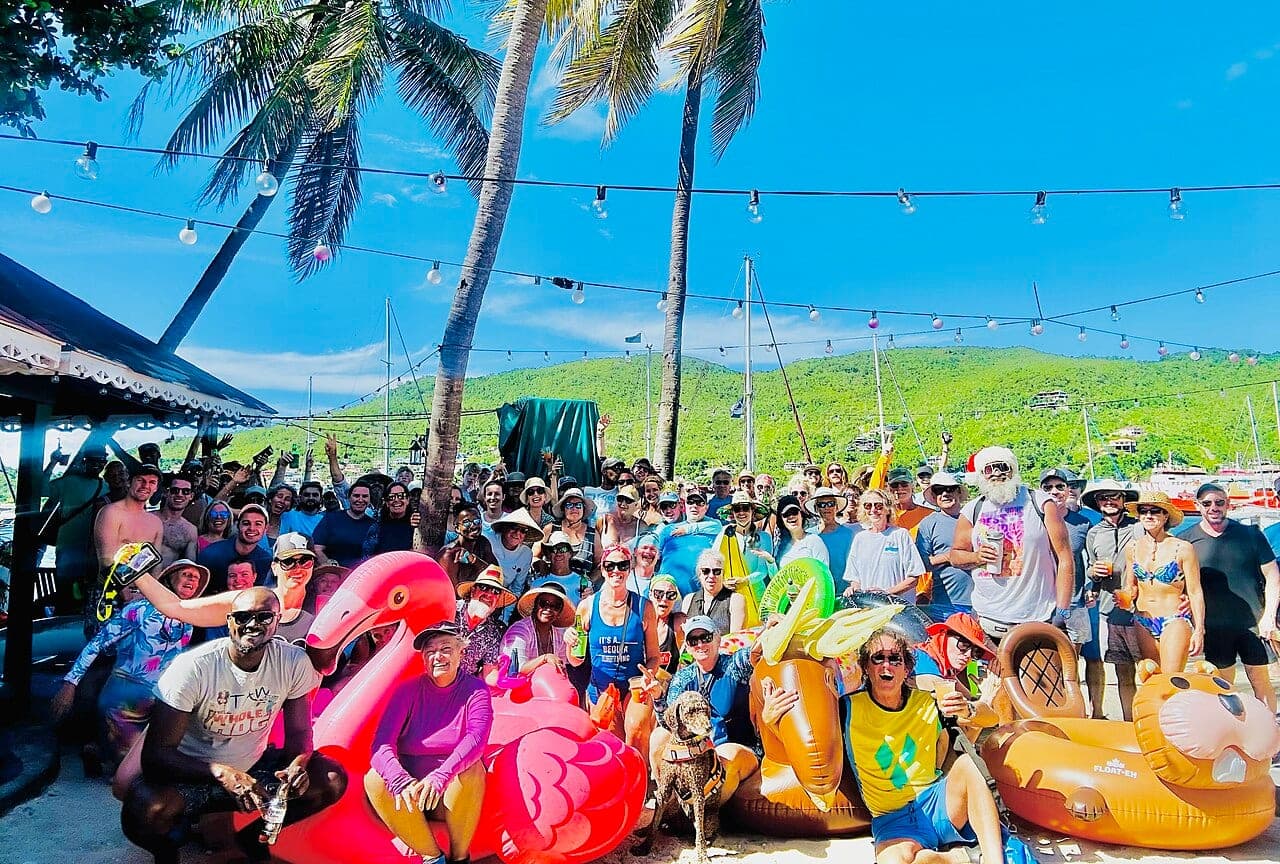
Saint Vincent and the Grenadines is a single volcanic island trailed by a necklace of smaller ones, a nation of roughly 110,000 people set in the eastern Caribbean between Saint Lucia and Grenada. The mountainous main island of Saint Vincent climbs to the still-active cone of La Soufriere, 1,234 metres above a coastline of dark-sand bays and steep green ridges; to the south the Grenadines run in a bright line of reefs and anchorages, among them Bequia, Mustique, Canouan and Union Island. The country is small and forested and, for its size, unusually layered, with Indigenous, African and British pasts all sitting close to the surface, and the sea never far from any of them.
This was among the last strongholds of the Indigenous Caribbean, and it is the homeland of the Garifuna, the Black Carib people formed when island Kalinago and self-liberated Africans became one nation. Their long resistance under Chief Joseph Chatoyer, and the forced deportation of thousands of their number to Central America in 1797, are the gravest chapters in the national memory, and they are commemorated rather than hidden. Around that memory Vincentians keep a wider culture of remembrance: Nine Night wakes that carry the dead through nine evenings of song, Anglican and Spiritual Baptist worship, the whalers' shanties of Barrouallie, and the model boats of Bequia that hold a whole maritime way of life in miniature.
The country occupies a compact stretch of the Windward Islands: the main island of Saint Vincent, about 344 square kilometres, plus the northern two-thirds of the Grenadine chain, some 45 square kilometres of islands and cays scattered toward Grenada. Saint Vincent itself is a young volcanic land, its spine forested and sharply cut by rivers, its most northerly quarter dominated by La Soufriere. Most of the roughly 110,000 people live along the coast, close to a fifth of them in and around the capital, Kingstown, on the sheltered south-western shore (Encyclopaedia Britannica).
Saint Vincent and the Grenadines is a parliamentary democracy and a Commonwealth realm, independent from the United Kingdom since 27 October 1979, with the British monarch as head of state represented by a governor-general. The economy long rested on export agriculture, first sugar, then arrowroot starch, of which the country was once the world's leading producer, and later bananas; tourism and yachting through the Grenadines, with remittances from a large overseas population, now carry much of it. English is the official language, spoken alongside an English-based Vincentian Creole. For all its small scale, this nation's history reaches further into the Indigenous Caribbean than almost any of its neighbours.
Kingstown. The capital and only sizeable town, Kingstown wraps around a working harbour beneath green hills, its streets shaded by arched stone arcades. It holds the country's institutions, its Anglican and Roman Catholic cathedrals, a busy Saturday market, and above the town the ramparts of Fort Charlotte. Just outside the centre lie the Kingstown Botanic Gardens, founded in 1765 and reckoned the oldest in the Western Hemisphere.
Georgetown. On the windward north-eastern coast, Georgetown was once the island's second town and the centre of its sugar and arrowroot districts. It sits in the shadow of La Soufriere, and its people have twice lived through the volcano's major eruptions, in 1902 and 2021, evacuating the northern villages each time.
Port Elizabeth, Bequia. The main settlement of Bequia, gathered around the calm horseshoe of Admiralty Bay, is the maritime heart of the Grenadines. Bequia earned a reputation as the boat-building capital of the West Indies, and Port Elizabeth still keeps that inheritance in its shipwrights, its model-boat workshops and the small Bequia Maritime Museum (IWC).
Barrouallie. A leeward-coast town known locally as Blackfish Town for its long history of hunting short-finned pilot whales, called blackfish, from small open boats. Its whalers developed work shanties, descendants of Atlantic sea chanteys, that folklorists have recorded as intangible heritage in their own right.
The islands were settled thousands of years ago by Indigenous peoples, and by the time Europeans arrived the main island was home to the Kalinago, or Island Caribs, who called it Hairouna. From the seventeenth century a second people took shape here. Africans who reached the island, by shipwreck and by escape from slavery elsewhere in the Caribbean, found refuge among the Kalinago, intermarried with them, and over generations became a distinct nation: the Garifuna, whom the British called Black Caribs. They kept the Carib language and much of Carib life while forging a new identity, and their numbers gave Saint Vincent a free Indigenous and Afro-Indigenous population long after neighbouring islands had been turned entirely to plantations.
 Fort Charlotte's guns point inland rather than out to sea, because what the garrison feared was the Black Caribs of the island's interior rather than the French. Photograph by Ein Dahmer, CC BY-SA 4.0, via Wikimedia Commons.
That strength let Saint Vincent resist European settlement for far longer than its neighbours. France ceded the island to Britain in 1763, but the Garifuna held the windward and interior lands and defended them in arms. In the First Carib War of 1769 to 1772 they fought British attempts to survey and seize their territory. The Second Carib War of 1795 to 1797, led by the paramount chief Joseph Chatoyer with French support, was graver still. Chatoyer was killed on Dorsetshire Hill above Kingstown on 14 March 1795, and the war ground on for two more years before British forces prevailed (Second Carib War; Joseph Chatoyer).
What followed was among the darkest acts of the colonial Caribbean, and it deserves to be told plainly. Having defeated the Garifuna, the British resolved to remove them from the island entirely. In 1796 and 1797 they rounded up several thousand survivors and interned them on Balliceaux, a small, dry, unsheltered island in the Grenadines. Disease swept the camp, and roughly half of those held there died. In March 1797 the survivors, some 2,200 men, women and children, were loaded onto ships and carried across the sea to the island of Roatan, off the coast of Honduras. From that single exile the entire Garifuna people of Central America, now numbering in the hundreds of thousands across Honduras, Belize, Guatemala and Nicaragua, descends (Garifuna Exile Story, Government of Saint Vincent and the Grenadines).
With the Garifuna gone, the colony was given over to sugar worked by enslaved Africans, a system whose cruelty needs no softening and whose scale reshaped the island's people. Britain abolished slavery across its empire in 1834, though a further period of coerced "apprenticeship" meant full freedom came only in 1838, after which the freed population rebuilt life around small farms, fishing and the church. Constitutional advance came slowly, leading to associated statehood in 1969 and full independence on 27 October 1979. Twice the volcano wrote itself into the record: the 1902 eruption of La Soufriere killed well over a thousand people in the northern districts, and the explosive eruptions that began on 9 April 2021 forced some 16,000 residents from their homes and buried farms in ash, though early evacuation meant no lives were lost directly.
English is the language of government, school and print, but everyday speech is Vincentian Creole, an English-lexicon creole carrying African grammatical patterns and a vocabulary shaped by the island's Indigenous, French and African past. The deeper Garifuna inheritance survives less in Saint Vincent itself, where the language did not continue, than among the exiled communities of Central America, where Garifuna is spoken to this day.
The country's own name records the arrival that undid it. Columbus is traditionally said to have sighted the island on 22 January 1498, the feast day of Saint Vincent of Zaragoza, and the name stuck to a place its Indigenous people already knew as Hairouna, often rendered "land of the blessed". The Grenadines take their name from their position along the chain leading toward Grenada, a Spanish naming that echoes the pomegranate, or granada. The two names together, one island and its little archipelago, form a small map of the nation itself.
Vincentian culture is Afro-Caribbean at its core, carried in music, food, worship and the sea. Its great popular festival is Vincy Mas, the national carnival, held not before Lent but at the height of summer, when calypso and soca tents, steelpan, mas bands and the dawn revelry of J'ouvert fill Kingstown for days. In the southern Grenadines the older Big Drum, or Nation Dance, survives, an African-rooted ceremony of drumming and song performed to honour ancestors and mark the turning points of life, linking Union Island to a wider Windward Islands tradition.
The islands' maritime crafts are a living inheritance. Bequia's shipwrights built the schooners and double-ended whaleboats that once tied the Grenadines together, and their descendants now carve intricate wooden model boats, a craft the Sargeant family workshop has practised in Port Elizabeth since the 1960s. On the water, a small licensed hunt for humpback whales continues off Bequia under an aboriginal-subsistence quota granted by the International Whaling Commission, using hand-thrown harpoons and open sailboats little changed since the 1870s, held by its community as heritage and watched by conservationists. At the table, the national dish pairs roasted breadfruit, the fruit Bligh's ships first brought here, with fried jackfish, alongside callaloo, arrowroot puddings, saltfish and the small river fry called tri tri.
Saint Vincent and the Grenadines is overwhelmingly Christian, and its churches carry the marks of British rule: Anglican and Methodist congregations are long established, joined by Roman Catholics, Seventh-day Adventists and fast-growing Pentecostal and evangelical assemblies. Sunday worship and church membership remain central threads of community life across the main island and the Grenadines.
Alongside these runs a distinctively Vincentian faith, the Spiritual Baptists, known historically as the Shakers, whose worship blends Baptist Christianity with African-derived expression in bell-ringing, hand-clapping, candlelight and ecstatic praise. The colonial government criminalised the faith under the Shakerism Prohibition Ordinance of 1912, and the ban held until it was repealed in 1965; in later years the state moved from persecution to honour, recognising an annual Spiritual Baptist day in the national calendar (Jamaica Gleaner). Beneath the formal churches, older Afro-Caribbean beliefs about spirits, the dead and the unseen world persist quietly, most visible in the customs that surround death.
Vincentian mourning joins Christian rite to African inheritance. A death brings the community to the family's home, and the central observance is the Nine Night, a wake held over the nine evenings between death and burial. Neighbours come to sing hymns and folk songs, tell stories and keep the bereaved company; the tradition, shared across the Anglophone Caribbean, carries an older belief, brought from West Africa, that it takes nine nights for the spirit to take leave of the living and find its rest (Nine nights). Funerals themselves are church-centred and well attended, often followed by a gathering on the fortieth day or first anniversary.
The nation also keeps a formal day of collective memory. National Heroes Day falls on 14 March, the anniversary of Chief Chatoyer's death in 1795, and honours him as the country's first National Hero, a status conferred in 2002. The day gathers Vincentians at Dorsetshire Hill, where he fell, and holds open a memory that reaches beyond the island: the memory of the Garifuna, of the war they fought here and the exile they were driven into, kept alive by Vincentians and by the descendants of the deported who return each year to the land their ancestors called home.
Saint Vincent's records begin later than most of the Caribbean because the Kalinago held the island longer than anywhere else.
The Garifuna, sometimes called Black Caribs, descend from Kalinago and Africans who escaped or survived shipwreck, and they held the island against European settlement into the eighteenth century. Britain took it in 1763, fought two Carib wars, and in 1797 deported around five thousand Garifuna to Roatán off Honduras, from where they spread along the Central American coast. The deportation lists and the naval records of that removal survive, and they are the founding document for Garifuna communities in Honduras, Belize, Guatemala and Nicaragua, whose language and culture UNESCO recognised in 2001.
For everyone else the sources are Anglican and Methodist registers, the slave registers of 1817 to 1834, and the compensation records. Civil registration is held by the Registrar in Kingstown, and the National Archives hold the colonial series.
Portuguese Madeirans arrived as indentured labourers from 1845 and Indians from 1861, and both are documented.
La Soufrière has erupted repeatedly, in 1812, 1902, 1979 and 2021. The 1902 eruption killed around sixteen hundred people, mostly in the Carib country in the north, and the burial and relief records of that year are the sharpest documents in the island's archive.
Two sites above Kingstown anchor the country's built and natural heritage. Fort Charlotte, completed early in the nineteenth century on a ridge above the harbour, keeps its cannon and cells and interprets the colonial and Carib past for visitors. Nearby, the Kingstown Botanic Gardens, founded in 1765, are among the oldest botanical gardens in the Western Hemisphere; their most storied resident is a breadfruit tree traced to the saplings Captain William Bligh delivered from the Pacific in 1793, and the gardens also shelter an aviary for the rare Saint Vincent parrot, the national bird (Caribbean Beat).
Older still are the island's petroglyphs. At Layou, on the leeward coast, a boulder some seven metres across is carved with faces and figures left by the Indigenous people roughly 1,500 years ago, among the finest of several such rock carvings on the island and a rare surviving trace of pre-Columbian Saint Vincent. The Saint Vincent and the Grenadines National Trust, working with government heritage and national-parks bodies, cares for these sites and campaigns to protect a patrimony that ranges from Carib rock art to colonial fortifications (Saint Vincent and the Grenadines National Trust).
For a small nation, much of the heritage record now lives online, and the Garifuna story has been a particular focus. Government tourism and culture portals publish the history of Chatoyer and the 1797 deportation, while diaspora and academic partners have documented Garifuna language, music and oral history. Recent documentary films following Garifuna descendants returning from Central America to Saint Vincent have carried that reunion to a wide audience and preserved elders' testimony.
The islands' maritime and community memory is being gathered too, through the Bequia Maritime Museum's collections, National Trust records of sites, and the digitisation of colonial-era registers held in regional archives. The whaling shanties recorded at Barrouallie in the twentieth century survive as audio and text that researchers can now consult far from the leeward shore where they were sung (Barrouallie whalers' shanties).
The most far-reaching Vincentian heritage is one that left the island in chains and flourished elsewhere. The Garifuna deported in 1797 built new homelands along the Caribbean coast of Central America, and their descendants today, several hundred thousand strong in Honduras, Belize, Guatemala and Nicaragua and in North American cities such as New York, keep the Garifuna language, the punta and other music, and a cuisine and spirituality carried from Hairouna. In Belize, Garifuna Settlement Day on 19 November is a national holiday, and the yearly pilgrimage of Central American Garifuna back to Saint Vincent has knit the exiled people to their island of origin.
At home and across its own diaspora in Britain, Canada and the United States, the wider Vincentian community sustains carnival, calypso, church and cricket. The result is a heritage held in two places at once, on the island itself and among the peoples its history scattered.
A national hero restored. In 2002 the country named Joseph Chatoyer its first National Hero and made 14 March, the day he was killed defending Garifuna land, a day of national remembrance. What the colonial record cast as rebellion the nation now honours as resistance.
The Garifuna return. Two centuries after the deportation, descendants of the exiled Garifuna travel back to Saint Vincent each year, and their language, music and dance, recognised by UNESCO, are taught and performed anew. A people the empire tried to erase from the island now come home to it as living heritage.
The oldest garden's oldest tree. The Kingstown Botanic Gardens, founded in 1765, still grow a breadfruit descended from Bligh's 1793 saplings and shelter the endangered Saint Vincent parrot, joining Caribbean botanical history to a national conservation effort.
A craft kept afloat. In Bequia, where the great trading and whaling schooners were once built, shipwrights and model-makers keep the island's boat-building name alive, and the Bequia Maritime Museum preserves the tools, models and stories of a seafaring community for those coming after.
Fort Charlotte's guns point inland rather than out to sea, because what the garrison feared was the Black Caribs of the island's interior rather than the French. Photograph by Ein Dahmer, CC BY-SA 4.0, via Wikimedia Commons.
That strength let Saint Vincent resist European settlement for far longer than its neighbours. France ceded the island to Britain in 1763, but the Garifuna held the windward and interior lands and defended them in arms. In the First Carib War of 1769 to 1772 they fought British attempts to survey and seize their territory. The Second Carib War of 1795 to 1797, led by the paramount chief Joseph Chatoyer with French support, was graver still. Chatoyer was killed on Dorsetshire Hill above Kingstown on 14 March 1795, and the war ground on for two more years before British forces prevailed (Second Carib War; Joseph Chatoyer).
What followed was among the darkest acts of the colonial Caribbean, and it deserves to be told plainly. Having defeated the Garifuna, the British resolved to remove them from the island entirely. In 1796 and 1797 they rounded up several thousand survivors and interned them on Balliceaux, a small, dry, unsheltered island in the Grenadines. Disease swept the camp, and roughly half of those held there died. In March 1797 the survivors, some 2,200 men, women and children, were loaded onto ships and carried across the sea to the island of Roatan, off the coast of Honduras. From that single exile the entire Garifuna people of Central America, now numbering in the hundreds of thousands across Honduras, Belize, Guatemala and Nicaragua, descends (Garifuna Exile Story, Government of Saint Vincent and the Grenadines).
With the Garifuna gone, the colony was given over to sugar worked by enslaved Africans, a system whose cruelty needs no softening and whose scale reshaped the island's people. Britain abolished slavery across its empire in 1834, though a further period of coerced "apprenticeship" meant full freedom came only in 1838, after which the freed population rebuilt life around small farms, fishing and the church. Constitutional advance came slowly, leading to associated statehood in 1969 and full independence on 27 October 1979. Twice the volcano wrote itself into the record: the 1902 eruption of La Soufriere killed well over a thousand people in the northern districts, and the explosive eruptions that began on 9 April 2021 forced some 16,000 residents from their homes and buried farms in ash, though early evacuation meant no lives were lost directly.
English is the language of government, school and print, but everyday speech is Vincentian Creole, an English-lexicon creole carrying African grammatical patterns and a vocabulary shaped by the island's Indigenous, French and African past. The deeper Garifuna inheritance survives less in Saint Vincent itself, where the language did not continue, than among the exiled communities of Central America, where Garifuna is spoken to this day.
The country's own name records the arrival that undid it. Columbus is traditionally said to have sighted the island on 22 January 1498, the feast day of Saint Vincent of Zaragoza, and the name stuck to a place its Indigenous people already knew as Hairouna, often rendered "land of the blessed". The Grenadines take their name from their position along the chain leading toward Grenada, a Spanish naming that echoes the pomegranate, or granada. The two names together, one island and its little archipelago, form a small map of the nation itself.
Vincentian culture is Afro-Caribbean at its core, carried in music, food, worship and the sea. Its great popular festival is Vincy Mas, the national carnival, held not before Lent but at the height of summer, when calypso and soca tents, steelpan, mas bands and the dawn revelry of J'ouvert fill Kingstown for days. In the southern Grenadines the older Big Drum, or Nation Dance, survives, an African-rooted ceremony of drumming and song performed to honour ancestors and mark the turning points of life, linking Union Island to a wider Windward Islands tradition.
The islands' maritime crafts are a living inheritance. Bequia's shipwrights built the schooners and double-ended whaleboats that once tied the Grenadines together, and their descendants now carve intricate wooden model boats, a craft the Sargeant family workshop has practised in Port Elizabeth since the 1960s. On the water, a small licensed hunt for humpback whales continues off Bequia under an aboriginal-subsistence quota granted by the International Whaling Commission, using hand-thrown harpoons and open sailboats little changed since the 1870s, held by its community as heritage and watched by conservationists. At the table, the national dish pairs roasted breadfruit, the fruit Bligh's ships first brought here, with fried jackfish, alongside callaloo, arrowroot puddings, saltfish and the small river fry called tri tri.
Saint Vincent and the Grenadines is overwhelmingly Christian, and its churches carry the marks of British rule: Anglican and Methodist congregations are long established, joined by Roman Catholics, Seventh-day Adventists and fast-growing Pentecostal and evangelical assemblies. Sunday worship and church membership remain central threads of community life across the main island and the Grenadines.
Alongside these runs a distinctively Vincentian faith, the Spiritual Baptists, known historically as the Shakers, whose worship blends Baptist Christianity with African-derived expression in bell-ringing, hand-clapping, candlelight and ecstatic praise. The colonial government criminalised the faith under the Shakerism Prohibition Ordinance of 1912, and the ban held until it was repealed in 1965; in later years the state moved from persecution to honour, recognising an annual Spiritual Baptist day in the national calendar (Jamaica Gleaner). Beneath the formal churches, older Afro-Caribbean beliefs about spirits, the dead and the unseen world persist quietly, most visible in the customs that surround death.
Vincentian mourning joins Christian rite to African inheritance. A death brings the community to the family's home, and the central observance is the Nine Night, a wake held over the nine evenings between death and burial. Neighbours come to sing hymns and folk songs, tell stories and keep the bereaved company; the tradition, shared across the Anglophone Caribbean, carries an older belief, brought from West Africa, that it takes nine nights for the spirit to take leave of the living and find its rest (Nine nights). Funerals themselves are church-centred and well attended, often followed by a gathering on the fortieth day or first anniversary.
The nation also keeps a formal day of collective memory. National Heroes Day falls on 14 March, the anniversary of Chief Chatoyer's death in 1795, and honours him as the country's first National Hero, a status conferred in 2002. The day gathers Vincentians at Dorsetshire Hill, where he fell, and holds open a memory that reaches beyond the island: the memory of the Garifuna, of the war they fought here and the exile they were driven into, kept alive by Vincentians and by the descendants of the deported who return each year to the land their ancestors called home.
Saint Vincent's records begin later than most of the Caribbean because the Kalinago held the island longer than anywhere else.
The Garifuna, sometimes called Black Caribs, descend from Kalinago and Africans who escaped or survived shipwreck, and they held the island against European settlement into the eighteenth century. Britain took it in 1763, fought two Carib wars, and in 1797 deported around five thousand Garifuna to Roatán off Honduras, from where they spread along the Central American coast. The deportation lists and the naval records of that removal survive, and they are the founding document for Garifuna communities in Honduras, Belize, Guatemala and Nicaragua, whose language and culture UNESCO recognised in 2001.
For everyone else the sources are Anglican and Methodist registers, the slave registers of 1817 to 1834, and the compensation records. Civil registration is held by the Registrar in Kingstown, and the National Archives hold the colonial series.
Portuguese Madeirans arrived as indentured labourers from 1845 and Indians from 1861, and both are documented.
La Soufrière has erupted repeatedly, in 1812, 1902, 1979 and 2021. The 1902 eruption killed around sixteen hundred people, mostly in the Carib country in the north, and the burial and relief records of that year are the sharpest documents in the island's archive.
Two sites above Kingstown anchor the country's built and natural heritage. Fort Charlotte, completed early in the nineteenth century on a ridge above the harbour, keeps its cannon and cells and interprets the colonial and Carib past for visitors. Nearby, the Kingstown Botanic Gardens, founded in 1765, are among the oldest botanical gardens in the Western Hemisphere; their most storied resident is a breadfruit tree traced to the saplings Captain William Bligh delivered from the Pacific in 1793, and the gardens also shelter an aviary for the rare Saint Vincent parrot, the national bird (Caribbean Beat).
Older still are the island's petroglyphs. At Layou, on the leeward coast, a boulder some seven metres across is carved with faces and figures left by the Indigenous people roughly 1,500 years ago, among the finest of several such rock carvings on the island and a rare surviving trace of pre-Columbian Saint Vincent. The Saint Vincent and the Grenadines National Trust, working with government heritage and national-parks bodies, cares for these sites and campaigns to protect a patrimony that ranges from Carib rock art to colonial fortifications (Saint Vincent and the Grenadines National Trust).
For a small nation, much of the heritage record now lives online, and the Garifuna story has been a particular focus. Government tourism and culture portals publish the history of Chatoyer and the 1797 deportation, while diaspora and academic partners have documented Garifuna language, music and oral history. Recent documentary films following Garifuna descendants returning from Central America to Saint Vincent have carried that reunion to a wide audience and preserved elders' testimony.
The islands' maritime and community memory is being gathered too, through the Bequia Maritime Museum's collections, National Trust records of sites, and the digitisation of colonial-era registers held in regional archives. The whaling shanties recorded at Barrouallie in the twentieth century survive as audio and text that researchers can now consult far from the leeward shore where they were sung (Barrouallie whalers' shanties).
The most far-reaching Vincentian heritage is one that left the island in chains and flourished elsewhere. The Garifuna deported in 1797 built new homelands along the Caribbean coast of Central America, and their descendants today, several hundred thousand strong in Honduras, Belize, Guatemala and Nicaragua and in North American cities such as New York, keep the Garifuna language, the punta and other music, and a cuisine and spirituality carried from Hairouna. In Belize, Garifuna Settlement Day on 19 November is a national holiday, and the yearly pilgrimage of Central American Garifuna back to Saint Vincent has knit the exiled people to their island of origin.
At home and across its own diaspora in Britain, Canada and the United States, the wider Vincentian community sustains carnival, calypso, church and cricket. The result is a heritage held in two places at once, on the island itself and among the peoples its history scattered.
A national hero restored. In 2002 the country named Joseph Chatoyer its first National Hero and made 14 March, the day he was killed defending Garifuna land, a day of national remembrance. What the colonial record cast as rebellion the nation now honours as resistance.
The Garifuna return. Two centuries after the deportation, descendants of the exiled Garifuna travel back to Saint Vincent each year, and their language, music and dance, recognised by UNESCO, are taught and performed anew. A people the empire tried to erase from the island now come home to it as living heritage.
The oldest garden's oldest tree. The Kingstown Botanic Gardens, founded in 1765, still grow a breadfruit descended from Bligh's 1793 saplings and shelter the endangered Saint Vincent parrot, joining Caribbean botanical history to a national conservation effort.
A craft kept afloat. In Bequia, where the great trading and whaling schooners were once built, shipwrights and model-makers keep the island's boat-building name alive, and the Bequia Maritime Museum preserves the tools, models and stories of a seafaring community for those coming after.
National Overview
Notable Cities
Historical Foundations
Linguistic and Etymological Roots
Cultural Identity
Religion and Spirituality
Remembrance and Mourning Traditions
Tracing a Family in Saint Vincent and the Grenadines
Heritage Preservation Efforts
Digital Heritage
Contemporary Cultural Influences
Success Stories
References and resources
- Encyclopaedia Britannica: Saint Vincent and the Grenadines. Geography, population, history and government.
- Joseph Chatoyer, Wikipedia. The national hero and paramount Garifuna chief.
- Second Carib War, Wikipedia. The 1795 to 1797 conflict and its aftermath.
- Garifuna Exile Story, Government of Saint Vincent and the Grenadines. The Balliceaux internment and 1797 deportation to Roatan.
- International Whaling Commission: Bequia aboriginal subsistence whaling. The Bequia hunt, quotas and traditional methods.
- Caribbean Beat: Breadfruit, Bligh and the botanic gardens. The 1765 Kingstown Botanic Gardens and Bligh's breadfruit.
- Saint Vincent and the Grenadines National Trust: Layou Petroglyph Park. The Layou rock carvings and Indigenous heritage.
- Jamaica Gleaner: Saint Vincent declares Spiritual Baptist Day a public holiday. The Shakers, the 1912 ordinance and its later honouring.
- Nine nights, Wikipedia. The Nine Night wake and its West African roots.
- International Journal of Intangible Heritage: whalers' shanties of Barrouallie. The pilot-whale hunt and its work songs.