Heritage · Country
Honduras Culture and Heritage
From the carved stelae of Copán, where Classic Maya sculpture reached its height, to the Mosquitia rainforest and the drum-led dugu of the Garifuna coast, Honduras keeps memory in stone, forest and song. This guide traces its cities, its landmarks and the Catholic, Maya-descended and Garifuna customs by which Hondurans honour their dead.Written to last.
By Confinity Heritage Editorial · Updated 2026-07-31 · 8-minute readQuiet tools, kept out of the way.
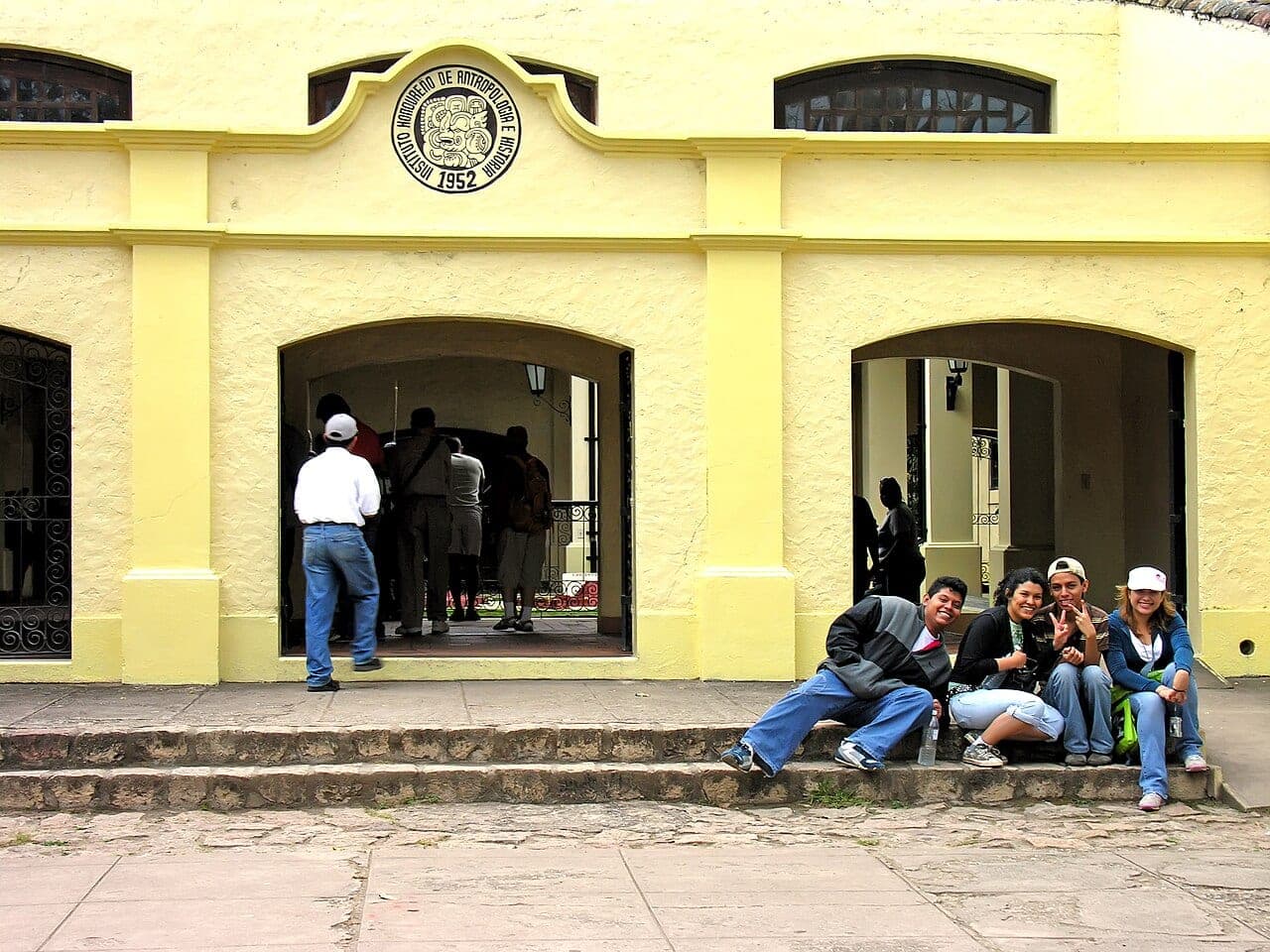
Honduras occupies the broad waist of Central America, a mountainous country that faces the Caribbean along a long northern coast and reaches the Pacific only through the Gulf of Fonseca. Its landscapes hold some of the most storied ground in the Americas: in the western valleys, the Maya city of Copán, where sculpture in stone reached a height matched almost nowhere else in the Maya world; in the far east, the Río Plátano rainforest and the roadless region of La Mosquitia; and along the shore between them, the coral cays of the Bay Islands and the villages of the Garifuna, an Afro-Indigenous people whose language, music and dance the world has recognised as heritage worth protecting.
Memory in Honduras is layered rather than singular. Catholic families keep the nine nights of the novenario and gather in the cemeteries on the Day of the Dead; the descendants of the Maya and the Lenca fold older observances into the same November days; and on the Caribbean coast the Garifuna hold the dugu, a rite that can call a scattered family home across borders to feast with its ancestors.
Honduras covers roughly 112,000 square kilometres, the second-largest country in Central America, and is home to about 10.5 million people (Britannica). It borders Guatemala to the west, El Salvador and the Gulf of Fonseca to the south-west, and Nicaragua to the south-east, while its Caribbean coast takes in the Bay Islands of Roatán, Utila and Guanaja. The interior is highland country of pine-covered mountains and fertile valleys where most people live, while the eastern lowlands of La Mosquitia remain among the least populated in the hemisphere.
The population is overwhelmingly mestizo, of mixed Indigenous and European descent, alongside Lenca, Miskito, Maya Chʼortiʼ, Pech, Tawahka and Tolupan communities and the Afro-Indigenous Garifuna and English-speaking islanders of the Bay Islands. Spanish is the national language, and the currency is the lempira, named for a sixteenth-century Lenca leader (Wikipedia). Tegucigalpa has been the capital since 1880, and San Pedro Sula anchors the industrial north. The economy still leans on the land, on highland coffee and on coastal bananas and African palm, the legacy of a fruit trade that shaped the twentieth century.
Tegucigalpa. The capital sits in a bowl of hills in the south-central highlands, a former silver- and gold-mining settlement whose colonial core climbs steep streets around the Cathedral of San Miguel and the church of Los Dolores. It became the national capital in 1880, displacing Comayagua, and today forms a single central district with Comayagüela across the Choluteca River. Its name is usually traced to Nahuatl and glossed as "hill of silver".
San Pedro Sula. Founded in 1536 by Pedro de Alvarado in the Sula Valley, the city grew into the country's manufacturing and commercial engine, close to the Caribbean port of Puerto Cortés and the banana and textile economy of the north. It is the second city of Honduras and the gateway to the coast and the Bay Islands.
Comayagua. For more than three centuries Comayagua was the colonial capital of Honduras, founded in 1537 in a valley close to the silver and gold mines that made the province valuable to Spain (Britannica). Its old centre keeps one of the best-preserved colonial ensembles in the country, crowned by the Cathedral of the Immaculate Conception, completed in the early eighteenth century, whose tower holds medieval clockwork of Moorish manufacture, brought from Spain and counted among the oldest working clocks in the Americas (Wikipedia).
Copán Ruinas. The small town of Copán Ruinas, in the western department of Copán near the Guatemalan border, serves the archaeological site a short distance away. Its cobbled streets, colonial church and the Copán Sculpture Museum make it the base for visitors to one of the great Classic Maya cities.
Long before the Spanish arrived, western Honduras lay at the south-eastern frontier of the Maya world, and its greatest city was Copán. A dynasty founded in AD 426 by the lord K'inich Yax K'uk' Mo' ruled the valley for four centuries, and under its kings Copán became a centre of Maya art and astronomy whose carved monuments are unusually deep and lifelike (UNESCO). The Hieroglyphic Stairway, first raised by the thirteenth ruler and reinstalled and expanded by K'ak' Yipyaj Chan K'awiil in AD 755, carries more than 2,200 glyphs, the longest known inscription of the Maya (Smithsonian). The sixteenth king, Yax Pasaj Chan Yopaat, dedicated Altar Q, whose four sides portray all sixteen rulers of the line. The dynasty ended early in the ninth century, and the city was gradually reclaimed by forest.
 Copan carries the longest Maya inscription known, a stairway of some two thousand glyphs, which was reassembled in the wrong order by early excavators and is still being sorted out. Photograph by Ridiculopathy, CC0, via Wikimedia Commons.
Beyond the Maya country, the central and western highlands were the land of the Lenca, while the north and east held the Pech, the Tawahka, the Tolupan and, along the rivers and lagoons, the Miskito. Christopher Columbus reached the coast on his fourth voyage in 1502 and, by the enduring account, named the country Honduras for the deep waters offshore. Spanish conquest began in the 1520s and met determined resistance; the Lenca leader Lempira rallied many communities against the invaders in the 1530s before he was killed, and his memory later gave the national currency its name (Wikipedia). Colonial Honduras became a province built on mining, silver and gold drawing settlers inland, the provincial and episcopal seat settling at Comayagua, and towns such as Tegucigalpa growing up around the mines.
Honduras gained independence from Spain in 1821 and, after a brief union with Mexico, became one of the five states of the Federal Republic of Central America (1823–1838), emerging as a separate republic when that union dissolved. The nineteenth century was politically unstable, but it was the twentieth that most shaped the modern economy. From the 1900s, United States firms, chiefly the United Fruit Company, the Standard Fruit Company and Samuel Zemurray's Cuyamel, planted vast banana estates on the north coast and built the railways and ports to serve them; by 1913 the great majority of the country's foreign trade ran to the United States, and the writer O. Henry, who had spent months in Trujillo in the 1890s, coined the phrase "banana republic" from what he saw. The trade brought roads, wage work and port towns, and also a long dependence on a single export and repeated foreign intervention, a history Hondurans record plainly.
Spanish is the language of Honduras, spoken in a Central American form and carrying, in the west and centre, words and place names inherited from Nahuatl and older Indigenous tongues. Several Indigenous languages survive alongside it: Miskito on the north-eastern coast, Pech, Tawahka (a Sumu language), Tolupan and Maya Chʼortiʼ near the Guatemalan border, though most are endangered and the Lenca language itself has not been spoken as a mother tongue for generations. On the Bay Islands, a Caribbean English creole is the everyday speech of the older communities.
The Garifuna language is the country's most distinctive linguistic inheritance. An Arawakan language carrying Cariban and African elements, with later loans from French, English and Spanish, it developed among the Garifuna people and is spoken today along the Caribbean coast and in a large diaspora; UNESCO recognised it, with Garifuna music and dance, in 2001 and again in 2008 (UNESCO). As for the country's own name, honduras is simply the Spanish word for "depths", applied, in the account handed down since Columbus, to the deep sea off the northern coast.
Honduran culture draws on three deep sources: the Maya and other Indigenous peoples, the Hispanic Catholic inheritance of the colonial centuries, and the Afro-Indigenous cultures of the Caribbean coast. The Maya legacy is clearest at Copán, but it survives too in the weaving, farming and ritual life of the Chʼortiʼ Maya of the west. Lenca communities in the highland departments of Lempira, Intibucá and La Paz are known above all for their pottery, hand-built and smoke-fired in forms and black-on-white patterns passed down the female line, and for the guancasco, a ceremony of peace in which two towns exchange visits and patron saints to renew old alliances.
On the coast, Garifuna culture gives Honduras one of its most recognisable voices. Punta, the best-known Garifuna dance and music, is driven by the paired primero and segunda drums, call-and-response singing, maracas and turtle-shell percussion, and its offshoot punta rock has carried the sound across the region. Food ties the country together at the table: the baleada, a folded wheat-flour tortilla filled with refried beans, cheese and cream, is the national everyday dish and traces its roots to Lenca flatbread, while the north coast and islands favour coconut-cooked seafood, conch soup, the Garifuna cassava bread called ereba and the plantain-and-seafood dish machuca.
Honduras is a predominantly Christian country. Roman Catholicism, brought by the Spanish and long the established faith, remains a leading tradition, framing patron-saint festivals, Holy Week processions and the observances for the dead. Over recent decades Protestant, and especially Evangelical and Pentecostal, churches have grown rapidly, so that a large share of Hondurans now identify as Protestant and the two traditions are close in size (Britannica).
Alongside and within Christian practice, older spiritualities endure. Among the Lenca and other Indigenous peoples, Catholic devotion blends with pre-Hispanic understandings of the land, the ancestors and the saints, expressed in rites such as the guancasco and in offerings at planting and harvest. The Garifuna keep a distinct religious world in which Catholic saints coexist with the gubida, the ancestral spirits, whose relationship with the living is tended by a spiritual specialist, the buyei (Wikipedia). For the Garifuna, the living and the dead remain members of one family, an idea that shapes the community's most important ceremonies.
For most Honduran families, mourning follows the Catholic pattern of the wider Hispanic world. The wake, the velorio, keeps company with the body through the night; burial follows quickly, and the nine days of the novenario bring relatives and neighbours together each evening to pray the rosary for the soul of the departed. Anniversaries, especially the first, are marked with a Mass and a gathering, and a framed photograph of the dead keeps a place in the home.
The Garifuna carry one of the most elaborate remembrance rites in the Americas, the dugu. Understood as a reunion of the living and the dead, it is held when the gubida, the ancestral spirits, are felt to need attention, often when illness or misfortune signals that an ancestor has been neglected. Led by a buyei, the ceremony takes place in a temple called the dabuyaba and can last several days, as the family prepares great quantities of food, including cassava bread, and drummers and singers call the ancestors to the gathering (Wikipedia). Offerings of food and drink are shared with the gubida and then returned to the earth or the sea. Because so many Garifuna now live abroad, a dugu can draw a dispersed family home across borders, holding the community together as much as honouring its dead.
At the start of November the whole country turns to its cemeteries. On the Day of the Dead, the Día de los Difuntos of 1 and 2 November, families clean and repaint the graves, carry flowers and wreaths, and gather to eat, pray and remember, sometimes with music beside the tombs. Regional custom gives the days a local colour: in the Lenca west, households prepare ayote en miel, squash cooked in raw-sugar syrup, and set portions in earthen vessels near the door so the returning dead may share the food they loved in life. The observance joins the Catholic feasts of All Saints and All Souls to far older ideas of hospitality toward the ancestors.
Honduran records are parish records, and the twentieth century's most important documents belong to a fruit company.
Catholic registers begin in the sixteenth century in Comayagua and the older towns, and civil registration dates from the later nineteenth century, held by the Registro Nacional de las Personas. The Archivo Nacional in Tegucigalpa holds the national series, and Guatemala's Archivo General de Centro América holds much of the colonial material for the whole isthmus.
Copán is the deep record, and it is written: the Maya inscriptions there give a dynastic sequence of sixteen rulers with dates, which is a royal genealogy carved in stone and among the most complete in the Americas.
The banana companies are the modern archive. United Fruit and Standard Fruit built railways, ports and towns on the north coast from the 1890s, employed a very large share of the working population, and recruited labour from Jamaica, Belize and the Caribbean, which is why the Bay Islands and the coast are English-speaking. Company employment, housing and medical records document that workforce, and the 1954 general strike that began on those plantations is the founding event of Honduran organised labour.
The Garifuna arrived on Roatán in 1797 after the deportation from Saint Vincent and spread along the coast; their communities hold their own genealogy and their land claims have depended on demonstrating it.
Migration north is the current record, and it is made by other countries' border agencies.
Honduras has two properties on the UNESCO World Heritage List, both inscribed early. The Maya Site of Copán was listed in 1980 for the exceptional quality of its sculpture and the record preserved in its inscriptions; conservation focuses on the fragile Hieroglyphic Stairway, the tunnels that reveal buried temples such as the Rosalila, and the sculpture museum that shelters original monuments from the weather (UNESCO). The Río Plátano Biosphere Reserve, inscribed in 1982, protects about 350,000 hectares of the Mosquitia, running from mountain headwaters to the Caribbean shore and forming, with the neighbouring Bosawás reserve in Nicaragua, the largest block of forest in Central America (UNESCO). Home to Miskito, Pech and Tawahka communities and abundant wildlife, the reserve has spent long periods on the List of World Heritage in Danger under pressure from settlement, logging and poaching.
Beyond the built and natural sites, the country safeguards living heritage. The language, dance and music of the Garifuna, shared with Belize, Guatemala and Nicaragua, were proclaimed by UNESCO in 2001 and inscribed on the Representative List of the Intangible Cultural Heritage of Humanity in 2008, a recognition that has encouraged Garifuna schools, drumming programmes and cultural organisations to pass the traditions on (UNESCO).
Copán is among the most thoroughly documented of all Maya cities. Generations of archaeologists have mapped, photographed and modelled its monuments, and digital records of the Hieroglyphic Stairway and the reconstructed Rosalila temple let the fragile carvings be studied without further wear; online collections such as the Smithsonian's Living Maya Time gallery bring the site to a wide audience (Smithsonian).
The Mosquitia has yielded to newer technology too. Airborne laser scanning, or LiDAR, flown over the rainforest from 2012 and followed by expeditions from 2015, revealed extensive pre-Columbian settlement long hidden under the canopy, ruins tied to the old legend of a "white city" in the forest (Wikipedia). For living culture, Garifuna communities and their diaspora have built online dictionaries, lessons and recordings that reach speakers far from the shore.
Honduran creativity today speaks in several registers. In the visual arts, the primitivist painter José Antonio Velásquez, who portrayed his mountain village of San Antonio de Oriente, brought Honduran subjects to international notice in the mid-twentieth century. In letters, the writer Froylán Turcios and the essayist and historian Rafael Heliodoro Valle helped define a national literature, while Ramón Amaya Amador's novel Prisión verde gave the banana plantations their most enduring fictional record.
Music carries the country's culture furthest. Punta rock, developed from Garifuna drumming, has spread across Central America and the diaspora, and Garifuna performers have won a wide following for coastal song. A large Honduran community abroad, especially in the United States, keeps these traditions in circulation and in steady contact with home.
Copán, a Maya capital preserved. A century of careful work has turned a forest-buried ruin into one of the best-understood Maya cities, its stairway of some 2,200 glyphs conserved in place, so the record left by sixteen kings can still be read.
The Garifuna voice recognised. UNESCO's recognition of Garifuna language, music and dance, in 2001 and again in 2008, gave an Afro-Indigenous people spread across four countries a shared claim to their heritage and a spur to teach it, keeping the drums, the dances and the language alive.
A rainforest still standing. Despite the pressures on it, the Río Plátano Biosphere Reserve keeps the largest rainforest in Honduras intact, safeguarding the watershed, its wildlife and the Miskito, Pech and Tawahka communities whose ways of life depend on it.
Copan carries the longest Maya inscription known, a stairway of some two thousand glyphs, which was reassembled in the wrong order by early excavators and is still being sorted out. Photograph by Ridiculopathy, CC0, via Wikimedia Commons.
Beyond the Maya country, the central and western highlands were the land of the Lenca, while the north and east held the Pech, the Tawahka, the Tolupan and, along the rivers and lagoons, the Miskito. Christopher Columbus reached the coast on his fourth voyage in 1502 and, by the enduring account, named the country Honduras for the deep waters offshore. Spanish conquest began in the 1520s and met determined resistance; the Lenca leader Lempira rallied many communities against the invaders in the 1530s before he was killed, and his memory later gave the national currency its name (Wikipedia). Colonial Honduras became a province built on mining, silver and gold drawing settlers inland, the provincial and episcopal seat settling at Comayagua, and towns such as Tegucigalpa growing up around the mines.
Honduras gained independence from Spain in 1821 and, after a brief union with Mexico, became one of the five states of the Federal Republic of Central America (1823–1838), emerging as a separate republic when that union dissolved. The nineteenth century was politically unstable, but it was the twentieth that most shaped the modern economy. From the 1900s, United States firms, chiefly the United Fruit Company, the Standard Fruit Company and Samuel Zemurray's Cuyamel, planted vast banana estates on the north coast and built the railways and ports to serve them; by 1913 the great majority of the country's foreign trade ran to the United States, and the writer O. Henry, who had spent months in Trujillo in the 1890s, coined the phrase "banana republic" from what he saw. The trade brought roads, wage work and port towns, and also a long dependence on a single export and repeated foreign intervention, a history Hondurans record plainly.
Spanish is the language of Honduras, spoken in a Central American form and carrying, in the west and centre, words and place names inherited from Nahuatl and older Indigenous tongues. Several Indigenous languages survive alongside it: Miskito on the north-eastern coast, Pech, Tawahka (a Sumu language), Tolupan and Maya Chʼortiʼ near the Guatemalan border, though most are endangered and the Lenca language itself has not been spoken as a mother tongue for generations. On the Bay Islands, a Caribbean English creole is the everyday speech of the older communities.
The Garifuna language is the country's most distinctive linguistic inheritance. An Arawakan language carrying Cariban and African elements, with later loans from French, English and Spanish, it developed among the Garifuna people and is spoken today along the Caribbean coast and in a large diaspora; UNESCO recognised it, with Garifuna music and dance, in 2001 and again in 2008 (UNESCO). As for the country's own name, honduras is simply the Spanish word for "depths", applied, in the account handed down since Columbus, to the deep sea off the northern coast.
Honduran culture draws on three deep sources: the Maya and other Indigenous peoples, the Hispanic Catholic inheritance of the colonial centuries, and the Afro-Indigenous cultures of the Caribbean coast. The Maya legacy is clearest at Copán, but it survives too in the weaving, farming and ritual life of the Chʼortiʼ Maya of the west. Lenca communities in the highland departments of Lempira, Intibucá and La Paz are known above all for their pottery, hand-built and smoke-fired in forms and black-on-white patterns passed down the female line, and for the guancasco, a ceremony of peace in which two towns exchange visits and patron saints to renew old alliances.
On the coast, Garifuna culture gives Honduras one of its most recognisable voices. Punta, the best-known Garifuna dance and music, is driven by the paired primero and segunda drums, call-and-response singing, maracas and turtle-shell percussion, and its offshoot punta rock has carried the sound across the region. Food ties the country together at the table: the baleada, a folded wheat-flour tortilla filled with refried beans, cheese and cream, is the national everyday dish and traces its roots to Lenca flatbread, while the north coast and islands favour coconut-cooked seafood, conch soup, the Garifuna cassava bread called ereba and the plantain-and-seafood dish machuca.
Honduras is a predominantly Christian country. Roman Catholicism, brought by the Spanish and long the established faith, remains a leading tradition, framing patron-saint festivals, Holy Week processions and the observances for the dead. Over recent decades Protestant, and especially Evangelical and Pentecostal, churches have grown rapidly, so that a large share of Hondurans now identify as Protestant and the two traditions are close in size (Britannica).
Alongside and within Christian practice, older spiritualities endure. Among the Lenca and other Indigenous peoples, Catholic devotion blends with pre-Hispanic understandings of the land, the ancestors and the saints, expressed in rites such as the guancasco and in offerings at planting and harvest. The Garifuna keep a distinct religious world in which Catholic saints coexist with the gubida, the ancestral spirits, whose relationship with the living is tended by a spiritual specialist, the buyei (Wikipedia). For the Garifuna, the living and the dead remain members of one family, an idea that shapes the community's most important ceremonies.
For most Honduran families, mourning follows the Catholic pattern of the wider Hispanic world. The wake, the velorio, keeps company with the body through the night; burial follows quickly, and the nine days of the novenario bring relatives and neighbours together each evening to pray the rosary for the soul of the departed. Anniversaries, especially the first, are marked with a Mass and a gathering, and a framed photograph of the dead keeps a place in the home.
The Garifuna carry one of the most elaborate remembrance rites in the Americas, the dugu. Understood as a reunion of the living and the dead, it is held when the gubida, the ancestral spirits, are felt to need attention, often when illness or misfortune signals that an ancestor has been neglected. Led by a buyei, the ceremony takes place in a temple called the dabuyaba and can last several days, as the family prepares great quantities of food, including cassava bread, and drummers and singers call the ancestors to the gathering (Wikipedia). Offerings of food and drink are shared with the gubida and then returned to the earth or the sea. Because so many Garifuna now live abroad, a dugu can draw a dispersed family home across borders, holding the community together as much as honouring its dead.
At the start of November the whole country turns to its cemeteries. On the Day of the Dead, the Día de los Difuntos of 1 and 2 November, families clean and repaint the graves, carry flowers and wreaths, and gather to eat, pray and remember, sometimes with music beside the tombs. Regional custom gives the days a local colour: in the Lenca west, households prepare ayote en miel, squash cooked in raw-sugar syrup, and set portions in earthen vessels near the door so the returning dead may share the food they loved in life. The observance joins the Catholic feasts of All Saints and All Souls to far older ideas of hospitality toward the ancestors.
Honduran records are parish records, and the twentieth century's most important documents belong to a fruit company.
Catholic registers begin in the sixteenth century in Comayagua and the older towns, and civil registration dates from the later nineteenth century, held by the Registro Nacional de las Personas. The Archivo Nacional in Tegucigalpa holds the national series, and Guatemala's Archivo General de Centro América holds much of the colonial material for the whole isthmus.
Copán is the deep record, and it is written: the Maya inscriptions there give a dynastic sequence of sixteen rulers with dates, which is a royal genealogy carved in stone and among the most complete in the Americas.
The banana companies are the modern archive. United Fruit and Standard Fruit built railways, ports and towns on the north coast from the 1890s, employed a very large share of the working population, and recruited labour from Jamaica, Belize and the Caribbean, which is why the Bay Islands and the coast are English-speaking. Company employment, housing and medical records document that workforce, and the 1954 general strike that began on those plantations is the founding event of Honduran organised labour.
The Garifuna arrived on Roatán in 1797 after the deportation from Saint Vincent and spread along the coast; their communities hold their own genealogy and their land claims have depended on demonstrating it.
Migration north is the current record, and it is made by other countries' border agencies.
Honduras has two properties on the UNESCO World Heritage List, both inscribed early. The Maya Site of Copán was listed in 1980 for the exceptional quality of its sculpture and the record preserved in its inscriptions; conservation focuses on the fragile Hieroglyphic Stairway, the tunnels that reveal buried temples such as the Rosalila, and the sculpture museum that shelters original monuments from the weather (UNESCO). The Río Plátano Biosphere Reserve, inscribed in 1982, protects about 350,000 hectares of the Mosquitia, running from mountain headwaters to the Caribbean shore and forming, with the neighbouring Bosawás reserve in Nicaragua, the largest block of forest in Central America (UNESCO). Home to Miskito, Pech and Tawahka communities and abundant wildlife, the reserve has spent long periods on the List of World Heritage in Danger under pressure from settlement, logging and poaching.
Beyond the built and natural sites, the country safeguards living heritage. The language, dance and music of the Garifuna, shared with Belize, Guatemala and Nicaragua, were proclaimed by UNESCO in 2001 and inscribed on the Representative List of the Intangible Cultural Heritage of Humanity in 2008, a recognition that has encouraged Garifuna schools, drumming programmes and cultural organisations to pass the traditions on (UNESCO).
Copán is among the most thoroughly documented of all Maya cities. Generations of archaeologists have mapped, photographed and modelled its monuments, and digital records of the Hieroglyphic Stairway and the reconstructed Rosalila temple let the fragile carvings be studied without further wear; online collections such as the Smithsonian's Living Maya Time gallery bring the site to a wide audience (Smithsonian).
The Mosquitia has yielded to newer technology too. Airborne laser scanning, or LiDAR, flown over the rainforest from 2012 and followed by expeditions from 2015, revealed extensive pre-Columbian settlement long hidden under the canopy, ruins tied to the old legend of a "white city" in the forest (Wikipedia). For living culture, Garifuna communities and their diaspora have built online dictionaries, lessons and recordings that reach speakers far from the shore.
Honduran creativity today speaks in several registers. In the visual arts, the primitivist painter José Antonio Velásquez, who portrayed his mountain village of San Antonio de Oriente, brought Honduran subjects to international notice in the mid-twentieth century. In letters, the writer Froylán Turcios and the essayist and historian Rafael Heliodoro Valle helped define a national literature, while Ramón Amaya Amador's novel Prisión verde gave the banana plantations their most enduring fictional record.
Music carries the country's culture furthest. Punta rock, developed from Garifuna drumming, has spread across Central America and the diaspora, and Garifuna performers have won a wide following for coastal song. A large Honduran community abroad, especially in the United States, keeps these traditions in circulation and in steady contact with home.
Copán, a Maya capital preserved. A century of careful work has turned a forest-buried ruin into one of the best-understood Maya cities, its stairway of some 2,200 glyphs conserved in place, so the record left by sixteen kings can still be read.
The Garifuna voice recognised. UNESCO's recognition of Garifuna language, music and dance, in 2001 and again in 2008, gave an Afro-Indigenous people spread across four countries a shared claim to their heritage and a spur to teach it, keeping the drums, the dances and the language alive.
A rainforest still standing. Despite the pressures on it, the Río Plátano Biosphere Reserve keeps the largest rainforest in Honduras intact, safeguarding the watershed, its wildlife and the Miskito, Pech and Tawahka communities whose ways of life depend on it.
National Overview
Notable Cities
Historical Foundations
Linguistic and Etymological Roots
Cultural Identity
Religion and Spirituality
Remembrance and Mourning Traditions
Tracing a Family in Honduras
Heritage Preservation Efforts
Digital Heritage
Contemporary Cultural Influences
Success Stories
References and resources
- UNESCO World Heritage Centre: Maya Site of Copán. The 1980 inscription, with the Hieroglyphic Stairway and the stelae of the Great Plaza.
- UNESCO World Heritage Centre: Río Plátano Biosphere Reserve. The 1982 inscription protecting the Mosquitia rainforest.
- UNESCO: Language, dance and music of the Garifuna. The intangible-heritage listing shared with Belize, Guatemala and Nicaragua.
- Encyclopaedia Britannica: Honduras. Geography, population, history and religion.
- Encyclopaedia Britannica: Copán. The Maya city and its dynasty.
- Encyclopaedia Britannica: Comayagua. The colonial capital and its cathedral.
- Smithsonian NMAI, Living Maya Time: Copán. Copán's monuments and inscriptions.
- Dugu ceremony (Wikipedia). The Garifuna ancestral rite, the buyei and the dabuyaba.
- Comayagua cathedral clock (Wikipedia). The medieval Moorish clockwork in the cathedral tower.
- Honduran lempira (Wikipedia). The currency named for the Lenca leader Lempira.
- White City legend (Wikipedia). The Mosquitia ruins and the LiDAR surveys.