Heritage · Country
Barbados Culture and Heritage
The easternmost island of the Caribbean wears an orderly English surface of saintly parishes and cricket greens, yet its wealth was built by Africans held in bondage on the sugar estates. A guide to Barbados heritage, and to how the island now remembers both its dead and its past.Written to last.
By Confinity Heritage Editorial · Updated 2026-07-31 · 8-minute readQuiet tools, kept out of the way.
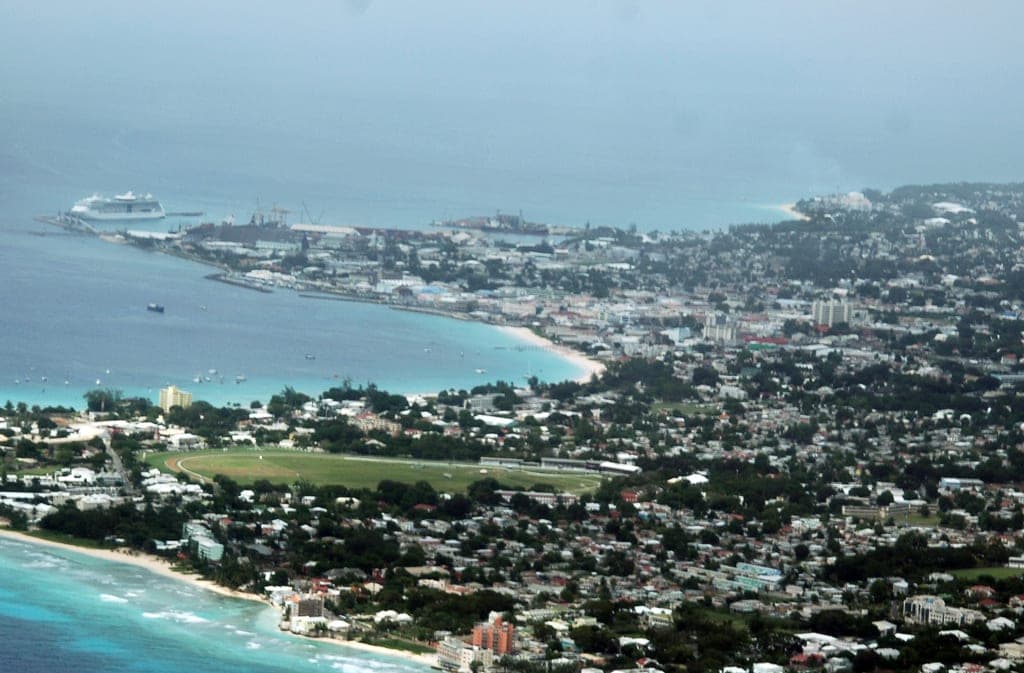
Barbados is the easternmost island of the Caribbean, a low coral platform of about 431 square kilometres set apart from the volcanic arc of the Lesser Antilles, alone in the open Atlantic. For more than three centuries it was governed from London so continuously that it earned the nickname Little England, and the resemblance is real: eleven parishes named for saints, a legislature sitting since 1639, village cricket and Anglican spires on the skyline. Yet that composed English surface rests on one of the most complete machines of enslavement the Americas ever built. The money that raised the great houses and the garrison church was made by Africans held in bondage on the sugar estates, and Barbadian memory has spent the last half-century learning to hold both truths at once.
The island's own culture grew directly out of that history. The Crop Over festival began as the celebration enslaved workers held at the close of the cane harvest; the Nine Night wake carries an Akan rhythm of mourning across the Atlantic; and the Newton burial ground, the earliest and largest excavated cemetery of enslaved people in the hemisphere, has become a site of national reckoning. In November 2021 Barbados removed the British monarch as head of state and became a republic, naming the singer Rihanna a national hero on the same night.
Barbados sits alone about 160 kilometres east of the main Lesser Antillean chain, often the first Caribbean land a ship reaches from across the Atlantic, a position that shaped its role as both a landfall and a slaving entrepot. Unlike its volcanic neighbours it is built of coral limestone, which gives it gentle terraces, no active volcano and an underground system of caves and springs. The land rises only to Mount Hillaby at 340 metres, and sugar cane still covers much of the interior (Britannica).
Roughly 280,000 people live on the island, the great majority of African descent, with minorities of mixed, European and Indian heritage and a small long-settled community of Redlegs, descended from indentured and transported poor whites of the seventeenth century. The country is divided into eleven parishes, each named for a saint, a map drawn by the Anglican church in the earliest years of settlement; Bridgetown, in Saint Michael, is the capital and only city. Since 30 November 2021 Barbados has been a parliamentary republic within the Commonwealth, led by a prime minister with a ceremonial president as head of state (House of Commons Library); its single UNESCO World Heritage property is Historic Bridgetown and its Garrison.
Bridgetown. The capital grew around the Careenage, the inlet where wooden ships were once hauled ashore to be cleaned, and it remains the island's centre of government and trade. Its Parliament houses one of the oldest legislatures in the Commonwealth, meeting since 1639, and the surrounding Historic Bridgetown, with its Chamberlain Bridge and coral-stone warehouses, forms the core of the UNESCO listing inscribed in 2011. At its heart is National Heroes Square, renamed from Trafalgar Square, where a statue of Admiral Nelson stood from 1813 until it was removed in 2020 and taken to the Barbados Museum, a deliberate reordering of the city's memory (National Heroes Square).
 Bridgetown's serpentine street plan is medieval rather than gridded, unusual for a colonial town, and the garrison beside it was the headquarters of the British military in the eastern Caribbean. Photograph by Sachiko Haraguchi, CC BY-SA 3.0 IGO, via Wikimedia Commons.
Holetown. On the west coast in Saint James, Holetown marks where the first English settlers landed on 17 February 1627. A monument and the annual Holetown Festival commemorate the founding, and the nearby St James Parish Church rises on the site of one of the island's first places of worship.
Speightstown. The second town, in the northern parish of Saint Peter, was once the island's busiest sugar port, trading so heavily with Bristol that it took the nickname Little Bristol. Its restored waterfront and the Arlington House museum recall the era when its jetties shipped Barbadian sugar across the Atlantic.
Oistins. A fishing town on the south coast in Christ Church, Oistins is the centre of the island's fishing industry and home to the weekly Friday fish fry, where the community gathers over grilled marlin, flying fish and music. The Charter of Barbados was signed here in 1652, and each Easter the town holds the Oistins Fish Festival in honour of its fisherfolk.
Barbados was not empty before Europeans came. Saladoid people from the South American mainland settled the island as early as the fourth to seventh centuries AD, followed by Arawak and later Kalinago communities who fished its coasts and farmed its interior. By the time Europeans took interest the population had gone, thinned by Spanish slave raids and the difficulty of the crossing, so the English found the island uninhabited (Britannica: history of Barbados). Portuguese sailors had already given it the name it still carries.
Bridgetown's serpentine street plan is medieval rather than gridded, unusual for a colonial town, and the garrison beside it was the headquarters of the British military in the eastern Caribbean. Photograph by Sachiko Haraguchi, CC BY-SA 3.0 IGO, via Wikimedia Commons.
Holetown. On the west coast in Saint James, Holetown marks where the first English settlers landed on 17 February 1627. A monument and the annual Holetown Festival commemorate the founding, and the nearby St James Parish Church rises on the site of one of the island's first places of worship.
Speightstown. The second town, in the northern parish of Saint Peter, was once the island's busiest sugar port, trading so heavily with Bristol that it took the nickname Little Bristol. Its restored waterfront and the Arlington House museum recall the era when its jetties shipped Barbadian sugar across the Atlantic.
Oistins. A fishing town on the south coast in Christ Church, Oistins is the centre of the island's fishing industry and home to the weekly Friday fish fry, where the community gathers over grilled marlin, flying fish and music. The Charter of Barbados was signed here in 1652, and each Easter the town holds the Oistins Fish Festival in honour of its fisherfolk.
Barbados was not empty before Europeans came. Saladoid people from the South American mainland settled the island as early as the fourth to seventh centuries AD, followed by Arawak and later Kalinago communities who fished its coasts and farmed its interior. By the time Europeans took interest the population had gone, thinned by Spanish slave raids and the difficulty of the crossing, so the English found the island uninhabited (Britannica: history of Barbados). Portuguese sailors had already given it the name it still carries.
 St Nicholas Abbey is one of a very small number of Jacobean houses left anywhere in the Americas, built in the 1650s on the profits of sugar and enslaved labour. Public domain, via Wikimedia Commons.
English settlement began at Holetown in 1627, and within a generation the colony had found its fortune in sugar, learned in part from Dutch planters and Brazil. By the 1650s Barbados was the wealthiest English colony in the Americas, its land carved into estates and worked by enslaved Africans shipped across the Atlantic in growing numbers. The system was brutal and demographically murderous, sustained only by constant new arrivals, and Barbados became in turn a distribution point from which enslaved people and plantation methods were carried on to Jamaica, the Carolinas and beyond. In April 1816 the largest slave revolt in the island's history, later named for its leader Bussa, rose across the southern parishes before it was crushed (Bussa's rebellion). Emancipation came on 1 August 1834, but it was followed by four years of compulsory apprenticeship that ended only in 1838, freeing the formerly enslaved in name well before it freed them in fact.
The century that followed brought a widening franchise, a labour movement born of the unrest of the 1930s, and full internal self-government. Barbados became independent on 30 November 1966 under Errol Barrow, remembered as the father of independence, while keeping the British sovereign as queen. Fifty-five years later, on 30 November 2021, it removed the crown and became a republic, with Dame Sandra Mason as its first president.
English is the official language of Barbados, the medium of law, church and school since the seventeenth century and one root of the Little England nickname. Alongside it lives Bajan, an English-lexicon creole shaped by the West African languages of the enslaved, spoken in the home, the rum shop and the fish market (Bajan Creole). It carries African grammar and cadence beneath English words and shifts toward standard English according to setting; it is the everyday voice of the island.
The country's name is older than its English history. The Portuguese, who touched the island in the sixteenth century, called it Os Barbados, meaning "the bearded ones", a name usually explained by the bearded fig tree, Ficus citrifolia, whose long aerial roots hang like beards and which grew across the island; the tree is now a national emblem. Barbadians also call their home Bim, an affectionate name whose likeliest origin lies in the Igbo phrase be mu, "my home" or "my people", carried across the Atlantic by the enslaved, so that even the island's pet name records an African inheritance.
The defining event of the Barbadian year is Crop Over. It began in the eighteenth century as the celebration held when the last cane was cut, a rare release for enslaved and later free plantation workers, with the crowning of a harvest king and queen. The festival lapsed with the sugar industry by the 1940s and was revived in 1974 as a national cultural festival (Crop Over). It now runs through July and climaxes on the first Monday of August in Grand Kadooment, a costumed street parade whose name is thought to come from "commencement", while the weeks between fill with calypso and soca competitions, among them the Pic-O-De-Crop crown.
Music carries the island's memory. The tuk band, a fife-and-drum ensemble of kettle drum, bass drum and penny whistle, fuses British military music with African rhythm and still leads processions and the displays of the Landship, a folk friendly society that parodies the Royal Navy while working as a burial and mutual-aid club. In the 1960s the Bajan musician Jackie Opel created spouge, a home-grown genre fusing Jamaican ska with Trinidadian calypso, the sound of the island until Opel died in a car crash in 1970 (Spouge). At the table, cou-cou, a cornmeal and okra pudding served with fried or steamed flying fish, is the national dish, the flying fish itself a national symbol, alongside pudding and souse and the rum for which the island claims to be the birthplace.
Barbados is overwhelmingly Christian, and its Christianity is stamped by the Church of England. Anglicanism was the established religion from the first years of settlement, which is why the island is divided into eleven parishes each built around its church, and as late as the 1871 census most Barbadians were counted Anglican. That share has since fallen sharply as Methodist, Moravian, Roman Catholic and Pentecostal churches have grown, but the parish map remains the imprint of the old establishment.
Beneath and beside the churches run traditions that carried African spirituality into a Christian society. The Spiritual Baptists, known in Barbados as Tie-heads for the coloured cloths wound about their heads, were established on the island in the 1950s and blend fervent worship with African-derived practice. Older still are beliefs in the continuing presence of the dead that surface in wake customs and folk healing, long discouraged yet persistent. Together they make Barbadian religious life more layered than its Anglican reputation suggests.
A Barbadian funeral is a communal duty. Churches fill for the service, whole neighbourhoods attend, and burial societies, mutual-aid clubs into which families pay for years, exist so that no one is buried without dignity. The most distinctive custom is the wake, and above all the Nine Night. Drawn from the Akan and wider West African traditions of the enslaved, it holds that the spirit of the dead lingers near the living for nine nights before departing; the household gathers each evening to sing, pray and tell stories, and on the ninth night the largest gathering sends the spirit on, with old customs of turning furniture or marking the threshold so the dead will not return (Nine nights). Grief and fellowship are deliberately mixed, and the ninth night can be as much celebration as sorrow.
The island also remembers slavery itself, and has made that remembrance public. The Newton Enslaved Burial Ground in Christ Church, excavated in the 1970s, is the earliest and largest undisturbed cemetery of enslaved people in the Americas, holding the remains of some 570 African men, women and children buried on the plantation between the late seventeenth and early nineteenth centuries (Newton Slave Burial Ground). Owned since 1993 by the Barbados Museum and Historical Society, it is now the focus of the Barbados Heritage District, a memorial and museum complex designed by the architect Sir David Adjaye to recount enslavement and its legacies (Adjaye Associates). Emancipation is honoured too: the Emancipation Statue raised in 1985, depicting the rebel Bussa breaking his chains, has become the island's foremost monument to freedom, and Bussa was named a national hero in 1998.
Barbados has the oldest and most complete records in the English-speaking Caribbean, and that is a consequence of how early and how thoroughly it was colonised.
Parish registers begin in 1637, eleven years after English settlement, and the eleven parishes have kept them since. The Barbados Department of Archives at Black Rock holds them along with deeds from the seventeenth century, wills, and civil registration from 1890. Because Barbados was densely settled, small, and never changed hands, almost nothing was lost to invasion, and the record is continuous in a way that Jamaica's and Trinidad's are not.
The slave registers of 1817 to 1834 name individuals with age, colour and origin, and Barbadian returns often give the mother, so families can be traced across successive triennial returns. Before 1817 the enslaved appear in wills, plantation inventories and levy lists, which is a harder search and frequently a possible one.
Barbados also documents the other direction. The island was the first English colony to develop sugar and the plantation labour model, and it exported both, along with people: Barbadian planters and their enslaved workers founded the Carolina colony, and Barbadians later went to build the Panama Canal and to work in Britain and North America. Emigration records, the Panama Canal Zone employment files in particular, are a substantial source.
The seventeenth-century Irish and Scottish indentured servants, transported after Cromwell's campaigns and the Monmouth rebellion, appear in the shipping and court records that sent them.
Barbados carries one UNESCO World Heritage Site, Historic Bridgetown and its Garrison, inscribed in 2011 as an outstanding example of British colonial town-building and military architecture from the seventeenth to nineteenth centuries (UNESCO). The Garrison, once the headquarters of British forces in the eastern Caribbean, encloses the Garrison Savannah racecourse, restored military buildings, the George Washington House, where the future American president stayed in 1751 on his only journey outside the mainland, and the Barbados Museum and Historical Society, housed since the 1930s in the former British military prison.
The museum holds more than 500,000 objects and the records of the island's social, military and natural history (Barbados Museum). Beyond it, plantation great houses have been conserved as working heritage: St Nicholas Abbey in Saint Peter, built about 1658 and one of only three Jacobean mansions surviving in the Western Hemisphere, has been restored as a museum and working rum distillery that presents its own history, sugar and enslaved labour included (St Nicholas Abbey). Together with the parish churches and the coral-stone warehouses of Bridgetown and Speightstown, they make a built heritage the island has increasingly chosen to read honestly rather than nostalgically.
Because Barbados was both a plantation society obsessive about record-keeping and a hub of the slave trade, its archives have unusual reach, much of it now online. The University College London database of the Legacies of British Slavery makes searchable the compensation paid to slave-owners at emancipation, including the many Barbadian estates, turning a register of payments to enslavers into a tool for tracing the enslaved and their descendants (UCL Legacies of British Slavery). Barbadian parish registers, wills and census returns are digitised and freely searchable, drawing family historians across the diaspora back to the island.
Barbadian institutions have added their own projects. The Barbados Museum and Historical Society and the national archives have digitised photographs, documents and newspaper runs, among them advertisements for enslaved runaways that restore names and details to people the plantation records otherwise reduced to property.
For its size Barbados has an outsized presence in the world. Its greatest export has been cricket: the island produced the three Ws, Frank Worrell, Everton Weekes and Clyde Walcott, and Sir Garfield Sobers, regarded by many as the finest all-rounder ever to play, while Bridgetown's Kensington Oval hosted the final of the 2007 World Cup. In music the singer Rihanna, born in Saint Michael, became one of the best-selling artists in history and, in 2021, the island's eleventh national hero and its only living one. Its literature runs from George Lamming, whose novel In the Castle of My Skin is a classic of the anglophone Caribbean, to the poet and historian Kamau Brathwaite.
Barbados also carries weight in world affairs beyond its scale: Prime Minister Mia Mottley has become a leading voice on climate finance and the reform of the international financial system, and the move to a republic in 2021 was watched across the Commonwealth as a reckoning with the colonial past. A large Barbadian diaspora in Britain, the United States and Canada keeps Crop Over, cricket and Bajan cooking alive abroad.
A colonial town becomes World Heritage. Historic Bridgetown and its Garrison won UNESCO inscription in 2011, recognising the Careenage, the parliament and the garrison not as relics to admire uncritically but as a record of empire, commerce and enslavement to be conserved whole.
A burial ground becomes a memorial. The Newton Enslaved Burial Ground, the oldest and largest of its kind in the Americas, is being transformed through the Barbados Heritage District into a place of national memory for the nearly six hundred people buried there.
A great house tells the truth. St Nicholas Abbey, one of three Jacobean houses left in the hemisphere, has been restored as a working plantation and museum that presents its sugar and its enslaved labour together, heritage that does not look away.
A festival reborn. Crop Over, once the harvest release of enslaved workers and lost with the sugar economy, was revived in 1974 and is now the centre of the Barbadian cultural year.
An island reorders its symbols. The removal of Nelson from the square in 2020, the naming of Bussa and of Rihanna among the national heroes, and the republic of 2021 together mark a national decision about whom Barbados chooses to remember.
St Nicholas Abbey is one of a very small number of Jacobean houses left anywhere in the Americas, built in the 1650s on the profits of sugar and enslaved labour. Public domain, via Wikimedia Commons.
English settlement began at Holetown in 1627, and within a generation the colony had found its fortune in sugar, learned in part from Dutch planters and Brazil. By the 1650s Barbados was the wealthiest English colony in the Americas, its land carved into estates and worked by enslaved Africans shipped across the Atlantic in growing numbers. The system was brutal and demographically murderous, sustained only by constant new arrivals, and Barbados became in turn a distribution point from which enslaved people and plantation methods were carried on to Jamaica, the Carolinas and beyond. In April 1816 the largest slave revolt in the island's history, later named for its leader Bussa, rose across the southern parishes before it was crushed (Bussa's rebellion). Emancipation came on 1 August 1834, but it was followed by four years of compulsory apprenticeship that ended only in 1838, freeing the formerly enslaved in name well before it freed them in fact.
The century that followed brought a widening franchise, a labour movement born of the unrest of the 1930s, and full internal self-government. Barbados became independent on 30 November 1966 under Errol Barrow, remembered as the father of independence, while keeping the British sovereign as queen. Fifty-five years later, on 30 November 2021, it removed the crown and became a republic, with Dame Sandra Mason as its first president.
English is the official language of Barbados, the medium of law, church and school since the seventeenth century and one root of the Little England nickname. Alongside it lives Bajan, an English-lexicon creole shaped by the West African languages of the enslaved, spoken in the home, the rum shop and the fish market (Bajan Creole). It carries African grammar and cadence beneath English words and shifts toward standard English according to setting; it is the everyday voice of the island.
The country's name is older than its English history. The Portuguese, who touched the island in the sixteenth century, called it Os Barbados, meaning "the bearded ones", a name usually explained by the bearded fig tree, Ficus citrifolia, whose long aerial roots hang like beards and which grew across the island; the tree is now a national emblem. Barbadians also call their home Bim, an affectionate name whose likeliest origin lies in the Igbo phrase be mu, "my home" or "my people", carried across the Atlantic by the enslaved, so that even the island's pet name records an African inheritance.
The defining event of the Barbadian year is Crop Over. It began in the eighteenth century as the celebration held when the last cane was cut, a rare release for enslaved and later free plantation workers, with the crowning of a harvest king and queen. The festival lapsed with the sugar industry by the 1940s and was revived in 1974 as a national cultural festival (Crop Over). It now runs through July and climaxes on the first Monday of August in Grand Kadooment, a costumed street parade whose name is thought to come from "commencement", while the weeks between fill with calypso and soca competitions, among them the Pic-O-De-Crop crown.
Music carries the island's memory. The tuk band, a fife-and-drum ensemble of kettle drum, bass drum and penny whistle, fuses British military music with African rhythm and still leads processions and the displays of the Landship, a folk friendly society that parodies the Royal Navy while working as a burial and mutual-aid club. In the 1960s the Bajan musician Jackie Opel created spouge, a home-grown genre fusing Jamaican ska with Trinidadian calypso, the sound of the island until Opel died in a car crash in 1970 (Spouge). At the table, cou-cou, a cornmeal and okra pudding served with fried or steamed flying fish, is the national dish, the flying fish itself a national symbol, alongside pudding and souse and the rum for which the island claims to be the birthplace.
Barbados is overwhelmingly Christian, and its Christianity is stamped by the Church of England. Anglicanism was the established religion from the first years of settlement, which is why the island is divided into eleven parishes each built around its church, and as late as the 1871 census most Barbadians were counted Anglican. That share has since fallen sharply as Methodist, Moravian, Roman Catholic and Pentecostal churches have grown, but the parish map remains the imprint of the old establishment.
Beneath and beside the churches run traditions that carried African spirituality into a Christian society. The Spiritual Baptists, known in Barbados as Tie-heads for the coloured cloths wound about their heads, were established on the island in the 1950s and blend fervent worship with African-derived practice. Older still are beliefs in the continuing presence of the dead that surface in wake customs and folk healing, long discouraged yet persistent. Together they make Barbadian religious life more layered than its Anglican reputation suggests.
A Barbadian funeral is a communal duty. Churches fill for the service, whole neighbourhoods attend, and burial societies, mutual-aid clubs into which families pay for years, exist so that no one is buried without dignity. The most distinctive custom is the wake, and above all the Nine Night. Drawn from the Akan and wider West African traditions of the enslaved, it holds that the spirit of the dead lingers near the living for nine nights before departing; the household gathers each evening to sing, pray and tell stories, and on the ninth night the largest gathering sends the spirit on, with old customs of turning furniture or marking the threshold so the dead will not return (Nine nights). Grief and fellowship are deliberately mixed, and the ninth night can be as much celebration as sorrow.
The island also remembers slavery itself, and has made that remembrance public. The Newton Enslaved Burial Ground in Christ Church, excavated in the 1970s, is the earliest and largest undisturbed cemetery of enslaved people in the Americas, holding the remains of some 570 African men, women and children buried on the plantation between the late seventeenth and early nineteenth centuries (Newton Slave Burial Ground). Owned since 1993 by the Barbados Museum and Historical Society, it is now the focus of the Barbados Heritage District, a memorial and museum complex designed by the architect Sir David Adjaye to recount enslavement and its legacies (Adjaye Associates). Emancipation is honoured too: the Emancipation Statue raised in 1985, depicting the rebel Bussa breaking his chains, has become the island's foremost monument to freedom, and Bussa was named a national hero in 1998.
Barbados has the oldest and most complete records in the English-speaking Caribbean, and that is a consequence of how early and how thoroughly it was colonised.
Parish registers begin in 1637, eleven years after English settlement, and the eleven parishes have kept them since. The Barbados Department of Archives at Black Rock holds them along with deeds from the seventeenth century, wills, and civil registration from 1890. Because Barbados was densely settled, small, and never changed hands, almost nothing was lost to invasion, and the record is continuous in a way that Jamaica's and Trinidad's are not.
The slave registers of 1817 to 1834 name individuals with age, colour and origin, and Barbadian returns often give the mother, so families can be traced across successive triennial returns. Before 1817 the enslaved appear in wills, plantation inventories and levy lists, which is a harder search and frequently a possible one.
Barbados also documents the other direction. The island was the first English colony to develop sugar and the plantation labour model, and it exported both, along with people: Barbadian planters and their enslaved workers founded the Carolina colony, and Barbadians later went to build the Panama Canal and to work in Britain and North America. Emigration records, the Panama Canal Zone employment files in particular, are a substantial source.
The seventeenth-century Irish and Scottish indentured servants, transported after Cromwell's campaigns and the Monmouth rebellion, appear in the shipping and court records that sent them.
Barbados carries one UNESCO World Heritage Site, Historic Bridgetown and its Garrison, inscribed in 2011 as an outstanding example of British colonial town-building and military architecture from the seventeenth to nineteenth centuries (UNESCO). The Garrison, once the headquarters of British forces in the eastern Caribbean, encloses the Garrison Savannah racecourse, restored military buildings, the George Washington House, where the future American president stayed in 1751 on his only journey outside the mainland, and the Barbados Museum and Historical Society, housed since the 1930s in the former British military prison.
The museum holds more than 500,000 objects and the records of the island's social, military and natural history (Barbados Museum). Beyond it, plantation great houses have been conserved as working heritage: St Nicholas Abbey in Saint Peter, built about 1658 and one of only three Jacobean mansions surviving in the Western Hemisphere, has been restored as a museum and working rum distillery that presents its own history, sugar and enslaved labour included (St Nicholas Abbey). Together with the parish churches and the coral-stone warehouses of Bridgetown and Speightstown, they make a built heritage the island has increasingly chosen to read honestly rather than nostalgically.
Because Barbados was both a plantation society obsessive about record-keeping and a hub of the slave trade, its archives have unusual reach, much of it now online. The University College London database of the Legacies of British Slavery makes searchable the compensation paid to slave-owners at emancipation, including the many Barbadian estates, turning a register of payments to enslavers into a tool for tracing the enslaved and their descendants (UCL Legacies of British Slavery). Barbadian parish registers, wills and census returns are digitised and freely searchable, drawing family historians across the diaspora back to the island.
Barbadian institutions have added their own projects. The Barbados Museum and Historical Society and the national archives have digitised photographs, documents and newspaper runs, among them advertisements for enslaved runaways that restore names and details to people the plantation records otherwise reduced to property.
For its size Barbados has an outsized presence in the world. Its greatest export has been cricket: the island produced the three Ws, Frank Worrell, Everton Weekes and Clyde Walcott, and Sir Garfield Sobers, regarded by many as the finest all-rounder ever to play, while Bridgetown's Kensington Oval hosted the final of the 2007 World Cup. In music the singer Rihanna, born in Saint Michael, became one of the best-selling artists in history and, in 2021, the island's eleventh national hero and its only living one. Its literature runs from George Lamming, whose novel In the Castle of My Skin is a classic of the anglophone Caribbean, to the poet and historian Kamau Brathwaite.
Barbados also carries weight in world affairs beyond its scale: Prime Minister Mia Mottley has become a leading voice on climate finance and the reform of the international financial system, and the move to a republic in 2021 was watched across the Commonwealth as a reckoning with the colonial past. A large Barbadian diaspora in Britain, the United States and Canada keeps Crop Over, cricket and Bajan cooking alive abroad.
A colonial town becomes World Heritage. Historic Bridgetown and its Garrison won UNESCO inscription in 2011, recognising the Careenage, the parliament and the garrison not as relics to admire uncritically but as a record of empire, commerce and enslavement to be conserved whole.
A burial ground becomes a memorial. The Newton Enslaved Burial Ground, the oldest and largest of its kind in the Americas, is being transformed through the Barbados Heritage District into a place of national memory for the nearly six hundred people buried there.
A great house tells the truth. St Nicholas Abbey, one of three Jacobean houses left in the hemisphere, has been restored as a working plantation and museum that presents its sugar and its enslaved labour together, heritage that does not look away.
A festival reborn. Crop Over, once the harvest release of enslaved workers and lost with the sugar economy, was revived in 1974 and is now the centre of the Barbadian cultural year.
An island reorders its symbols. The removal of Nelson from the square in 2020, the naming of Bussa and of Rihanna among the national heroes, and the republic of 2021 together mark a national decision about whom Barbados chooses to remember.
National Overview
Notable Cities
Historical Foundations
Linguistic and Etymological Roots
Cultural Identity
Religion and Spirituality
Remembrance and Mourning Traditions
Tracing a Family in Barbados
Heritage Preservation Efforts
Digital Heritage
Contemporary Cultural Influences
Success Stories
References and resources
- UNESCO World Heritage Centre: Historic Bridgetown and its Garrison. The 2011 inscription and its justification.
- UNESCO World Heritage Centre: Barbados. The state-party page for the island's World Heritage.
- Barbados Museum and Historical Society. The national museum in the Garrison and steward of the Newton burial ground.
- St Nicholas Abbey. The restored Jacobean great house, museum and rum distillery.
- Newton Slave Burial Ground. The earliest and largest excavated plantation cemetery in the Americas.
- Adjaye Associates: Newton Enslaved Burial Ground Memorial. The design of the Barbados Heritage District.
- UCL Legacies of British Slavery. The searchable database of slave-owner compensation, including Barbadian estates.
- House of Commons Library: Barbados becomes a republic. The 2021 transition to a republic.
- Encyclopaedia Britannica: Barbados. Geography, history and political background.