Heritage · Country
Egypt Culture and Heritage
For three thousand years, few civilisations poured more genius into defeating death than ancient Egypt, from mummified kings to the spell-books buried with the poor. This is a guide to Egypt's heritage, to the Muslim and Coptic customs by which the living country remembers its dead, and to the museums racing to keep all of it safe.Written to last.
By Confinity Heritage Editorial · Updated 2026-07-31 · 8-minute readQuiet tools, kept out of the way.
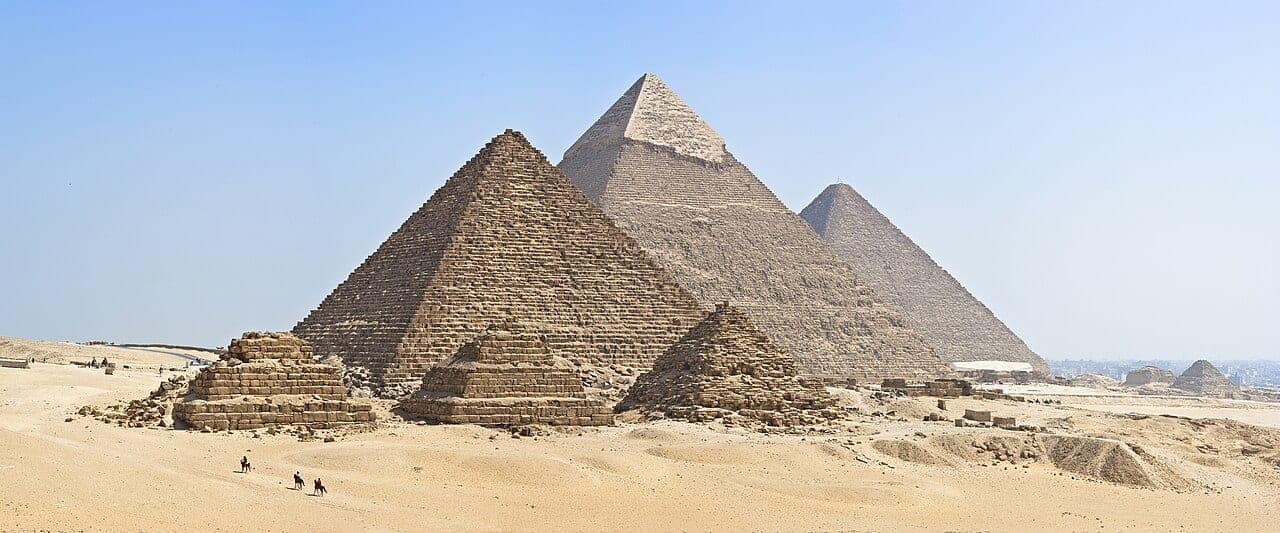
Few civilisations have been as preoccupied with memory and the afterlife as ancient Egypt. For roughly three thousand years its people poured extraordinary skill into defeating death: embalming the body so the soul might still recognise it, filling tombs with the food and furniture the dead would need, and copying out the collection of spells we now call the Book of the Dead (World History Encyclopedia). The pyramids of Giza, the only survivor of the seven wonders of the ancient world, are at heart tombs, engines built to carry a king into eternity. To walk among Egypt's monuments is to move through one long argument that the dead are not gone, and that remembering them is the first duty of the living.
Egypt is also a living nation of some 118 million people, the most populous in the Arab world, overwhelmingly Muslim with an ancient Coptic Christian minority, strung along the Nile (Worldometer). Its present-day heritage, the dawn call to prayer over Cairo, the fish meal after a Coptic burial, the mourning tent raised across a side street, belongs to the same story as the temples. This profile treats the pharaonic mortuary religion as history, then turns to the faiths and customs by which Egyptians remember their dead today, and to the institutions preserving it all.
Egypt sits at the north-eastern corner of Africa, joined to Asia across the Sinai Peninsula, and occupies just over a million square kilometres, most of it Sahara. Almost everyone lives on the sliver of land watered by the Nile, the world's longest river, which runs the length of the country before fanning into the broad Delta at the Mediterranean (Britannica). The concentration is extreme: the valley and delta, perhaps four percent of the territory, hold nearly the whole population, while the deserts stay all but empty.
With around 118 million people, Egypt is the most populous Arab country and the third most populous in Africa, its median age in the mid-twenties (Worldometer). Greater Cairo, home to more than twenty million, is the largest urban area in both Africa and the Arab world, and the Suez Canal, cut in 1869, still carries a large share of global trade. Egypt is a republic; Arabic is its official language and Islam its state religion, with the Coptic Orthodox Church the largest Christian community in the Middle East.
Cairo. The capital, Al-Qahira, "the victorious", was founded by the Fatimid dynasty in 969, on ground reaching back to the Roman fortress of Babylon and the first Islamic capital at Fustat beside it. Its dense medieval core of mosques, madrasas and gates is inscribed as the Historic Cairo World Heritage Site, and Al-Azhar, founded soon after the city, remains the foremost seat of learning in Sunni Islam (UNESCO). Cairo holds the Egyptian Museum on Tahrir Square.
Alexandria. Founded by Alexander the Great in 331 BC, the Mediterranean city was the intellectual capital of the ancient world, home to the fabled Library and the Pharos lighthouse. Saint Mark is held to have brought Christianity to Egypt here, and the Coptic papacy has its roots in the city; the modern Bibliotheca Alexandrina, opened in 2002, revives the old library's ambition.
Luxor. Built over ancient Thebes, capital of the New Kingdom, Luxor is often called the greatest open-air site of antiquity. On the east bank rise the temple complexes of Karnak and Luxor; on the west lie the mortuary temples and the Valley of the Kings, where Howard Carter opened the near-intact tomb of Tutankhamun in 1922.
Aswan. Egypt's southern gateway and the historic frontier with Nubia, Aswan guards the First Cataract and the island temple of Philae, one of the last strongholds of the old religion. Above the city stretch the High Dam and Lake Nasser, and further south stand the colossal rock temples of Abu Simbel, carved for Ramesses II.
Giza. Now part of greater Cairo, Giza holds the Great Pyramid of Khufu, its two companion pyramids and the Sphinx, raised in the Old Kingdom some forty-five centuries ago. On the plateau's edge rises the new Grand Egyptian Museum, built to gather the pharaonic collections beside the monuments themselves.
Egypt's recorded history opens around 3100 BC, when a ruler remembered as Narmer or Menes united Upper and Lower Egypt and founded a state that would endure for three millennia (Britannica). The Old Kingdom (about 2686–2181 BC) was the age of the pyramid builders; the Middle Kingdom restored order after collapse; and the New Kingdom (about 1550–1070 BC) made Egypt an empire, the era of Hatshepsut, Akhenaten, Tutankhamun and Ramesses II. After centuries of decline and foreign rule, the last native dynasties gave way to conquest.
 The hypostyle hall at Karnak, added to by pharaoh after pharaoh over more than a thousand years. Photograph by Diego Delso, CC BY-SA 4.0, via Wikimedia Commons.
Alexander the Great took Egypt in 332 BC and founded Alexandria; his general Ptolemy began a Greek-speaking dynasty that ended with Cleopatra VII, the last pharaoh, whose death in 30 BC delivered Egypt to Rome. As a Roman and then Byzantine province Egypt became largely Christian, and the Coptic Church took shape, producing the first Christian monasticism in the deserts of the Nile valley.
The Arab armies of the Rashidun Caliphate, led by Amr ibn al-As, conquered Byzantine Egypt between 639 and 642, founding the garrison town of Fustat, the nucleus of Cairo, and building the country's first mosque (Wikipedia). A succession of Islamic states followed: the Fatimids, who founded Cairo and Al-Azhar; the Ayyubids of Saladin; the Mamluk sultans, who repelled the Mongols; and, from 1517, the Ottomans. Arabic gradually replaced Coptic as the everyday language.
Modern Egypt is usually traced to Muhammad Ali, the Ottoman governor who from 1805 built a semi-independent state. Britain occupied the country in 1882; nominal independence came in 1922, and a revolution led by the Free Officers in 1952 ended the monarchy and brought Gamal Abdel Nasser to power. The nationalisation of the Suez Canal, successive wars, the 1979 peace with Israel and the protests of 2011 that ended Hosni Mubarak's rule have all shaped a country still defining its modern identity.
The ancient Egyptian language is one of the longest-attested in human history, written first in hieroglyphs, then in the cursive hieratic and demotic scripts, across more than three thousand years. Its final stage is Coptic, ancient Egyptian set down in a modified Greek alphabet, which became the language of Egyptian Christianity (Coptic language). The key that unlocked the whole record was the Rosetta Stone, whose parallel Greek, demotic and hieroglyphic text let Jean-François Champollion announce the decipherment of hieroglyphs in 1822, giving the world its first direct reading of the pharaohs' own words (Britannica).
The name of the country carries this depth. "Egypt" descends through Greek Aigyptos from an ancient Egyptian name for Memphis, Hut-ka-Ptah, "the temple of the soul of Ptah", while "Copt", the word for Egypt's Christians, comes from the same root, so that Copt simply means Egyptian. Egyptians themselves call their country Misr, an ancient Semitic name still in daily use (Britannica). Coptic survives today mainly in the liturgy of the Coptic Orthodox Church, having faded as an everyday tongue by around the seventeenth century, while Egyptian Arabic, spread across the region by a century of film and song, is the most widely understood spoken form of the language.
Egyptian identity blends an old sense of the country as a single family with a famous gift for humour: the nukta, the quick joke told even in hard times, is a national art with a wit that has needled every ruler for centuries. Family and neighbourly obligation run deep, hospitality is close to sacred, and the shared table is central, from the bowl of ful medames to the rice, lentils and pasta of koshari and the sweets of Ramadan evenings (Britannica).
Music has long carried the national mood. Umm Kulthum, whose monthly radio concerts once emptied the streets of the Arab world, remains the defining voice of Egyptian song more than fifty years after her death, and her Cairo funeral in 1975 drew crowds said to rival any in the country's history. The moulids, the joyous saint's-day festivals shared by Muslims and Christians alike, keep older forms of gathering alive beside a modern culture of cinema, football and street life.
Islam is the faith of roughly nine in ten Egyptians, almost all of them Sunni, ordering daily life through the five prayers, the fast of Ramadan and the festivals of Eid. Cairo's Al-Azhar, more than a thousand years old, is among the most influential authorities in Sunni Islam, its scholars consulted around the world (Al-Azhar). Sufi orders add a mystical strand to popular piety.
The Coptic Orthodox Church, which traces its founding to Saint Mark in the first century, is the largest Christian community in the Middle East, perhaps a tenth of Egyptians, led by the Pope of Alexandria, currently Tawadros II (Britannica). Egyptian Christians cherish the tradition that the Holy Family sheltered in Egypt during the flight from Herod, and pilgrimage sites along that route remain important today. The ancient Egyptian religion, by contrast, belongs to history: its gods, Ra the sun, Osiris lord of the dead, Isis, Amun and the goddess Ma'at who embodied truth and cosmic order, are no longer worshipped, but studied and displayed as the foundation of the country's earliest heritage.
No people has left a fuller record of its beliefs about death than the ancient Egyptians, and their mortuary religion is now studied as history. They held that a person was made of several parts, among them the ka, a life-force that stayed with the body, and the ba, a mobile spirit, which had to be reunited for the dead to live again (World History Encyclopedia). Embalmers removed the organs into canopic jars, dried the corpse in natron salt and wrapped it in resin-soaked linen, a process spread across roughly seventy days. The Opening of the Mouth ritual symbolically restored the senses of the mummy, and copies of the Book of the Dead were placed in the tomb as a guide for the journey ahead. Under Roman rule the mask over that wrapped face became a painting: the Fayum mummy portraits are the oldest images in which an ordinary person still looks like a particular person, and about a thousand of them survive.
The hypostyle hall at Karnak, added to by pharaoh after pharaoh over more than a thousand years. Photograph by Diego Delso, CC BY-SA 4.0, via Wikimedia Commons.
Alexander the Great took Egypt in 332 BC and founded Alexandria; his general Ptolemy began a Greek-speaking dynasty that ended with Cleopatra VII, the last pharaoh, whose death in 30 BC delivered Egypt to Rome. As a Roman and then Byzantine province Egypt became largely Christian, and the Coptic Church took shape, producing the first Christian monasticism in the deserts of the Nile valley.
The Arab armies of the Rashidun Caliphate, led by Amr ibn al-As, conquered Byzantine Egypt between 639 and 642, founding the garrison town of Fustat, the nucleus of Cairo, and building the country's first mosque (Wikipedia). A succession of Islamic states followed: the Fatimids, who founded Cairo and Al-Azhar; the Ayyubids of Saladin; the Mamluk sultans, who repelled the Mongols; and, from 1517, the Ottomans. Arabic gradually replaced Coptic as the everyday language.
Modern Egypt is usually traced to Muhammad Ali, the Ottoman governor who from 1805 built a semi-independent state. Britain occupied the country in 1882; nominal independence came in 1922, and a revolution led by the Free Officers in 1952 ended the monarchy and brought Gamal Abdel Nasser to power. The nationalisation of the Suez Canal, successive wars, the 1979 peace with Israel and the protests of 2011 that ended Hosni Mubarak's rule have all shaped a country still defining its modern identity.
The ancient Egyptian language is one of the longest-attested in human history, written first in hieroglyphs, then in the cursive hieratic and demotic scripts, across more than three thousand years. Its final stage is Coptic, ancient Egyptian set down in a modified Greek alphabet, which became the language of Egyptian Christianity (Coptic language). The key that unlocked the whole record was the Rosetta Stone, whose parallel Greek, demotic and hieroglyphic text let Jean-François Champollion announce the decipherment of hieroglyphs in 1822, giving the world its first direct reading of the pharaohs' own words (Britannica).
The name of the country carries this depth. "Egypt" descends through Greek Aigyptos from an ancient Egyptian name for Memphis, Hut-ka-Ptah, "the temple of the soul of Ptah", while "Copt", the word for Egypt's Christians, comes from the same root, so that Copt simply means Egyptian. Egyptians themselves call their country Misr, an ancient Semitic name still in daily use (Britannica). Coptic survives today mainly in the liturgy of the Coptic Orthodox Church, having faded as an everyday tongue by around the seventeenth century, while Egyptian Arabic, spread across the region by a century of film and song, is the most widely understood spoken form of the language.
Egyptian identity blends an old sense of the country as a single family with a famous gift for humour: the nukta, the quick joke told even in hard times, is a national art with a wit that has needled every ruler for centuries. Family and neighbourly obligation run deep, hospitality is close to sacred, and the shared table is central, from the bowl of ful medames to the rice, lentils and pasta of koshari and the sweets of Ramadan evenings (Britannica).
Music has long carried the national mood. Umm Kulthum, whose monthly radio concerts once emptied the streets of the Arab world, remains the defining voice of Egyptian song more than fifty years after her death, and her Cairo funeral in 1975 drew crowds said to rival any in the country's history. The moulids, the joyous saint's-day festivals shared by Muslims and Christians alike, keep older forms of gathering alive beside a modern culture of cinema, football and street life.
Islam is the faith of roughly nine in ten Egyptians, almost all of them Sunni, ordering daily life through the five prayers, the fast of Ramadan and the festivals of Eid. Cairo's Al-Azhar, more than a thousand years old, is among the most influential authorities in Sunni Islam, its scholars consulted around the world (Al-Azhar). Sufi orders add a mystical strand to popular piety.
The Coptic Orthodox Church, which traces its founding to Saint Mark in the first century, is the largest Christian community in the Middle East, perhaps a tenth of Egyptians, led by the Pope of Alexandria, currently Tawadros II (Britannica). Egyptian Christians cherish the tradition that the Holy Family sheltered in Egypt during the flight from Herod, and pilgrimage sites along that route remain important today. The ancient Egyptian religion, by contrast, belongs to history: its gods, Ra the sun, Osiris lord of the dead, Isis, Amun and the goddess Ma'at who embodied truth and cosmic order, are no longer worshipped, but studied and displayed as the foundation of the country's earliest heritage.
No people has left a fuller record of its beliefs about death than the ancient Egyptians, and their mortuary religion is now studied as history. They held that a person was made of several parts, among them the ka, a life-force that stayed with the body, and the ba, a mobile spirit, which had to be reunited for the dead to live again (World History Encyclopedia). Embalmers removed the organs into canopic jars, dried the corpse in natron salt and wrapped it in resin-soaked linen, a process spread across roughly seventy days. The Opening of the Mouth ritual symbolically restored the senses of the mummy, and copies of the Book of the Dead were placed in the tomb as a guide for the journey ahead. Under Roman rule the mask over that wrapped face became a painting: the Fayum mummy portraits are the oldest images in which an ordinary person still looks like a particular person, and about a thousand of them survive.
 The pyramids at Giza are tombs, and the largest building project any society has ever devoted to its dead. Photograph by Ricardo Liberato, CC BY-SA 2.0, via Wikimedia Commons.
The goal of that journey was judgement. In the scene painted again and again on tomb walls and papyri, the heart of the deceased is weighed against the feather of Ma'at; a heart lighter than truth passed into the fields of the blessed, while a heavier one was devoured, and the person ceased to exist (ARCE). Tombs were provisioned with everything the dead might need, so that the living could go on caring for them.
Modern Egyptian mourning is shaped by faith rather than by mummification. In Muslim custom the body is washed, wrapped in a plain white shroud and buried, usually within a day and without a coffin, laid on its right side facing Mecca (MyEnd). For three days the family receives condolences, often in a large street tent, the azza, where mourners sit, drink unsweetened coffee and hear recitation of the Quran. The dead are remembered again at the arba'een, the fortieth day, and charity given in their name, the sadaqa, is held to benefit them in the hereafter.
Coptic Christian mourning keeps its own long-established forms. Cremation is not practised; mourners wear black, and the funeral may be marked by loud lament for the departed. After the burial, family and friends share a mercy meal, traditionally of fish, and they too keep the fortieth day with a special liturgy and prayers for the soul (MyEnd). For both faiths the rhythm is much the same: a swift, dignified burial, an intense first period of grief, and a return on the fortieth day, so that remembrance becomes a season shared by the whole community.
The oldest Egyptian conviction about death is that it can be survived by being named. A tomb inscription asks the passer-by to say the name aloud; erasing a name from a monument was a punishment aimed at the afterlife rather than the reputation. That inheritance of remembrance runs from the offering formulae of the Old Kingdom to the modern Egyptian practice of visiting the family tomb during the feasts and reading the Fatiha over it.
Egypt counted its people earlier and more completely than almost anywhere outside Europe, and the registers are still in Cairo.
The censuses of 1848 and 1868, taken under Muhammad Ali and Ismail, are individual-level enumerations that name everybody in a household: women, children and enslaved people included, with ages, origins and occupations. They are the earliest such censuses in the Middle East and among the earliest anywhere outside the West, and they survive as more than seven thousand handwritten Arabic registers at the National Archives of Egypt. A digitisation project working in the archives between 2010 and 2012 produced samples that researchers now use, though the full series is consulted on site.
Civil registration of births and deaths was established early in the twentieth century and is administered by the interior ministry. Sharia court registers carry marriage, divorce and inheritance for the Muslim population and reach back centuries in the older towns; Coptic Orthodox parishes kept their own registers of baptism and marriage, and for Coptic families the church, not the state, holds the older record.
Two other bodies of paper matter. Waqf endowment deeds name founders and their descendants, and Egypt has an enormous quantity of them. And the Jewish, Greek, Italian and Armenian communities of Alexandria and Cairo kept their own registers until the departures of the 1950s and 1960s, so those families are traced through community archives now held in Israel, France, Greece and the United States rather than in Egypt.
Egypt has protected its antiquities as a matter of state for well over a century. The Egyptian Museum on Tahrir Square, designed by the French architect Marcel Dourgnon and opened in 1902, was long the single great home of the pharaonic collections and remains, after renovation, a working centre where repatriated objects are restored (Egyptian Museum). Oversight now rests with the Ministry of Tourism and Antiquities and its Supreme Council of Antiquities, which license every excavation.
Two vast new museums have reshaped that landscape. The National Museum of Egyptian Civilization at Fustat received the country's royal mummies in 2021 (NMEC). Nearby, on the Giza plateau, the Grand Egyptian Museum has been built to display the full Tutankhamun collection together for the first time. Its opening came in phases across the mid-2020s: a partial opening of galleries in 2024 was followed, according to the Egyptian government and international press, by a full public opening announced for 1 November 2025 (National Geographic; UNESCO). Egypt holds seven UNESCO World Heritage sites, among them the Memphis pyramid fields, Ancient Thebes, the Nubian monuments from Abu Simbel to Philae, Historic Cairo, Abu Mena and Saint Catherine's Monastery in Sinai (UNESCO).
Egypt has also pressed, with growing success, for the return of antiquities taken abroad. The former antiquities minister Zahi Hawass has made repatriation a public campaign, calling for the Rosetta Stone in the British Museum, the bust of Nefertiti in Berlin and the Dendera zodiac in the Louvre, and thousands of illicitly exported objects have been returned in recent years.
Much of Egypt's digital heritage work is centred on the Bibliotheca Alexandrina and its Center for Documentation of Cultural and Natural Heritage, known as CULTNAT (CULTNAT). CULTNAT documents the country's tangible and intangible heritage with high-resolution imaging, three-dimensional reconstruction and mapping, and its Eternal Egypt project put interactive reconstructions, panoramas and thousands of artefact images online (Wikipedia).
The library's own Digital Assets Repository and its Memory of Modern Egypt archive gather manuscripts, photographs and records of the recent past, while efforts from mapping the Theban necropolis to open-platform museum partnerships bring the monuments within reach of anyone with a screen. For a heritage this old and this scattered, digitisation is insurance as much as access.
Modern Egypt has long been the cultural engine of the Arabic-speaking world. Its film industry, based in Cairo and once nicknamed the Hollywood of the East, dominated Arab cinema for much of the twentieth century and gave the world the actor Omar Sharif; its songs and serials set the tone for the region. In literature, Naguib Mahfouz won the Nobel Prize in 1988, the first Arabic-language writer to do so, for novels that mapped the lives of ordinary Cairenes (Naguib Mahfouz).
Ancient Egypt, meanwhile, has never loosened its grip on the global imagination: Tutankhamun's gold, the pyramids and the Sphinx recur endlessly in film and design, a fascination often called Egyptomania that sustains much of the country's tourism economy.
The rescue that created World Heritage. When the Aswan High Dam threatened to drown the monuments of Nubia, an international campaign led by UNESCO between 1960 and 1968 cut the temples of Abu Simbel into more than a thousand blocks and rebuilt them on higher ground (UNESCO). The rescue, which saved more than twenty monuments, directly inspired the 1972 World Heritage Convention, so that a threat to Egypt's past helped build the system now protecting heritage everywhere (Nubia campaign).
The pharaohs' last procession. In April 2021 Egypt moved twenty-two royal mummies, eighteen kings and four queens, from the old Egyptian Museum to the National Museum of Egyptian Civilization in a televised parade of gilded chariots watched around the world, a modern ceremony of remembrance for rulers dead three thousand years (Pharaohs' Golden Parade).
Reading the pharaohs again. Champollion's decipherment of hieroglyphs in 1822, made possible by the Rosetta Stone, reopened three thousand years of Egyptian voices to the world, and the discipline it founded now works with Egyptian scholars to keep those voices heard (Britannica).
The pyramids at Giza are tombs, and the largest building project any society has ever devoted to its dead. Photograph by Ricardo Liberato, CC BY-SA 2.0, via Wikimedia Commons.
The goal of that journey was judgement. In the scene painted again and again on tomb walls and papyri, the heart of the deceased is weighed against the feather of Ma'at; a heart lighter than truth passed into the fields of the blessed, while a heavier one was devoured, and the person ceased to exist (ARCE). Tombs were provisioned with everything the dead might need, so that the living could go on caring for them.
Modern Egyptian mourning is shaped by faith rather than by mummification. In Muslim custom the body is washed, wrapped in a plain white shroud and buried, usually within a day and without a coffin, laid on its right side facing Mecca (MyEnd). For three days the family receives condolences, often in a large street tent, the azza, where mourners sit, drink unsweetened coffee and hear recitation of the Quran. The dead are remembered again at the arba'een, the fortieth day, and charity given in their name, the sadaqa, is held to benefit them in the hereafter.
Coptic Christian mourning keeps its own long-established forms. Cremation is not practised; mourners wear black, and the funeral may be marked by loud lament for the departed. After the burial, family and friends share a mercy meal, traditionally of fish, and they too keep the fortieth day with a special liturgy and prayers for the soul (MyEnd). For both faiths the rhythm is much the same: a swift, dignified burial, an intense first period of grief, and a return on the fortieth day, so that remembrance becomes a season shared by the whole community.
The oldest Egyptian conviction about death is that it can be survived by being named. A tomb inscription asks the passer-by to say the name aloud; erasing a name from a monument was a punishment aimed at the afterlife rather than the reputation. That inheritance of remembrance runs from the offering formulae of the Old Kingdom to the modern Egyptian practice of visiting the family tomb during the feasts and reading the Fatiha over it.
Egypt counted its people earlier and more completely than almost anywhere outside Europe, and the registers are still in Cairo.
The censuses of 1848 and 1868, taken under Muhammad Ali and Ismail, are individual-level enumerations that name everybody in a household: women, children and enslaved people included, with ages, origins and occupations. They are the earliest such censuses in the Middle East and among the earliest anywhere outside the West, and they survive as more than seven thousand handwritten Arabic registers at the National Archives of Egypt. A digitisation project working in the archives between 2010 and 2012 produced samples that researchers now use, though the full series is consulted on site.
Civil registration of births and deaths was established early in the twentieth century and is administered by the interior ministry. Sharia court registers carry marriage, divorce and inheritance for the Muslim population and reach back centuries in the older towns; Coptic Orthodox parishes kept their own registers of baptism and marriage, and for Coptic families the church, not the state, holds the older record.
Two other bodies of paper matter. Waqf endowment deeds name founders and their descendants, and Egypt has an enormous quantity of them. And the Jewish, Greek, Italian and Armenian communities of Alexandria and Cairo kept their own registers until the departures of the 1950s and 1960s, so those families are traced through community archives now held in Israel, France, Greece and the United States rather than in Egypt.
Egypt has protected its antiquities as a matter of state for well over a century. The Egyptian Museum on Tahrir Square, designed by the French architect Marcel Dourgnon and opened in 1902, was long the single great home of the pharaonic collections and remains, after renovation, a working centre where repatriated objects are restored (Egyptian Museum). Oversight now rests with the Ministry of Tourism and Antiquities and its Supreme Council of Antiquities, which license every excavation.
Two vast new museums have reshaped that landscape. The National Museum of Egyptian Civilization at Fustat received the country's royal mummies in 2021 (NMEC). Nearby, on the Giza plateau, the Grand Egyptian Museum has been built to display the full Tutankhamun collection together for the first time. Its opening came in phases across the mid-2020s: a partial opening of galleries in 2024 was followed, according to the Egyptian government and international press, by a full public opening announced for 1 November 2025 (National Geographic; UNESCO). Egypt holds seven UNESCO World Heritage sites, among them the Memphis pyramid fields, Ancient Thebes, the Nubian monuments from Abu Simbel to Philae, Historic Cairo, Abu Mena and Saint Catherine's Monastery in Sinai (UNESCO).
Egypt has also pressed, with growing success, for the return of antiquities taken abroad. The former antiquities minister Zahi Hawass has made repatriation a public campaign, calling for the Rosetta Stone in the British Museum, the bust of Nefertiti in Berlin and the Dendera zodiac in the Louvre, and thousands of illicitly exported objects have been returned in recent years.
Much of Egypt's digital heritage work is centred on the Bibliotheca Alexandrina and its Center for Documentation of Cultural and Natural Heritage, known as CULTNAT (CULTNAT). CULTNAT documents the country's tangible and intangible heritage with high-resolution imaging, three-dimensional reconstruction and mapping, and its Eternal Egypt project put interactive reconstructions, panoramas and thousands of artefact images online (Wikipedia).
The library's own Digital Assets Repository and its Memory of Modern Egypt archive gather manuscripts, photographs and records of the recent past, while efforts from mapping the Theban necropolis to open-platform museum partnerships bring the monuments within reach of anyone with a screen. For a heritage this old and this scattered, digitisation is insurance as much as access.
Modern Egypt has long been the cultural engine of the Arabic-speaking world. Its film industry, based in Cairo and once nicknamed the Hollywood of the East, dominated Arab cinema for much of the twentieth century and gave the world the actor Omar Sharif; its songs and serials set the tone for the region. In literature, Naguib Mahfouz won the Nobel Prize in 1988, the first Arabic-language writer to do so, for novels that mapped the lives of ordinary Cairenes (Naguib Mahfouz).
Ancient Egypt, meanwhile, has never loosened its grip on the global imagination: Tutankhamun's gold, the pyramids and the Sphinx recur endlessly in film and design, a fascination often called Egyptomania that sustains much of the country's tourism economy.
The rescue that created World Heritage. When the Aswan High Dam threatened to drown the monuments of Nubia, an international campaign led by UNESCO between 1960 and 1968 cut the temples of Abu Simbel into more than a thousand blocks and rebuilt them on higher ground (UNESCO). The rescue, which saved more than twenty monuments, directly inspired the 1972 World Heritage Convention, so that a threat to Egypt's past helped build the system now protecting heritage everywhere (Nubia campaign).
The pharaohs' last procession. In April 2021 Egypt moved twenty-two royal mummies, eighteen kings and four queens, from the old Egyptian Museum to the National Museum of Egyptian Civilization in a televised parade of gilded chariots watched around the world, a modern ceremony of remembrance for rulers dead three thousand years (Pharaohs' Golden Parade).
Reading the pharaohs again. Champollion's decipherment of hieroglyphs in 1822, made possible by the Rosetta Stone, reopened three thousand years of Egyptian voices to the world, and the discipline it founded now works with Egyptian scholars to keep those voices heard (Britannica).
National Overview
Notable Cities
Historical Foundations
Linguistic and Etymological Roots
Cultural Identity
Religion and Spirituality
Remembrance and Mourning Traditions
Tracing a Family in Egypt
Heritage Preservation Efforts
Digital Heritage
Contemporary Cultural Influences
Success Stories
References and resources
- Encyclopaedia Britannica, Egypt, geography, population, history and government.
- UNESCO World Heritage Centre, Egypt, the country's seven World Heritage sites.
- UNESCO, Nubian Monuments from Abu Simbel to Philae, the sites saved by the 1960s salvage campaign.
- World History Encyclopedia, Mummification in Ancient Egypt, embalming, the ka and ba, and burial practice.
- ARCE, The Book of the Dead: A Guidebook to the Afterlife, the funerary spells and the weighing of the heart.
- Wikipedia, Arab conquest of Egypt, Amr ibn al-As, Fustat and the coming of Islam.
- Encyclopaedia Britannica, Coptic Orthodox Church of Alexandria, history, beliefs and the Coptic community.
- Wikipedia, Coptic language, the final stage of the ancient Egyptian language.
- Encyclopaedia Britannica, Rosetta Stone, the object behind Champollion's 1822 decipherment.
- MyEnd, Modern Death Practices in Egypt, Muslim and Coptic funerary and mourning customs.
- Wikipedia, Egyptian Museum, the 1902 Tahrir Square museum and its collections.
- National Geographic, The Grand Egyptian Museum, the phased opening near Giza.
- Wikipedia, Pharaohs' Golden Parade, the 2021 transfer of the royal mummies.
- Bibliotheca Alexandrina, CULTNAT, Egypt's centre for documenting cultural and natural heritage.