Heritage · Country
Angola Culture and Heritage
From the plateau capital of the Kingdom of Kongo to the wharves of Luanda, once one of the Atlantic slave trade's largest departure ports, Angola carries five centuries of memory in stone, song and mourning. This is a guide to its kingdoms and peoples, its semba and kizomba, and the Christian and Bantu customs through which Angolans keep their ancestors close.Written to last.
By Confinity Heritage Editorial · Updated 2026-07-31 · 8-minute readQuiet tools, kept out of the way.
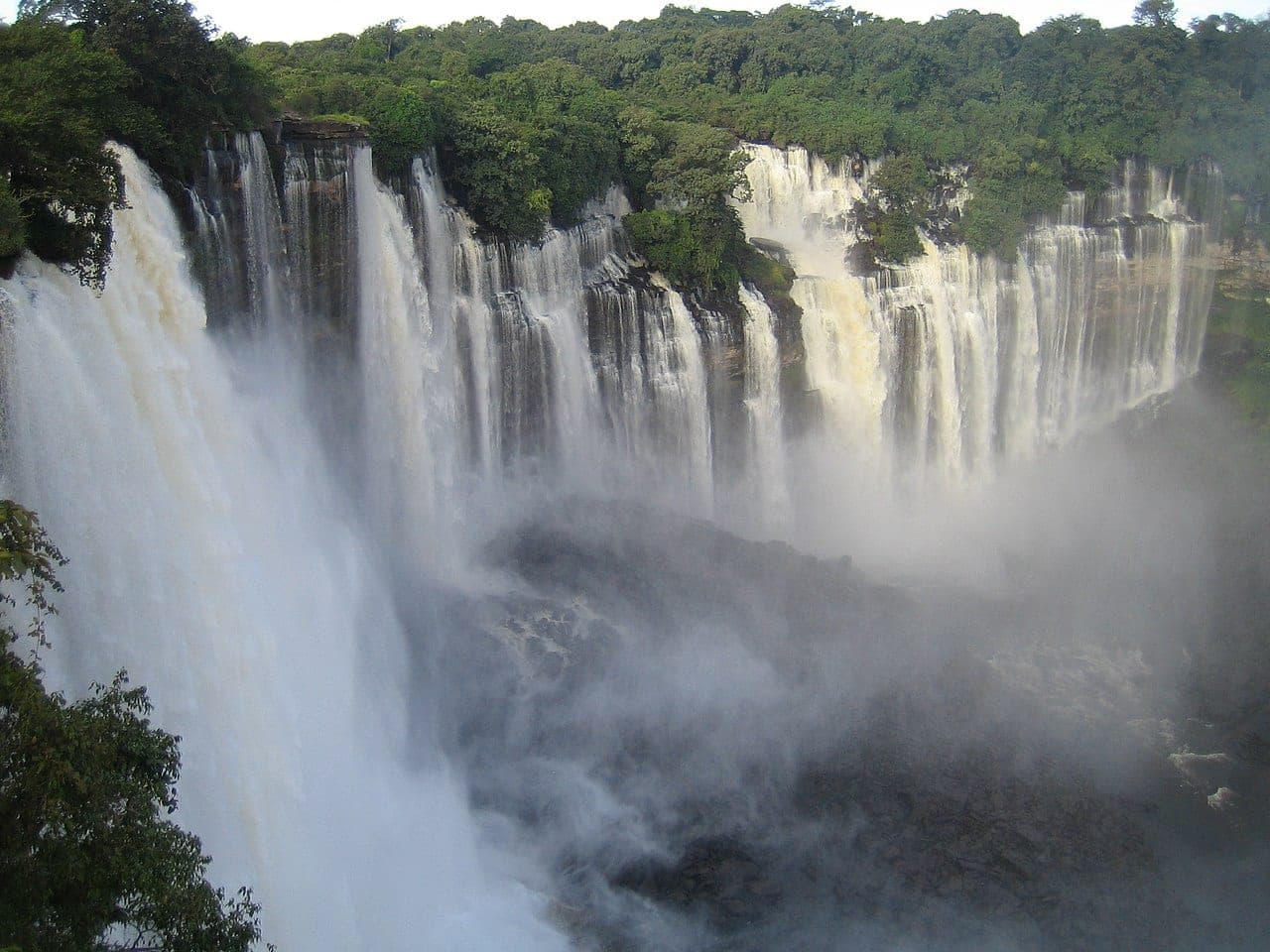
Angola occupies a broad reach of the Atlantic coast of south-central Africa, a country of some 1,246,700 square kilometres where a narrow coastal plain climbs into a high interior plateau. For roughly three centuries its capital, Luanda, was one of the largest departure ports of the transatlantic slave trade, and that history shapes how the country remembers. Here memory is a wound carried in family lines scattered across the ocean, marked today by a museum on the ground where captives were baptised before boarding ships to the Americas. Yet Angolan memory reaches back much further, to Bantu farmers and ironworkers, to the Kingdom of Kongo whose capital crowned a plateau in the far north, and to the neighbouring Ndongo and Matamba kingdoms, whose most famous ruler, Queen Njinga, spent decades resisting Portuguese conquest.
It moves from the Kalandula Falls and the Tundavala escarpment to the historic core of Luanda; from the rock engravings of Tchitundu-Hulu to the semba and kizomba that carried Angolan rhythm around the world; and from the many peoples who share the country, among them the Ovimbundu, Mbundu, Bakongo and Chokwe, to the funerary rites, Christian and traditional, that keep the departed present among the living.
Angola borders the Democratic Republic of the Congo to the north and north-east, Zambia to the east and Namibia to the south, with the Atlantic Ocean forming its long western edge. The oil-bearing province of Cabinda lies apart in the north, separated from the rest of the country by a strip of Congolese territory. Inland from the coast the land rises through the Bié Plateau, and rivers including the Kwanza and the Cunene drain the highlands (Britannica).
The population reached roughly 36 million people by 2024, making Angola one of the most populous countries of southern Africa, with more than a quarter of its people in and around Luanda (Wikipedia). The country gained independence from Portugal in 1975, and Portuguese remains the sole official language, the common tongue of a nation that also speaks many Bantu languages. Governed from Luanda across eighteen provinces, its economy rests on oil and diamonds.
Luanda. The capital was founded in 1576 by the Portuguese nobleman Paulo Dias de Novais as São Paulo da Assunção de Loanda, and it became the administrative heart of the colony and the principal outlet of the slave trade (Wikipedia). Its oldest monument, the hilltop Fortress of São Miguel, was raised the same year (Wikipedia). Today it is a large coastal metropolis whose older streets and museums hold the layered record of five centuries.
Benguela. Founded in 1617 as São Filipe de Benguela, this southern coastal city was a second major port of the slave trade before it became, in the twentieth century, the Atlantic gateway of the Benguela Railway, built between 1903 and 1931 to carry copper from the interior of Central Africa to the ocean at nearby Lobito (Wikipedia). Wrecked during the war, the line has since been rebuilt.
Lubango. Set among the mountains of the Huíla highlands above 1,700 metres, Lubango was founded in 1885 by Portuguese settlers from Madeira and was known as Sá da Bandeira until independence (Wikipedia). A hilltop Cristo Rei statue overlooks the town, and just beyond it lie the Serra da Leba mountain pass and the Tundavala escarpment.
Malanje. The northern city of Malanje is the base for two of Angola's best-known landscapes: the Kalandula Falls, where the Lucala River drops around 105 metres across a curtain some 400 metres wide, and the Black Rocks of Pungo Andongo (the Pedras Negras), dark monoliths woven into the legends of Queen Njinga.
The earliest layers of Angolan history belong to Khoisan hunter-gatherers and, from the first millennium, to Bantu-speaking farmers and ironworkers who settled the plateau and formed the region's first states. By the fifteenth century the Kingdom of Kongo, centred on its capital of Mbanza Kongo in the far north, had become one of the most powerful and organised states in Central Africa (UNESCO). When Portuguese ships arrived in 1483, the Kongo court entered into diplomacy with Lisbon, adopted Christianity and sent envoys to Europe, a rapprochement soon undone by the demand for captive labour.
To the south lay the kingdoms of Ndongo and Matamba, whose rulers bore the title ngola. Portugal established a base at Luanda in 1576 and pressed inland, and it was here that Njinga (Nzinga) Mbande, who ruled in the seventeenth century, mounted a long and skilful resistance. Moving between war and negotiation, she forged alliances with rival groups and European powers alike and held Matamba as her stronghold against both Portuguese forces and her local rivals (Britannica: Nzinga; Britannica: Matamba).
From the late sixteenth century Luanda grew into one of the busiest slave-trading ports in the world. Over roughly three centuries several million Africans were shipped from Angolan shores, the great majority carried to Brazil. The trade drove wars of capture in the interior, emptied whole regions and created a diaspora whose descendants across the Americas still trace their origins to this coast. It is a history Angola records plainly, most of all at the site where captives were held and baptised before departure (National Museum of Slavery).
Formal Portuguese colonial rule over the interior was consolidated only in the late nineteenth and early twentieth centuries and lasted until independence on 11 November 1975. Independence was followed almost at once by a civil war between the MPLA government and the UNITA movement, a conflict prolonged by Cold War intervention that continued, with pauses, until 2002. It cost hundreds of thousands of lives, displaced millions and left much of the countryside sown with landmines. The years of peace since have been given over to reconstruction and the return of the displaced.
Portuguese is the official language and the shared medium of government, schooling and media, spoken by most Angolans and, for a growing share of city dwellers, as a first language. Alongside it live the Bantu languages that carry the country's older identities: Umbundu, the language of the Ovimbundu of the central and southern highlands and the most widely spoken African language in the country; Kimbundu, the language of the Mbundu of the Luanda region; Kikongo, spoken by the Bakongo of the north; and Chokwe, spoken across the east (Wikipedia). Several hold official recognition as national languages, each preserving oral history older than the written record.
The country's own name is an inheritance of this history. Angola derives from the Portuguese colonial name Reino de Angola, itself taken from ngola, the royal title borne by the kings of Ndongo and Matamba whom the Portuguese first encountered in the sixteenth century (Wikipedia). A word for a ruler thus became the name of a colony and then of a nation, recalling the sovereigns who resisted the arrival it accompanied.
Angolan cultural life is bound up with music and dance. Semba, the older form, took shape from coastal Kimbundu traditions and rose to popularity in the 1950s through pioneering groups such as Ngola Ritmos, becoming the sound of urban Angola and, many hold, an ancestor of Brazilian samba (Wikipedia: Semba). From semba grew kizomba in the late 1970s and 1980s, when influences such as zouk produced a slower, more melodic style whose name comes from the Kimbundu word for a party; it has since become a global partner dance (Wikipedia: Kizomba). Luanda's Carnival, a pre-Lenten festival of masked groups and drumming, gathers these energies into a public celebration each year.
The visual arts carry equal weight. The Chokwe (also written Cokwe) of eastern Angola are among Central Africa's most admired sculptors, best known for the pwo or mwana pwo mask, a serene female face worn in men's initiation dances to honour founding female ancestors (The Met). At the table, Angolan cuisine joins African staples with centuries of Portuguese and Atlantic influence: funge, a smooth porridge of cassava or maize flour, accompanies stews such as muamba de galinha, the palm-oil chicken often named the national dish, and calulu, a stew of fish or meat with leafy greens and okra.
The great majority of Angolans are Christian, with Roman Catholics forming the largest body at around 44 per cent and Protestants close behind at roughly 35 per cent, the result of missions that arrived with and after the Portuguese (Wikipedia). African-initiated churches, including the Tocoist Church founded in Angola and the Kimbanguist Church rooted in the wider Kongo region, blend Christian worship with local forms and command large followings.
Beneath and alongside Christianity endures the older Bantu spiritual order. Many Angolans hold to a supreme creator, known by names such as Nzambi, who is distant from daily affairs, while the immediate spiritual world is governed by ancestors and by lesser spirits of land, water and lineage. Diviners and healers mediate between the living and these powers, interpret misfortune and conduct the rites that keep a family in right relation with its dead. For many people the two are not rivals but layers of a single worldview, carried on together.
Death in Angola summons the whole community. A funeral, widely called the óbito, opens with a wake at the family home, where relatives, neighbours and church members gather over several days and nights to sit with the bereaved, to sing, pray and share food. Attendance is a duty of belonging rather than a courtesy, and the numbers who come, often from far away, measure the standing of the departed. Where custom allows, the body is carried home to be buried among kin, so that a person rests in the ground of their own people.
 Sao Miguel was built in 1576 and became the administrative centre of the traffic in people. More captives were shipped from Angola than from anywhere else in Africa, most of them to Brazil. Photograph by Erik Cleves Kristensen, CC BY 2.0, via Wikimedia Commons.
In Christian households the rites follow the church calendar of vigil, requiem and burial, frequently overlaid with older observances: a set period of mourning during which the bereaved, and especially widows, withdraw from festivity and may wear dark clothing, closed by a ceremony that lifts the mourning. In traditional practice the dead do not simply depart. They join the ancestors, who remain concerned with their descendants, are addressed at moments of birth, marriage and difficulty, and must be informed, thanked and at times appeased through offerings and shared meals. Care for graves and the marking of anniversaries keep this bond active, so that remembrance is less an event than a continuing relationship.
Angola also carries a national memory of loss. The country remembers the millions taken from its coast during the slave trade, a grief now given a place of return at the National Museum of Slavery, and it remembers the dead and displaced of the long civil war, along with those still killed or maimed by landmines. The clearing of those mines and the search for the war's missing are themselves acts of mourning at the scale of a nation.
Angolan records begin at the ports, and the ports were the largest source of the Atlantic slave trade.
Something over five million people were shipped from the Angolan coast, chiefly from Luanda and Benguela, more than from anywhere else. The Portuguese administration and the church recorded them in baptismal registers taken before embarkation, in customs ledgers and in the accounts of the ships. Those records are in Luanda, in Lisbon at the Arquivo Histórico Ultramarino, and in Brazil, and the transatlantic slave-voyage databases have made a large part of the shipping record searchable. It is possible, occasionally, to connect a person landed in Bahia to a place of embarkation in Angola, and that is a rare thing to be able to do at all.
Catholic parish registers survive from the seventeenth century in the coastal towns, and colonial administrative files run through to independence in 1975.
Then twenty-seven years of civil war, which displaced four million people, destroyed provincial archives and left the country with a registration system that reached a minority of the population. Large numbers of Angolans have no birth certificate, and campaigns to register adults retrospectively have been running for years.
The older record is the kingdom of Kongo, whose kings converted to Christianity in 1491 and corresponded with Lisbon and Rome for centuries afterwards. Those letters, in the Vatican and Portuguese archives, are an African royal archive in the sovereign's own words, and there is very little else like them.
Angola's most prominent heritage effort is the safeguarding of Mbanza Kongo, inscribed on the UNESCO World Heritage List in 2017 as the vestiges of the capital of the former Kingdom of Kongo. The listing protects the plateau site where the political and religious centre of the kingdom once stood, including the remains of its royal precinct and the early church tied to the arrival of Christianity (UNESCO). It capped years of work to record and stabilise a place long neglected.
In Luanda, the National Museum of Slavery, established in 1977 on the estate of a former slave trader and adjoining the seventeenth-century Capela da Casa Grande where captives were baptised, preserves the memory of the trade and increasingly serves as a research centre for descendants seeking their origins (National Museum of Slavery). The Fortress of São Miguel, restored as a museum, guards the fabric of early colonial Luanda. Further south, the rock engravings and paintings of Tchitundu-Hulu in Namibe province, among the finest prehistoric rock-art sites in the region, some two to four thousand years old, remain a priority for documentation (British Museum).
Because so much of Angola's heritage was carried away by the slave trade, some of its most important digital records are held abroad and made freely available. The SlaveVoyages database has assembled records of tens of thousands of slaving voyages, letting families and researchers trace the routes that ran from Luanda and Benguela to the Americas (SlaveVoyages). The British Museum's African Rock Art image project has digitised photographs and records of sites including Tchitundu-Hulu, opening a fragile, remote heritage to anyone online (British Museum).
Within the country, the Mbanza Kongo records and the collections of Luanda's national museums are steadily being catalogued online, while Angolan music, from Ngola Ritmos to contemporary kizomba and kuduro, reaches a global audience through streaming platforms that serve as a living sound archive of the nation.
Angolan culture travels widely, above all through its music. Kizomba is now danced in studios on every continent, and kuduro, the fast electronic street music born in Luanda's musseque neighbourhoods in the 1990s, has spread through the Lusophone world and into global pop. Veteran voices such as Bonga and the late Waldemar Bastos carried Angolan song abroad through years of exile and return, and a younger generation keeps the exchange running between Luanda, Lisbon and Rio de Janeiro (Wikipedia: Music of Angola).
Angolan literature has earned an international readership through writers such as Pepetela, whose novels chart the independence struggle and its aftermath, José Eduardo Agualusa, translated into dozens of languages, and Ondjaki, whose stories of childhood in a changing Luanda have won prizes across the Portuguese-speaking world. The large Angolan diaspora, concentrated in Portugal and Brazil but reaching far beyond, keeps these forms in circulation, so that semba and muamba can be found wherever Angolans have settled.
A capital reclaimed. The 2017 UNESCO inscription of Mbanza Kongo turned a long-overlooked plateau town into a recognised monument of African statecraft, drawing investment in excavation and scholarship.
A museum of return. The National Museum of Slavery has grown from a memorial into a working archive, helping descendants of the enslaved trace their ancestry to the Angolan coast, turning a site of departure into one of homecoming.
A dance conquers the world. Kizomba, born of semba in late twentieth-century Luanda, has become a global partner dance taught and performed on every continent, one of Angola's most far-reaching cultural exports.
The sound of the musseques. Kuduro rose from Luanda's poorest neighbourhoods to international stages within a generation, proof that Angolan youth culture could set its own terms and be heard worldwide.
Ancient art brought to light. The documentation and digitisation of the Tchitundu-Hulu engravings, through the British Museum's rock-art project, have preserved a record of the country's earliest peoples and made it accessible to the world.
Sao Miguel was built in 1576 and became the administrative centre of the traffic in people. More captives were shipped from Angola than from anywhere else in Africa, most of them to Brazil. Photograph by Erik Cleves Kristensen, CC BY 2.0, via Wikimedia Commons.
In Christian households the rites follow the church calendar of vigil, requiem and burial, frequently overlaid with older observances: a set period of mourning during which the bereaved, and especially widows, withdraw from festivity and may wear dark clothing, closed by a ceremony that lifts the mourning. In traditional practice the dead do not simply depart. They join the ancestors, who remain concerned with their descendants, are addressed at moments of birth, marriage and difficulty, and must be informed, thanked and at times appeased through offerings and shared meals. Care for graves and the marking of anniversaries keep this bond active, so that remembrance is less an event than a continuing relationship.
Angola also carries a national memory of loss. The country remembers the millions taken from its coast during the slave trade, a grief now given a place of return at the National Museum of Slavery, and it remembers the dead and displaced of the long civil war, along with those still killed or maimed by landmines. The clearing of those mines and the search for the war's missing are themselves acts of mourning at the scale of a nation.
Angolan records begin at the ports, and the ports were the largest source of the Atlantic slave trade.
Something over five million people were shipped from the Angolan coast, chiefly from Luanda and Benguela, more than from anywhere else. The Portuguese administration and the church recorded them in baptismal registers taken before embarkation, in customs ledgers and in the accounts of the ships. Those records are in Luanda, in Lisbon at the Arquivo Histórico Ultramarino, and in Brazil, and the transatlantic slave-voyage databases have made a large part of the shipping record searchable. It is possible, occasionally, to connect a person landed in Bahia to a place of embarkation in Angola, and that is a rare thing to be able to do at all.
Catholic parish registers survive from the seventeenth century in the coastal towns, and colonial administrative files run through to independence in 1975.
Then twenty-seven years of civil war, which displaced four million people, destroyed provincial archives and left the country with a registration system that reached a minority of the population. Large numbers of Angolans have no birth certificate, and campaigns to register adults retrospectively have been running for years.
The older record is the kingdom of Kongo, whose kings converted to Christianity in 1491 and corresponded with Lisbon and Rome for centuries afterwards. Those letters, in the Vatican and Portuguese archives, are an African royal archive in the sovereign's own words, and there is very little else like them.
Angola's most prominent heritage effort is the safeguarding of Mbanza Kongo, inscribed on the UNESCO World Heritage List in 2017 as the vestiges of the capital of the former Kingdom of Kongo. The listing protects the plateau site where the political and religious centre of the kingdom once stood, including the remains of its royal precinct and the early church tied to the arrival of Christianity (UNESCO). It capped years of work to record and stabilise a place long neglected.
In Luanda, the National Museum of Slavery, established in 1977 on the estate of a former slave trader and adjoining the seventeenth-century Capela da Casa Grande where captives were baptised, preserves the memory of the trade and increasingly serves as a research centre for descendants seeking their origins (National Museum of Slavery). The Fortress of São Miguel, restored as a museum, guards the fabric of early colonial Luanda. Further south, the rock engravings and paintings of Tchitundu-Hulu in Namibe province, among the finest prehistoric rock-art sites in the region, some two to four thousand years old, remain a priority for documentation (British Museum).
Because so much of Angola's heritage was carried away by the slave trade, some of its most important digital records are held abroad and made freely available. The SlaveVoyages database has assembled records of tens of thousands of slaving voyages, letting families and researchers trace the routes that ran from Luanda and Benguela to the Americas (SlaveVoyages). The British Museum's African Rock Art image project has digitised photographs and records of sites including Tchitundu-Hulu, opening a fragile, remote heritage to anyone online (British Museum).
Within the country, the Mbanza Kongo records and the collections of Luanda's national museums are steadily being catalogued online, while Angolan music, from Ngola Ritmos to contemporary kizomba and kuduro, reaches a global audience through streaming platforms that serve as a living sound archive of the nation.
Angolan culture travels widely, above all through its music. Kizomba is now danced in studios on every continent, and kuduro, the fast electronic street music born in Luanda's musseque neighbourhoods in the 1990s, has spread through the Lusophone world and into global pop. Veteran voices such as Bonga and the late Waldemar Bastos carried Angolan song abroad through years of exile and return, and a younger generation keeps the exchange running between Luanda, Lisbon and Rio de Janeiro (Wikipedia: Music of Angola).
Angolan literature has earned an international readership through writers such as Pepetela, whose novels chart the independence struggle and its aftermath, José Eduardo Agualusa, translated into dozens of languages, and Ondjaki, whose stories of childhood in a changing Luanda have won prizes across the Portuguese-speaking world. The large Angolan diaspora, concentrated in Portugal and Brazil but reaching far beyond, keeps these forms in circulation, so that semba and muamba can be found wherever Angolans have settled.
A capital reclaimed. The 2017 UNESCO inscription of Mbanza Kongo turned a long-overlooked plateau town into a recognised monument of African statecraft, drawing investment in excavation and scholarship.
A museum of return. The National Museum of Slavery has grown from a memorial into a working archive, helping descendants of the enslaved trace their ancestry to the Angolan coast, turning a site of departure into one of homecoming.
A dance conquers the world. Kizomba, born of semba in late twentieth-century Luanda, has become a global partner dance taught and performed on every continent, one of Angola's most far-reaching cultural exports.
The sound of the musseques. Kuduro rose from Luanda's poorest neighbourhoods to international stages within a generation, proof that Angolan youth culture could set its own terms and be heard worldwide.
Ancient art brought to light. The documentation and digitisation of the Tchitundu-Hulu engravings, through the British Museum's rock-art project, have preserved a record of the country's earliest peoples and made it accessible to the world.
National Overview
Notable Cities
Historical Foundations
Linguistic and Etymological Roots
Cultural Identity
Religion and Spirituality
Remembrance and Mourning Traditions
Tracing a Family in Angola
Heritage Preservation Efforts
Digital Heritage
Contemporary Cultural Influences
Success Stories
References and resources
- UNESCO World Heritage Centre: Mbanza Kongo, Vestiges of the former Kingdom of Kongo
- Encyclopaedia Britannica: Angola
- Encyclopaedia Britannica: Nzinga (Queen Njinga)
- Encyclopaedia Britannica: Matamba
- National Museum of Slavery (Wikipedia)
- Fortress of São Miguel (Wikipedia)
- British Museum: Tchitundu-Hulu, African Rock Art image project
- SlaveVoyages database
- Music of Angola (Wikipedia)
- Benguela railway (Wikipedia)