Heritage · Country
Republic of the Congo Culture and Heritage
From the flooded clearings of Nouabalé-Ndoki, where forest elephants gather at dusk, to the green-tiled basilica rising over Brazzaville, this is a country that keeps its memory in rivers, forests and song. Its heritage lives in Congolese rumba, in the painters of Poto-Poto and in the elegant discipline of the sapeurs.Written to last.
By Confinity Heritage Editorial · Updated 2026-07-31 · 8-minute readQuiet tools, kept out of the way.
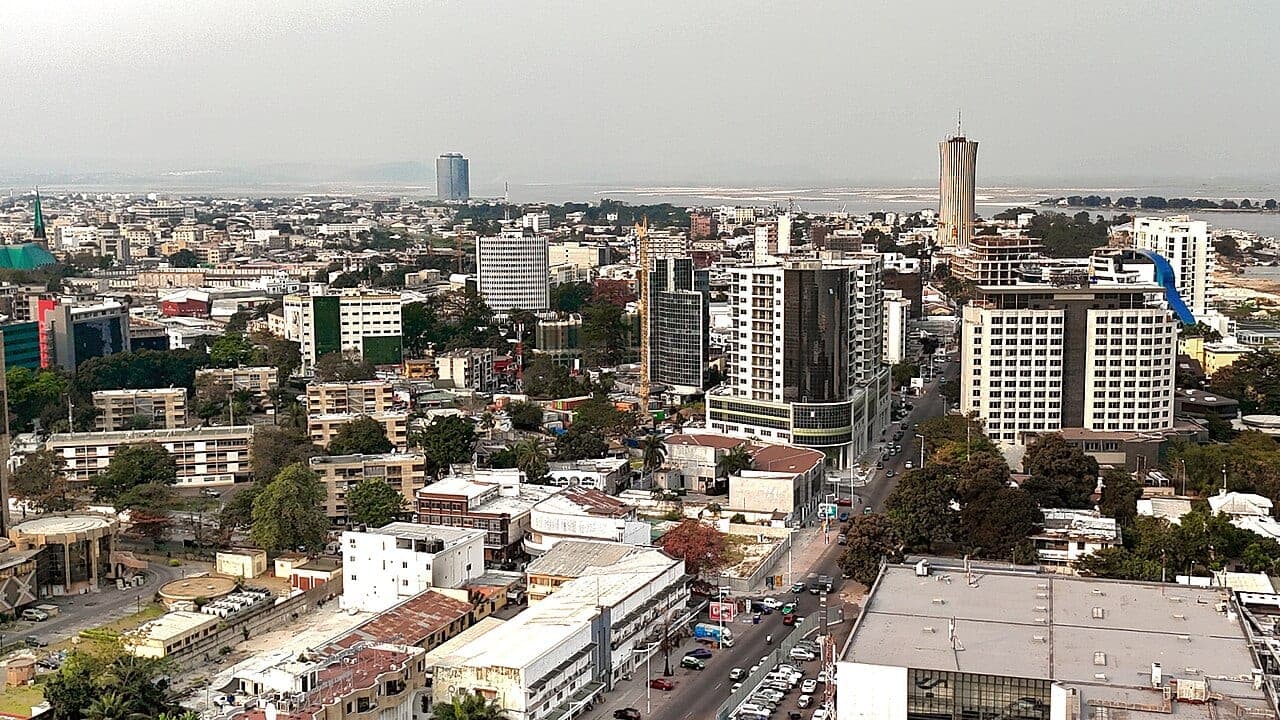
The Republic of the Congo, often called Congo-Brazzaville after its capital, sits on the western bank of the Congo River, straddling the equator in Central Africa. It is the smaller of the two neighbouring states that carry the river's name, and it should not be confused with the far larger Democratic Republic of the Congo, or Congo-Kinshasa, which lies on the opposite bank. The two capitals, Brazzaville and Kinshasa, face each other across the water at Pool Malebo, one of the closest pairs of capital cities in the world, yet they belong to separate nations with distinct colonial pasts, one French and one Belgian (Britannica).
This archive gathers what the country chooses to remember. Much of the Republic of the Congo is covered by dense equatorial rainforest, and roughly half of its people live in and around Brazzaville and the Atlantic port of Pointe-Noire. Its memory is carried in the herbaceous clearings where forest elephants gather, in the coastal shoreline where enslaved people once boarded ships, in the guitar lines of rumba, and in the funerary rites that Bantu communities have practised for centuries. What follows is an attempt to hold those threads together with care and precision.
The Republic of the Congo covers about 342,000 square kilometres and shares borders with Gabon, Cameroon, the Central African Republic, the Democratic Republic of the Congo, the Angolan exclave of Cabinda, and a short Atlantic coastline. The land rises from coastal plains through the forested Mayombe massif and the Niari valley to the interior plateaus of the Batéké people, and then falls into the vast, humid basin of the north, where the Sangha and Likouala rivers braid through some of the least disturbed rainforest left in Africa (Britannica).
Population is concentrated in the south, along the railway and river corridor that links Pointe-Noire on the coast to Brazzaville on the river. The far north is thinly settled, home to fishing and farming communities along the waterways and to communities of forest peoples whose knowledge of the equatorial ecosystem reaches back thousands of years. This division between the urban south and the forest north shapes much of how the country experiences and preserves its heritage.
Brazzaville is the capital and the seat of national memory. Founded in 1880 and named for the Italian-born French explorer Pierre Savorgnan de Brazza, it spreads along the northern shore of Pool Malebo and holds the country's oldest institutions, its cathedral and basilica, its national museum, and the riverside quarters where rumba and modern Congolese painting first took shape (New World Encyclopedia).
Pointe-Noire, on the Atlantic, is the economic capital and principal seaport, grown large on the offshore petroleum industry that underpins much of the national economy. It lies close to the historic Loango coast, a place whose beauty carries a heavy history. Dolisie, in the Niari department, is the third city of the country, a rail and market town that connects the coastal region to the agricultural interior. Ouesso, far to the north on the Sangha River in the Sangha department, is the gateway to the northern rainforests and the parks of the Congo Basin, a modest river town that opens onto some of the continent's most important conservation landscapes.
The earliest inhabitants of the region were forest peoples whose Stone Age cultures were gradually joined, over many centuries, by Bantu-speaking farmers migrating into the basin. By the second millennium, Bantu communities including the Kongo, the Téké (or Batéké) and the Vili had established themselves across the south and the plateaus (Britannica).
Along the coast rose the Kingdom of Loango, a Vili state that flourished from around the sixteenth century between the equator and the mouth of the Congo River. Loango was a centralised power that traded ivory, copper and finely woven raffia cloth. During the seventeenth century, European demand shifted from these goods toward captive human beings, and the Loango coast became one of the major departure points of the Atlantic slave trade. Historians estimate that on the order of a hundred thousand or more enslaved people were shipped from this coast in the eighteenth and early nineteenth centuries, a scale of suffering that must be named plainly (Britannica: Kingdom of Loango). Inland, the Téké kingdom of the plateaus and the wider world of the Kongo peoples formed the political fabric that European powers would later disrupt.
French influence entered through treaties in the 1880s, when de Brazza secured agreements with the Téké ruler known as the Makoko, and the territory became part of French Congo and then, from 1910, of the federation of French Equatorial Africa, with Brazzaville as its administrative centre (Britannica: history). During the Second World War the city took on a role far larger than its size. After 1940, French Equatorial Africa rallied to General Charles de Gaulle, and Brazzaville served as the symbolic capital of Free France for several years, the place from which many of the movement's early decrees were issued (Free French Africa, Wikipedia). The 1944 Brazzaville Conference, held there, foreshadowed later debates about the future of the French colonies.
The country gained full independence in 1960. In the decades that followed it went through a period as a Marxist-Leninist People's Republic of the Congo (1969–1992), and then a difficult phase of civil conflict during the 1990s, before returning to a multiparty constitutional order. These modern chapters are recorded here only in outline; what this archive keeps is the longer memory of peoples, rivers and forests that outlasts any single government.
The name Congo comes from the Kingdom of Kongo and from the KiKongo-speaking peoples of the region; the spelling with a C reached wider use through Portuguese contact (Wiktionary: Congo). The river, and then the two modern republics, took their names from this older world of the Kongo and neighbouring Bantu states.
French is the official language, a legacy of the colonial period, and it remains the language of government, schooling and much of the press. Alongside it, the country recognises two national languages that serve as everyday means of communication across ethnic lines: Lingala, widely spoken in Brazzaville and the north, and Kituba, a Kikongo-based creole common in the south and the coastal region (Languages of the Republic of the Congo, Wikipedia). Beyond these, dozens of Bantu languages are spoken, including varieties of Kongo and Téké, so that many Congolese move fluidly between a home language, a national language and French.
Music is the country's most recognisable cultural export. Congolese rumba, a genre and social dance that grew from an older dance form known as nkumba, developed across the twin cities of Brazzaville and Kinshasa in the twentieth century and became the sound of urban Central Africa. In 2021 it was inscribed on the UNESCO Representative List of the Intangible Cultural Heritage of Humanity following a joint nomination by the Republic of the Congo and the Democratic Republic of the Congo, a rare shared honour that reflects how deeply the two nations are linked by this music (UNESCO ICH).
 Diosso was the seat of the Ma Loango, ruler of the kingdom of Loango, whose court sent envoys to Europe and whose coast became one of the busiest embarkation points of the slave trade. Photograph by Luxy keys, CC0, via Wikimedia Commons.
Visual art has its own landmark. The Poto-Poto School of Painting was founded in Brazzaville in 1951 by Pierre Lods, and named for the Poto-Poto quarter of the city. It became one of the earliest art institutions in Central Africa, encouraging local painters to develop a distinctive style of elongated figures, market scenes and dancers rendered in bright colour, and it continues to train and exhibit artists today (Rhodes: History of the Poto-Poto School).
Then there is La Sape, the Société des Ambianceurs et des Personnes Élégantes, a movement of dandies known as sapeurs who cultivate an art of elegant dress, immaculate suits, coordinated colour and a philosophy of dignity through style. La Sape is shared with the Democratic Republic of the Congo and has roots reaching back to the colonial era, but in Brazzaville it has its own proud lineage. Congolese cooking anchors daily life more quietly: saka-saka, made from pounded cassava leaves simmered with palm oil, is a national favourite, served alongside cassava, plantain, freshwater fish and grilled meat.
Most Congolese are Christian, the majority Roman Catholic with substantial Protestant and revivalist congregations, a distribution shaped by French and missionary influence. Yet Christianity in the Congo is rarely practised in isolation from older frameworks of belief. Many families hold, alongside church membership, an understanding of the world in which ancestors remain present, in which the forest and its spirits deserve respect, and in which healers and diviners mediate misfortune and health (Britannica: People).
Indigenous churches that blend Christian scripture with African prophecy also have a strong following, most notably the movements descended from early twentieth-century Kongo religious leaders. Islam is present chiefly among immigrant and trading communities. What runs through this variety is a layered spirituality, one in which a single family may light candles at Mass and still keep the customs owed to the dead.
Among the Kongo and neighbouring peoples, death is understood as a passage rather than an ending, a movement from the world of the living into the world of the ancestors, who continue to watch over their descendants. Funerary practice has long carried great weight and expense, because to bury a person well is to honour that passage.
The Kongo world produced some of Central Africa's most striking mortuary art. Among the Bwende and related communities, important figures were commemorated with niombo, large anthropomorphic funerary figures built up from cloth around the body, a practice that bound the identity of the dead to the textiles so valued in Kongo culture (Niombo, Wikipedia). Carved masks associated with initiation, ancestor veneration and funerary rites were danced at moments of transition, calling on guardian spirits to accompany the living through grief. Mourning today typically unfolds over several days of wake, song and shared food, drawing together the extended family and the wider community, before Christian burial rites and, often, a later ceremony that formally settles the deceased among the ancestors.
The memory of the Loango coast belongs in any honest account of remembrance here. The beaches from which enslaved people were forced onto ships are places of loss for countless families across the Atlantic world, and they are increasingly recognised as sites of commemoration rather than curiosity. This archive treats that history soberly, as a wound to be remembered rather than a spectacle to be described.
The Republic of the Congo's family records are church records, colonial fragments and the memory of the kingdom of Loango.
Loango, whose seat was at Diosso, sent envoys to Europe and traded along a coast that became one of the busiest embarkation points of the Atlantic slave trade. The court's own record was oral and ritual, and the Ma Loango's succession is remembered; the royal tombs at Diosso are the physical trace. The trade itself was documented by the Europeans doing it, in Nantes, Bordeaux, Lisbon and Amsterdam, so the record of Congolese people carried away is in the ports that received the profit.
From the 1880s the French kept a civil register that mattered chiefly to those holding French status, and the colonial series is divided between Brazzaville and Aix-en-Provence. Brazzaville's position as the capital of French Equatorial Africa, and briefly of Free France from 1940, means the city holds records for a much larger territory than the modern country.
Catholic and Protestant mission registers are the vital records for most families through the twentieth century.
The civil conflicts of the 1990s damaged archives and displaced a large part of the population of Brazzaville and the Pool region, and civil registration remains incomplete.
The lineage systems are largely matrilineal here, among the Kongo and Teke peoples, so a man's heirs are frequently his sister's children rather than his own, which has to be understood before any tree is drawn.
The country's most significant preserved landscape is the Sangha Trinational, inscribed on the UNESCO World Heritage List in 2012 as a natural site shared across three nations. It brings together three contiguous national parks, Nouabalé-Ndoki in the Republic of the Congo, Lobéké in Cameroon and Dzanga-Ndoki in the Central African Republic, protecting roughly 750,000 hectares of the north-western Congo Basin (UNESCO: Sangha Trinational). Nouabalé-Ndoki, largely untouched by logging, shelters critically endangered western lowland gorillas, forest elephants, chimpanzees and the emblematic bongo antelope, and its forest clearings, or bais, are among the best places on earth to observe these animals. Part of this landscape is also protected under the Ramsar Convention as the Sangha-Ndoki wetland.
In the built environment, the Basilica of Sainte-Anne-du-Congo in Brazzaville is the country's best-known landmark. Designed by the French architect Roger Erell and partially consecrated in 1949, its steep, green-tiled roof and interior of pointed arches fuse a Gothic sensibility with local craft and materials, and it remains a spiritual and civic anchor of the capital (Basilica of Sainte-Anne, Wikipedia). The national museum in Brazzaville holds ethnographic and historical collections that document the Kongo, Téké and Vili worlds and the country's more recent past. Conservation, both of forest and of built heritage, remains a work in progress, supported by international partners and constrained by limited resources.
The digital record of Congolese heritage is still thin, and this makes careful documentation valuable. UNESCO maintains detailed public files on the Sangha Trinational and on Congolese rumba, and international conservation organisations publish survey data, wildlife censuses and monitoring reports drawn from the northern parks. Encyclopaedic references such as Britannica and Wikipedia provide accessible overviews, while academic archives preserve studies of the Loango trade and of Kongo funerary art. Congolese institutions and cultural bodies are gradually placing collections, painting archives and oral histories online. For families tracing memory across the diaspora created in part by the coastal trade, digital archives offer a way to reconnect a scattered history, and archives like this one aim to hold those records with accuracy and respect.
The living culture of the Republic of the Congo continues to travel well beyond its borders. Congolese rumba, now formally recognised by UNESCO, remains a defining sound of African popular music and a shared inheritance with the Democratic Republic of the Congo, carried by successive generations of guitarists, singers and dancers. Its descendants and offshoots continue to shape music across the continent and its diaspora (France 24).
La Sape, meanwhile, has become an internationally recognised expression of Congolese identity, photographed, filmed and admired abroad as a philosophy of grace and self-respect worn on the body. Together, rumba and La Sape present an image of the country grounded in elegance, resilience and creativity, an image that Congolese communities in Europe and beyond carry with them and pass to their children.
The clearest achievement of recent decades lies in the northern rainforests. The protection of Nouabalé-Ndoki and its incorporation into the Sangha Trinational have helped safeguard populations of western lowland gorillas and forest elephants at a time when both species face severe pressure elsewhere from poaching and habitat loss (UNESCO: Sangha Trinational). Long-term research at the forest clearings has deepened scientific understanding of great ape behaviour and elephant social life, while ranger patrols and community partnerships work to hold back the ivory trade.
The recognition of Congolese rumba by UNESCO in 2021 is a cultural success of a different kind, an official affirmation that a music born in the working-class quarters of Brazzaville and Kinshasa belongs to the shared heritage of humanity (UNESCO ICH). Between the gorillas of the Sangha and the guitars of the rumba, the Republic of the Congo has shown that its heritage, natural and cultural alike, is worth defending and worth remembering.
Diosso was the seat of the Ma Loango, ruler of the kingdom of Loango, whose court sent envoys to Europe and whose coast became one of the busiest embarkation points of the slave trade. Photograph by Luxy keys, CC0, via Wikimedia Commons.
Visual art has its own landmark. The Poto-Poto School of Painting was founded in Brazzaville in 1951 by Pierre Lods, and named for the Poto-Poto quarter of the city. It became one of the earliest art institutions in Central Africa, encouraging local painters to develop a distinctive style of elongated figures, market scenes and dancers rendered in bright colour, and it continues to train and exhibit artists today (Rhodes: History of the Poto-Poto School).
Then there is La Sape, the Société des Ambianceurs et des Personnes Élégantes, a movement of dandies known as sapeurs who cultivate an art of elegant dress, immaculate suits, coordinated colour and a philosophy of dignity through style. La Sape is shared with the Democratic Republic of the Congo and has roots reaching back to the colonial era, but in Brazzaville it has its own proud lineage. Congolese cooking anchors daily life more quietly: saka-saka, made from pounded cassava leaves simmered with palm oil, is a national favourite, served alongside cassava, plantain, freshwater fish and grilled meat.
Most Congolese are Christian, the majority Roman Catholic with substantial Protestant and revivalist congregations, a distribution shaped by French and missionary influence. Yet Christianity in the Congo is rarely practised in isolation from older frameworks of belief. Many families hold, alongside church membership, an understanding of the world in which ancestors remain present, in which the forest and its spirits deserve respect, and in which healers and diviners mediate misfortune and health (Britannica: People).
Indigenous churches that blend Christian scripture with African prophecy also have a strong following, most notably the movements descended from early twentieth-century Kongo religious leaders. Islam is present chiefly among immigrant and trading communities. What runs through this variety is a layered spirituality, one in which a single family may light candles at Mass and still keep the customs owed to the dead.
Among the Kongo and neighbouring peoples, death is understood as a passage rather than an ending, a movement from the world of the living into the world of the ancestors, who continue to watch over their descendants. Funerary practice has long carried great weight and expense, because to bury a person well is to honour that passage.
The Kongo world produced some of Central Africa's most striking mortuary art. Among the Bwende and related communities, important figures were commemorated with niombo, large anthropomorphic funerary figures built up from cloth around the body, a practice that bound the identity of the dead to the textiles so valued in Kongo culture (Niombo, Wikipedia). Carved masks associated with initiation, ancestor veneration and funerary rites were danced at moments of transition, calling on guardian spirits to accompany the living through grief. Mourning today typically unfolds over several days of wake, song and shared food, drawing together the extended family and the wider community, before Christian burial rites and, often, a later ceremony that formally settles the deceased among the ancestors.
The memory of the Loango coast belongs in any honest account of remembrance here. The beaches from which enslaved people were forced onto ships are places of loss for countless families across the Atlantic world, and they are increasingly recognised as sites of commemoration rather than curiosity. This archive treats that history soberly, as a wound to be remembered rather than a spectacle to be described.
The Republic of the Congo's family records are church records, colonial fragments and the memory of the kingdom of Loango.
Loango, whose seat was at Diosso, sent envoys to Europe and traded along a coast that became one of the busiest embarkation points of the Atlantic slave trade. The court's own record was oral and ritual, and the Ma Loango's succession is remembered; the royal tombs at Diosso are the physical trace. The trade itself was documented by the Europeans doing it, in Nantes, Bordeaux, Lisbon and Amsterdam, so the record of Congolese people carried away is in the ports that received the profit.
From the 1880s the French kept a civil register that mattered chiefly to those holding French status, and the colonial series is divided between Brazzaville and Aix-en-Provence. Brazzaville's position as the capital of French Equatorial Africa, and briefly of Free France from 1940, means the city holds records for a much larger territory than the modern country.
Catholic and Protestant mission registers are the vital records for most families through the twentieth century.
The civil conflicts of the 1990s damaged archives and displaced a large part of the population of Brazzaville and the Pool region, and civil registration remains incomplete.
The lineage systems are largely matrilineal here, among the Kongo and Teke peoples, so a man's heirs are frequently his sister's children rather than his own, which has to be understood before any tree is drawn.
The country's most significant preserved landscape is the Sangha Trinational, inscribed on the UNESCO World Heritage List in 2012 as a natural site shared across three nations. It brings together three contiguous national parks, Nouabalé-Ndoki in the Republic of the Congo, Lobéké in Cameroon and Dzanga-Ndoki in the Central African Republic, protecting roughly 750,000 hectares of the north-western Congo Basin (UNESCO: Sangha Trinational). Nouabalé-Ndoki, largely untouched by logging, shelters critically endangered western lowland gorillas, forest elephants, chimpanzees and the emblematic bongo antelope, and its forest clearings, or bais, are among the best places on earth to observe these animals. Part of this landscape is also protected under the Ramsar Convention as the Sangha-Ndoki wetland.
In the built environment, the Basilica of Sainte-Anne-du-Congo in Brazzaville is the country's best-known landmark. Designed by the French architect Roger Erell and partially consecrated in 1949, its steep, green-tiled roof and interior of pointed arches fuse a Gothic sensibility with local craft and materials, and it remains a spiritual and civic anchor of the capital (Basilica of Sainte-Anne, Wikipedia). The national museum in Brazzaville holds ethnographic and historical collections that document the Kongo, Téké and Vili worlds and the country's more recent past. Conservation, both of forest and of built heritage, remains a work in progress, supported by international partners and constrained by limited resources.
The digital record of Congolese heritage is still thin, and this makes careful documentation valuable. UNESCO maintains detailed public files on the Sangha Trinational and on Congolese rumba, and international conservation organisations publish survey data, wildlife censuses and monitoring reports drawn from the northern parks. Encyclopaedic references such as Britannica and Wikipedia provide accessible overviews, while academic archives preserve studies of the Loango trade and of Kongo funerary art. Congolese institutions and cultural bodies are gradually placing collections, painting archives and oral histories online. For families tracing memory across the diaspora created in part by the coastal trade, digital archives offer a way to reconnect a scattered history, and archives like this one aim to hold those records with accuracy and respect.
The living culture of the Republic of the Congo continues to travel well beyond its borders. Congolese rumba, now formally recognised by UNESCO, remains a defining sound of African popular music and a shared inheritance with the Democratic Republic of the Congo, carried by successive generations of guitarists, singers and dancers. Its descendants and offshoots continue to shape music across the continent and its diaspora (France 24).
La Sape, meanwhile, has become an internationally recognised expression of Congolese identity, photographed, filmed and admired abroad as a philosophy of grace and self-respect worn on the body. Together, rumba and La Sape present an image of the country grounded in elegance, resilience and creativity, an image that Congolese communities in Europe and beyond carry with them and pass to their children.
The clearest achievement of recent decades lies in the northern rainforests. The protection of Nouabalé-Ndoki and its incorporation into the Sangha Trinational have helped safeguard populations of western lowland gorillas and forest elephants at a time when both species face severe pressure elsewhere from poaching and habitat loss (UNESCO: Sangha Trinational). Long-term research at the forest clearings has deepened scientific understanding of great ape behaviour and elephant social life, while ranger patrols and community partnerships work to hold back the ivory trade.
The recognition of Congolese rumba by UNESCO in 2021 is a cultural success of a different kind, an official affirmation that a music born in the working-class quarters of Brazzaville and Kinshasa belongs to the shared heritage of humanity (UNESCO ICH). Between the gorillas of the Sangha and the guitars of the rumba, the Republic of the Congo has shown that its heritage, natural and cultural alike, is worth defending and worth remembering.
National Overview
Notable Cities
Historical Foundations
Linguistic and Etymological Roots
Cultural Identity
Religion and Spirituality
Remembrance and Mourning Traditions
Tracing a Family in Republic of the Congo
Heritage Preservation Efforts
Digital Heritage
Contemporary Cultural Influences
Success Stories
References and resources
- Britannica: Republic of the Congo
- Britannica: History of the Republic of the Congo
- Britannica: Kingdom of Loango
- UNESCO World Heritage Centre: Sangha Trinational
- UNESCO Intangible Cultural Heritage: Congolese rumba
- Rhodes College: History of the Poto-Poto School of Painting
- Wikipedia: Basilica of Sainte-Anne-du-Congo in Brazzaville
- Wikipedia: Free French Africa
- Wikipedia: Languages of the Republic of the Congo
- Wikipedia: Niombo
- New World Encyclopedia: Brazzaville
- France 24: Congolese rumba added to UNESCO heritage list