Heritage · University
University of Ibadan: History and Overview
Founded in 1948 as University College Ibadan, a college of the University of London, the University of Ibadan is Nigeria's first university. Within a decade of opening, its lecture halls had produced Chinua Achebe, Wole Soyinka, Christopher Okigbo and the generation that invented modern African literature in English.Written to last.
By Confinity Heritage Editorial · 2026-08-24 · 8-minute readQuiet tools, kept out of the way.
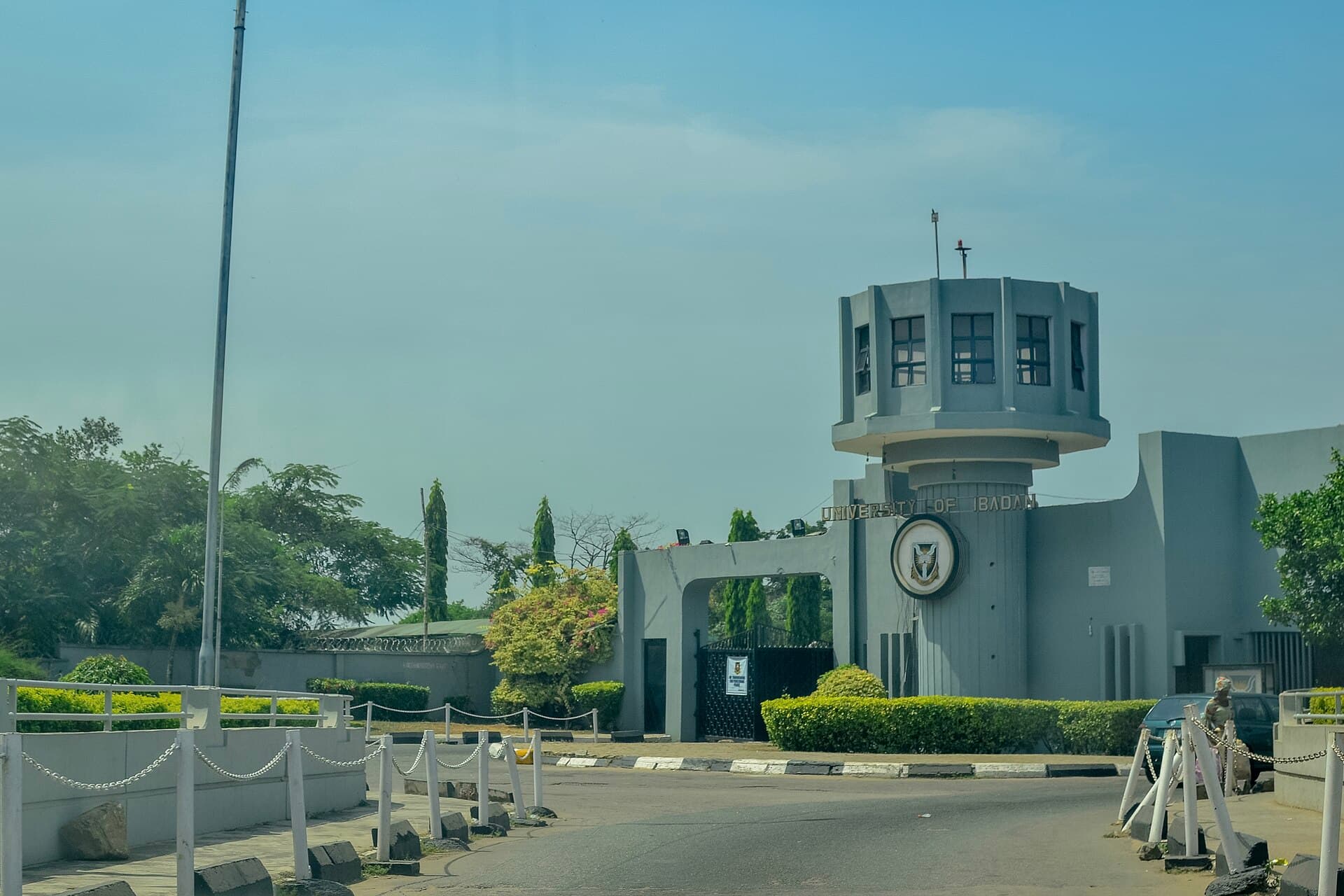
The University of Ibadan is Nigeria's first university, opened in 1948 as University College Ibadan on land granted by the chiefs of Ibadan, a Yoruba city then widely described as the largest in tropical Africa. For its first years it was a college of the University of London, its students sitting London examinations and taking London degrees under the special relationship scheme that carried British university standards into the late colonial world. In 1962, two years after Nigerian independence, it became a full university in its own right, awarding its own degrees as the University of Ibadan.
Those are the administrative facts, and they matter less than what happened inside the place. In its first decade this small college on the northern edge of Ibadan educated Chinua Achebe, Wole Soyinka, Christopher Okigbo, John Pepper Clark, Elechi Amadi and Flora Nwapa. Between them they wrote the founding books of modern African literature in English, and most of them had done so, or begun to, within fifteen years of the college admitting its first students. Few campuses anywhere can claim a creative explosion of that scale, and this page sets down how it happened.
The college grew out of the Asquith and Elliot commissions of the 1940s, which recommended university institutions for Britain's colonies, staffed and examined to the standard of British universities. University College Ibadan admitted its first students in January 1948, absorbing staff and students from the older Yaba Higher College in Lagos, and moved to its permanent site after the chiefs and people of Ibadan granted more than a thousand hectares of land a few miles north of the city. Kenneth Mellanby, an entomologist, served as first principal, and the early faculties covered the arts, the sciences, agriculture and medicine.
The London arrangement gave the college its rigour and also its limits. Syllabuses and examinations came from Britain, and critics inside Nigeria argued through the 1950s that the curriculum faced London more than it faced Africa. Independence changed the frame. In 1960 the historian Kenneth Dike became principal, and when the college gained full university status in 1962 he became its first vice-chancellor, the first Nigerian to lead the institution and one of the first Africans to head a university on the continent. Dike had already made his name by insisting that African history be written from African sources, and his appointment signalled what the university now meant to the new country.
The decades that followed were harder. The civil war of 1967-1970 pulled the community apart, sending staff and students of Eastern origin, Dike among them, out of Ibadan; Okigbo, the finest poet of the first generation, died fighting for Biafra in 1967. From the late 1970s military rule and collapsing funding drove many of the university's scholars abroad, a brain drain that scattered Ibadan-trained academics across the universities of Europe and North America. The university kept teaching through all of it, and its diaspora became, in time, part of its reach.
The campus is one of the notable modernist ensembles in West Africa. The British architects Maxwell Fry and Jane Drew planned its core buildings in the tropical modern style they developed for the region, with pierced screens, deep shade and open courtyards designed for heat and rain rather than against them. Trenchard Hall, the assembly hall where generations have matriculated and graduated, anchors the ceremonial heart of the campus, and the university's main gate on Oyo Road has become the image by which the institution is known across Nigeria.
At the centre of academic life stands the Kenneth Dike Library, the main university library, named for the vice-chancellor who reshaped the study of African history. Its Africana collections, together with the university's press and its journals, made Ibadan a publishing and research hub for the region from the 1950s onward. The university today teaches across more than a dozen faculties, from arts, science and law to agriculture, education, pharmacy and public health, with a postgraduate college that is among the largest in Africa.
Medicine deserves its own line in the record. The University College Hospital, established by ordinance in 1952 and opened to patients in 1957, was built as the college's teaching hospital and stood for decades as West Africa's premier centre of medical training. Its wards trained the doctors, nurses and specialists who staffed hospitals across Nigeria and far beyond it, and UCH remains one of the country's leading referral hospitals.
The distinctive fact about Ibadan is that a continent's literature found its voice on one campus in roughly one decade. Chinua Achebe arrived in the first intake of 1948 on a scholarship to study medicine, switched after a year to English, history and religious studies at the cost of his scholarship, and graduated in 1953. Five years later he published Things Fall Apart, the novel that answered colonial fiction with an Igbo world rendered whole, and that has since sold in the tens of millions across dozens of languages.
Wole Soyinka studied at the college from 1952 to 1954 before finishing his degree at Leeds; he returned to Ibadan around 1960 on a research fellowship in drama, and in 1986 became the first African to win the Nobel Prize in Literature. Christopher Okigbo read Classics and turned that training into some of the most original poetry in the language before the war killed him at Nsukka in 1967. John Pepper Clark, poet and playwright, founded the student poetry magazine The Horn, which gave the young writers their first pages. Elechi Amadi, who studied physics and mathematics, wrote The Concubine; Flora Nwapa, who took her degree at Ibadan in the 1950s, went on to publish Efuru in 1966 and became the first African woman novelist to be published in English internationally.
The city fed the campus and the campus fed the city. In 1961 the Mbari Club opened in Ibadan, a writers' and artists' centre founded with the editor Ulli Beier and carried by Achebe, Soyinka, Okigbo and Clark, publishing and staging new African work alongside the journal Black Orpheus. For a few years Ibadan, city and university together, was the capital of a new literature: a place where students who had grown up under colonial syllabuses decided that the next books would be their own. The parallel with Makerere University in Uganda, the sister London-scheme college that seeded East African letters in the same years, only sharpens the point; the 1962 Makerere writers' conference drew heavily on the Ibadan circle.
Beyond the writers, Ibadan trained much of the professional and academic class of independent Nigeria and a good part of Anglophone Africa's. Emeka Anyaoku, who read Classics at the college, served as Secretary-General of the Commonwealth from 1990 to 2000. The university's medical school produced the physicians who built Nigeria's health system; its history department, under Dike and his successors, created the Ibadan school of history that rewrote the African past from African evidence; its scientists, lawyers, and public servants populate institutions across the continent and the diaspora. Many of the professors now holding chairs in African studies, medicine and the sciences at universities around the world took their first degrees on this campus.
The University of Ibadan is consistently ranked Nigeria's leading university, regularly placed first in the country and among the top institutions in Africa by the major international tables. It teaches tens of thousands of students, with an unusually strong postgraduate emphasis for the region, and it remains a centre for research on health, agriculture and African history and culture. Its persistent challenges, funding, strikes and the pull of universities abroad, are the challenges of Nigerian higher education generally; its standing, after nearly eighty years, is not in question.
The campus lies along Oyo Road about eight kilometres north of central Ibadan, in Oyo State, and the main gate is a recognised city landmark. Visitors can walk the grounds, see Trenchard Hall and the Kenneth Dike Library from outside, and visit the university zoological and botanical gardens, which are open to the public and popular with families from the city. Ibadan itself rewards the trip: the brown roofs of one of Africa's great historic cities spread below Bower's Tower on Oke Are hill, and the university sits within reach of the city's markets and of Lagos, about two hours south. Term-time visitors should plan around the Kenneth Dike Library, the zoological garden and the main gate rather than the teaching departments.