Heritage · University
Makerere University: History and Overview
Founded in 1922 as a technical school on a hill above Kampala, Makerere grew into the university of an entire region, serving Kenya, Tanzania and Uganda as part of the University of East Africa before the national universities went their own ways. Its lecture halls educated presidents, and in June 1962 its campus hosted the conference where modern African literature in English argued itself into being.Written to last.
By Confinity Heritage Editorial · 2026-08-24 · 8-minute readQuiet tools, kept out of the way.
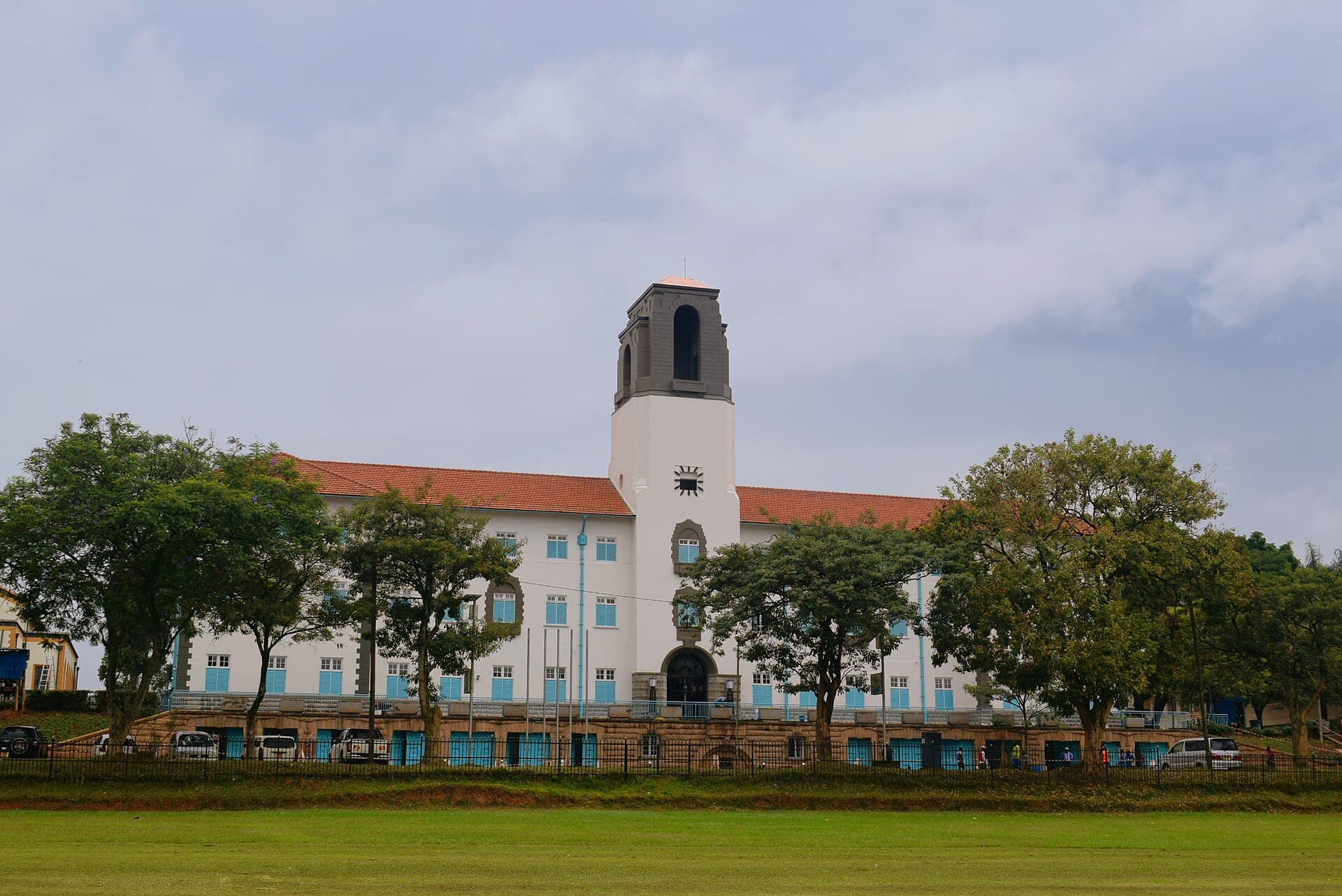
Makerere University stands on a hill about five kilometres from the centre of Kampala, the capital of Uganda, and for much of the twentieth century it stood, in a real sense, at the centre of East Africa. Founded in 1922 as a small technical school, it became the region's first institution of higher learning, and for decades it was the only one. Students crossed borders to reach it from Kenya, Tanganyika, Zanzibar and beyond, and when those territories became independent nations, an extraordinary share of their first leaders, writers and scholars carried a Makerere education with them.
That is the claim this page sets down: Makerere is the mother institution of East African higher education. The universities of Nairobi and Dar es Salaam both descend from the federal university it anchored in the 1960s. It has also endured as much as any institution on the continent, surviving the dictatorship of Idi Amin, the loss of a generation of scholars, and the fire that gutted its most beloved building. Its history is worth telling plainly.
Makerere opened in January 1922 as a technical school of the British colonial government, teaching carpentry, building and mechanics to a first intake of a few dozen students on Makerere Hill. Its scope widened quickly. Within its first two decades it added courses in medicine, agriculture, veterinary science and teacher training, and it began drawing students from across British East Africa rather than Uganda alone. In 1949 it became a university college in a special relationship with the University of London, its students taking London degrees while studying in Kampala.
The next step made it the university of a region in name as well as fact. In 1963 Makerere joined with the newer colleges at Nairobi and Dar es Salaam to form the University of East Africa, a single federal university serving Kenya, Tanzania and Uganda, awarding its own degrees for the first time. The arrangement lasted until 1970, when the three countries established separate national universities and Makerere became the independent national university of Uganda. The split multiplied East Africa's universities, but it did not change the genealogy: the institutions that trained the region's doctors, teachers and civil servants trace their descent to the hill in Kampala.
The 1970s brought the darkest chapter. Under Idi Amin, who seized power in 1971, the university was watched, purged and terrorised. Frank Kalimuzo, the first vice-chancellor of the newly independent Makerere, was abducted from the campus by security operatives in 1972 and never seen again; he is presumed to have been murdered. Scholars fled into exile in large numbers through the decade, and the university that had been the pride of the region entered the 1980s stripped of staff, books and money. Recovery was slow and real. From the late 1980s onward Makerere rebuilt, and in the 1990s it pioneered a privately sponsored admissions scheme that expanded enrolment from a few thousand students to tens of thousands.
The main campus spreads across Makerere Hill in northwestern Kampala, a green precinct of colonial-era halls, mid-century faculties and newer towers. Its centrepiece is the Main Building, universally known as the Ivory Tower, a whitewashed administration block with a clock tower completed in 1941 that appears on the university's crest and serves as shorthand for the institution itself. On the night of 20 September 2020 a fire tore through the building and gutted it, destroying offices and records. The loss was felt across East Africa as something more than property damage. The building has since been restored behind its surviving walls, its clock tower renewed, and it once again presides over the hill.
Makerere reorganised itself in 2011 into a collegiate structure of nine constituent colleges and a school of law, spanning the humanities and social sciences, health sciences, agriculture, engineering, natural sciences, education, business and computing. Some thirty-five thousand students study there. The university also holds one of the founding institutions of modern African art: the school of fine art established in 1937 by Margaret Trowell, an English teacher and painter who encouraged her students to work from East African life rather than European models. The Margaret Trowell School of Industrial and Fine Arts trained the first generation of the region's professional artists, among them the sculptor Gregory Maloba and the painters Sam Ntiro and Elimo Njau, and the Makerere Art Gallery on campus keeps the collection in which East African modernism can be said to begin.
In June 1962 the campus hosted a gathering with a modest official name, the Conference of African Writers of English Expression, that became one of the defining events in modern African letters. To Makerere came Chinua Achebe, Wole Soyinka, John Pepper Clark, Ezekiel Mphahlele, Grace Ogot and the American poet Langston Hughes, among dozens of others: novelists, playwrights and critics from across the continent meeting, many for the first time, to ask what African literature was and who would write it. Among the student delegates was a young Ngugi wa Thiong'o, then an undergraduate at Makerere, who handed Achebe the manuscript of what became Weep Not, Child, the first novel in English by an East African to be published in the Heinemann African Writers Series.
The conference did not happen in a vacuum. Kampala in the early 1960s was a literary capital, and the magazine Transition, founded in the city in 1961 by the Ugandan editor Rajat Neogy, gave the new writing its sharpest platform, publishing Achebe, Soyinka, Ngugi and Paul Theroux, who was then teaching at Makerere. Neogy was jailed on sedition charges in 1968, and the magazine later left Uganda.
The conference's limits mattered as much as its achievements, and it is fair to record both. Its very title confined the discussion to English, and delegates could not settle the question of what made a literature African. The critic Obi Wali answered in Transition the following year that literature written in European languages was a dead end, and Ngugi himself came to agree. In Decolonising the Mind he looked back on Makerere 1962 as a gathering that excluded the majority of Africans who did not write or read in English, and he later gave up writing fiction in English for his native Gikuyu. The conference where African literature in English convened is also the conference that started the argument over whether it should exist, and both legacies began on this campus.
Makerere's alumni roll reads like a roster of postcolonial East African leadership. Julius Nyerere, the first president of Tanzania, earned his teaching diploma at Makerere in the 1940s; Milton Obote, who led Uganda to independence and served twice as its president, studied there in the years after the war. Benjamin Mkapa, later president of Tanzania, took his degree in English at Makerere, and Mwai Kibaki, later president of Kenya, graduated in economics with first-class honours and returned to teach on the hill before entering politics. The university also educated generations of the region's judges, physicians and civil servants.
Its literary and scholarly names run just as deep. Ngugi wa Thiong'o wrote his first plays and novels as a Makerere student; the poet David Rubadiri and the novelist Peter Nazareth studied there; V. S. Naipaul spent 1966 at the university as a writer in residence, and the political scientist Ali Mazrui taught there until the Amin years drove him abroad. In the sciences, Makerere's medical school has been the region's most important for a century, and its modern strength lies in public health. The Makerere University Johns Hopkins University Research Collaboration, founded in 1988, produced landmark trials in preventing mother-to-child transmission of HIV, and the Infectious Diseases Institute on campus has become a leading African centre for research and clinical training in HIV, tuberculosis and emerging infections.
Makerere marked its centenary in 2022 and stands consistently among the top universities in Africa in the major international rankings, often listed alongside the University of Cape Town among the continent's leading research institutions. Its research output leads the region, anchored by the health sciences, and the Makerere Institute of Social Research under the political theorist Mahmood Mamdani rebuilt doctoral training in the humanities. It still draws students from across East Africa, and its graduates continue to fill the courts, wards and ministries of several countries.
The campus occupies Makerere Hill, a short drive northwest of central Kampala, and visitors can walk its grounds. The restored Ivory Tower is the landmark to see, and the Makerere Art Gallery, near the fine art school, is open to the public. St. Francis Chapel and the older halls of residence give a sense of the mid-century college that the independence generation knew. Teaching blocks and halls of residence are in daily use and examination weeks are best avoided; the Main Building, the Freedom Square lawn and the art gallery carry a visit on their own.