Heritage · University
Sciences Po: History and Overview
Founded in 1872 by Émile Boutmy after France's defeat by Prussia, Sciences Po was built to retrain a nation's governing class. From its house on the rue Saint-Guillaume it has educated most of the presidents and prime ministers of the Fifth Republic, and since 2001 it has run one of Europe's boldest experiments in opening an elite school.Written to last.
By Confinity Heritage Editorial · 2026-08-24 · 8-minute readQuiet tools, kept out of the way.
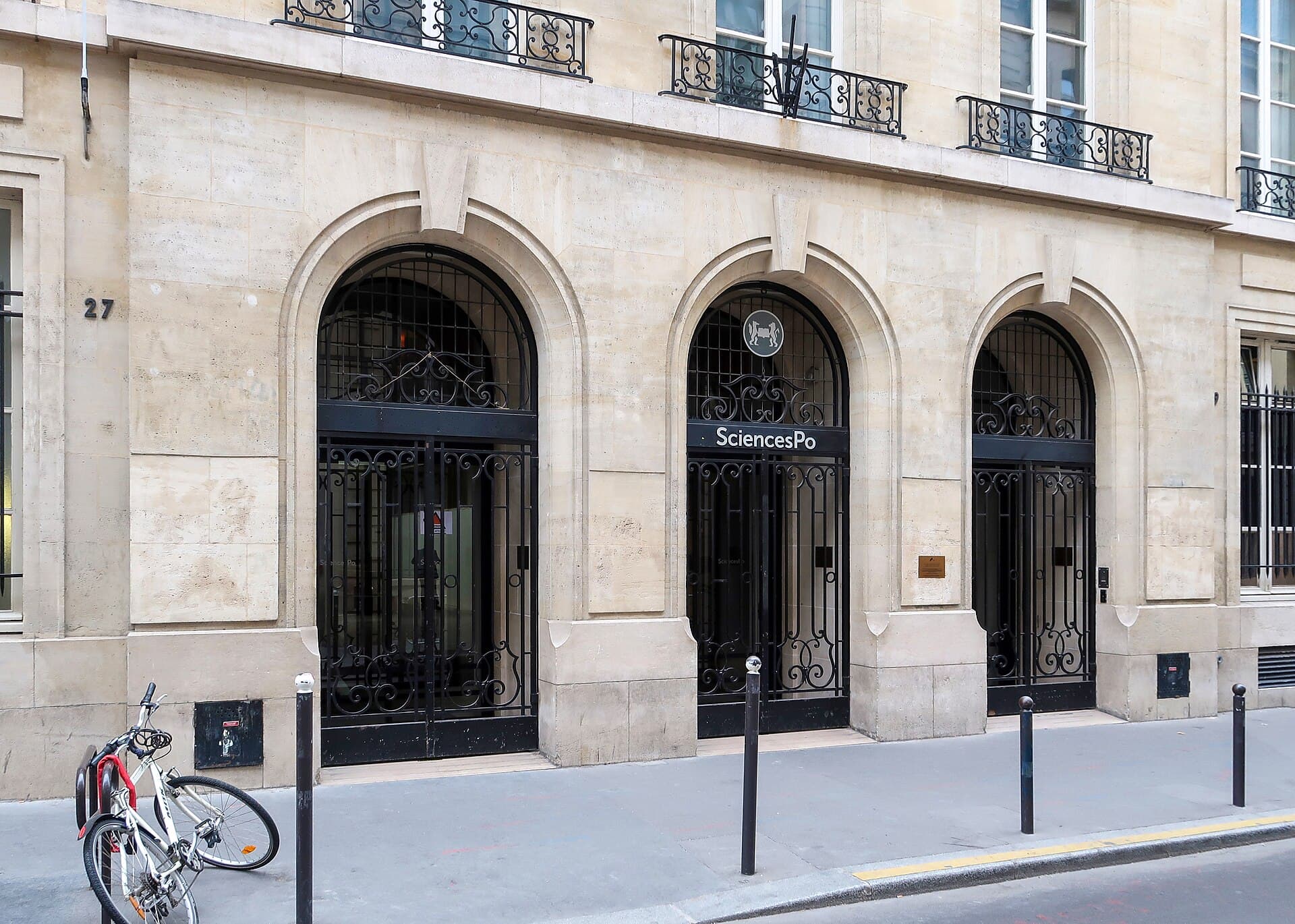
Sciences Po, formally the Institut d'Études Politiques de Paris, is France's principal school of the political and social sciences. Its home is a former private mansion at 27 rue Saint-Guillaume, a narrow street in the Saint-Germain-des-Prés quarter of the Left Bank, and from that address it has supplied the French state with its leadership for a century and a half. The school was born from a catastrophe: the defeat of 1870, when Prussia's armies broke France in a matter of months and the country asked itself how its governing class had failed so completely.
Few institutions carry the memory of a modern state so concentrated in one place. The registers of Sciences Po hold the student files of presidents, prime ministers, diplomats and a fashion designer who was meant to be a diplomat, and its main lecture hall has heard the same footsteps for generations: the young people who would go on to run a republic.
Émile Boutmy founded the École Libre des Sciences Politiques in 1872, in the immediate aftermath of the Franco-Prussian War and the violence of the Paris Commune. Boutmy, a scholar of constitutional history, argued that France had been defeated not only on the battlefield but in the formation of its elites, who had learned rhetoric and law while their Prussian counterparts studied administration, economics and the world as it actually worked. With the support of intellectuals including Hippolyte Taine and Ernest Renan, he built a free-standing school of government outside the official university system of the day, deliberately apart from the tradition of the University of Paris-Sorbonne. In 1879 the school purchased the eighteenth-century mansion at 27 rue Saint-Guillaume that remains its front door.
The experiment worked with unsettling speed. By the end of the nineteenth century the school's graduates dominated the entrance examinations for the grands corps, the elite bodies of the French administration, from the Conseil d'État and the Inspection des Finances to the diplomatic service. A private school had become the doorway to the public state, and that success eventually became the argument against it. At the Liberation in 1945, the provisional government judged that the recruitment of the state's servants could not be left to a private institution charging fees in one quarter of Paris. Rather than absorb the school outright, the reformers split it in two: a public institute, the Institut d'Études Politiques de Paris, to teach, and a private foundation, the Fondation Nationale des Sciences Politiques, to own the buildings and the library and manage the whole. The same year created the École Nationale d'Administration, and for the rest of the century Sciences Po served as the main preparatory route into it.
The most watched chapter in the school's modern history opened in 2001, when its director Richard Descoings introduced a separate admissions track for students from lycées in priority education zones, largely in the banlieues of the big cities. The Conventions Éducation Prioritaire bypassed the traditional entrance examination, which Descoings argued measured cultural inheritance as much as ability, and the decision set off a national argument about merit, republican equality and what an elite school owes the country that sustains it. The results have outlived the controversy. More than two thousand students have entered through the pathway, drawn from well over a hundred partner schools, and studies of their progress have found that they graduate and build careers at rates comparable to their classmates. An institution founded to rebuild one elite had chosen, deliberately, to widen the next one.
The Paris campus grew outward from the house at 27 rue Saint-Guillaume into a cluster of buildings threaded through the seventh arrondissement. The largest addition came in 2022, when the school opened its 1 Saint-Thomas campus in the Hôtel de l'Artillerie, a former seventeenth-century convent that later served the French army, restored to gather teaching, research and student life around a set of quiet courtyards.
Sciences Po is also, unusually for a French grande école, a network of small regional campuses with distinct identities. Undergraduates spend their first two years at one of seven campuses, each pairing the common curriculum with a regional focus: Le Havre looks toward Asia, Menton on the Mediterranean coast toward the Middle East, Nancy toward European and Franco-German affairs, Dijon toward Central and Eastern Europe, Poitiers toward Latin America and the Iberian world, and Reims toward North America and Africa, with Paris anchoring the whole. The third year is spent abroad, and graduate study returns to Paris across schools of international affairs, public affairs, law, journalism, management and urban policy, together with a doctoral school.
The library that Boutmy began assembling at the founding is now among the leading social science collections in continental Europe. Its particular treasure is its press collection: runs of newspapers and periodicals reaching back into the nineteenth century, gathered continuously since the school's earliest years, so that a reader can follow French political life week by week from the aftermath of the Commune onward.
The largest lecture hall at 27 rue Saint-Guillaume is named for the founder, and the Amphithéâtre Émile Boutmy is the closest thing the French state has to a common classroom. Students have filled its benches since the years when the Third Republic was young, and the roll of those who passed through it reads like the republic's own index. Most of the presidents of the Fifth Republic studied at the school, François Mitterrand, Jacques Chirac, François Hollande and Emmanuel Macron among them, and most of its prime ministers as well, from Michel Debré at the Fifth Republic's founding to Édouard Philippe and Gabriel Attal in recent years. For decades the path ran onward through ENA, which drew the bulk of its intake from Sciences Po graduates until its replacement by the Institut National du Service Public in 2022.
The hall's memory is not only French. Boutros Boutros-Ghali, who studied there after leaving Egypt for Paris, went on to become Secretary-General of the United Nations. And the school keeps one file that reads like a joke history played on a serious institution: Christian Dior enrolled in the 1920s at his family's insistence, being groomed for a diplomatic career, and drifted from the lecture benches toward galleries and sketchbooks until the training meant for embassies produced instead the most famous fashion house in France.
That continuity is the school's quiet distinction. Universities keep archives; Sciences Po is one. A single room, in continuous use across a century and a half, through which nearly every generation of a republic's leadership has passed on its way up: the building on rue Saint-Guillaume functions as the state's memory, held in seating charts and examination lists.
Behind the famous alumni stands a research institution. Albert Sorel taught diplomatic history in the school's first generation, and André Siegfried helped invent the modern study of French electoral geography from its lecture rooms. Today the Fondation Nationale des Sciences Politiques supports research centres spanning international affairs, political attitudes, economics and sociology, and their work supplies much of the standing scholarship on how France votes, governs and argues with itself.
That work carries the school's name well beyond France. In the QS World University Rankings by subject, Sciences Po has for several years stood among the top institutions in the world for politics and international studies, the only French entrant at that level, and its degrees are taught in partnership with universities from Columbia to Keio.
Around 15,000 students study at Sciences Po, and close to half of them come from outside France, drawn from roughly 150 countries. Teaching runs in French and English, and the dual structure of 1945, a public institute carried by a private foundation, still governs the whole. The directorship changed hands several times between 2021 and 2024, a turbulent stretch for the institution, and Luis Vassy was appointed director in 2024.
The founding question has never gone away. The arguments of 1872, 1945 and 2001 were all, at bottom, the same argument: who should be trained to run France. The school's answer has widened each time.
The historic entrance at 27 rue Saint-Guillaume stands in the seventh arrondissement, a few minutes' walk from the Saint-Germain-des-Prés and Rue du Bac metro stations. Sciences Po is a working school rather than a tourist site, and its buildings are generally open only to students and staff, but its public lectures and open days admit outside visitors at announced times. Researchers can apply for access to the library's collections, including the nineteenth-century press holdings, through the library's reader services.