Heritage · University
Fudan University: History and Overview
Founded in Shanghai in 1905 by the scholar Ma Xiangbo, Fudan University takes its name from a classical line about daylight returning morning after morning. It survived nine years of wartime exile in Chongqing and now stands in the top tier of Chinese universities, known for journalism, international relations, and medicine.Written to last.
By Confinity Heritage Editorial · 2026-08-24 · 8-minute readQuiet tools, kept out of the way.
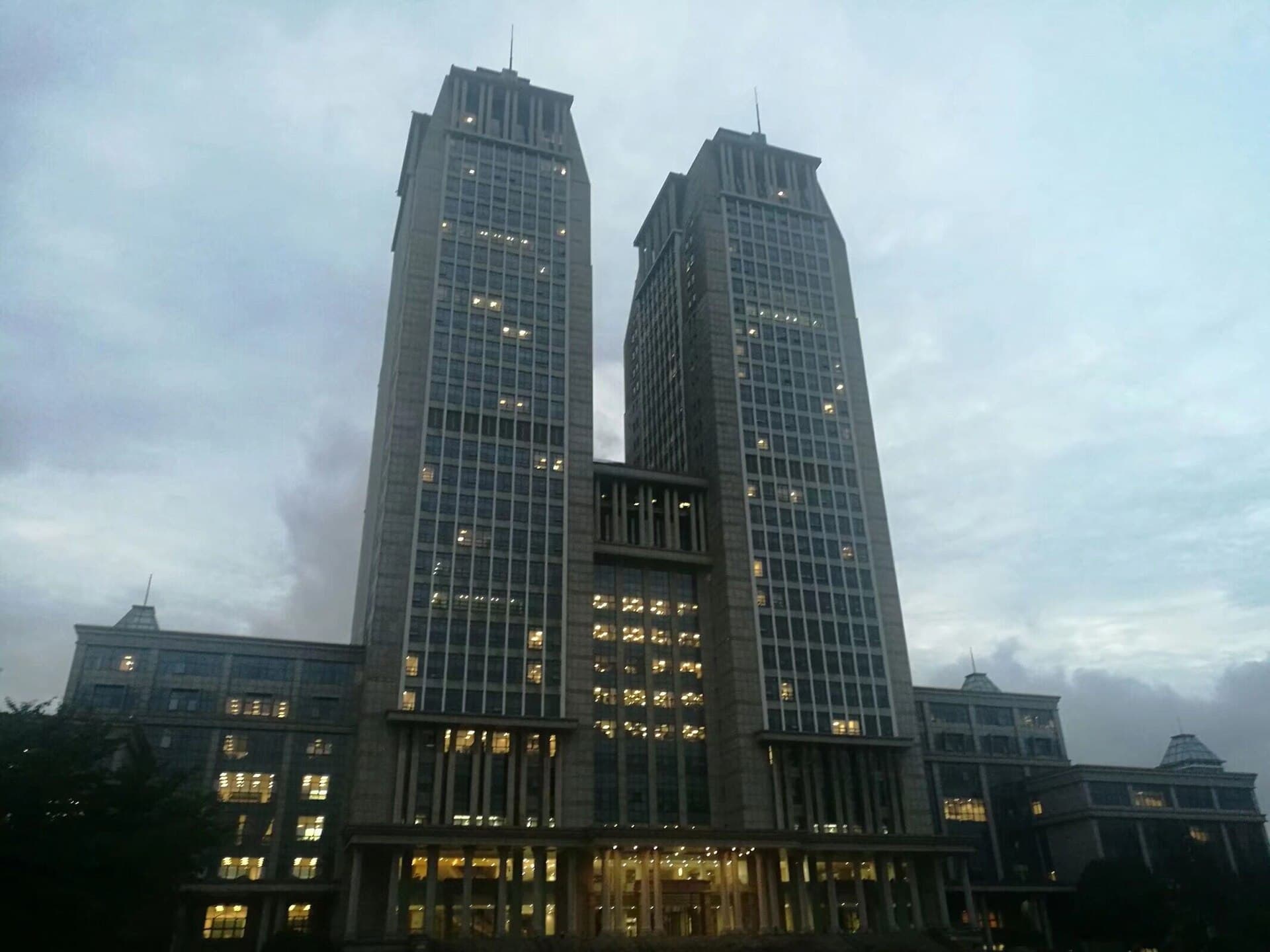
Fudan University stands in the northeast of Shanghai, China's largest city, and carries one of the most quietly beautiful names any university has ever been given. The two characters of Fudan were lifted from an ancient commentary on the classics, from a line that celebrates the light of the sun and moon and the way dawn returns after every dawn. A school named in 1905, in the last years of a failing empire, chose for itself the image of light that keeps coming back.
The name turned out to be a description of the institution's whole history. Fudan was founded in an act of departure, when a scholar and his students walked out of one university to build another they could govern themselves. Three decades later the entire school walked much farther, a thousand miles inland and back, through a war.
Fudan's founder, Ma Xiangbo, was a Jesuit-educated scholar from a long-standing Catholic family, ordained a priest, later a diplomat and reformer who believed modern education was the country's way forward. In 1903 he founded Aurora University in Shanghai, donating his own property to establish it. Within two years he had fallen out with the French Jesuit fathers over control of the curriculum and governance. When the dispute came to a head in 1905, more than a hundred of Aurora's students withdrew in support of him, and with them Ma founded Fudan Public School, a college run by Chinese scholars rather than by a foreign church. The name, with its promise of returning light, also carried a quiet echo of Aurora, the dawn he had founded first.
The early school was fragile, moving between temporary premises and surviving the fall of the Qing dynasty in 1911. Its long consolidation came under Li Denghui, a Yale-educated educator who led Fudan from 1913 and spent more than two decades building it into a full private university, acquiring the land in the Jiangwan district north of the city where the main campus still sits. Fudan was formally constituted as a university in 1917, and by the 1920s it had added the schools that became its signature strengths, including in 1929 a department of journalism that is counted as the oldest in China.
War interrupted everything. After Japan attacked Shanghai in 1937, the university left the city and moved inland by stages, settling at Beibei near Chongqing, the wartime capital, where it kept teaching for the better part of nine years. In 1941 the refugee institution was taken into public hands as a national university, and in 1946, the war over, it returned to its Jiangwan home.
The last great reshaping came in 1952, when the new People's Republic reorganized higher education across the country. Fudan was made a comprehensive university of the arts and sciences and received whole faculties transferred from other institutions in eastern China. The transfers brought some of the country's most distinguished scholars to Shanghai, among them the mathematicians Su Buqing and Chen Jiangong, and set the university's modern character as a place assembled from many traditions.
The heart of Fudan is the Handan campus in Yangpu district, named for the road it faces, a mature campus of plane trees and twentieth-century teaching halls. Its central auditorium, Xianghui Hall, rebuilt after the war, takes one character of its name from Ma Xiangbo and one from Li Denghui, joining the university's two builders in the room where its ceremonies happen. Above everything rise the Guanghua twin towers, completed for the university's centenary, among the tallest university buildings in the world. Their name comes from the same classical line as Fudan's own, the phrase describing the brilliance of the sun and moon, so the campus skyline and the institution answer each other.
Fudan today operates across four campuses. Handan holds the humanities, social sciences, and most undergraduate life. Jiangwan, a newer campus a short distance north, houses law and several of the sciences. Fenglin, in the southwest of the city, is the medical campus, home to the Shanghai Medical College that merged with Fudan in 2000 and brought with it a medical school founded in 1927 along with a ring of major teaching hospitals. Zhangjiang, in Pudong, faces the technology district and holds work in microelectronics and pharmacy. Across them the university teaches tens of thousands of students in programs spanning the humanities, sciences, engineering, medicine, and management, with particular reputations in journalism, international relations, mathematics, and the life sciences.
The university's name comes from the Shangshu Dazhuan, an early commentary associated with the Book of Documents. In a song preserved in its section on the age of Yu and Xia appears the line from which both Fudan and the Guanghua towers are drawn, rendered in English roughly as "Brilliant are the sunlight and the moonlight; dawn returns after the dawn." Fudan means, in effect, the return of the morning: light that comes back. For the founders of 1905 the sense was double, a classical blessing on a new school and a statement that Chinese learning would renew itself under its own direction.
The name was tested in the plainest way imaginable. When the Japanese invasion reached Shanghai in 1937, staying meant closing, so the university moved. Students and faculty carried books, instruments, and records inland through a country at war, and re-established their classrooms at Beibei on the Jialing River near Chongqing. Many Chinese universities share a version of this memory; the most famous is the wartime merger of northern universities into Lianda at Kunming. Fudan's exile was its own, though: a Shanghai institution transplanted whole into the hills of Sichuan, holding lectures through air raids, graduating classes far from home for nearly a decade. The wartime dead are commemorated at Beibei, where the old campus site is preserved. In 1946 the university came back to Jiangwan and began again on its own ground. The school named for the returning of daylight had enacted its name, and the memory of the long walk west remains part of how Fudan tells itself.
The 1952 reorganization gave Fudan a mathematical school of unusual depth. Su Buqing, a differential geometer of international standing, arrived from Zhejiang University with his colleague Chen Jiangong, an analyst known for his work on function theory, and the two built Fudan into one of China's leading centers of mathematics. Su later served as the university's president, and his students carried the school's geometry tradition forward for decades.
In the life sciences the central figure is Tan Jiazhen, often called the founder of modern Chinese genetics. Trained in the Caltech laboratory of Thomas Hunt Morgan, the pioneer of chromosome genetics, Tan made early discoveries in the population genetics of ladybird beetles, then spent the rest of a very long life building the discipline in China, establishing at Fudan the country's first genetics research institutions and defending the science itself through years when it was politically suspect.
The wider roll reflects the university's place in modern Chinese public life. Yu Youren, later a celebrated calligrapher and statesman, was among the students of the founding generation. The journalism school has trained editors and correspondents for nearly a century, and the university's graduates in economics, law, and international relations moved into prominent positions in government, diplomacy, and business as China's reform era opened after 1978. Its medical school has produced generations of physicians and public-health leaders.
Fudan belongs to the small group at the top of Chinese higher education, a member of the C9 League alongside Peking University, Tsinghua University, Shanghai Jiao Tong University, and Zhejiang University. International league tables place it among the leading universities in Asia and within or near the top 50 in the world. Its research spans microelectronics and brain science, Chinese civilization studies, quantitative finance, and clinical medicine.
It is also, by long reputation, the most cosmopolitan of Shanghai's universities, with one of the largest international student communities in mainland China and a dense web of exchange agreements abroad. That character fits its history: a university founded on Chinese self-governance that was never closed to the world, in the country's most outward-facing city.
The Handan campus sits in Yangpu district in northeastern Shanghai, near the Wujiaochang commercial hub, and is reached easily by metro. Chinese university campuses control entry at the gates, and visitors may need to register or show identification, so check current arrangements before a special trip. From the surrounding streets the Guanghua twin towers are visible for some distance and make the campus easy to find. Within the grounds the older quadrangles, the statue of Ma Xiangbo, and Xianghui Hall reward a slow walk. Fudan is a working university above all, and term-time visitors share its paths with one of the largest student communities in Shanghai.