Heritage · University
Seoul National University: History and Overview
Founded in 1946 by merging ten colonial-era institutions into independent Korea's first national university, Seoul National University stands at the summit of South Korean academic life. Its Gwanak campus houses the Kyujanggak, the royal library of the Joseon dynasty founded in 1776, whose annals and ritual protocols are inscribed in UNESCO's Memory of the World register.Written to last.
By Confinity Heritage Editorial · 2026-08-24 · 8-minute readQuiet tools, kept out of the way.
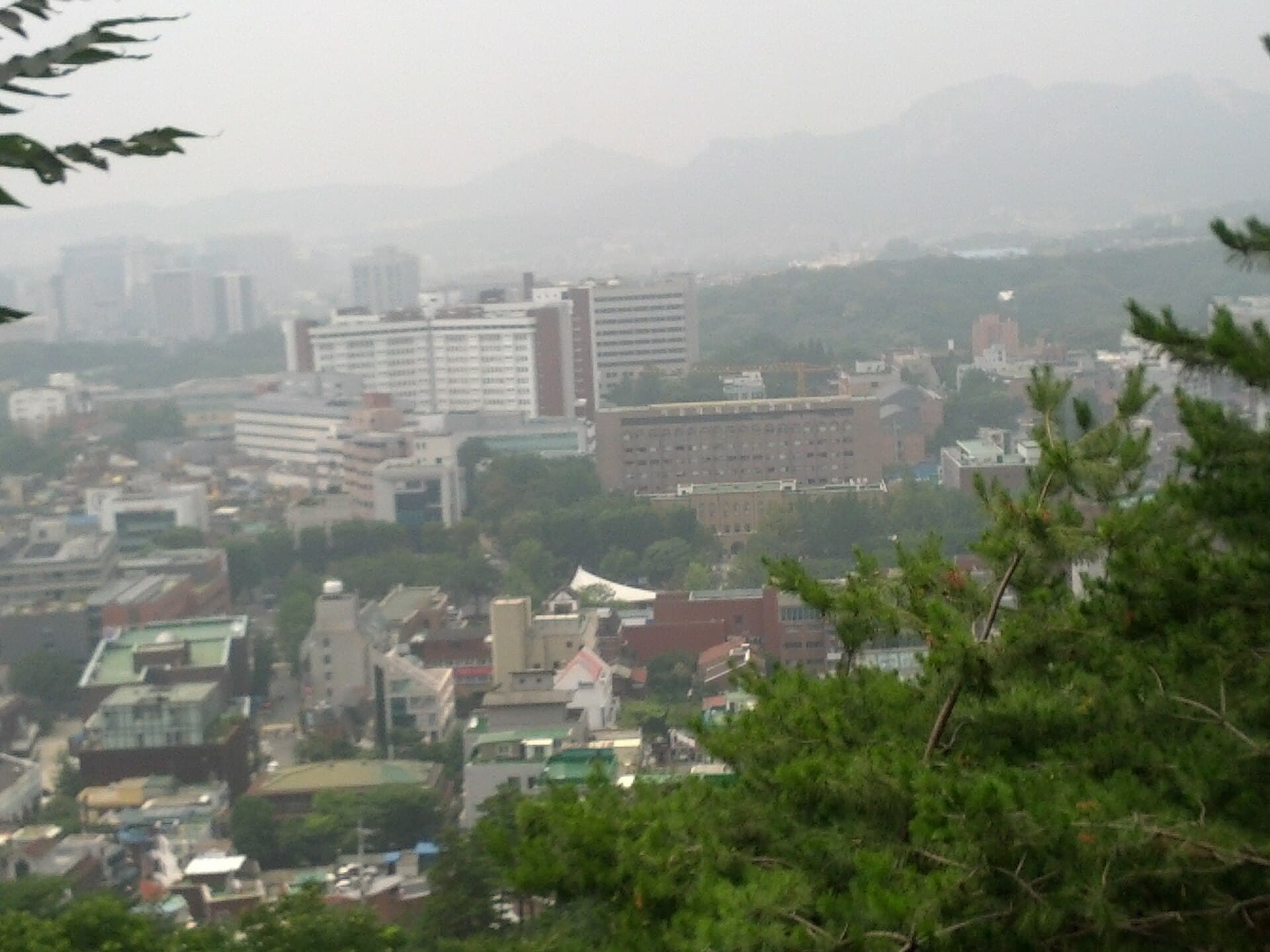
Seoul National University is the national flagship university of South Korea, founded in 1946 as the first national university of a country that had just recovered its independence. Its place at the head of the country's academic order is so settled that the university operates as a fixture of national life, studied for, argued over, and written into the biographies of presidents, judges, poets and engineers. Its main campus spreads across the lower slopes of Gwanaksan, a granite mountain on the southern edge of Seoul, while its medical colleges remain at Yeongeon in the old city, on grounds that have held a teaching hospital since the last years of the Korean Empire.
For an institution not yet a century old under its present name, the university keeps an unusually deep archive. In a purpose-built hall on the Gwanak campus sits the Kyujanggak, the royal library founded by a Joseon king in 1776, whose annals, protocols and state diaries passed through the fall of a dynasty and a colonial occupation before coming to rest inside a modern research university.
Seoul National University was created in August 1946, when the American military government then administering the southern half of Korea issued an ordinance merging ten existing institutions of higher education into a single national university. The largest of them was Kyongsong University, the renamed successor of Keijo Imperial University, which the Japanese colonial government had established in the 1920s as the only university on the peninsula; around its faculties were gathered nine professional schools of law, medicine, engineering, agriculture and other fields. The consolidation was fiercely contested at the time, but the result stood. An independent Korea now had a national university of its own, built deliberately out of the institutions the colonial period had left behind: the founding itself was an act of national reconstruction, the machinery of higher learning taken back and reassembled under a Korean name.
The university dates itself from 1946, yet several of its colleges carry lineages that reach further back, into the reform decade of the late Joseon court. The college of law descends from the Beopgwan Yangseongso, a training institute for judicial officials opened by the state in 1895. The college of medicine traces its descent through the government medical school of the Korean Empire and the Daehan Uiwon, the state hospital whose clock-towered main building of 1908 still stands at Yeongeon, protected as a historic site. The founding is therefore layered: a 1946 charter laid over institutions born of Korea's own nineteenth-century push to modernize, interrupted by colonization and then reclaimed.
For its first three decades the university worked from campuses scattered across central Seoul. In 1975 the government gathered most of them onto a single new campus built on former golf-course land at the foot of Gwanaksan; the colleges of medicine, dentistry and nursing remained at Yeongeon beside the university hospital.
The university's history is also braided into the country's long struggle for democracy. In the April Revolution of 1960, students from Seoul National University marched near the front of the demonstrations that brought down the government of Syngman Rhee after a rigged election, and some were among those killed when police opened fire. The campus remained a center of dissent through the authoritarian decades that followed. In January 1987, Park Jong-chul, a twenty-one-year-old linguistics student at the university, died under police interrogation in a basement cell in Namyeong-dong. The attempted cover-up of his death, and its exposure, helped ignite the June Struggle later that year, the nationwide protests that forced the restoration of direct presidential elections. A memorial on the Gwanak campus keeps his name.
The Gwanak campus is one of the largest university precincts in the country, a small city of lecture halls, laboratories, dormitories and museums along a valley road that climbs toward the mountain. The university teaches across more than a dozen colleges, from the humanities and natural sciences to engineering, fine arts, medicine and law, together with an extensive graduate school, and close to thirty thousand students study there. In 2011 it was reorganized into an incorporated national university corporation, with greater autonomy over its own affairs.
The Yeongeon campus in Jongno district holds the colleges of medicine and nursing and Seoul National University Hospital, heir to the Daehan Uiwon. Seen from the slopes of Naksan, the old fortress hill to its east, the medical campus reads as a compact quarter of hospital towers gathered around the 1908 building, modern Korean medicine still working on the ground where its state institutions began. A third campus at Pyeongchang, in Gangwon province, houses programs in green technology and biosciences.
The Kyujanggak is the reason a university founded in 1946 can fairly be called one of Korea's oldest memory institutions. King Jeongjo established it in 1776, the year he took the throne, as a royal library and research office housed in a two-story pavilion in the rear garden of Changdeokgung palace. Its scholars collected royal writings, compiled state publications and advised the king. After the dynasty fell, its collections passed into the custody of the colonial government and then of Keijo Imperial University, and in 1946 they came to Seoul National University. Since 2006 they have been managed by the Kyujanggak Institute for Korean Studies, which holds roughly three hundred thousand books, documents and printing woodblocks in a climate-controlled hall on the Gwanak campus.
What sits in that hall is the documentary core of the Joseon dynasty. The institute preserves one of the surviving complete archive copies of the Annals of the Joseon Dynasty, the day-by-day chronicle of the kings compiled over five centuries, along with the Seungjeongwon ilgi, the diaries of the royal secretariat, and the Ilseongnok, the daily records of state affairs. Beside them stand hundreds of volumes of Uigwe, the illustrated royal protocols that recorded weddings, funerals, banquets and building projects in such procedural detail that a ceremony could be restaged centuries later from the page. Many of the Uigwe document the court's ancestral rituals at the royal shrines, the state's grand form of the same remembrance that Korean households keep in the jesa rite. All four of these bodies of records have been inscribed in UNESCO's Memory of the World register, the annals in 1997 and the Uigwe in 2007 among them. A dynasty's record office thus lives on inside a modern university, its holdings digitized, catalogued and read daily by historians, and its exhibition hall open to anyone who walks in.
Admission to Seoul National University has long been the most sought-after prize in Korean education. The university stands first among the "SKY" trio, the shorthand Koreans use for Seoul National, Korea and Yonsei universities, and each November the national college entrance examination that governs admission briefly reorganizes the country, with flights rescheduled and offices opening late on test day. The examination culture around the university is much debated in Korea: critics link it to intense private tutoring and pressure on the young, while defenders point to the openness of a single national test. The university sits at the center of both arguments.
Its alumni run through every register of Korean public life. Two presidents of the republic, Kim Young-sam and Yoon Suk-yeol, studied there, along with a long line of prime ministers, ministers and senior judges. Ban Ki-moon, Secretary-General of the United Nations from 2007 to 2016, took his degree in international relations in 1970. The dissident poet Kim Chi-ha, imprisoned for verses that mocked the dictatorship, studied aesthetics on the old campus. In industry, Kakao founder Kim Beom-su trained as an industrial engineer there, and in mathematics June Huh, who began at the university in physics and astronomy, received the Fields Medal in 2022.
Seoul National University is consistently ranked first in South Korea and among the leading universities of Asia, with research strength across engineering, medicine, the natural sciences and Korean studies. Its hospital system anchors the country's medical research, its graduates dominate the senior civil service and judiciary, and the Kyujanggak institute is a principal center for the study of Joseon documents, its royal records digitized and openly available.
The Gwanak campus is open to visitors, reached from its subway station on Line 2 and a short bus ride up the valley. The Kyujanggak exhibition hall shows royal books, maps and Uigwe volumes, generally open on weekdays without charge; the campus also holds the university museum and an art museum designed by Rem Koolhaas. At Yeongeon, the 1908 Daehan Uiwon building beside the university hospital now houses a medical museum, and the walk up Naksan Park behind it gives a wide view over the medical campus and the old city. Both campuses are working academic and clinical grounds, so Gwanak's walking routes, the museum and the arboretum edge are the parts to plan around.