Heritage · University
KAIST: History and Overview
Founded in 1971 by government statute with a USAID loan, KAIST was designed to give Korean scientists a reason to come home. From its Daejeon campus it has trained the engineers behind Korea's semiconductor rise, built the country's first satellite, and fielded the robot that won the 2015 DARPA Robotics Challenge.Written to last.
By Confinity Heritage Editorial · 2026-08-24 · 8-minute readQuiet tools, kept out of the way.
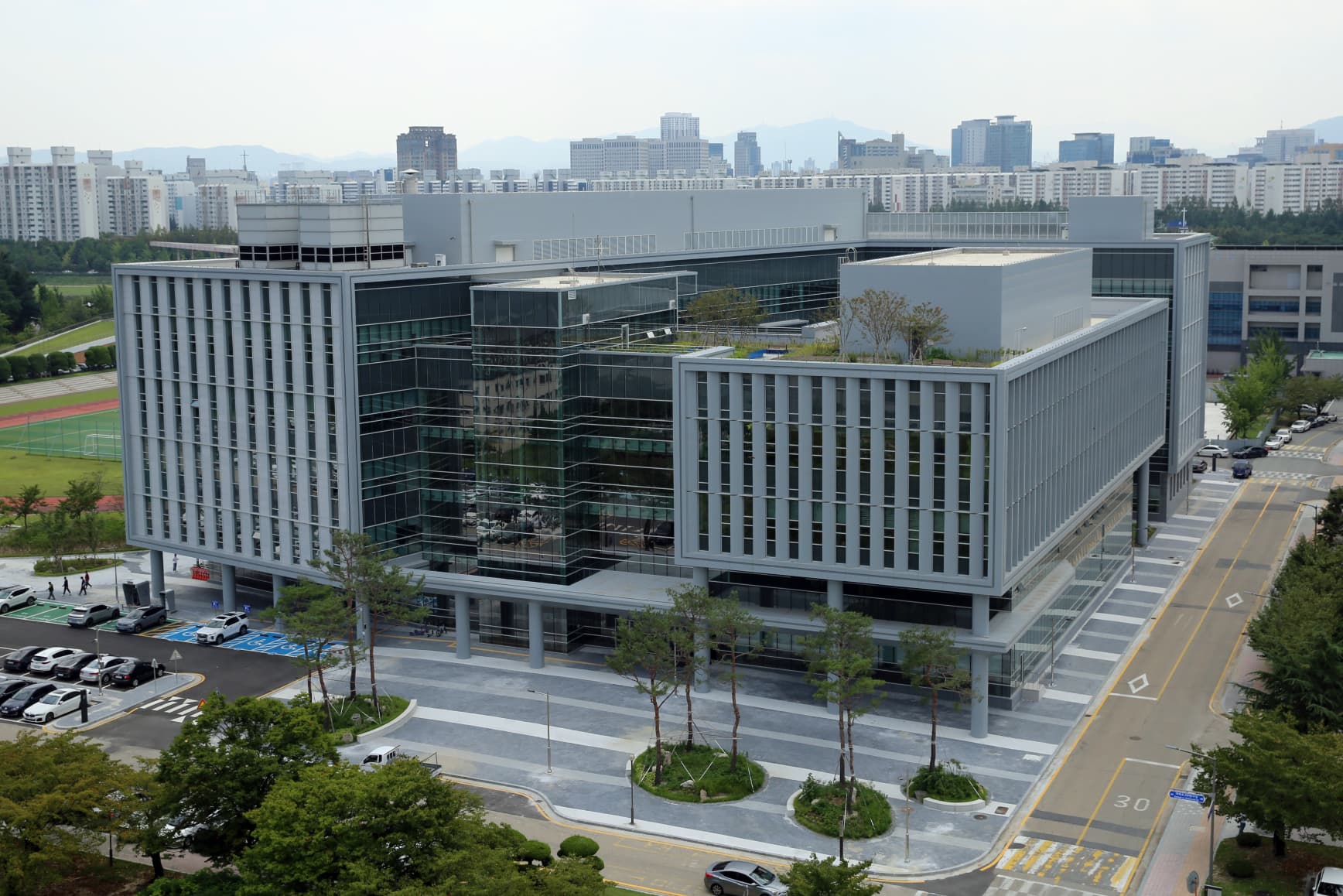
KAIST, the Korea Advanced Institute of Science and Technology, is South Korea's first research-focused graduate school of science and engineering, established by a special act of the National Assembly in 1971. It occupies a wooded campus in Daejeon, a city about 140 kilometres south of Seoul, at the heart of the Daedeok research district. Most universities grow out of a founder's bequest or a city's ambition. KAIST grew out of a national decision, made at a moment when Korea's income per head was still counted in the hundreds of dollars, that the country's future would be engineered by its own scientists or not at all.
The institute is therefore a keeper of an unusual kind of memory: the record of a poor country writing itself a blueprint for becoming a technological one, and then following it. The document at the centre of that story, a 1970 survey report drafted by a team led by Frederick Terman of Stanford, still reads as the institute's founding text, and its predictions have mostly come true.
At the end of the 1960s South Korea faced a problem that statistics made brutally plain: the great majority of Korean students who went abroad for doctorates in science and engineering did not come back. The country had founded the Korea Institute of Science and Technology, KIST, in 1966 as a contract research body, but it had no domestic institution capable of training researchers to the level industry would need. In 1970 the government, working with the United States Agency for International Development, commissioned a survey of whether a new kind of graduate school was feasible. The resulting report endorsed the idea, and in 1971 the Korea Advanced Institute of Science, KAIS, was established in Seoul under its own statute, funded in part by a six million dollar USAID loan.
The founding law deliberately placed the school outside the ordinary education ministry framework so that it could set its own curriculum, pay competitive salaries, and recruit faculty from among the very diaspora it was built to reverse. Students received full scholarships and dormitory places, and graduates could satisfy their military service obligation through research work rather than conscription, a decisive incentive for the country's best young scientists. The formula worked. Korean PhDs who had settled in American universities and laboratories began returning to teach, and the first master's students entered in 1973.
The institute's later history is a series of mergers and separations that trace Korea's science policy. In 1981 KAIS was combined with KIST to form the present KAIST. In 1989 the research institute and the school separated again, and KAIST moved south to the Daedeok district of Daejeon, absorbing the undergraduate Korea Institute of Technology that had been founded there, which is how a graduate school acquired its undergraduate body. The Korea Science Academy in Busan, a high school for scientifically gifted students, was later affiliated with KAIST, extending the pipeline downward. Through each change the founding logic held: a single institution, backed by statute, standing at the top of the country's technical education.
The main campus spreads across the Daedeok district in northern Daejeon, a landscape of low hills, ginkgo avenues and a much-loved duck pond. What surrounds it matters as much as the grounds themselves. Daedeok, now branded Daedeok Innopolis, is Korea's planned science city, home to government research institutes for electronics, aerospace, nuclear energy and standards, along with the corporate laboratories that grew up beside them. KAIST sits inside this district the way a college sits inside a university, supplying it with graduates and drawing collaborators from it.
Academically the institute is organised into colleges spanning natural sciences, engineering, life science, liberal arts and business, with a graduate school of innovation and technology management and a business school campus in Seoul. Around eleven thousand students are enrolled, with graduate students outnumbering undergraduates, a proportion that reflects the founding mission. A large share of courses is taught in English, and admissions draw heavily on the country's science high schools. Where Seoul National University stands as Korea's comprehensive flagship, KAIST was built narrow and deep, and it has stayed that way.
The intensity of the place is part of its identity, and the institute has had to reckon with the cost. In 2011 a series of student deaths prompted a national debate about pressure and grading policy at KAIST, and the institute responded with reforms to tuition penalties, counselling and academic load. It states this history plainly in its own accounts, which is the honest way to hold it.
The document usually called the Terman Report is the closest thing KAIST has to a founding relic. Frederick Terman was the Stanford engineering dean and provost whose encouragement of his students, Hewlett and Packard among them, and whose linking of university research to nearby industry earned him a reputation as an architect of Silicon Valley. In 1970, at USAID's request, he led the survey team sent to judge whether Korea could sustain an elite graduate school of applied science. The team's report answered yes, and went further: it sketched the school's departments, its governance, its salary structure, and its relationship to industry, and it predicted that within decades the institution would become a model that other developing countries would study.
There is something worth pausing on here. Nations commission dams, railways and constitutions. Korea commissioned a school, and asked the man who had wired a Californian valley for innovation to write the specification for a Korean one. The report was a loan document, a feasibility study, the driest genre there is, and it turned out to be a prophecy. KAIST keeps the blueprint in its institutional memory the way older universities keep royal charters, citing it in its official history and marking its anniversaries. The difference is that a charter grants permission, while the Terman Report made a bet, and the bet paid.
KAIST's research record is studded with firsts that double as markers of national capability. In 1992 the institute's Satellite Technology Research Center, SaTReC, built Uribyol-1, also known as KITSAT-1, Korea's first satellite, developed with the University of Surrey and launched that August on an Ariane rocket. For Koreans of a certain generation the name Uribyol, "our star", carries the same charge that Sputnik or Explorer carries elsewhere: the moment a country's presence in orbit became a fact. SaTReC's successors fed into the national space programme that has since sent probes toward the Moon.
In robotics, the humanoid HUBO, first built at KAIST in 2004, became the best known machine of its kind outside Japan. In June 2015 a KAIST team's DRC-HUBO, a humanoid that could kneel down onto wheels, won the DARPA Robotics Challenge finals in California against teams from the leading robotics laboratories of the United States, Japan and Europe, completing the disaster-response course fastest and taking the two million dollar first prize.
The quieter contribution is people. KAIST graduates staff the research divisions of Samsung, LG and SK, and the institute's alumni were present through the development work that made Korea a leading maker of memory chips and mobile systems. A striking share of the founders of Korea's technology companies trained there, Nexon's Kim Jung-ju and Naver's Lee Hae-jin among them, both from its graduate school. Counts vary by survey, so it is enough to say that in Korean deep technology, a KAIST degree is the common thread.
KAIST now places among the leading science and technology universities in Asia and ranks high in international tables of universities founded within the last century. It runs campuses in Daejeon and Seoul, an innovation hub in Busan through the Korea Science Academy affiliation, and has extended abroad: in 2022 it signed an agreement with New York University to build a joint campus partnership in New York. Research strengths run from semiconductors and artificial intelligence to synthetic biology and the mobility systems being tested on its own grounds. The brain drain the institute was founded to reverse has, at KAIST itself, long since turned the other way: its faculty is recruited from the world's leading laboratories, and its graduates increasingly stay in Korea to build.
KAIST's main campus lies in Yuseong district, Daejeon, about an hour from Seoul by KTX high-speed rail to Daejeon station and a short taxi or bus ride onward. The grounds are open to walkers, and the pond and the tree-lined central axis make it a pleasant campus to cross. Public buildings such as the library and cafeterias are generally accessible, though laboratories are not, and visitors during examination periods are asked to keep noise down. Daejeon itself offers the National Science Museum and the Expo Science Park nearby, both legacies of the city's role as Korea's science capital.