Heritage · University
Charles University: History and Overview
Founded in 1348 by Charles IV, Holy Roman Emperor and King of Bohemia, Charles University in Prague was the first university in central Europe. Its medieval core, the Karolinum, has conferred degrees in the same hall for more than six centuries, and its students twice changed the history of their country on the same November date.Written to last.
By Confinity Heritage Editorial · 2026-08-25 · 8-minute readQuiet tools, kept out of the way.
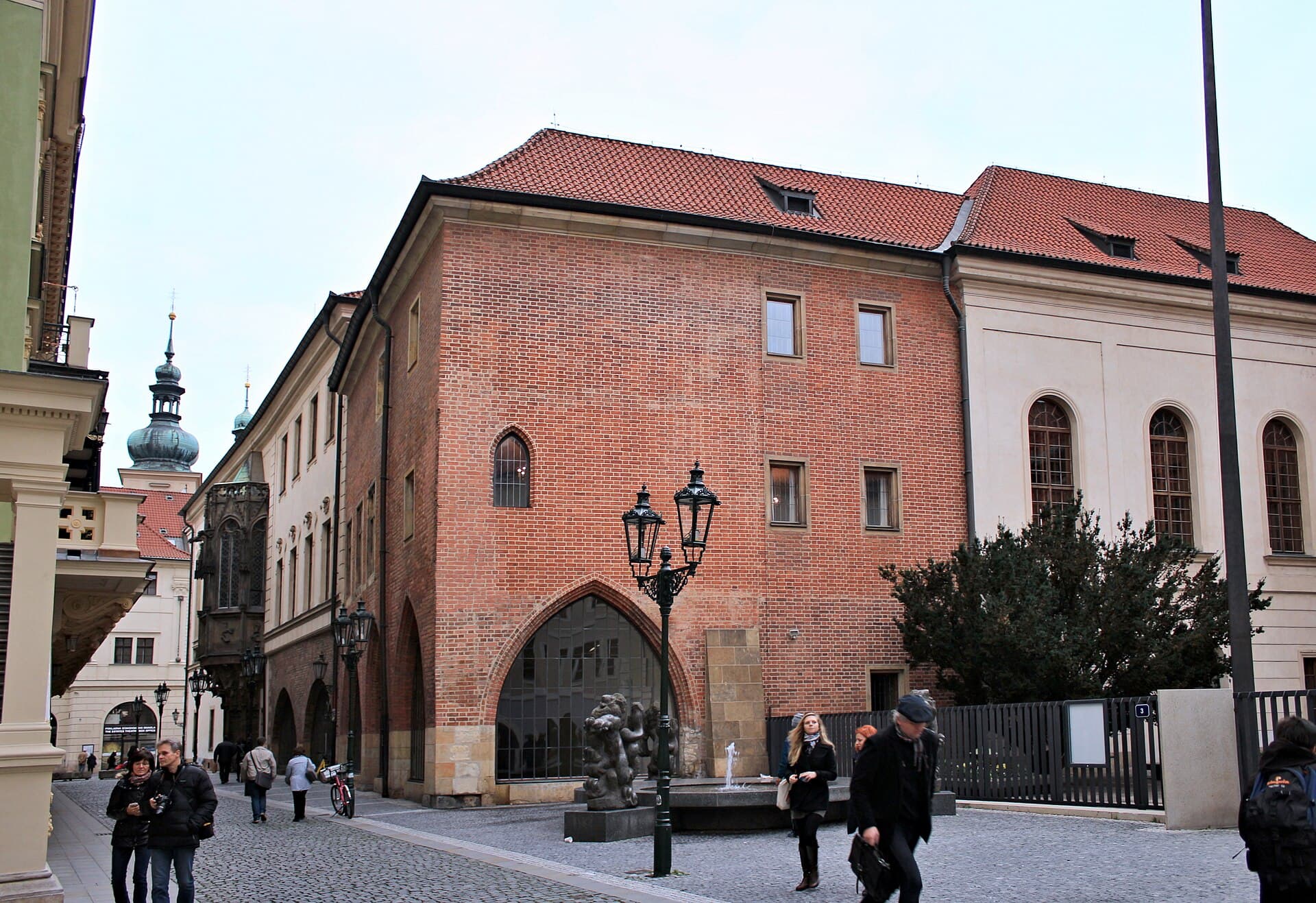
Charles University in Prague is the oldest university in Czechia and the first founded anywhere in central Europe. Charles IV, King of Bohemia and soon to be Holy Roman Emperor, issued its founding charter on 7 April 1348, creating what the university itself describes as the first studium generale north of the Alps and east of Paris. He modelled it on the universities of Paris and Bologna, gave it the four faculties of a complete medieval university, and organised its members into four "nations": Bohemian, Bavarian, Polish and Saxon.
Most old universities keep their memory in libraries and archives. Charles University also keeps it in a single room. In the Karolinum, its seat since the fourteenth century, the same Gothic hall has watched over graduations for more than six hundred years, and the institution around it has stood at the centre of nearly every turn in the Czech story, including two November days, fifty years apart, on which its students walked into history.
The founding generation built quickly. Within decades Prague had drawn masters and students from across the Empire and beyond, and its example spread: Casimir the Great chartered the Jagiellonian University in Kraków in 1364, and Rudolf IV founded the University of Vienna in 1365. In 1383 King Wenceslas IV gave the university a burgher's house near the Old Town, the core of the present Karolinum, whose chapel still projects its ornate Gothic oriel window over the street.
The university's first great crisis was a quarrel over votes. Under the founding arrangement each of the four nations carried one vote in university affairs, which left the Bohemians permanently outnumbered. In January 1409 Wenceslas IV issued the Decree of Kutná Hora, reversing the ratio and giving the Bohemian nation three votes. The German masters and students left Prague in their thousands, and many of them settled in Saxony, where the University of Leipzig was founded later that same year. The reformer Jan Hus, the leading figure of the Bohemian party, was elected rector in the aftermath and served in 1409-1410. His burning at the Council of Constance in July 1415, despite a promise of safe conduct, set Bohemia alight. Through the Hussite wars the university stood with the reform movement, shrank to little more than its arts faculty, and spent two centuries as the learned centre of a church out of communion with Rome.
The Habsburg reconquest after 1620 brought the university under Catholic control. The Jesuits, established at the Clementinum since 1556, absorbed it, and in 1654 Ferdinand III merged the two institutions as the Charles-Ferdinand University, the name it carried for nearly three hundred years. The reforms of the eighteenth century loosened Jesuit control and opened the university to a broader public, and through the nineteenth century it became the arena of the Czech national revival, with instruction gradually admitted in Czech alongside German.
The tension between the two languages ended in an arrangement with few parallels anywhere: in 1882 the Charles-Ferdinand University was divided into two complete universities, one Czech and one German, sharing a city and a founding charter. The physicist Ernst Mach served as the German university's first rector after the division, and in 1911 the German university brought Albert Einstein to Prague as professor of theoretical physics; he worked there in 1911-1912, between his posts in Zurich, before returning to Switzerland. Franz Kafka took his doctorate in law at the same institution in 1906. After Czechoslovak independence the Czech university resumed the historic name Charles University in 1920, while its German counterpart continued separately until 1945, when, after six years as an instrument of the occupation, it was abolished by presidential decree.
Charles University has never had a walled campus. Its buildings are folded into Prague itself, which is part of its character: the Karolinum beside the Estates Theatre near the Old Town Square, the Faculty of Law on the Vltava embankment, the Faculty of Arts on the square now named for Jan Palach, and the science and medical faculties spread through the Albertov district and beyond. Three faculties sit outside the capital altogether, the medical faculties in Plzeň and Hradec Králové and the pharmacy faculty in Hradec Králové.
The Karolinum remains the ceremonial and administrative seat. Its Great Hall, raised on the medieval fabric of the fourteenth-century house, is where matriculations and graduations take place, and the rebuilt complex around it, restored in the twentieth century by the architect Jaroslav Fragner, holds the rectorate and the university's ceremonial rooms. Academically the university spans seventeen faculties, from theology, law, medicine and arts, the four with medieval roots, to mathematics and physics, social sciences, and physical education, together with institutes and research centres across the sciences and humanities.
Every university accumulates memory. At Charles University the memory is unusually concentrated, in one hall and on one date.
The hall is the Karolinum's. Since the fourteenth century the university has conferred its degrees on the same spot, under the roofline that carries the Gothic oriel of its old chapel. A student graduating this year stands where students stood before Columbus sailed, in a building the university has occupied longer than most nations have existed in their present form. Wars, occupations and regimes have interrupted the teaching; none has moved the ceremony.
The date is 17 November. In the autumn of 1939, after demonstrations against the German occupation in which the medical student Jan Opletal was fatally shot, the Nazi authorities struck at the universities directly. On 17 November 1939 they closed every Czech institution of higher learning, executed nine student leaders without trial, and deported more than a thousand students to the Sachsenhausen concentration camp. Czech universities stayed shut for the rest of the war. In 1941, students in exile in London proclaimed the date International Students' Day, the only international day with a Czech origin.
Fifty years later the students returned to it deliberately. On 17 November 1989 a commemorative march for the students of 1939 set out from Albertov, in the university district, and ended on Národní třída, where riot police beat the marchers. The country's answer to those beatings became the Velvet Revolution, and within weeks the communist government had fallen. Between the two Novembers stands a third act of student witness: Jan Palach, a student of the university's Faculty of Arts, burned himself to death in January 1969 in protest at the Soviet occupation and the resignation that followed it. He is remembered without theatre. The square in front of his faculty is Jan Palach Square, renamed in the year the revolution he did not live to see finally came.
The university's roll runs from the medieval faculties to the modern laboratories. Bernard Bolzano, one of the founders of modern mathematical analysis, held a chair at Prague from 1805 until the imperial authorities dismissed him for his views in 1819. Tomáš Garrigue Masaryk taught philosophy at the Czech university before becoming the first president of Czechoslovakia in 1918. The chemist Jaroslav Heyrovský, a graduate and professor of Charles University, received the Nobel Prize in Chemistry in 1959 for inventing polarography, the first Nobel awarded to a Czech scientist. The German university of Prague has its own roll: besides Einstein and Kafka, its medical school graduated Carl Ferdinand Cori and Gerty Cori, who shared the Nobel Prize in Physiology or Medicine in 1947 for uncovering how the body cycles glucose, Gerty Cori becoming the first woman to win in that category. Prague's greatest astronomical pairing, Tycho Brahe and Johannes Kepler, belongs to the court of Rudolf II rather than to the university, though their presence made the city around it a capital of European science.
Charles University is the leading university of Czechia and its largest, with around 50,000 students across the seventeen faculties, roughly a fifth of them from abroad. It ranks as the strongest Czech institution in the major international tables and belongs to the Coimbra Group and Europaeum networks of historic European universities, as well as the 4EU+ European university alliance. Its research strengths run from medicine and the natural sciences to Czech history, philology and law, fields in which it is effectively the national archive of expertise, and the Karolinum gives its name to the university press.
The Karolinum stands on Ovocný trh in the Old Town, a few steps from the Estates Theatre; its Gothic oriel is best seen from the street, and its ground-floor gallery hosts exhibitions open to the public, though the ceremonial halls remain in academic use. Jan Palach Square lies on the river a short walk away, and a memorial to the students of 1989 is set into the arcade on Národní třída at the point where the march was stopped. Visitors in Prague on 17 November will find both sites carrying candles.