Heritage · University
Brown University: History and Overview
Chartered in 1764 as the College of Rhode Island, Brown University is the seventh-oldest college in the United States, founded with a charter that barred religious tests for students. Its Van Wickle Gates open only twice a year, and its 2006 Slavery and Justice report set a standard for how an institution examines its own past.Written to last.
By Confinity Heritage Editorial · 2026-08-25 · 8-minute readQuiet tools, kept out of the way.
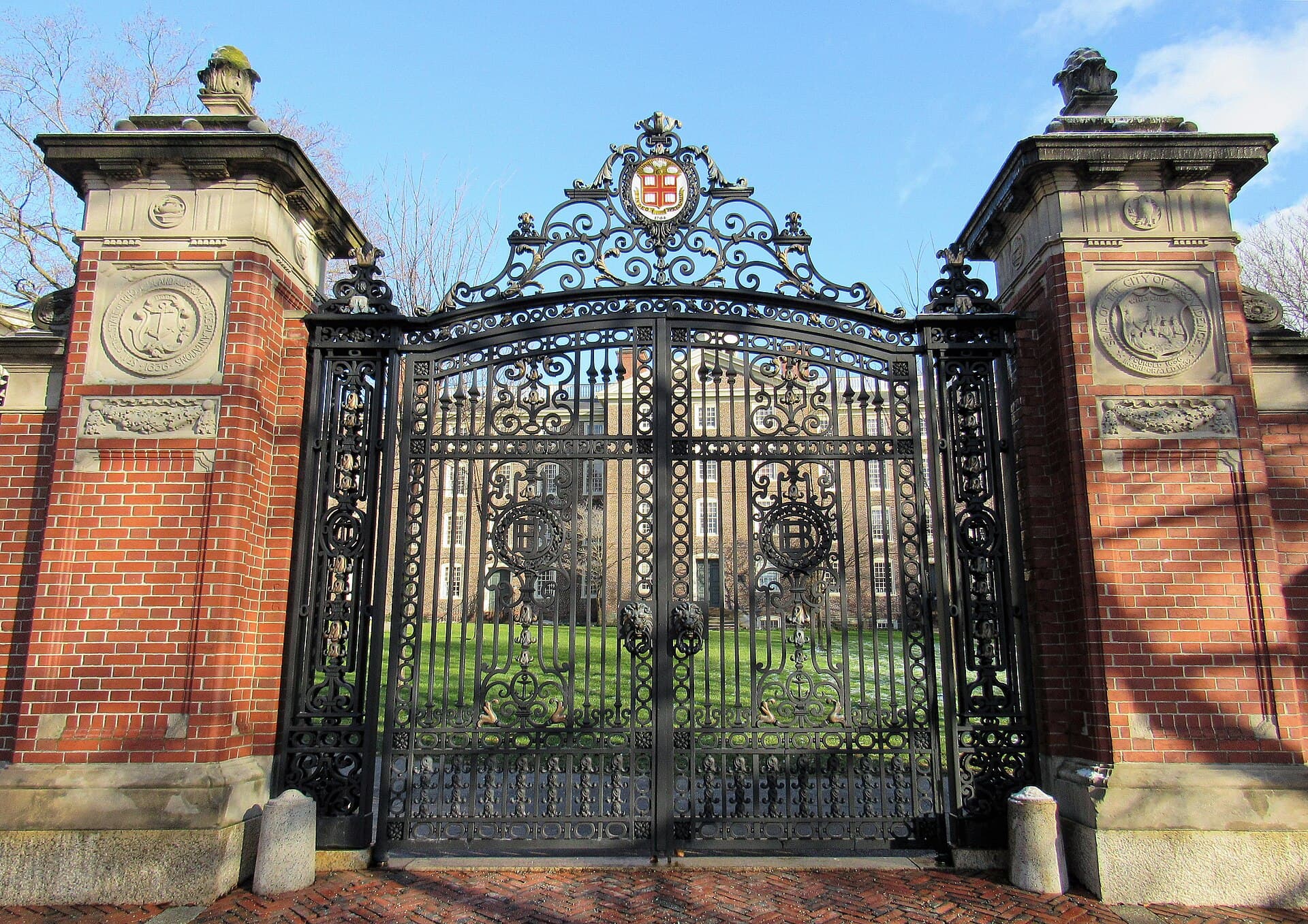
Brown University stands on College Hill above Providence, Rhode Island, the seventh-oldest institution of higher learning in the United States. It was chartered in 1764 as the College of Rhode Island, in a colony founded on liberty of conscience, and its charter carried that founding idea into education: no student would ever be turned away over religion. The wrought-iron Van Wickle Gates at the top of College Street frame the campus entrance and open only twice a year, inward for the students arriving and outward for the students leaving.
Two acts of remembering give Brown its particular character among the old American colleges. The first is that ritual of the gates, which turns arrival and departure into shared ceremony. The second is harder. Between 2003 and 2006 the university formally investigated its own origins, traced the money that built it back to the slave trade, published what it found, and later set the finding in sculpture on its oldest lawn. Few institutions have examined their own record so openly. This page tells both stories.
The colonial legislature of Rhode Island granted the charter in 1764, and the College of Rhode Island opened in the town of Warren under James Manning, a Baptist minister and its first president. Brown was the seventh of the nine colleges founded in Britain's American colonies, a generation after Yale University, and like its predecessors it grew from a religious community; the Baptists of Rhode Island wanted a college of their own. What set the charter apart was a clause radical for its time: into this "liberal and catholic institution" there would never be admitted any religious tests, and all its members would forever enjoy "full, free, absolute, and uninterrupted liberty of conscience." Governance was apportioned among Baptists, Quakers, Congregationalists and Anglicans, but admission asked nothing of a student's faith, a settlement no other colonial college had written into its founding document.
The college moved to Providence in 1770 and raised its first building there, the plain brick College Edifice now called University Hall. During the Revolution the building was taken out of academic use altogether: American and later French troops quartered in it as barracks and a hospital, and instruction was suspended for several years. In 1804 the college took its present name after a gift from Nicholas Brown Jr., a graduate and merchant whose family had been entwined with the institution, and with Providence commerce, since the founding.
Women entered through a coordinate institution, the Women's College begun in 1891 and later named Pembroke College, which merged fully into Brown in 1971. Two years earlier the university had remade its own teaching with the open curriculum. And in 2001 Ruth Simmons took office as Brown's eighteenth president, the first Black president of any Ivy League institution, and soon asked the university a question most institutions prefer to leave unasked.
The campus spreads across College Hill, a neighborhood of clapboard houses and brick sidewalks above downtown Providence. University Hall still anchors it, facing the Front Green and the quieter lawns behind, and the Van Wickle Gates, dedicated in 1901 from a bequest of the banker Augustus Stout Van Wickle, mark the ceremonial entrance at the crest of College Street. At Commencement the procession passes through them and down the hill to the First Baptist Church in America, the 1775 meeting house of the congregation Roger Williams founded, where Brown has held its graduation exercises since the eighteenth century.
Academically, Brown's signature is the open curriculum. In 1969, after a reform movement led by students, the faculty adopted what was then called the New Curriculum: no distribution requirements, no core sequence, and the option to take any course on a satisfactory or no-credit basis. Outside a chosen concentration, students build their own education course by course. More than five decades on, the open curriculum remains the reason many applicants name for choosing Brown.
Brown also keeps two libraries of unusual depth. The John Carter Brown Library, an independently governed institution on the college green since 1904, holds one of the world's great collections of early Americana: books, maps and manuscripts from the age of European encounter with the Americas, printed roughly before 1825. The John Hay Library, named for Lincoln's private secretary and Brown graduate John Hay, keeps the university's rare books and archives, among them the papers of H. P. Lovecraft, the writer of weird fiction who lived nearly all his life a few streets away and is now inseparable from Providence's own sense of itself.
The Van Wickle Gates open on two occasions. At Convocation each September the central portal swings inward, and the new class walks up through it onto the campus. At Commencement each May it swings outward, and the graduating class walks down through it toward the church below. A student passes through twice, once in each direction, with the years of an education in between; campus superstition warns that walking through the central gates at any other time means never graduating. It is a simple piece of theatre, and an effective one: the gates turn matriculation and graduation into a memory held in common by everyone who has studied on that hill.
The university's other act of memory faced the opposite direction, into its own ledger. In 2003 President Ruth Simmons appointed a Steering Committee on Slavery and Justice and asked it to establish the facts of Brown's relationship to slavery and the transatlantic slave trade. The facts were close to home. The Brown brothers of Providence, the family whose name the university bears, were merchants in an economy threaded through with slavery, and in 1764, the year of the college's charter, their firm fitted out the sloop Sally for a slaving voyage to West Africa. Of the roughly 196 Africans taken aboard, more than a hundred died before the voyage ended, by disease, by suicide, and in the suppression of an uprising. One brother, Moses, was so shaken that he freed the people he held and became a Quaker abolitionist; another, John, defended the trade for the rest of his life. Enslaved laborers, the committee also found, had helped raise University Hall itself.
The committee published its report, Slavery and Justice, in October 2006, with recommendations the university then acted on: acknowledgment, memorialization, support for Providence public education, and continued research through a dedicated center. In 2014 the sculptor Martin Puryear's Slavery Memorial was installed on the Front Green near University Hall, a half-buried ball and a broken chain rising out of the lawn, with a plaque setting out the history in plain words. Many universities have since conducted similar inquiries, and Brown's report is commonly cited as the model. An institution audited its own memory, published the finding, and put it where every student who enters through the gates will walk past it.
Brown's graduates run from the early republic to the present. John Hay, class of 1858, served Abraham Lincoln as private secretary and later became Secretary of State. John D. Rockefeller Jr., class of 1897, gave his name to the main library that students call the Rock. The economist Janet Yellen, who took her degree in 1967, went on to chair the Federal Reserve and serve as Secretary of the Treasury, the first person to have led both. Ted Turner, founder of CNN, attended in the late 1950s without finishing; the actor Emma Watson finished quietly, taking a degree in English literature in 2014 between film sets.
Brown enrolls about 7,000 undergraduates and around 11,000 students in all, and admission has never been more sought: recent classes have been selected from the largest applicant pools in the university's history, with acceptance rates around five percent. The Warren Alpert Medical School, named in 2007 after a major gift, anchors a growing medical and life-sciences presence in Providence's Jewelry District below the hill. The Center for the Study of Slavery and Justice, established on the committee's recommendation, continues the work the 2006 report began, and the university updated and reissued the report in an expanded edition for its fifteenth anniversary.
College Hill is an easy walk up from downtown Providence, and the campus greens are open to visitors. The Van Wickle Gates, University Hall and the Slavery Memorial sit within a few minutes of one another at the historic core, and the First Baptist Church in America stands at the foot of the hill on North Main Street. The John Carter Brown Library mounts public exhibitions from its collections, and the John Hay Library's reading room is open to researchers. The surrounding streets, Benefit Street especially, hold one of the densest concentrations of colonial and early federal architecture in the country.