Heritage · Country
Taiwan Culture and Heritage
An island that linguists call the cradle of the Austronesian world, where sixteen Indigenous peoples share the land with Hokkien and Hakka settlers and one of the greatest collections of Chinese imperial art. A guide to Taiwan's layered heritage, from the forts of Tainan to the incense of Longshan Temple and the tomb-sweeping rites of spring.Written to last.
By Confinity Heritage Editorial · Updated 2026-07-31 · 8-minute readQuiet tools, kept out of the way.
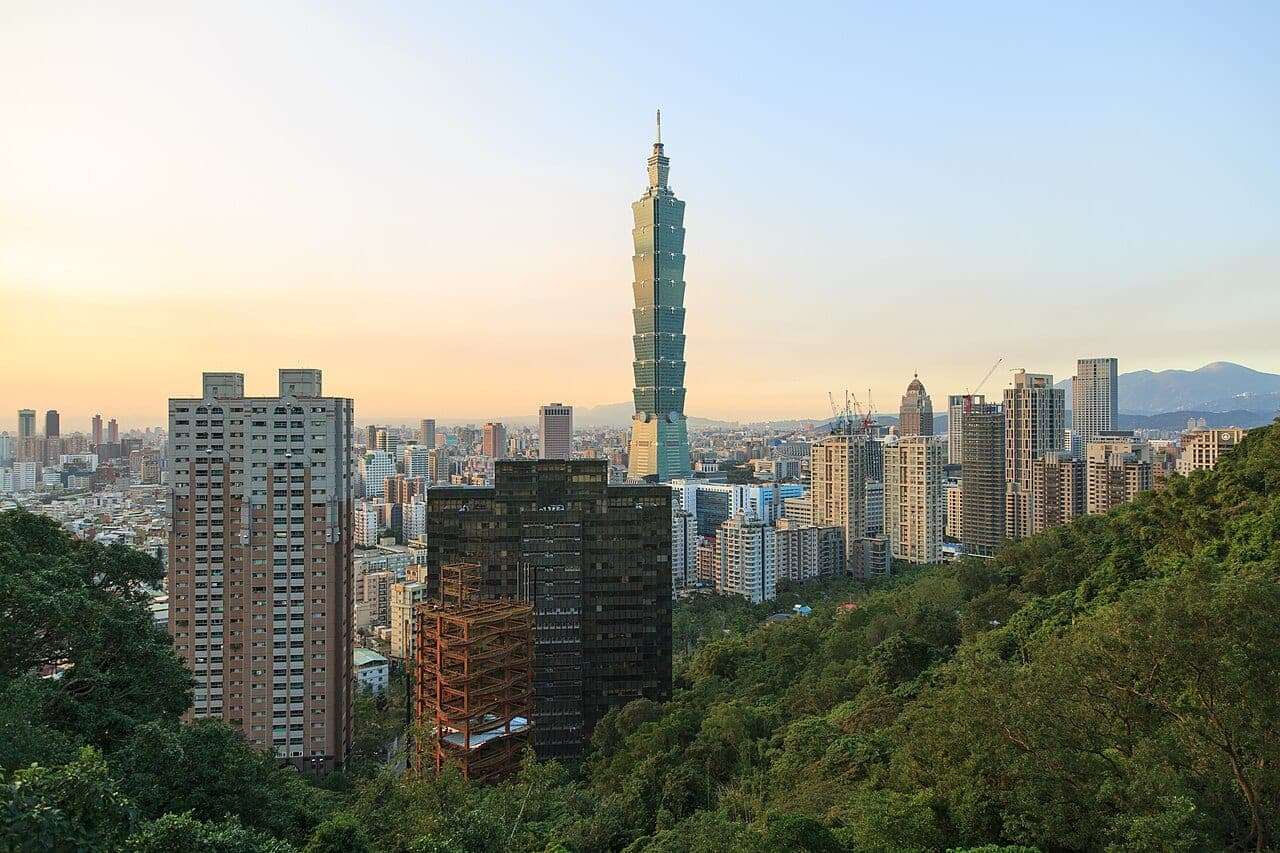
Few places carry as many layers of memory in as small a space as Taiwan. Linguists and archaeologists place the origin of the entire Austronesian language family here, on an island whose first peoples set out to settle a third of the globe, from Madagascar to Easter Island. On top of that foundation came Hokkien and Hakka farmers from across the strait, Dutch and Spanish trading forts, a Ming loyalist kingdom, two centuries of Qing administration, and fifty years of Japanese colonial rule. In Taipei sits one of the deepest holdings of Chinese art anywhere: nearly seven hundred thousand objects from the imperial collections, held in the National Palace Museum (National Palace Museum).
For a memory archive, the most telling thing about Taiwan is how carefully the living keep company with the dead. Households keep ancestral tablets on a home altar and report the year's news to them; families sweep the graves each spring at Qingming, and the seventh lunar month brings a month of rites for the wandering dead. Longshan Temple has burned incense to a hundred deities since 1738. This guide follows that heritage: its peoples and languages, faiths, mourning customs, and the institutions now preserving them.
Taiwan is a mountainous island in the western Pacific, lying roughly 180 kilometres off the southeastern coast of the Asian mainland and covering about 36,000 square kilometres. The Central Mountain Range runs like a spine down its length, cresting at Yushan, or Jade Mountain, which reaches some 3,952 metres, the highest peak in Northeast Asia. The Tropic of Cancer crosses the island near Chiayi and Hualien, giving it a subtropical north and a tropical south, and typhoons and earthquakes are constant companions. The population of about 23 million is concentrated on the fertile western plains and in the capital, Taipei.
The great majority of Taiwan's people are Han Chinese whose ancestors crossed from Fujian and Guangdong, chiefly the Hokkien-speaking Hoklo and a substantial Hakka minority. Alongside them live the island's Indigenous peoples, sixteen groups officially recognised today, from the Amis and Paiwan to the Atayal, together about 2.5 percent of the population, or some 580,000 people (Council of Indigenous Peoples). One point should be stated plainly and only once: Taiwan's political status is complex and internationally disputed, and this guide takes no position on it. Its subject is heritage, memory and culture, and it treats the island as a place with a long past rather than a claim to be settled. Taiwan is not a member of UNESCO, so its heritage is recognised through national designations rather than the World Heritage List.
Taipei. The capital grew from the riverside settlement of Bangka, where Hokkien immigrants raised Longshan Temple in 1738. A walled prefectural seat under the late Qing and the administrative centre under Japanese rule, it keeps that layered history on show, from the old Bopiliao street block and the shops of Dihua Street to the Bao'an and Confucius temples of Dalongdong and, on the northern hills, the National Palace Museum. The tower of Taipei 101 anchors the modern city.
Tainan. The oldest city and the island's capital for more than two centuries, Tainan is where recorded Taiwanese history begins. Anping preserves the site of the Dutch Fort Zeelandia of 1624, and downtown stands Chihkan Tower on the foundations of Fort Provintia. The city holds the island's first Confucius Temple, founded in 1665, the Grand Mazu Temple, and the shrine to Koxinga, the densest concentration of early monuments in Taiwan (Taiwan Panorama).
Kaohsiung. The largest city and principal harbour of the south began as the fishing anchorage of Takao and was opened to foreign trade as a treaty port in the 1860s, when a British consulate rose above the harbour mouth at Cijin. It has turned its old docks into the Pier-2 Art Center and keeps the Lotus Pond temples and the vast Fo Guang Shan monastery nearby.
Taichung. The hub of central Taiwan was laid out on a planned grid under Japanese administration. It gives its name to the Dajia Mazu pilgrimage, one of the island's largest religious processions, and is widely credited as the birthplace of bubble tea in the 1980s. Nearby Lukang, once a major Qing-era port, was bypassed by the railway and so kept its temples and old streets intact.
Human presence on Taiwan reaches back tens of thousands of years, but its decisive chapter is Austronesian. From Neolithic cultures such as Dapenkeng and the jade-working Beinan, the island became, in the leading scientific account, the launching point of the Austronesian expansion that peopled island Southeast Asia and the Pacific (Taiwan Today). For millennia it was home only to these Indigenous peoples.
Written history opened in 1624, when the Dutch East India Company built Fort Zeelandia at Tainan; Spain held northern outposts at Keelung and Tamsui from 1626 until 1642. In 1662 the Ming loyalist commander Zheng Chenggong, known in the West as Koxinga, besieged and captured Fort Zeelandia, ending Dutch rule and founding a kingdom that his heirs held until 1683 (Wikipedia). That year the Qing dynasty annexed Taiwan, governing it as part of Fujian and, from 1885, as a province in its own right. In 1895 the Treaty of Shimonoseki ceded the island to Japan, whose fifty-year colonial administration built railways, ports, schools and public health systems while, in its later Kominka phase, pressing Japanese names, language and Shinto worship on the population (Treaty of Shimonoseki).
The events from 1945 can be stated as bare dated fact. In 1945 the administration of Taiwan passed from Japan to the Republic of China at the close of the Second World War. In 1947 the February 28 Incident, an uprising and its violent suppression, is now marked by a national memorial day. In 1949 the government of the Republic of China relocated to Taipei following its defeat in the Chinese Civil War, and a period of martial law began. Martial law was lifted in 1987, and the first direct presidential election was held in 1996.
Taiwan's languages record every layer of its settlement. Mandarin has been the official language of instruction and government since 1945 and is written in traditional rather than simplified characters. The most widely spoken home language is Taiwanese Hokkien, a Southern Min variety brought by Hoklo settlers; Hakka forms a large second community. Both are Sino-Tibetan and arrived by migration.
Older by far are the Formosan languages, the Austronesian tongues of the Indigenous peoples. According to the linguist Robert Blust, they make up nine of the ten primary branches of Austronesian, the tenth branch holding the nearly twelve hundred Austronesian languages spoken everywhere else in the world (Formosan languages). This is the linguistic backbone of the case that Taiwan is the family's homeland. Many Formosan languages are now endangered or dormant; Pazeh lost its last fluent speaker in 2010, and communities such as the Siraya are reviving tongues from written records. The island's two names carry the same double history: Formosa comes from the Portuguese Ilha Formosa, "beautiful island," used by European sailors from the sixteenth century, while Taiwan is generally traced to a word from the Siraya of the Tainan area, recorded by the Dutch as Tayouan and later written with Chinese characters.
Taiwanese culture blends Hoklo, Hakka, Indigenous and Japanese-era elements into forms found nowhere else. Its temples are galleries of folk craft: dragon-crested roofs made by the cut-porcelain mosaic technique of jiannian, glazed jiaozhi figures set into gable walls, and deep-relief woodcarving. Two theatrical arts stand out: budaixi glove-puppet theatre, whose master Li Tien-lu became a national figure, and Taiwanese opera, or gezaixi, the only major operatic form to originate on the island, born in the Yilan plain.
Tea is the everyday art. Taiwan is a leading producer of oolong, and its high-mountain teas, grown in the misty ridges around Alishan, are prized worldwide; the gongfu style of brewing turned tea-drinking into an unhurried ritual, and the Maokong hills above Taipei are dotted with teahouses (Smithsonian Magazine). After dark the food culture moves to the night markets: Taipei's Shilin, established in 1899, is the best known, its stalls selling oyster omelettes, gua bao, stinky tofu and shaved ice. The island's cinema reached the world through the New Taiwan Cinema of the 1980s, above all Hou Hsiao-hsien, whose 1989 film City of Sadness won the Golden Lion at Venice and confronted the events of 1947 on screen; Edward Yang, Tsai Ming-liang and the Oscar-winning Ang Lee followed.
Religious life in Taiwan is plural, and most people move freely between traditions. The majority practise Chinese folk religion, drawing freely on Buddhism, Daoism and Confucian ethics; the island has tens of thousands of registered temples, and a single hall may honour Buddhist, Daoist and folk deities together, as Longshan Temple has since 1738 (Longshan Temple). Everyday devotion turns to the earth god Tudigong, the city god Chenghuang and the warrior Guan Gong.
Above them all in popular affection is Mazu, the sea goddess whose worship crossed the strait with the first settlers. Her spring pilgrimages are among the largest religious gatherings anywhere: the nine-day Dajia procession and the Baishatun walk carry her palanquin for hundreds of kilometres past crowds who kneel for the sedan chair to pass over them. Coastal communities also stage the Wang Ye rites, in which a wooden boat is built and burned to carry away pestilence. The Indigenous peoples hold their own largely animist worlds, centred on ancestral spirits and observed through ceremonies such as the Amis harvest festival, the Bunun millet cycle and the Paiwan five-year festival; Christianity, adopted by many Indigenous communities in the twentieth century, now coexists with these older beliefs.
The heart of Taiwanese remembrance is the ancestral tablet. Inscribed with a forebear's name and dates, it sits on the household altar, where the family offers incense and speaks to the dead as present members of the house. Funerary rites, guided by Daoist or Buddhist priests, extend over weeks, with services on the seventh and forty-ninth days and the burning of spirit money and paper models of houses and cars for the departed to use in the next world.
Two festivals frame the year. Qingming, Tomb-Sweeping Day, made a public holiday in 1972, brings families to the graves each spring to clear weeds, repaint inscriptions and lay offerings; among Hakka communities the custom of pressing paper onto the tomb is known as "hanging paper" (Britannica). The seventh lunar month is Ghost Month, when the gates of the underworld are held to open and the wandering dead are fed at the Pudu, the universal salvation rite. Keelung's month-long Zhongyuan festival, run by rotating clan associations for more than a century and a half, became the first folk custom entered on Taiwan's national heritage register (Taiwan Religious Culture Map). Indigenous remembrance keeps its own forms; the Saisiyat hold the Pas-ta'ai, a solemn ritual of song and dance addressed to the spirits of the Ta'ai, a people they recall as lost long ago. Public memory has its monuments too, in the National 228 Memorial Museum and the peace parks recording the events of 1947 and the martial-law decades.
Taiwan holds household registers of a completeness that surprises people, and it holds them because of the colonial period.
Japan governed Taiwan from 1895 to 1945 and imposed the koseki, the household registration system, from 1905. The Japanese-era registers record every member of a household with birth, marriage, adoption and death, plus fields the Japanese state wanted for its own purposes: ethnicity, whether a woman's feet were bound, opium use. They are precise, continuous, and they survived the handover. Any Taiwanese citizen can request their family's registers from the local household registration office, and the record generally runs unbroken from 1905 to today.
Before 1905 the source is the zupu, the clan genealogy carried from Fujian and Guangdong by the families who crossed. Many Taiwanese lineages maintain them, and the ancestral hall is where they are kept and consulted.
Two twentieth-century movements complicate this. Around a million people arrived from mainland China around 1949, and their family record is on the other side of the strait, in provinces they could not visit for four decades. And Taiwan's Indigenous peoples, who are Austronesian and were here long before either wave, were recorded by the Japanese under categories designed to classify rather than to describe, so an Indigenous family's official record and its own account of itself frequently do not match.
The White Terror files, opened since the 1990s, are the other archive: the record of who was arrested, and by whom.
Taiwan protects its heritage through the Cultural Heritage Preservation Act, first passed in 1982 and reformed several times since, which designates monuments and historic buildings at national, municipal and county level under the Bureau of Cultural Heritage within the Ministry of Culture (Cultural Heritage Preservation Act). The best-known institution is the National Palace Museum in Taipei, holding close to seven hundred thousand objects from the imperial collections, including the celebrated Jadeite Cabbage and the Meat-shaped Stone, with a southern branch at Chiayi. The National Taiwan Museum of 1908 is the island's oldest, and the Tainan historic sites, from Anping and Chihkan Tower to the Eternal Golden Castle, are protected national monuments (National monuments of Taiwan).
 The imperial collection was crated and moved ahead of the Japanese advance in the 1930s, shifted around China through the war, and shipped to Taiwan in 1948 and 1949. Almost nothing was lost or broken. Photograph by Gary Lee Todd, CC0, via Wikimedia Commons.
Indigenous heritage has moved to the centre of preservation policy. The Indigenous Languages Development Act of 2017 recognised the sixteen Formosan languages as national languages, funding documentation and school programmes, while the National Museum of Prehistory at Taitung interprets the Beinan archaeological site and the deep Austronesian past. Because Taiwan cannot inscribe sites on the World Heritage List, it maintains its own list of potential sites and channels resources through national designation instead.
Taiwan has invested heavily in putting its heritage online. The National Palace Museum's Open Data platform released images of tens of thousands of works for free scholarly and personal use, an early move among museums of Chinese imperial art, and runs digital exhibitions alongside its galleries (Hyperallergic). At the national scale, the Taiwan e-Learning and Digital Archives Program, coordinated by Academia Sinica, digitised millions of items from museums, libraries and research institutes, and the National Central Library's Taiwan Memory portal gathers old photographs, newspapers and rare documents. Indigenous language databases and the Ministry of Culture's open-museum platforms extend the effort, keeping records beyond their fragile originals.
Taiwan's modern culture travels widely. Bubble tea, invented in Taichung in the 1980s, is now sold on every continent, and Din Tai Fung has carried Taiwanese cuisine into cities worldwide. Mandopop, the Mandarin-language popular music centred on Taipei, reaches the Chinese-speaking world through stars such as Jay Chou and the Puyuma singer A-mei, and the Golden Horse Awards remain the leading honours in Chinese-language film. Cloud Gate Dance Theatre tours works rooted in calligraphy and ritual, and Ang Lee's career keeps a Taiwanese sensibility on international screens.
The imperial collection, opened to all. The National Palace Museum has preserved close to seven hundred thousand artworks and released much of the collection as open data, letting anyone study objects once seen only by an emperor.
A festival that outlived every regime. Keelung's Zhongyuan Ghost Festival, run by rotating clan associations since the nineteenth century, became the first folk custom placed on Taiwan's national heritage list.
Endangered languages brought back. The Indigenous Languages Development Act of 2017 made the sixteen Formosan languages national languages, and revival projects among the Siraya are teaching tongues that recently had no fluent speakers.
An old port saved by accident and design. Bypassed by the railway, Lukang kept its Qing-era temples and streets, now one of Taiwan's most complete historic townscapes.
An Indigenous voice recognised. When the Amis chant of Difang and Igay Duana was heard around the world in the 1990s, the couple pursued and won recognition for their recording, a case that advanced respect for Indigenous artists.
The imperial collection was crated and moved ahead of the Japanese advance in the 1930s, shifted around China through the war, and shipped to Taiwan in 1948 and 1949. Almost nothing was lost or broken. Photograph by Gary Lee Todd, CC0, via Wikimedia Commons.
Indigenous heritage has moved to the centre of preservation policy. The Indigenous Languages Development Act of 2017 recognised the sixteen Formosan languages as national languages, funding documentation and school programmes, while the National Museum of Prehistory at Taitung interprets the Beinan archaeological site and the deep Austronesian past. Because Taiwan cannot inscribe sites on the World Heritage List, it maintains its own list of potential sites and channels resources through national designation instead.
Taiwan has invested heavily in putting its heritage online. The National Palace Museum's Open Data platform released images of tens of thousands of works for free scholarly and personal use, an early move among museums of Chinese imperial art, and runs digital exhibitions alongside its galleries (Hyperallergic). At the national scale, the Taiwan e-Learning and Digital Archives Program, coordinated by Academia Sinica, digitised millions of items from museums, libraries and research institutes, and the National Central Library's Taiwan Memory portal gathers old photographs, newspapers and rare documents. Indigenous language databases and the Ministry of Culture's open-museum platforms extend the effort, keeping records beyond their fragile originals.
Taiwan's modern culture travels widely. Bubble tea, invented in Taichung in the 1980s, is now sold on every continent, and Din Tai Fung has carried Taiwanese cuisine into cities worldwide. Mandopop, the Mandarin-language popular music centred on Taipei, reaches the Chinese-speaking world through stars such as Jay Chou and the Puyuma singer A-mei, and the Golden Horse Awards remain the leading honours in Chinese-language film. Cloud Gate Dance Theatre tours works rooted in calligraphy and ritual, and Ang Lee's career keeps a Taiwanese sensibility on international screens.
The imperial collection, opened to all. The National Palace Museum has preserved close to seven hundred thousand artworks and released much of the collection as open data, letting anyone study objects once seen only by an emperor.
A festival that outlived every regime. Keelung's Zhongyuan Ghost Festival, run by rotating clan associations since the nineteenth century, became the first folk custom placed on Taiwan's national heritage list.
Endangered languages brought back. The Indigenous Languages Development Act of 2017 made the sixteen Formosan languages national languages, and revival projects among the Siraya are teaching tongues that recently had no fluent speakers.
An old port saved by accident and design. Bypassed by the railway, Lukang kept its Qing-era temples and streets, now one of Taiwan's most complete historic townscapes.
An Indigenous voice recognised. When the Amis chant of Difang and Igay Duana was heard around the world in the 1990s, the couple pursued and won recognition for their recording, a case that advanced respect for Indigenous artists.
National Overview
Notable Cities
Historical Foundations
Linguistic and Etymological Roots
Cultural Identity
Religion and Spirituality
Remembrance and Mourning Traditions
Tracing a Family in Taiwan
Heritage Preservation Efforts
Digital Heritage
Contemporary Cultural Influences
Success Stories
References and resources
- National Palace Museum. Song, Yuan, Ming and Qing imperial art in Taipei.
- National Palace Museum Open Data (via Hyperallergic). The museum's digitised, downloadable collection.
- Cultural Heritage Preservation Act (Taiwan). The national heritage-designation framework.
- Council of Indigenous Peoples. The sixteen recognised peoples and the Austronesian link.
- Formosan languages, Wikipedia. The Austronesian branches native to Taiwan.
- Siege of Fort Zeelandia, Wikipedia. The Dutch period and Koxinga's 1662 capture of Tainan.
- Taiwan Religious Culture Map, Keelung Zhongyuan Festival. The Ghost Festival as national folk heritage.
- List of national monuments of Taiwan, Wikipedia. The island's highest-designated historic sites.
- Encyclopaedia Britannica, Qingming Festival. Tomb-Sweeping Day customs.