Heritage · Country
Rwanda Culture and Heritage
Rwanda folds its heritage into a green country of a thousand hills, from the royal court at Nyanza and the drummers of the old kingdom to the mountain gorillas of the Virunga volcanoes. It is also a nation that has made remembrance a public duty, holding the memory of the 1994 genocide against the Tutsi with a care that shapes its calendar, its laws and its daily life.Written to last.
By Confinity Heritage Editorial · Updated 2026-07-31 · 8-minute readQuiet tools, kept out of the way.
Rwanda is a small, high country in the heart of Africa, folded into row after row of steep green hills that gave it the name by which it is known everywhere, the land of a thousand hills. From the volcanoes of the north to the shore of Lake Kivu, almost no ground here is flat, and the terraced slopes carry one of the most densely settled rural populations on the continent. Heritage in Rwanda is inseparable from this landscape: the old kingdom read the hills as a single realm, the mountain gorillas hold to the bamboo forests of the northern peaks, and the memorials that anchor the national memory sit among the same terraces where daily life goes on.
That national memory carries a particular weight. In 1994 Rwanda endured the genocide against the Tutsi, in which an estimated 800,000 people, and by some counts more than a million, the great majority of them Tutsi, were killed in about a hundred days. The country that rebuilt itself afterwards chose not to forget but to remember deliberately, through an annual season of mourning, through memorials now recognised by the world, and through community practices meant to knit a divided people back together.
Rwanda is a landlocked republic of about 26,338 square kilometres in the Great Lakes region of east-central Africa, bordered by Uganda, Tanzania, Burundi and the Democratic Republic of the Congo. Lake Kivu forms much of the western frontier, and the chain of the Virunga volcanoes rises along the northern edge, where Mount Karisimbi reaches 4,507 metres. Though it lies just south of the equator, the country's high altitude gives it a temperate, spring-like climate, warmer in the eastern savannah of Akagera, and two rainy seasons order the farming year on its terraced hillsides (Britannica).
With a population of roughly 13 to 14 million, Rwanda is among the most densely populated countries in Africa, and its people, the Banyarwanda, share a single language and a common culture across the historic groupings of Hutu, Tutsi and Twa. The capital, Kigali, sits near the geographic centre on a cluster of ridges and valleys and has become a byword for order and cleanliness, helped by a national ban on single-use plastic bags and by monthly community work days.
Kigali. The capital and largest city spreads across a set of hills and the valleys between them, its business district on one ridge and residential quarters on others. It is the seat of government and the centre of national life, and it holds the country's principal place of memory, the Kigali Genocide Memorial at Gisozi, where more than 250,000 people are buried and the national commemoration begins each April (Kigali Genocide Memorial).
Huye (formerly Butare). The southern city of Huye is Rwanda's academic and intellectual centre, long home to the country's oldest university faculties. It houses the Ethnographic Museum, opened in 1989, which holds the most complete collection of pre-colonial Rwandan material culture in the region, from basketry and ironwork to a reconstruction of court life.
Nyanza. A short distance from Huye lies Nyanza, the historic seat of the mwami, the king of Rwanda. The King's Palace Museum at Rukari reconstructs the great thatched royal residence in its traditional form and keeps a herd of the sacred long-horned inyambo cattle, whose keepers still sing to them as they did at court.
Musanze (formerly Ruhengeri). In the shadow of the Virunga volcanoes, Musanze is the gateway to Volcanoes National Park and the base for mountain-gorilla trekking. Each year it hosts Kwita Izina, the gorilla-naming ceremony, which draws visitors from around the world.
Rwanda's story reaches back to the settlement of the region by the Twa, then by farming and cattle-keeping communities whose descendants became the Hutu, Tutsi and Twa of later centuries. By around the fifteenth century a centralised Kingdom of Rwanda had formed, ruled by a sacred king, the mwami, whose dynasty expanded outward from a core near Nyanza. The court governed through appointed chiefs, a cattle-clientship system known as ubuhake, and a body of ritual specialists, the abiru, who guarded the dynastic code and the royal drums that embodied the kingdom's authority.
 The royal residence at Nyanza, rebuilt in the traditional woven form to show how the Rwandan court lived before the colonial period. Photograph by Yakov Fedorov, CC BY-SA 4.0, via Wikimedia Commons.
European rule arrived late. Rwanda was assigned to Germany at the Berlin Conference and administered from the 1890s as part of German East Africa, the colonisers governing through the existing monarchy; after the First World War the territory passed to Belgium under a League of Nations mandate. Belgian administration hardened what had been fluid social categories: in 1933 a census fixed every Rwandan as Hutu, Tutsi or Twa and recorded the label on an identity card, turning flexible identities into rigid, inherited classifications that later proved catastrophic (USHMM). A political upheaval at the end of the 1950s reversed the old hierarchy, drove many Tutsi into exile, and led to independence on 1 July 1962.
The decades that followed saw recurring violence and the flight of Tutsi refugees, whose descendants formed the Rwandan Patriotic Front. In 1994, after the president's plane was shot down, an organised campaign began the genocide against the Tutsi, in which an estimated 800,000 people or more were killed across roughly a hundred days between April and July, while the international community failed to intervene (Britannica). The Front's advance ended the killing that July, leaving the country shattered. What came next was a long labour of rebuilding: the return of refugees, the reconstruction of institutions, and a national programme of justice and reconciliation that would define Rwanda for a generation.
Rwanda is unusual in Africa for its linguistic unity. Kinyarwanda, a Bantu language of the Niger-Congo family, is spoken by very nearly the entire population as a first language, so Rwandans share not only a tongue but the proverbs, praise poetry and oral history carried in it (Ethnologue). It is the national language and the everyday medium of home, market and worship. The constitution names three further official languages: French, a legacy of Belgian rule; English, official since 2003 and the medium of school instruction since 2008; and Swahili, the regional lingua franca of East Africa, added in 2017.
The country's name, u Rwanda, once meant the domain ruled from the royal court, the territory the kingdom made its own as it grew, and it shares its root with the Kinyarwanda verb kwanda, to spread or to grow. Kinyarwanda names carry meaning openly: many are short sentences of thanks, hope or reference to God, such as those built on Imana, the word for the creator. Because the language was, for most of its history, spoken rather than written, Rwanda's deep memory survives in recited royal genealogies, in the dynastic poetry of the court, and in the proverbs that still season everyday conversation.
The signature performance of Rwandan culture is the intore, the dance of heroes, once the display of the warriors trained at the royal court. Male dancers in headdresses of long dried grass move in lines that mime the poise of the warrior, accompanied by the thunder of the royal drummers, whose interlocking rhythms on the ingoma drums were, in the kingdom, an emblem of the state itself. The drums and the intore remain the centrepiece of national celebrations and of the cultural performances at Nyanza.
Rwanda's most distinctive visual art is imigongo, geometric relief painting worked in cow dung mixed with natural pigments and finished in black, white, ochre and red spirals, zigzags and diamonds. Tradition traces its origin to Prince Kakira of the old kingdom of Gisaka, and it is made largely by women, who have organised into cooperatives around his home region in the east (Wikipedia). Weaving is a second great craft: the tall, coiled agaseke basket, often called the peace basket, carries patterns that speak of generosity and unity and is given at weddings and to honoured guests. Women wear the flowing mushanana on formal occasions, and the everyday foods are ubugali, a firm cassava or maize dough, isombe of pounded cassava leaves, grilled brochettes, and ikivuguto, the fermented milk that reflects the deep cultural place of cattle.
Rwanda is today a strongly Christian country. Roman Catholics are the largest group, followed by Protestant, Adventist and Pentecostal churches whose numbers have grown since the 1990s. A Muslim minority, historically concentrated in trading quarters and long present in Kigali and Nyanza, makes up a small share of the population, and the mosques of the capital are part of its ordinary streetscape.
Beneath these faiths lies the older Rwandan understanding of the sacred, centred on Imana, the supreme creator, whose name Rwandans still invoke in blessings and in the names they give their children. Traditional belief held that Imana was distant but benevolent, and that the closer, ever-present spiritual powers were the ancestors, the abazimu, who remained bound to their families after death. The practice of guterekera honoured and appeased these spirits, while the kubandwa cult of the hero-figure Ryangombe offered initiates a spiritual community that cut across social rank. Much of this older world has receded before Christianity, but its habits of thought, above all the sense that the dead remain members of the family, still colour how Rwandans mark death.
In Rwandan custom, death opens a period of gathered mourning known as ikiriyo, when relatives, neighbours and friends come to the family home to sit with the bereaved, sharing food, prayer and stories of the person who has died. The gathering commonly lasts several days, and older practice set aside certain foods and celebrations during it as marks of respect. Behind these observances lay the belief that the dead pass into the company of the ancestors and continue to watch over their descendants, so that a proper funeral, and the remembrance that follows, keeps the bond between living and departed intact.
The royal residence at Nyanza, rebuilt in the traditional woven form to show how the Rwandan court lived before the colonial period. Photograph by Yakov Fedorov, CC BY-SA 4.0, via Wikimedia Commons.
European rule arrived late. Rwanda was assigned to Germany at the Berlin Conference and administered from the 1890s as part of German East Africa, the colonisers governing through the existing monarchy; after the First World War the territory passed to Belgium under a League of Nations mandate. Belgian administration hardened what had been fluid social categories: in 1933 a census fixed every Rwandan as Hutu, Tutsi or Twa and recorded the label on an identity card, turning flexible identities into rigid, inherited classifications that later proved catastrophic (USHMM). A political upheaval at the end of the 1950s reversed the old hierarchy, drove many Tutsi into exile, and led to independence on 1 July 1962.
The decades that followed saw recurring violence and the flight of Tutsi refugees, whose descendants formed the Rwandan Patriotic Front. In 1994, after the president's plane was shot down, an organised campaign began the genocide against the Tutsi, in which an estimated 800,000 people or more were killed across roughly a hundred days between April and July, while the international community failed to intervene (Britannica). The Front's advance ended the killing that July, leaving the country shattered. What came next was a long labour of rebuilding: the return of refugees, the reconstruction of institutions, and a national programme of justice and reconciliation that would define Rwanda for a generation.
Rwanda is unusual in Africa for its linguistic unity. Kinyarwanda, a Bantu language of the Niger-Congo family, is spoken by very nearly the entire population as a first language, so Rwandans share not only a tongue but the proverbs, praise poetry and oral history carried in it (Ethnologue). It is the national language and the everyday medium of home, market and worship. The constitution names three further official languages: French, a legacy of Belgian rule; English, official since 2003 and the medium of school instruction since 2008; and Swahili, the regional lingua franca of East Africa, added in 2017.
The country's name, u Rwanda, once meant the domain ruled from the royal court, the territory the kingdom made its own as it grew, and it shares its root with the Kinyarwanda verb kwanda, to spread or to grow. Kinyarwanda names carry meaning openly: many are short sentences of thanks, hope or reference to God, such as those built on Imana, the word for the creator. Because the language was, for most of its history, spoken rather than written, Rwanda's deep memory survives in recited royal genealogies, in the dynastic poetry of the court, and in the proverbs that still season everyday conversation.
The signature performance of Rwandan culture is the intore, the dance of heroes, once the display of the warriors trained at the royal court. Male dancers in headdresses of long dried grass move in lines that mime the poise of the warrior, accompanied by the thunder of the royal drummers, whose interlocking rhythms on the ingoma drums were, in the kingdom, an emblem of the state itself. The drums and the intore remain the centrepiece of national celebrations and of the cultural performances at Nyanza.
Rwanda's most distinctive visual art is imigongo, geometric relief painting worked in cow dung mixed with natural pigments and finished in black, white, ochre and red spirals, zigzags and diamonds. Tradition traces its origin to Prince Kakira of the old kingdom of Gisaka, and it is made largely by women, who have organised into cooperatives around his home region in the east (Wikipedia). Weaving is a second great craft: the tall, coiled agaseke basket, often called the peace basket, carries patterns that speak of generosity and unity and is given at weddings and to honoured guests. Women wear the flowing mushanana on formal occasions, and the everyday foods are ubugali, a firm cassava or maize dough, isombe of pounded cassava leaves, grilled brochettes, and ikivuguto, the fermented milk that reflects the deep cultural place of cattle.
Rwanda is today a strongly Christian country. Roman Catholics are the largest group, followed by Protestant, Adventist and Pentecostal churches whose numbers have grown since the 1990s. A Muslim minority, historically concentrated in trading quarters and long present in Kigali and Nyanza, makes up a small share of the population, and the mosques of the capital are part of its ordinary streetscape.
Beneath these faiths lies the older Rwandan understanding of the sacred, centred on Imana, the supreme creator, whose name Rwandans still invoke in blessings and in the names they give their children. Traditional belief held that Imana was distant but benevolent, and that the closer, ever-present spiritual powers were the ancestors, the abazimu, who remained bound to their families after death. The practice of guterekera honoured and appeased these spirits, while the kubandwa cult of the hero-figure Ryangombe offered initiates a spiritual community that cut across social rank. Much of this older world has receded before Christianity, but its habits of thought, above all the sense that the dead remain members of the family, still colour how Rwandans mark death.
In Rwandan custom, death opens a period of gathered mourning known as ikiriyo, when relatives, neighbours and friends come to the family home to sit with the bereaved, sharing food, prayer and stories of the person who has died. The gathering commonly lasts several days, and older practice set aside certain foods and celebrations during it as marks of respect. Behind these observances lay the belief that the dead pass into the company of the ancestors and continue to watch over their descendants, so that a proper funeral, and the remembrance that follows, keeps the bond between living and departed intact.
 More than two hundred and fifty thousand people are buried at the Kigali memorial, many of them brought here because there was nowhere else to put them and no one left to claim them. Photograph by Jenny Paul, CC BY-SA 4.0, via Wikimedia Commons.
Since 1994 this personal grief has been joined by a national one. Each year on 7 April Rwanda begins Kwibuka, meaning "to remember", the commemoration of the genocide against the Tutsi, marked by the International Day of Reflection recognised by the United Nations. The opening week is a national mourning period, the icyunamo, when flags fly at half-mast, public entertainment is stilled, and a solemn Walk to Remember carries people to the memorials; the season of remembrance then runs for a hundred days, mirroring the length of the killing, to the country's Liberation Day. At the memorials the dead are named and tended with dignity: the Kigali Genocide Memorial at Gisozi, where more than a quarter of a million victims are buried; the church at Nyamata, where the belongings of those who died are kept as they were; and Murambi in the south (Kigali Genocide Memorial).
Alongside remembrance, Rwanda built institutions of repair. The community courts known as gacaca, drawn from a customary practice of village dispute-resolution, heard close to two million cases between 2002 and 2012, placing confession, testimony and local participation at the centre of post-genocide justice (Britannica). The monthly umuganda, a morning of communal work in which citizens clean streets, build classrooms and repair paths together, revived an old obligation of collective labour and became a regular act of shared belonging. Together, remembrance and reconciliation form the country's most deliberate heritage: a decision, renewed each year, to hold the memory of loss and to build unity from it.
Rwanda's national archive of the last thirty years is a record of nearly two million trials.
The gacaca courts, community tribunals convened on hillsides between 2002 and 2012, heard 1,958,634 genocide cases. Neighbours accused neighbours in public, defendants answered in public, and clerks wrote it down. The result is a documentary record of what happened in almost every community in the country, naming victims, perpetrators and witnesses, and it is being digitised in a programme that began in 2015. Its reliability is argued about, and the arguments are serious, but as a body of testimony about a population it has no equivalent anywhere.
Before that, the record that mattered was an identity card. Belgian administration classified Rwandans as Hutu, Tutsi or Twa and printed the category on the card, hardening a social distinction into an inherited legal one. In 1994 those cards were used at roadblocks to decide who died.
Church registers, Catholic above all, are the vital records for most Rwandan families before independence, and many churches were themselves massacre sites in 1994, which means the register and the killing are in the same building.
The genocide memorials at Gisozi and elsewhere hold the names, the photographs brought by families, and the testimony collections, and the identification of remains continues. The Rwandan state's own civil registration is now functional and modern, which is a quiet achievement in the circumstances.
Rwanda's heritage gained new international standing in 2023, when UNESCO inscribed both a cultural and a natural site in the country. The Memorial Sites of the Genocide, comprising Nyamata, Murambi, Gisozi in Kigali and Bisesero, were added to the World Heritage List, recognising the memorials as places of universal significance for humanity's duty to remember (UNESCO). In the same year Nyungwe National Park, a montane rainforest in the south-west rich in primates, birds and orchids, became Rwanda's first natural World Heritage site (Rwanda Development Board).
Beyond the World Heritage listings, the country maintains a network of custodians. Volcanoes National Park protects the Rwandan portion of the transboundary Virunga Massif and its mountain gorillas; the King's Palace Museum at Nyanza preserves the form and setting of the royal court; and the Ethnographic Museum at Huye holds the national collection of traditional life. These museums are managed by the national heritage body, the Rwanda Cultural Heritage Academy, formerly the Institute of National Museums of Rwanda, which works to document and safeguard oral traditions, crafts and historic sites.
The most developed strand of Rwanda's digital heritage grows directly from its work of remembrance. The Genocide Archive of Rwanda, developed at the Kigali Genocide Memorial with the Aegis Trust, gathers and digitises survivor testimony, photographs, documents and audiovisual records, so that evidence and memory of the genocide against the Tutsi outlast the generation that lived through it. Its online collections allow researchers, teachers and families to consult material once confined to a single archive room.
The wider heritage sector is following the same path. Rwanda's programme of digital government is being turned toward preserving civil records and cultural material, and museums increasingly present their collections online. In Volcanoes National Park, conservation programmes keep detailed digital records of individual gorillas and their families, a living archive of the country's most watched wildlife.
Modern Rwandan culture carries the old forms into new settings. Kigali has grown into a centre for conferences, sport and the arts, with a purpose-built arena hosting continental basketball, and a film sector, sometimes nicknamed Hillywood, that stages an annual festival on cinema and open-air screens. Rwandan musicians blend gospel, Afrobeat and traditional rhythm, and ensembles have carried the sound of the royal drums into the present, taking the once male preserve of drumming to new audiences.
A national "Made in Rwanda" movement has lifted local design and manufacture, and Rwandan fashion houses now draw on imigongo geometry and traditional textiles for markets at home and abroad. The country's reputation for order, safety and green ambition, expressed in its plastics ban and car-free days, shapes how Rwandans and the wider world see it. A substantial diaspora, formed largely by the exiles and survivors of the twentieth century, keeps Kinyarwanda, cuisine and the April remembrance alive across Europe, North America and East Africa.
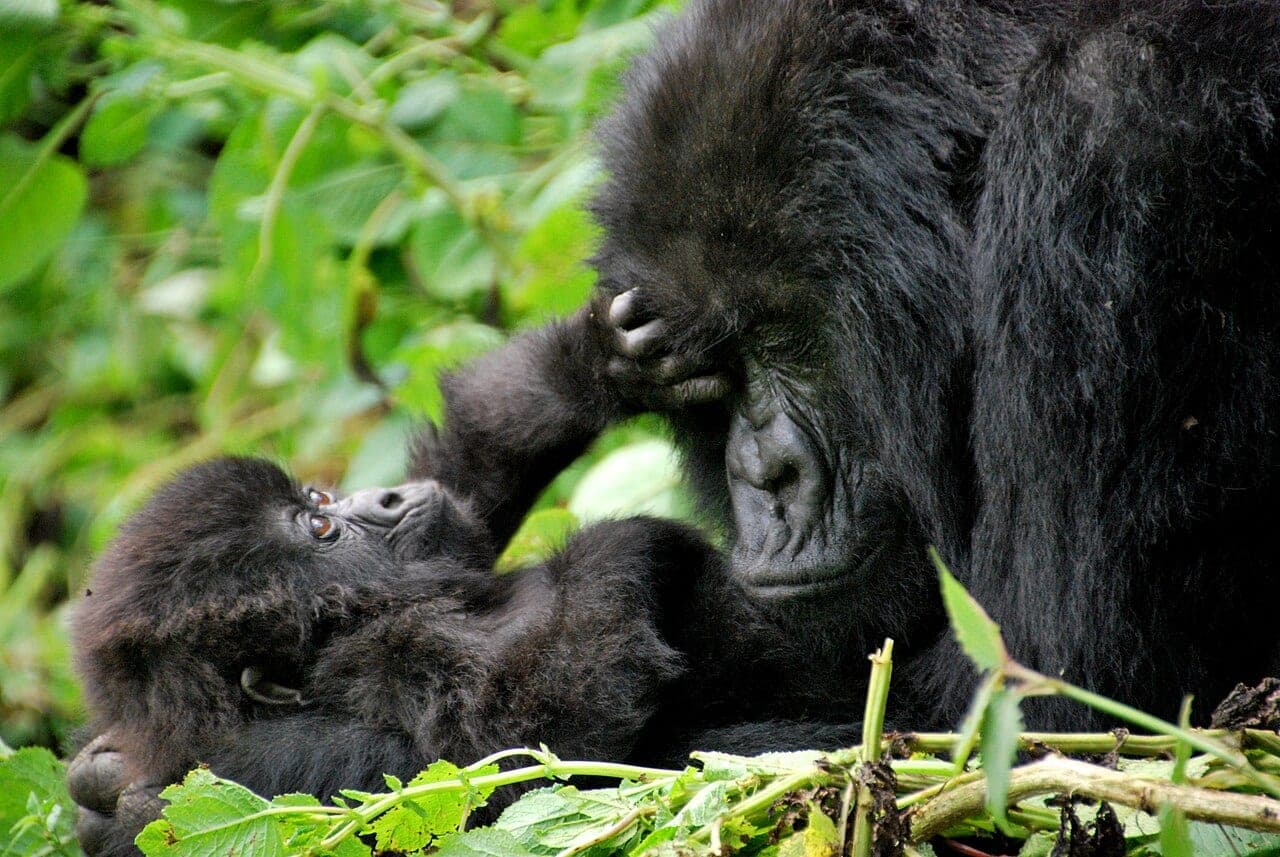
The gorillas return. Rwanda's best-known conservation story is the recovery of the mountain gorilla. Studied from the 1960s at the Karisoke Research Center founded by Dian Fossey, and once feared close to extinction, the population of the Virunga Massif has climbed past a thousand animals, making the mountain gorilla the only great ape whose numbers are rising and prompting its reclassification from critically endangered to endangered (Kwita Izina, Visit Rwanda). Each year the Kwita Izina ceremony, modelled on the naming of a newborn child, names the year's baby gorillas before thousands of onlookers, binding conservation to Rwandan tradition.
A country rebuilt. The recovery of Rwanda itself, from the devastation of 1994 to a functioning, ordered state within a generation, is a story with few parallels. Institutions were remade, refugees returned in their millions, and the deliberate work of remembrance and reconciliation, through Kwibuka, the gacaca courts and monthly umuganda, allowed a shattered society to rebuild. That the memorials of 1994 are now recognised as World Heritage, and that the same country hosts continental sport and international gatherings, measures how far the rebuilding has reached, without setting aside the memory on which it rests.
More than two hundred and fifty thousand people are buried at the Kigali memorial, many of them brought here because there was nowhere else to put them and no one left to claim them. Photograph by Jenny Paul, CC BY-SA 4.0, via Wikimedia Commons.
Since 1994 this personal grief has been joined by a national one. Each year on 7 April Rwanda begins Kwibuka, meaning "to remember", the commemoration of the genocide against the Tutsi, marked by the International Day of Reflection recognised by the United Nations. The opening week is a national mourning period, the icyunamo, when flags fly at half-mast, public entertainment is stilled, and a solemn Walk to Remember carries people to the memorials; the season of remembrance then runs for a hundred days, mirroring the length of the killing, to the country's Liberation Day. At the memorials the dead are named and tended with dignity: the Kigali Genocide Memorial at Gisozi, where more than a quarter of a million victims are buried; the church at Nyamata, where the belongings of those who died are kept as they were; and Murambi in the south (Kigali Genocide Memorial).
Alongside remembrance, Rwanda built institutions of repair. The community courts known as gacaca, drawn from a customary practice of village dispute-resolution, heard close to two million cases between 2002 and 2012, placing confession, testimony and local participation at the centre of post-genocide justice (Britannica). The monthly umuganda, a morning of communal work in which citizens clean streets, build classrooms and repair paths together, revived an old obligation of collective labour and became a regular act of shared belonging. Together, remembrance and reconciliation form the country's most deliberate heritage: a decision, renewed each year, to hold the memory of loss and to build unity from it.
Rwanda's national archive of the last thirty years is a record of nearly two million trials.
The gacaca courts, community tribunals convened on hillsides between 2002 and 2012, heard 1,958,634 genocide cases. Neighbours accused neighbours in public, defendants answered in public, and clerks wrote it down. The result is a documentary record of what happened in almost every community in the country, naming victims, perpetrators and witnesses, and it is being digitised in a programme that began in 2015. Its reliability is argued about, and the arguments are serious, but as a body of testimony about a population it has no equivalent anywhere.
Before that, the record that mattered was an identity card. Belgian administration classified Rwandans as Hutu, Tutsi or Twa and printed the category on the card, hardening a social distinction into an inherited legal one. In 1994 those cards were used at roadblocks to decide who died.
Church registers, Catholic above all, are the vital records for most Rwandan families before independence, and many churches were themselves massacre sites in 1994, which means the register and the killing are in the same building.
The genocide memorials at Gisozi and elsewhere hold the names, the photographs brought by families, and the testimony collections, and the identification of remains continues. The Rwandan state's own civil registration is now functional and modern, which is a quiet achievement in the circumstances.
Rwanda's heritage gained new international standing in 2023, when UNESCO inscribed both a cultural and a natural site in the country. The Memorial Sites of the Genocide, comprising Nyamata, Murambi, Gisozi in Kigali and Bisesero, were added to the World Heritage List, recognising the memorials as places of universal significance for humanity's duty to remember (UNESCO). In the same year Nyungwe National Park, a montane rainforest in the south-west rich in primates, birds and orchids, became Rwanda's first natural World Heritage site (Rwanda Development Board).
Beyond the World Heritage listings, the country maintains a network of custodians. Volcanoes National Park protects the Rwandan portion of the transboundary Virunga Massif and its mountain gorillas; the King's Palace Museum at Nyanza preserves the form and setting of the royal court; and the Ethnographic Museum at Huye holds the national collection of traditional life. These museums are managed by the national heritage body, the Rwanda Cultural Heritage Academy, formerly the Institute of National Museums of Rwanda, which works to document and safeguard oral traditions, crafts and historic sites.
The most developed strand of Rwanda's digital heritage grows directly from its work of remembrance. The Genocide Archive of Rwanda, developed at the Kigali Genocide Memorial with the Aegis Trust, gathers and digitises survivor testimony, photographs, documents and audiovisual records, so that evidence and memory of the genocide against the Tutsi outlast the generation that lived through it. Its online collections allow researchers, teachers and families to consult material once confined to a single archive room.
The wider heritage sector is following the same path. Rwanda's programme of digital government is being turned toward preserving civil records and cultural material, and museums increasingly present their collections online. In Volcanoes National Park, conservation programmes keep detailed digital records of individual gorillas and their families, a living archive of the country's most watched wildlife.
Modern Rwandan culture carries the old forms into new settings. Kigali has grown into a centre for conferences, sport and the arts, with a purpose-built arena hosting continental basketball, and a film sector, sometimes nicknamed Hillywood, that stages an annual festival on cinema and open-air screens. Rwandan musicians blend gospel, Afrobeat and traditional rhythm, and ensembles have carried the sound of the royal drums into the present, taking the once male preserve of drumming to new audiences.
A national "Made in Rwanda" movement has lifted local design and manufacture, and Rwandan fashion houses now draw on imigongo geometry and traditional textiles for markets at home and abroad. The country's reputation for order, safety and green ambition, expressed in its plastics ban and car-free days, shapes how Rwandans and the wider world see it. A substantial diaspora, formed largely by the exiles and survivors of the twentieth century, keeps Kinyarwanda, cuisine and the April remembrance alive across Europe, North America and East Africa.
The gorillas return. Rwanda's best-known conservation story is the recovery of the mountain gorilla. Studied from the 1960s at the Karisoke Research Center founded by Dian Fossey, and once feared close to extinction, the population of the Virunga Massif has climbed past a thousand animals, making the mountain gorilla the only great ape whose numbers are rising and prompting its reclassification from critically endangered to endangered (Kwita Izina, Visit Rwanda). Each year the Kwita Izina ceremony, modelled on the naming of a newborn child, names the year's baby gorillas before thousands of onlookers, binding conservation to Rwandan tradition.
A country rebuilt. The recovery of Rwanda itself, from the devastation of 1994 to a functioning, ordered state within a generation, is a story with few parallels. Institutions were remade, refugees returned in their millions, and the deliberate work of remembrance and reconciliation, through Kwibuka, the gacaca courts and monthly umuganda, allowed a shattered society to rebuild. That the memorials of 1994 are now recognised as World Heritage, and that the same country hosts continental sport and international gatherings, measures how far the rebuilding has reached, without setting aside the memory on which it rests.
National Overview
Notable Cities
Historical Foundations
Linguistic and Etymological Roots
Cultural Identity
Religion and Spirituality
Remembrance and Mourning Traditions
Tracing a Family in Rwanda
Heritage Preservation Efforts
Digital Heritage
Contemporary Cultural Influences
Success Stories
References and resources
- Encyclopaedia Britannica: Rwanda: geography, people, history and government.
- Encyclopaedia Britannica: Rwanda genocide of 1994: background, course and aftermath of the genocide against the Tutsi.
- Kigali Genocide Memorial: the national memorial at Gisozi, Kwibuka commemoration and the Genocide Archive of Rwanda.
- UNESCO World Heritage Centre: Rwanda: the 2023 inscriptions of the Memorial Sites of the Genocide and Nyungwe National Park.
- Rwanda Development Board: Nyungwe National Park World Heritage inscription: the country's first natural World Heritage site.
- Visit Rwanda: Kwita Izina: the gorilla-naming ceremony and mountain-gorilla conservation.
- United States Holocaust Memorial Museum: Divided by ethnicity: colonial identity cards and the racialisation of Hutu, Tutsi and Twa.
- Ethnologue: Kinyarwanda: the national language and Rwanda's linguistic profile.
- Wikipedia: Imigongo: the geometric relief art of the old kingdom of Gisaka.