Heritage · Country
Burundi Culture and Heritage
In the hills above Gitega the sacred karyenda drums still speak for a vanished kingdom, and three communities share one language and one memory. This is a guide to Burundi's heritage and the people who keep it alive.Written to last.
By Confinity Heritage Editorial · Updated 2026-07-31 · 8-minute readQuiet tools, kept out of the way.
The oldest voice in Burundi is a drum. In the hills above Gitega, at the sanctuary of Gishora, men of the Abatimbo lineage carry tall carved drums on their heads, set them in a crescent, and begin a call that has gathered the country to attention for generations. At the centre of that world once stood the karyenda, the sacred drum that spoke for the mwami, the king, and whose beating marked coronations, sowing seasons and royal funerals. To hold the drum was to hold legitimacy; its rhythm was a form of government as much as it was music.
Burundi is small and high, a country of steep green hills folded above the northern tip of Lake Tanganyika, where three communities, the Twa, the Hutu and the Tutsi, share a single language, Kirundi, a single inherited faith in the creator Imana, and a single body of proverb and song. It is also a country that has carried great sorrow, and that has worked, through the Arusha peace process and the slow labour of reconciliation, to honour the memory of everyone it lost across every community.
Burundi is a landlocked country of about 27,834 square kilometres in the African Great Lakes region, bordered by Rwanda to the north, Tanzania to the east and south-east, and the Democratic Republic of the Congo to the west across the waters of Lake Tanganyika. It is one of the most densely settled countries on the continent, home to roughly 14 million people who live mostly on family farms terraced into the hills. The land rises from the lakeshore to a spine of highlands along the Congo-Nile watershed, then falls away eastward toward the plateaus; coffee and tea grown on these slopes carry much of the country's export trade.
The population is shared by three communities, the Hutu (about 85 per cent), the Tutsi (about 14 per cent) and the Twa (about 1 per cent), who between them speak one mother tongue and hold one culture in common; historically the line between Hutu and Tutsi was as much a social and occupational category as a fixed ethnic one, with intermarriage and movement between them. Since 2019 the country has kept two capitals: Gitega, the inland political capital near the old royal heartland, and Bujumbura, the largest city and economic capital on the lake. Two landmarks fix Burundi on the map of the world's water: Lake Tanganyika, among the deepest and longest freshwater lakes on earth, and, near Rutovu in the south, a monument marking what is often called the southernmost source of the Nile.
Gitega. Set on the central plateau, Gitega was a seat of the mwami and the royal court, and in 2019 it became the country's political capital, a return of government to the historic heart of the kingdom. It holds the National Museum of Gitega, the country's principal museum of royal regalia and material culture, and it sits within reach of the drum sanctuary at Gishora, making it the natural capital of Burundian heritage as well as of the state.
Bujumbura. The country's largest city and economic capital lies on the north-eastern shore of Lake Tanganyika. Grown under colonial rule as Usumbura, it became the national capital at independence and remains the harbour through which much of Burundi's trade passes, as well as home to the University of Burundi and the country's main cultural and commercial institutions.
Ngozi. In the northern highlands, Ngozi anchors one of Burundi's most productive coffee regions, its hillsides given over to smallholdings whose beans reach markets abroad. A university town and the seat of a Catholic diocese, it is a centre of church life and learning in the north.
Rumonge. On the lake's south-western shore, Rumonge is a fishing and palm-growing town whose waters yield the small ndagala and other fish that feed much of the country. Nearby, at Mugere, a monument marks a spot where, by tradition, the explorers David Livingstone and Henry Morton Stanley are said to have paused during their travels along the lake.
The hills of Burundi were settled in deep antiquity by the Twa, forest hunters and potters, and over the first millennium and after by farmers and cattle-keepers, the ancestors of today's Hutu and Tutsi, who came to share the Kirundi language and a common way of life on the land. Out of these communities grew the Kingdom of Burundi, ruled by a mwami whose authority was bound up with the sacred drums. The karyenda was more than an emblem; it was understood to embody the king's power over fertility and the harvest, and control of the drums was, in a real sense, control of the state. Kings such as Mwezi IV Gisabo, who reigned into the early twentieth century, defended the kingdom against outside pressure.
That pressure came first from Germany, which brought Burundi into German East Africa toward the close of the nineteenth century, and then from Belgium, which occupied the territory during the First World War. After the war the League of Nations placed Burundi, joined with neighbouring Rwanda as the single mandate of Ruanda-Urundi, under Belgian administration. Colonial rule governed through the monarchy but reshaped it; the issuing of identity documents in the later colonial period hardened the older, more fluid distinction between Hutu and Tutsi into a rigid classification, with consequences that would outlast the colonists. Burundi regained its independence on 1 July 1962, at first as a constitutional monarchy under the mwami, before becoming a republic later in the decade.
The years that followed were marked, at intervals, by episodes of ethnic violence in which many thousands of Burundians died, and by a civil war that ran roughly from 1993 to 2005, set off by the assassination of Melchior Ndadaye, the country's first democratically elected president. An estimated three hundred thousand people are thought to have been killed across the conflict as a whole. These are wounds that touched every community, and they are recorded here soberly and briefly, without apportioning blame to any people; the dead are honoured together. The long path out of the war ran through the Arusha peace process, whose agreement of 2000 was largely written into a new constitution in 2005 and built power-sharing between the communities into the structure of the state. The modern republic that emerged from that settlement moved its political capital to Gitega in 2019, returning the seat of government to the old royal centre of the country.
Burundi is unusual in Africa for being, in effect, a nation of one language. Kirundi, a Bantu tongue closely related to Rwanda's Kinyarwanda, is the mother tongue of nearly every citizen and the country's sole national language, spoken across all three communities. Alongside it, French, a legacy of Belgian rule, and English, made official in 2014, serve in government and education, but it is Kirundi that carries the country's proverbs, poetry and daily speech.
The name itself is built from that language. In Kirundi the root Rundi names the land and its people, and the prefixes do the rest: the country is Burundi, its people the Barundi (or Abarundi), a single person an Umurundi, and the language Ikirundi. The pattern is the same one that names Rwanda and Kinyarwanda next door, a shared grammar of belonging: to name the country is already to name its people and their tongue in one breath.
At the centre of Burundian identity is the royal drum. The drummers perform in a circle of tall wooden drums, moving from a slow, solemn opening to a thunderous unison as some drum and others dance and leap. The most sacred of them, the karyenda, was the drum of the mwami, and the whole tradition grew from the rituals of kingship, in which the beating of drums marked the great occasions of the realm. The living heart of that tradition is the drum sanctuary at Gishora, near Gitega, founded in the time of Mwezi IV Gisabo and kept ever since by the Abatimbo, guardians of an old lineage who tend the sacred drums, among them two that are never sounded, whose names invoke the clearing of the forest and the cultivation of the soil, binding the king to the fertility of the earth.
 The royal drum was an object of the monarchy rather than a musical instrument, kept in sanctuaries with its own guardians. The drumming was inscribed by UNESCO in 2014, with safeguarding measures aimed at stopping it becoming a floor show. Photograph by NathanRUZO, CC BY-SA 4.0, via Wikimedia Commons.
Beyond the drum, Burundi holds one of Africa's great traditions of oral art. Kirundi carries an extended family of spoken forms: the imigani, proverbs that compress a whole ethic of patience, discretion and neighbourliness into a phrase; the ibisigo, refined praise poetry; the amazina y'inka, pastoral poems in honour of cattle; and riddles, myths and lullabies passed between generations by voice alone. Handwork carries its own memory in the coiled, lidded baskets woven across the region, tightly patterned in natural and dyed fibre and given at marriages as tokens of peace and welcome. The table gathers the household around beans, plantain, cassava, sweet potato and sorghum, worked into ubugali dough and eaten with greens and, on the lake, with grilled and dried fish, while banana and sorghum beers accompany occasions of ceremony.
Burundi today is overwhelmingly Christian. Around ninety per cent of the population belongs to the churches, roughly two thirds Roman Catholic and a quarter Protestant, brought by missions under colonial rule and grown deep in the hills; a Muslim minority of a few per cent worships mainly in Bujumbura and the lakeside towns, and small communities follow the older ways alone.
Yet beneath and alongside the churches runs the country's inherited spirituality, and for most families the two are woven together rather than opposed. Traditional belief centres on Imana, the benevolent creator and source of life and fortune, remote from daily petition yet present in blessing; and on the abazimu, the spirits of the ancestors, who watch over their descendants, reward respect with good harvests, and are honoured with offerings and remembrance. From the same moral world comes the bashingantahe, men of proven integrity entrusted with the staff of justice, who arbitrate disputes and speak the truth in the community's name, an ideal Burundians have drawn on again in reconciliation. Christian faith and this older reverence for creator and ancestor coexist in most households without contradiction.
In Burundian tradition, death does not sever a person from the family so much as change the terms of belonging. The dead pass into the ranks of the abazimu, the ancestors, who remain interested in the living and are approached with respect, and a funeral is therefore a communal act that binds kin and neighbours in mourning, with gatherings, shared food and the formal expression of grief and consolation. Where the drum once sounded for a royal funeral, drumming and song still carry commemoration, honouring a life with a voice the whole community understands, and respect for elders and for the resting places of the dead runs through these customs as a standing obligation.
Today most funerals in Burundi follow Christian rites, the Catholic Mass or Protestant service, with burial, prayer and the support of the parish, while the Muslim minority observes the swift burial, washing and prayer of Islam; in both, the older instinct to gather the community around the bereaved endures. Over all of this lies a shared and careful memory of the people lost in the country's years of violence and civil war, mourned across every community. Burundians have marked that memory soberly, in acts of commemoration and in the reconciliation built into national life, holding the dead of all communities together in remembrance rather than setting one people's grief against another's.
Burundi's records are church records, and its most consequential documents were identity cards.
Catholic and Protestant missions have kept baptism, marriage and burial registers since the late nineteenth century, and for most Burundian families those are the vital records. The colonial administrative series, German until the First World War and then Belgian under mandate, is split between Bujumbura, Brussels and Tervuren.
The Belgian administration is also responsible for the document that shaped everything after. Colonial authorities in Ruanda-Urundi classified the population as Hutu, Tutsi or Twa and recorded the category on identity cards, hardening what had been a fluid social distinction into a fixed and inheritable one. Those cards, and the census categories behind them, are the paper origin of a great deal of what followed.
What followed is not well documented. The mass killings of 1972, in which the army killed a very large number of Hutu, particularly the educated, were not recorded, and estimates vary by a factor of several. The violence after 1993 killed hundreds of thousands more. In neither case is there a national list of the dead, and the truth and reconciliation commission's work has been contested.
The older record is the kingdom. The Burundian monarchy, abolished in 1966, had a court, a ritual calendar and the sacred karyenda drums whose custodianship was hereditary. Those lineages, and the family histories attached to them, are held orally by the families concerned and by the drummers of Gitega.
Burundi's most celebrated act of heritage safeguarding is the recognition of its drum. In 2014 UNESCO inscribed the ritual dance of the royal drum on the Representative List of the Intangible Cultural Heritage of Humanity, honouring a tradition of drumming, dance and song that reaches back to the rituals of the monarchy. Within the country, laws adopted in the previous decade extended protection to the sacred drums and their sanctuaries, and the sanctuary at Gishora remains the guarded home of the living practice, tended by its hereditary keepers.
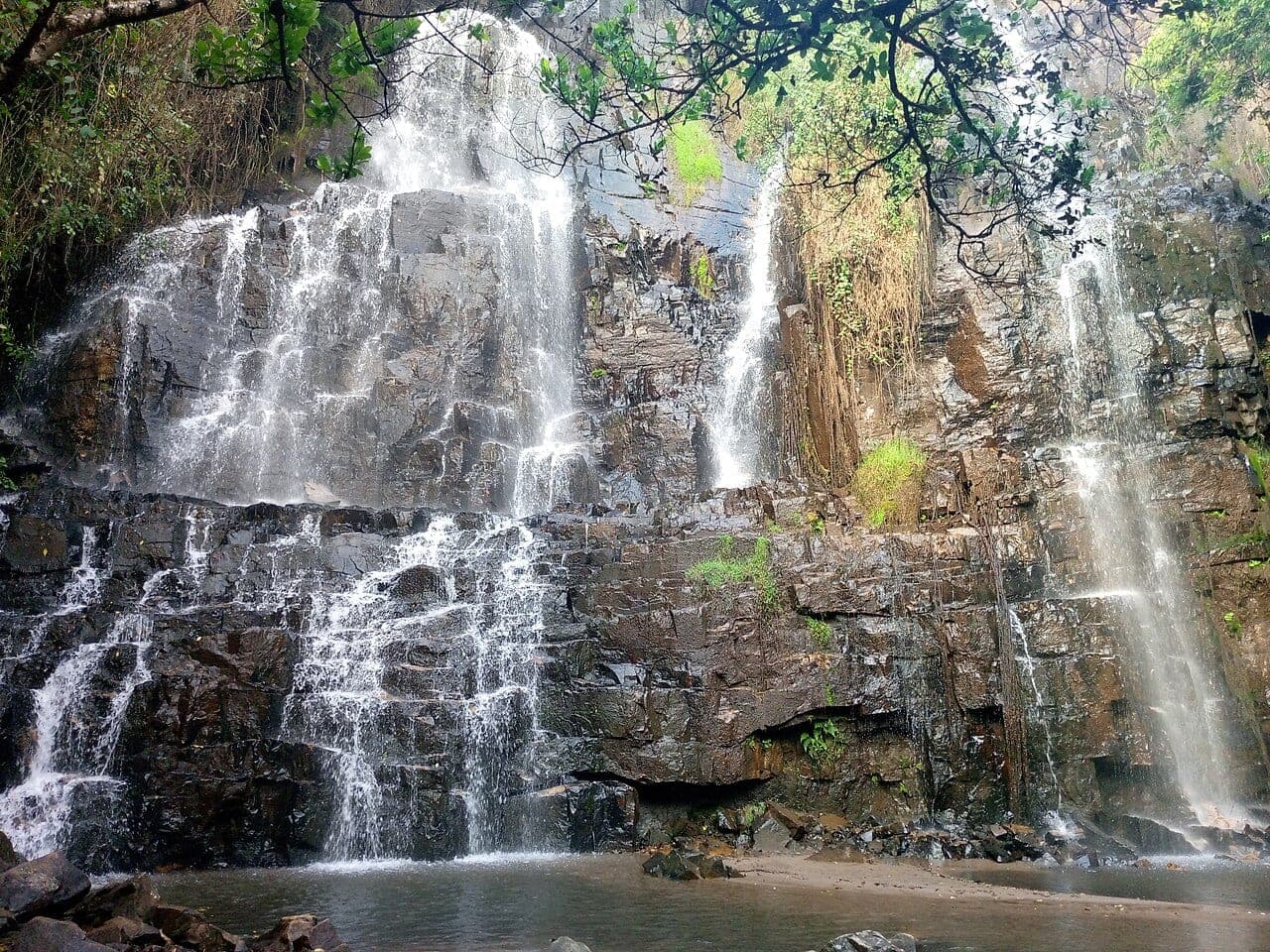
The country's institutional memory rests on the National Museum of Gitega, founded in the mid-1950s with the largest public collection of royal regalia, instruments and photographs, together with the Living Museum in Bujumbura, which presents daily life and natural history. Burundi's natural heritage is protected in reserves that were themselves once bound to the crown: Kibira National Park, a highland rainforest between roughly 1,500 and 2,600 metres that served the old kings as a sacred hunting ground and shelters chimpanzees, monkeys and more than two hundred bird species, and Rusizi National Park, where the Rusizi River spreads into the lake among hippos and waterbirds. The Karera Falls and the monument at the southern source of the Nile draw visitors to the country's water and stone.
Burundi's digital heritage is young and growing, shaped as much by artists and the diaspora as by institutions. Its most powerful carrier is the recorded and filmed performance of the royal drummers, whose sound has been captured on record and video for more than half a century and now circulates freely online, letting audiences far from Gishora hear the karyenda tradition and younger Burundians study their inheritance.
Beyond the drum, the effort to bring Kirundi's oral literature and the country's history into durable digital form is under way but uneven, pursued through university scholarship, language projects and the informal archive of social media, where songs, proverbs, choirs and family ceremonies are shared daily. Diaspora communities keep customs in practice abroad and post them home, so that much of Burundi's living memory now travels as much through screens as through the hills.
Burundi's largest cultural export is unmistakable. The Royal Drummers of Burundi, performing under names such as the Master Drummers of Burundi, have toured the world's concert halls and festivals for decades, carrying the sound of the karyenda tradition to audiences on every continent and turning a ritual of kingship into one of the most recognisable percussion traditions on earth. Their recordings shaped popular music far beyond the country, and their thunderous, synchronised style has influenced drummers well outside Africa, so that the name of Burundi is, for many listeners abroad, first of all the name of a drum.
At home and across the diaspora, that heritage feeds a living culture of musicians who set the old rhythms against modern arrangements, dancers who carry the drum into new settings, and writers working in Kirundi, French and English; the drum remains the thread that gathers a scattered nation around a sound its people know at once.
A ritual recognised by the world. The 2014 inscription of the ritual dance of the royal drum on UNESCO's Representative List gave international standing to a tradition once reserved for the court of the mwami, helping anchor its practice for the generations to come.
A sanctuary kept alive. At Gishora the sacred drums are still tended by the hereditary keepers who have guarded them since the days of the kingdom, and visitors who climb the hill hear the tradition performed where it has always belonged.
The drum that crossed the world. From village ritual to global stage, the Royal Drummers of Burundi have carried the country's percussion tradition across continents, a local sacred art become a shared human inheritance.
Peace written into the state. The Arusha settlement that ended the civil war built power-sharing between the communities into the constitution, and the reconciliation that followed remains a hard-won achievement held in common by a people determined to remember their losses together.
The royal drum was an object of the monarchy rather than a musical instrument, kept in sanctuaries with its own guardians. The drumming was inscribed by UNESCO in 2014, with safeguarding measures aimed at stopping it becoming a floor show. Photograph by NathanRUZO, CC BY-SA 4.0, via Wikimedia Commons.
Beyond the drum, Burundi holds one of Africa's great traditions of oral art. Kirundi carries an extended family of spoken forms: the imigani, proverbs that compress a whole ethic of patience, discretion and neighbourliness into a phrase; the ibisigo, refined praise poetry; the amazina y'inka, pastoral poems in honour of cattle; and riddles, myths and lullabies passed between generations by voice alone. Handwork carries its own memory in the coiled, lidded baskets woven across the region, tightly patterned in natural and dyed fibre and given at marriages as tokens of peace and welcome. The table gathers the household around beans, plantain, cassava, sweet potato and sorghum, worked into ubugali dough and eaten with greens and, on the lake, with grilled and dried fish, while banana and sorghum beers accompany occasions of ceremony.
Burundi today is overwhelmingly Christian. Around ninety per cent of the population belongs to the churches, roughly two thirds Roman Catholic and a quarter Protestant, brought by missions under colonial rule and grown deep in the hills; a Muslim minority of a few per cent worships mainly in Bujumbura and the lakeside towns, and small communities follow the older ways alone.
Yet beneath and alongside the churches runs the country's inherited spirituality, and for most families the two are woven together rather than opposed. Traditional belief centres on Imana, the benevolent creator and source of life and fortune, remote from daily petition yet present in blessing; and on the abazimu, the spirits of the ancestors, who watch over their descendants, reward respect with good harvests, and are honoured with offerings and remembrance. From the same moral world comes the bashingantahe, men of proven integrity entrusted with the staff of justice, who arbitrate disputes and speak the truth in the community's name, an ideal Burundians have drawn on again in reconciliation. Christian faith and this older reverence for creator and ancestor coexist in most households without contradiction.
In Burundian tradition, death does not sever a person from the family so much as change the terms of belonging. The dead pass into the ranks of the abazimu, the ancestors, who remain interested in the living and are approached with respect, and a funeral is therefore a communal act that binds kin and neighbours in mourning, with gatherings, shared food and the formal expression of grief and consolation. Where the drum once sounded for a royal funeral, drumming and song still carry commemoration, honouring a life with a voice the whole community understands, and respect for elders and for the resting places of the dead runs through these customs as a standing obligation.
Today most funerals in Burundi follow Christian rites, the Catholic Mass or Protestant service, with burial, prayer and the support of the parish, while the Muslim minority observes the swift burial, washing and prayer of Islam; in both, the older instinct to gather the community around the bereaved endures. Over all of this lies a shared and careful memory of the people lost in the country's years of violence and civil war, mourned across every community. Burundians have marked that memory soberly, in acts of commemoration and in the reconciliation built into national life, holding the dead of all communities together in remembrance rather than setting one people's grief against another's.
Burundi's records are church records, and its most consequential documents were identity cards.
Catholic and Protestant missions have kept baptism, marriage and burial registers since the late nineteenth century, and for most Burundian families those are the vital records. The colonial administrative series, German until the First World War and then Belgian under mandate, is split between Bujumbura, Brussels and Tervuren.
The Belgian administration is also responsible for the document that shaped everything after. Colonial authorities in Ruanda-Urundi classified the population as Hutu, Tutsi or Twa and recorded the category on identity cards, hardening what had been a fluid social distinction into a fixed and inheritable one. Those cards, and the census categories behind them, are the paper origin of a great deal of what followed.
What followed is not well documented. The mass killings of 1972, in which the army killed a very large number of Hutu, particularly the educated, were not recorded, and estimates vary by a factor of several. The violence after 1993 killed hundreds of thousands more. In neither case is there a national list of the dead, and the truth and reconciliation commission's work has been contested.
The older record is the kingdom. The Burundian monarchy, abolished in 1966, had a court, a ritual calendar and the sacred karyenda drums whose custodianship was hereditary. Those lineages, and the family histories attached to them, are held orally by the families concerned and by the drummers of Gitega.
Burundi's most celebrated act of heritage safeguarding is the recognition of its drum. In 2014 UNESCO inscribed the ritual dance of the royal drum on the Representative List of the Intangible Cultural Heritage of Humanity, honouring a tradition of drumming, dance and song that reaches back to the rituals of the monarchy. Within the country, laws adopted in the previous decade extended protection to the sacred drums and their sanctuaries, and the sanctuary at Gishora remains the guarded home of the living practice, tended by its hereditary keepers.
The country's institutional memory rests on the National Museum of Gitega, founded in the mid-1950s with the largest public collection of royal regalia, instruments and photographs, together with the Living Museum in Bujumbura, which presents daily life and natural history. Burundi's natural heritage is protected in reserves that were themselves once bound to the crown: Kibira National Park, a highland rainforest between roughly 1,500 and 2,600 metres that served the old kings as a sacred hunting ground and shelters chimpanzees, monkeys and more than two hundred bird species, and Rusizi National Park, where the Rusizi River spreads into the lake among hippos and waterbirds. The Karera Falls and the monument at the southern source of the Nile draw visitors to the country's water and stone.
Burundi's digital heritage is young and growing, shaped as much by artists and the diaspora as by institutions. Its most powerful carrier is the recorded and filmed performance of the royal drummers, whose sound has been captured on record and video for more than half a century and now circulates freely online, letting audiences far from Gishora hear the karyenda tradition and younger Burundians study their inheritance.
Beyond the drum, the effort to bring Kirundi's oral literature and the country's history into durable digital form is under way but uneven, pursued through university scholarship, language projects and the informal archive of social media, where songs, proverbs, choirs and family ceremonies are shared daily. Diaspora communities keep customs in practice abroad and post them home, so that much of Burundi's living memory now travels as much through screens as through the hills.
Burundi's largest cultural export is unmistakable. The Royal Drummers of Burundi, performing under names such as the Master Drummers of Burundi, have toured the world's concert halls and festivals for decades, carrying the sound of the karyenda tradition to audiences on every continent and turning a ritual of kingship into one of the most recognisable percussion traditions on earth. Their recordings shaped popular music far beyond the country, and their thunderous, synchronised style has influenced drummers well outside Africa, so that the name of Burundi is, for many listeners abroad, first of all the name of a drum.
At home and across the diaspora, that heritage feeds a living culture of musicians who set the old rhythms against modern arrangements, dancers who carry the drum into new settings, and writers working in Kirundi, French and English; the drum remains the thread that gathers a scattered nation around a sound its people know at once.
A ritual recognised by the world. The 2014 inscription of the ritual dance of the royal drum on UNESCO's Representative List gave international standing to a tradition once reserved for the court of the mwami, helping anchor its practice for the generations to come.
A sanctuary kept alive. At Gishora the sacred drums are still tended by the hereditary keepers who have guarded them since the days of the kingdom, and visitors who climb the hill hear the tradition performed where it has always belonged.
The drum that crossed the world. From village ritual to global stage, the Royal Drummers of Burundi have carried the country's percussion tradition across continents, a local sacred art become a shared human inheritance.
Peace written into the state. The Arusha settlement that ended the civil war built power-sharing between the communities into the constitution, and the reconciliation that followed remains a hard-won achievement held in common by a people determined to remember their losses together.
National Overview
Notable Cities
Historical Foundations
Linguistic and Etymological Roots
Cultural Identity
Religion and Spirituality
Remembrance and Mourning Traditions
Tracing a Family in Burundi
Heritage Preservation Efforts
Digital Heritage
Contemporary Cultural Influences
Success Stories
References and resources
- UNESCO Intangible Cultural Heritage: Ritual dance of the royal drum. The 2014 inscription record for Burundi's royal drumming tradition.
- Encyclopaedia Britannica: History of Burundi. Colonial rule, independence, the civil war and the Arusha peace process.
- Encyclopaedia Britannica: Gitega. The royal centre and political capital of Burundi.
- Wikipedia: Burundi. Population, religion, languages and national geography.
- Wikipedia: Kirundi. The Bantu language shared across Burundi's communities and its oral forms.
- Wikipedia: Ruanda-Urundi. The German and Belgian colonial administration of the territory.
- Wikipedia: Karera waterfalls. The falls of south-eastern Burundi.
- Wikipedia: National Museum of Gitega. The country's principal museum of royal regalia and material culture.
- UNESCO World Heritage Centre: Burundi. Burundi's engagement with the World Heritage and heritage conventions.