Heritage · Country
Gabon Culture and Heritage
Gabon keeps its oldest memory beneath the equatorial canopy, from the rock engravings of Lopé and the guardian figures set over ancestral bone to the falls of the Ivindo running through untouched forest. A guide to the country's heritage and the people who protect it.Written to last.
By Confinity Heritage Editorial · Updated 2026-07-31 · 8-minute readQuiet tools, kept out of the way.
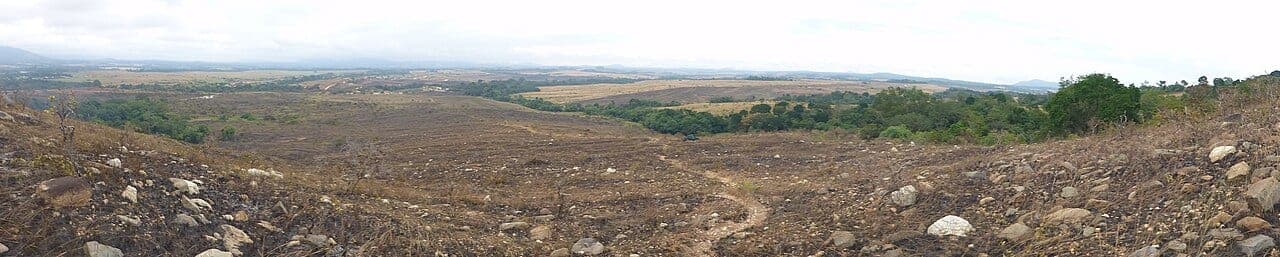
In the centre of Gabon, where the equatorial forest breaks into islands of grassland, the Ogooué River has cut a valley that people have never truly left. Archaeologists working in the Ecosystem and Relict Cultural Landscape of Lopé-Okanda have traced almost continuous human occupation reaching back some 400,000 years, and scattered across its granite outcrops are more than 1,600 rock engravings, most cut around the time iron-working reached the valley two thousand years ago. UNESCO inscribed the site in 2007 as one of the rare places recognised at once for its natural systems and its human record, a mixed World Heritage property where the history of the land and the history of its people cannot be pulled apart.
That inseparability runs through Gabonese heritage. For much of the country's past, memory was not stored in stone buildings but carried in the forest itself: in carved figures set to guard the bones of the dead, in masks that return ancestors to the village on the shoulders of stilt dancers, and in initiations passed by voice from elder to novice.
Gabon is a country of about 267,667 square kilometres on the Atlantic coast of Central Africa, straddling the equator on the Gulf of Guinea. It is bordered by Equatorial Guinea and Cameroon to the north and the Republic of the Congo to the east and south, with the Ogooué River draining most of the interior toward the sea. Forest covers close to nine-tenths of the territory, one of the highest proportions of any nation on earth, and beneath and beside that canopy live forest elephants, western lowland gorillas and chimpanzees in numbers few other countries can match (Britannica).
The population of roughly 2.3 million is small for so large a country, and around ninety-five per cent of it belongs to Bantu-speaking communities. The Fang of the north are the largest group, followed by the Myene of the estuary and coast, the Punu and Nzebi of the south, and the Kota and Teke of the east, among dozens of others. French is the official language and the shared tongue of a highly urbanised society: most Gabonese live in towns, above all in the capital, Libreville. Oil, drawn largely from the waters off Port-Gentil, has funded the modern state since the 1970s, and in 2002 the government set aside thirteen national parks covering roughly a tenth of the country, a decision that reframed the forest as national inheritance rather than raw material.
Libreville. The capital sits on the north shore of the Komo estuary and takes its name, "free town," from its founding purpose. In 1849 French authorities settled a group of Africans freed from a captured slave ship on the site, and the town grew from that act of liberation into the administrative and commercial heart of the country. Today it holds the National Museum of Arts, Rites and Traditions and the bulk of Gabon's cultural institutions (Britannica).
Port-Gentil. Gabon's second city and chief seaport stands on Mandji Island near Cape Lopez, at the mouth of the Ogooué. It is the centre of the petroleum and timber industries and the source of much of the country's wealth, a working city of refineries and docks rather than monuments (Britannica).
Franceville. Founded in 1880 by the explorer Pierre Savorgnan de Brazza on the site of a village called Masuku, Franceville is the largest town of the south-eastern Haut-Ogooué province and the terminus of the Transgabonais railway from the coast. Nearby lie the manganese deposits of Moanda and the Oklo uranium field, remarkable to science as the site of the only known natural nuclear fission reactors, which ran roughly two billion years ago and were identified in 1972.
Lambaréné. A town built across islands in the Ogooué, Lambaréné is known worldwide for the hospital founded there in 1913 by Albert Schweitzer. The institution still treats patients and keeps a museum in Schweitzer's memory, and the town remains a place of quiet pilgrimage on the river.
The human record at Lopé shows the Ogooué valley used as a corridor and a home for hundreds of thousands of years, with grass savannas that opened after the last ice age some 15,000 years ago and stone tools far older beneath them. Between about 3,500 and 2,000 years ago, farming peoples moving south and east during the Bantu expansion passed through, leaving polished stone axes and pottery; when iron-working arrived around two thousand years ago, hilltop villages grew larger, furnaces appeared, and the valley's rock engravings were cut (UNESCO). Out of these migrations came the forest societies of later centuries, organised by clan and lineage rather than into large centralised kingdoms.
Portuguese navigators reached the estuary in the 1470s and gave the country the name it still carries. European trade along the coast, at first in goods and later in enslaved people, drew Gabon into the Atlantic system over the following centuries, bringing lasting harm to coastal communities before the traffic in human beings was suppressed. The founding of Libreville in 1849, when the French navy settled fifty-two people freed from a seized slave ship on the estuary, belongs to the closing of that era. France extended formal control through the late nineteenth century, with Brazza pushing inland along the Ogooué, and Gabon became part of French Equatorial Africa. In 1913 Albert Schweitzer, already a noted theologian and organist, opened his hospital at Lambaréné and there developed the ethic he called reverence for life, work later recognised with the 1952 Nobel Peace Prize (Nobel Prize).
Gabon became independent on 17 August 1960, with Léon M'ba as its first president. He was succeeded in 1967 by Omar Bongo Ondimba, whose presidency lasted until his death in 2009 and was followed by that of his son, Ali Bongo Ondimba. In 2023 the military assumed power and set up a transitional government, and the country entered a period of political transition. These recent events are noted here only for the record; this profile is concerned with the longer inheritance of culture and memory.
The name Gabon comes from the Portuguese gabão, a cloak with a hood and sleeves; the early navigators thought the shape of the Komo estuary resembled such a garment, and the word attached first to the river and then to the land. French is the language of government, schooling and the media, and serves as the common tongue across a country of more than forty local languages, nearly all of them Bantu.
Fang, spoken across the north and into Cameroon and Equatorial Guinea, has the largest number of speakers; Myene, the language of the estuary peoples, long served as a language of trade and mission along the coast; and Punu, Nzebi, Kota, Teke and many smaller languages carry the identities of the interior. Most of these tongues were historically oral rather than written, their histories, genealogies and law held in spoken form and performed rather than filed. That reliance on the voice makes the smaller languages vulnerable as French spreads through school and city life, and it places a particular weight on the elders and initiates who still carry the older words.
Gabon's art is known above all for the reliquary figures that guarded the dead. Among the Fang, carved wooden heads and figures called byeri sat atop cylindrical boxes of bark holding the skulls and long bones of distinguished ancestors; families rubbed them with palm oil to keep their protective power and consulted them at moments of decision. Among the Kota, flat wooden figures known as mbulu-ngulu, their faces sheathed in beaten copper and brass, watched over baskets of ancestral relics. When these works reached Europe in the early twentieth century, their concentrated geometry helped reshape modern art, drawing the close attention of Picasso, Braque and their contemporaries (Fang people, Wikipedia).
The Punu of the south are celebrated for the white-faced mask called okuyi or mukudj, carved as an idealised female face and coated with white kaolin drawn from riverbeds linked to the world of the dead, the white standing for the ancestral realm. The mask comes to life in a stilt dance of the same name, in which a masked performer moves and turns high above the crowd in feats of balance and acrobatics, mediating between the living and the dead at funerals and celebrations (The Met). Behind much of this art lies Bwiti, the initiatory forest religion described below.
Gabonese cuisine draws on the forest, the rivers and the sea. The national dish is poulet nyembwe, chicken simmered in a sauce made from the pulp of red palm nuts, its name taken from the Myene word for palm butter; it is eaten with cassava, plantains or rice. Smoked river fish, the oil-rich atanga (safou) fruit, and a nutty sauce made from odika, the seed of the wild mango, round out a table built on fresh, local ingredients.
Most Gabonese are Christian, divided chiefly between Roman Catholics and a range of Protestant and evangelical churches, the legacy of mission work along the coast and rivers from the nineteenth century onward. A Muslim minority worships mainly in the towns, and the constitution provides for freedom of belief.
Running alongside and often within Christianity is Bwiti, an initiatory tradition of the forest peoples that the state formally recognises. Practised especially by the Mitsogo and Punu of the interior and, in a distinct branch, by many Fang, Bwiti centres on the sacramental use of iboga, the bitter root bark of the plant Tabernanthe iboga, taken to open communication with ancestors and to bind the community across generations (Bwiti, Wikipedia). Initiation may last several days and is led by a ritual specialist, the nganga, to the music of drums and the ngombi harp, with initiates dressed in red, white and black. The Fang branch weaves in Christian imagery and calendar, one of many places in Gabon where church and older belief are held together rather than set against each other.
At the heart of traditional Gabonese remembrance stands the ancestor. In the reliquary traditions of the Fang and Kota, the bones of a lineage's most respected dead, above all the skull, were kept in a bark box or basket and set under the watch of a carved guardian figure. These relics were believed to hold power that protected and guided the living, and the figures that guarded them were the visible sign of a continuing bond between a family and its founders, consulted before important undertakings and honoured across the generations.
Funerals gather kin and neighbours for wakes, drumming and song, and among the Punu and neighbouring peoples the white okuyi mask may appear at these gatherings, bringing an ancestral presence into the mourning. Bwiti, too, has long carried a funerary role, its rites helping to settle the dead among the ancestors and to steady the bereaved. Today most Gabonese also mark death with Christian services and burial, and in many families the church rite and the older customs of vigil, remembrance and respect for the ancestors sit side by side. The reliquary figures themselves, once handled only within the lineage, are now also studied and cared for in museums, a shift from private guardianship to shared heritage that the country continues to work through.
Gabonese family records are lineage records, and the initiation society is where they are learned.
Fang, Myene, Punu, Nzebi and Teke communities each keep descent through clans, and the Fang recite the ayong, the clan line, which places a person among a people spread across Gabon, Equatorial Guinea and Cameroon. The mvet epic, performed on a stringed instrument by specialists, carries the collective version.
Bwiti is the institution that carries the rest. It is an initiatory religion centred on iboga, in which the initiate is shown the ancestors, and the temple and its lineage of initiators form a structure of inherited belonging. Reliquary figures, the byeri, were made to guard the skulls and bones of ancestors kept in bark boxes, and the figure was the guardian rather than the ancestor; many are now in European museums.
The French kept a civil register from the 1840s that recorded those with French status and largely ignored everyone else, and it is divided between Libreville and Aix-en-Provence. Catholic and Protestant mission registers carry nineteenth and twentieth century vital events.
Oil made Gabon wealthy on paper and did not produce a comprehensive civil register; a substantial share of Gabonese have no birth certificate.
The oldest record in the country is at Lopé, where rock engravings and archaeological deposits document human presence across thousands of years in a forest that has been continuously inhabited.
Gabon holds two UNESCO World Heritage sites, and together they capture its double inheritance of nature and culture. The Ecosystem and Relict Cultural Landscape of Lopé-Okanda, inscribed in 2007, was recognised for both its forest-savanna mosaic and its long human record, including the more than 1,600 rock engravings of the Ogooué valley (UNESCO). Ivindo National Park, inscribed in 2021, protects a stretch of near-pristine equatorial rainforest along the Ivindo River, whose Kongou and Mingouli falls are among the great natural spectacles of Central Africa, together with the forest clearing of Langoué Baï where elephants and other wildlife gather (UNESCO).
These sites sit within the wider network of thirteen national parks created in 2002 and managed by the national parks agency, which places roughly a tenth of the country under formal protection. On the cultural side, the National Museum of Arts, Rites and Traditions in Libreville, reopened in 2019, holds a collection of some 2,500 works, with the mask and reliquary traditions of the Fang, Kota, Punu and Tsogho peoples all represented (MOMAA). National research bodies and the parks service also carry out survey and conservation work across the archaeological and natural landscape.
Because so much Gabonese art left the country during the colonial period, some of the fullest digital records of it are held abroad. The Metropolitan Museum of Art, the Musée du quai Branly in Paris and other institutions publish photographs and catalogue records of Gabonese masks and reliquary figures online, letting scholars and Gabonese abroad study works held far from home. Within Gabon, the reopening of the National Museum has been accompanied by efforts to document its collection.
The country's natural heritage is increasingly recorded in digital form as well. Camera-trap networks, aerial and satellite surveys and biodiversity databases track forest elephants, gorillas and the health of the parks, and the mapping of forest cover feeds directly into national climate reporting. Informally, Gabonese musicians, dancers and storytellers, at home and in the diaspora, use social media to circulate performances, language lessons and ceremony, an everyday archive that keeps living traditions in motion.
Gabon has a musical reputation out of proportion to its size. Pierre-Claver Akendengué is revered for songs that set Gabonese languages and poetry to modern arrangement, and Oliver N'Goma carried a smooth Gabonese take on Afro-zouk across French-speaking Africa in the 1990s. Singers such as Patience Dabany and Annie-Flore Batchiellilys have kept traditional rhythm and language present in popular music, and a younger generation works in gospel, urban and dance styles.
Beyond music, the masks and figures of Gabon remain reference points in the global art world, and a small film and literary scene works in French. In sport, the footballer Pierre-Emerick Aubameyang, long the captain of the national team, has been the country's most visible figure abroad. Across these fields, contemporary Gabonese culture tends to move between the forest inheritance and the wider Francophone and Atlantic world rather than choosing between them.
A forest nation, protected by policy. With close to nine-tenths of its land still forested, Gabon retains one of the most intact tropical forest estates on the planet, and the thirteen parks created in 2002 turned that abundance into deliberate policy. The parks shelter what may be the world's most important remaining population of African forest elephants.
Ivindo joins the World Heritage List. In 2021 Ivindo National Park was inscribed by UNESCO, giving international recognition to the Kongou and Mingouli falls and the surrounding rainforest and adding a natural site to stand beside the mixed landscape of Lopé-Okanda (UNESCO).
Paid to keep the forest standing. In 2021 Gabon became the first African country to receive results-based payment for reducing carbon emissions from its forests, under an agreement supported by Norway through the Central African Forest Initiative, with a first tranche of about 17 million US dollars (CAFI).
A museum brought back. The reopening of the National Museum of Arts, Rites and Traditions in Libreville in 2019 gave the country a modern home for its own mask and reliquary heritage, much of which had long been better known through collections overseas.
National Overview
Notable Cities
Historical Foundations
Linguistic and Etymological Roots
Cultural Identity
Religion and Spirituality
Remembrance and Mourning Traditions
Tracing a Family in Gabon
Heritage Preservation Efforts
Digital Heritage
Contemporary Cultural Influences
Success Stories
References and resources
- UNESCO World Heritage Centre: Ecosystem and Relict Cultural Landscape of Lopé-Okanda, the 2007 mixed-site inscription and its rock engravings.
- UNESCO World Heritage Centre: Ivindo National Park, the 2021 natural-site inscription and the Kongou and Mingouli falls.
- Encyclopaedia Britannica: Gabon, geography, peoples, history and economy.
- Encyclopaedia Britannica: Libreville, the capital and its founding.
- Encyclopaedia Britannica: Port-Gentil, the oil and timber seaport.
- Nobel Prize: Albert Schweitzer, Peace 1952, Lambaréné and reverence for life.
- The Metropolitan Museum of Art: Punu Mukudj mask, the white mask and its stilt dance.
- Fang people (Wikipedia), the byeri reliquary tradition and its influence on modern art.
- Bwiti (Wikipedia), the initiatory religion and the use of iboga.
- MOMAA: Museum of Arts and Traditions, Libreville, the national collection reopened in 2019.
- Central African Forest Initiative: Gabon, results-based payment for forest protection.