Heritage · Country
Puerto Rico Culture and Heritage
An archipelago the Taíno called Boriquén, held by Spain for four centuries and by the United States since 1898, where the oldest European fortifications in the territory look out over a cemetery built to face the Atlantic. This is a guide to Puerto Rico's heritage, its language, its music and the nine nights by which Puerto Ricans see their dead away.Written to last.
By Confinity Heritage Editorial · Updated 2026-08-17 · 8-minute readQuiet tools, kept out of the way.
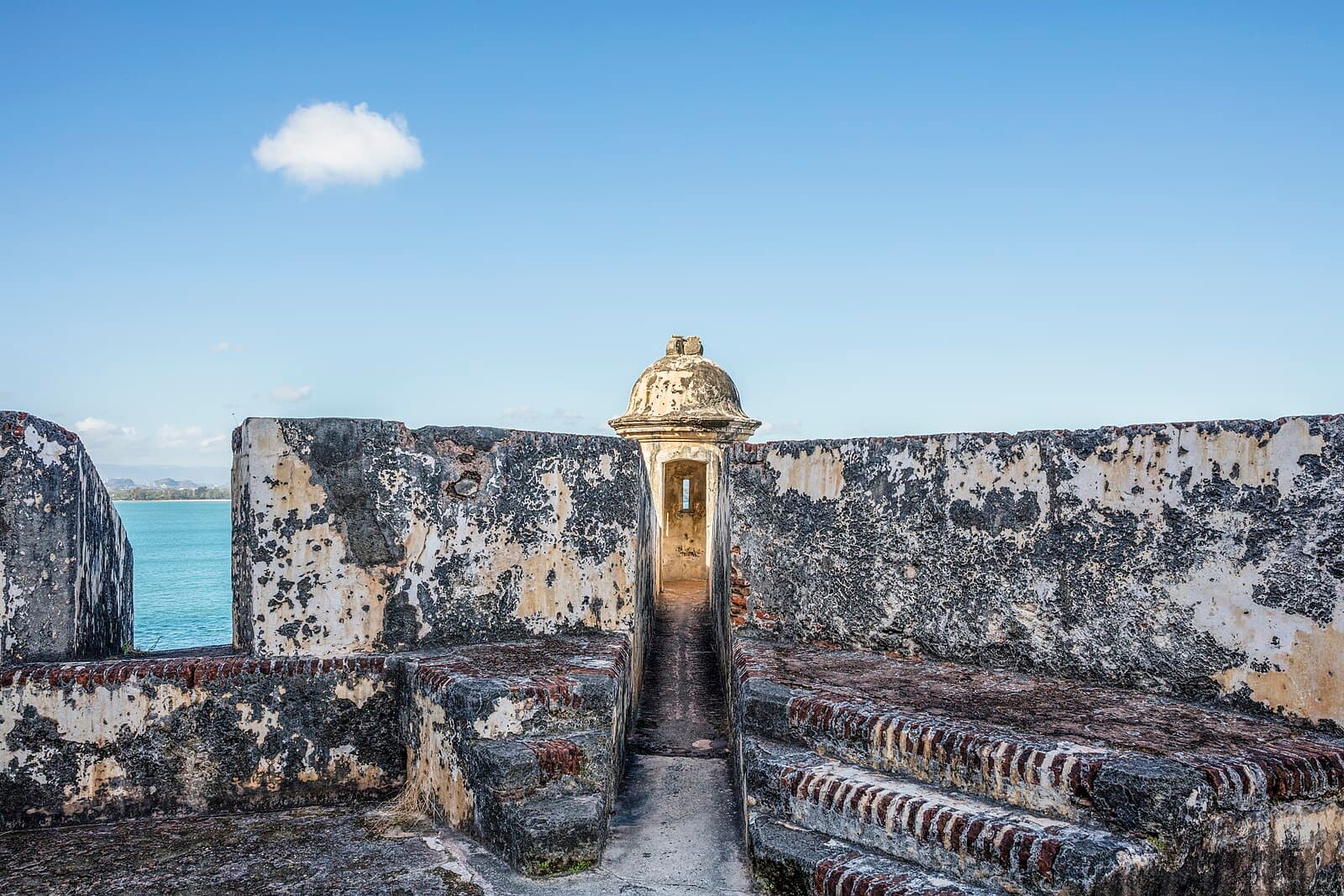
Puerto Rico remembers in layers. The petroglyphs at Caguana were cut by Taíno hands around 1270; the walls of El Morro were raised by Spain from 1539 and finished by enslaved and conscripted labour over two centuries; the cemetery of Santa María Magdalena de Pazzis was laid out below those walls in the 1860s, deliberately facing open water so the dead would look toward the crossing. Walk from one to the next in a morning and you have walked through three separate ideas of what an island is for.
Almost none of that memory sits still. Words the Taíno used are spoken every day in Spanish and in English by people who have never heard the word Taíno, and the bomba drum that enslaved Africans played in Loíza is taught now in community schools in Santurce and the Bronx. The archipelago's political standing has been argued over for more than a century without resolution, which means the question of who Puerto Ricans are is a live conversation carried on in music, in language and at the graveside.
Puerto Rico is an archipelago of about 9,100 square kilometres in the northeastern Caribbean, made up of one main island roughly 160 kilometres long, the smaller inhabited islands of Vieques and Culebra, and a scatter of cays. The 2020 census counted 3,285,874 residents, a fall of more than eleven per cent on the decade before, driven by economic contraction and by the migration that followed Hurricane Maria; a further population of Puerto Rican origin, larger than the one on the archipelago, lives in the fifty states. The Cordillera Central divides the drier southern coast from the wet north, where El Yunque holds the only tropical rainforest in the United States National Forest System. Puerto Rico is an unincorporated territory of the United States whose residents are citizens by birth, organised since 1952 as the Commonwealth of Puerto Rico, or Estado Libre Asociado, with an elected governor and legislature, seventy-eight municipalities and a non-voting delegate in Congress. Spanish and English are both official; Spanish is the language of daily life for nearly everyone.
San Juan. Founded in 1521 when settlers abandoned the swampy first settlement at Caparra for the islet at the harbour mouth, San Juan is the second-oldest European-founded capital in the Americas. Its walled core holds La Fortaleza, begun in 1533 and still the governor's residence, the oldest executive mansion in continuous use in the hemisphere; the Castillo San Felipe del Morro, whose six levels rise 43 metres above the harbour entrance; and the Castillo San Cristóbal, the largest Spanish fortification built in the New World (National Park Service). Around them run the blue cobbles of the old streets and the Catedral de San Juan Bautista, where Juan Ponce de León is buried.
Ponce. The southern city kept its own architectural character through the nineteenth-century sugar and coffee boom: a historic zone of criollo townhouses, the Teatro La Perla, and the red-and-black striped Parque de Bombas firehouse of 1882 that has become the city's emblem. The Museo de Arte de Ponce holds the strongest collection of European painting in the Caribbean, and the city's carnival, with its horned papier-mâché vejigante masks, is the island's largest.
Loíza. East of San Juan, Loíza is the centre of Afro-Puerto Rican culture, settled by free and formerly enslaved Africans on the coastal plain where the sugar estates stood. Its Fiestas de Santiago Apóstol in late July bring out vejigantes in masks carved from coconut husk, distinct from the Ponce papier-mâché, and its bomba lineages are among the oldest documented on the island.
Utuado. The mountain town holds Caguana, the most important Taíno ground surviving anywhere in the Antilles.
The archipelago the Taíno called Boriquén was settled from South America in waves, with ceramic-making Saladoid peoples arriving around 200 BC and the classic Taíno chiefdoms taking shape by about 1200 AD. Columbus landed in 1493, but sustained Spanish settlement began in 1508, when Juan Ponce de León founded Caparra and began the encomienda system that bound the Taíno to forced labour. A general Taíno rising in 1511 was defeated within a year, and disease, overwork and flight reduced the indigenous population so quickly that Spain turned to the transatlantic slave trade, importing enslaved Africans to work sugar and, later, coffee. Genetic research has since shown that Taíno ancestry did not vanish with the chiefdoms: it survives measurably, alongside Spanish and West African descent (Smithsonian).
 El Morro took nearly 250 years to reach the form it has now, and the walls were still being extended when the fort had already become obsolete. Photograph by P. Hughes, CC BY-SA 4.0, via Wikimedia Commons.
For three centuries Puerto Rico mattered to Spain chiefly as a fortress guarding the sea lanes, which is why so much of its colonial inheritance is military stone: San Juan repelled Francis Drake in 1595 and a large British expedition in 1797, and the Dutch burned the town in 1625 without taking El Morro. Sugar built the coastal economy on enslaved labour until the Spanish Cortes abolished slavery on 22 March 1873, freeing about 29,000 people on terms that compensated the slaveholders and required the freed to contract their labour for three more years (Library of Congress). The date is a public holiday, Día de la Abolición, marked most strongly in Loíza and the old sugar districts.
An independence rising at Lares in September 1868, the Grito de Lares, was suppressed within days but became the founding event of Puerto Rican nationalism. Spain granted an autonomy charter in 1897; within a year United States forces landed at Guánica during the Spanish-American War, and the Treaty of Paris transferred the archipelago in December 1898. The Foraker Act of 1900 imposed a civil government appointed from Washington, and the Jones-Shafroth Act of March 1917 conferred United States citizenship, weeks before the country entered the First World War. A constitution approved in 1952 created the Commonwealth, giving Puerto Rico control of its internal affairs while leaving sovereignty with Congress under the Territory Clause.
Political status has been put to voters seven times, in 1967, 1993, 1998, 2012, 2017, 2020 and 2024. The first two produced pluralities or majorities for continued commonwealth status, the 1998 ballot was won by a "none of the above" option, and statehood led in the four most recent votes, though turnout in 2017 fell below a quarter of registered voters after opposition parties called for a boycott, and no result has yet moved Congress to act (Britannica). Statehood, independence and an enhanced commonwealth or free association each have serious constituencies, and each argument is made by Puerto Ricans about their own future. The restructuring imposed by the PROMESA law in 2016, and Hurricane Maria in September 2017, which an independent study commissioned by the government put at 2,975 excess deaths, have sharpened every version of it.
The Taíno left more of themselves in speech than anywhere else. Words that passed from their Arawakan language through Spanish into English include hamaca (hammock), huracán (hurricane), barbacoa (barbecue), canoa (canoe), tabaco, maíz, iguana and manatí. The island's own name for itself, Borinquen, from Boriquén, remains in constant use: Puerto Ricans call themselves boricuas, and the anthem's opening line names the land as Borinquen. Municipal names across the map are Taíno or Taíno-derived, often from the caciques who ruled those valleys: Caguas, Utuado, Guayama, Yabucoa, Humacao, Mayagüez, Jayuya. The Spanish name arrived by a swap, the island first christened San Juan Bautista and the harbour town Puerto Rico, "rich port", until the two names traded places.
Puerto Rican Spanish is recognisable across the Spanish-speaking world within a sentence or two. Syllable-final /s/ is commonly aspirated or dropped, so that "los amigos" becomes closer to "loh amigoh"; /r/ at the end of a syllable is often pronounced as /l/, which produces the affectionately quoted "Puelto Rico"; and the double rr is frequently articulated far back in the throat, a velar or uvular sound rare elsewhere in the Americas. Spanish and English have both held official status for most of the period since 1902, with a brief Spanish-only interval between 1991 and 1993, and the everyday result is a good deal of code-switching among families whose lives run between the island and the mainland.
Two African-descended musical forms sit at the base of Puerto Rican identity. Bomba, developed by enslaved people on the sugar coasts and best preserved in Loíza, Ponce, Mayagüez and Santurce, reverses the usual relationship of dance and drum: the dancer improvises and the lead barril drummer follows the body, so each performance is a conversation nobody has had before. Plena arose in the working-class barrios of Ponce in the early twentieth century, played on hand-held panderos and known as the periódico cantado, the sung newspaper, because its verses reported what had happened in the neighbourhood that week.
From the mountains came the jíbaro tradition: the cuatro, a small guitar with ten strings in five double courses that is the national instrument, the improvised ten-line décima sung by trovadores, and the aguinaldos carried house to house by parranda groups through a Christmas season that runs past Three Kings Day on 6 January and into the octavitas beyond it. Salsa was shaped as much in San Juan and Puerto Rican New York as anywhere, through Rafael Cortijo and Ismael Rivera, El Gran Combo, Tito Puente and Héctor Lavoe. The cellist Pablo Casals, whose mother was Puerto Rican, settled on the island in 1956 and founded the Festival Casals the following year; it still runs each spring (Casals Festival). Food carries the same mixed inheritance, from mofongo and pasteles to the lechón asado roasted along the mountain road at Guavate.
Roman Catholicism arrived with the first Spanish settlers and shaped the calendar of every town: each of the seventy-eight municipalities keeps fiestas patronales for its patron saint, a week of processions, music and food organised around the parish church, and the archipelago's patroness is the Virgen de la Divina Providencia, declared in 1969. The Catholic share of the population has fallen substantially over two generations, and Pentecostal and other evangelical churches have grown into a large minority with a visible presence in community life, broadcasting and disaster relief.
Alongside the churches run older and quieter practices. Espiritismo, in the form systematised by the French writer Allan Kardec and widely adopted in nineteenth-century Puerto Rico, treats the dead as present and reachable, and its mediums and home séances shaped how many families think about the recently deceased. Santería, the Yoruba-derived religion developed principally in Cuba, has a following here too through Caribbean migration, and the religious-goods shops called botánicas serve Catholic, spiritist and Santería customers from the same shelves.
A Puerto Rican death traditionally sets a fixed sequence in motion. The velorio, the wake, gathers family and neighbours around the body through the night with coffee and food; the funeral Mass and burial follow; and then comes the novenario, nine consecutive nights of the rosary said in the home of the bereaved, often led by a rezadora, a woman known in the neighbourhood for knowing the prayers. In many families the rosary is sung rather than spoken, the rosario cantado, and the ninth night is the largest gathering. A further rosary is said at the month's end and again at the cabo de año, the first anniversary, which is when many families consider mourning formally closed.
The cemetery of Santa María Magdalena de Pazzis in Old San Juan shows how deliberately that culture placed its dead. Laid out from 1863 on the strip of ground between the walls of El Morro and the sea, it was built facing the Atlantic so that the graves look out across the water, and it holds the nationalist leader Pedro Albizu Campos, the physician and statesman José Celso Barbosa and the writer José Gautier Benítez among its neoclassical mausoleums (Wikipedia).
Since 2008 Puerto Rico has also become known for a newer practice, the muerto parao, in which the body is embalmed and posed upright or seated for the wake rather than laid in a casket. It began at the Marín Funeral Home in San Juan, which prepared the body of twenty-four-year-old Ángel Luis Pantojas Medina standing in his mother's living room at the family's request, and has been repeated a small number of times since, including for a boxer displayed in a corner of a ring and for an octogenarian seated in her own chair among her plants. The practice is legal in Puerto Rico provided the pose is not obscene, and it is chosen by families, not offered as spectacle. Read against the velorio it is less of a break than it first appears: the tradition has always held that the dead should be present at their own farewell, surrounded by the things and people that identified them, and the muerto parao takes that instruction literally.
Puerto Rican records are Spanish, then American, and unusually complete for the Caribbean.
Catholic parish registers begin in the sixteenth century in San Juan, among the oldest in the Americas, and civil registration was introduced in 1885. Both are well preserved and a very large share has been digitised, so most Puerto Rican families can be traced into the eighteenth century without leaving a screen.
The document everyone starts with is the 1910 to 1940 federal censuses, because Puerto Rico became American territory in 1898 and was enumerated by the United States from 1910. Puerto Ricans have been citizens since 1917, so the twentieth-century record is federal: military service, social security, migration.
The colonial administrative archive is at the Archivo General de Puerto Rico in San Juan, and the Spanish material is duplicated at the Archivo General de Indias in Seville, which is digitised and free.
Slavery ended in 1873, and the slave registers of the nineteenth century, together with the manumission and coartación records, are the route back for Afro-Puerto Rican families. The Real Cédula de Gracias of 1815, which encouraged Catholic immigration, brought Corsicans, Mallorcans, Irish and later Canary Islanders, and their arrival papers survive.
The recent complication is weather and migration together. Hurricane Maria in 2017 damaged records and accelerated a departure that had already moved more Puerto Ricans to the mainland than live on the island.
Puerto Rico's single UNESCO World Heritage Site, inscribed in 1983, covers La Fortaleza and the San Juan National Historic Site: El Morro, San Cristóbal, San Juan de la Cruz and about three-quarters of the city walls, described by UNESCO as outstanding examples of European military architecture adapted to Caribbean harbour defence (UNESCO). The National Park Service administers it and has run long conservation campaigns on the masonry and on the garitas, the sentry boxes that have become the island's most reproduced symbol.
Domestic preservation runs through the Instituto de Cultura Puertorriqueña, established in 1955 and led for its first two decades by the archaeologist Ricardo Alegría, who used it to restore Old San Juan, professionalise archaeology and build the state collections. The ICP manages the Caguana Indigenous Ceremonial Center in Utuado, a site of about thirty bateyes, or ball courts, built around 1270 and bordered by monoliths bearing the largest concentration of petroglyphs in the Antilles; it is a National Historic Landmark and remains a place of observance for people who identify as Taíno descendants (Wikipedia).
Hurricane Maria tested all of it. The Archivo General de Puerto Rico lost roof integrity and took on water, the national digitisation unit lost equipment when a window failed, and collections across the island went months without power or climate control. The Smithsonian's Cultural Rescue Initiative supplied generator fuel to the Museo de Arte de Puerto Rico, which then sheltered more than 200 works and artefacts from seven other collections until their own buildings could hold them again (Smithsonian Cultural Rescue Initiative).
Much of Puerto Rico's documentary record is now reachable from anywhere, which matters for a people split roughly in half between the archipelago and the mainland. The University of Puerto Rico maintains digital collections of manuscripts, photographs and periodicals; the Enciclopedia de Puerto Rico, run by the Fundación Puertorriqueña de las Humanidades, publishes referenced articles on history, music and biography in both languages (Enciclopedia de Puerto Rico); and the Digital Library of the Caribbean pools Puerto Rican newspapers with those of its neighbours.
The most distinctive project came out of the 2017 storms. The Archivo de Respuestas Emergencias de Puerto Rico gathers photographs, recordings, testimony and ephemera created by Puerto Ricans during and after Hurricanes Irma and Maria, an open-access record assembled from below rather than from an institution's filing cabinet. It holds what a government archive will not: the ordinary evidence of how a population got through a specific year.
Puerto Rican music has shaped global popular culture twice in living memory, through salsa and then reggaetón, which grew out of San Juan's caseríos in the 1990s and now dominates Spanish-language charts worldwide. Bad Bunny's 2025 album and his residency of thirty concerts in San Juan that summer were built around island identity, bomba and plena rhythms and the politics of displacement, and drew hundreds of thousands of visitors. Rita Moreno, José Ferrer and Lin-Manuel Miranda carried Puerto Rican material into the American theatre and film mainstream. The pressures named most often on the island are demographic and economic: sustained out-migration, an ageing population, housing costs in districts bought up for short-term rental, and the difficulty of funding cultural institutions under fiscal oversight.
The soaked archive came back. Documents damaged in the collections of the Instituto de Cultura Puertorriqueña after Hurricane Maria were cleaned and restored over roughly 6,000 working hours between September 2023 and March 2024, returning nearly six years after the storm.
A Taíno site kept as a living place. Caguana, built around 1270 and holding the densest concentration of petroglyphs in the Antilles, is conserved by the Instituto de Cultura Puertorriqueña and remains open as an archaeological park and as a place of observance for people who claim descent from its builders.
Bomba taught rather than exhibited. Once carried by a handful of family lineages in Loíza, Ponce and Mayagüez, bomba is now taught in community schools and workshops across the island and in the diaspora, with new dancers and drummers learning the regional styles by name.
A disaster archived by the people in it. The Archivo de Respuestas Emergencias de Puerto Rico turned the experience of Irma and Maria into an open digital collection built from residents' own photographs and accounts.
El Morro took nearly 250 years to reach the form it has now, and the walls were still being extended when the fort had already become obsolete. Photograph by P. Hughes, CC BY-SA 4.0, via Wikimedia Commons.
For three centuries Puerto Rico mattered to Spain chiefly as a fortress guarding the sea lanes, which is why so much of its colonial inheritance is military stone: San Juan repelled Francis Drake in 1595 and a large British expedition in 1797, and the Dutch burned the town in 1625 without taking El Morro. Sugar built the coastal economy on enslaved labour until the Spanish Cortes abolished slavery on 22 March 1873, freeing about 29,000 people on terms that compensated the slaveholders and required the freed to contract their labour for three more years (Library of Congress). The date is a public holiday, Día de la Abolición, marked most strongly in Loíza and the old sugar districts.
An independence rising at Lares in September 1868, the Grito de Lares, was suppressed within days but became the founding event of Puerto Rican nationalism. Spain granted an autonomy charter in 1897; within a year United States forces landed at Guánica during the Spanish-American War, and the Treaty of Paris transferred the archipelago in December 1898. The Foraker Act of 1900 imposed a civil government appointed from Washington, and the Jones-Shafroth Act of March 1917 conferred United States citizenship, weeks before the country entered the First World War. A constitution approved in 1952 created the Commonwealth, giving Puerto Rico control of its internal affairs while leaving sovereignty with Congress under the Territory Clause.
Political status has been put to voters seven times, in 1967, 1993, 1998, 2012, 2017, 2020 and 2024. The first two produced pluralities or majorities for continued commonwealth status, the 1998 ballot was won by a "none of the above" option, and statehood led in the four most recent votes, though turnout in 2017 fell below a quarter of registered voters after opposition parties called for a boycott, and no result has yet moved Congress to act (Britannica). Statehood, independence and an enhanced commonwealth or free association each have serious constituencies, and each argument is made by Puerto Ricans about their own future. The restructuring imposed by the PROMESA law in 2016, and Hurricane Maria in September 2017, which an independent study commissioned by the government put at 2,975 excess deaths, have sharpened every version of it.
The Taíno left more of themselves in speech than anywhere else. Words that passed from their Arawakan language through Spanish into English include hamaca (hammock), huracán (hurricane), barbacoa (barbecue), canoa (canoe), tabaco, maíz, iguana and manatí. The island's own name for itself, Borinquen, from Boriquén, remains in constant use: Puerto Ricans call themselves boricuas, and the anthem's opening line names the land as Borinquen. Municipal names across the map are Taíno or Taíno-derived, often from the caciques who ruled those valleys: Caguas, Utuado, Guayama, Yabucoa, Humacao, Mayagüez, Jayuya. The Spanish name arrived by a swap, the island first christened San Juan Bautista and the harbour town Puerto Rico, "rich port", until the two names traded places.
Puerto Rican Spanish is recognisable across the Spanish-speaking world within a sentence or two. Syllable-final /s/ is commonly aspirated or dropped, so that "los amigos" becomes closer to "loh amigoh"; /r/ at the end of a syllable is often pronounced as /l/, which produces the affectionately quoted "Puelto Rico"; and the double rr is frequently articulated far back in the throat, a velar or uvular sound rare elsewhere in the Americas. Spanish and English have both held official status for most of the period since 1902, with a brief Spanish-only interval between 1991 and 1993, and the everyday result is a good deal of code-switching among families whose lives run between the island and the mainland.
Two African-descended musical forms sit at the base of Puerto Rican identity. Bomba, developed by enslaved people on the sugar coasts and best preserved in Loíza, Ponce, Mayagüez and Santurce, reverses the usual relationship of dance and drum: the dancer improvises and the lead barril drummer follows the body, so each performance is a conversation nobody has had before. Plena arose in the working-class barrios of Ponce in the early twentieth century, played on hand-held panderos and known as the periódico cantado, the sung newspaper, because its verses reported what had happened in the neighbourhood that week.
From the mountains came the jíbaro tradition: the cuatro, a small guitar with ten strings in five double courses that is the national instrument, the improvised ten-line décima sung by trovadores, and the aguinaldos carried house to house by parranda groups through a Christmas season that runs past Three Kings Day on 6 January and into the octavitas beyond it. Salsa was shaped as much in San Juan and Puerto Rican New York as anywhere, through Rafael Cortijo and Ismael Rivera, El Gran Combo, Tito Puente and Héctor Lavoe. The cellist Pablo Casals, whose mother was Puerto Rican, settled on the island in 1956 and founded the Festival Casals the following year; it still runs each spring (Casals Festival). Food carries the same mixed inheritance, from mofongo and pasteles to the lechón asado roasted along the mountain road at Guavate.
Roman Catholicism arrived with the first Spanish settlers and shaped the calendar of every town: each of the seventy-eight municipalities keeps fiestas patronales for its patron saint, a week of processions, music and food organised around the parish church, and the archipelago's patroness is the Virgen de la Divina Providencia, declared in 1969. The Catholic share of the population has fallen substantially over two generations, and Pentecostal and other evangelical churches have grown into a large minority with a visible presence in community life, broadcasting and disaster relief.
Alongside the churches run older and quieter practices. Espiritismo, in the form systematised by the French writer Allan Kardec and widely adopted in nineteenth-century Puerto Rico, treats the dead as present and reachable, and its mediums and home séances shaped how many families think about the recently deceased. Santería, the Yoruba-derived religion developed principally in Cuba, has a following here too through Caribbean migration, and the religious-goods shops called botánicas serve Catholic, spiritist and Santería customers from the same shelves.
A Puerto Rican death traditionally sets a fixed sequence in motion. The velorio, the wake, gathers family and neighbours around the body through the night with coffee and food; the funeral Mass and burial follow; and then comes the novenario, nine consecutive nights of the rosary said in the home of the bereaved, often led by a rezadora, a woman known in the neighbourhood for knowing the prayers. In many families the rosary is sung rather than spoken, the rosario cantado, and the ninth night is the largest gathering. A further rosary is said at the month's end and again at the cabo de año, the first anniversary, which is when many families consider mourning formally closed.
The cemetery of Santa María Magdalena de Pazzis in Old San Juan shows how deliberately that culture placed its dead. Laid out from 1863 on the strip of ground between the walls of El Morro and the sea, it was built facing the Atlantic so that the graves look out across the water, and it holds the nationalist leader Pedro Albizu Campos, the physician and statesman José Celso Barbosa and the writer José Gautier Benítez among its neoclassical mausoleums (Wikipedia).
Since 2008 Puerto Rico has also become known for a newer practice, the muerto parao, in which the body is embalmed and posed upright or seated for the wake rather than laid in a casket. It began at the Marín Funeral Home in San Juan, which prepared the body of twenty-four-year-old Ángel Luis Pantojas Medina standing in his mother's living room at the family's request, and has been repeated a small number of times since, including for a boxer displayed in a corner of a ring and for an octogenarian seated in her own chair among her plants. The practice is legal in Puerto Rico provided the pose is not obscene, and it is chosen by families, not offered as spectacle. Read against the velorio it is less of a break than it first appears: the tradition has always held that the dead should be present at their own farewell, surrounded by the things and people that identified them, and the muerto parao takes that instruction literally.
Puerto Rican records are Spanish, then American, and unusually complete for the Caribbean.
Catholic parish registers begin in the sixteenth century in San Juan, among the oldest in the Americas, and civil registration was introduced in 1885. Both are well preserved and a very large share has been digitised, so most Puerto Rican families can be traced into the eighteenth century without leaving a screen.
The document everyone starts with is the 1910 to 1940 federal censuses, because Puerto Rico became American territory in 1898 and was enumerated by the United States from 1910. Puerto Ricans have been citizens since 1917, so the twentieth-century record is federal: military service, social security, migration.
The colonial administrative archive is at the Archivo General de Puerto Rico in San Juan, and the Spanish material is duplicated at the Archivo General de Indias in Seville, which is digitised and free.
Slavery ended in 1873, and the slave registers of the nineteenth century, together with the manumission and coartación records, are the route back for Afro-Puerto Rican families. The Real Cédula de Gracias of 1815, which encouraged Catholic immigration, brought Corsicans, Mallorcans, Irish and later Canary Islanders, and their arrival papers survive.
The recent complication is weather and migration together. Hurricane Maria in 2017 damaged records and accelerated a departure that had already moved more Puerto Ricans to the mainland than live on the island.
Puerto Rico's single UNESCO World Heritage Site, inscribed in 1983, covers La Fortaleza and the San Juan National Historic Site: El Morro, San Cristóbal, San Juan de la Cruz and about three-quarters of the city walls, described by UNESCO as outstanding examples of European military architecture adapted to Caribbean harbour defence (UNESCO). The National Park Service administers it and has run long conservation campaigns on the masonry and on the garitas, the sentry boxes that have become the island's most reproduced symbol.
Domestic preservation runs through the Instituto de Cultura Puertorriqueña, established in 1955 and led for its first two decades by the archaeologist Ricardo Alegría, who used it to restore Old San Juan, professionalise archaeology and build the state collections. The ICP manages the Caguana Indigenous Ceremonial Center in Utuado, a site of about thirty bateyes, or ball courts, built around 1270 and bordered by monoliths bearing the largest concentration of petroglyphs in the Antilles; it is a National Historic Landmark and remains a place of observance for people who identify as Taíno descendants (Wikipedia).
Hurricane Maria tested all of it. The Archivo General de Puerto Rico lost roof integrity and took on water, the national digitisation unit lost equipment when a window failed, and collections across the island went months without power or climate control. The Smithsonian's Cultural Rescue Initiative supplied generator fuel to the Museo de Arte de Puerto Rico, which then sheltered more than 200 works and artefacts from seven other collections until their own buildings could hold them again (Smithsonian Cultural Rescue Initiative).
Much of Puerto Rico's documentary record is now reachable from anywhere, which matters for a people split roughly in half between the archipelago and the mainland. The University of Puerto Rico maintains digital collections of manuscripts, photographs and periodicals; the Enciclopedia de Puerto Rico, run by the Fundación Puertorriqueña de las Humanidades, publishes referenced articles on history, music and biography in both languages (Enciclopedia de Puerto Rico); and the Digital Library of the Caribbean pools Puerto Rican newspapers with those of its neighbours.
The most distinctive project came out of the 2017 storms. The Archivo de Respuestas Emergencias de Puerto Rico gathers photographs, recordings, testimony and ephemera created by Puerto Ricans during and after Hurricanes Irma and Maria, an open-access record assembled from below rather than from an institution's filing cabinet. It holds what a government archive will not: the ordinary evidence of how a population got through a specific year.
Puerto Rican music has shaped global popular culture twice in living memory, through salsa and then reggaetón, which grew out of San Juan's caseríos in the 1990s and now dominates Spanish-language charts worldwide. Bad Bunny's 2025 album and his residency of thirty concerts in San Juan that summer were built around island identity, bomba and plena rhythms and the politics of displacement, and drew hundreds of thousands of visitors. Rita Moreno, José Ferrer and Lin-Manuel Miranda carried Puerto Rican material into the American theatre and film mainstream. The pressures named most often on the island are demographic and economic: sustained out-migration, an ageing population, housing costs in districts bought up for short-term rental, and the difficulty of funding cultural institutions under fiscal oversight.
The soaked archive came back. Documents damaged in the collections of the Instituto de Cultura Puertorriqueña after Hurricane Maria were cleaned and restored over roughly 6,000 working hours between September 2023 and March 2024, returning nearly six years after the storm.
A Taíno site kept as a living place. Caguana, built around 1270 and holding the densest concentration of petroglyphs in the Antilles, is conserved by the Instituto de Cultura Puertorriqueña and remains open as an archaeological park and as a place of observance for people who claim descent from its builders.
Bomba taught rather than exhibited. Once carried by a handful of family lineages in Loíza, Ponce and Mayagüez, bomba is now taught in community schools and workshops across the island and in the diaspora, with new dancers and drummers learning the regional styles by name.
A disaster archived by the people in it. The Archivo de Respuestas Emergencias de Puerto Rico turned the experience of Irma and Maria into an open digital collection built from residents' own photographs and accounts.
National Overview
Notable Cities
Historical Foundations
Linguistic and Etymological Roots
Cultural Identity
Religion and Spirituality
Remembrance and Mourning Traditions
Tracing a Family in Puerto Rico
Heritage Preservation Efforts
Digital Heritage
Contemporary Cultural Influences
Success Stories
References and resources
- UNESCO, La Fortaleza and San Juan National Historic Site: the 1983 inscription covering the forts, walls and governor's residence.
- National Park Service, San Juan National Historic Site: El Morro, San Cristóbal and the conservation of the city walls.
- Library of Congress, Abolition of Slavery in Puerto Rico: the law of 22 March 1873 and its conditions.
- Encyclopaedia Britannica, The Debate over Political Status: the plebiscites and competing positions.
- Caguana Ceremonial Ball Courts Site, Wikipedia: the Taíno bateyes, monoliths and petroglyphs at Utuado.
- Santa María Magdalena de Pazzis Cemetery, Wikipedia: the seaward cemetery below El Morro.
- Smithsonian Cultural Rescue Initiative, Puerto Rico 2017: collections sheltered and stabilised after Irma and Maria.
- Smithsonian Magazine, Taíno Ancestry in the Caribbean: genetic evidence of indigenous descent in the modern population.
- Enciclopedia de Puerto Rico: referenced articles on history, music, religion and biography.
- Instituto de Cultura Puertorriqueña: the state cultural institute and its sites.
- Encyclopaedia Britannica, Puerto Rico: geography, history and society.